

Contents(10)
- Solving the 40-Year Mystery of Synchronised Coral Spawning
- Surprising Facts: Corals Are Actually a Group of Animals with Remarkably Diverse Forms!
- Do Corals Understand Investment Strategy? The Spawning Choices Between Risk-Spreading and Going All-In
- Seven Years of Field Survey Data Reveal: The Critical Factor Is Hidden in the Lunar Cycle
- Both Indoor and Outdoor Experiments Yield the Same Result: Nighttime Light Suppresses Coral Spawning
- Light of Different Wavelengths All Produces the Same Suppressive Effect
- The 40-Year Coral Mystery Solved: The Answer Is the Dark Window Between Sunset and Moonrise
- After Receiving the "Dark" Signal, Coral Eggs Need Five Days to Ripen
- A Serendipitous Encounter Brings Years of Research to an International Journal
- Challenging Ecological Research Turns a Corner: A Multinational Team Sets Out Anew
The Editor says: Last year, witnessing coral spawning in Kenting for the first time, the Editor was completely awestruck by the breathtaking spectacle and the sheer vitality of the corals! What mechanism drives corals to spawn en masse at the same time? Let's follow Academia Sinica's "Research Matters" (研之有物) interview to find out! <Full article reprinted from Academia Sinica Research Matters – Why Do Corals Spawn in Mass Synchrony? The Key Lies in the Dark Window Between Sunset and Moonrise! >
Solving the 40-Year Mystery of Synchronised Coral Spawning
As far back as the 1980s, scientists discovered that corals seem to share an unspoken understanding, reproducing together within a remarkably short window of time and flooding the surrounding waters with vast quantities of coral eggs — a spectacular and breathtaking sight. Scholars had long speculated that the synchronised spawning phenomenon was driven by factors such as temperature, tidal patterns, and light, yet the precise trigger had never been confirmed. After 40 years, a research team at Academia Sinica's Biodiversity Research Center has finally unveiled the secret! Academia Sinica's "Research Matters" sat down with Associate Research Fellow Yoko Nozawa and Postdoctoral Researcher Che-Hung Lin, who discovered that the key to synchronised coral spawning lies in the period of darkness between sunset and moonrise.
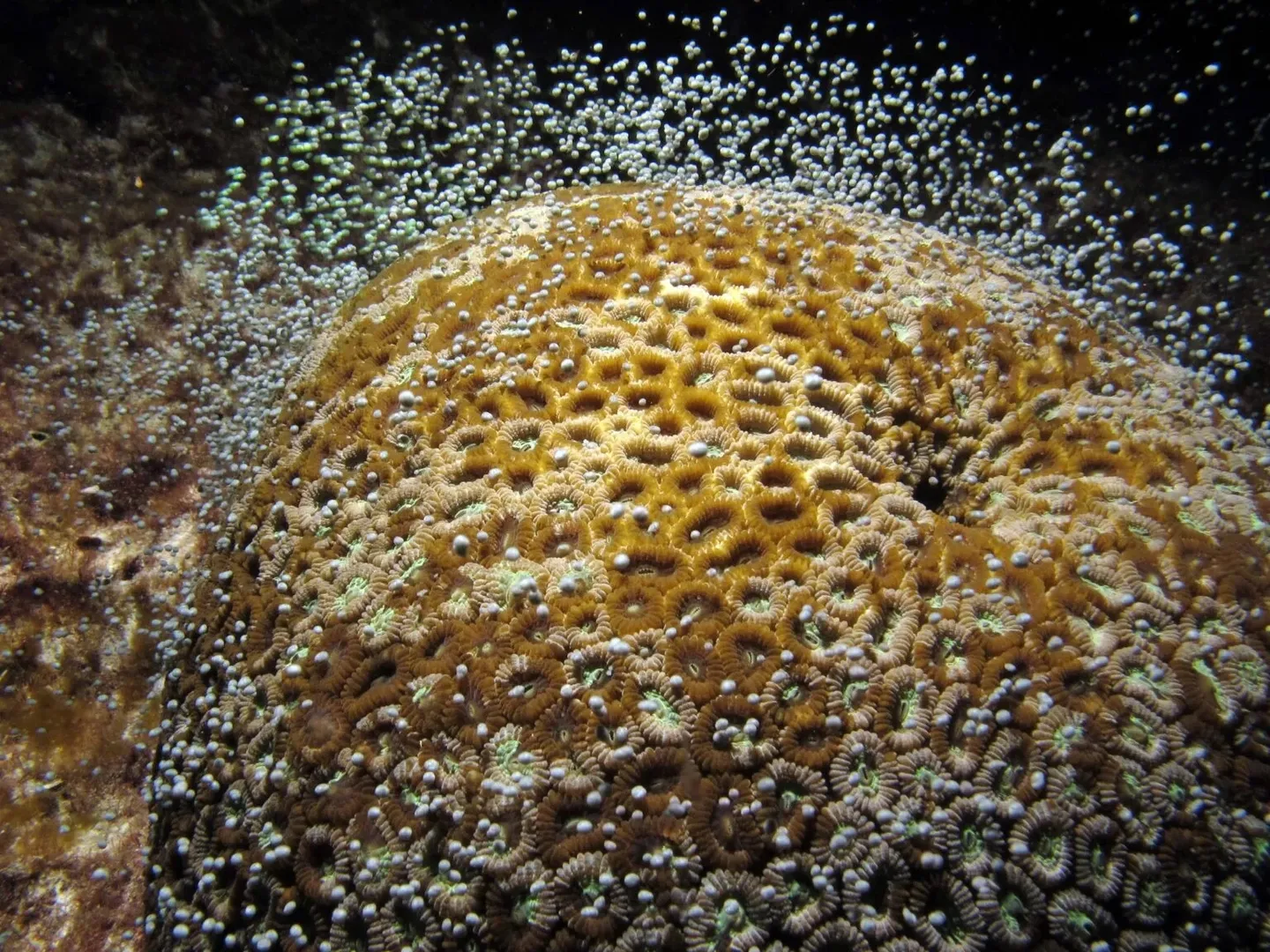
Yoko Nozawa's team conducted long-term observation and research at Green Island, Taiwan, and finally identified the key factor behind synchronised coral spawning. During the coral breeding season (approximately April–June in southern Taiwan), the dark window between sunset and moonrise after the full moon triggers the conditions for coral spawning. Pictured: Dipsastraea speciosa in the act of spawning. Photo │ Che-Hung Lin


Surprising Facts: Corals Are Actually a Group of Animals with Remarkably Diverse Forms!
Because corals can only attach to a fixed location and cannot move, they were once mistakenly classified as plants. Their appearance also tends to mislead people into thinking intuitively that one large coral colony is a single organism. In reality, however, most corals are colonies of polyps; only a few species — such as some members of the family Fungiidae — consist of a single giant polyp forming one individual coral.
Take reef-building corals as an example: a coral polyp colony can be divided into two components, non-living and living. The calcium carbonate skeleton serves as a protective shell and home; the countless living, active polyps that cover it form the biological layer.
Coral polyps are classified in the phylum Cnidaria and resemble their relatives the sea anemones in appearance, with a cylindrical body, a single opening, and tentacles arranged around that opening. The tentacles are densely studded with nematocysts, which the polyps use to capture plankton for food. Another food source for coral polyps comes from their mutualistic symbiotic partners, zooxanthellae, which produce nutrients and oxygen through photosynthesis while also giving colour to what would otherwise be a white skeleton and transparent polyps.
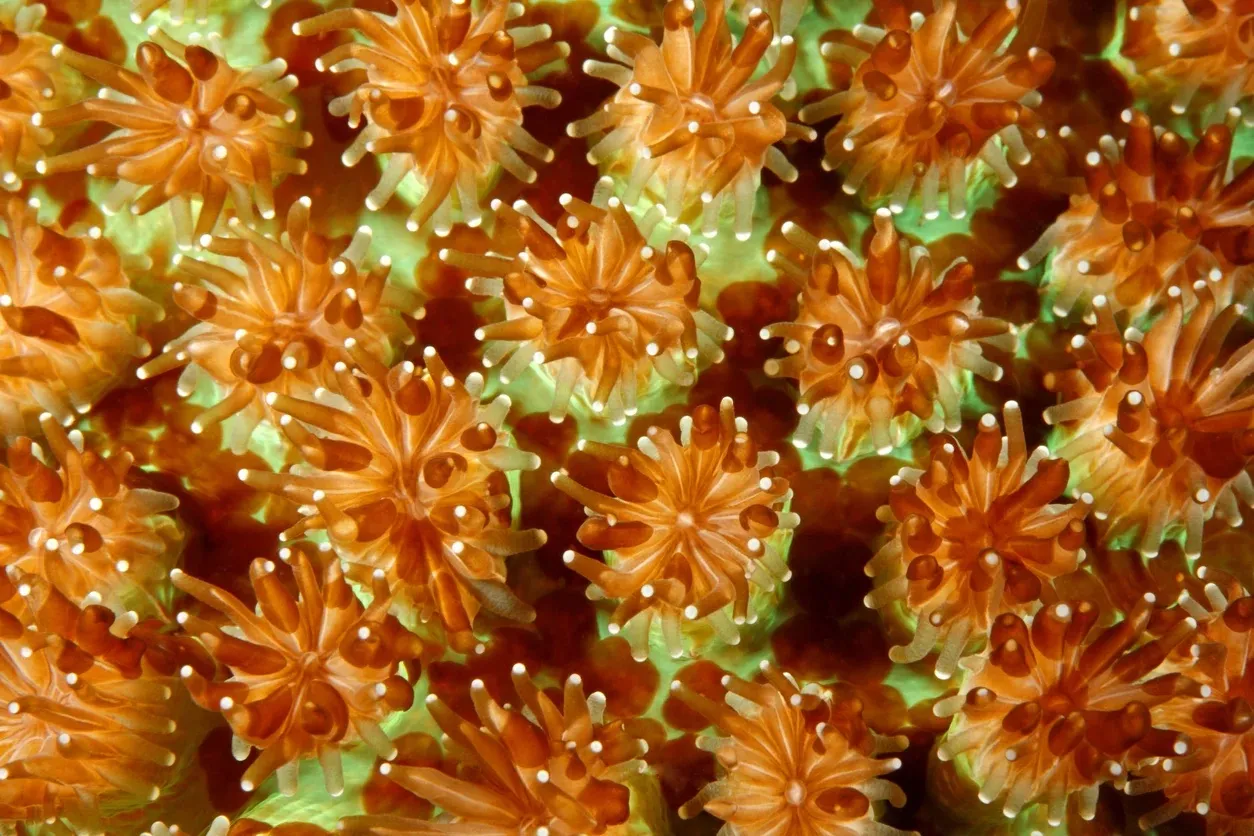
Every reef-building coral (also known as stony coral) colony begins from a single polyp, gradually growing into the coral reefs we see today through a slow, continuous process of growth. Photo │ iStock
Every coral of any size we see in the ocean originates from a single, microscopically small polyp that divides and divides again; coral polyps reproduce asexually on an ongoing basis, splitting into vast numbers of individuals over the years. The calcium carbonate secreted by generation upon generation of polyps accumulates over time, eventually building up into castle-like structures — what we call "coral reefs." Scientists consider coral reefs to be the tropical rainforests of the sea, providing habitat and abundant food and energy for fish, crustaceans, and many other organisms.
Associate Research Fellow Yoko Nozawa considers corals extraordinarily remarkable organisms: a single polyp, initially so small as to be invisible to the naked eye, keeps dividing and reproducing until hundreds of millions of polyps gather together to form the only living thing on Earth visible from outer space — the Great Barrier Reef.
However, the individuals added through asexual division are genetically and morphologically identical to their predecessors. This form of asexual reproduction cannot increase genetic diversity and can leave a population ill-equipped to adapt to environmental change. Corals must therefore invest additional time and energy in releasing sperm and eggs to engage in sexual reproduction and produce offspring with fresh genetic combinations.
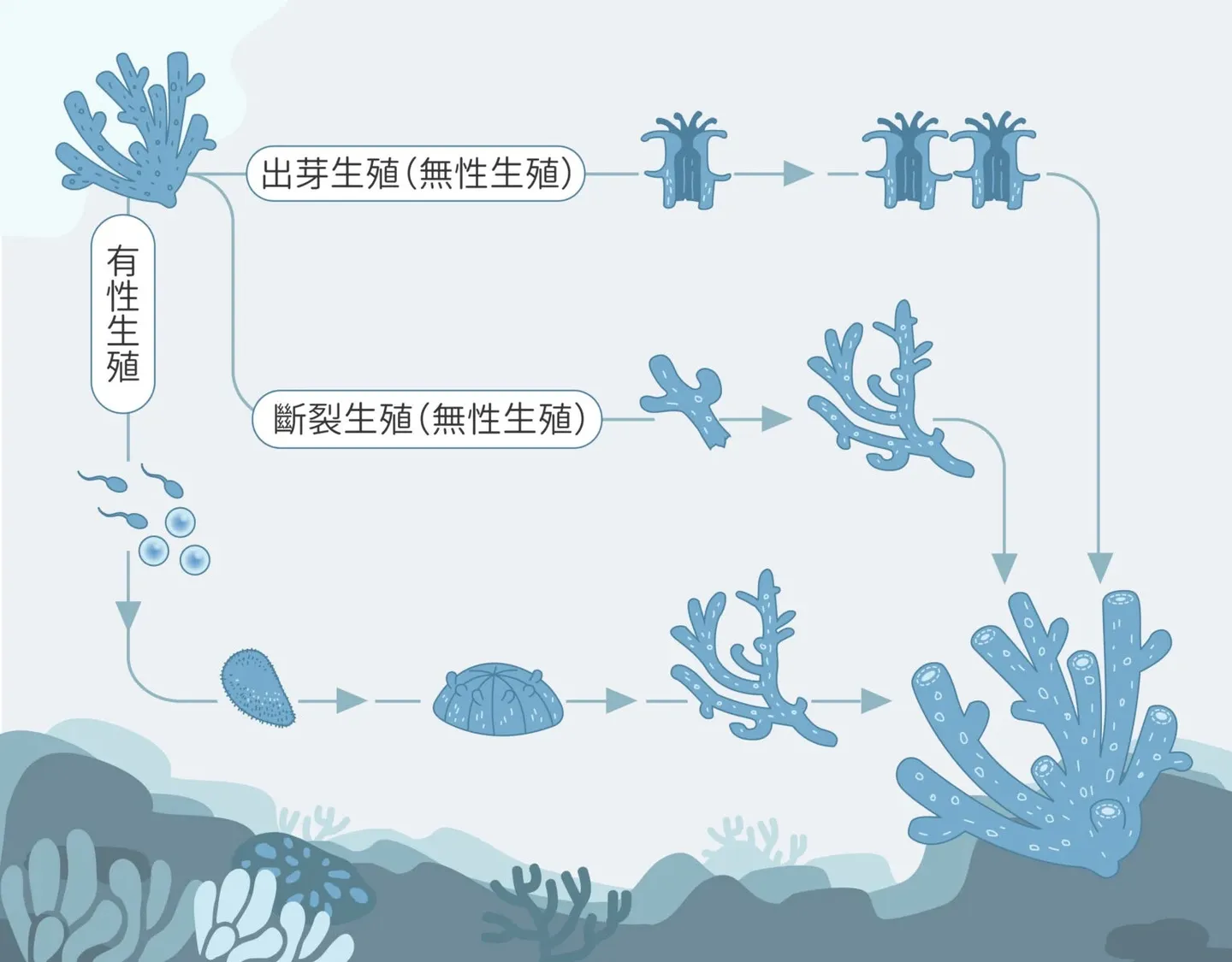
Corals can reproduce through both asexual and sexual reproduction. Photo │ Research Matters (Source │ Global Foundation for Ocean Exploration)
Do Corals Understand Investment Strategy? The Spawning Choices Between Risk-Spreading and Going All-In
Unlike fish, which can find a mate before spawning and fertilising eggs, stationary corals have no choice but to release their sperm and eggs directly into the seawater. To overcome the disadvantage of being unable to move, they adopt a synchronised strategy — essentially agreeing to release staggering quantities of sperm and eggs together within a very short period. This dramatically raises the concentration of gametes in the water, greatly increasing the chances of successful fertilisation, and even leaves predators lurking nearby overwhelmed and unable to keep up.
The magnificent spectacle of coral spawning that people marvel at is, at the same time, a testament to how living organisms strive to overcome nature's obstacles in order to reproduce.
Synchronised coral spawning can be further divided into two modes. Yoko Nozawa notes that corals spawn only once a year; some species prefer to spread their risk — individuals within a colony spawn simultaneously, but different colonies are staggered by a few days, earlier or later. Other corals go all-in, with every colony agreeing to spawn on the very same day. The latter strategy naturally offers higher fertilisation rates, but if that day happens to be disrupted by heavy rain, a typhoon, or other weather events, very few offspring may survive that year.
"The fact that both strategies have evolved shows that each has its own advantages," Yoko Nozawa explains. But regardless of whether a species is cautious or a risk-taker, how do corals — unable to move or communicate with one another — manage to coordinate their spawning? Since the synchronised spawning phenomenon was first documented in the 1980s, this mystery has puzzled the world for a full 40 years.
Seven Years of Field Survey Data Reveal: The Critical Factor Is Hidden in the Lunar Cycle
Starting in 2010, Yoko Nozawa's research team has dived to conduct surveys at Green Island every year during the coral breeding season (typically April, May, and June in southern Taiwan). During survey periods, the team entered the water every night to record coral species, abundance, and spawning times. After accumulating seven years of survey data, postdoctoral researcher Che-Hung Lin identified a clear reproductive pattern for each coral species.
According to the team's existing records, corals belonging to the family Merulinidae adopt the risk-spreading strategy, with different colonies spawning synchronously in staggered batches. Although the spawning dates among colonies are offset, the schedule is very consistent — always five to eight days after the "full moon." Green Island is also home to a large number of corals belonging to some species within the genus Acropora; these corals coordinate all colonies to spawn on the very same day, but the exact date varies from year to year.
"Merulinidae spawn consistently five to eight days after the full moon; Acropora also spawn after the full moon, but without any discernible pattern," says Che-Hung Lin. Even so, both groups spawn after the full moon, leading the research team to focus on a lunar-cycle factor — moonlight — for further investigation.
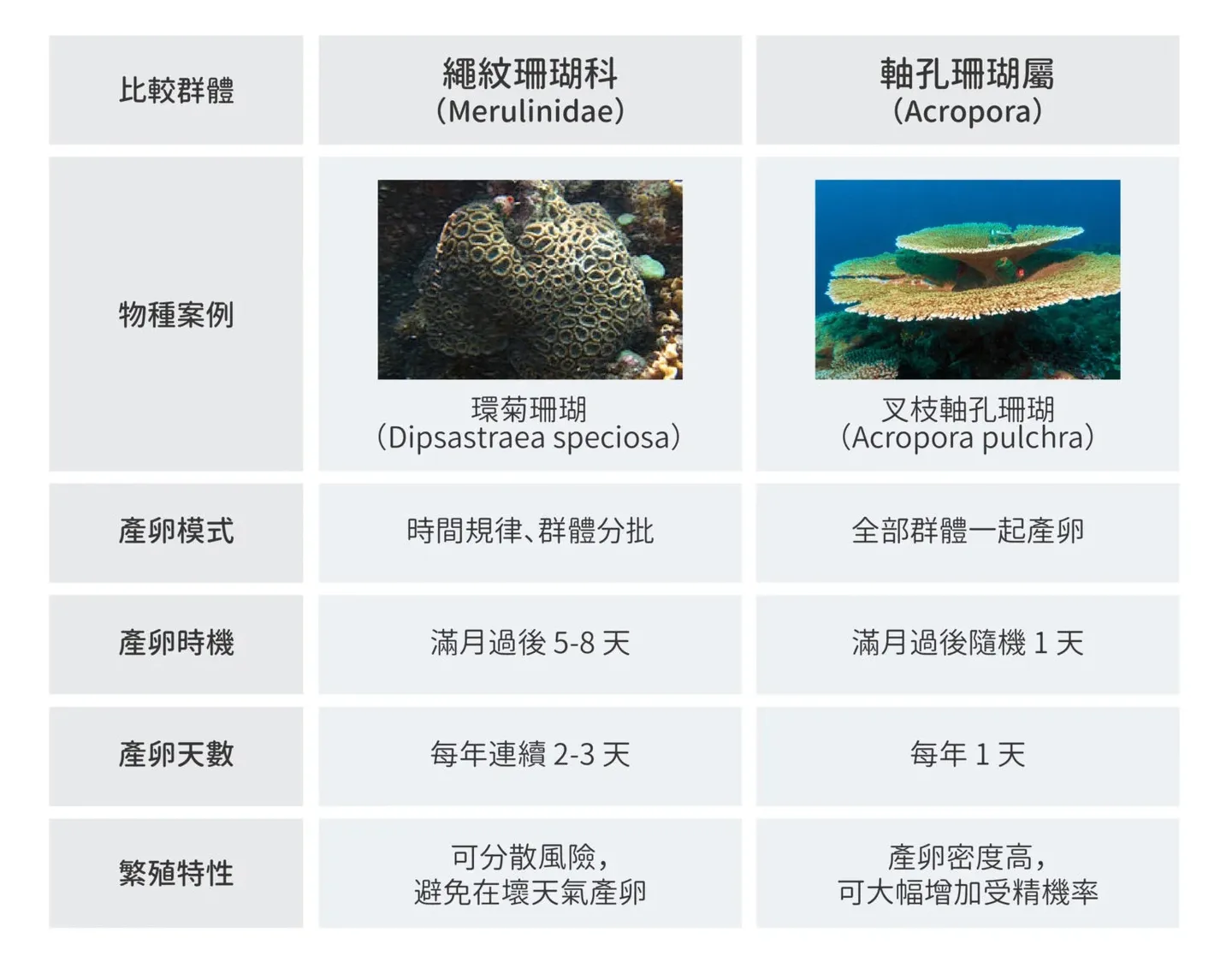
Merulinidae vs Acropora. Photo │ Research Matters (Sources: Wikipedia, iStock)
Both Indoor and Outdoor Experiments Yield the Same Result: Nighttime Light Suppresses Coral Spawning
Because Dipsastraea speciosa (family Merulinidae) is common at Green Island — easy to observe and sample — and its reproductive timing follows a traceable pattern, the team selected this species for their experiments. "When we blocked out the moonlight, Dipsastraea speciosa spawned earlier," Yoko Nozawa explains. This preliminary result suggested that the darkness following the full moon serves as the environmental signal telling corals to prepare for spawning.
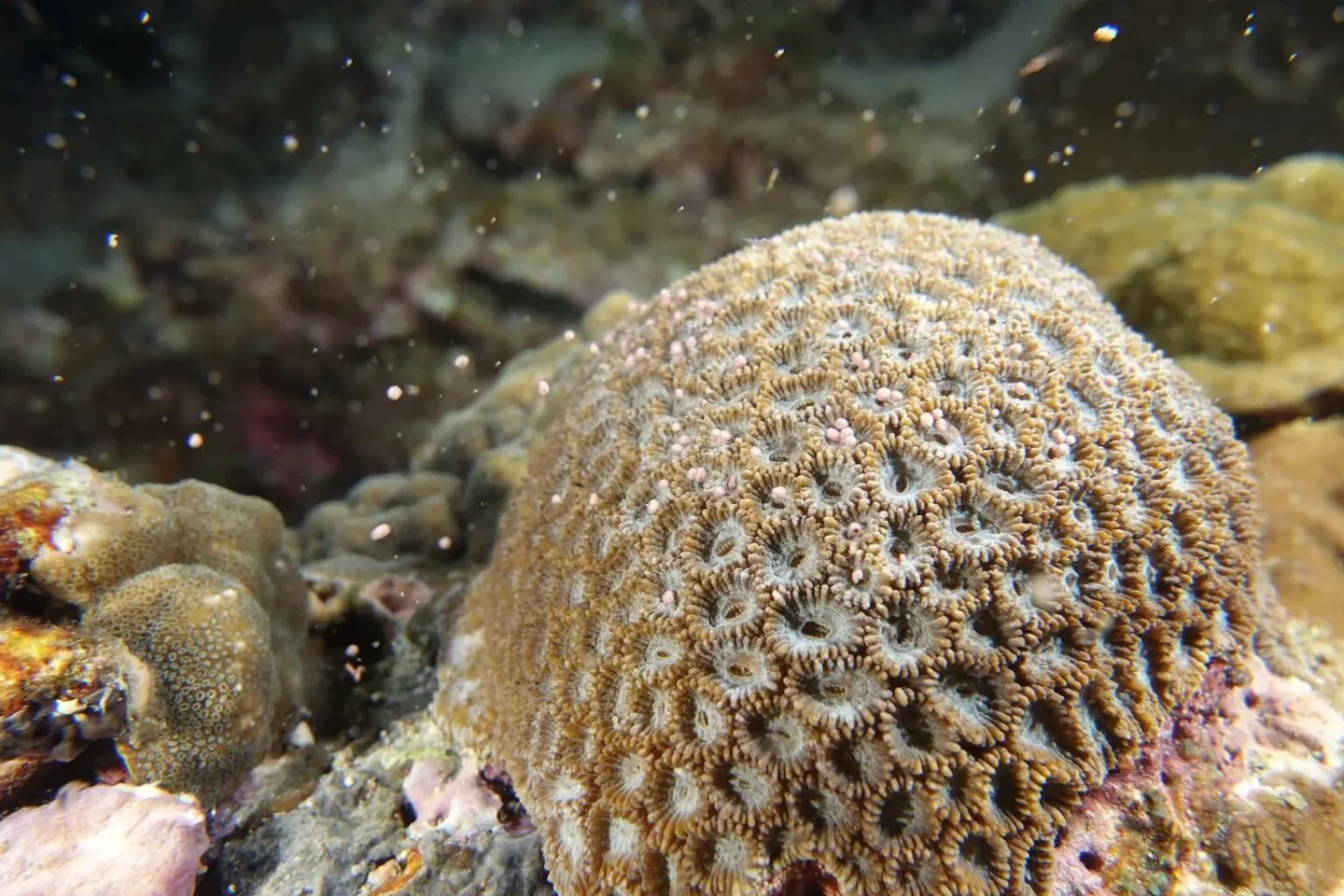
Dipsastraea speciosa belongs to the family Merulinidae; mass spawning events among its colonies typically occur five to eight days after the full moon. Photo │ Che-Hung Lin
To avoid interference from other environmental factors, the experiments were first conducted in tanks in the laboratory. The team then moved to the area near Gongguan on the northern side of Green Island to confirm that corals — whether in an artificial environment or in their natural habitat — would spawn earlier when shrouded in darkness. "We entered the water every day and covered the corals with opaque aluminium foil or transparent cloth three days before the full moon, one day before, and one day after," says Che-Hung Lin. The results matched expectations: the earlier corals were covered with the dark cloth, the sooner they spawned — reliably releasing gametes in large quantities five to eight days after receiving the darkness signal.
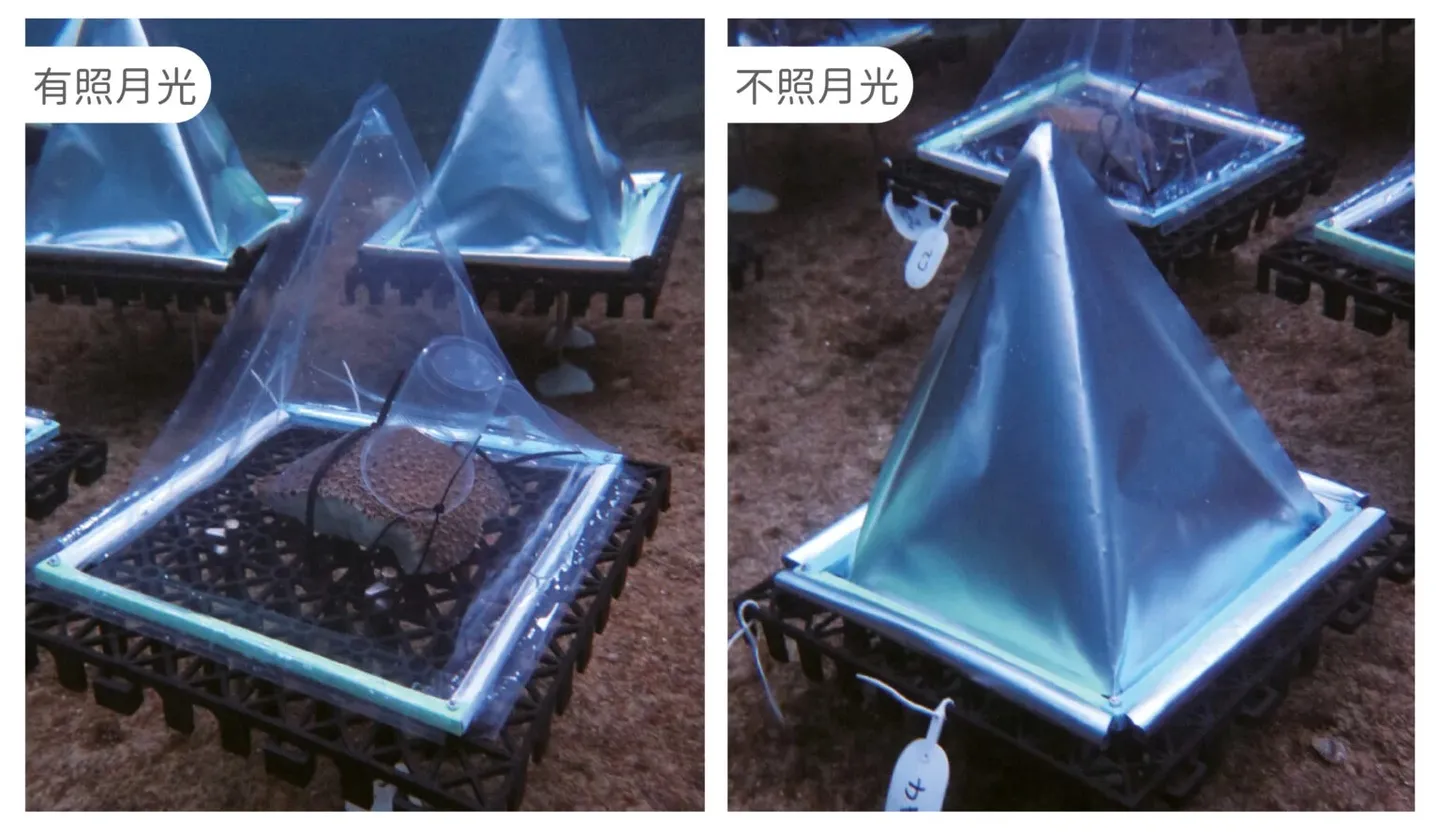
The research team set up experiments at Green Island to observe Dipsastraea speciosa spawning, artificially controlling light exposure so that no moonlight reached the corals three days before, one day before, and one day after the full moon. They found that the earlier the cover was applied, the earlier spawning was triggered. Photo │ PNAS
Light of Different Wavelengths All Produces the Same Suppressive Effect
In addition to testing the presence or absence of light, Che-Hung Lin also incorporated trials using different light spectra and intensities. A paper published in Science in 2006 had indicated that corals may be capable of detecting moonlight. Yoko Nozawa notes that the paper showed that exposure to moonlight triggers expression of the cry gene in corals, and that the cry gene responds particularly strongly to blue light.
The team therefore returned to the laboratory and used artificial light sources to simulate moonlight intensity, exposing corals separately to red, blue, and green light to determine whether, as the literature suggested, different spectral light sources would stimulate corals to different degrees. The experiments confirmed, however, that all three colours of light equally suppressed spawning. In other words, all the evidence gathered points in the same direction: darkness is the key to coral spawning.
The 40-Year Coral Mystery Solved: The Answer Is the Dark Window Between Sunset and Moonrise
After painstakingly piecing together the clues, the team confirmed that nighttime light suppresses coral spawning. They then wanted to understand further whether even a momentary flash of light during the long night would disrupt the corals, or how long exposure was needed to achieve a suppressive effect. The team therefore examined four conditions separately in a laboratory setting: complete darkness throughout the night, continuous light throughout the night, light during the first half of the night (sunset to midnight), and light during the second half of the night (midnight to sunrise).
The results showed that corals in the second-half-of-the-night light group behaved the same as those kept in complete darkness — spawning synchronously after five days. Corals exposed to light during the first half of the night behaved the same as those exposed to light all night, experiencing delayed and less synchronised spawning. "Seeing this, we speculated that the receptors corals use to sense light must have 'business hours,'" Che-Hung Lin says with a laugh. These receptors appear to be active from after sunset until around midnight, though slight individual variation among coral specimens does exist.
The answer was finally revealed: for Dipsastraea speciosa, as few as two consecutive nights with approximately one hour of darkness after sunset is sufficient to meet the conditions for synchronised spawning. This also explains why corals consistently choose to reproduce after the full moon. Che-Hung Lin points out that because the Earth is rotating while the Moon simultaneously orbits the Earth, the time of moonrise is delayed by approximately 30–70 minutes each day (Note 1). Mapping this against the lunar cycle in April — the breeding season — the moon rises at around 2 p.m. at the beginning of the month, then progressively later each day until the full moon, when it finally rises after sunset. The dark window in between is what signals to the corals: it's time to prepare for spawning.
There are good reasons to choose to spawn after the full moon. Yoko Nozawa points out that Dipsastraea speciosa spawns during darkness and neap tides; the dim environment provides some cover from predators, and the calmer seas during neap tides mean that sperm and eggs are not immediately dispersed.
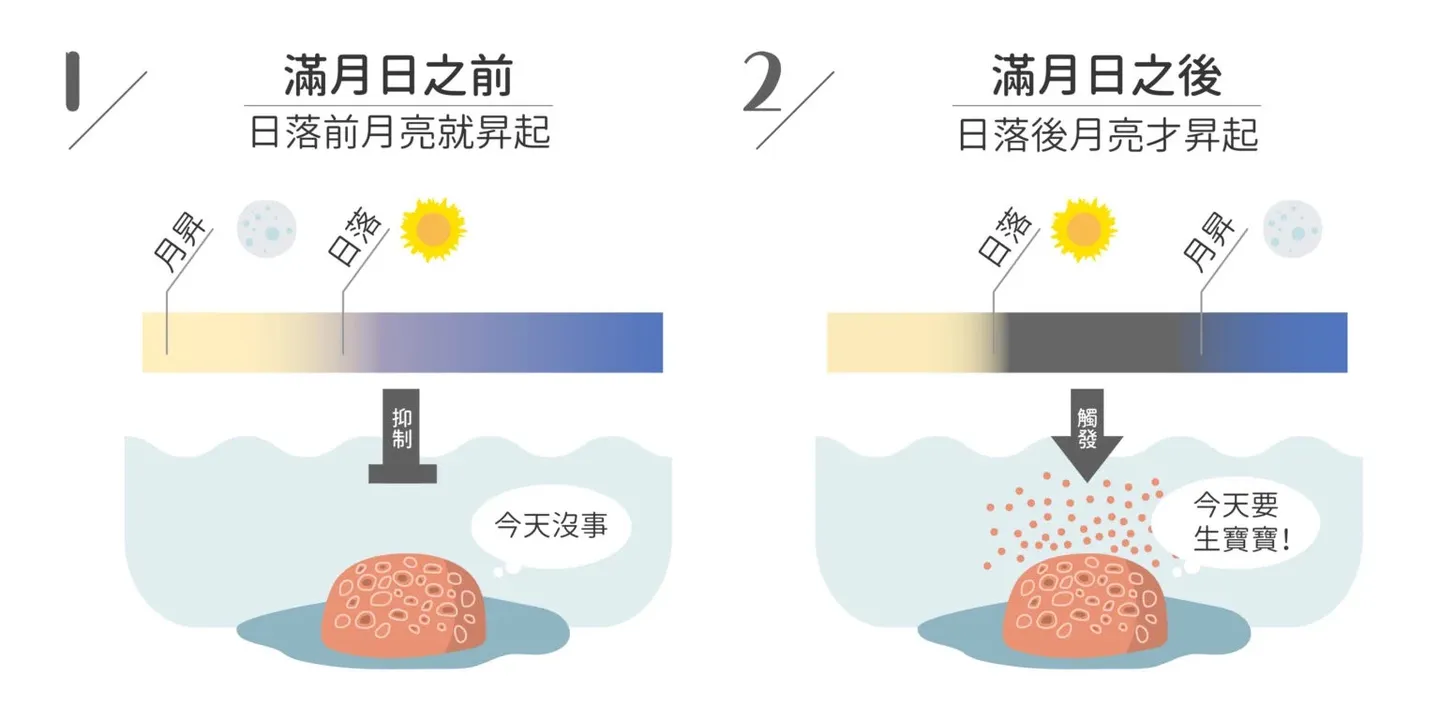
After years of natural observation and controlled experimentation, the research team finally uncovered the secret of synchronised coral spawning — the key is the period of darkness after the full moon during the breeding season. Figure 1 shows that before the full moon, moonlight suppresses coral spawning; Figure 2 shows that after the full moon, the dark window between sunset and moonrise triggers the conditions for coral spawning. Photo │ PNAS
After Receiving the "Dark" Signal, Coral Eggs Need Five Days to Ripen
As for the microscopic mechanism behind Merulinidae's consistent pattern of spawning five to eight days after the full moon, the research team is still actively investigating, and it may be related to the maturation process of sperm and eggs. The following is the team's working hypothesis based on their observations.
Merulinidae are hermaphroditic; each polyp produces both sperm and immature eggs internally. When a coral receives the stimulus of two consecutive nights of darkness, the nucleus of the egg cell gradually migrates toward the periphery of the cell. This entire process — known as germinal vesicle migration (GVM) — takes approximately five days.
Once GVM is complete, the egg cell nucleus begins to break down over a period of roughly three to four hours, in a process called germinal vesicle breakdown (GVBD), at which point the egg cell is nearly fully prepared for fertilisation. The mature eggs and sperm are then packaged together into a structure called a "sperm-egg bundle." Yoko Nozawa explains that after the coral releases these bundles into the water, they float up to the surface — because the probability of sperm and egg meeting in the two-dimensional plane of the sea surface is far greater than in the three-dimensional volume of the water column below.
Once the bundles break apart at the surface, the released eggs have only one final step: extruding the polar body from within the cell, after which fertilisation with sperm can occur. Interestingly, young eggs preferentially fuse with sperm from a different coral; but as time passes, they will also accept sperm from the same coral. "Otherwise, the longer they wait, the more they risk being swept away or eaten — the chances of fertilisation can only diminish," Che-Hung Lin adds.
After successful fertilisation, the fertilised egg sinks into the water and develops into a ciliated, free-swimming planula larva. The planula spends several days searching the seafloor; once it finds a suitable location, it attaches and metamorphoses into a polyp that can no longer move freely. The polyp then divides continuously, secreting calcium carbonate, and gradually grows into a coral colony.

Associate Research Fellow Yoko Nozawa explains the microscopic mechanisms of coral spawning currently under investigation. Photo │ Research Matters
A Serendipitous Encounter Brings Years of Research to an International Journal
"To be honest, we were quite lucky — the manuscript had originally been submitted to a different journal." Che-Hung Lin, first author of the paper, recalls with a smile that a visit by Japanese scholar Takahashi Shunichi to Taiwan unexpectedly led to this new discovery about coral spawning being published in the Proceedings of the National Academy of Sciences (PNAS).
While Professor Takahashi Shunichi of the University of the Ryukyus was staying at Academia Sinica, he dropped by to visit Yoko Nozawa's laboratory — a fellow Japanese national — and in the course of casual conversation discovered that the two had actually been university classmates. "We were barely more than nodding acquaintances back in university, and we'd had no news of each other after graduation," Yoko Nozawa recalls. Takahashi had gone on to conduct research in tropical biology, genetics, and molecular biology at the University of the Ryukyus, while Nozawa had been moving back and forth between Academia Sinica and Green Island conducting ecological and behavioural surveys of corals — yet somehow, the old classmates happened to cross paths again in academic circles.
On Takahashi's recommendation, the two sides collaborated to expand and strengthen the experiments. Che-Hung Lin notes that Takahashi offered valuable tips on designing experiments and submitting to journals — such as replicating the same results both in the laboratory and in natural settings to bolster persuasiveness, keeping the manuscript conservative and confining it to what had already been confirmed rather than speculating beyond the data, and carefully polishing the writing and structure of paragraphs while patiently engaging with reviewers.
This fortuitous connection fostered a cross-border Taiwan–Japan research collaboration and gave the years of diligent work by Yoko Nozawa, Che-Hung Lin, and their colleagues a chance to be published in a prestigious journal, bringing the truth about coral spawning to a much wider audience.
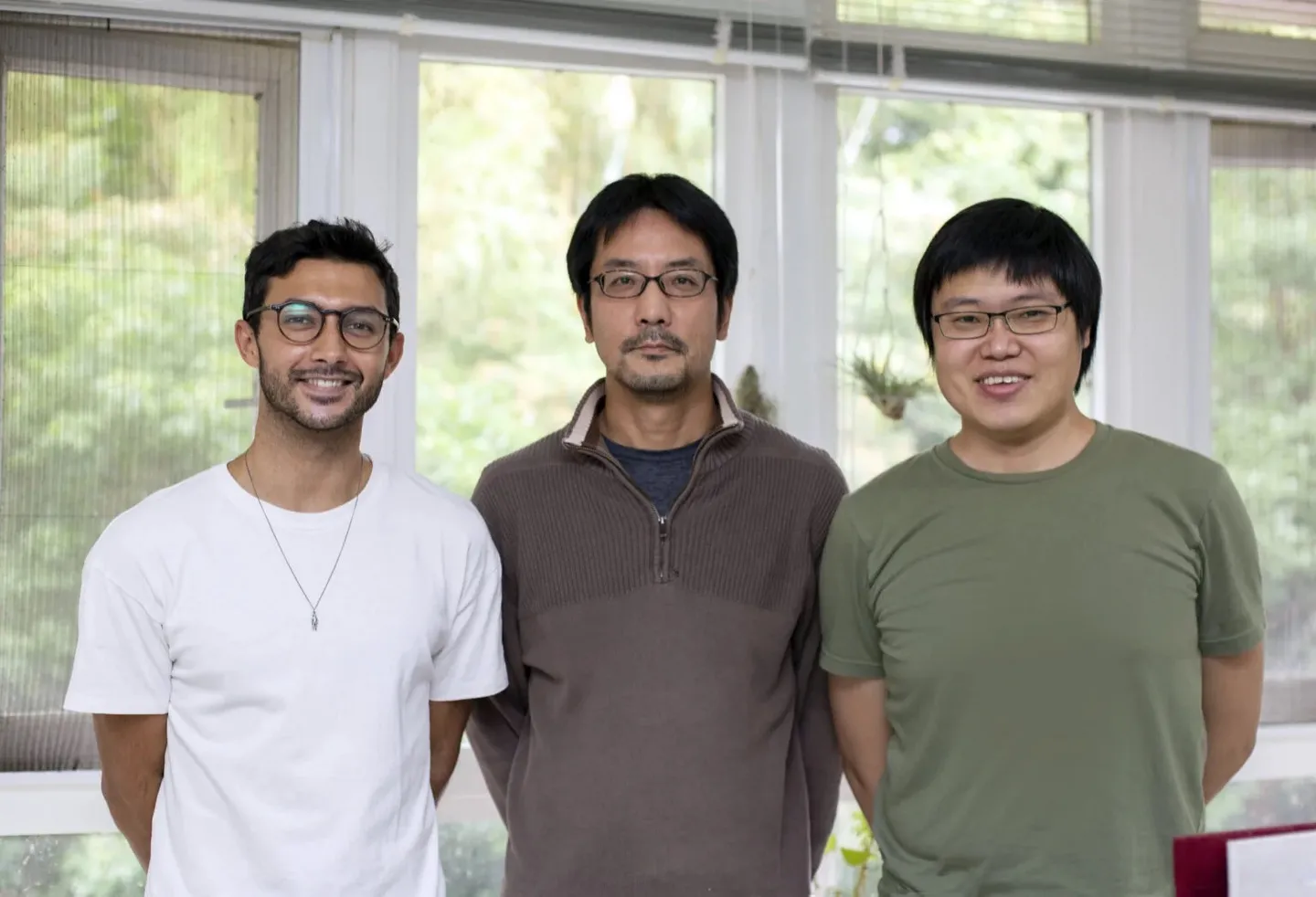
Coral spawning research demands long-term commitment. The years of work by Associate Research Fellow Yoko Nozawa (centre) and Postdoctoral Researcher Che-Hung Lin (right) and their team have finally been published in the Proceedings of the National Academy of Sciences (PNAS). Photo │ Research Matters
Challenging Ecological Research Turns a Corner: A Multinational Team Sets Out Anew
Looking back on a career that began with a personal love of diving and led him to choose corals as his research subject, Yoko Nozawa — more than 20 years on — has slowly begun to hope that his work might make a tangible contribution to coral populations that are steadily declining. "I'm very glad to be able to do my research here," he says. "Academia Sinica's support means I can focus entirely on my work without worries."
Having cracked the mystery of synchronised spawning in Dipsastraea speciosa, Che-Hung Lin will next move to the laboratory of his current supervisor's old classmate — Professor Takahashi Shunichi at the University of the Ryukyus — to begin a new coral research project. Yoko Nozawa says he will continue to support Lin's postdoctoral research: since this study focused primarily on Dipsastraea speciosa, they still want to know whether other species within the family Merulinidae are also triggered to spawn synchronously by darkness, and whether there are further secrets behind Acropora's irregular post-full-moon spawning pattern and its paradoxical failure to spawn when light is lacking.
Also worth mentioning: following the publication of the coral spawning findings, Yoko Nozawa received a letter from Levy Oren, a researcher at Bar-Ilan University in Israel. Levy Oren studies the impact of light pollution on coral populations in the Red Sea and expressed keen interest in the published research, with hopes for a future collaboration. The subject of coral spawning — with only one observational opportunity per year, demanding nightly night diving surveys, and fraught with risk and hardship — has long deterred many researchers. Now, the years of perseverance by Yoko Nozawa, Che-Hung Lin, and their colleagues have paid off, and a grand coral-rescue adventure spanning the Red Sea, Green Island, and Okinawa awaits them.
Note 1: Because the Moon's orbit around the Earth is not a perfect circle, the daily delay in moonrise varies depending on the lunar phase (new moon / full moon) and the season, ranging from approximately 30 to 70 minutes.
Full article reprinted from Academia Sinica Research Matters – Why Do Corals Spawn in Mass Synchrony? The Key Lies in the Dark Window Between Sunset and Moonrise!
Interviews and text │ Lin Cheng-Hsun, Jian Ke-Zhi
Art design │ Lin Xun-An, Cai Wan-Jie
Further reading:
- Lin, C.-H., Takahashi, S., Mulla, A. J. & Nozawa, Y. (2021). Moonrise timing is key for synchronized spawning in coral dipsastraea speciosa. PNAS, 118(34).
- "Coral Facts." NOAA Coral Reef Conservation Program.
- "How Do Corals Reproduce ?" Global Foundation for Ocean Exploration.
- "What are corals ?" National Ocean Service.
- 3 Things You Should Know About Photographing Coral Spawning


![[BlueTrend Mini Classroom] The Star Killer & Most Venomous Shrimp: The Devoted Harlequin Shrimp](/_astro/002_vivipic_2vdzYS.webp)