Contents(4)
The invasive Lionfish has been spreading rapidly across the Mediterranean in recent years, driven by climate warming, an absence of natural predators, and remarkable reproductive capacity — threatening marine ecosystems and fishery resources alike. Greek environmental organizations and the culinary world have joined forces to promote Lionfish cuisine as a means of controlling its numbers, transforming an invasive species into a Mediterranean table delicacy in order to reduce its impact on the ocean ecosystem.
What would you do about an invasive species that can lay 2 million eggs a year, has virtually no natural predators, and devours juvenile fish at will? Scientists and chefs across the Mediterranean have a straightforward answer: eat it.
The Lionfish is native to the Indian and Pacific Oceans, but driven by climate warming it has rapidly spread into the Mediterranean, wreaking havoc on local marine ecosystems and fisheries. The silver lining, however, is that this invasive species is not only edible — its flesh is tender and remarkably delicious. Environmental groups are now teaming up with the culinary industry in an effort to turn this ecological crisis around, hoping that one day the Lionfish will no longer be a headache, but a staple on Mediterranean tables.
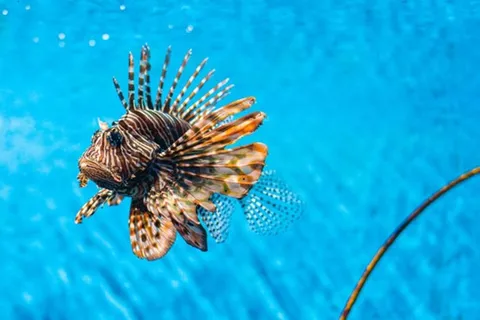
The Lionfish has spread rapidly into the Mediterranean in recent years, threatening local marine ecosystems and fisheries. Photo: Wai Siew/Upsplash
Lionfish Enter the Mediterranean — Populations Surge at Alarming Speed
According to Euronews, a few years ago Lionfish began appearing in Mediterranean waters — first near Cyprus, then spreading into the Aegean Sea. This Asian fish species has become a major threat to the Mediterranean as ocean temperatures continue to rise.
Katerina Kokkinaki, Green Marketing Director of the Greek environmental organization Elafonisos Eco, notes that the local growth rate of Lionfish has been staggering. She recalls: "Five years ago, we first spotted this fish at Elafonisos — there was just one. But over the past few years, that single fish has turned into thousands upon thousands."
The explosive growth of Lionfish in the Mediterranean comes down to two key factors: extraordinary reproductive capacity and a complete absence of natural predators. A single individual can produce approximately 2 million eggs per year, allowing populations to expand from scattered individuals into vast colonies within just a few years.
In their native Indo-Pacific waters, predators such as large Grouper, barracuda, moray eel, and even some species of shark can prey on Lionfish, keeping their numbers at least partially in check. But in the Mediterranean, the absence of any such predators means Lionfish face virtually no survival pressure.
Making matters worse, Lionfish consume juvenile fish and invertebrates in enormous quantities. This isn't merely "eating fish" — it severs the growth chain of fish populations, making it increasingly difficult for overall fish numbers to recover. Over time, this disrupts the entire marine food chain, threatening local fisheries and coastal communities.


As the Ecological Crisis Unfolds: "If You Can't Beat Them, Eat Them!"
At the third Lionfish in the Mediterranean III conference, experts from various fields stressed that chefs and local markets are critical to solving the Lionfish problem. Approaching it through cuisine and food culture not only raises public awareness of the Lionfish issue but also encourages more responsible consumer choices.
As it turns out, Lionfish is an excellent candidate for the kitchen. Greek chef Elias Chiazzoli says: "We make full use of Lionfish in the kitchen — it's delicious no matter how you prepare it. You can eat it raw, as ceviche, tiradito, sushi, in soups, or simply grilled." He describes the fish's flesh as tender, with a fresh, refined flavour.
Monaco-based chef Didier Rubiolo has also developed a number of Lionfish dishes. He describes the fish's flesh as white, delicate, and flaky — similar in texture to Grouper or red snapper. He emphasizes: "Small actions can bring about big changes."
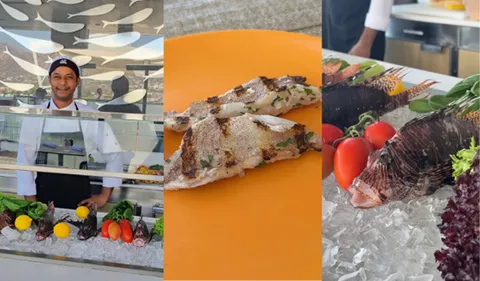
Approaching the issue through cuisine and food culture can raise public awareness of the Lionfish problem. Photo: Elafonisos Eco
Stakeholders Push "Sustainable Gastronomy" — Hoping Lionfish Becomes a Mainstream Ingredient
Many people are alarmed when they hear that Lionfish are "venomous." In fact, the venom is confined to the spines on the dorsal fin. Chef Chiazzoli explains: "Lionfish pose no danger to humans — as long as they are handled properly, they are perfectly safe to eat."
To raise public awareness of Lionfish invasion in the Mediterranean, Monaco's Marius restaurant hosted a dinner in January 2026 that featured Lionfish cuisine alongside an art auction showcasing works by Greek artist Dimos Flessas. Flessas remarked: "People think of Lionfish as a threat, but it is actually innocent. It is human behaviour that has caused this imbalance. I hope that through art, I can awaken people's awareness and sense of responsibility."
To promote the consumption of Lionfish, Greek NGOs have partnered with the culinary world to organize cooking courses and outreach events, introducing chefs and consumers to the ways Lionfish can be prepared. David Watson, trustee of the Stelios Charitable Foundation, explained that they have held sustainable ocean cooking courses teaching young chefs how to handle and cook Lionfish.
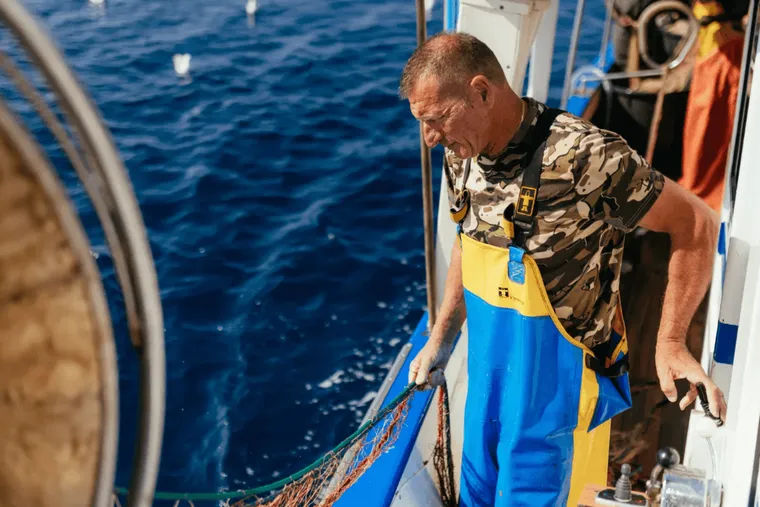
While initial hesitation existed, a growing number of fishermen on Greek islands have begun selling Lionfish, and consumer response has been quite positive. This once-troublesome invasive species may soon become a mainstream ingredient in Mediterranean markets.

A growing number of fishermen on Greek islands have begun selling Lionfish, and consumer response has been quite positive. Photo: Elafonisos Eco
References
- euronews, Can this venomous fish become a Greek delicacy? Environmental NGOs hope so
- Elafonisos Eco, Lionfish in the Mediterranean III
- Elafonisos Eco, Instagram
- Monaco Life, MONACO CHEF TACKLES MEDITERRANEAN'S LION FISH CRISIS THROUGH ART AND CUISINE
※ This article is reprinted from the Delta Electronics Foundation's Low Carbon Life Blog: 〈An Invasive Species Turned Delicacy? The Mediterranean Is Trying to "Eat Its Way" Out of the Lionfish Crisis〉, co-produced with BlueTrend.