Contents(6)
Whether it's the double-tailed Siren on the Starbucks logo or Disney's Ariel, our imagination and longing for mermaids — real or fantasy — knows no bounds: befriending sea creatures, luring sailors with enchanting songs…
Mermaids aren't just for girls. For men, embodying a merman is a prime opportunity to train core strength. Watching a merman glide effortlessly through the water, droplets sliding casually off his skin as he surfaces, is inexplicably sensual and undeniably eye-catching.
Dream of being a mermaid with me and sing Under the Sea!
Photos courtesy of Mermaid Heart – Taiwan Mermaid Art Academy. Photography / Tsou Yuhsin (胖丁)
What You Should Know About Mermaiding
As the scuba diving boom continues to grow, more and more people are warming up to the ocean. Underwater modelling, aquatic dance, and underwater photography have all emerged as alternative commercial opportunities in the social media age. Mermaid training institutions around the world include MSA and AQUAMERMAID in the United States, IMSIA based in Germany and the Philippines, FFFSSM in France, and MFI in Hong Kong. Systematic mermaid training courses are relatively rare in Taiwan, but the MFI system promoted by the Taiwan Mermaid Art Academy in 2018 has become one of the better-known programmes in recent years.
The Taiwan Mermaid Art Academy was founded by Maggie Yang (Mermaid Heart) and focuses on promoting professional and recreational mermaiding, as well as developing training courses in mermaid performance and underwater arts. On the recreational side, it guides beginners toward fulfilling their mermaid dreams through a fun and safe teaching approach. Professional mermaid and underwater performance training brings the art of the underwater world to a wider audience.
Maggie Yang (Mermaid Heart), founder of the Taiwan Mermaid Art Academy, has decades of experience in aquatic activities. She deeply believes in the inseparable connection between humans and the sea, and hopes that through this alternative water sport, more people will safely draw close to the ocean — fall in love with it and protect it. Her vision is to "speak up for marine life in the guise of a mermaid," and she hopes that everyone can find their own "Mermaid Heart" through this platform.
Maggie Yang, founder of "Mermaid Heart."
(Photos courtesy of Mermaid Heart – Taiwan Mermaid Art Academy. Photography / Jammi Chen)


Do You Need to Take a Class to Become a Mermaid?
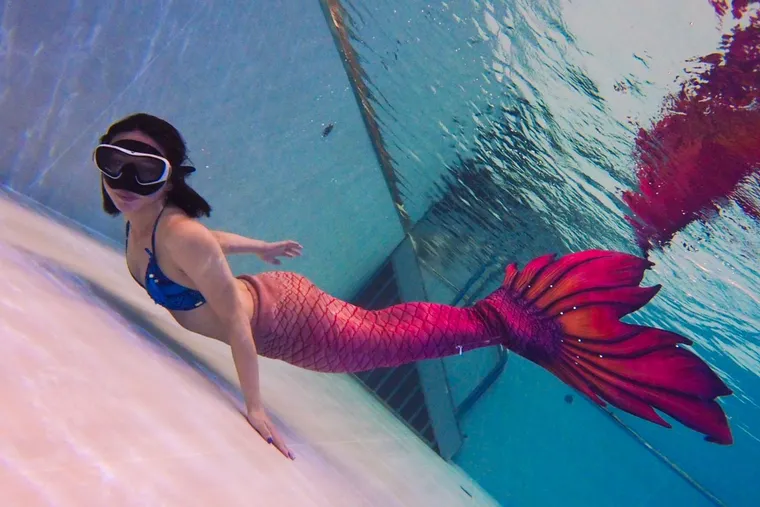
Mermaiding uses freediving techniques to enter the water. The key difference from regular swimming is that both legs are bound together, which can feel deeply unsettling the moment you hit the water — your instinct is to flail your arms on the surface. Coaching and instruction are essential before you can achieve that graceful, captivating form. Slipping into a mermaid tail also means factoring in water pressure, equipment, and buoyancy, as well as figuring out which movements and angles conserve energy while still meeting the photographer's demands.
As someone naturally clumsy, I went in thinking my years of water experience would make it easy. I could fumble my way through it on my own, sure — but without a coach's tips and guidance, my movement was nothing short of hideous (think: a maggot wriggling).
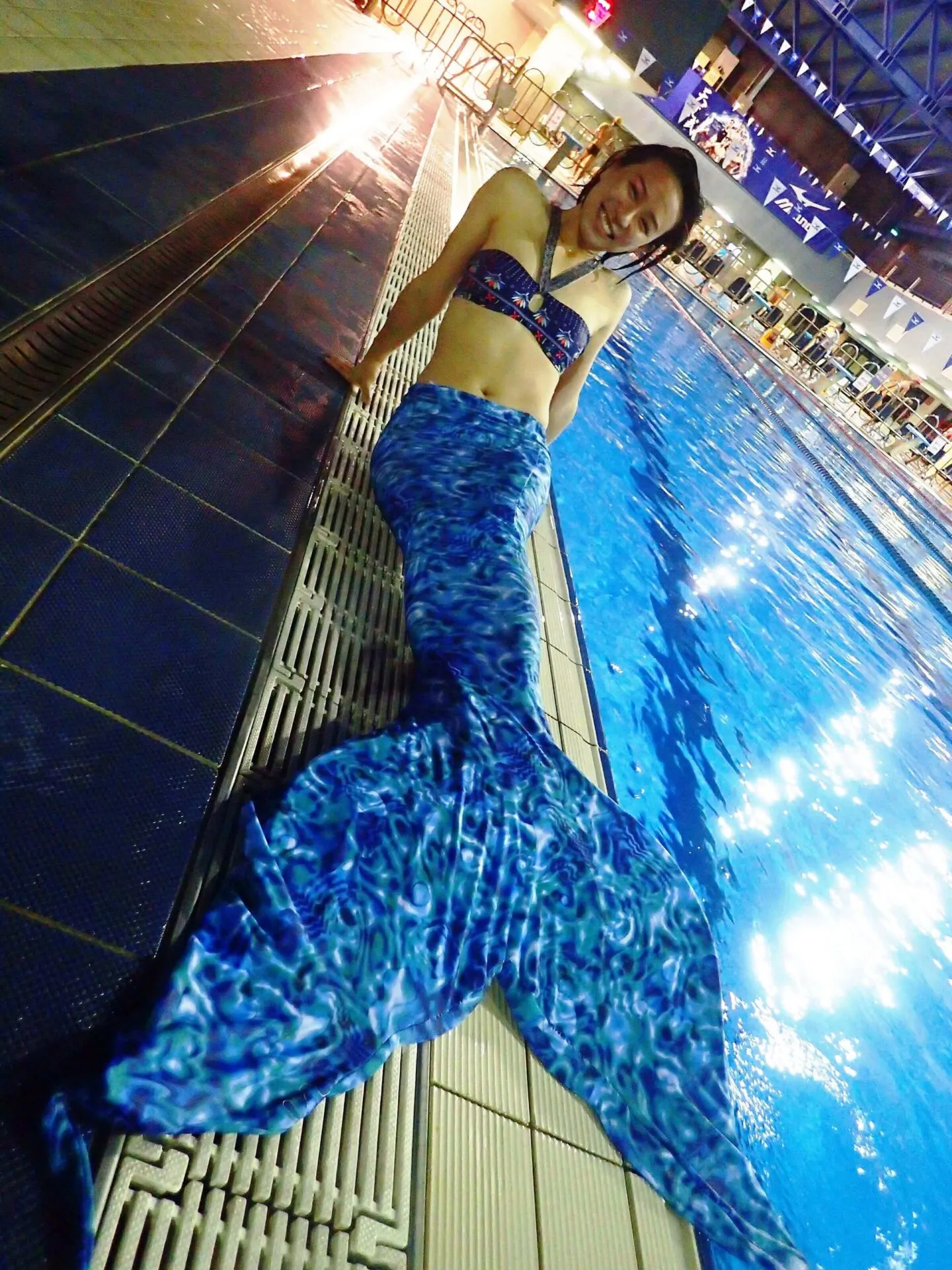
Slip on the tail and embrace the first perfectly proportioned silhouette of your life.
Photos courtesy of Mermaid Heart – Taiwan Mermaid Art Academy
Photography / Maggie Yang (Mermaid Heart)
Mermaiding is an attitude. The golden rule is "look elegant at all times." Even if you're gasping for breath or resting at the poolside, the moment you put on that mermaid tail, you must maintain an air of effortless grace.
And do you think those impossibly beautiful mermaid photos happen by accident? Wrong. Behind each shot lies muscular endurance and countless little tricks — and without a coach to teach you, you'll be left admiring from the sidelines forever.
An Alternative Grace and Poise
- Body conditioning: Mermaid Yoga
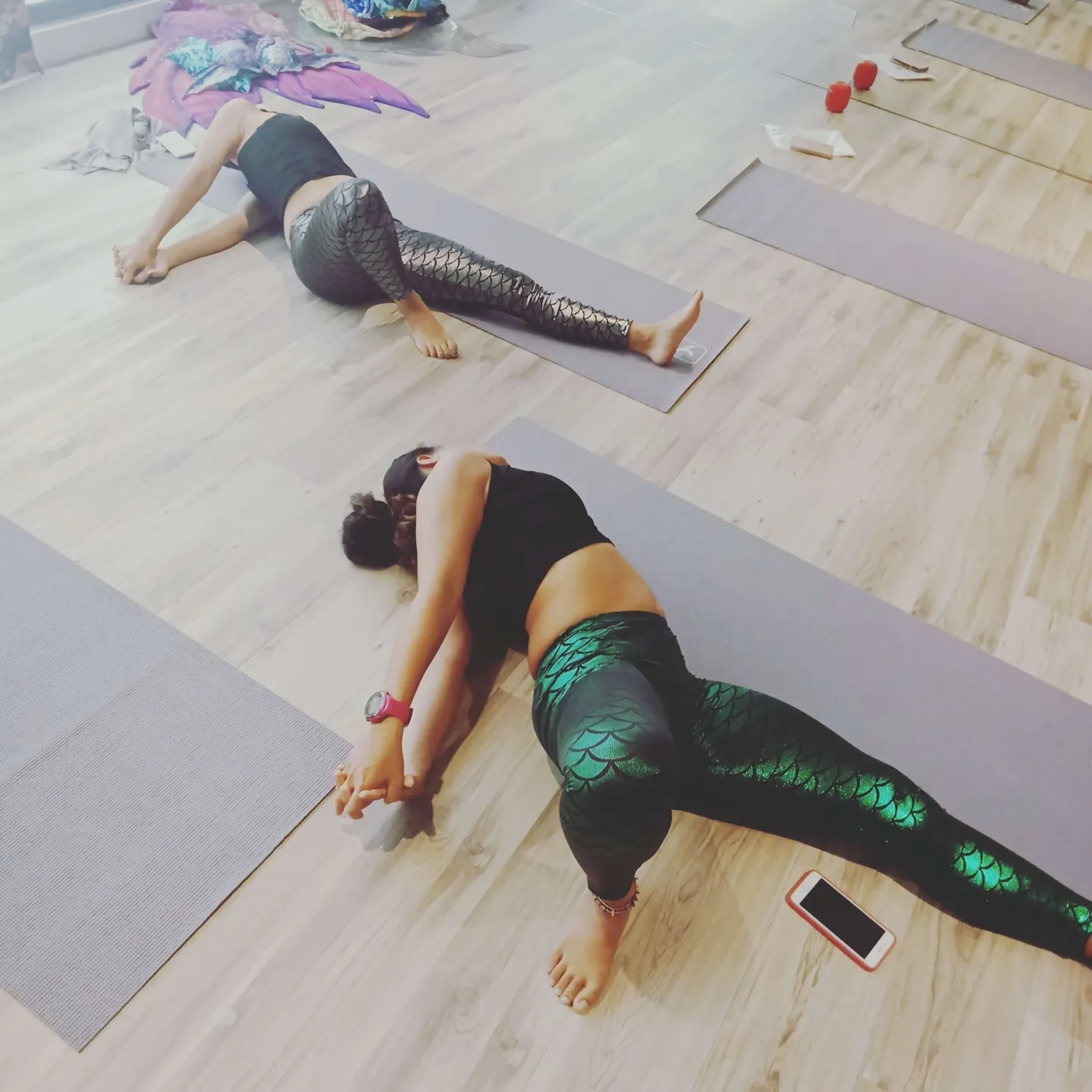
Spinal stretches, shoulder opening, and chest expansion are essential components of mermaid yoga.
Photos courtesy of Mermaid Heart – Taiwan Mermaid Art Academy. Photography / Tsou Yuhsin (胖丁)
Body conditioning is the foundation of the mermaid training curriculum. Flexibility is crucial for mermaiding — the sport primarily engages the shoulders, back, core, and waist. To help students achieve proper, fluid posture underwater, the stretching exercises in mermaid yoga must be practised diligently. Spinal extension, core training, and rhythmic fluidity all affect performance beneath the surface. During wave training in particular, the coach will constantly remind students that facial expression matters enormously — relaxed and sensual is the goal. This kind of attention to expression truly does make a difference once you're in the water.
- Water Course: Calm Water
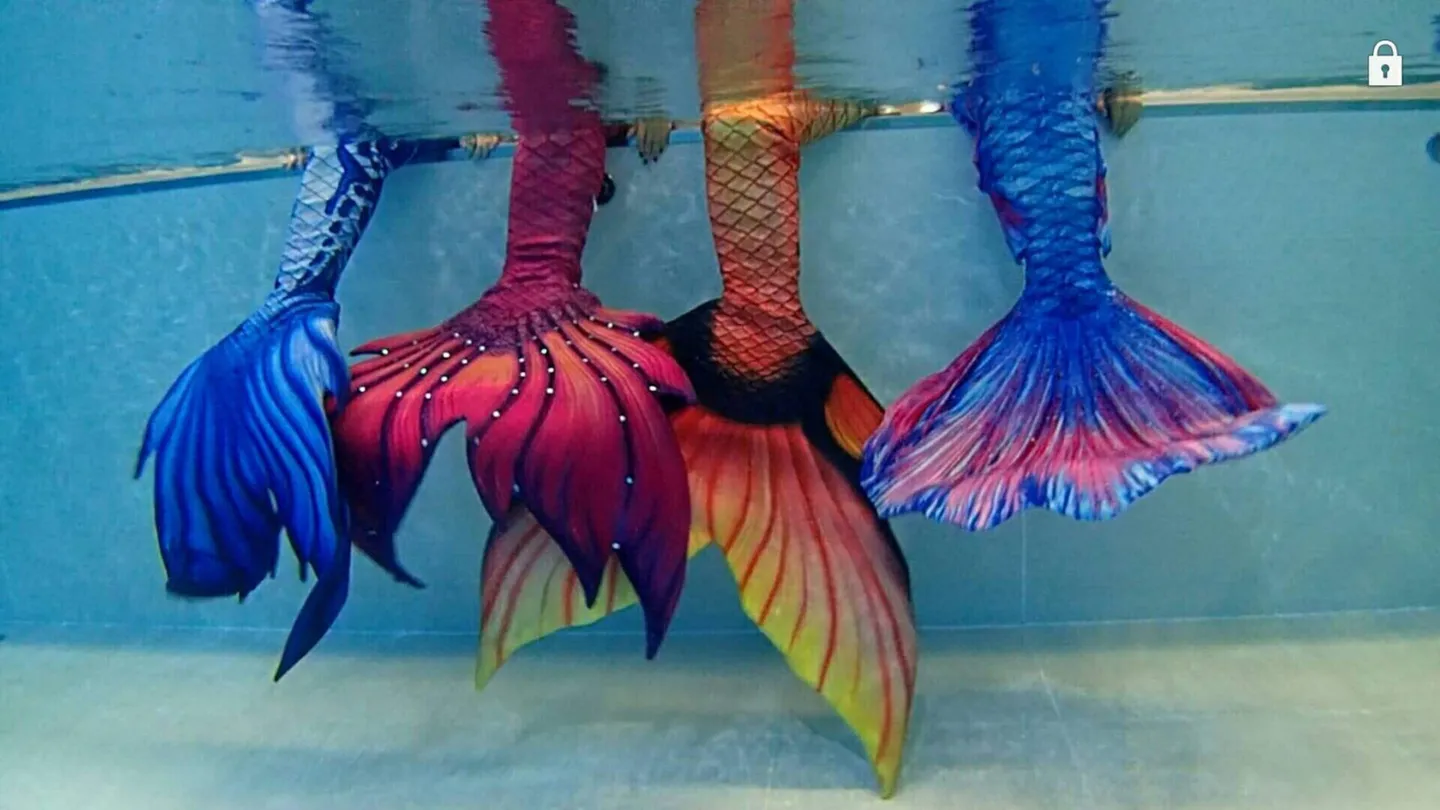
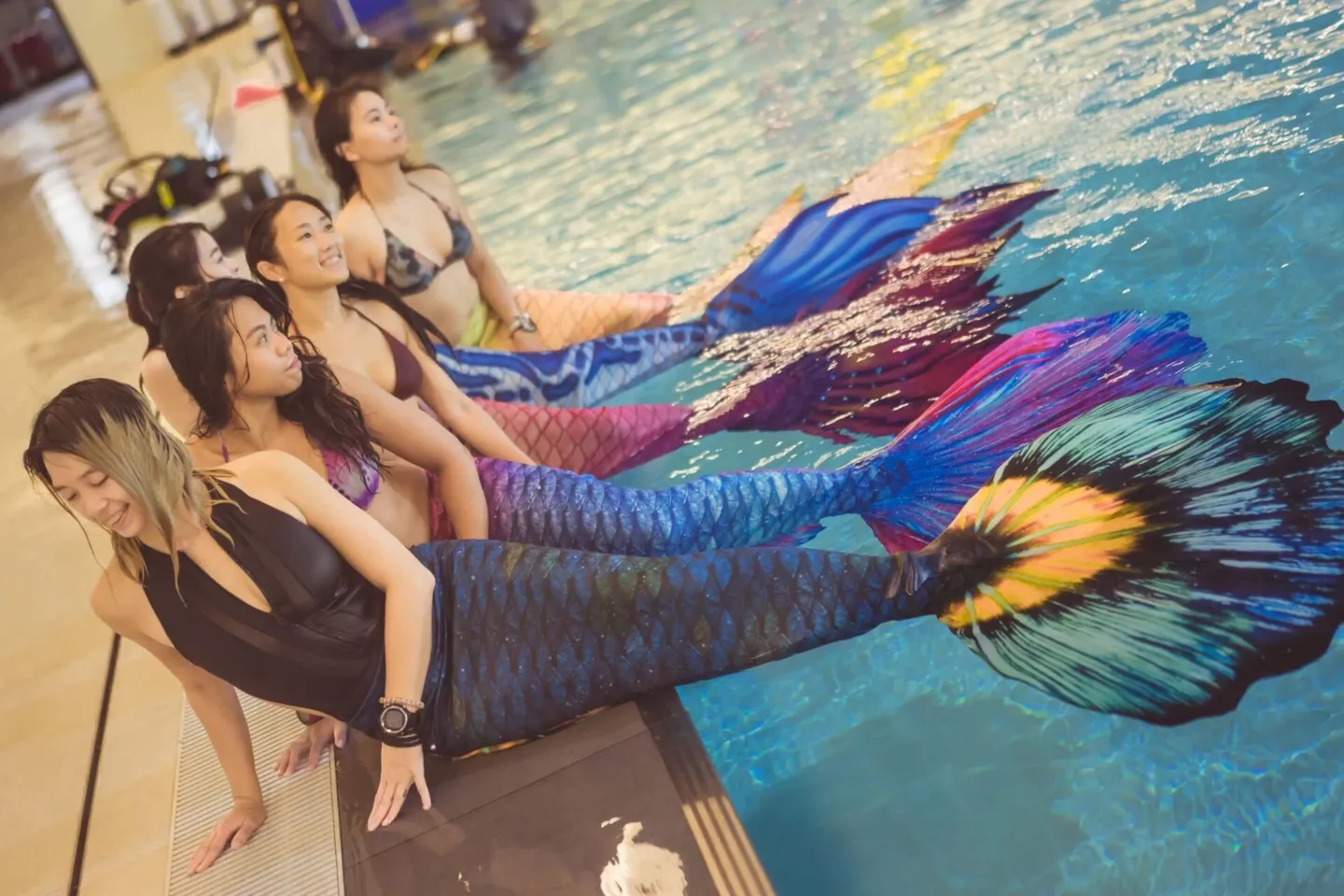
A dazzling, colourful mermaid tail — where every mermaid dream begins.
Photos courtesy of Mermaid Heart – Taiwan Mermaid Art Academy. Photography / Tsou Yuhsin (胖丁)
This is divided into static and dynamic elements. On the static side, students use neutral buoyancy control to practise holding a motionless pose in the middle of the water column — striking positions such as the Titanic pose, the needle, and the swan — giving photographers time to focus and shoot. The challenge is staying underwater as long as possible without taking a full breath of air; this is the paradox of static poses.
The core of dynamic training lies in learning how to dive down in the mermaid tail and move through the water with elegance: horizontal glides, rolls, backstroke, side-swimming, and tail-flicking. It also includes underwater expression training and simple interactions with the camera (such as a flying kiss or a heart gesture). If you want to look beautiful, go slow! A dynamic horizontal glide may look utterly graceful, but inside you're nearly running out of air.
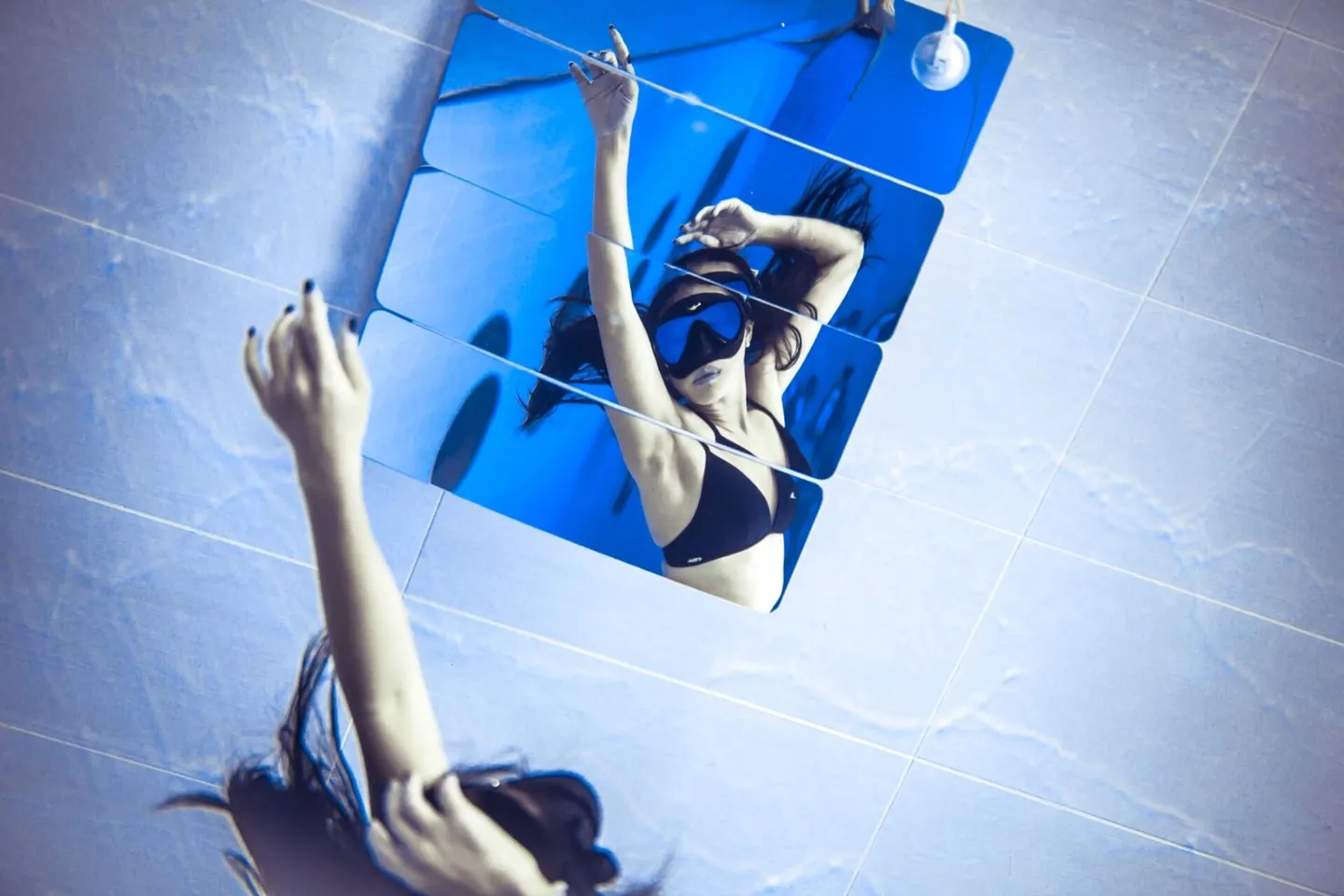
Practising the static needle pose through an underwater mirror.
Photos courtesy of Mermaid Heart – Taiwan Mermaid Art Academy. Photography / Tsou Yuhsin (胖丁)
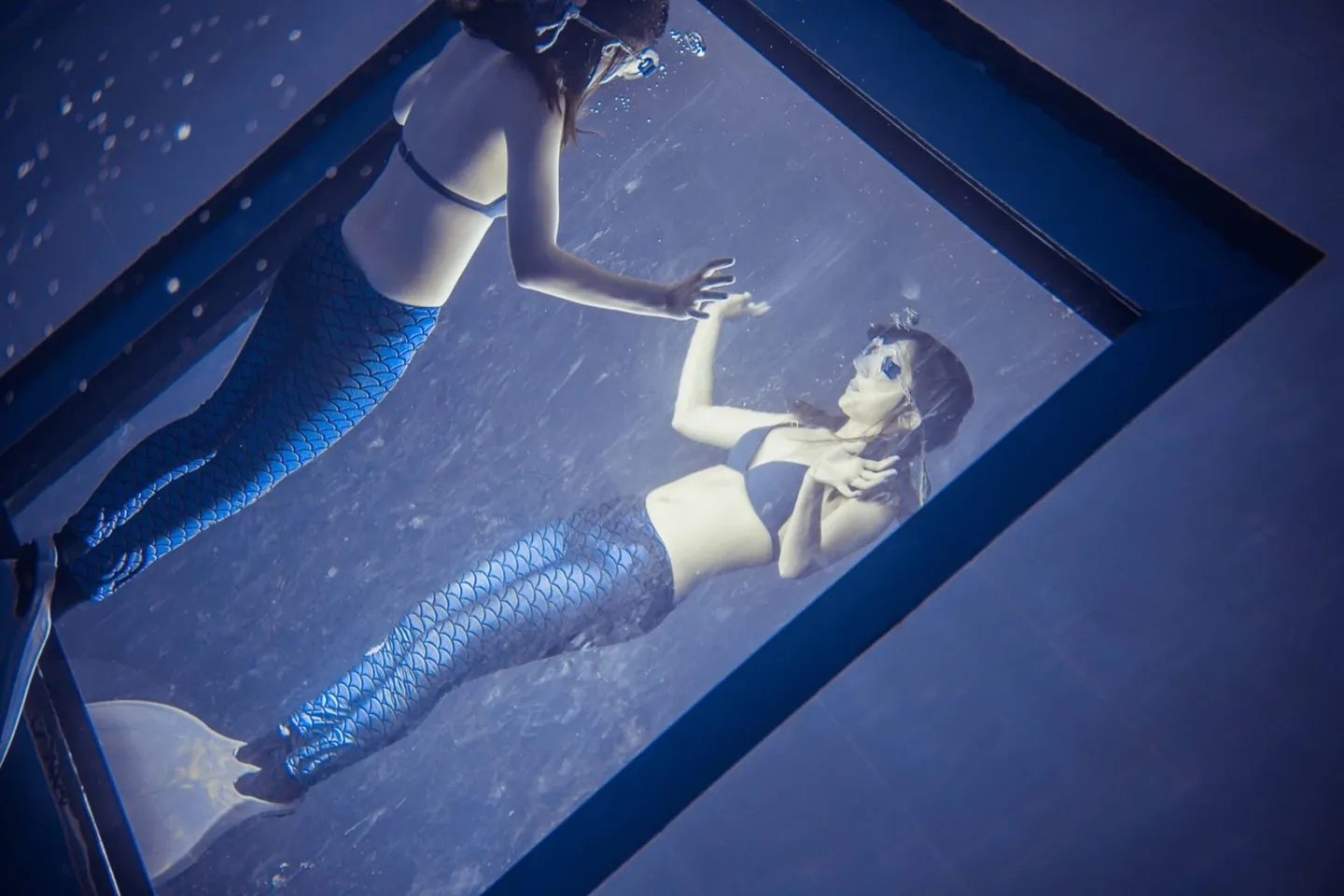
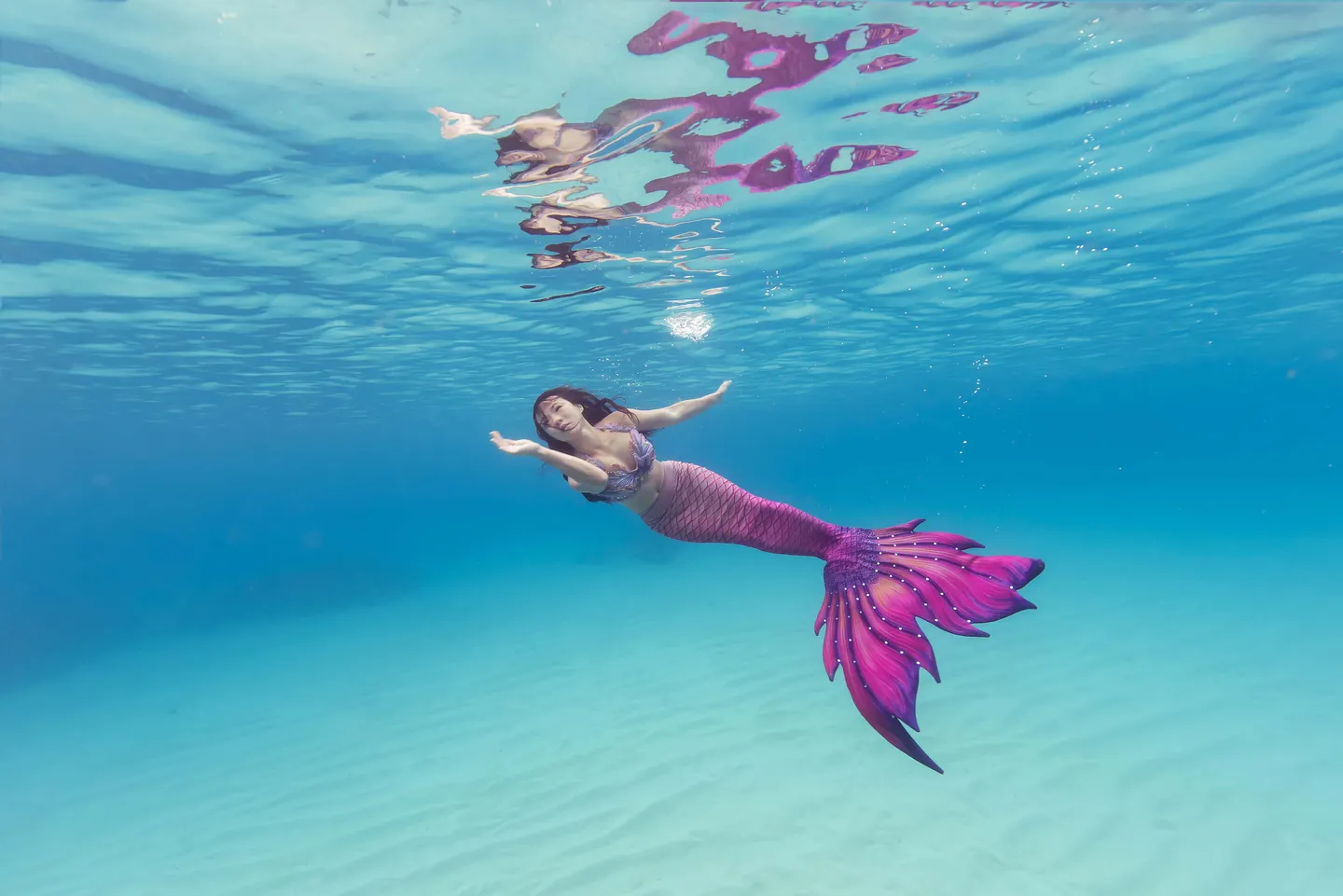
Being at peace with yourself, floating freely in a blue universe — entirely on your own terms.
Photos courtesy of Mermaid Heart – Taiwan Mermaid Art Academy. Photography / Tsou Yuhsin (胖丁)
Mermaiding Q&A
Q: Do you need a certification? What does the course cover?
A: The mermaid certification programme is divided into theory, body conditioning, and water sessions. This article covers the M1 beginner course — the foundational level of the mermaid training curriculum — which consists of a theory class, mermaid yoga, and three water sessions, totalling approximately 12 hours. The course fee includes venue admission, equipment rental, certification examination fee, certification application, and scale shorts, and costs approximately NT$15,800. Note that beginners do not go into the water in a full mermaid tail right away; instead, you wear scale shorts. This makes it easier for the coach to correct posture errors during training (such as bent knees), while also avoiding unnecessary physical contact that could arise from hands-on correction.
Learning Stages
M1: Focused primarily on learning — building the foundations for your life Under the Sea
M2: Entering the professional level — eligible for commercial performances and competitions
M3: Moving into open water — learning environmental assessment and underwater photography with marine life
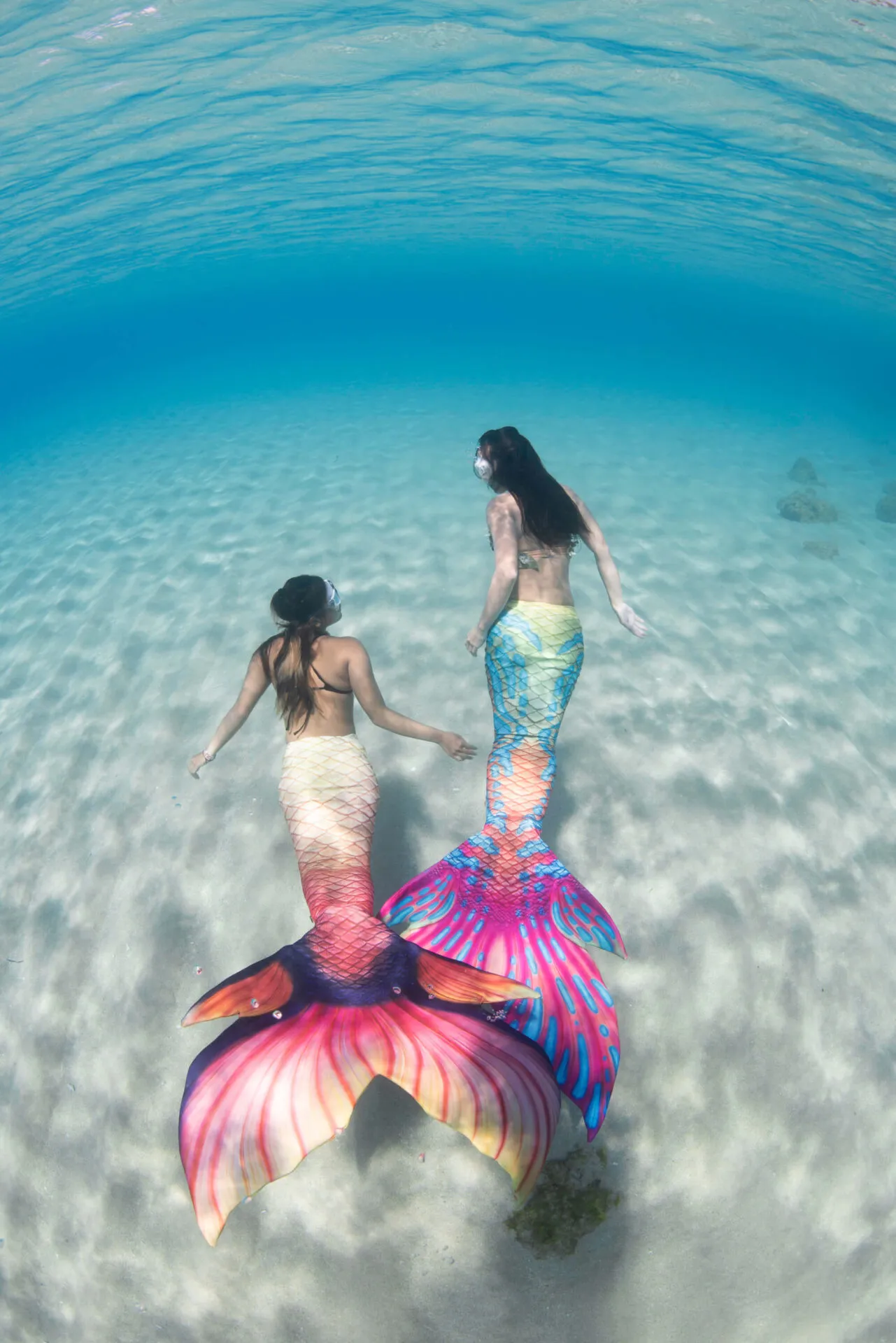
Mum, I saw a mermaid!
Photos courtesy of Mermaid Heart – Taiwan Mermaid Art Academy. Photography / Allen Lee
A Baby Mermaid's Inner Thoughts — The Reality Check
If you want to look beautiful, go slow! The coach's expressions and movements are so captivating that I kept losing focus staring at her — and maybe that's partly why I wanted to learn mermaiding in the first place: to find a little more of my own femininity.
Capturing great photos and videos doesn't happen overnight or in just a few classes. It all comes down to your mermaid technique and how consistently you practise. More practice absolutely makes a difference — but not everyone lives near a pool that's deep enough, or that allows monofins and offers rental equipment. Rubber monofins also tend to scrape the ankles and heels during training, so wearing a short pair of dive socks that cover the ankles is strongly recommended.
Once you have the basics down, the urge to buy things will inevitably kick in: thermal dive socks, a wetsuit with decent thickness for winter pool sessions. And if that sounds like an expense, just wait until you start ordering custom tails and accessories from abroad for the sake of beautiful photos — that's a deep rabbit hole indeed. But isn't every sport like this? There are always trade-offs. As long as you live by the philosophy of "joy in the doing," your investment will pay off. The most important thing is that you're happy.
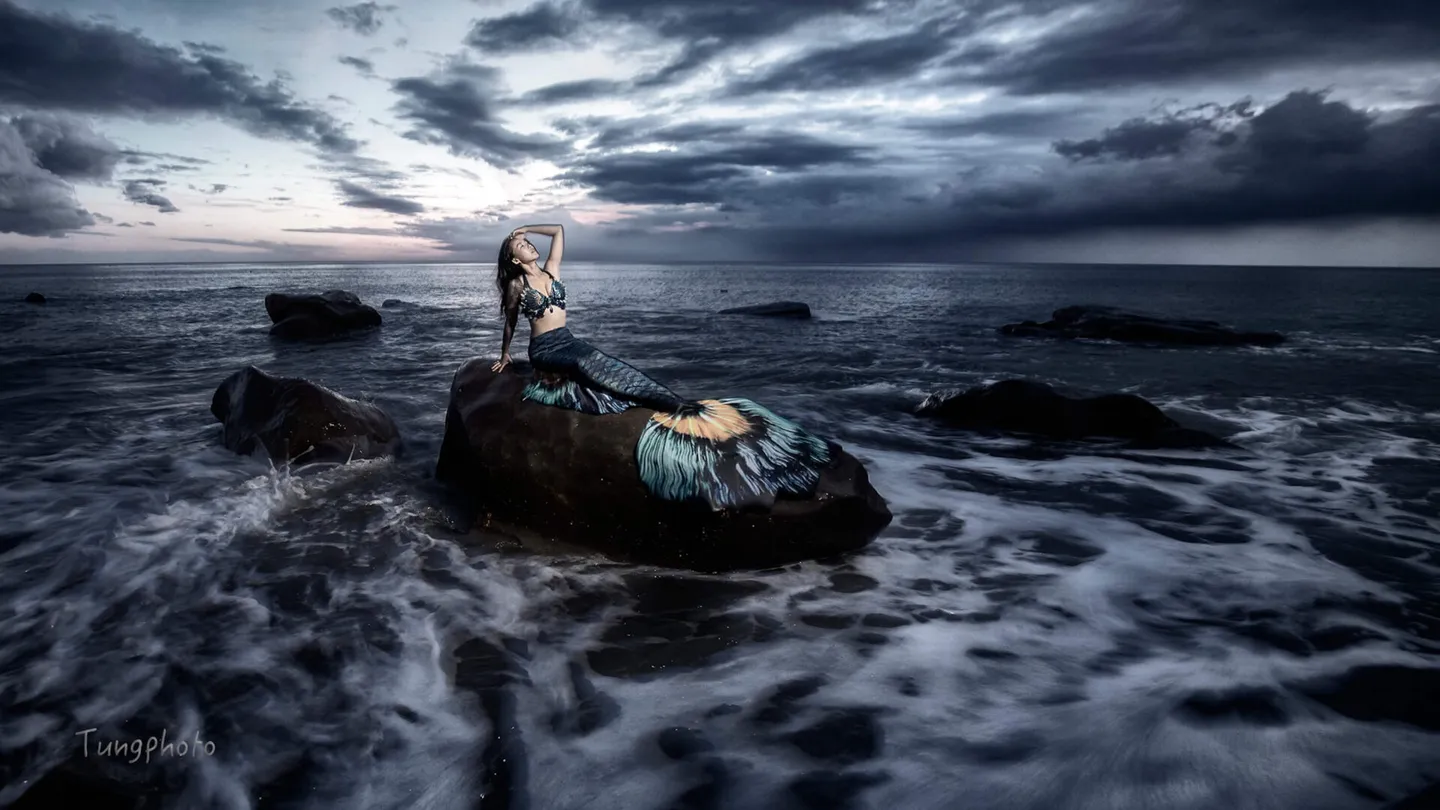
Photos courtesy of 攝粒子影像設計
Photography / 蘇國通
Further reading:

![[Desserts & Freediving] Your Burning Questions About Freediving – PinckyMommy](/_astro/IMG_0515_Z1VNCJ2.webp)