![[More Protected Zones Mean Nothing Without Enforcement!] Ocean Encyclopaedia: A Fresh Look at Marine Protected Areas — Part 2](/_images/c9a639425077-1440w.webp)
Contents(6)
- Are Taiwan's Marine Protected Areas Thriving?
- Let the Data Speak: The Stark Differences in MPA Effectiveness
- Wanghaixiang: The Top-Performing Marine Protected Area
- Three Key Ecosystem Indicators for Evaluating Marine Protected Areas
- Buy on Books.com.tw: Support Ocean Encyclopaedia
- Marine Protected Areas — Bonus Content
In our previous article, we introduced the importance of marine protected areas (MPAs) in a clear and accessible way (【Marine Protected Areas — The Best Answer for Ocean Sustainability?】Ocean Encyclopaedia: A Fresh Look at Marine Protected Areas — Part 1). However, we also planted a seed at the end of that piece, hinting that the real-world effectiveness of MPAs goes far beyond simply drawing lines on a map and making an official announcement. Ongoing enforcement and monitoring are among the most critical factors in determining whether an MPA truly succeeds. Rather than taking that on faith, this article draws on research by Dr. Li Cheng-Lu to let the data show us what success — and failure — looks like for a marine protected area.
Are Taiwan's Marine Protected Areas Thriving?
If the picture painted in our previous article were accurate, the waters around Taiwan should be teeming with life — so why do news stories about dwindling fish stocks keep appearing in the headlines? Recall the caveat we buried in that earlier piece: the definition of an MPA is actually quite vague, whether you look at the International Union for Conservation of Nature (IUCN) standard or the regulations announced by Taiwan's Fisheries Agency. In Taiwan, the government has delegated the power to define MPAs — including their scope, restricted activities, fishing methods, restricted periods, and even penalty authority — to individual county and city governments and the relevant maritime agencies.
In the early days, Taiwan lacked a single authority responsible for the ocean. The legislative logic that resulted from this gap means that a single stretch of sea can fall under the jurisdiction of multiple agencies. Take the Wanghaixiang Chaojing Bay Marine Resource Conservation Area as an example: the agency that pushed for the zone's designation was the Keelung City Bureau of Industrial Development; the rules governing its use fall under the Tourism and Transportation Bureau (including the controversial recent ban on night diving); enforcement is handled by the Coast Guard Administration; but penalty decisions loop back to the Keelung City Government. Fortunately, thanks to strict enforcement by the Keelung City Government and close attention from the broader diving community, the Wanghaixiang Chaojing Bay Marine Resource Conservation Area — though tiny in area — has become one of Taiwan's most successful MPAs.
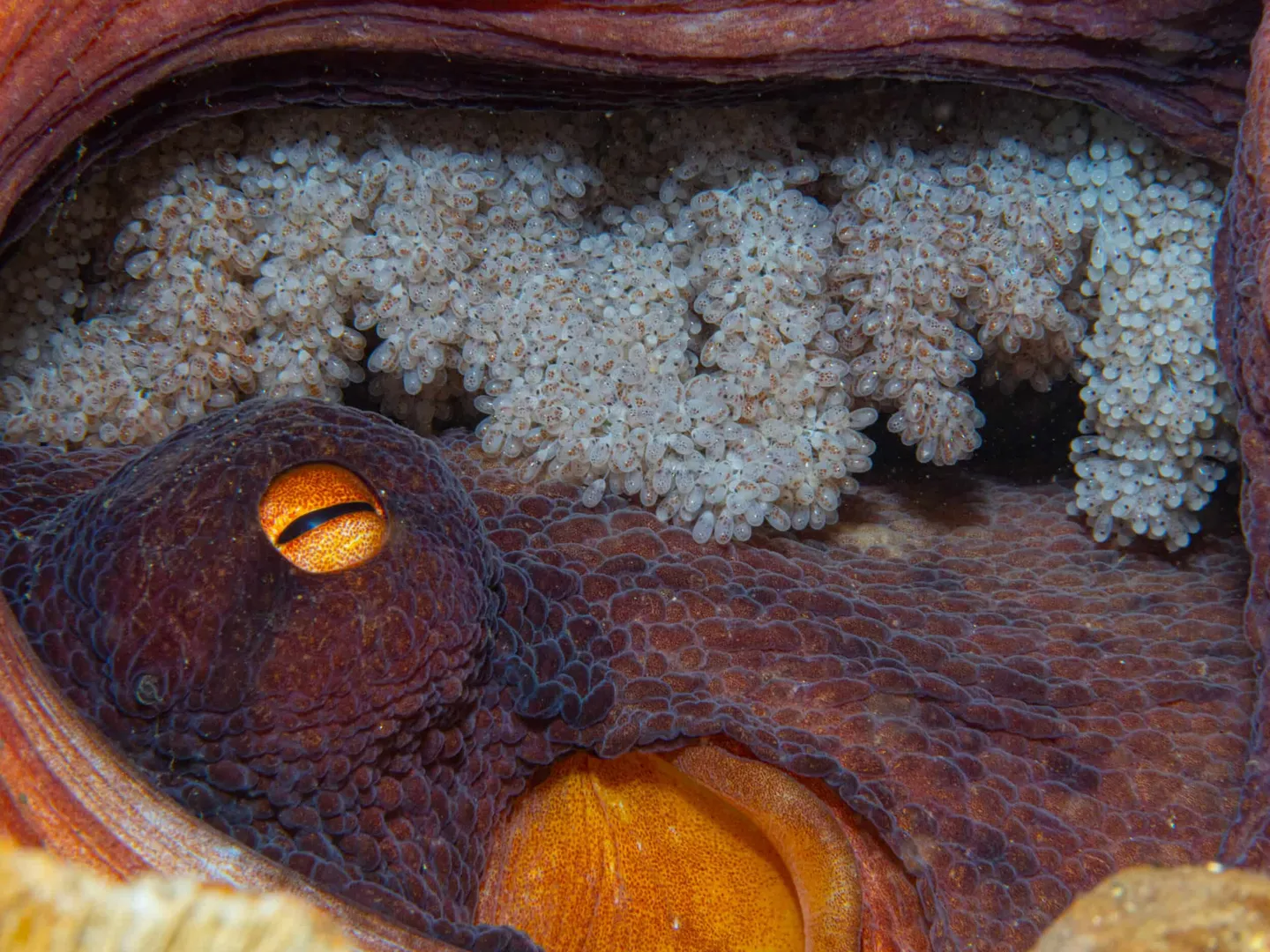
The ocean nurtures all manner of life — and it needs our help to protect it. Photo: 貓尾巴
But what about the fate of Taiwan's other protected areas? According to the Fisheries Agency website, MPAs established under the Fisheries Act, the National Park Act, the Wildlife Conservation Act, the Cultural Heritage Preservation Act, and the Tourism Development Act together cover approximately 30,035 square kilometres — roughly 46.15% of Taiwan's territorial sea area of 65,076 square kilometres. As for how well these zones are actually enforced, most people already have a pretty good idea.
Take the Houbihu Marine Resource Conservation Area, located between Nanwan and Maobitou in Kenting National Park, where divers armed with spearguns are occasionally spotted hunting fish. In recent years, incidents have also occurred in Green Island, Xiaoliuqiu, and Penghu, where local residents were found fishing inside protected zones; when the Coast Guard stepped in to enforce the law, officers were surrounded — and in some cases physically threatened — by fishermen. Under such disregard for the rule of law, poaching has only grown worse.
The problem of weak enforcement is multi-layered. Beyond unclear jurisdictions, it involves insufficient enforcement personnel, inadequate professional training, and interference from local elected officials. But there is an even deeper issue at the core: a general public indifference to regulations and a dismissive attitude toward ocean issues. Over the years, the author has known senior dive instructors and marine recreation operators who spend their days working in legitimate ocean-related businesses and their nights sneaking into protected areas to spearfish — a deeply disheartening sight.


Let the Data Speak: The Stark Differences in MPA Effectiveness
With all that said, what do the concrete results of establishing MPAs actually look like? Let the numbers tell the story. According to a 2018 ecological survey report published by the Fisheries Agency — covering artificial reef zones and aquatic organism breeding conservation areas in northeastern Taiwan — the data show that Wanghaixiang ranked highest among all surveyed northern MPAs in both fish species richness and individual fish counts, even though many of the other zones had been established far longer. Looking at the fish biomass bar charts, it is immediately clear that Wanghaixiang Bay's biomass in the subtidal, intertidal, and tidal pool zones far exceeds that of every other northern MPA.
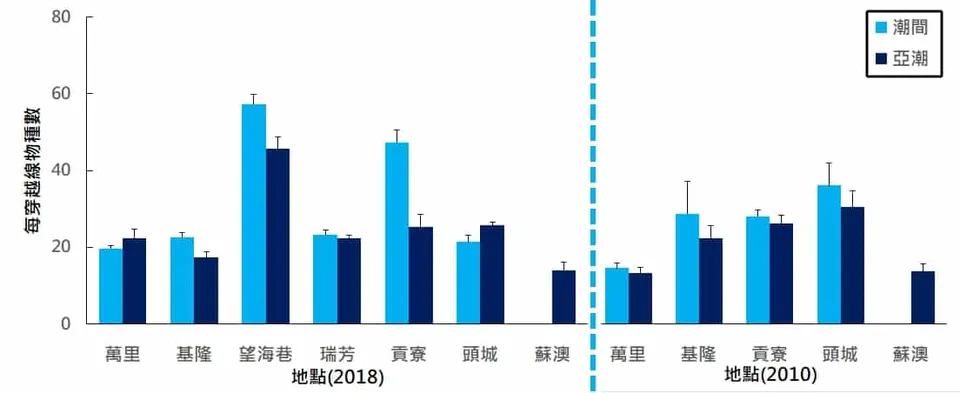
Bar chart comparing fish species richness across seven conservation areas along the North Coast and Northeast Coast, compared with 2011 survey data. Values represent transect mean ± standard error. Note: Wanghaixiang was surveyed as part of the Keelung Conservation Area in 2010. Source: 2018 Fisheries Agency ecological survey report on artificial reef zones and aquatic organism breeding conservation areas in northeastern Taiwan (Note: 2011 Wanghaixiang data are included within the Keelung Conservation Area figures).
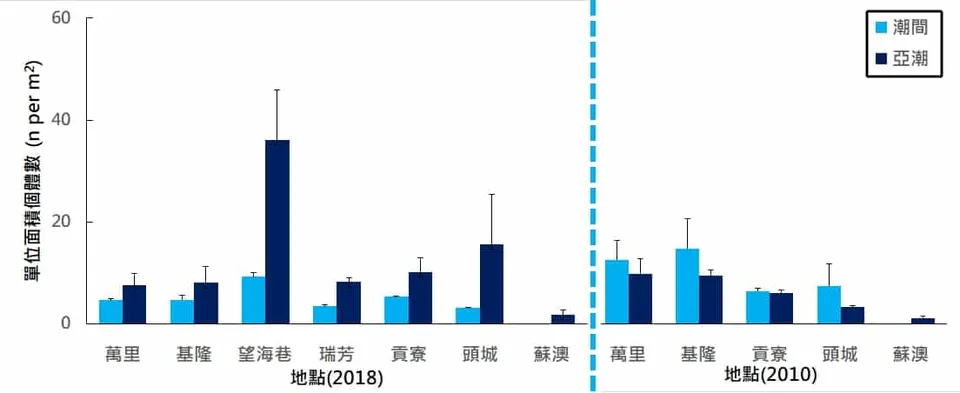
Bar chart comparing individual fish counts across seven conservation areas along the North Coast and Northeast Coast, compared with 2011 survey data. Values represent transect mean ± standard error. Note: Wanghaixiang was surveyed as part of the Keelung Conservation Area in 2010. Source: 2018 Fisheries Agency ecological survey report on artificial reef zones and aquatic organism breeding conservation areas in northeastern Taiwan (Note: 2011 Wanghaixiang data are included within the Keelung Conservation Area figures).
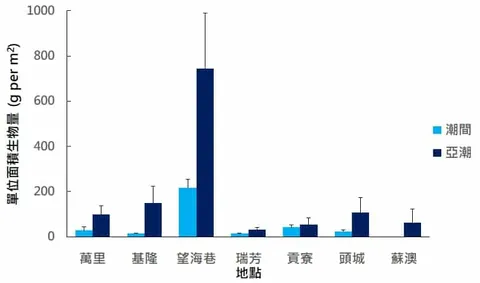
Bar chart of fish biomass across seven conservation areas along the North Coast and Northeast Coast. Values represent transect mean ± standard error. Source: 2018 Fisheries Agency ecological survey report on artificial reef zones and aquatic organism breeding conservation areas in northeastern Taiwan.
Beyond the differences between sites, comparing the 2010 and 2018 survey years reveals something remarkable. Just two years after the Wanghaixiang Bay Conservation Area was established — that is, by 2018 — species richness had doubled compared to 2010, while individual fish counts had grown fivefold. This rate of growth was up to four times greater than that of other northern conservation areas. In terms of fish biomass, Wanghaiziang Bay not only had more fish overall, but also a higher proportion of large fish exceeding 30 cm in length than any other protected area. By 2018, its fish biomass was 18 times that of 2010, and eight to twenty times that of other conservation areas.
Wanghaixiang: The Top-Performing Marine Protected Area
Although the Wanghaixiang Conservation Area has only been in existence for two years and covers an area smaller than a single football pitch, strict Coast Guard enforcement combined with diver-led monitoring has propelled it to the top of the rankings among the seven northern MPAs. Other protected areas — such as those at Keelung's Waimushan, Wanli's Yehliu, and Ruifang's Shen-Ao — have been designated on paper, but with no active management and rampant poaching, their fish populations have declined year after year. The 2018 biomass data for these sites showed values of less than 50 grams per unit area. The numbers make one thing abundantly clear: a properly enforced MPA is highly effective at ecological restoration and habitat diversification. Sustaining those results, however, depends on long-term monitoring. We urge the government to maintain its focus on marine conservation, allocate sufficient research funding to survey the MPAs covering 46.15% of Taiwan's 65,076 sq km territorial sea, and call on the Ocean Affairs Council — established in 2018 — to shoulder its full responsibility as Taiwan's unified ocean authority.
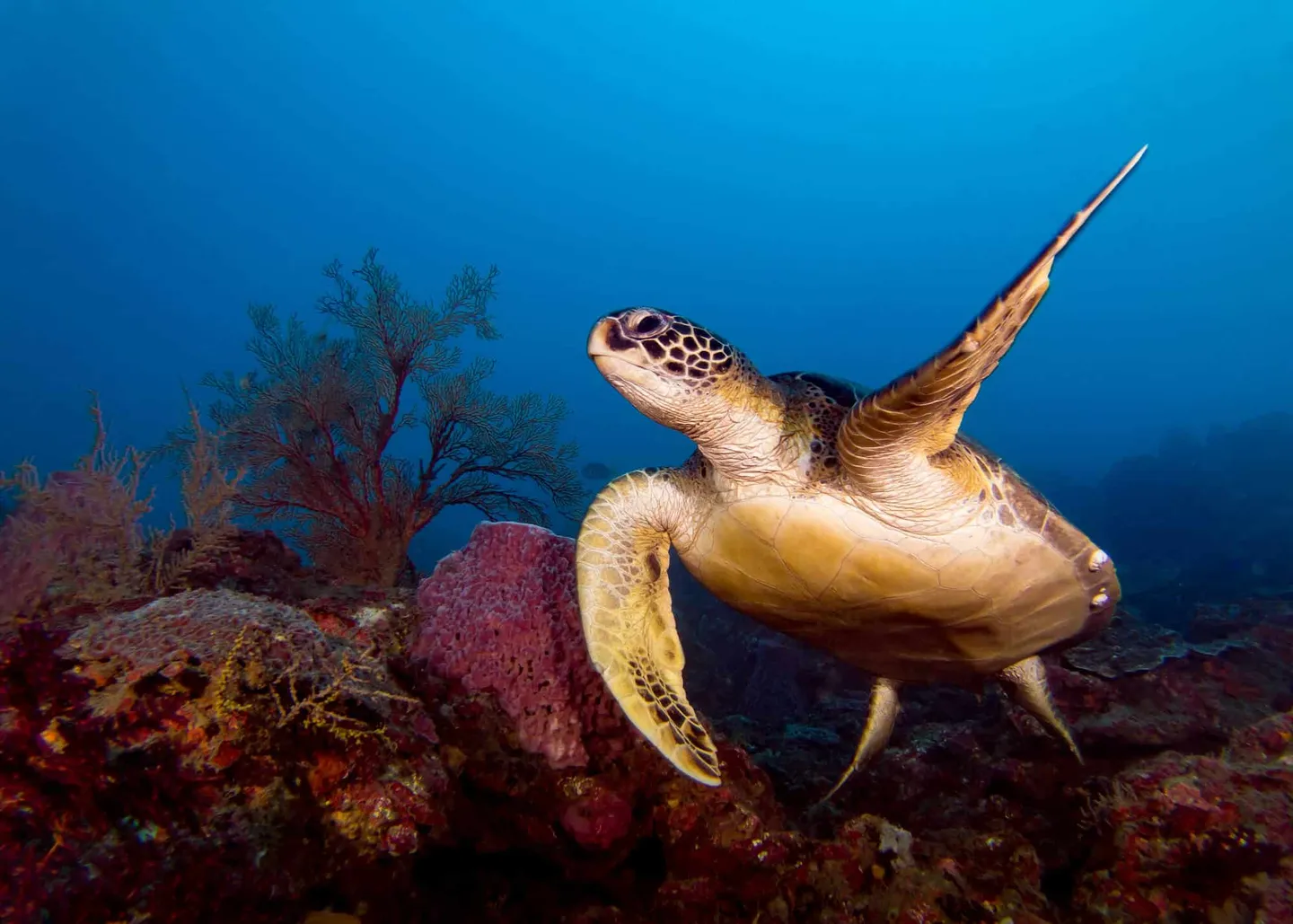
A healthy ecosystem should attract a diverse community of species. Photo: 京太郎
Three Key Ecosystem Indicators for Evaluating Marine Protected Areas
From the data above, we identified several critical metrics for evaluating an MPA: species richness, individual fish counts, and biomass per unit area. These three indicators reveal the overall health of a marine ecosystem. A complete coral reef ecosystem requires producers, a diversity of consumers, apex predators, and specific functional groups that keep algae in check and signal coral health — all of which are essential markers of ecosystem vitality. Geographically, surveys are divided into three zones: subtidal, intertidal, and tidal pools. In our next article, we will take an ecosystem-based approach to explore what indicator species a healthy marine ecosystem should contain — so that next time you head out for a dive or a spot of marine observation, you'll know exactly how to read the health of the waters around you.
Before we sign off, allow us a moment to share something we're proud of. If you're a lover of the ocean, or simply want to deepen your understanding of the sea, we highly recommend BlueTrend's very own publication: Ocean Encyclopaedia — Northern Taiwan Edition!
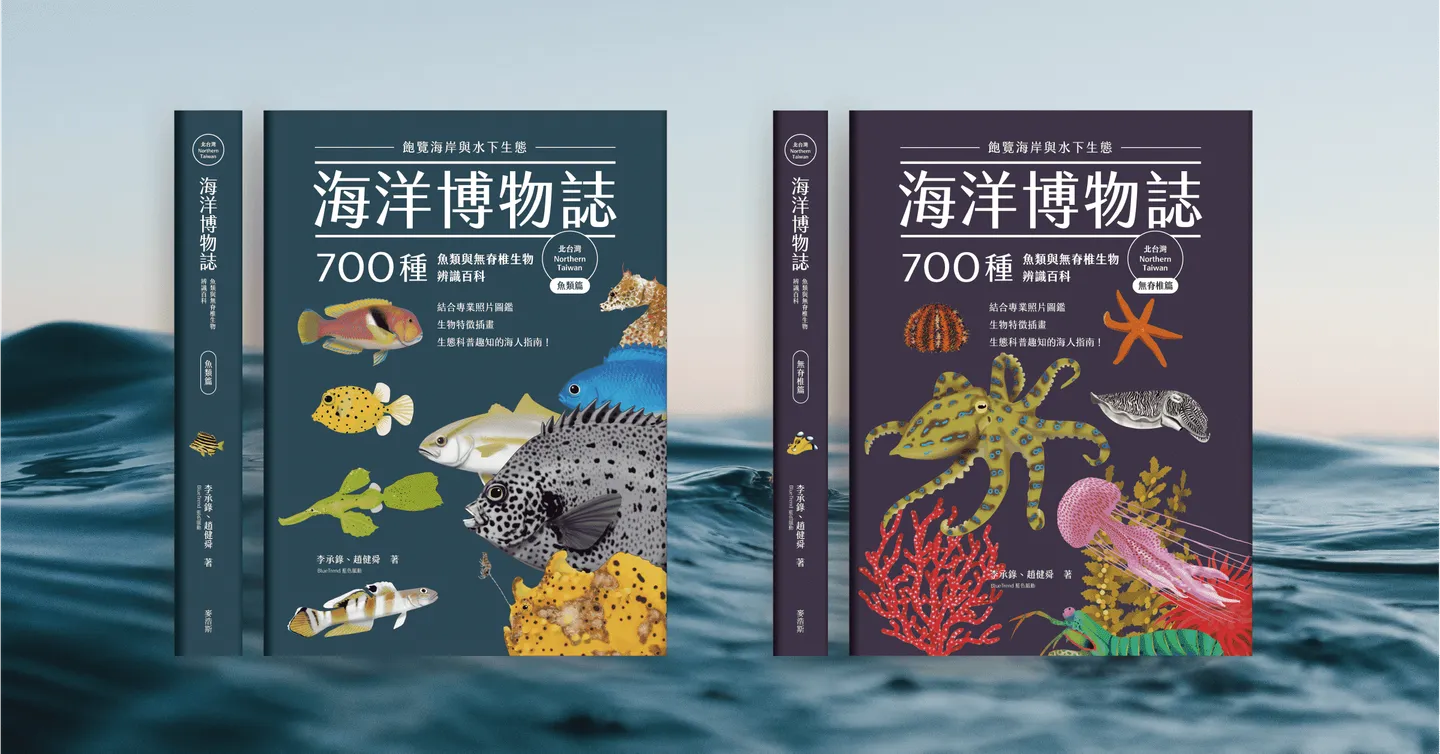
Buy on Books.com.tw: Support Ocean Encyclopaedia
Cover illustration: Lin Qun
The content of this article was reviewed and professionally revised with the assistance of Dr. Li Cheng-Lu (Wox Lee).
Marine Protected Areas — Bonus Content
Above, we examined data from several northern Taiwan MPAs. Now let's also take a look at the underwater ecosystems of southern Taiwan — including Xiaoliuqiu, famed as a paradise for sea turtles, and the waters around Kenting.
Xiaoliuqiu survey zones:
-
Northwest Zone = Vase Rock area
-
Shanfu Zone = near Shanfu
-
Island Circuit Zone = near Dafu West Fishing Harbour
-
Yufu Zone = near Lobster Cave / Agui Diving area
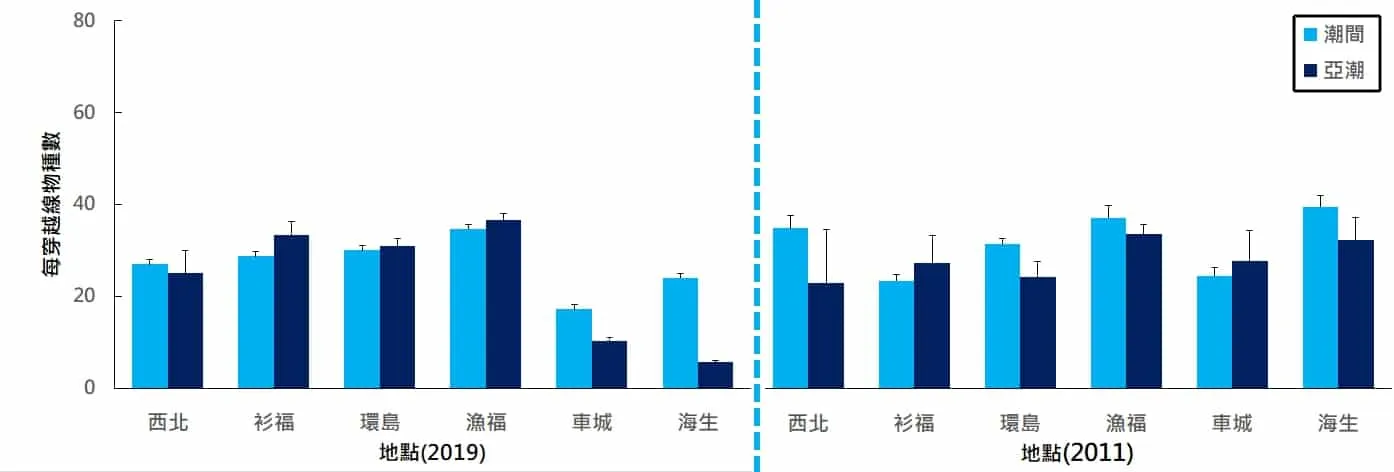
Species richness along transects at various southern sites. Research: Li Cheng-Lu
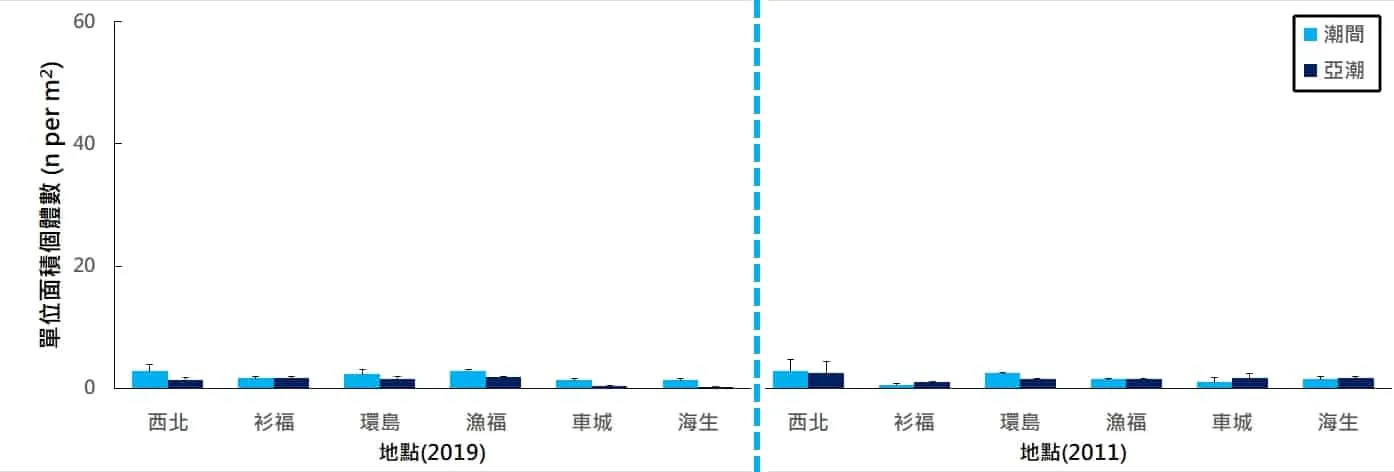
Individual fish counts per unit area at various southern sites. Research: Li Cheng-Lu
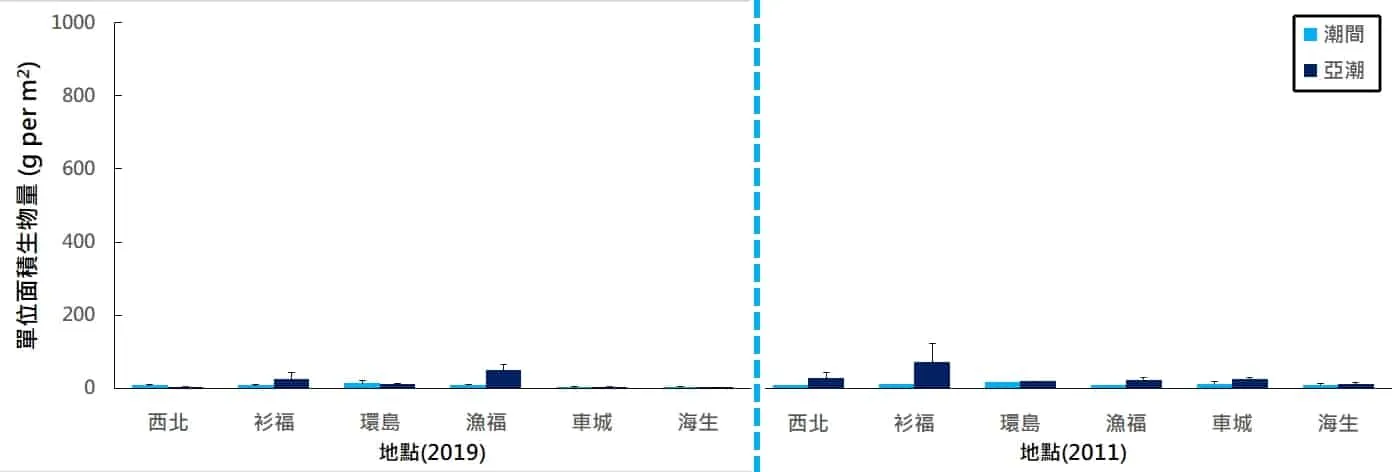
Biomass per unit area at various southern sites. Research: Li Cheng-Lu
Southern Taiwan is home to a diverse coral reef ecosystem, yet the figures above fall well short of those recorded in the north — and those of us who spend time in the water already know why. We hope that one day, the BlueTrend Ocean Encyclopaedia team and our community of ocean-loving friends can work together to survey and protect the precious marine ecosystems of southern Taiwan, and watch these numbers improve year after year.
Further Reading:

![[Are Marine Protected Areas the Best Answer for Ocean Sustainability?] Ocean Almanac Takes You Back to Basics on Marine Protected Areas — Part 1](/_astro/%E4%BA%9E%E6%BD%AE%E5%B8%B62-scaled_28wA0p.webp)