The Editor says: Many tourists make a special trip to Oslob in the Philippines just for the chance to swim with Whale Sharks — and this kind of tourism has utterly transformed what was once a quiet fishing village, benefiting countless families in the process. At the same time, it has drawn sharp criticism from those who care about natural ecosystems, who argue that provisioning wild animals will alter their behaviour and make it impossible for them to return to life in the wild. This situation can be found at dive sites in many countries around the world. Whether it is ultimately good or bad remains unsettled in the short term, but only through deeper understanding can we truly grasp the impact of such practices. Is feeding wildlife really a necessary evil in promoting marine recreation? This article is reprinted in full from the Why not Australia Facebook page.
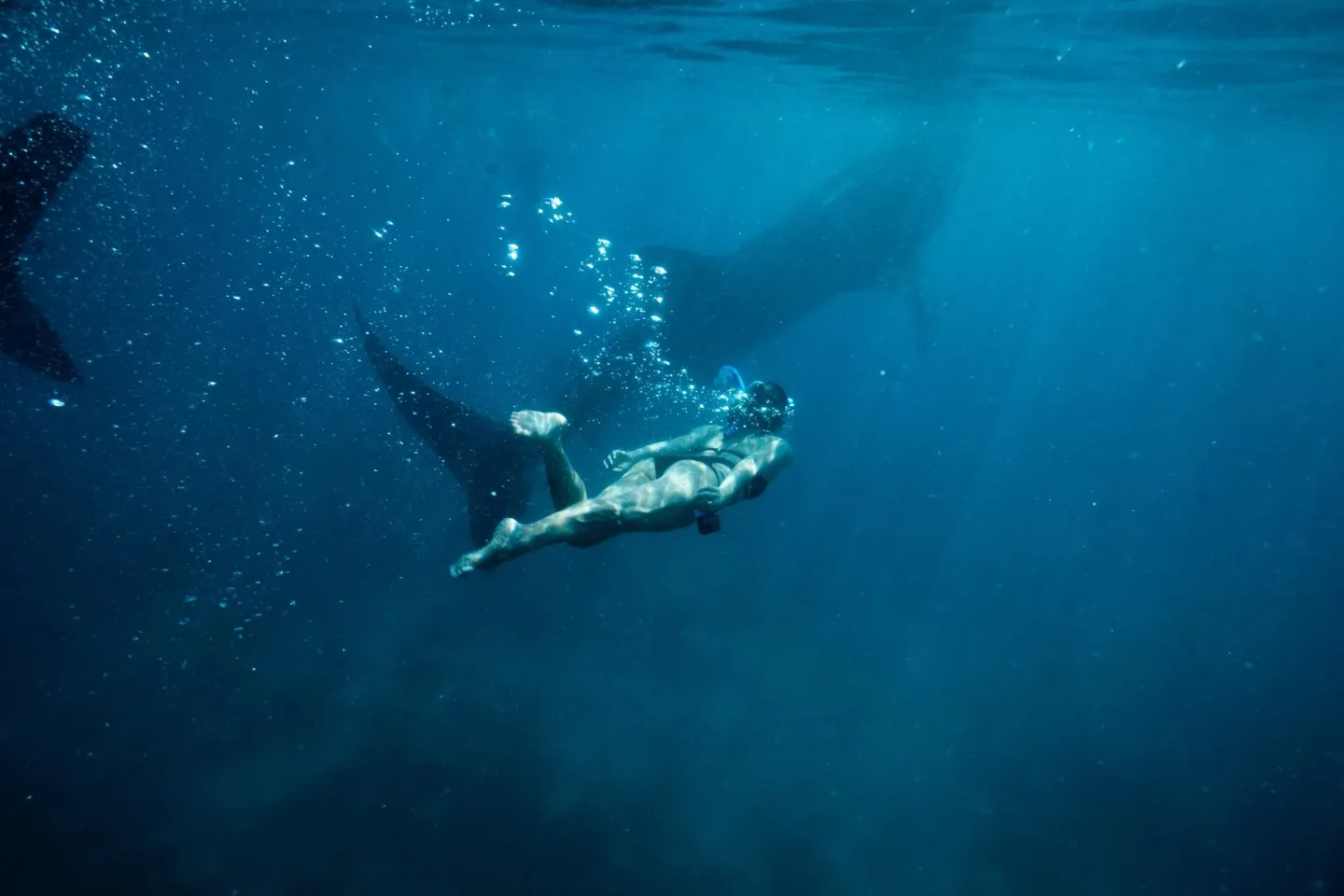
Swimming with Whale Sharks
Over the past few years I've been seeing more and more people head to Cebu,
coming back with photos and videos of themselves swimming alongside Whale Sharks.
It wasn't until I was about to go to Cebu myself that I took a serious look at the facts,
and I wanted to share what I found.
Whether you've been or not,
whether you've seen a Whale Shark or not,
this is something genuinely worth thinking about again.
There's no grand reason I want to raise this —
it's simply because the Whale Shark has always been my first love in the ocean.
In Oslob, the most famous draw is a 100% guaranteed Whale Shark encounter,
and according to an article published by (phillinestravelpackage.com),
that article reveals what the Whale Sharks of Oslob are actually facing,
and explains why that travel platform no longer promotes Oslob Whale Shark swimming tours.
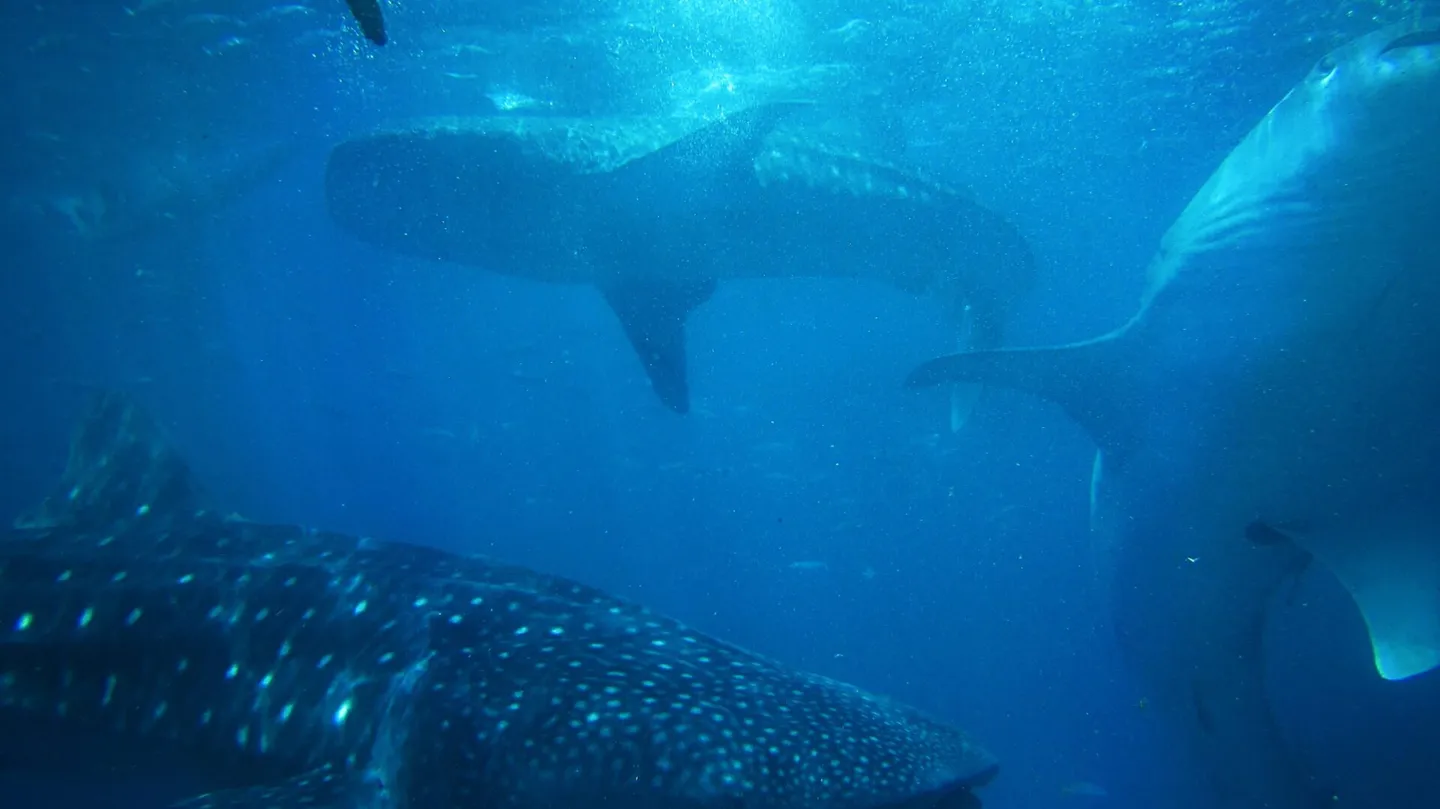


The Problems with Whale Shark Encounters in Oslob
- The impact of provisioning on migration patterns
Like many other fish, Whale Sharks are highly migratory. The primary drivers of their migration are food and reproduction. In summer and spring, the majority of Whale Sharks travel along the coastlines of tropical regions — the Gulf of Mexico, Australia, Africa, Southeast Asia, and elsewhere. Their annual migration routes span thousands of miles; data from 2018 even recorded a Whale Shark named "Anne" travelling more than 20,000 km. Although the precise purpose of their migration is not fully understood, we know Whale Sharks are a species with established migratory patterns. Yet the Whale Sharks at Oslob are staying longer and longer, because the local fishermen and operators feed them — causing these sharks to abandon migration altogether. One individual named "Mr. Bean" was recorded staying at the site for 392 days.
It is clear that this provisioning behaviour has interfered with their migratory patterns. For an already endangered species like the Whale Shark, this carries serious consequences for reproduction. Female Whale Sharks seek out a "suitable" location to give birth — somewhere with ample food and safety — in order to maximise their offspring's chances of survival. When they stop migrating, this reproductive cycle is disrupted, reducing the survival rate of their young, and pushing an already endangered species closer to the edge.
-
- Changes to feeding behaviour
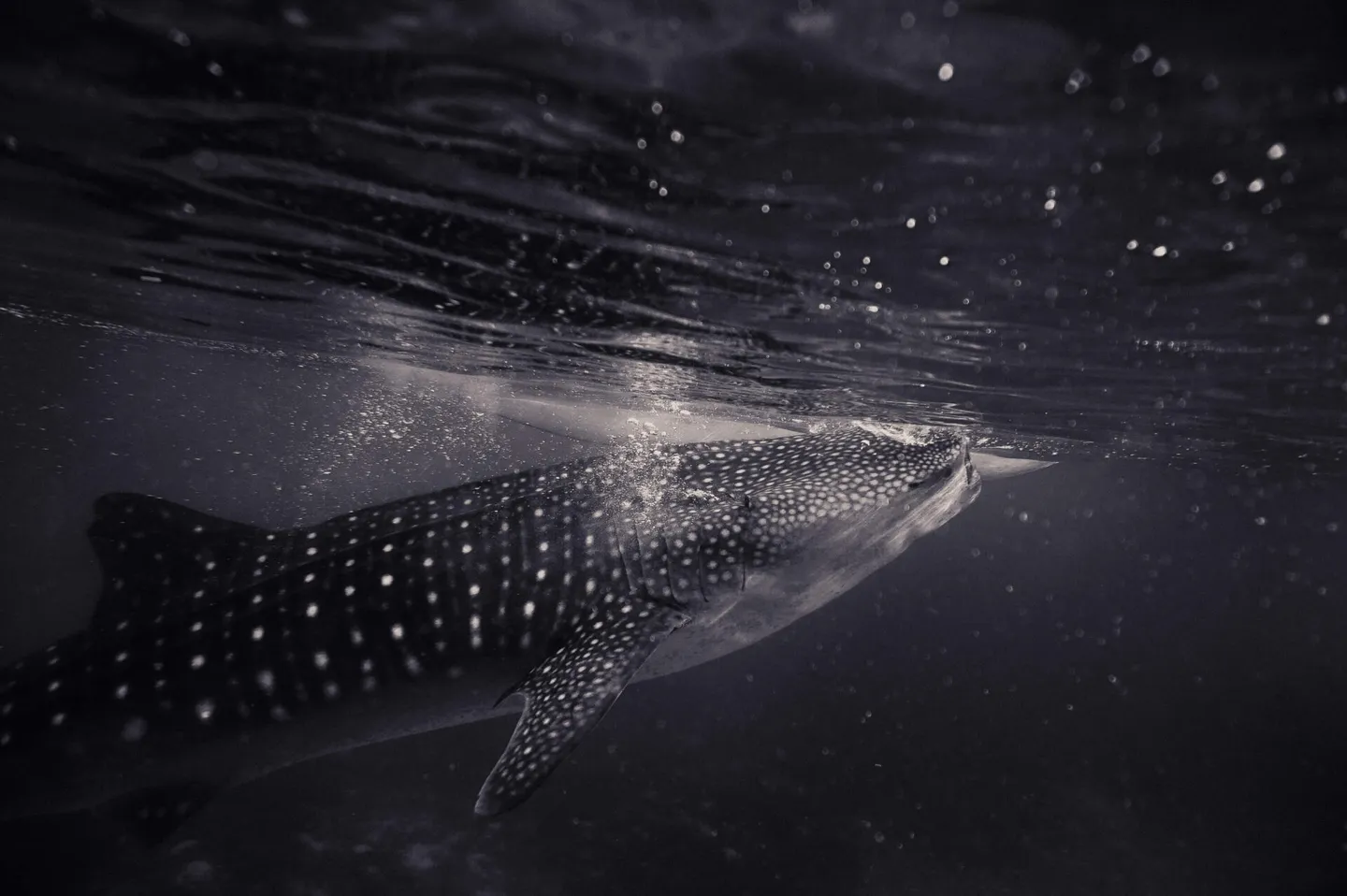
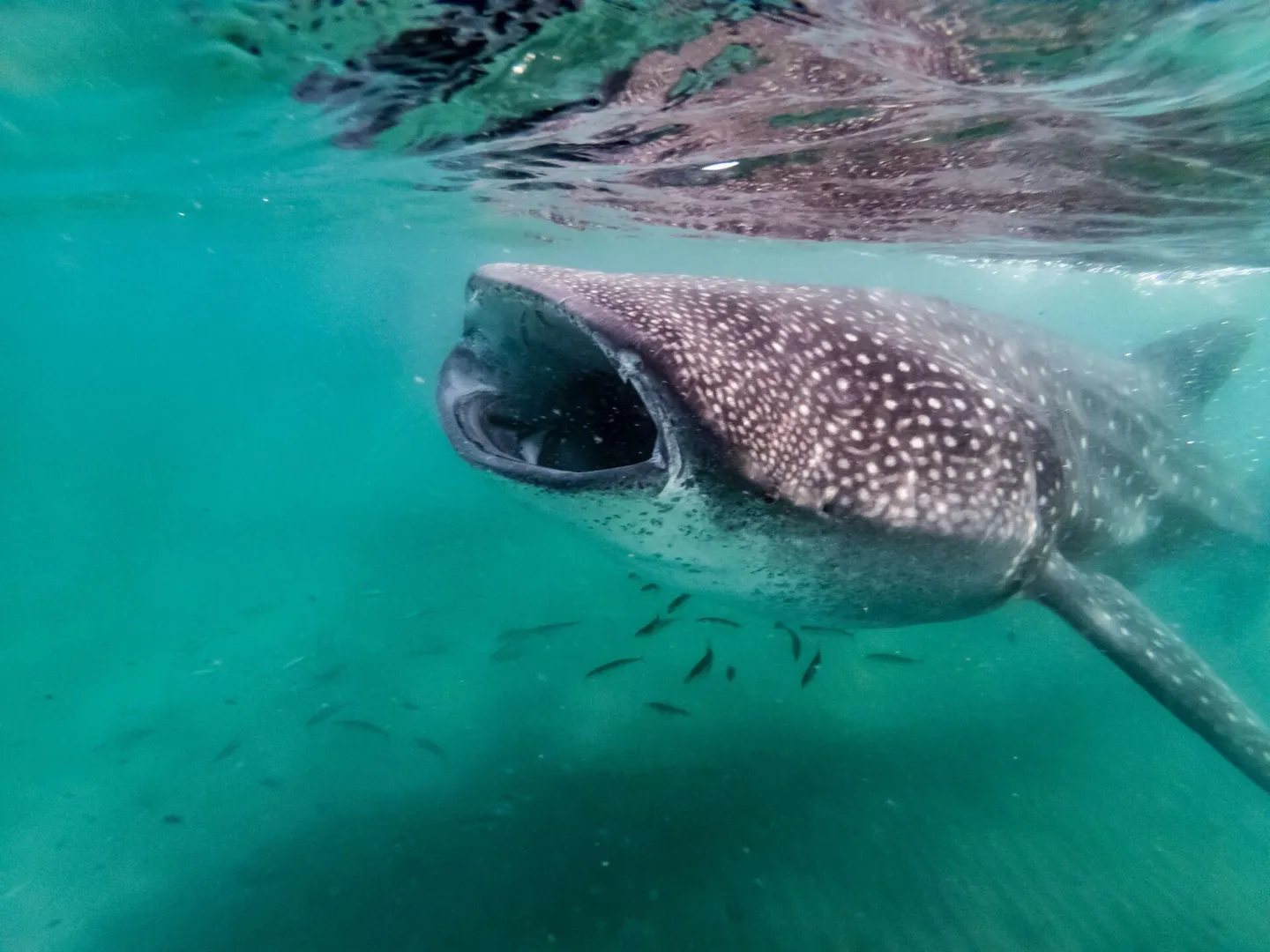
Whale Sharks are filter feeders. Their natural feeding method relies on a versatile suction filter-feeding method, which allows them to capture larger, more active prey as well as aggregations of zooplankton. It may also mean they filter less water, enabling them to concentrate and consume plankton more efficiently.
Put simply, a Whale Shark sucks in a huge mouthful of seawater, then filters it out through its gills, retaining whatever it wants to eat. Their primary diet consists of plankton, with occasional small animals such as krill, jellyfish, sardines, squid, and crab — as long as they are small enough.
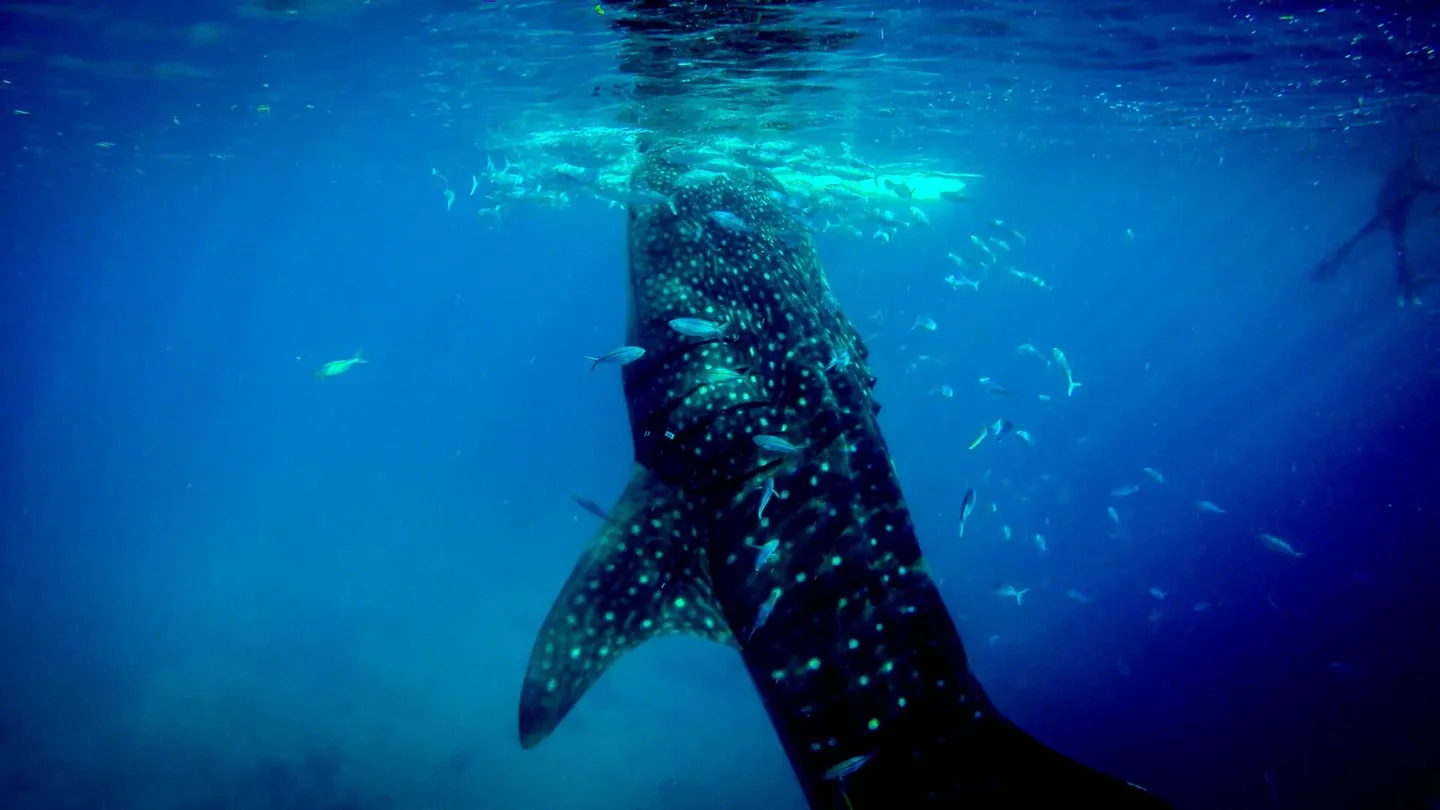
However, marine biologists and scientists observing the site have noted that the Whale Sharks at Oslob no longer display this natural feeding method. Instead, they have been observed engaging in "vertical feeding position," "passive feeding," and "surface feeding behaviour" — none of which are the most natural feeding modes for Whale Sharks. While these behaviours have been documented in individual animals elsewhere, they are not their primary way of eating.
-
3. Injuries
The Whale Sharks in Oslob have been conditioned to associate boats with food. Even when they venture outside the interaction zone or feeding area, they have developed the habit of rushing toward any boat expecting a meal. They cannot distinguish which vessels are there to feed them and which are not. The greatest danger arises when they encounter motorised boats outside the feeding zone and charge toward them without hesitation. Scientists have documented numerous injuries on Oslob Whale Sharks caused by collisions with motorised vessels. One case involves a Whale Shark named Fermin, who sustained multiple wounds on his face and around his eyes; he stayed away from the interaction zone for several days because he had begun to associate pain with approaching boats. While most wounds healed, the damage to his eyes turned out to be permanent.
-
4. Nutritional quality of the food provided
As mentioned above, Whale Sharks eat plankton along with small crustaceans such as krill, crab larvae, copepods, and small fish like sardines, anchovies, and mackerel. Occasionally they also take larger prey such as small tuna, albacore, and squid (Compagno, 1984; Last & Stevens, 1994), as well as phytoplankton and macroalgae.
The Whale Shark is the largest fish in the world — the size of a bus — and accordingly eats enormous quantities of food. On average, they spend 7.5 hours a day feeding, consuming roughly 44 kg of plankton. Yet in Oslob, they are fed only small shrimp; reports indicate that if there are no tourists present, the sharks are not fed at all.
Because feeding from a boat is an inefficient delivery method, the Whale Sharks there are unable to obtain "sufficient" food. Since their diet is almost exclusively sakura shrimp, their nutritional intake falls far short of that enjoyed by wild individuals with access to a varied diet.
To make matters worse, rising prices for sakura shrimp in Oslob have led more and more fishermen to source them from distant locations. The long transport distances compromise the quality of the shrimp, and the sharks frequently refuse to eat the lower-quality food — leaving them in a state of chronic hunger and even malnutrition.
-
5. Visitors to Oslob are not properly educated on how to interact with wildlife
Republic Act 9147 explicitly states that hunting, selling, or harassing Whale Sharks is illegal. Yet in Oslob, this law is largely not enforced. Some tour operators fail to inform visitors of the relevant rules and guidelines, and do not emphasise why these animals need protection. This disregard for regulations makes life increasingly difficult for the local Whale Sharks.
According to a study by LAMAVE, researchers tallied physical contact between people and Whale Sharks, recording 1,823 instances of touching activities during the survey period, totalling 3,849 minutes. That works out to a Whale Shark being touched 29 times per hour, with regulations being violated 97% of the time. When violations occur, there is no enforcement or penalty.
-
Articles listing "five reasons you shouldn't swim with Whale Sharks in Oslob" have been circulating for years — yet among the people around me, visitor numbers show no sign of dropping.
Some people simply don't care, but I suspect a far larger proportion simply don't know. I often hear people returning from the trip telling me: "I went swimming with Whale Sharks — they were so cool, but the water smelled awful."
Most people have no idea what lies behind the practice of Whale Shark provisioning, or what it actually means for the sharks. All you know is that you need to be in the first group out on the water before 8 a.m., because it only gets less pleasant after that.
And why is it so much worse if you're not in the first group? Because the underwater environment is already in poor shape — you're only down there for a few dozen minutes and you can feel it. Now imagine the Whale Sharks that have stopped migrating because of the feeding. How long do they have to stay in those conditions?
From a conservation standpoint, this is genuinely a deeply troubling situation. So why is it allowed to continue?
Looking at It from Another Angle
A recently published study (December 2018) examined just how significant the economic benefits of Whale Shark tourism have been for local fishermen. I've heard many people say — and I've told myself this too — "living like that is still better than dying; if they didn't have the Whale Shark tourism, they would be destitute. Better for them to be alive like this than not at all."
A dive company established in Oslob in 2011, after pivoting to Whale Shark tourism, attracted more than 75,000 visitors in its first five years. Ticket revenue reached US$1,840 — approximately NT$567 million in total.
Before the Whale Shark tourism model began, Oslob had long struggled with food insecurity, with most residents dependent on fishing for their livelihoods. When currents were too strong to go out to sea, there was simply no income. Chronic overfishing and coral reef destruction were the root causes of the food supply problem, and beyond food insecurity, a cascade of social issues followed — child labour, lack of healthcare, limited access to education, and more. When survival is the priority, environmental concerns inevitably take a back seat.
Once Whale Shark ecotourism began, there were of course changes to the local ecosystem — but local fishermen came to understand that a living Whale Shark generates far more income than a dead one. The revenue brought by the sharks has helped lift the community out of poverty, providing better food, healthcare, education, and housing, while also helping prevent coral reefs from being destroyed by destructive fishing practices.
Beyond protecting Whale Sharks, the income generated by this form of tourism has also funded infrastructure, sanitation, education, and social welfare programmes in Ta-awan and Oslob, and helps manage five marine protected areas (MPAs).
-
Oslob's Whale Shark tourism has clearly transformed the local economy — giving children the means to go to school, access medical care, and simply have enough to eat.
But what about the Whale Sharks? Because of the provisioning, they are essentially trapped there. They no longer feed in a "normal" way, their young have no chance to grow up in a safe, food-rich environment, and the adults themselves can't even eat their fill.
No one is the villain here. Doing what it takes to put food on the table is only human. In this situation, education and management are the fundamental solutions. Stricter regulation, teaching local fishermen how to conduct ecotourism without altering the natural behaviour of the animals, and more comprehensive laws — these are what can make Whale Shark ecotourism truly sustainable.
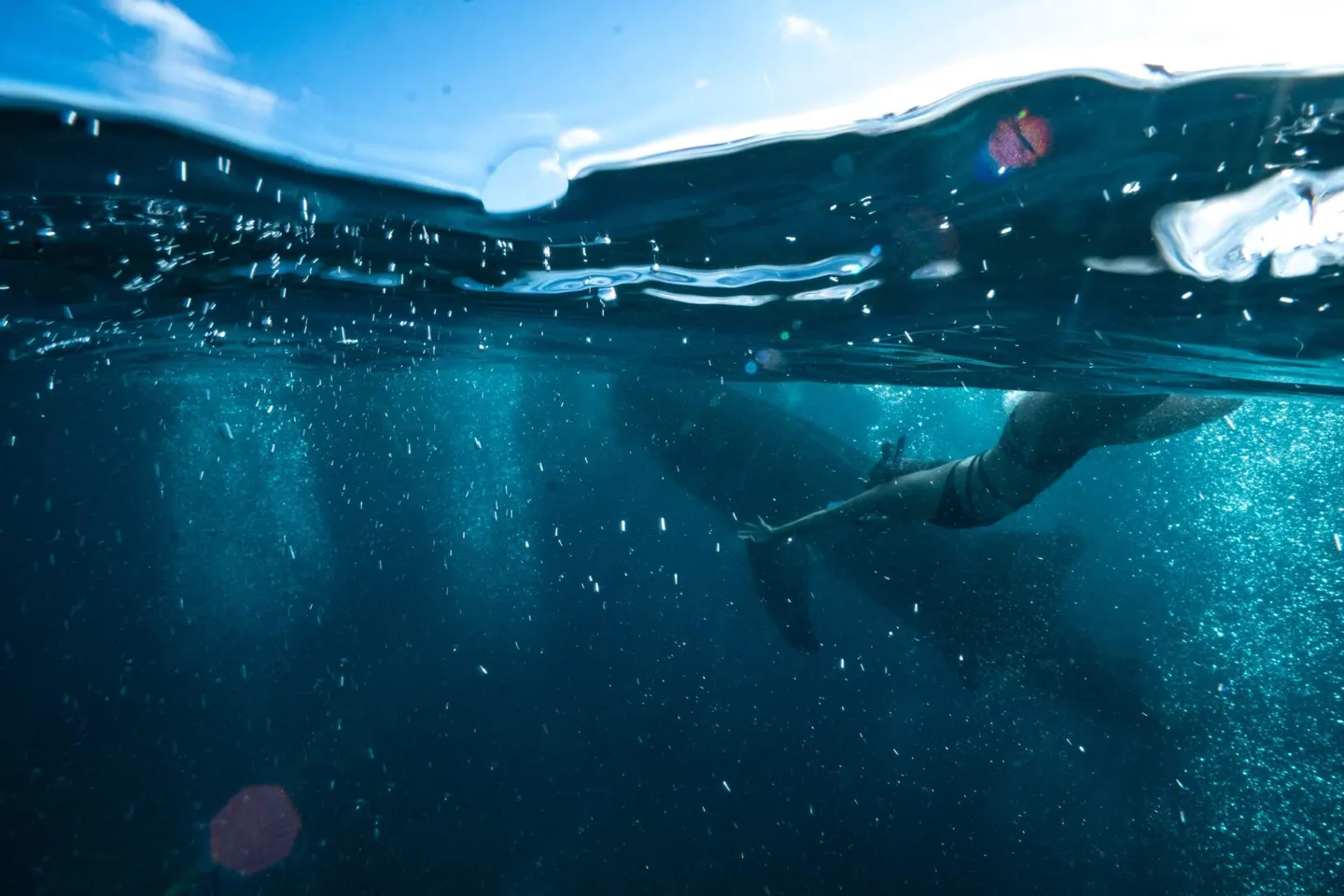
-
The conclusion of this piece isn't actually a call for everyone to stop visiting Oslob to see Whale Sharks. It's a reminder that every time we spend money, we are casting a vote for the kind of world we want to live in. Choose operators with a good reputation and strong pre-trip education. Or consider going somewhere else altogether — places like Donsol in the Philippines, or Ningaloo in Western Australia — visiting when the Whale Sharks naturally migrate through those waters. Let them grow up healthy, live well, and meet you at their very best.
-
Postscript: When I decided to go to Cebu last year, I was actually the first one to say I wanted to go to Oslob to see Whale Sharks! But perhaps because the logistics weren't falling into place, my brother asked me: "Are you sure you want to go to Oslob to see Whale Sharks?"
I said, "Why wouldn't I? Of course I want to — I really love Whale Sharks."
"Do you really want the first Whale Shark you ever see to be tiny and surrounded by murky, smelly water?"
That hit me hard. A deep, sincere kind of sadness. I spent a lot of time researching Oslob's Whale Shark tourism, and I even started looking into where else I could go to see Whale Sharks in a more responsible, respectful way.
I bought a swimsuit with a Whale Shark print and went around pretending to be a Whale Shark XD
It sounds ridiculous, I know — but I so desperately want to find them one day and tell them: "I've come to see you. I hope you're all healthy and thriving. Just getting to see you living this well is all I could ever ask for."
References:
-
Colman, J. (1997). A review of the biology and ecology of the whale shark. Journal of Fish Biology, 51(6), pp.1219-1234.
-
Davis, D., Banks, S., Birtles, A., Valentine, P. and Cuthill, M. (1997). Whale sharks in Ningaloo Marine Park: managing tourism in an Australian marine protected area. Tourism Management, 18(5), pp.259-271.
-
Lowe, J. and Tejada, J. (2019). The role of livelihoods in collective engagement in sustainable integrated coastal management: Oslob Whale Sharks. Ocean & Coastal Management, 170, pp.80-92.
-
PHILIPPINES TRAVEL PACKAGES. (2019). Whale Sharks Tours in Oslob, Cebu Are a Crime Against Nature. [online] Available at: http://www.philippinestravelpackage.com/oslob/
-
Thomson, J., Araujo, G., Labaja, J., McCoy, E., Murray, R. and Ponzo, A. (2019). Feeding the world's largest fish: highly variable whale shark residency patterns at a provisioning site in the Philippines.
-
台灣環境資訊協會-環境資訊中心. (2019). 鯨鯊救了整個漁村 菲律賓Oslob的社區型生態旅遊. [online] Available at: https://e-info.org.tw/node/215879…
Further reading:
-
Why not Australia Facebook page
Cover photo: Photo by Toa Heftiba on Unsplash. Additional photos: Photo by Hoang M Nguyen on Unsplash, Photo by Jake Gaviola on Unsplash, Photo by Michael Liao on Unsplash, Photo by @Matthew_T_Rader on Unsplash.
Frequently Asked Questions
How is a BlueTrend dive trip different from an unknown, no-name dive group?
Choosing us means full peace-of-mind protection and a smooth experience from start to finish. Every trip we run holds to three things.
First, full legal protection and a professional dive leader: we strictly follow Taiwan's travel regulations and provide complete travel-agency liability insurance, travel insurance, trip-inconvenience insurance and dive insurance. Every group is accompanied by a certified, foreign-language dive leader who joins you on both the dives and the land itinerary, liaising seamlessly with local dive shops and operators on your behalf to keep things running smoothly — the person our travellers trust most.
Second, fully licensed with secure payments: every payment goes into a licensed travel agency's account, with multiple safe payment channels (bank transfer, credit card and more) and a legal collect-and-remit receipt, so every transaction is open, transparent and protected, avoiding the fraud and dispute risks of transferring money privately to an individual.
Third, hand-picked quality we vet in person: every trip, dive site and partner shop is scouted on the ground by our own team, from the guides' professionalism and safety standards to the food, lodging, environment and service details on land, all vetted by us so you don't get caught out.
I want to sign up for a dive trip. Are there certification-level or logged-dive requirements?
Each dive site is different, so the entry bar varies. 'Bali Tulamben', for instance, is relatively beginner-friendly. 'Malapascua in the Philippines' is also beginner-friendly, but since thresher sharks tend to cruise between 20 and 30 metres, we recommend AOW certification with 20+ logged dives to enjoy this trip comfortably. For 'the Maldives' or 'Palau', we suggest AOW with 50+ logged dives for a more relaxed experience. If you're not sure whether your experience fits the trip you want, message us and our dive editors will assess it and help you find the trip you'll feel safest on.
Can I join if I'm signing up alone? How are rooms arranged?
Plenty of our travellers sign up solo! For rooms and beds, we prioritise pairing you with a same-gender traveller, and if you'd rather have your own space you can pay the difference to upgrade to a single room. For the diving, our professional leader will pair you with a suitable buddy, and with the happy vibe on our trips you'll quickly make a great group of dive friends. Many people sign up alone, make new friends, and end up organising the next trip together!
Does the trip fee include dive insurance, gear rental, taxes and instructor tips?
It depends on the trip, the destination's regulations and the local operators. Every BlueTrend dive trip has a detailed web page with a clear 'included / not included' list, transparent and with no hidden charges. All payments are collected by a licensed travel agency, with a standard-form contract for your protection.
I'm a new diver / haven't dived in a long time — will I fall behind the group?
Before you complete your booking, our team assesses a suitable trip based on your certification level and experience. Before departure, we strongly recommend taking time to refresh in Taiwan with an instructor, or a fun dive to get your feel back. On the trip itself, our professional dive leader groups and pairs everyone by experience, keeps a close eye underwater on travellers who need extra care, and steps in to help right away.
Will the photos and videos taken during the trip be shared with us?
During the dives, 'safety' is always the leader's top priority, so whenever it's suitable and safe the leader will capture great shots and record the best moments. During or after the trip, we compile a cloud album for all travellers to download, so you go home loaded with memories!
Besides your scheduled trips, can you arrange a private group charter or independent travel for me and my friends?
Absolutely! Besides group trips, we also arrange private group charters and independent travel. We can communicate, enquire and coordinate services with local operators based on your needs, saving you time and effort and taking the language barrier off your plate, to tailor the smoothest, most reassuring dive trip just for you. Contact our LINE support and our editors will arrange it for you!