

Contents(4)
the Editor says: The ocean absorbs approximately 2.5 billion tonnes of carbon every year, and whales along with other large fish are powerful carbon-storage champions! Amid the global warming crisis, all sectors are searching for ways to cut emissions — yet rampant overfishing is causing vast amounts of "blue carbon" to disappear. Faced with the intractable realities of the fishing industry, the United Nations Conference on Trade and Development (UNCTAD) has explicitly stated that "fisheries subsidies directly cause overfishing." Rather than simply doubling down on subsidies, setting management measures, helping fishing communities transition, or devising systemic solutions may be the only way to allow fisheries and marine conservation to coexist sustainably. <Full article reprinted from the Low-Carbon Living Blog, co-produced by the Environmental Information Center; author: Cao Kezhi.>
Global overfishing has pushed nearly 90% of fish species to the brink of survival. The consequences extend beyond ecosystems and people's dinner tables — ocean "blue carbon" is also declining as the carcasses of large fish disappear. Recent research has uncovered a direct link between overfishing and the loss of blue carbon. On the high seas, Taiwan's fishing fleet extracts blue carbon at a rate equivalent to the world's third-largest consumer, underpinned by the seventh-highest harmful fisheries subsidies expenditure in the world.
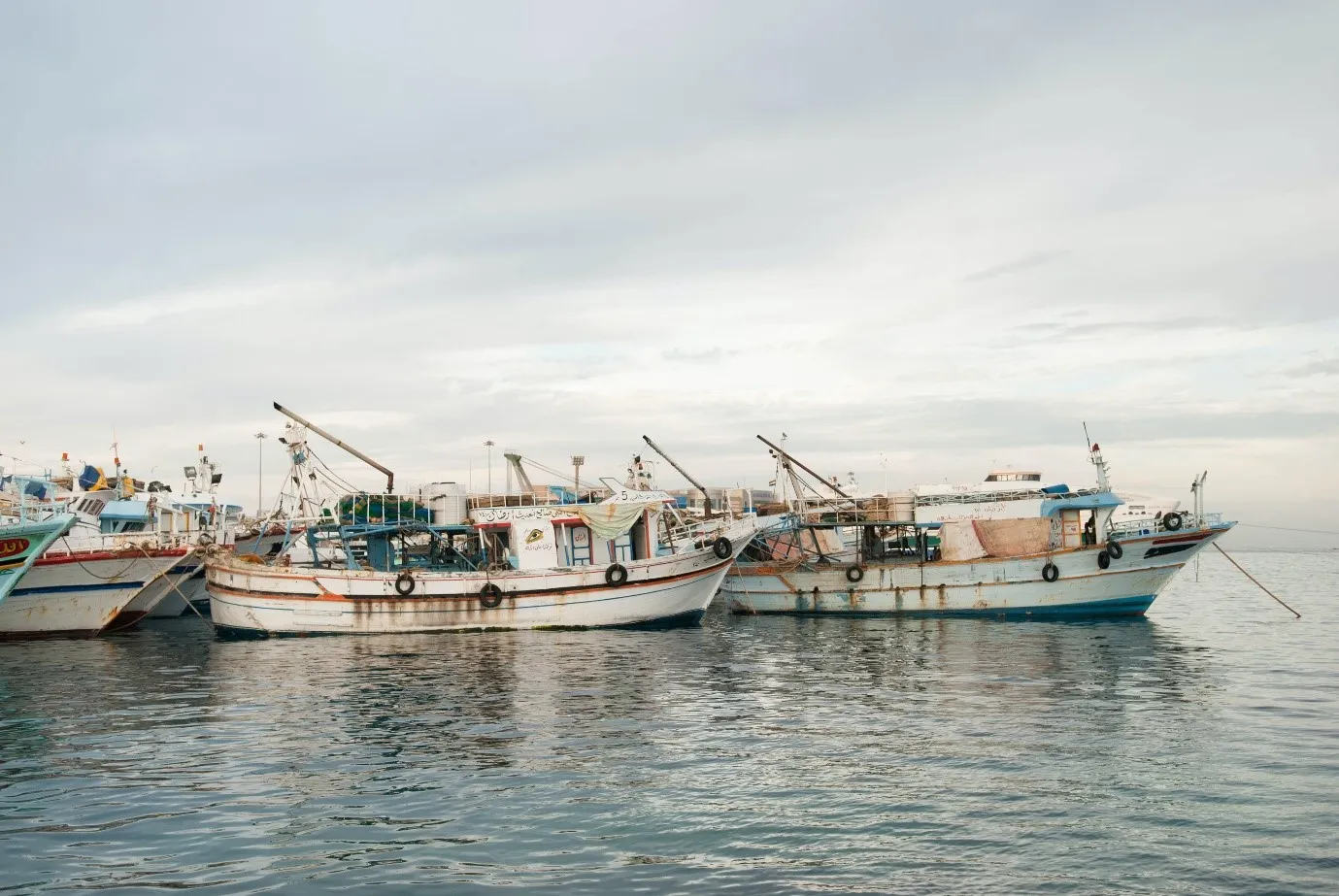
Global overfishing has pushed nearly 90% of fish species to the brink of survival, and is also causing blue carbon to decline. Image source: Anastasia Fomina/Unsplash
How Do the Carcasses of Large Fish Become Key Players in Carbon Sequestration?
The ocean serves as a vital natural carbon sink, absorbing approximately 2.5 billion tonnes of carbon per year — equivalent to 22% of human carbon emissions. The carbon sequestration potential of coastal vegetation is remarkable: mangroves, salt marshes, and seagrass beds together store more than 55 billion metric tonnes of carbon dioxide, accounting for over 50% of the ocean's total carbon storage capacity. The carbon captured over the lifetime of large fish such as whales is equally significant, often far exceeding that of many terrestrial plants.
A 2019 International Monetary Fund (IMF) report noted that each large whale stores an average of 33 tonnes of carbon dioxide, compared to a single tree, which absorbs only about 48 pounds (roughly 22 kg) per year. When a whale reaches the end of its long life and sinks to the ocean floor, the carbon preserved in its carcass can remain in the deep sea for hundreds of years without escaping into the atmosphere.
The phytoplankton nourished by decomposing whale carcasses are also excellent carbon capturers. Global phytoplankton supply 50% of the world's oxygen each year, while also capturing 37 billion tonnes of carbon dioxide — equivalent to the sequestration capacity of four Amazon rainforests. Because whale excrement contains iron, nitrogen, and other nutrients that phytoplankton require, whales — whether moving horizontally or vertically through the ocean — substantially promote phytoplankton growth.
Sadly, by the 20th century global whale populations had fallen to below 25% of pre-industrial-whaling levels (which stood at approximately 4 to 5 million individuals), leaving around 1.3 million today. The population of the largest species, the blue whale, has dropped to below 3% of its historical numbers.
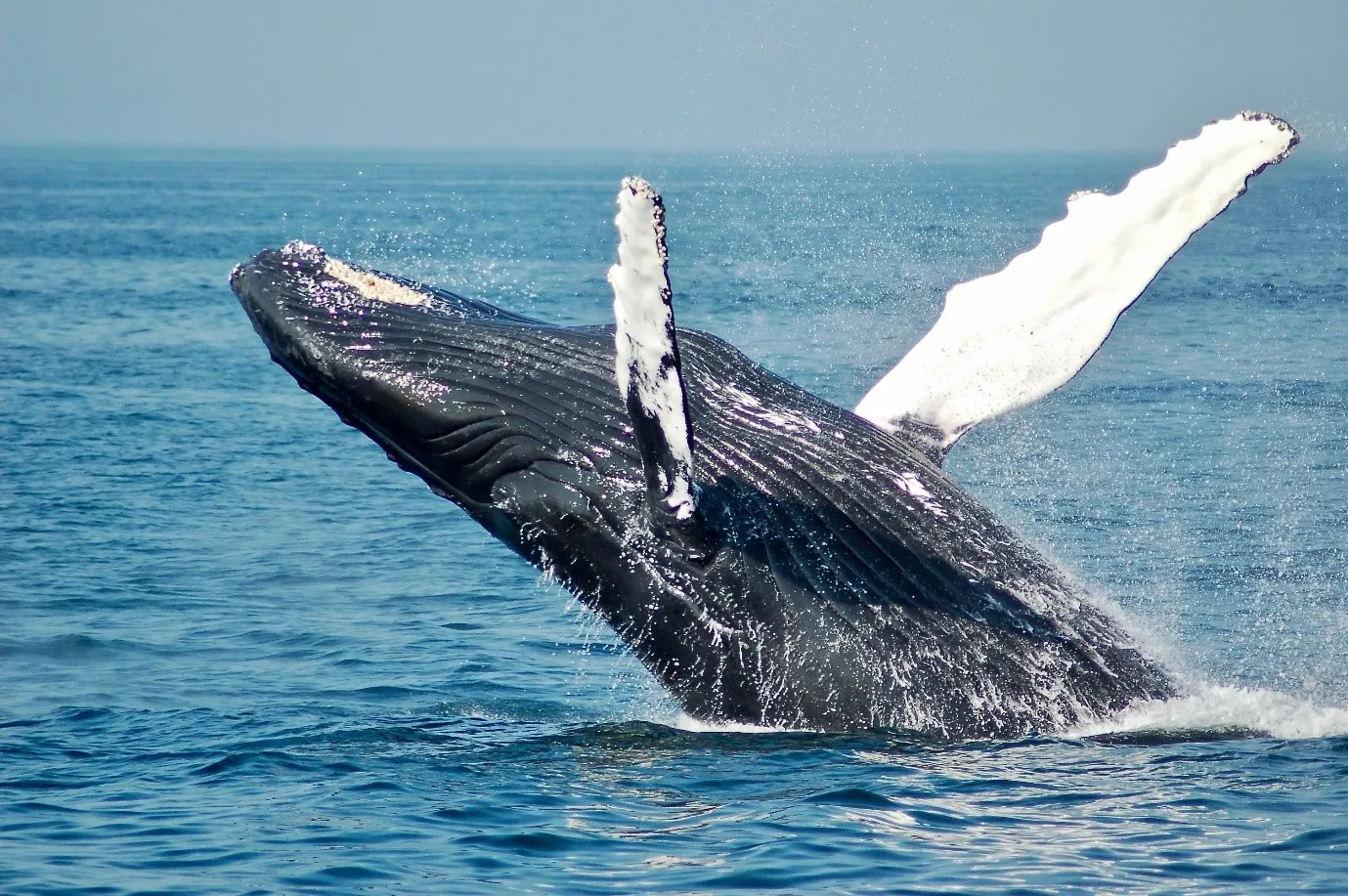
Each large whale stores an average of 33 tonnes of carbon dioxide, and the carbon preserved in a whale's large carcass as it sinks to the ocean floor can remain in the deep sea for hundreds of years. Image source: Todd Cravens/Unsplash


How Does Overfishing Reduce "Blue Carbon"?
The sharp decline of whales and other large fish is not only a consequence of overfishing — it also means that humans are hauling vast quantities of "blue carbon" out of the sea every year, making overfishing an invisible driver of global warming.
A landmark 2020 study revealed that enormous quantities of large fish — capable of storing blue carbon — are removed from the ocean through fishing activities each year, while the fishing industry as a whole, from catch to processing to consumption, emits ever more carbon dioxide. The study, titled "Let more big fish sink: Fisheries prevent blue carbon sequestration — half in unprofitable areas," examined large fish species over 30 cm in length, including sailfish, tuna, sharks, and mackerel, and found that they collectively store up to 700 million tonnes of carbon per year — a truly staggering contribution.
The study found that between 1950 and 2014, the blue carbon equivalent of large fish caught by global fishing fleets amounted to approximately 37.5 million tonnes — of which around 21.8 million tonnes comprised carbon that could have sunk to the deep sea. Additionally, because fishing vessels run on fossil fuels, each tonne of catch generates approximately 1.9 tonnes of carbon dioxide. It is estimated that between 1950 and 2014, fishing vessels alone emitted 165 million tonnes of carbon. Taken together, the fishing industry's total carbon emissions during this period reached 200 million tonnes. Carbon emissions from fishing in 2014 alone reached 20.4 million tonnes — equivalent to the annual emissions of 4.5 million cars.
Looking at high-seas zones specifically, the Pacific Ocean accounted for 71.1% of total global blue carbon extracted by fishing, with 49.1% of that coming from equatorial waters within 10 degrees north and south of the equator. By country, the top three consumers of blue carbon on the high seas were Japan (22.2%), Indonesia (6%), and Taiwan (5.1%). Together with the Philippines, Spain, the United States, Ecuador, China, South Korea, and Thailand, these 10 nations have collectively accounted for 62% of all blue carbon brought ashore since 1950.
The Culprit Behind Overfishing Has Been Found: Taiwan Ranks Seventh in the World for Harmful Fisheries Subsidies
One might argue that there is some justification if these catches generate enormous economic benefit for humanity.
But the research also found that nearly half of all high-seas fishing activity would be unprofitable without subsidies. The study revealed that if government subsidies for fishing port construction, vessel building, and fuel costs are excluded, 43.5% of high-seas fishing operations would not be economically viable. These unprofitable-without-subsidy fishing grounds — particularly those between 10°N and 20°S latitude — show the most severe blue carbon depletion, encompassing areas around Japan's coastline, the central Pacific, the southern Atlantic, and the northern Indian Ocean. When government subsidies are factored in, the share of "unprofitable" fishing zones drops to 23.1%.
In 2022, UNCTAD warned that "US$20 billion (approximately NT$621.426 billion) in annual fisheries subsidies directly cause overfishing."
According to a 2021 report by the American non-profit marine conservation organization Oceana, the world's top 10 nations providing "harmful fisheries subsidies" collectively spent US$15.4 billion (approximately NT$476.9 billion) per year in 2018, of which more than US$5.3 billion was used to subsidize domestic fleets fishing in foreign waters. The top three were China, Japan, and South Korea. Remarkably, Taiwan ranked seventh on the list, spending approximately NT$700 million per year on harmful fisheries subsidies.
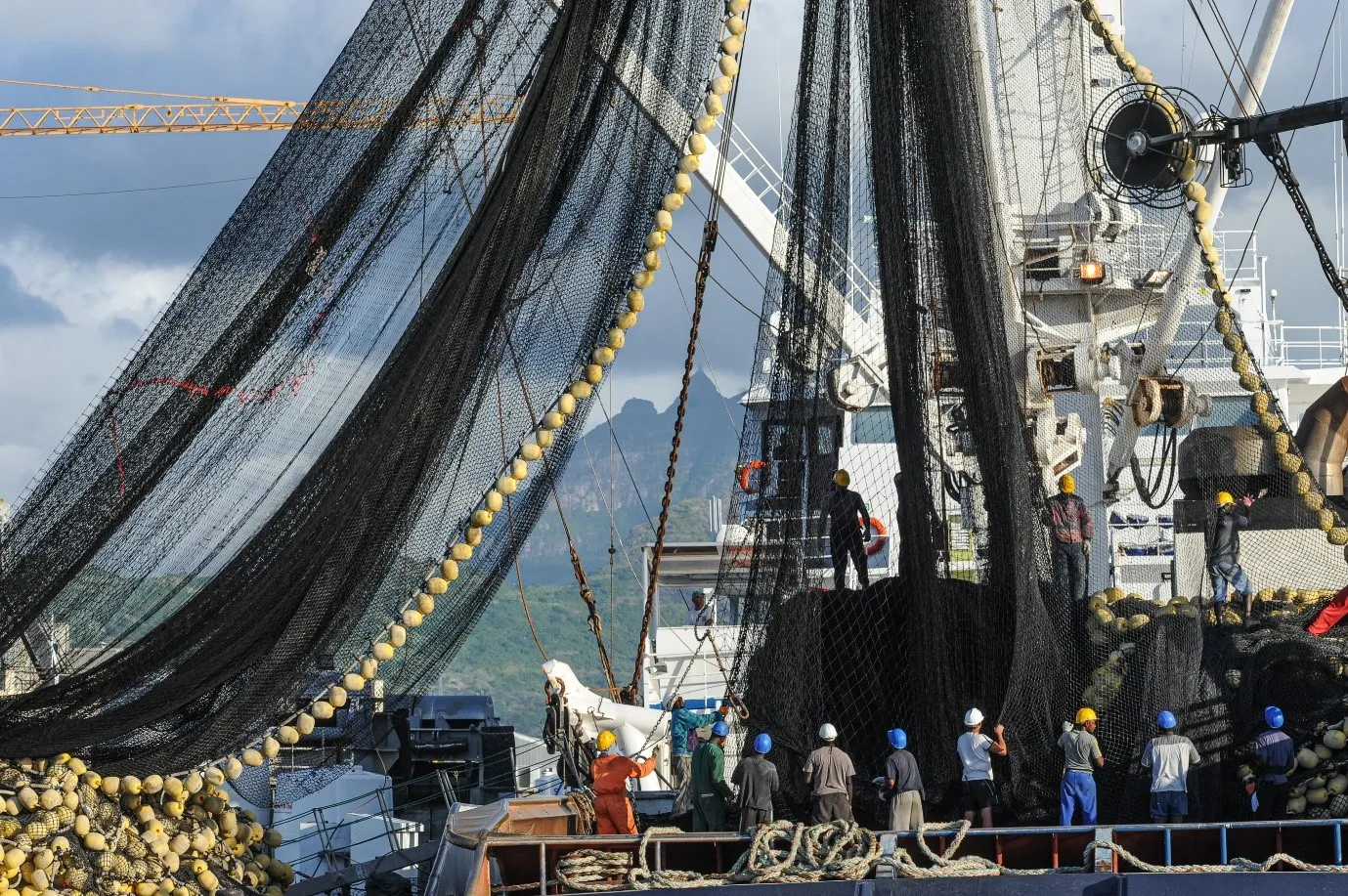
UNCTAD has previously warned that the large-scale fisheries subsidies provided each year directly cause overfishing in the world's oceans. Photo source: Jo-Anne McArthur/Unsplash
On May 8 this year, UNCTAD also publicly called at the Third UN Trade Forum for the swift adoption of a global "Blue Deal" to protect precious marine resources. The proposal aims to prohibit illegal, unreported, and unregulated fishing, and calls for an end to national subsidies for high-seas fishing activities. However, the "Blue Deal" must be approved by two-thirds of the World Trade Organization's 164 member states before it can take effect.
References
- Science Advances (October 28, 2020) Let more big fish sink: Fisheries prevent blue carbon sequestration—half in unprofitable areas
- 食力 (April 21, 2022) 每年漁業補撈3兆條魚 為陸地飼養動物的50倍!「補貼」為什麼成為過度捕撈元兇?
- IMF (December 2019), Nature's Solution to Climate Change
- OCEANA (June 2021), Tracking Harmful Fisheries Subsidies
- Environmental Information Center (October 2, 2019), 一條鯨魚抵幾千棵樹 緩解暖化天然神器 「護鯨就是固碳」
- Environmental Information Center (January 21, 2022), 海洋「藍碳」會是未來碳儲存的潛力股嗎?
- UNCTAD (May 8, 2023), Global 'Blue Deal' urgently needed to protect and invest in our ocean
Further Reading:


![[Blu's Marine Classroom] The World's #1 Most Toxic Crab! Besides the Mosaic Reef Crab, Meet Two More Deadly Poisonous Crabs!](/_astro/001_vivipic_Z1iEiVG.webp)