Contents(6)
the Editor says: There are all kinds of jobs in the world, and one group of people works through surveillance cameras, image-processing systems, and AI-powered automatic fish species identification to effectively monitor fishing vessel operations while also helping to document on-board catch activities. What exactly do electronic monitors in pelagic fisheries do? Read on to find out! <Full article republished from Environmental Information Center, author: Tsai Pei-yun2024.01.22>
When the Taiwanese drama The Devotion of Suspect X (Eight Gates of Advocacy) aired in July 2023, it sparked wave after wave of discussion. Many friends around me who had never paid attention to pelagic fisheries suddenly became fascinated by the industry, repeatedly asking: is pelagic fishing really that dark? The drama's plotlines — illegal shark finning, Indonesian fishers being abused to the point of committing murder, and the mysterious disappearance of a foreign (American) fisheries observer — bear a striking resemblance to events that have actually played out in real life (brief summaries of two real incidents [1][2]).
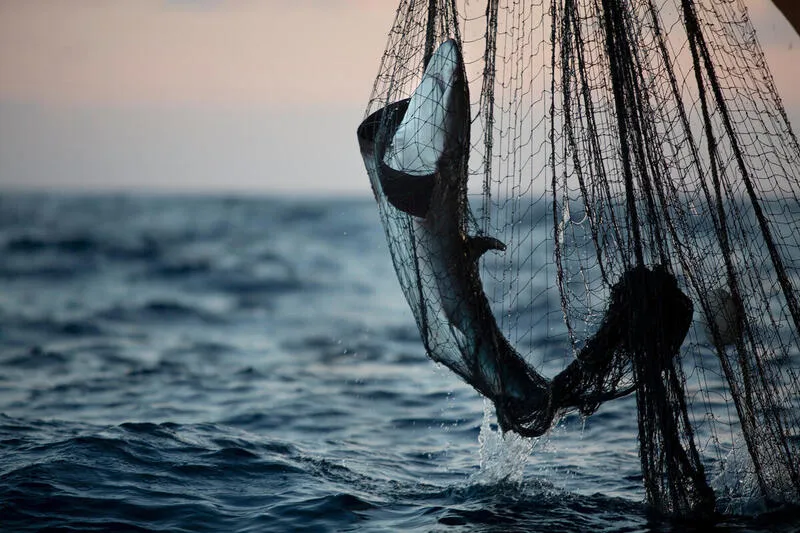
In the vast ocean, how is pelagic fisheries management carried out? Image source: Abbie Trayler-Smith / Greenpeace
Our oceans are immense and boundless, providing a vital food source for hundreds of millions of people around the world. According to the United Nations Food and Agriculture Organization (FAO), marine capture fisheries account for half of total global fisheries production. Distant-water fishing vessels operating on the high seas or within other nations' exclusive economic zones play a critical role in meeting the ever-growing demand for seafood. These vessels travel to all three major oceans to fish; more often than not, once a vessel sets out, it will not return to port for at least six months, relying on at-sea transshipment of catch and resupply of essentials to remain fishing continuously. It is precisely these operational characteristics that make managing pelagic fisheries so challenging — and that once cast a shadow of illegal fishing over Taiwan, one of the world's leading distant-water fishing nations.
Managing the Open Ocean — How?
Every year, thousands of distant-water fishing vessels traverse the world's high seas, targeting everything from sardines to Pacific bluefin tuna. Once upon a time, ocean resources were believed to be inexhaustible, but as fisheries resources became intensively exploited, nations gradually came to appreciate the importance of management and conservation.
In 1982, the United Nations adopted the United Nations Convention on the Law of the Sea (UNCLOS), which not only granted all nations the right to fish on the high seas but also required countries to cooperate with one another in taking the necessary measures to conserve living marine resources on the high seas. The UN went further in 1995 by adopting the United Nations Fish Stocks Agreement (UNFSA), which explicitly established the rights and obligations of states regarding straddling fish stocks and highly migratory fish stocks, and made Regional Fisheries Management Organizations (RFMOs) the cornerstone of international fisheries governance.
Although RFMOs can set relevant regulations for high-seas fisheries management, vessels and aircraft have traditionally been regarded as extensions or floating territory of their flag states. As such, the flag state remains the ultimate manager of a distant-water fishing vessel, and national regulations and enforcement are equally critical to overseeing these operations.
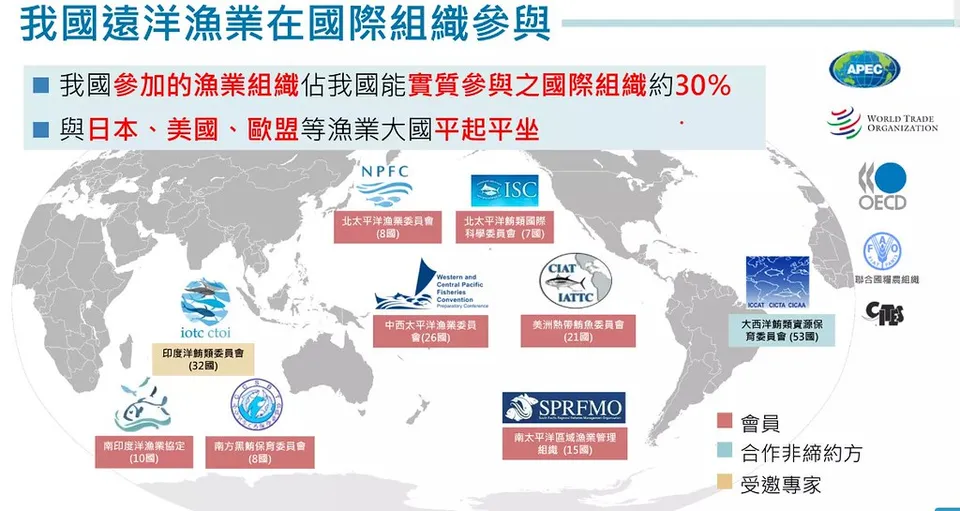
Taiwan's participation in international organizations related to pelagic fisheries. Image source: Council of Agriculture, Executive Yuan
At present, governments and RFMO managers are actively gathering information on fishing activities, conducting science-based stock assessments, and formulating and implementing relevant regulations. There are many methods for collecting data, including fishing logbooks, at-sea records by human observers, port inspections, and maritime patrols — but these methods are often underutilized, susceptible to misreporting, too costly, or insufficiently precise, leaving stakeholders in pelagic fisheries hesitant to act on improving fisheries sustainability.
At the same time, catches from distant-water fishing vessels are not only transshipped and offloaded at domestic and foreign ports — transshipment at sea is extremely common. To verify the accuracy of catch data, managers must rely not only on reports from fishing vessels and carrier vessels, but also on port inspections and at-sea records and audits. Because distant-water vessels operate across vast ocean areas, collecting data at sea is inherently difficult. To meet this challenge, most RFMOs have established observer programmes to facilitate the collection of comprehensive fisheries data.


So, What Data Do Observers Need to Collect?
The objective of the regional observer programme should be to collect verified catch information from the Convention Area, other scientific information and information related to fisheries in the Convention Area, to monitor compliance with conservation and management measures of the (Western and Central Pacific Fisheries) Commission.
Western and Central Pacific Fisheries Commission (WCPFC) Conservation and Management Measure 2018-05
The passage above outlines the objective of the WCPFC's Regional Observer Programme (ROP). In other words, an observer's job is essentially to collect data — but the information to be gathered is extensive.
Under the WCPFC's Regional Observer Programme, observers must record nearly 100 types of data, ranging from basic vessel information to length measurements of various species caught. Basic vessel details — such as the vessel name and owner — can be recorded once before or upon boarding, but catch information must be recorded every time a fishing operation takes place. Additionally, if the vessel carrying the observer conducts at-sea transshipment activities, the observer must also record the details of each transshipment, including the vessels involved, the coordinates, the date, and the quantities and species transshipped. Because RFMOs recognize that at-sea transshipment is a very common activity in pelagic fisheries — but are also concerned that illegal, unreported, or non-compliant transshipment (especially on the high seas) can not only distort catch data but also facilitate IUU fishing — observer coverage on carrier vessels is now required to record at-sea transshipment activities.
Currently, while RFMOs require 100% observer coverage on purse seiners, the required observer coverage rate for longliners is generally only 5% [3]. This significant disparity in coverage not only undermines scientific research but further impedes sustainable fisheries management.
Enter the Electronic Monitor (EM)!
Electronic Monitoring (EM) systems have actually been in development for quite some time. Countries in Europe and North America began developing and implementing them roughly 20 years ago, and Taiwan also started developing its own EM systems around 10 years ago [4].
In general, an EM system typically comprises a set of cameras and sensors connected to an onboard computer, along with a Vessel Monitoring System (VMS) [5]. Images captured by the cameras and data from the sensors are stored on hard drives; when a fishing trip concludes, the hard drives are retrieved and analyzed by shore-based analysts, who compile data such as catch volume, bycatch, discards, and fishing locations. However, some EM system providers have already moved toward using software to automatically analyze footage, flagging key clips of vessel activity, and transmitting data via Wi-Fi or satellite rather than relying on the physical transport of hard drives.
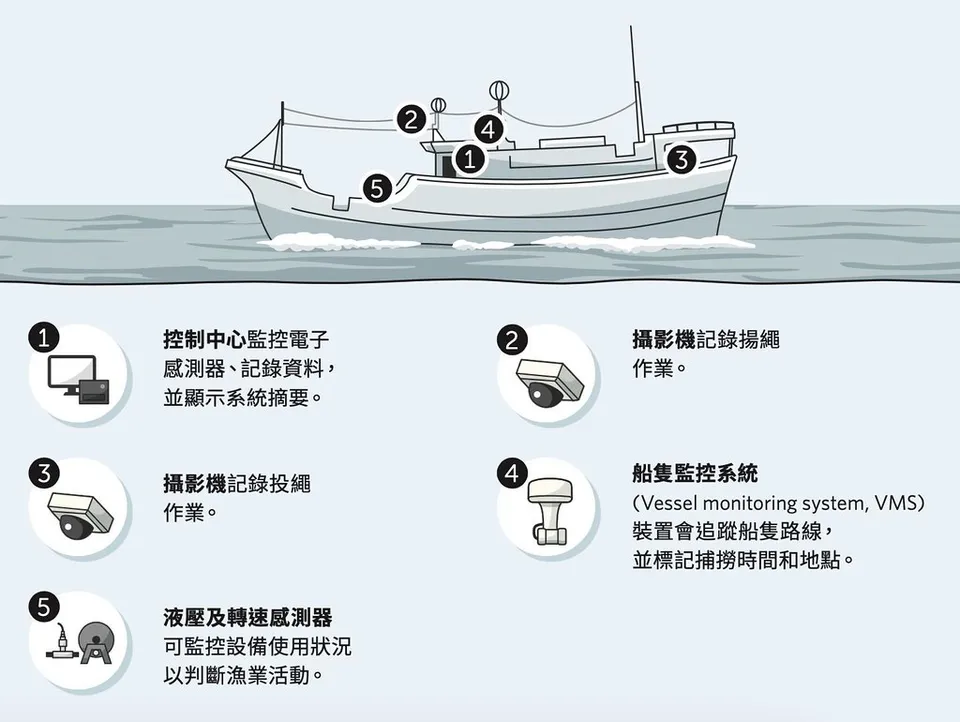
An Electronic Monitoring (EM) system typically consists of five major components. Image source: Pew Charitable Trusts
As more countries and vessels adopt EM systems for data collection, numerous studies have shown that EM can improve the accuracy of fishing logbooks, reduce IUU fishing activity, increase the availability of data for research on biodiversity and protected species, and enhance managers' ability to monitor vessel compliance. The Pew Charitable Trusts' 2019 publication Electronic Monitoring: A Key Tool for Global Fisheries Management summarizes the advantages of EM systems, including:
-
When the human cost of deploying human observers is relatively high, EM systems can reduce costs
-
Hiring personnel to review monitoring data and maintain systems can boost employment
-
Vessel owners or fishing companies can use EM systems to monitor their own vessels' operations, ensuring legality and transparency
-
EM saves space on vessels where observer accommodation is limited
-
Because electronic monitors are not subject to intimidation or bribery, they help ensure the integrity of the data collected
Of course, stakeholders still have reservations about EM systems, including the upfront capital required for equipment, the inability to replace human observers for biological sampling, the need for regular cleaning of onboard camera lenses, a shortage of image-analysis personnel, and privacy concerns for crew members. However, technology is advancing rapidly and more and more manufacturers are investing in EM development, driving equipment costs steadily downward. Software-based image processing and analysis capabilities are also continuously improving — facial and body blurring technology can now be applied through software to reduce privacy concerns. Furthermore, the current aim of developing electronic monitoring is to supplement human observers in collecting more complete data, not to replace them, and to increase overall observer coverage (encompassing both electronic and human observers) to ensure that fisheries management stays on a sustainable path.
For Sustainability, the Industry Is Moving Too
Although the primary driver behind the development of EM systems was originally the monitoring needs of regulatory authorities, the growth of the sustainable seafood market over the past decade has generated increasing interest in EM across the entire seafood supply chain. Using EM can verify that fishing activities meet market buyers' requirements (such as legality) and help obtain the data needed for sustainable fisheries certification (such as bycatch records).
In 2021, Thai Union (TU), one of the world's largest seafood companies, announced a partnership with The Nature Conservancy (TNC) to install EM systems on vessels supplying their operations, increasing supply chain transparency and combating IUU fishing. In June of last year, Walmart, the world's largest retailer, announced that by 2027 all of its seafood would come exclusively from vessels with 100% observer coverage (including both human and electronic observers).
In 2022, Pew published a series of related white papers, one of which focused on the roles that seafood supply chain stakeholders play in integrating EM. That report noted that retailers and seafood suppliers have begun working together to identify transparency and IUU-related issues in the production chain and to find solutions; fishing companies have also started taking steps — including the adoption of EM — to improve supply chain transparency.
In late October 2023, Pew, the Global Tuna Alliance (GTA), and Japanese sustainable seafood consultancy Seafood Legacy co-hosted an electronic monitoring workshop in Tokyo, Japan. FCF Co., Ltd. (豐群水產), a Taiwanese company and one of the world's three largest seafood traders, was among the workshop's speakers. They noted that FCF has been actively experimenting with various technologies to ensure fisheries sustainability, and that EM can indeed increase the collection of fisheries science data — one of the main reasons they have been actively trialing EM in recent years. However, they also face challenges related to upfront costs, crew awareness and training onboard, and the personnel and time required for back-end data analysis. Other speakers, including Transparency and Sustainability (TNS) Industries from a South Korean fishing company and China's Luen Thai Fishing Ventures, echoed both the advantages and challenges of EM described in this article.
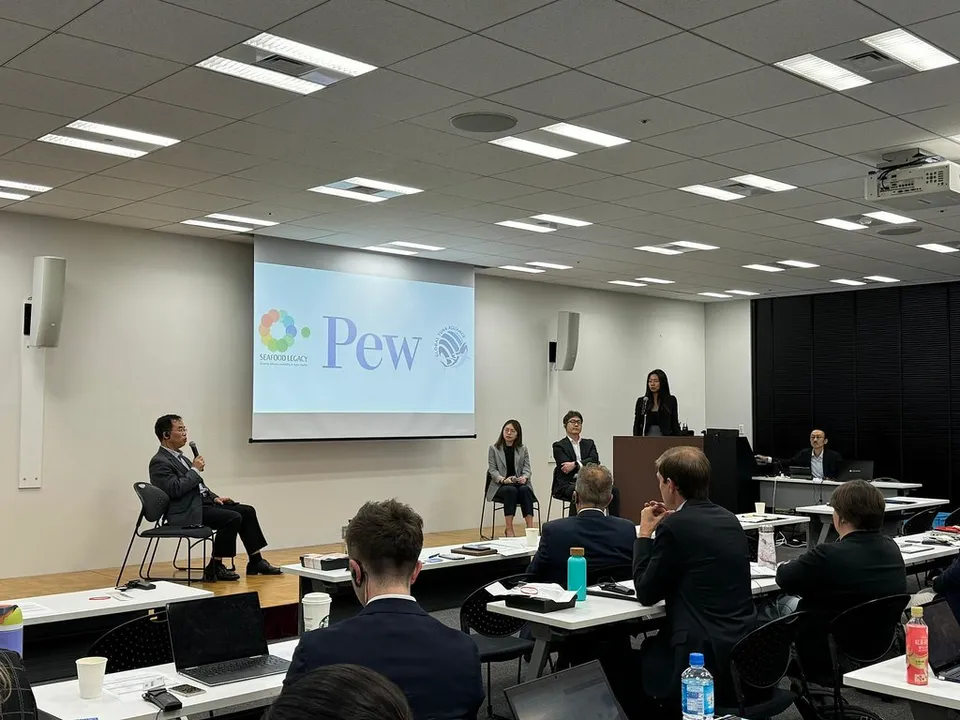
Interest in EM is growing within the seafood industry. The Pew Charitable Trusts, the Global Tuna Alliance, and Japanese sustainable seafood consultancy Seafood Legacy hosted an electronic monitoring workshop in Tokyo, Japan last year. Image source: Pew Charitable Trusts
Although both the hardware and software of EM systems still have room for improvement, and regulations governing EM vary across countries and regional fisheries management organizations, EM technology is advancing rapidly compared to a decade ago. Progress in AI technology over the next five years is likely to accelerate this further. Even major tuna RFMOs — the Indian Ocean Tuna Commission (IOTC) and the International Commission for the Conservation of Atlantic Tunas (ICCAT) — have already taken the lead in adopting EM-related regulations.
While EM is far from perfect, many stakeholders across the fisheries production chain have noted that EM is not only usable but also fit for purpose — and that alone makes it worth our continued effort and attention.
Notes
[1] The "Ping Chun No. 16" incident in the drama bears many similarities to the real-life tragedy of the "Ho Chun No. 61" in 2016. According to Greenpeace's 2018 report "Seabound," in May 2016, the longliner Ho Chun No. 61, flagged to Vanuatu, departed from Kaohsiung, Taiwan, heading to fishing grounds in the Western and Central Pacific. The vessel carried 28 crew members — 6 Vietnamese, 7 Filipino, and 13 Indonesian — with a Chinese captain and a Taiwanese vessel owner. On the night of 7 September 2016, six Indonesian crew members broke into the captain's cabin and attacked and killed him. The following day, the chief engineer contacted the Taiwanese vessel owner to report the captain's death, and the Ho Chun No. 61 sailed to Fiji. When the six crew members were questioned by Fijian police, they admitted to participating in the killing. In early 2017, the Supreme Court of Vanuatu sentenced the six Indonesian crew members to 18 years in prison, with no parole for the first 9 years; if granted parole, the six would be repatriated to Indonesia to serve the remainder of their sentences. Both the Vanuatu court's judgment and Greenpeace's interviews with the six crew members serving their sentences in Vanuatu revealed that the six had long suffered discrimination, beatings, and verbal and physical violence from the captain, and that forced labor conditions likely existed on the vessel even before the captain's death.
[2] The plotline in the drama involving the mysterious disappearance of foreign fisheries observer Kenny Dowson mirrors the real-life case of American observer Keith Davis, who went missing at sea in 2015. According to one article in The Reporter's 2021 series on pelagic fisheries, "Four Deaths of Foreign Observers — Unresolved Truths Aboard Taiwan's Distant-Water Fishing Vessels," on 10 September 2015, Davis transferred from the Panama-flagged carrier vessel Victoria 168 — owned by a Taiwanese national — to a fishing vessel named Chung Kuo No. 818 off the west coast of Peru, completed his inspection as usual, and was last seen around 4 p.m., when crew members discovered he was no longer on board, his life jacket still in the cabin. The captain immediately launched a search but could not find him. Thirty hours after his disappearance, the U.S. Coast Guard dispatched vessels to search an area equivalent to 50,000 football fields — and still found no trace of him.
[3] The International Commission for the Conservation of Atlantic Tunas (ICCAT) requires 10% observer coverage for longliners.
[4] Council of Agriculture, Opening a Smart Eye for Fisheries Management: Development of Electronic Monitoring and Future Trends
[5] However, the equipment in each electronic monitoring system may differ slightly depending on the type of fishing vessel and the data collection objectives.
Executive Editor: Jenny Tsai
Further Reading: