Contents(4)
Penghu — A Miniature Taiwan in the Sea
Why is Penghu also known as Chrysanthemum Island (菊島)? The answer lies in the Indian blanketflower (Gaillardia pulchella), which blooms everywhere across the archipelago. Wind-resistant, drought-tolerant, and sun-loving, this tenacious wildflower thrives in Penghu's island environment and has been designated the county flower. It is also seen as a symbol of the resilient and unyielding spirit of Penghu's people — hence the island's beloved nickname, Chrysanthemum Island. Li Cheng-lu (Wox), author of Marine Field Notes, once remarked during a visit to Penghu that the archipelago's marine ecosystem is like a miniature version of Taiwan. The northern waters are influenced by the colder China Coastal Current, which brings fish species similar to those found along Taiwan's Northeast Coast; a branch of the Kuroshio passes through southern Penghu, its warm waters providing an ideal environment for coral growth; the outer waters of Penghu's southern four islands are renowned for their strong currents and crystal-clear visibility, where large pelagic creatures such as sharks are frequently spotted — much like Taiwan's eastern coast; and the inner sea of Penghu, with its dramatic tidal range, reveals vast expanses of sandy mudflats at low tide, teeming with diverse marine life reminiscent of Taiwan's western shore.
Beneath Penghu's waves, you'll discover a captivating collision of species and habitats — from legally protected giant clams and abundant sea cucumbers to seagrass meadows and the nudibranchs beloved by underwater macro photographers. Penghu's varied topography nurtures a rich marine ecosystem, and with a little luck you may even encounter rare species seldom seen elsewhere in Taiwan.


Coral Is Beautiful — But I Don't Know Much About It
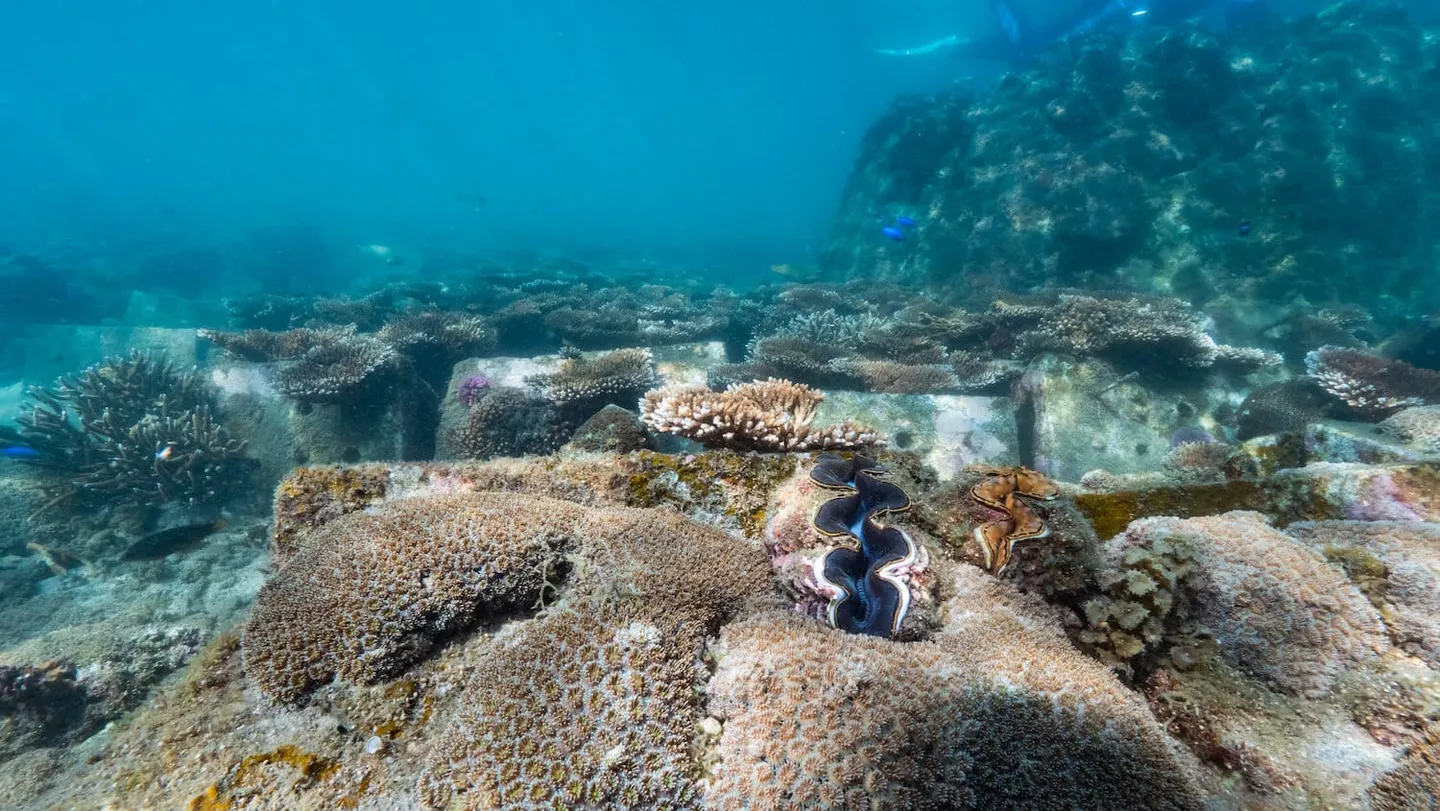
In Penghu, you can see not only coral restoration efforts but also giant clam restoration!
Do you know what coral actually is? Coral belongs to the phylum Cnidaria and is made up of many individual coral polyps — which is also what gives different coral its varied colours. As coral grows, it secretes calcium carbonate to form a calcareous skeleton or spicules, slowly building up layer by layer to create coral reefs. Coral reefs are like forests beneath the sea: they are home to countless marine organisms, providing crucial space for breeding, feeding, shelter, and refuge from predators. However, coral growth is highly sensitive to external conditions such as water temperature, sunlight, and water quality. When coral is exposed to an unsuitable environment over an extended period, it begins to expel its symbiotic algae, leading to coral bleaching and, eventually, death. Offshore islands like Penghu, being less affected by river runoff and land-based pollution than the main island, offer comparatively better conditions for coral growth.
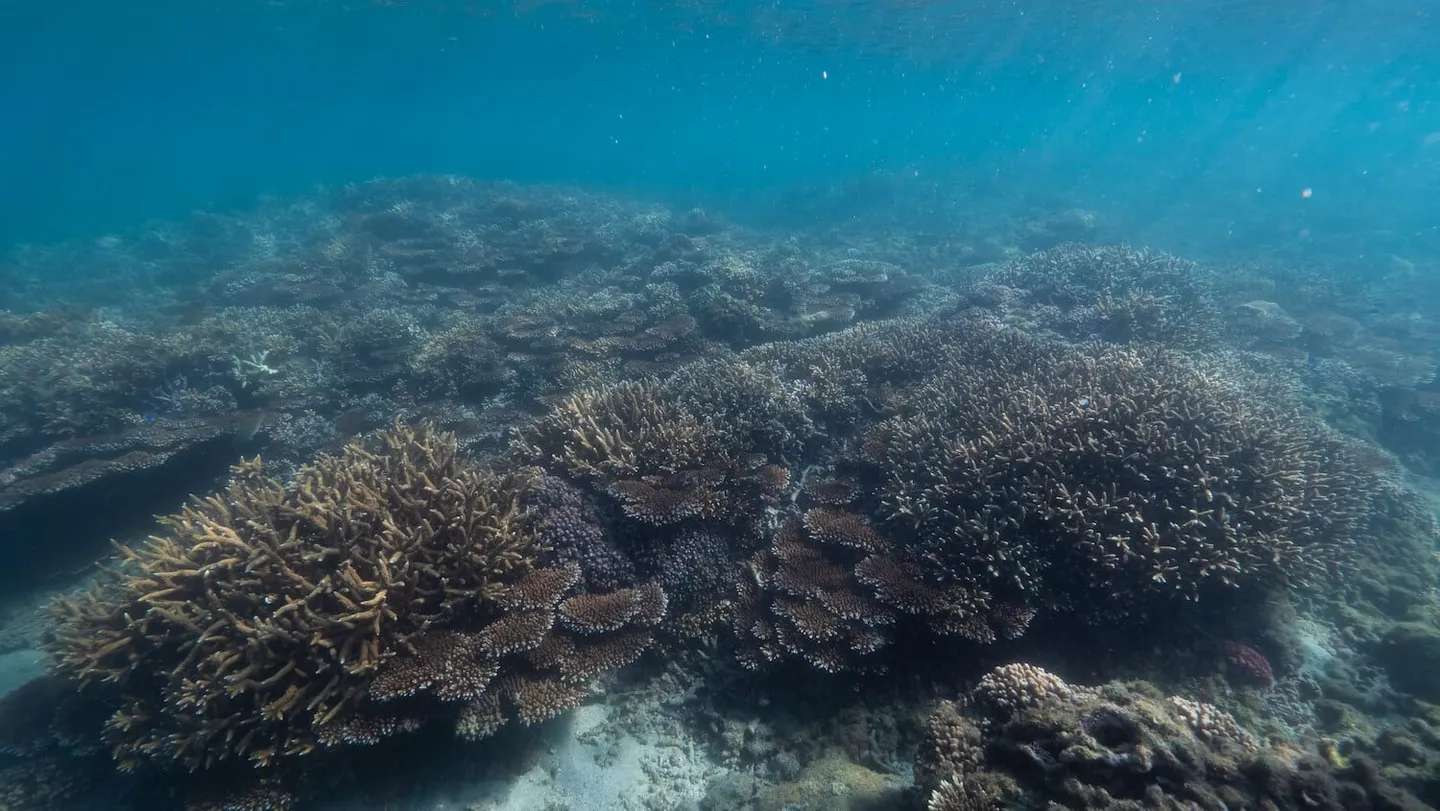
The underwater coral ecosystem in Penghu is truly spectacular.
A 2020 coral health survey in Magong found that live coral coverage in Hangwan stood at 29.4%, which falls into the "fair" category by international standards. Researchers discovered the remains of branching coral in Hangwan alongside thriving colonies of Acropora coral, confirming that the area is indeed a suitable environment for coral growth.
The Nursery for Marine Life — Where the "Coral Florist" Journey Begins
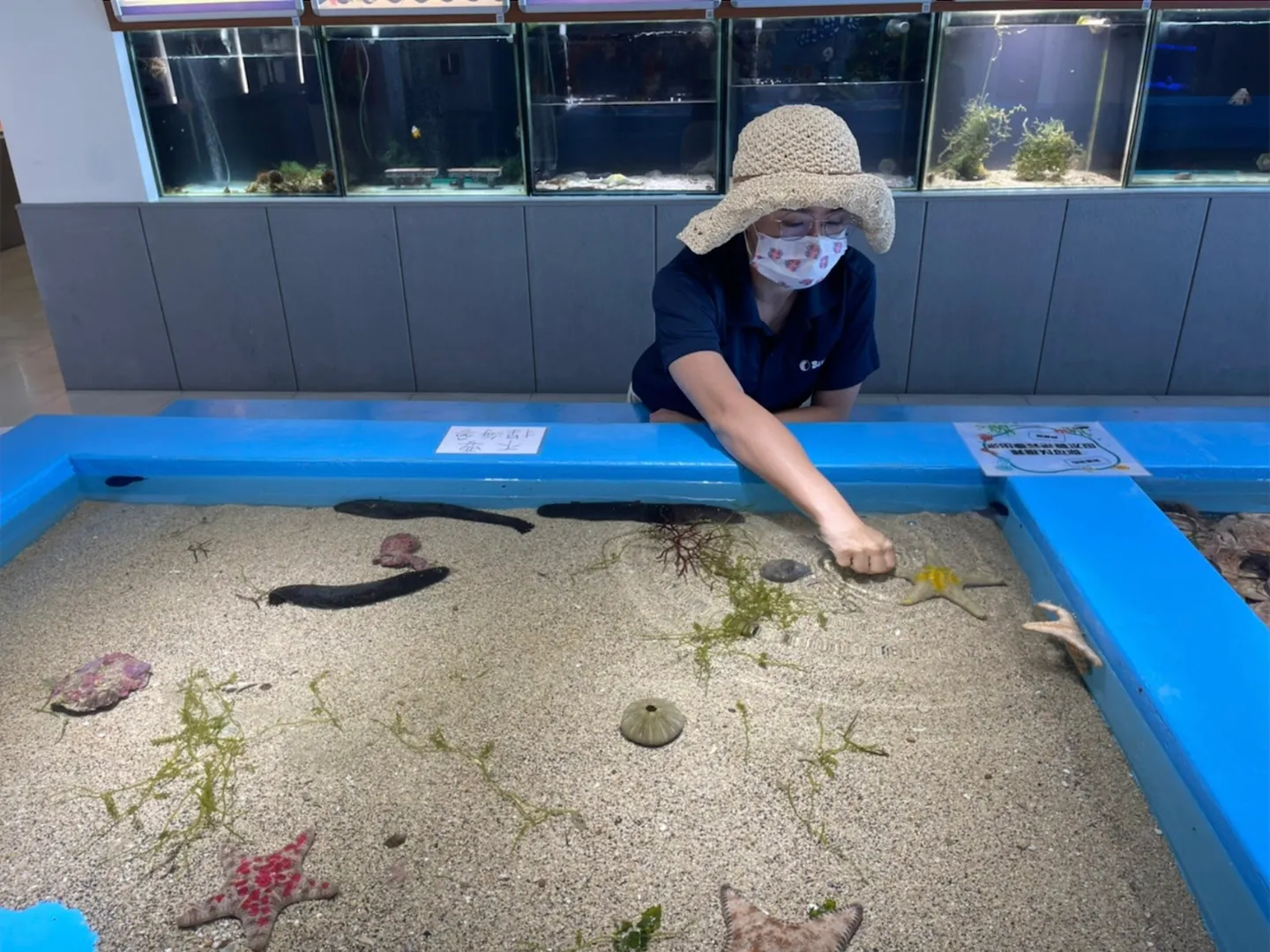
The aquatic seedling hatchery features a touch pool where visitors can get up close with marine creatures.
The Aquatic Seedling Hatchery (hereafter "the hatchery") houses fish breeding tanks, larval rearing pools, and shellfish and algae cultivation tanks covering the full process from rearing to release. On the ground floor, the breeding tanks are filled with tiny aquatic creatures at various life stages: spider conch (Lambis lambis) larvae still in the planktonic phase, juvenile white-spined sea urchins (Tripneustes gratilla, known locally as horse-dung sea urchins), and seedlings of nutritionally rich laver seaweed. The second floor features an interpretive tour route (advance reservation required), a touch pool, aquarium displays, and an introduction to coral planting.
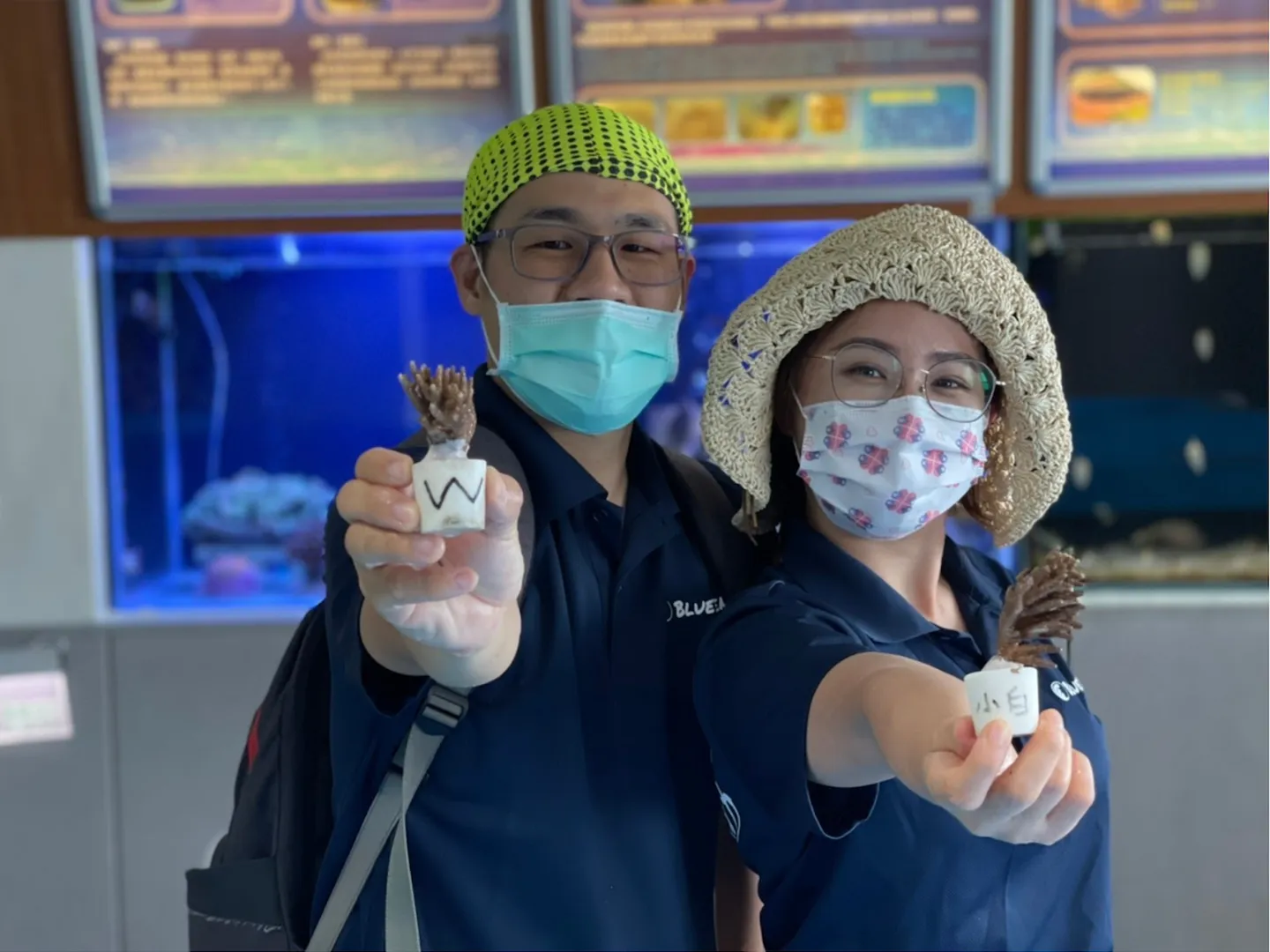
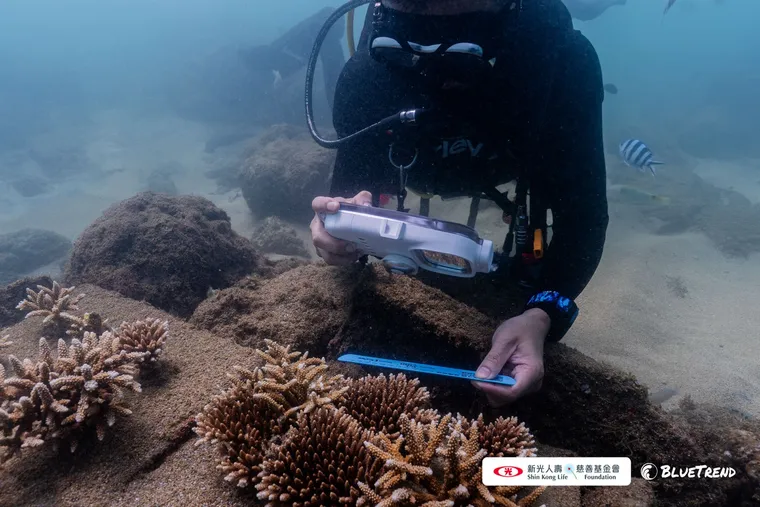
This is also where the journey of the "Coral Florist" begins. The hatchery's restoration approach involves collecting coral fragments that have broken off naturally due to typhoons or other natural events, then cultivating them and mounting them onto gūlǎo stone — a traditional natural building material of Penghu — as a base. Because gūlǎo stone is formed from coral itself, it naturally contains tiny micropores that act as breathing channels for the coral fragment. This pairing of restored coral with ancient gūlǎo stone feels like a beautiful passing of the torch from one generation to the next.
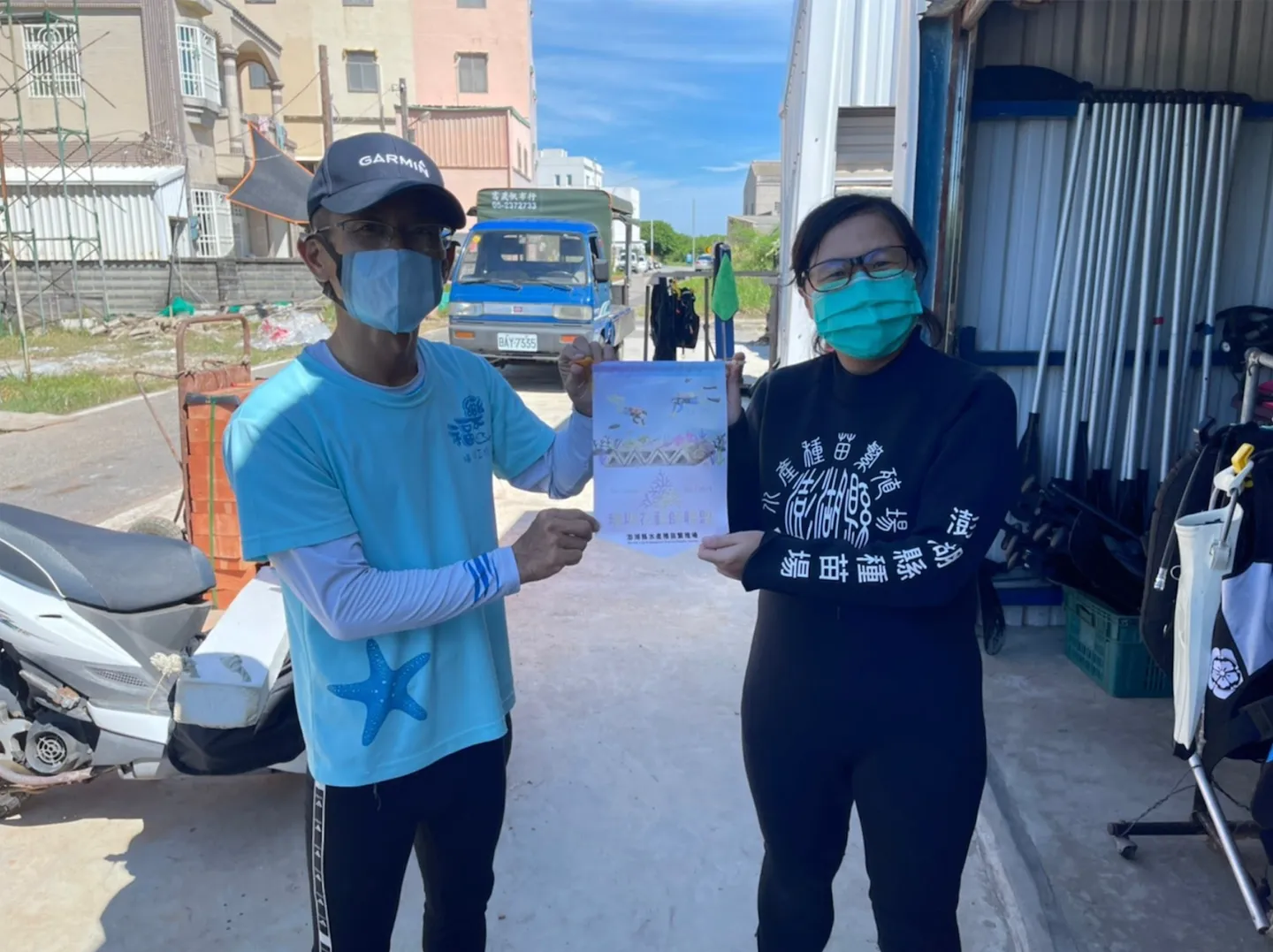
The hatchery maintains close cooperative ties with water activity operators in Penghu's waters.
In Taiwan, collecting coral without authorisation is illegal. As such, the hatchery has partnered with several local Penghu dive shops in the Suogang Hangwan marine area of Magong City to run marine garden coral planting activities. Dive shops wishing to participate must first register legally with the Penghu National Scenic Area Administration and provide customers and students with the appropriate insurance coverage for water activities. Additionally, the hatchery holds various training workshops for operators during the quieter winter diving season, covering topics such as marketing and packaging skills, basic species identification, and coral ecology — so that dive shop instructors can put their knowledge to good use when the diving season kicks off, elevating water activities beyond recreation into education.
You Don't Have to Know How to Swim to Plant Coral
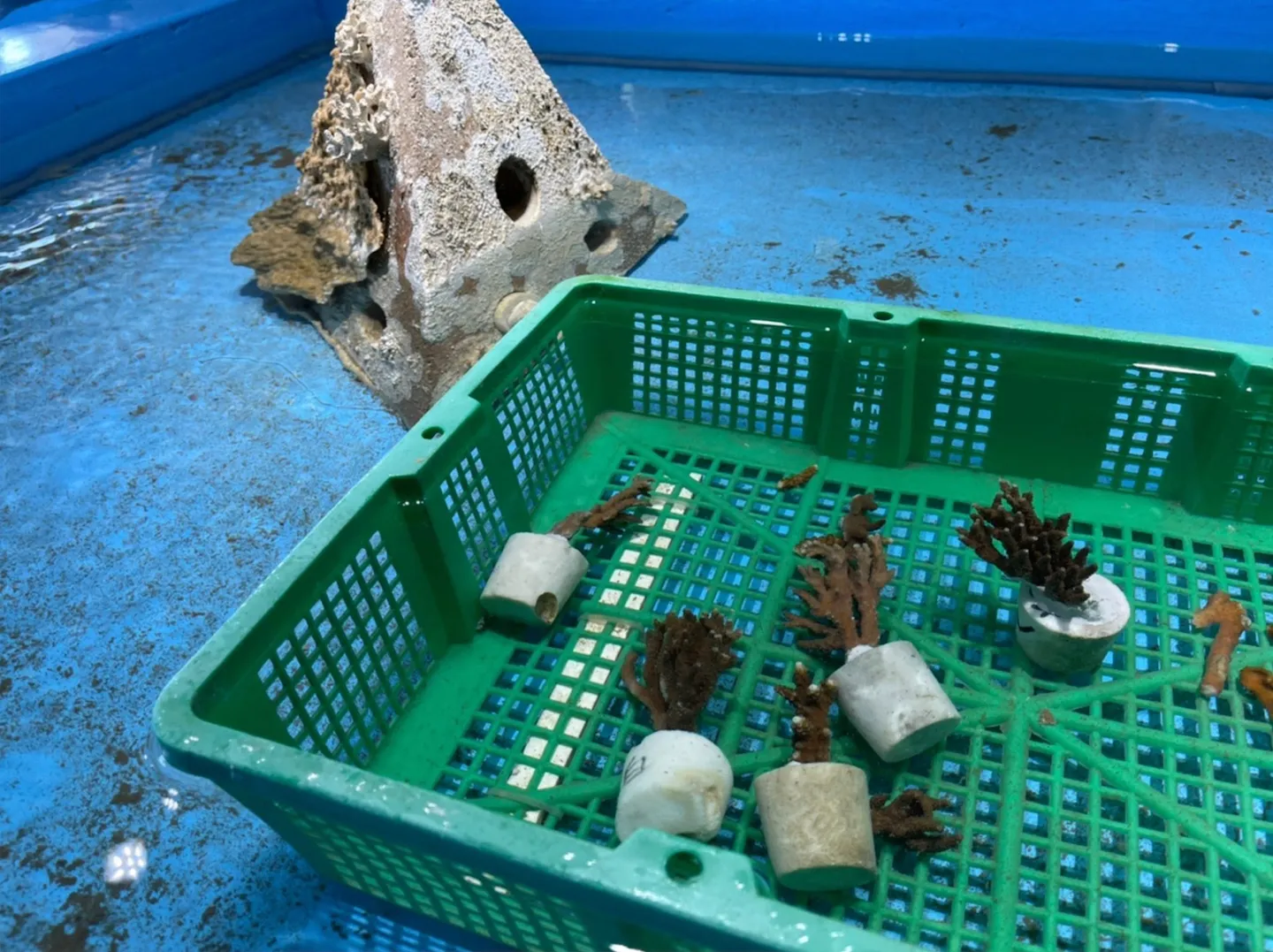
Once several bases are secured, it's time to help the coral move to its new home!
You can sign up for the Coral Florist experience — part of the "Aerobic Ocean Proposal" programme — through operators that partner with the hatchery, choosing either snorkeling or scuba diving to take part in the coral planting activity. The entire coral planting session lasts approximately 2 hours and includes a briefing, equipment distribution, and in-water experience. During the session, you will be given an Acropora coral fragment and a gūlǎo stone base. After hand-kneading epoxy putty into shape for fixing, you can secure the coral fragment onto the base. You can even give your coral baby a name and look forward to watching it grow!
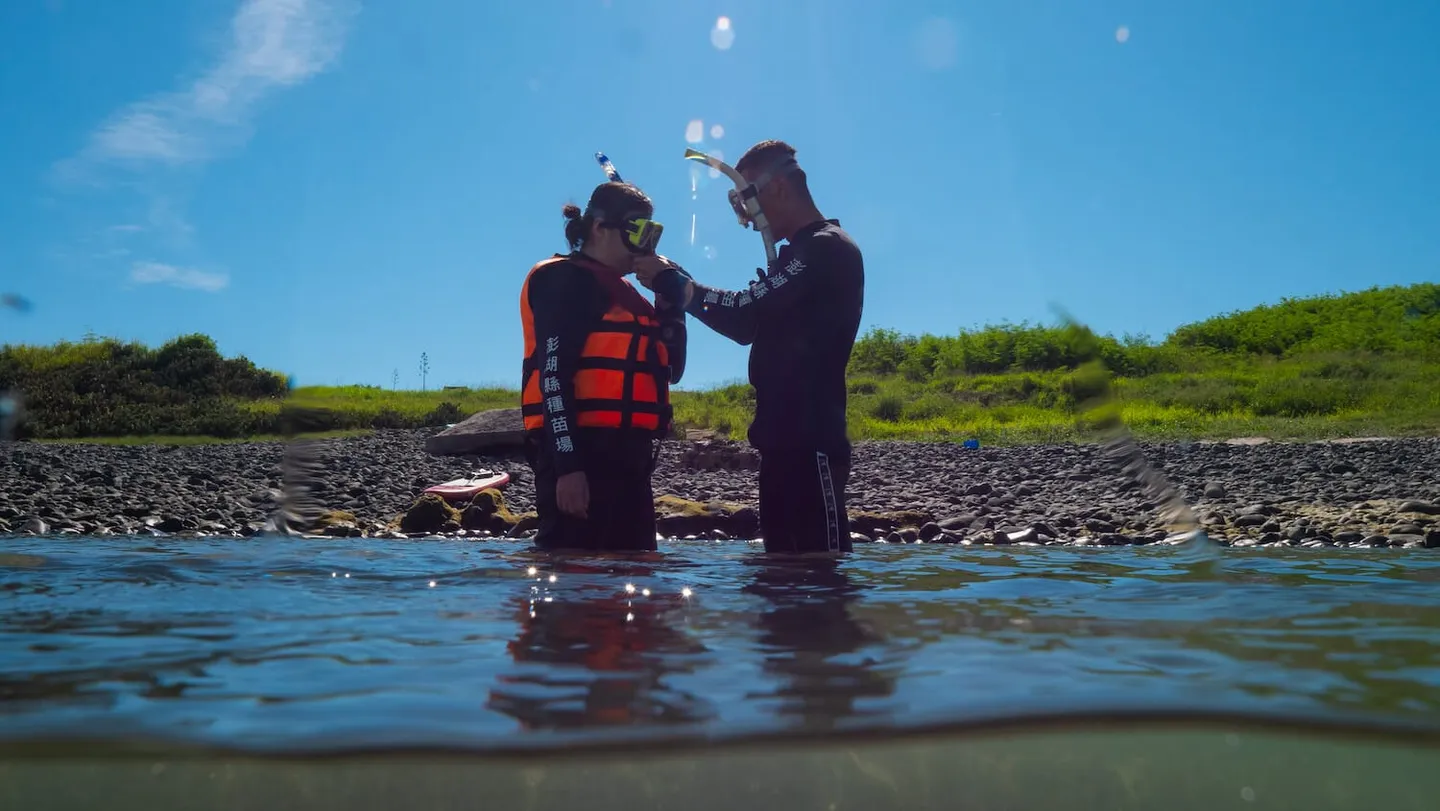
The calm, flat waters of Penghu's Hangwan Bay are perfect for water activities.
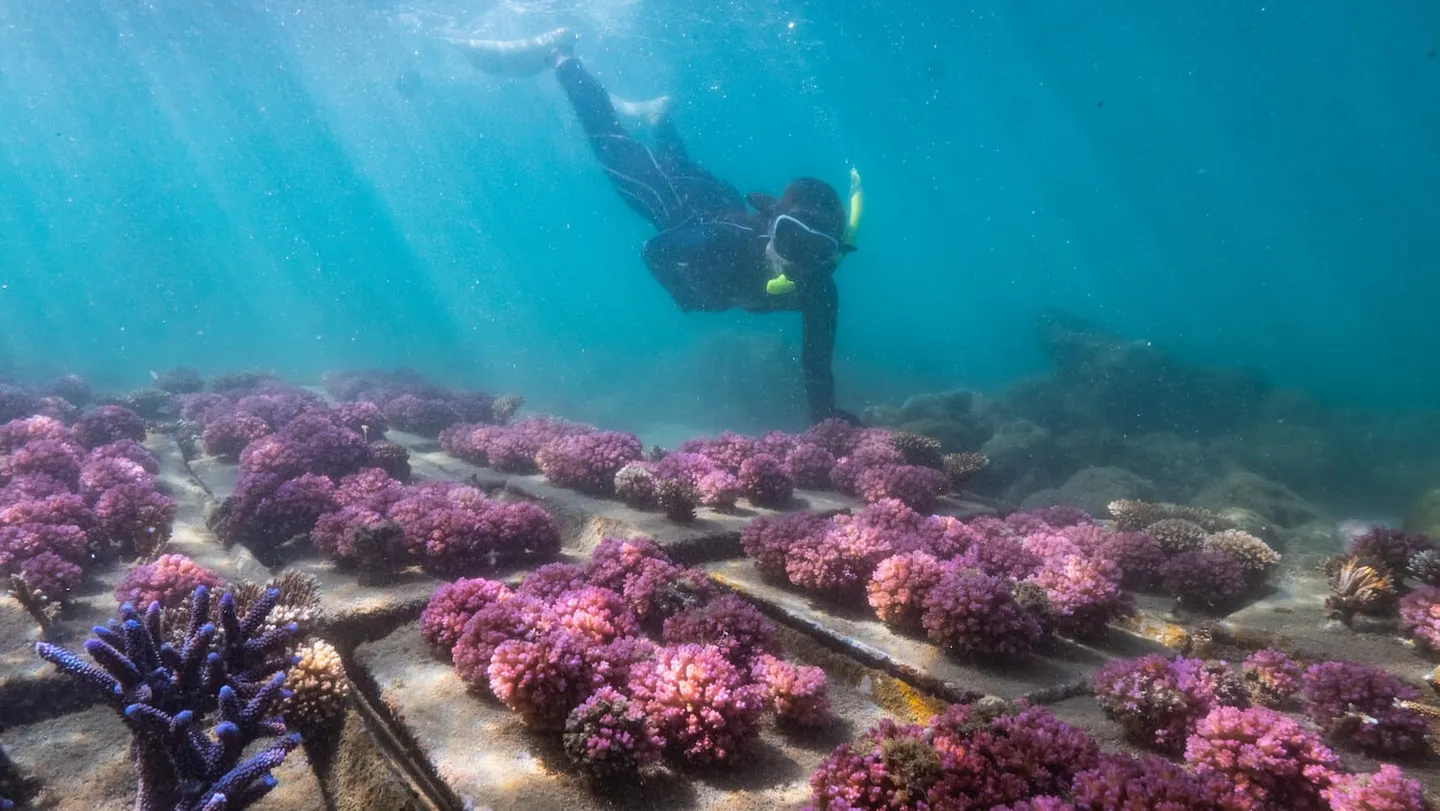
For those who choose snorkeling: upon arriving at Suogang Hangwan, your instructor will take you to the coral planting zone using a torpedo buoy, introducing the underwater coral ecosystem along the way. Taiwan's first artificial coral marine garden will slowly come into view before your eyes — stone corals in an array of colours, lavender-hued staghorn coral resembling fields of lavender, expansive table-shaped Acropora colonies — and you may even spot moray eels lurking inside the artificial triangular transplant bricks awaiting deployment. For safety reasons, snorkelers will have the coral planted by the instructor on their behalf. Congratulations — at this point, your coral planting is complete! After the planting, your instructor will take you to the nearby underwater mailbox, where you can post the waterproof postcard you wrote earlier and leave behind a one-of-a-kind underwater memory.
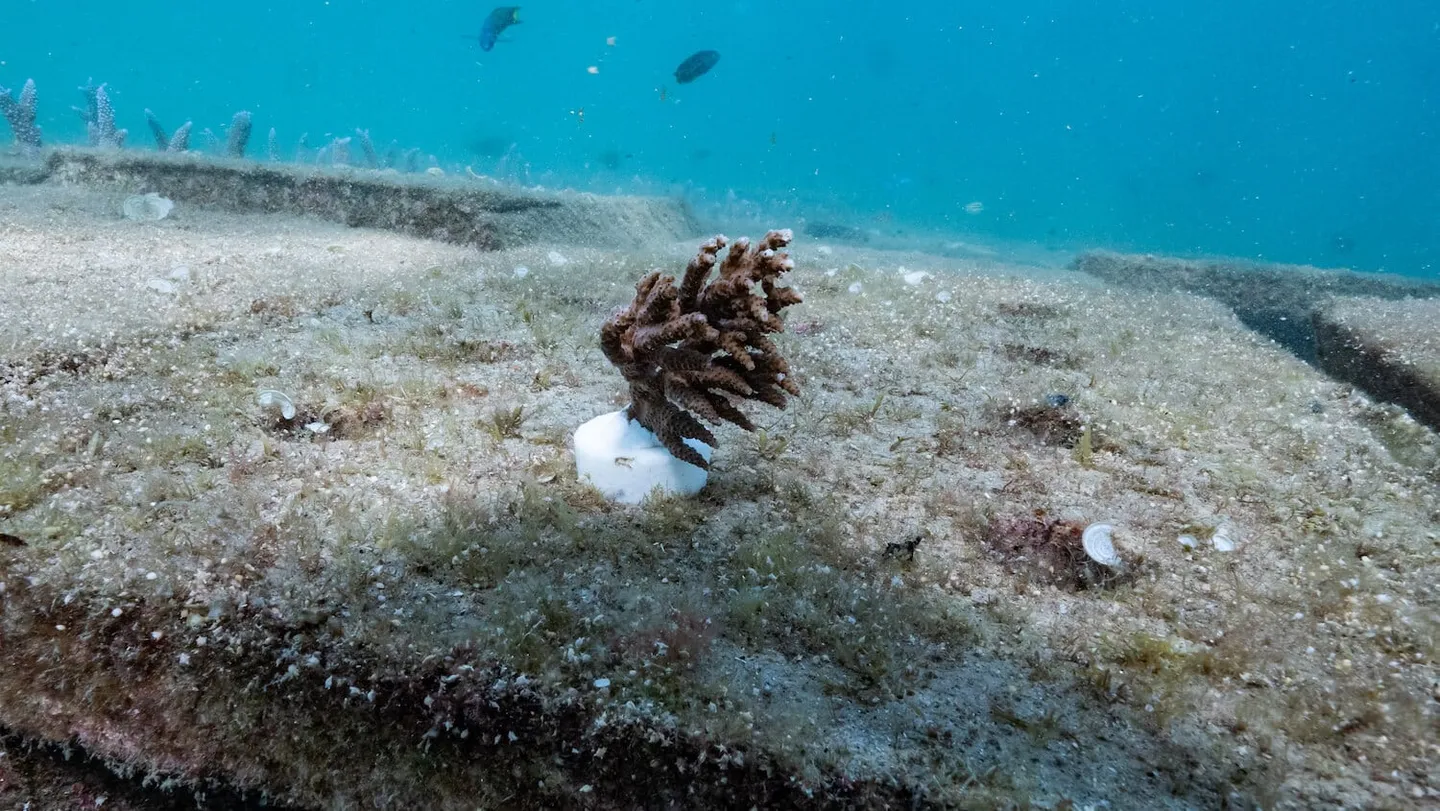
Grow big and strong, little coral!
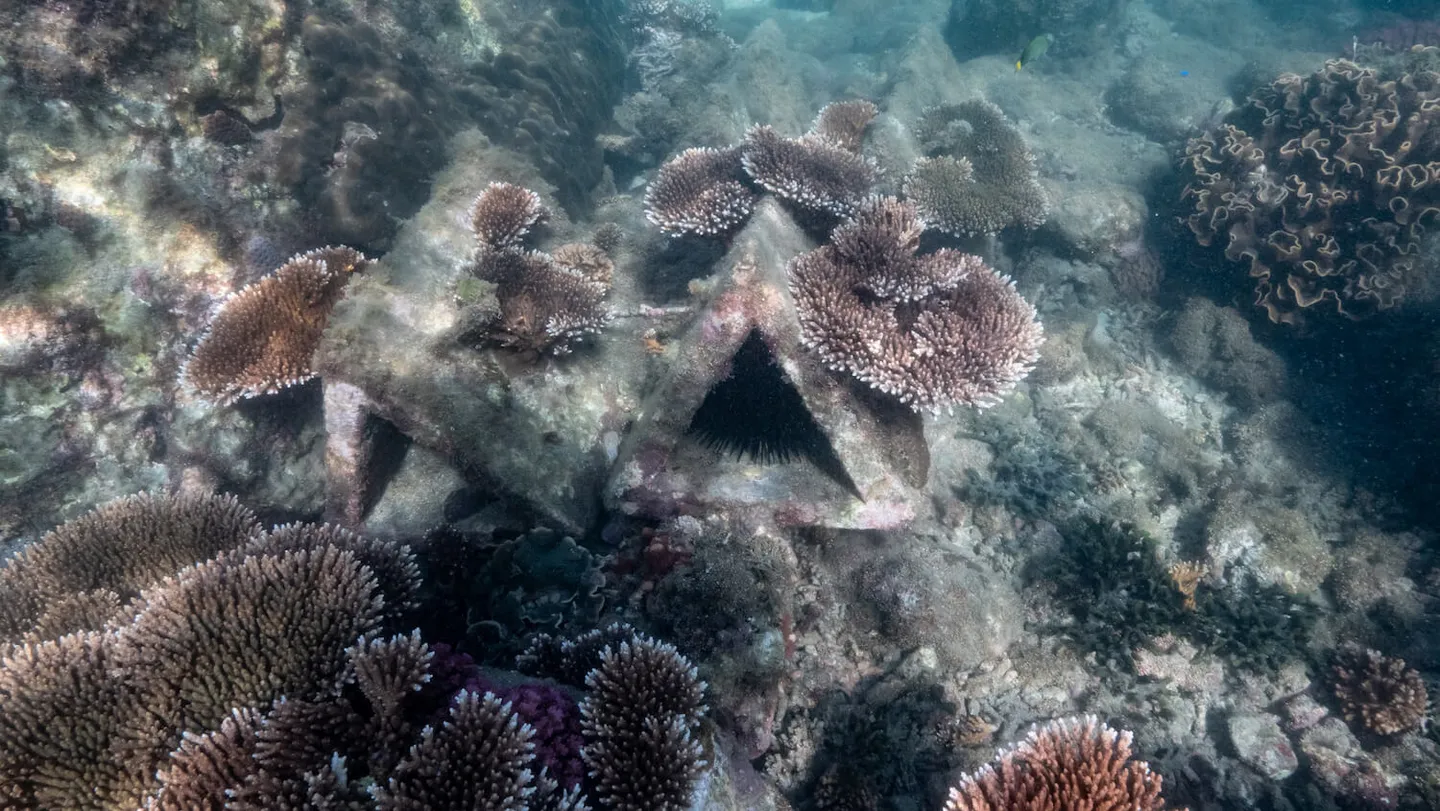
As the coral matures, it provides a diverse habitat for marine life.
For those who choose scuba diving: your instructor will guide you to a flat sandy area where you can kneel and position yourself, then hand-plant your coral fragment directly into a transplant brick. As the coral grows, the accumulating calcium carbonate skeleton will gradually encase the concrete brick, making it a part of the coral itself. After completing the planting, you can explore the hatchery's magnificent coral scenery alongside your instructor — and if you're lucky, you might even encounter a sea turtle!
Perhaps There Is Still More We Can Do
Through government-led coral restoration efforts in Penghu, local operators are encouraged to participate, and visitors plant coral with their own hands — deepening participants' understanding of and connection to coral. When you truly come to know coral, you no longer want to harm it; instead, you begin to care for it. Gradually, you start changing your habits — avoiding touching or stepping on coral, maintaining a respectful distance from reef structures, choosing reef-safe sunscreen made with natural ingredients to avoid disrupting coral polyp growth hormones — and a positive, environmentally friendly cycle begins to take shape.
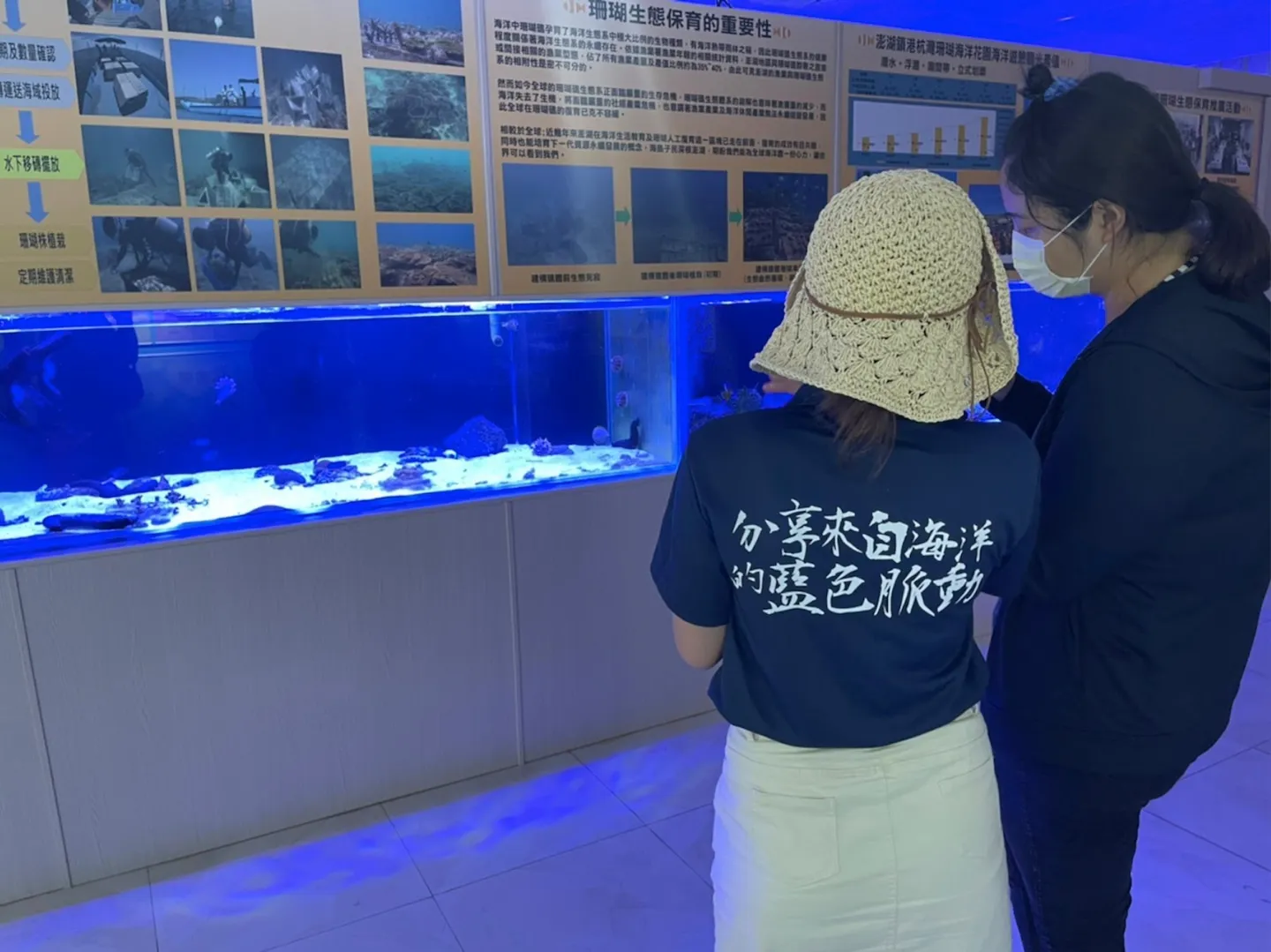
The coral planting process is also a form of environmental education.
Through this gentle government-supported mechanism, Penghu dive shops gain new marketing opportunities and a competitive edge. While providing an educational and entertaining experience, the programme conveys the vital importance of environmental conservation. The three-way collaboration between government, operators, and visitors strengthens the resilience and robustness of coral restoration zones, while also creating a thriving commercial model around the coral marine garden — one with the potential to be replicated elsewhere. Should businesses come on board in the future, there may even be room to draw inspiration from Okinawa's 35-coffee, where already-dead coral is used to roast coffee beans, creating a local specialty souvenir with a portion of the proceeds feeding back into underwater coral garden restoration — completing a positive cycle. Another possibility would be to partner with world coral organisations and take part in the challenge of planting one hundred coral fragments.
Further reading:
- Aquatic Seedling Hatchery
- Penghu Coral Florist Alliance
- Spotting Opportunities for Taiwan's Marine Citizen Scientists Through Australia's Reef Check and Coral Watch
- A Challenge from Okinawa! Let's Plant One Hundred Coral Fragments Together!
- Okinawa's Exclusive 35-coffee — Finding a Second Life for Bleached Coral!