Contents(4)
This article is reprinted in full from the Environment Information Center: "Are Sharks Getting Smaller? Could Hammerhead Sharks Be Next on the Fishing Ban List? Following Expert Hsu Hua-Hsun Through a Fishing Harbor for Answers"
At Chenggong Fishing Harbor in Taitung, rows upon rows of catch are laid out on the ground. Fishermen divide up the work — some weigh the fish and attach price-and-weight labels; others slice off fins, heads, and viscera; some grab soft water hoses to rinse away the slime and blood.
A fishing boat pulls up to the dock. Fishermen haul ashore one Blue Shark after another — locally known as "water sharks" — their skin smooth and gleaming, their eyes clear and bright. Suddenly a bystander lets out a gasp: a large Scalloped Hammerhead Shark is being brought ashore, its wide-angle vision having done nothing to help it escape. Thwack, thwack — two more Hammerhead Sharks, each no longer than a forearm, are stacked up and left to await the next round of weighing, cutting, and transport. These apex predators of the sea have already stopped struggling.
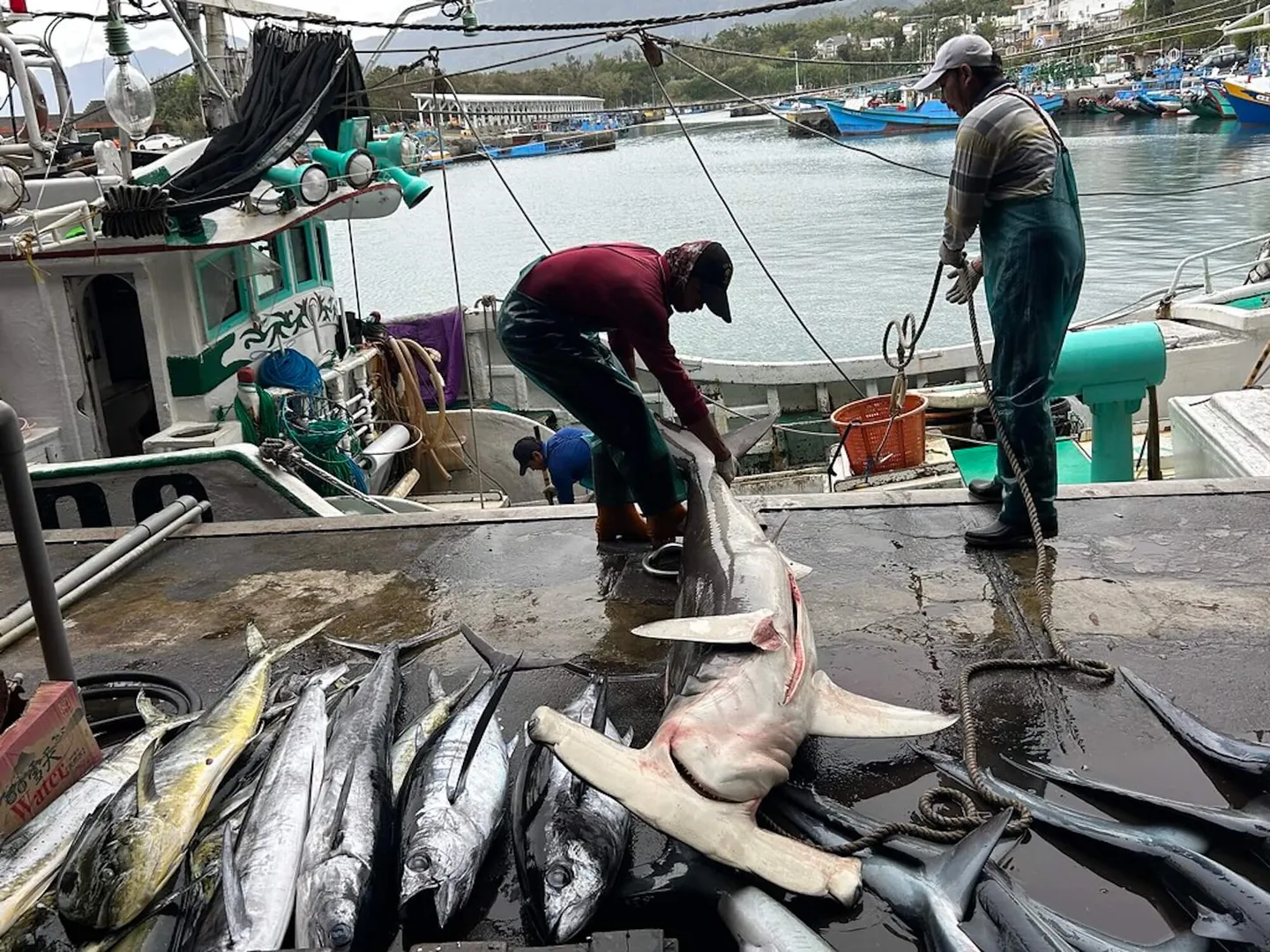
At Chenggong Fishing Harbor in Taitung, a fisherman places a gutted Hammerhead Shark on shore. Photo: Yuan Hui-Yan
Overseas, the capture of sharks as bycatch or through shark finning is called "wasteful shark killing." In Taiwan, however, the Fisheries Agency describes sharks as subject to "whole-fish utilization" — smoked shark at local eateries, fish paste products with no disclosed origin or ingredients, fish liver oil — sharks turn up everywhere.
Dr. Hsu Hua-Hsun, an expert with over 20 years of research in shark resources and conservation, brought students and reporters from the Environment Information Center along to observe and explain the state of Taiwan's shark resources, believing that witnessing things firsthand is what plants and nurtures the seeds of conservation.
Hammerhead Sharks Enter Fishing Ban Discussions — But a Transition Period Is Needed
In early March 2025, the Ministry of Agriculture announced a forthcoming ban on catching Zebra Sharks, Blacktip Sharks, and the Mobulidae family in coastal and inshore waters, with implementation set for New Year's Day 2026. Together with the previously enacted bans on Great White Sharks, Basking Sharks, and Megamouth Sharks, Taiwan now has six shark species under a fishing ban.
When reporters accompanied Hsu Hua-Hsun on a visit to Chenggong Fishing Harbor earlier this year, he revealed that Hammerhead Sharks would likely become another banned species in Taiwan — but they were not included in this latest round of bans.
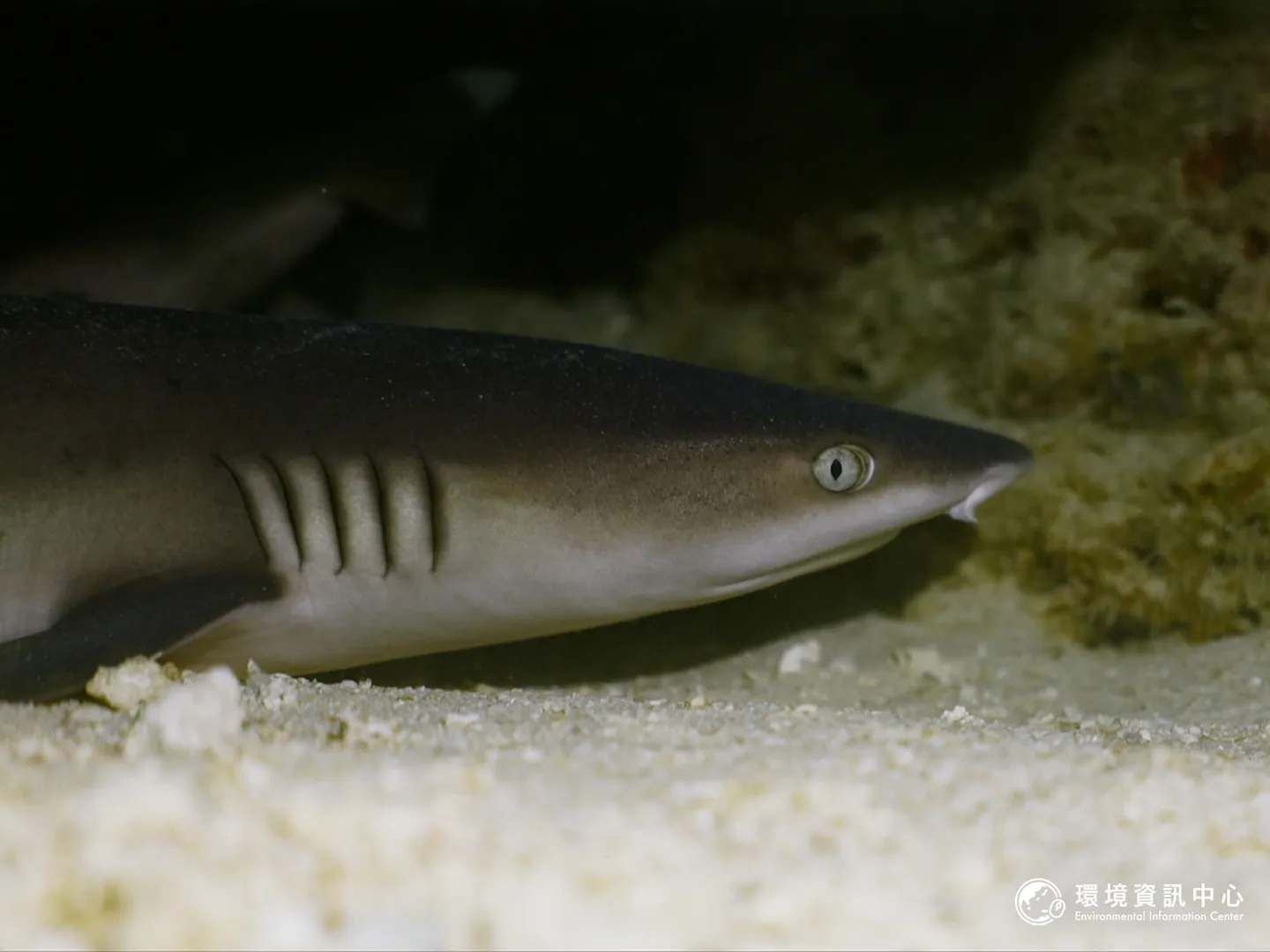
A photographer diving at Green Island captures a Blacktip Reef Shark. Stock photo. Photo: Marco Chang / For use in this article only
Three species of Hammerhead Shark commonly appear in Taiwan's catch: the Great Hammerhead Shark, the Smooth Hammerhead Shark, and the Scalloped Hammerhead Shark.
Of these, Hsu Hua-Hsun says the Great Hammerhead Shark is already "caught in extremely small numbers" — possibly fewer than 10 per year. At a November 2024 consultation meeting on the management of cartilaginous fish in coastal and inshore waters, the Fisheries Agency, fishing associations, academics, and relevant groups agreed to include the Great Hammerhead Shark in the ban, noting that "it would have virtually no impact on fishermen." The other two species, however, present more complexity — the size of individuals caught on the east and west coasts differs, as do the fishing methods used, requiring further consideration of the most appropriate management approach.
It should be noted that all three Hammerhead Shark species are banned in the Atlantic. In response to the Environment Information Center, the Fisheries Agency stated that Hammerhead Sharks are drawing attention both domestically and internationally. CITES has listed them under "Appendix II," meaning they face no immediate threat of extinction but require trade regulation to prevent adverse impacts on their survival. The Fisheries Agency said that Hammerhead Shark imports and exports will comply with CITES requirements. It has already asked the Ministry of Economic Affairs' Bureau of Foreign Trade to add the relevant import/export commodity codes for these species, and plans to conduct resource surveys and assessments of hammerhead shark species in coastal and inshore waters this year, with management regulations to be determined based on survey results.
Hsu Hua-Hsun has consistently emphasized that any fishing ban should minimize the impact on fishermen as much as possible. If implemented, he suggests beginning with total catch limits — once the limit is reached, fishermen could bring sharks to the side of the boat, cut the line, and release them back into the sea. Fishing methods also warrant attention, including restrictions on trawl nets and drift gillnets in coastal and inshore areas.
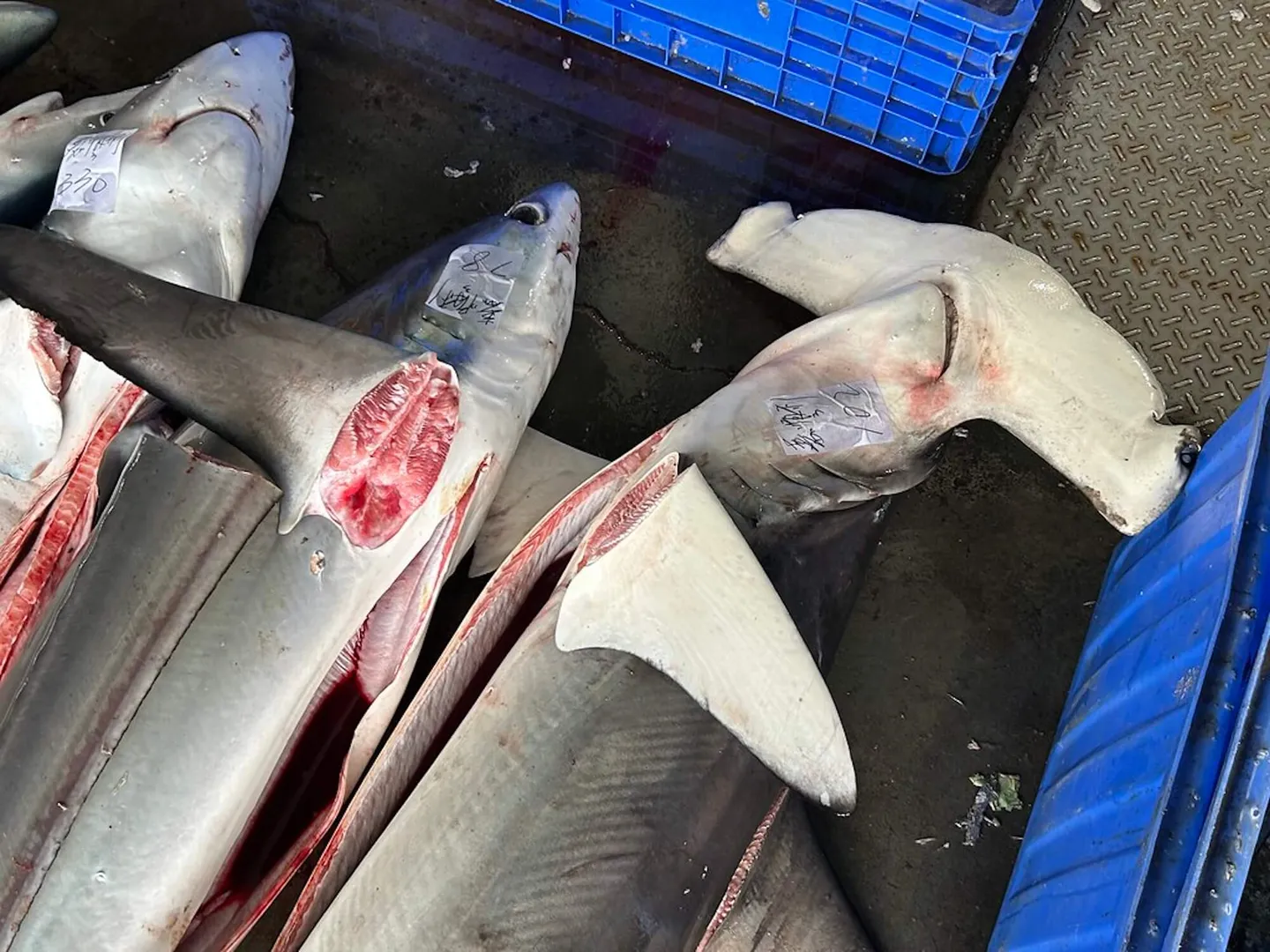
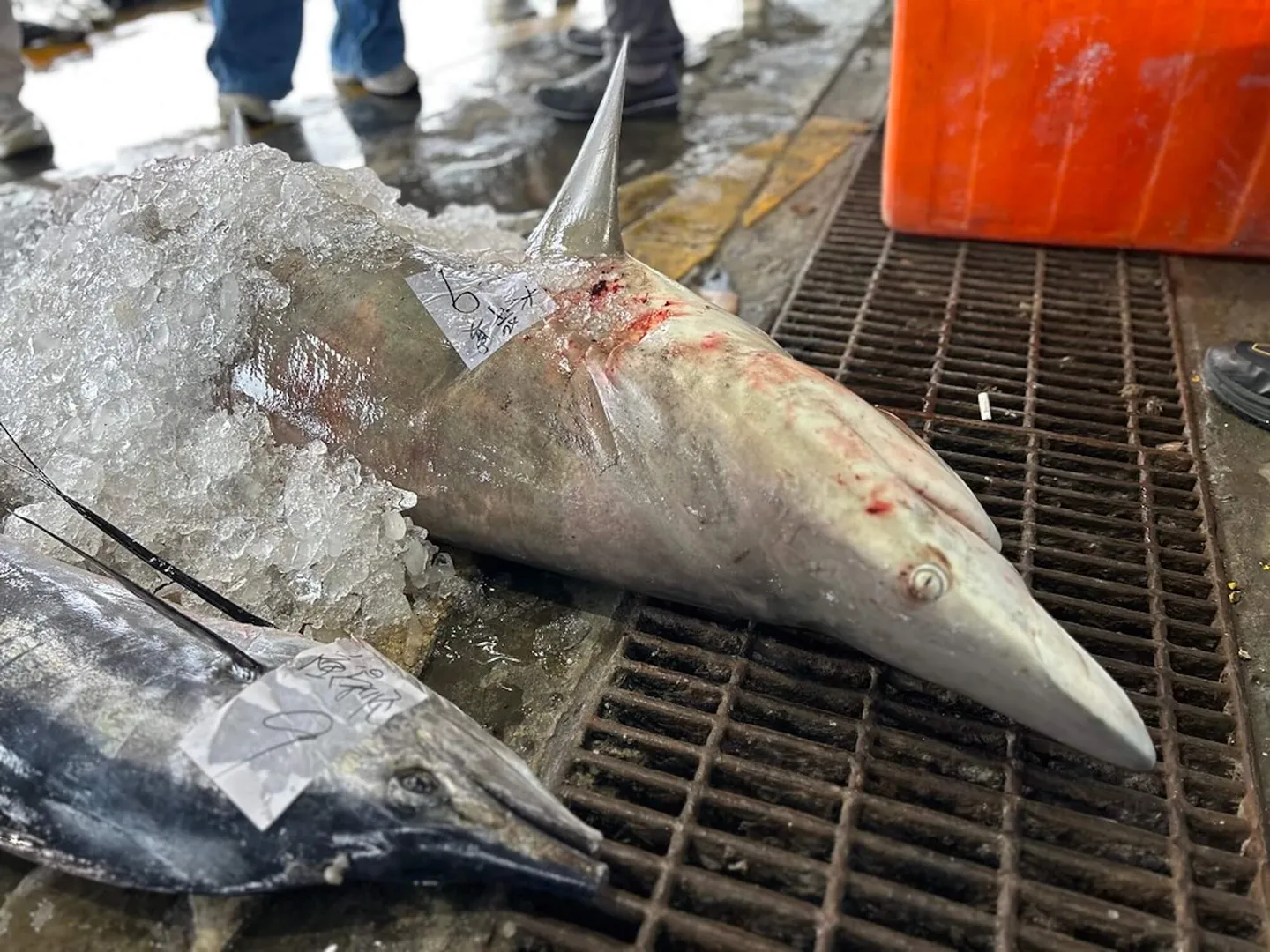
Fish vendors attach labels to the catch, marking prices. Photo: Yuan Hui-Yan
Enforcing a fishing ban has never been easy. Hsu Hua-Hsun notes that fishermen need a transition period — it cannot happen overnight. He uses the Whale Shark as an example: resource surveys began in 2001, and a catch quota was introduced in 2002 at 80 individuals per year, gradually reduced to 30 by 2007. From 2006, it was prohibited to catch Whale Sharks under 4 metres in total length, and the use of harpoons was banned. It was not until 2008 that Whale Shark fishing and product trade were comprehensively prohibited — "full conservation, reached after eight years."
Along this long road of conservation, Hsu Hua-Hsun sometimes tells fishermen that the Philippines began shark conservation reforms in the 1990s, when income levels there were still lower than Taiwan's — yet they managed to achieve conservation measures. This gives Taiwan's fishermen "cause for reflection," he says.


Sharks Are Part of Fishermen's Income — But How Much Are They Worth?
Hsu Hua-Hsun explains that sharks in Taiwan's coastal and inshore waters are "mostly bycatch." While shark meat does not fetch a high price, it still forms part of the catch — "it still has a value." At NT$10 per kilogram, 50 kg can bring in NT$500. Fishermen also have operational considerations: they go out to sea and cast nets once a day, and they will not willingly spend the time and effort to haul in and release a few sharks. "If the catch is poor that day, sharks become part of the income; if the catch is good, there's no time to bother with them, and the priority fish get handled first." The sharks left behind may of course die.
The most valuable part of a shark is its fins, which are typically processed domestically into shark fin for use in restaurants and trade. shark fin is exported primarily to Singapore, followed by China and Hong Kong; shark meat is mainly exported to South American countries and South Korea.
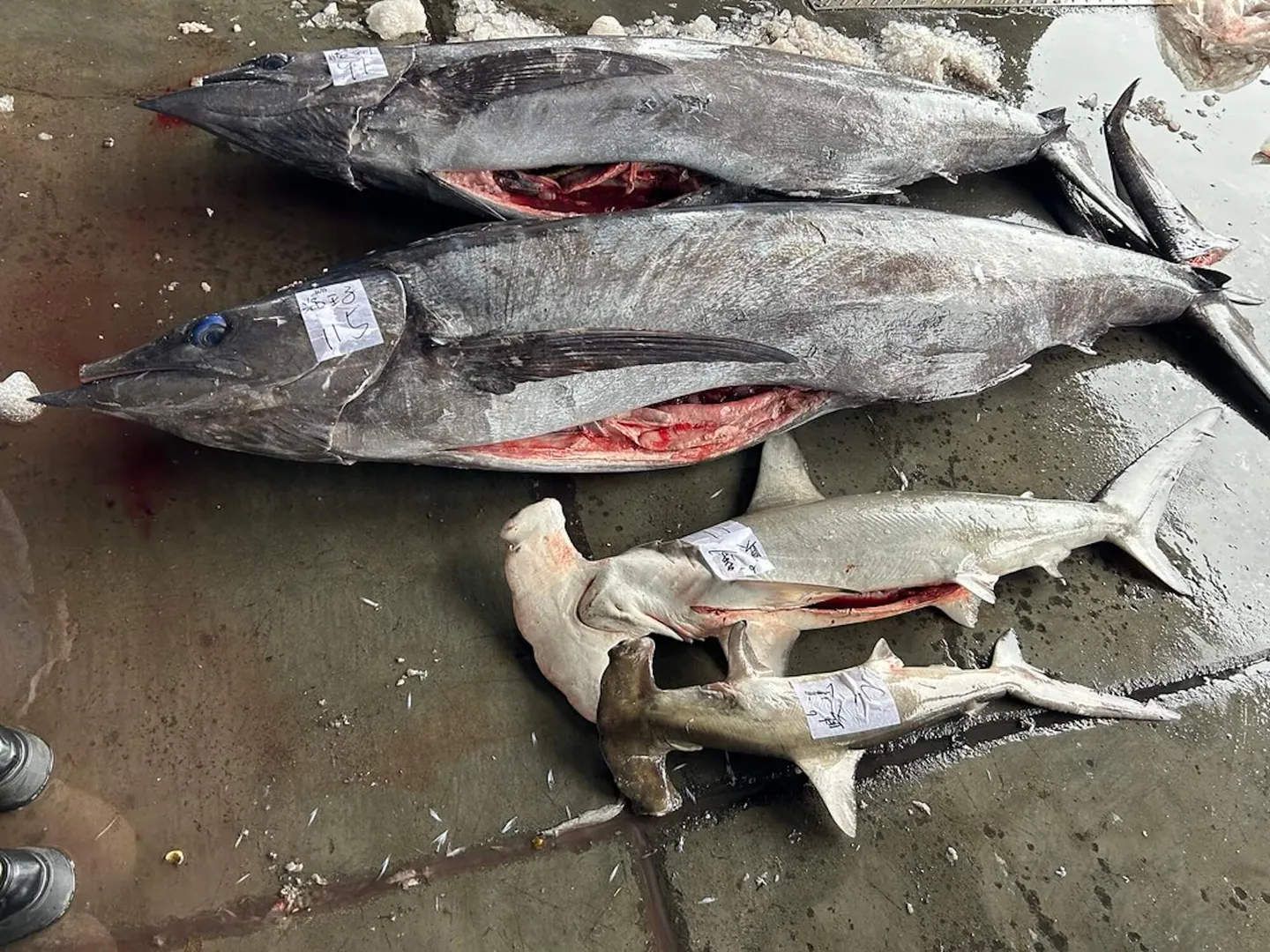
Two small Hammerhead Sharks also fall victim to longline fishing. Photo: Yuan Hui-Yan
At the end of 2024, the IUCN published a long-awaited shark status report — the first in 20 years — titled The global status of sharks, rays and chimaeras. The Taiwan section was co-authored by Hsu Hua-Hsun and two researchers. The report notes that the Fisheries Agency announced Taiwan's first National Plan of Action for Sharks (NPOA-Sharks) and its International Plan of Action for the Conservation and Management of Sharks (IPOA-Sharks) in 2006, followed by a second NPOA-Sharks in 2012 — which has yet to be implemented to this day.
Hsu Hua-Hsun also points out that there are significant differences in habitat type and fishing methods between Taiwan's eastern and western coasts, and that understanding the habitat use of common species in both coastal waters is critical to formulating further management policies. Moreover, research on the biology and ecology of individual species remains scarce, making it necessary to use molecular techniques for species identification in certain populations. Research on heavy metal and pollutant accumulation in sharks, rays, and their products — particularly benthic and deep-sea species — is also insufficient.
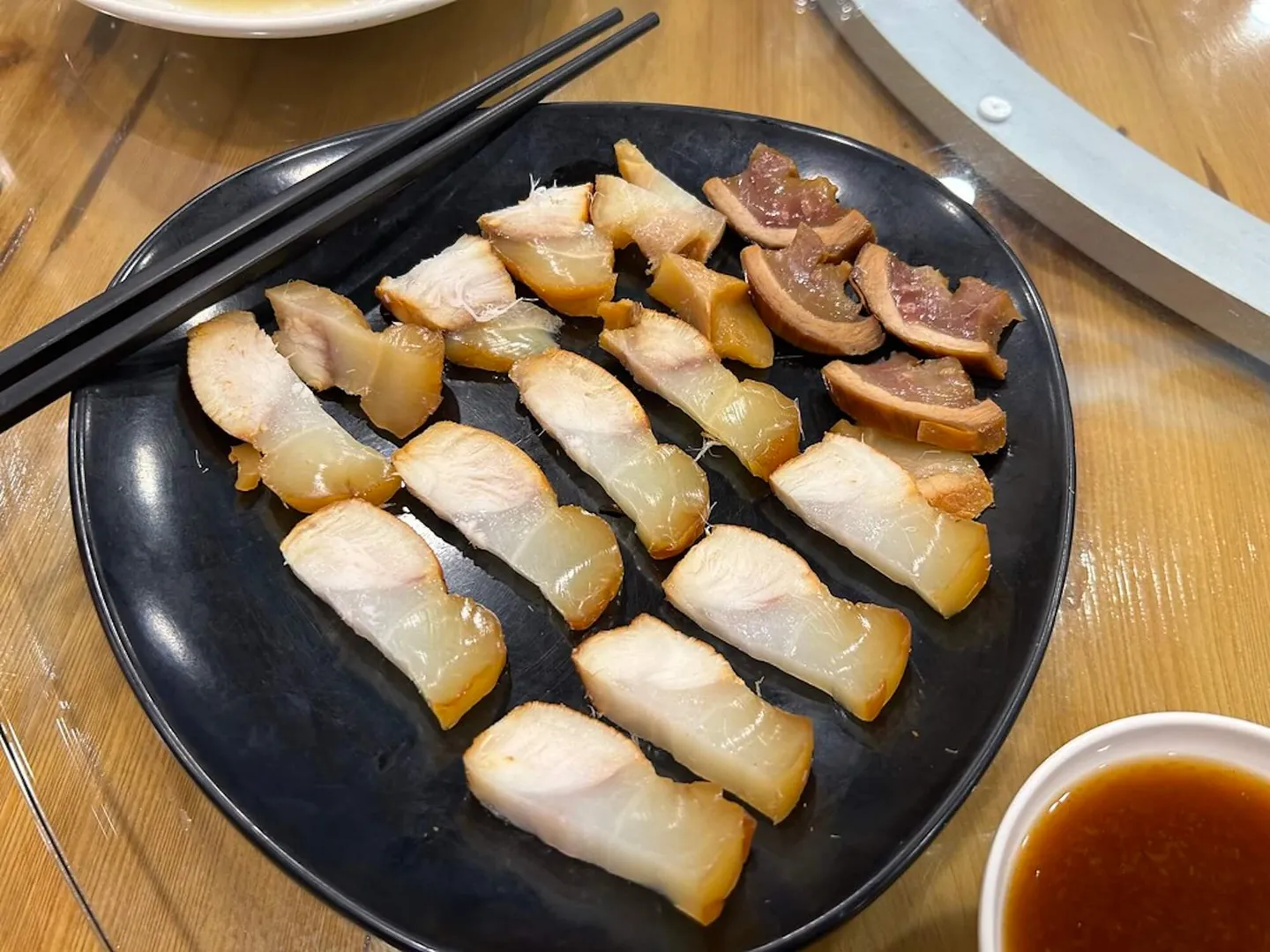
In Taiwan, sharks are subject to whole-fish utilization. Some restaurants serve smoked shark. Photo: Yuan Hui-Yan
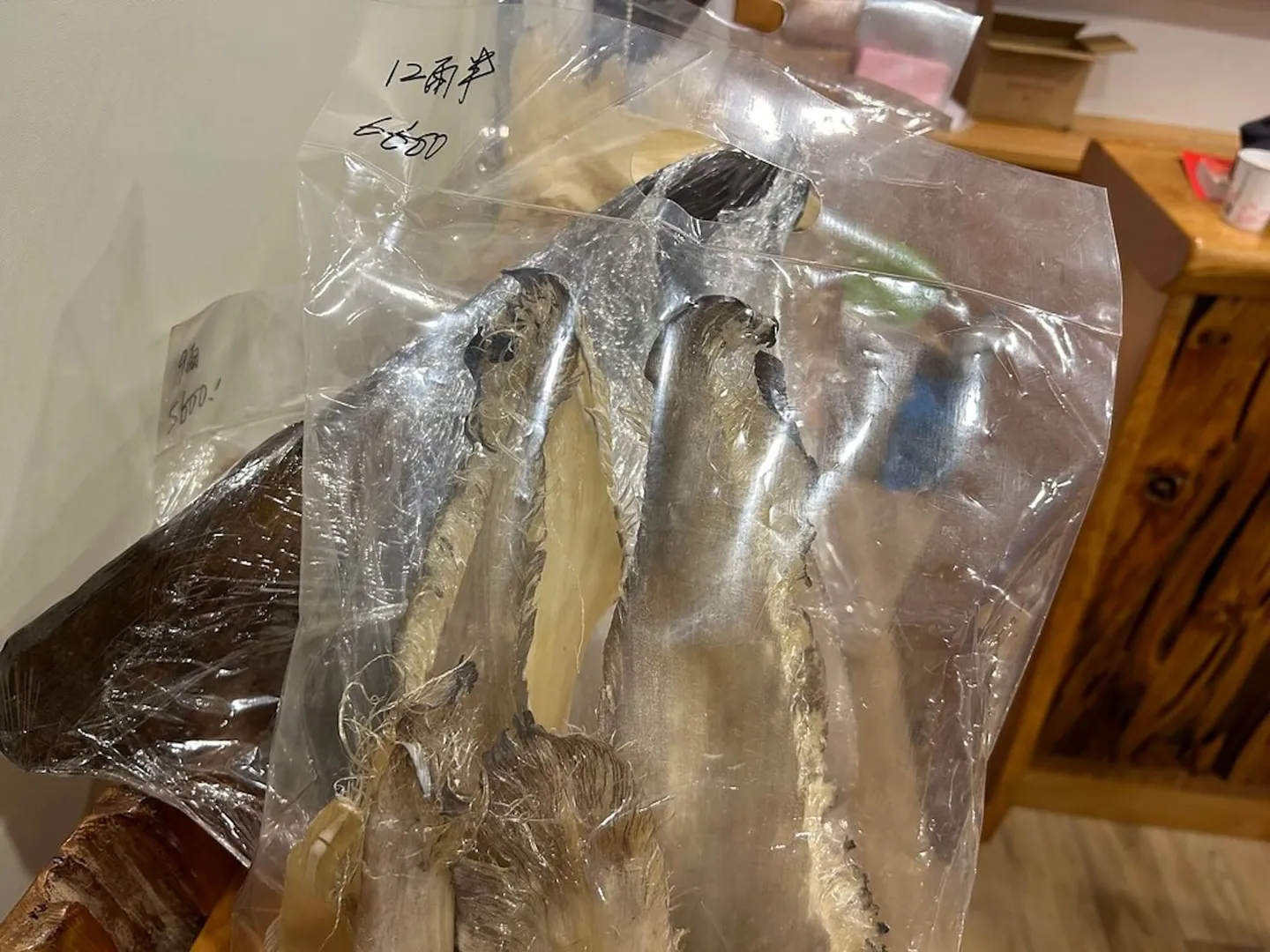
Shark fins are processed and dried into shark fin; 12.5 taels sell for NT$6,600 — far more valuable than the meat. Photo: Yuan Hui-Yan
He elaborates that the habitats, species, fisheries, trade, and uses relating to sharks, rays, and chimaeras are diverse and complex, making it extremely difficult to designate a single large marine protected area (MPA) for them. He recommends starting with targeted management and protection of key species and populations — such as size limits, gear restrictions, and total allowable catch — as well as requiring the landing of whole specimens (prohibiting at-sea finning), designating regional marine protected areas (MPAs), and mandating more comprehensive catch or landing reports. In addition, the NPOA and IPOA must be reviewed and updated.
The Fisheries Agency, for its part, states that it has established "Guidelines for Fishermen on the Handling of Shark Fins" to prevent finning-and-discarding, and that it cooperates with international fisheries management organizations on shark management measures. It also conducts rolling revisions of relevant management and control measures in accordance with resource assessments, aiming to achieve the sustainable use of shark resources, emphasizing that a fishing ban is the final and non-essential management tool.
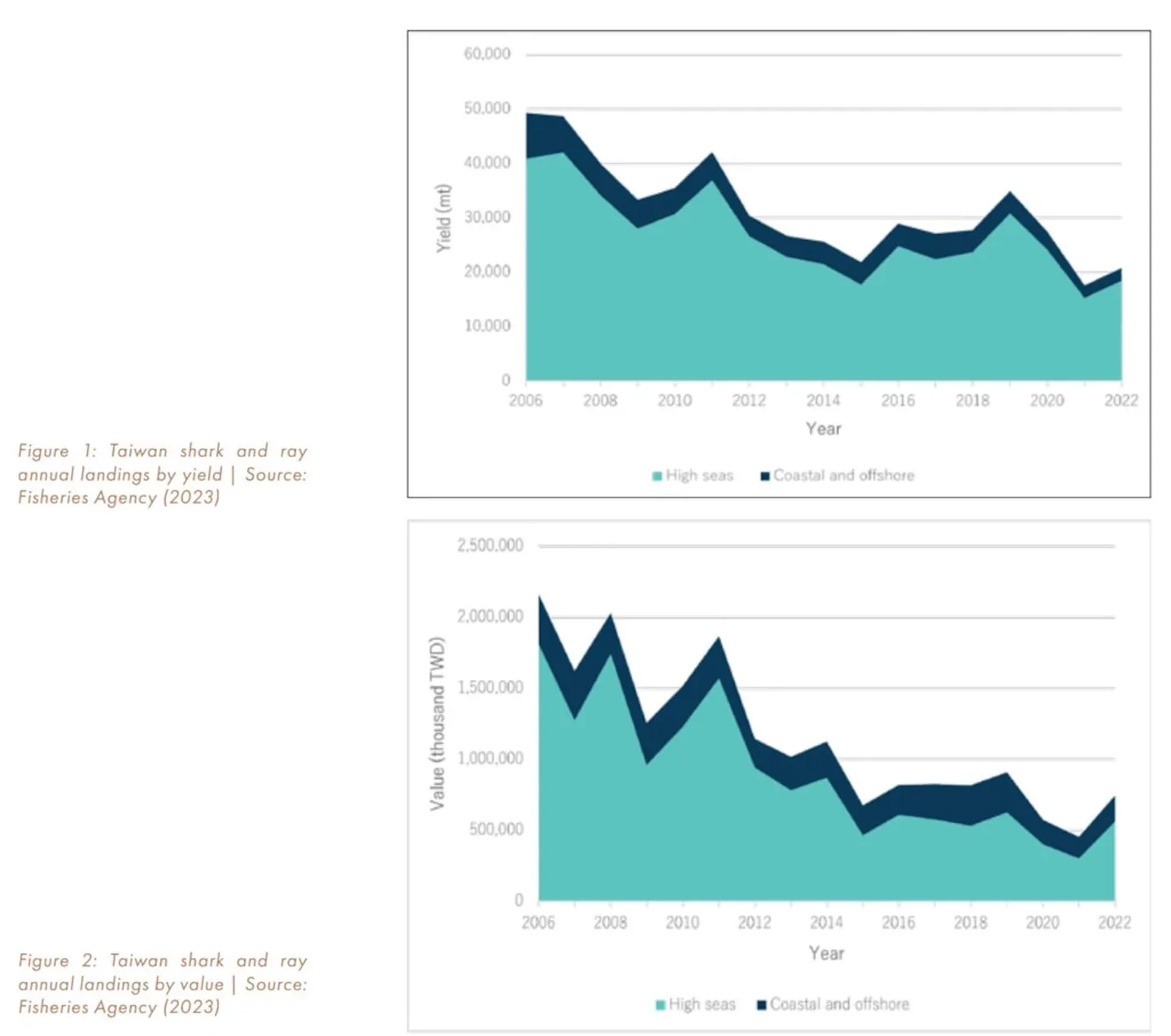
Image source: Excerpted from the IUCN report The global status of sharks, rays and chimaeras
Students Who Love Diving Won't Want to Study Dead Things
In fact, Hsu Hua-Hsun does not advocate for a complete ban on shark fishing. "I wouldn't oppose eating them either — I just think they can be utilized, but sustainably."
He has loved the ocean since childhood. Over 20 years ago, just entering this field of research, he enrolled in the Department of Fisheries at National Taiwan Ocean University, went out to sea for a month of practical training, learned to use longlines, and even sailed from Taiwan to Japan — "a truly rare experience." In the early days, fisheries departments focused on teaching students "how to catch fish more efficiently" and "where fish can be found"; later, the curriculum expanded to include research on the environmental impact of catches, resource ecology management, and related topics.

Shark researcher Hsu Hua-Hsun brings students to visit Chenggong Fishing Harbor in Taitung. Photo: Yuan Hui-Yan
Hsu Hua-Hsun serves as a research assistant at the Coastal and Offshore Fishery Biology Research Center of the Fisheries Research Institute under the Ministry of Agriculture, and is also an adjunct assistant professor at the Institute of Marine Ecology and Conservation at National Sun Yat-sen University. In his research career, he has observed that overall shark catch volumes have been declining for nearly 20 years. "Fishermen themselves know that sharks are getting fewer and smaller."
Much of Hsu Hua-Hsun's research data comes from fishermen, requiring considerable time to build mutual trust. "You have to patiently listen to their conversations — though of course their experience isn't always accurate." For instance, fishermen may only remember their biggest haul, while the actual situation still needs to be independently observed and filtered.
Beyond personnel, the most critical constraint is funding. "The Fisheries Agency has relatively limited funds and too many things to manage. The Ocean Conservation Administration has more budget and can conduct more surveys."
Yet Hsu Hua-Hsun remains confident about the prospects for shark conservation. He feels that today's generation of students has far more access to the ocean than before. "Some of them love diving, and they won't want to study dead things." He also hopes that Taiwan develops more in-depth marine tourism — such as going out to sea and diving to observe cartilaginous fish — so that fishermen, too, have a direction for transformation.
"I of course hope that sharks aren't only seen at fish markets, or only in aquariums — but truly seen in the ocean. Because seeing them is what makes you feel something," he says.
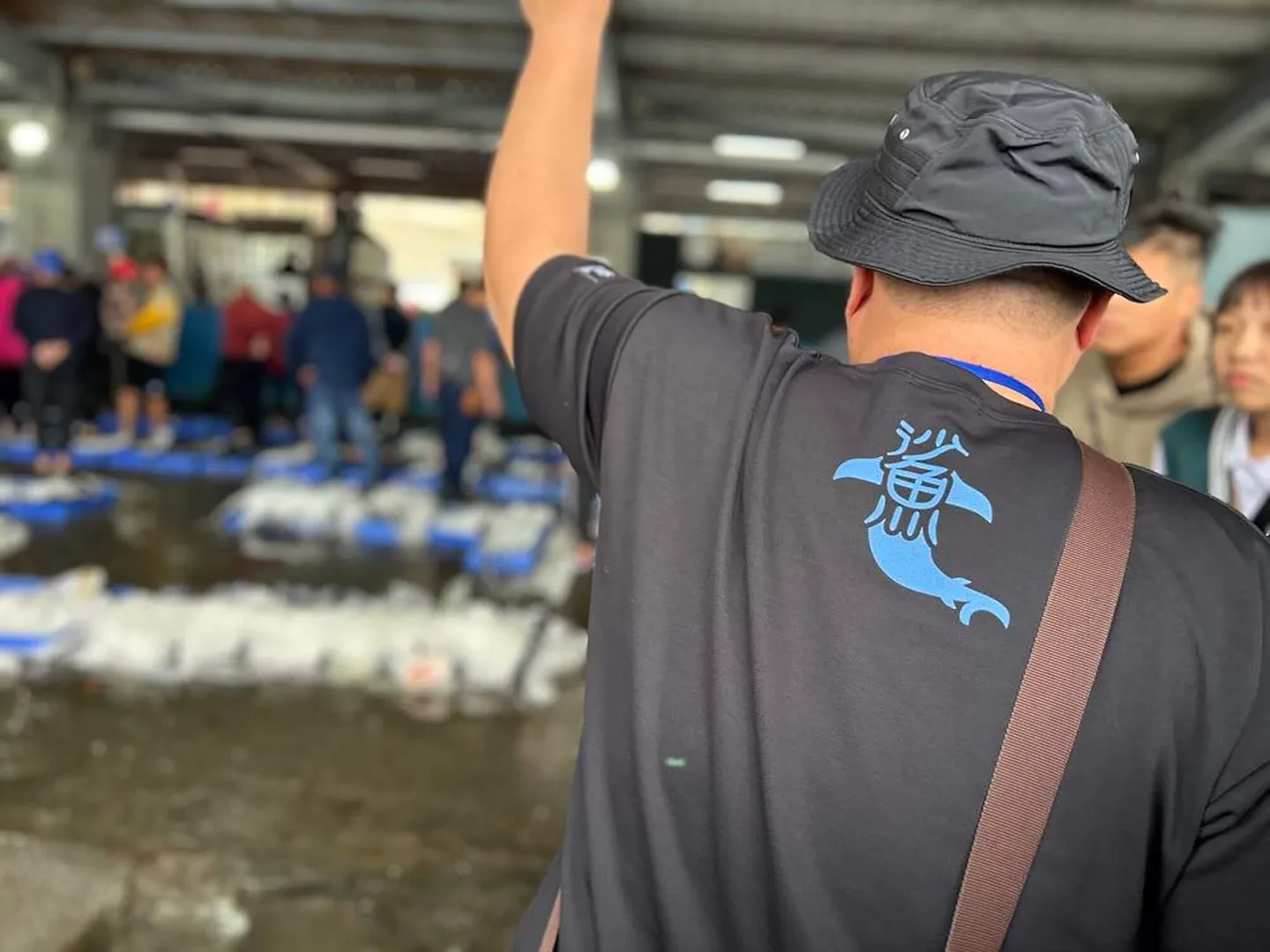
Hsu Hua-Hsun hopes sharks are no longer seen only at fish markets. He believes students who have seen living sharks in the ocean will be genuinely moved. Photo: Yuan Hui-Yan
Further Reading
- Original article: Are Sharks Getting Smaller? Could Hammerhead Sharks Be Next on the Fishing Ban List? Following Expert Hsu Hua-Hsun Through a Fishing Harbor for Answers
- Fisheries Agency Announces Coastal and Inshore Fishing Ban on Zebra Sharks, Blacktip Sharks, and the Mobulidae Family — Violators Face Fines Up to NT$150,000