![Can't Speak Diving English Abroad? The Essential Diving English Guide for Divers — Part 2 [Practical Conversation Edition]](/_images/3c31fda06c08-1440w.webp)
Contents(9)
Diving English for Recreational Divers
The cover photo throws my former colleague under the bus.
This article lists some practical conversations that recreational divers are most likely to need. It is divided into two main sections: Before/After a Dive and Possible Problems You May Encounter. Please use it alongside the mind map from Part 1 and adapt the phrases to your own situation. This article is written primarily around the PADI (certification agency) system — other systems may differ slightly in wording, but the content is largely applicable across the board!
If you haven't read Part 1 yet — Can't Speak Diving English Abroad? The Essential Diving English Guide for Divers — Part 1 [Vocabulary Edition] — go check it out first.
I also invited my friend Scuba Strider 潛旅·行者 (click to visit the Facebook page) to proofread the English and offer additional suggestions — his side notes will appear throughout the article! He was originally an English teacher in Hong Kong who wanted to help students learn English through scuba diving, so all of his page content comes in both Chinese and English. Fellow divers who want to improve their English, go follow him now!!
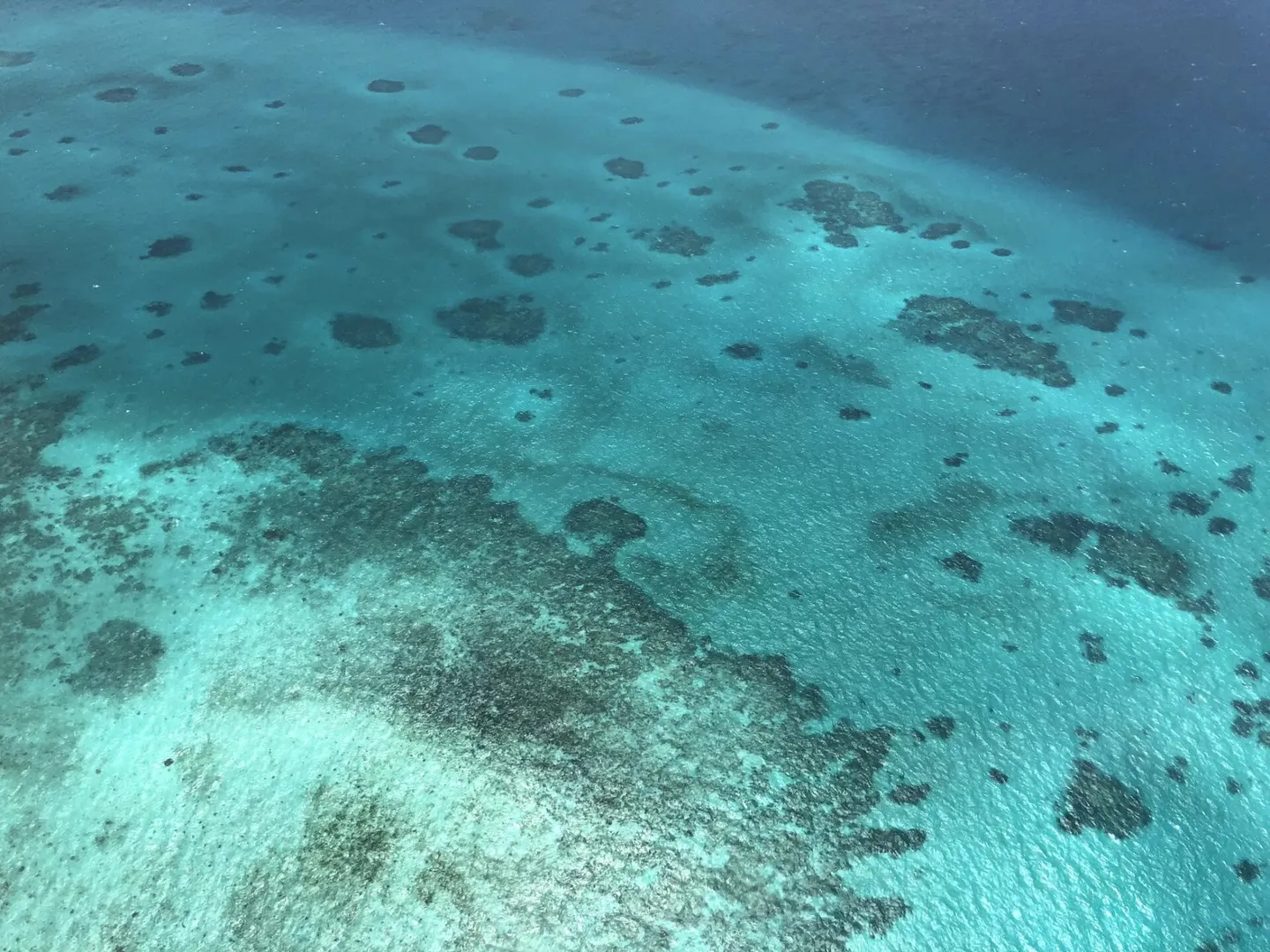
An aerial view of Australia's Great Barrier Reef


Before/After a Dive
Before you head out, ask about accommodation and diving.
1. I would like to book a dive trip for ____ people. Are there any spots available from 25th July to 30th July?
I would like to book a dive trip for ____ (number of people). Are there any spots available from 25th July to 30th July?
You can swap "dive trip" for a number of alternatives depending on what you need, for example:
Accommodation, Liveaboard, Snorkel trip, Discover Scuba Dive/Intro Dive, Open Water course (refer to Part 1 for other course names in English).
2. How much do you charge for a dive? Does it include dive guiding?
How much do you charge for a dive? Does it include dive guiding?
"A dive" and "dive guiding" can be swapped for things like Equipment rental, Insurance, Food/Meals, Airport transfer.
Jen's side note: In Australia, for example, dive guide fees are calculated separately — charged per person per dive, not as a flat rate the way a dive guide is priced in Taiwan. When travelling abroad, pay attention to how costs are broken down locally, or the final bill may not match what you budgeted. On another note, a few years ago I went by myself to dive on a local island in the Maldives and found I could negotiate very reasonable prices directly with the operators. At the time, I was a solo female traveller who booked a large honeymoon suite for five days (sounds a bit sad, haha), dive trips included — if I recall correctly, it came to just over NT$10,000. However, when I arrived on the island — with barely ten tourists on the whole island — the dive shop tried to backpedal and charge me more. Luckily I had screenshots of all our messages, so I'd strongly recommend sorting everything out before you leave. Also, a word of caution to female travellers: do stay alert, and be a little wary if a dive guide seems odd or makes you uncomfortable.
3. Is there any extra cost for Nitrox?
Is there any extra cost for Nitrox?
4. How many divers will be guided by one dive guide?
How many divers will be guided by one dive guide?
5. Could you find me a buddy?
Could you find me a buddy? Could you help me buddy up with other divers?
Jen's side note: In Australia, many divers don't dive with a guide at all — they attend the briefing and then jump in with their own buddies. But if you're travelling solo, don't worry about being forced to pay for a dive guide just to have someone in the water with you. You can simply ask the dive shop to pair you up with another diver — it's a great opportunity to make new friends! Once, I met a Chinese gentleman on a trip. I would usually suggest Chinese-speaking divers dive with a guide, since most are more comfortable with guided diving from their certification training. After I mentioned he could find his own dive buddy, he said, "Sure, find me one!" My boss paired him with an American gentleman who had thousands of dives under his belt. I glanced down at the Chinese gentleman's dive record in my hand: "AOW, 50 dives." My heart sank a little. When they came back after their first dive, I quietly pulled the American aside — "Hey! XXX, how was your dive?" — and to my surprise, he gushed about how great the Chinese gentleman was, how well he dived, and what a fun time they had. They ended up diving together for the next three days. Afterwards, the Chinese gentleman told me he was actually an SDI (certification agency) instructor — and that he just liked to travel incognito.
6. Could you explain the dive plan again?
Could you explain the dive plan again?
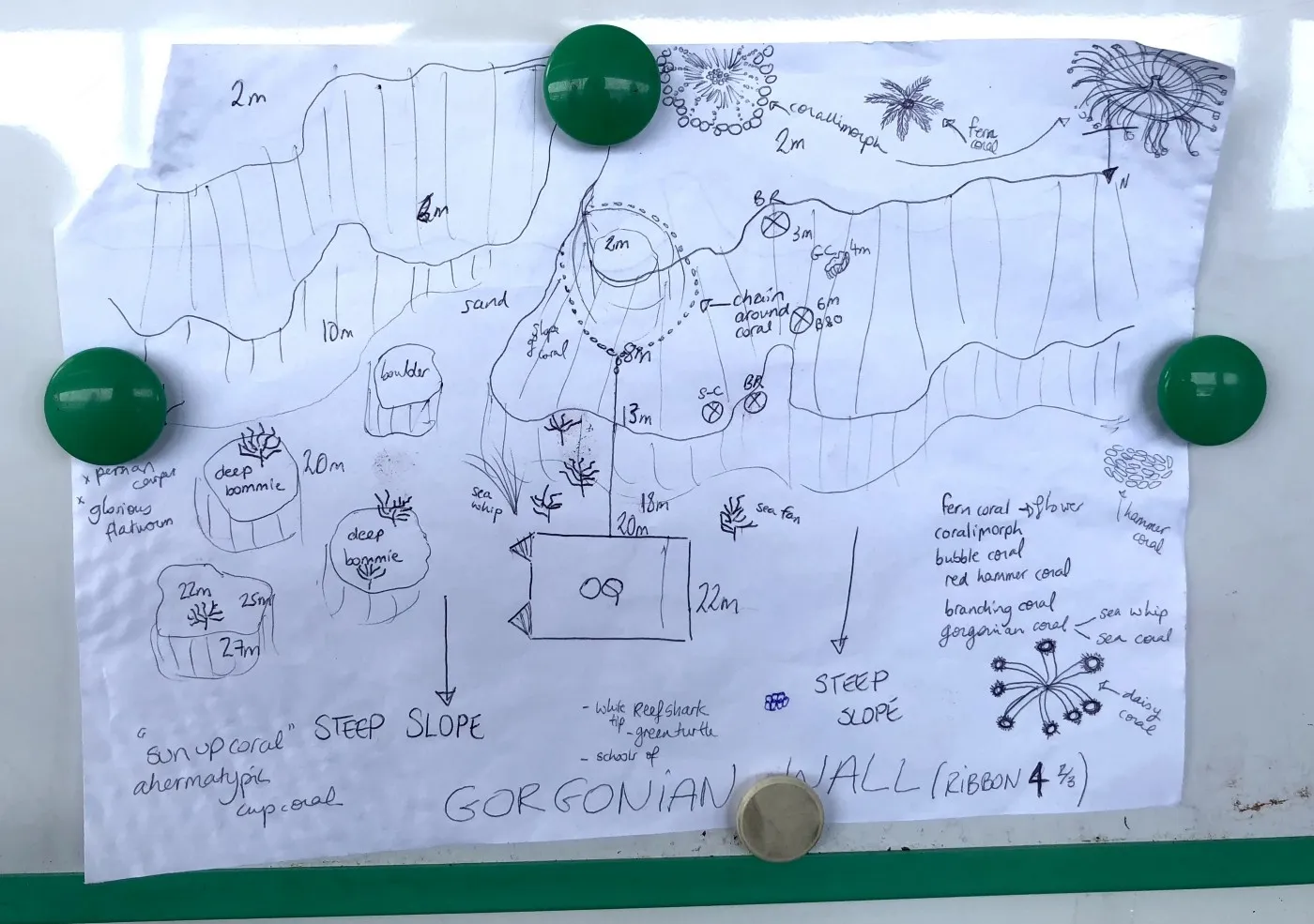
7. I would like to see some nudibranchs. Could you try to find me some?
I would like to see some nudibranchs. Could you try to find me some?
Feel free to swap "nudibranchs" for whatever marine life you want to see. Here are just a few examples — specific scientific names are not listed:
Whale Shark, Reef shark, Hammerhead Shark, sea turtle, Sea slug, Frogfish, Stonefish, pygmy seahorse, Leafy sea dragon.
Jen's side note: I used to always mix up "nudibranch" and "sea slug" until a passenger explained the difference while sharing photos. The word "nudibranch" actually comes from Latin for "naked gills" (click to read the Wikipedia entry) — so when you see the exposed gill plumes on the animal's back, "nudibranch" is the correct term to use. I found a really well-written, easy-to-understand article where the author explains: "all nudibranchs are sea slugs, but not all sea slugs are nudibranchs." Click through to read it if you're interested.
8. Which dive site(s) will we visit?
Which dive site(s) will we visit?
9. Do you know where I can buy some seasick pills?
Do you know where I can buy some seasick pills?
Seasickness medication can also be called Motion sickness tablets or Seasick pills.
Jen's side note: When I first went to a pharmacy I always asked for "seasick pills," but for some reason pharmacists never seemed to understand. Eventually I learned from a pharmacist that the proper term is "motion sickness pills/tablets." When I was working in Australia, quite a few boat operators didn't sell medication-based seasickness remedies — not sure if it was to avoid liability — but they did sell something called Ginger tablets, which apparently also help with nausea. My housemate in Australia worked as crew on another boat company and once told me that ice can also help with seasickness, which is apparently one reason why the air conditioning on boats is often blasted so cold. During my volunteer stint on Mike Ball, I was seasick for all seven days living on the boat. By the end I knew that getting in the water would help, but I simply couldn't manage it — and became the most seasick dive instructor they had ever known.
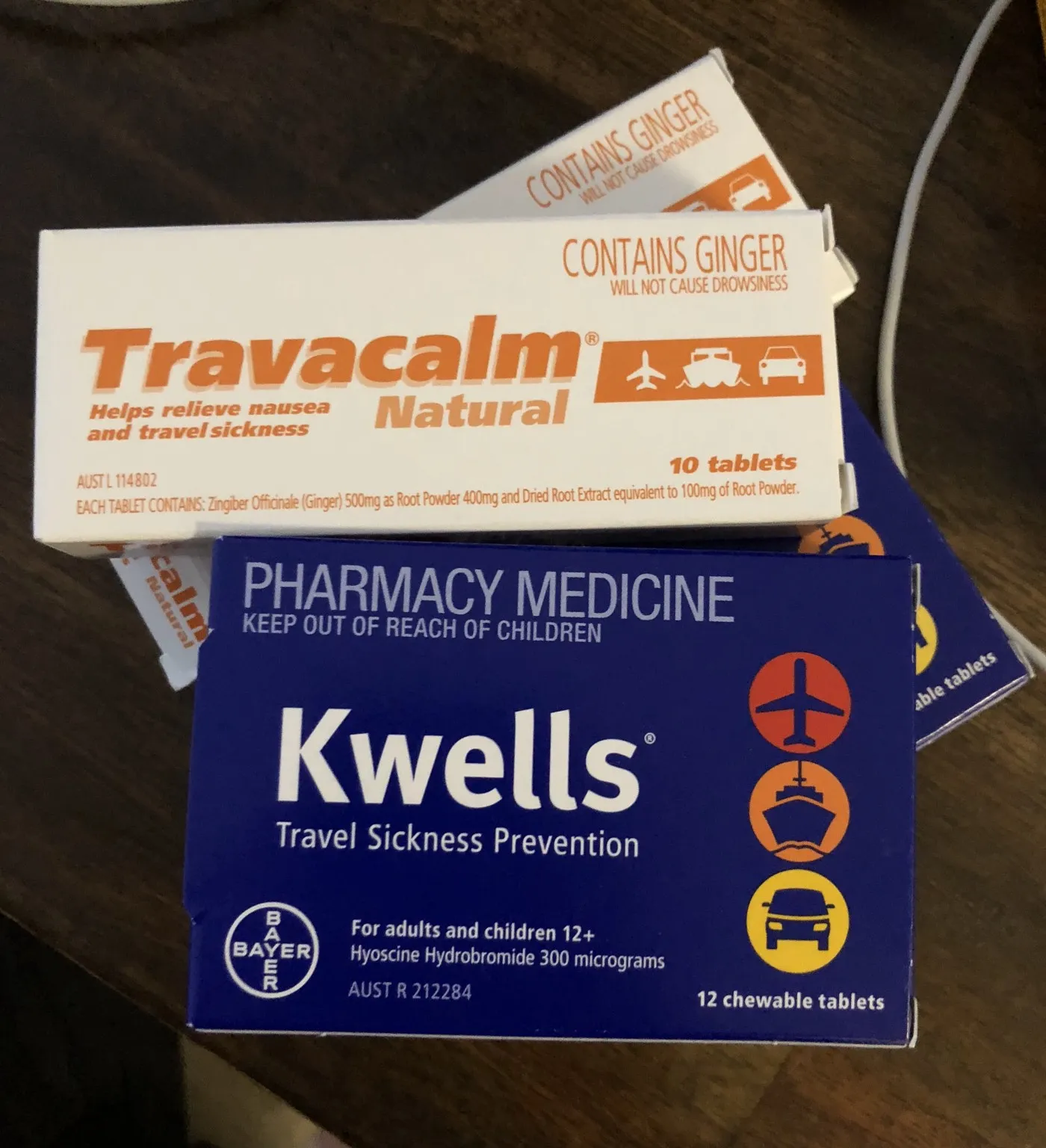
My bag always has this many seasickness remedies in it — the orange ones are the ginger tablets I mentioned
10. What is the best way to enter the water? Giant stride or back roll?
What is the best way to enter the water? Giant stride or back roll?
Possible Situations
Set up the gear, Self-checking
Tank:
I cannot turn the tank on.
I forgot to turn my tank on.
This tank is leaking.
The O-ring needs to be replaced.
This is not a full tank.
I need a Nitrox tank/ an analyser.
Jen's side note: Speaking of scuba tanks / cylinders, some people habitually open the tank valve to blow off the dust cap on the first stage regulator — that sharp "psssst!" sound seems almost standard practice in dive shops across Asia. In Australia, however, almost no instructors do this. Usually everyone simply wipes the dust cap dry carefully. Blasting the tank valve to dry it off is something you're very likely to get firmly told off for.
Scuba Strider's side note: On the topic of forgetting to open your tank and needing someone's help — here's a fun one: if you're in a rush to get in the water, whatever you do, don't say "can you turn me on," because "turn someone on" means to arouse someone — in a very sexual sense. Jen: This is genuinely hilarious — scuba diving turns into flirting!
BCD:
My BCD bladder is leaking.
This BCD doesn't fit me. The BCD is not my size.
This BCD has a broken Velcro/broken buckle.
I cannot inflate this BCD.
The BCD is self-inflating.
The tank strap is loose. Can you tighten it for me?
Regulator/reg:
Can you help me check my reg? I cannot breathe through this regulator.
I have a broken mouthpiece on my second stage. Can you change me a new one?
Jen's side note: "Regulator" can be shortened to "reg."
Mask:
Do you have any defog/anti-fog solution?
My mask gets foggy easily.
Do you have a prescription mask? I think I need a -4.5D (minus four point five diopters) mask.
Buddy Check:
The buddy check acronym seems to be unique to PADI (certification agency), and I've noticed many Chinese-speaking students struggle to remember it reliably. In the course manual, the buddy check acronym is:
BWRAF, Begin With Review And Friend.
I recommend using Bring Women Roses And Flowers instead, as the words are simpler and easier to remember.
B: BCD — Inflate / Deflate / Orally inflate / Dump valves (primarily to recheck for leaks or self-inflation)
W: Weights — Whether you have the weights? / Whether you have the right amount of weights? / Right-hand release.
R: Releases — Fasten your straps and the buckles.
A: Air — Full tank / breathe smoothly. Check that both you and your dive buddy can breathe smoothly through the regulator (also take note of your buddy's octopus / alternate second stage location at this stage).
F: Final check — Camera, Mask, Fins, Dive computer, Streamlining etc.
Hand Signals
OK.
Problem.
Going up / Going down.
Cannot equalize.
Check your air (How much air do you have left?).
Numbers.
Low on air (usually below 50 bar).
Out of air (usually 0 bar).
Safety stop (5 metres / 3 minutes).
Awesome.
Scuba Strider's side note: Some bored instructor overseas once wrote two pages of hilarious alternate dive signs — some of the humour is even a little R-rated. If you're a veteran diver with time to spare, search for it online. It's guaranteed to completely change your perspective on diving.
Others and Emergency
Too far from the boat.
Uncontrolled/runaway ascent.
Lost direction.
Lost buddy: search for no more than one minute and reunion on the surface.
Man overboard.
Abandon ship.
In the next article, I'll cover diving English for Divemaster level and above, focused on dive briefings. "Time permitting," I'll also add commonly used English phrases for the Open Water Diver and Advanced Open Water Diver courses.
Hope you found this helpful!
-
Diving Safety Cannot Be Compromised — The Diver's Guardian: The Lookout
-
Tired of Diving the Great Barrier Reef? Head to Melbourne and Dive with pipefish and Seals
-
Exploring Australia's Mysterious Shipwreck in Strong Currents — S.S. Yongala
-
Searching for Purpose? Come Do an Unforgettable Dive Working Holiday in Australia!
-
Encountering a Minke Whale at the Great Barrier Reef — Australia's Dream Voyage You Must Experience

![Diving Abroad But Can't Speak Diving English? The Essential Diving English Guide Part 1 — [Nouns]](/_astro/mael-balland-hx73qL8rOOo-unsplash-2_Z1JBwHj.webp)
![Diving Abroad But Can't Speak Diving English? The Essential English Guide for Divers Part 3 — [Divemaster / Instructor Edition]](/_astro/mael-balland-4HGHduVeCNs-unsplash_2gDACr.webp)