Contents(6)
the Editor says: Being caught between opposing forces, existing frameworks, and systemic constraints are just some of the challenges one might encounter on the front lines of conservation. Only by changing the status quo and breaking free from entrenched structures can Taiwan's ecological work environment mature — and inspire more practitioners to dedicate themselves to conservation. Follow along with BlueTrend as we explore the difficulties faced by those working on conservation's front lines! This article is reprinted with the author's permission; it was originally published in the Environmental Information Center.
If someone told you they had devoted their life's ambition to ecological conservation work, how would you picture and understand the nature of such a non-conventional career? Would you imagine them trekking between mountains and sea day after day, immersed in "nature" among flora and fauna? Or chaining themselves to a towering ancient tree to stop a company they consider utterly villainous from crossing a line? Well, perhaps — but the reality looks more like a combination of both, seasoned generously with the social realities of the world.
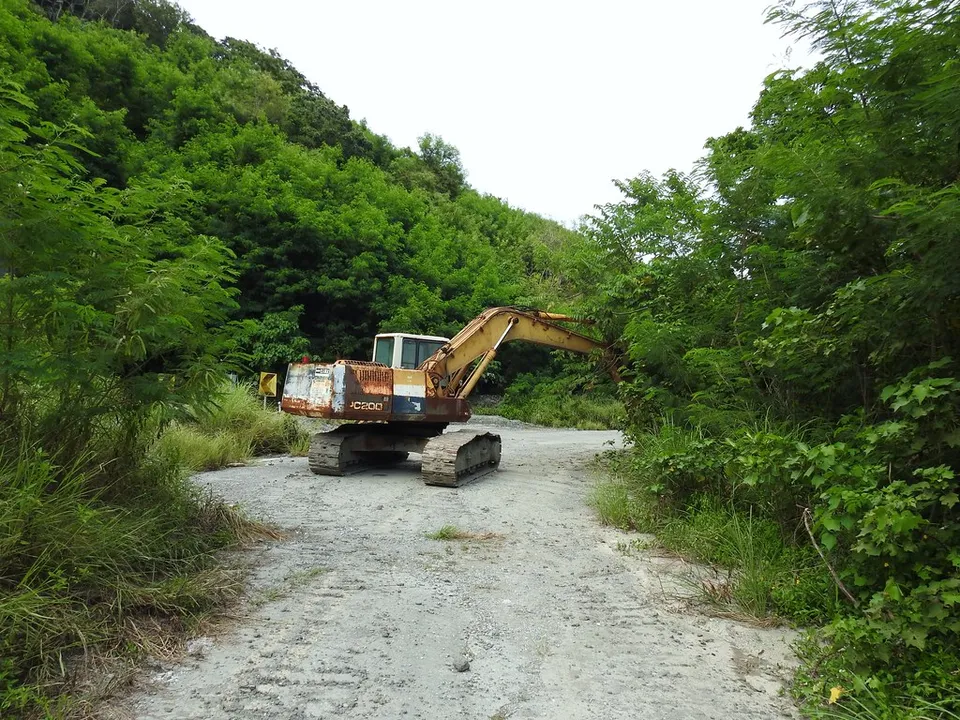
An excavator and road maintenance works in the eastern forests. Photo courtesy of Li Cheng-Han.
The Front Lines of Conservation Are Not Deep in the Wilderness
On television, people stride across remote landscapes carrying instruments, carefully tracking footprints, excitedly spotting their target animal, and then rushing forward to catch it — this is the readily available image that shapes public perception of conservation work. In reality, conservation operates on far more grounded terrain: it exists in the zones where ecological and human development conflicts are most intense, and the practitioners carrying it out endure enormous internal conflict between their conservation principles and competing interests.
Ecological conservation serves a public good. Since it would be difficult to garner widespread support if private interests had to be sacrificed, the government generally takes responsibility for driving policy. Conservation corridor projects along the Central Mountain Range have long been a government priority; in recent years, the scope has expanded to include plains and foothill areas. Yet the ecosystems facing the gravest threats are neither the pristine forests deep in the mountains nor the tranquil rural pathways — they are the areas where conservation overlaps with engineering development and land use, confronted by the construction of factories, residential buildings, and energy facilities, as well as road maintenance and river improvement works. Every single one of these is intimately connected to your and my industrial interests, and to the safety of lives and property.
It was against this backdrop that mechanisms such as the Environmental Impact Assessment Act and the ecological review administrative guidelines emerged — driven by growing conservation awareness and the efforts of civil society groups — as a counterbalance to development. In simple terms, these mechanisms require that before any construction project proceeds, a professional ecological assessment of the local ecosystem and species must be conducted (typically carried out by ecological professionals hired by private firms), and the necessity and methods of construction must be reconsidered accordingly.
This sounds complete and reasonable — but is it really?


No One Throws a Stone at Their Own Foot
Textbooks and news reports consistently champion the value of conservation, so let us begin by examining how society views ecology through the worldly lens of "value." I sometimes have brief exchanges with hikers and passersby I encounter by chance in the mountains and forests. After I share the tongue-twisting, hard-to-remember name of a plant in front of us, roughly nine times out of ten their next question is: "Can you eat this plant / brew it into tea / use it as herbal medicine?" I usually sheepishly admit that, with certain exceptions, most plants are "not useful" in that sense.
It seems the gap between ordinary people's idea of "value" and the goals of ecological conservation is considerable. Most industries and transactions in society arise from the interplay of supply and demand. The ecological survey industry, however, exists only because of mandatory policy requirements. For most entities, ecological conservation is a concession compelled by regulation — genuine demand for it simply does not arise naturally. Moreover, the protective measures recommended for ecosystems invariably work against developers' interests and add to construction costs. This zero-sum dynamic makes the assessment process a constant uphill struggle for ecological practitioners.
I was once directly and bluntly asked at a team meeting in a northwestern mountain area by a developer: "Can you tell me exactly where the rare plants in the report are growing? We'll dig them up first." It sounds utterly lawless, but these raw, unvarnished words exist all too genuinely in the world of ecological practitioners. In a project in the eastern lowlands, the same motivation — to conceal the bad and highlight the good — was expressed far more subtly: "Don't let word get out about these rare species." Working hard and diligently is a virtue everyone praises, but if your diligence leads you to document many sensitive rare species, you may well have already become someone else's problem.
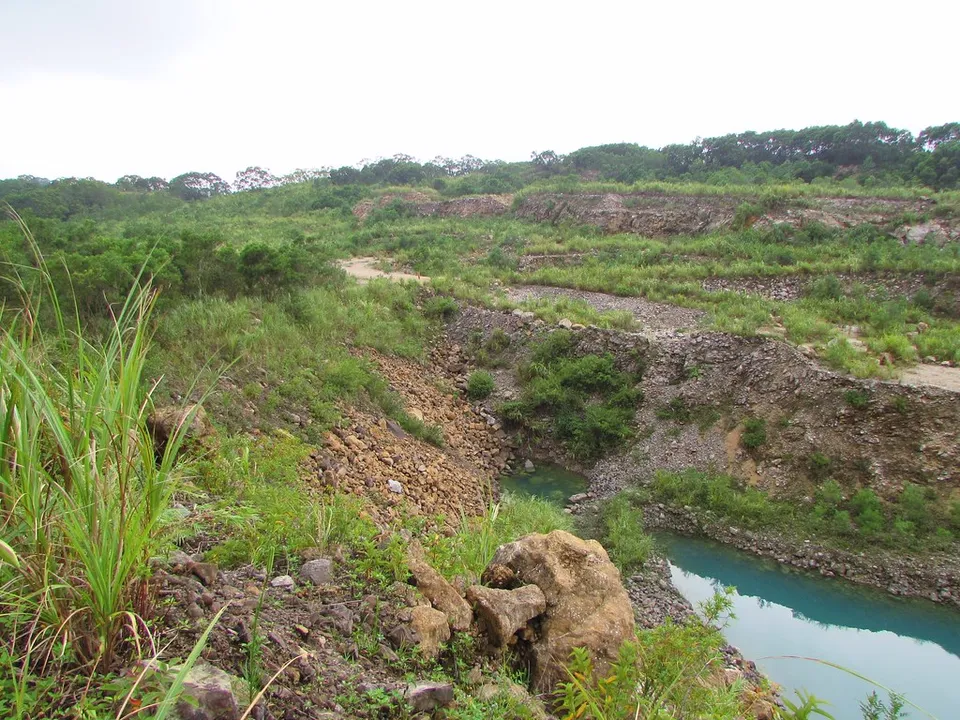
Development versus broadleaf forest: a tug of war in a northwestern mountain area. Photo courtesy of Li Cheng-Han.
Under the current system, developers fund and commission professional ecological teams to conduct surveys and submit reports, and the final written reports are submitted for review uniformly through the developer. The result is a policy that runs counter to human nature, producing bizarre outcomes: no one throws a stone at their own foot, and the way ecological survey findings are presented is subject to "adjustments" of varying degrees and forms.
Interference with ecological reports is not limited to the following tactics:
- Blunt and direct: simply making sensitive species disappear from the report entirely.
- Roundabout: applying pressure through your superiors (or superiors proactively pressuring you on their own).
- Condescending instruction: "teaching" you how a "good" ecological report ought to be written.
That said, some developers need not go to such lengths, because ecological teams — worn down by repeated setbacks — may end up self-censoring their own findings. The methods include:
- Skipping a thorough survey plan, which reduces workload and lowers the probability of finding rare species — seng-sū sū-seng (Taiwanese, sardonically emphatic: keep everything as simple as possible to save yourself the trouble).
- Since pressure is almost guaranteed anyway, why bother conducting and writing a rigorous survey? Just make sure the report looks watertight.
- Content that "holds no surprises" earns approval from all sides, gives the firm a competitive edge when bidding for contracts, and makes for a smooth career path.
A senior acquaintance of mine, upon hearing this description of the profession, immediately summed it up in four pithy characters: "blocking people's money." What a phrase — "blocking people's money." If not for genuine passion and conviction for ecology, how could anyone bear it?
Caught Between Two Fires
When an ecological assessment enters the review stage, the questions raised by committee members can help clarify the logic and push developers toward more ecologically considerate practices. Yet beneath this seemingly positive process, situations arise that are difficult to speak of openly: the recommendations offered by the ecological team are not accepted by the developer, and when committee members at a meeting notice that ecological considerations have been insufficiently addressed and raise questions, it is the ecological team itself that ends up fielding those questions — a frustrating cycle that every practitioner in the field has faced.
For example: a construction project in the north disregarded the urgent recommendations of ecological surveyors to preserve the pond habitat of a protected freshwater fish species, and proceeded to excavate and destroy it. When the subsequent review meeting demanded corrective measures, the developer required the ecological team to increase survey effort and explain the "reasons" — essentially attempting to recapture the fish. Predictably, once the nest is destroyed, no eggs remain intact; the additional effort after the fact did not save a single fish and served only to add pointless work items. The correct approach would have been habitat preservation, habitat compensation, or ex-situ restoration — attempting to preserve or offset the population and its habitat — rather than using the contractual relationship between developer and consultant to "instruct" the ecological team to increase survey effort as cover for their own wrongdoing.
Curiously, some developers invest more in ecological conservation planning and costs than other projects of comparable purpose and scale, yet receive no corresponding recognition during the overall review process. A professional team that provides rich ecological mitigation measures may find that the very quality of their work causes the project to be held to significantly higher standards — a genuine catch-22. Under such dynamics, those who are honest will, having repeatedly been disadvantaged, shift toward a mindset of not laying all their cards on the table, reinforcing developers' determination to conceal the bad and highlight the good.
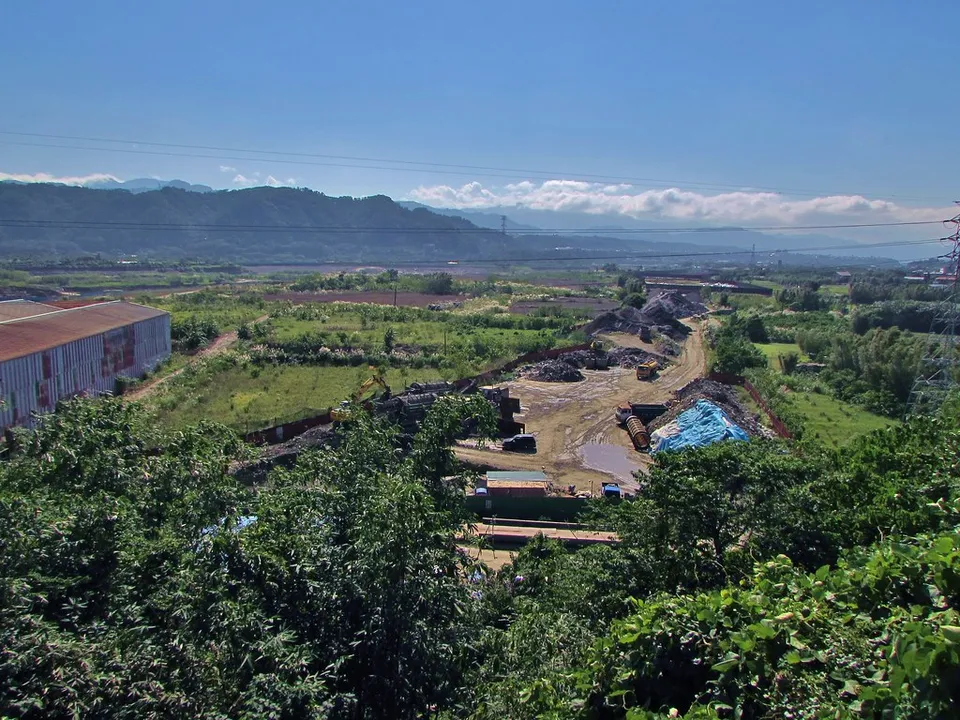
A construction project in the north that disregarded the urgent preservation recommendations of ecological surveyors. Photo courtesy of Li Cheng-Han.
The current system requires certain development projects to invite civil society groups to participate in discussions, increasing transparency and helping to address the blind spots of ecological surveys and the isolation of individual practitioners. However, for many lesser-known taxonomic groups or areas that have never previously attracted attention, it is not uncommon for species or special ecosystems to be discovered for the first time by practitioners working within the ecological assessment mechanism. Regrettably, because front-line personnel are bound, in the course of their work, by all manner of confidentiality clauses and punitive compensation provisions embedded in project contracts and employment contracts, they are effectively silenced — leaving civil society groups with no chance of being informed. Do these extra-legally signed systems and contracts exist to protect cronyism and oppress the vulnerable, or to safeguard the public interest of ecological conservation?
Pressure does not come only from the outside. The social circle of Taiwan's ecological community is small; the government agencies and vendors they collaborate with might be encountered again just around the next corridor corner. Practitioners at the lower rungs inevitably find themselves reading the moods of those above them. Superiors who cannot withstand pressure redirect the constraints onto the front-line staff responsible: "Why didn't you communicate with them first?" — even when the other party had no intention of making improvements, and the situation escalated as a result. Or: "How did XX civil society group find out?" — the alarmed, accusatory tone of that question making it sound as though the findings of an ecological survey were the world's most valuable secret. The determination to cover things up, placing trade secrets and commercial interests above professional ethics, is in fact the most dangerous thing one can do to ecological conservation.
Last but most importantly, ecological conservation requires a rational allocation of resources. Given its inherently non-revenue-generating nature, it is undeniable that resources allocated to the sector are squeezed out, giving rise to all the negative outcomes described above. Although conservation is idealistic and serves the public interest, it also requires sufficient resources to recruit personnel and build capacity, and to provide the appropriate conditions and environment needed to improve outcomes. Industries have historically consumed natural resources and converted them into human benefit, sustaining the development of civilization; society repaying those resources to ecological conservation is, by all rights, an obligation that should be taken without hesitation.
How to Avoid Repeating the Same Mistakes
Having heard the open secrets of the profession, no one should be surprised to have come across reports such as: "Forest around a protected bat roost in the south destroyed by solar energy construction," "Habitat of protected freshwater fish damaged by a river improvement project in central Taiwan," or "Food plant habitat for insectivorous plants obliterated by an urban planning project in the north." Numb indifference will only allow things to spiral further out of control. To prevent incidents from repeating, the following perspectives are offered as a starting point for discussion:
- Drawing on environmental impact assessment practices in Europe and the United States, decouple the professional ecological assessment process from the developer — establish a clear separation of funding sources to prevent interference from stakeholders, and resolve the various predicaments encountered by ecological practitioners.
- Establish a third-party audit mechanism; no form of restriction should be permitted on lateral communication between professional ecological teams and civil society groups, so as to achieve joint oversight and checks and balances.
- Limit the scope of project contracts and employment contracts so they do not impede the transparency of survey data; give practitioners sufficient voice and space for objective interpretation, and encourage industry actors to raise environmental and professional ethical standards — this will help improve both the internal culture of the field and the quality of data produced.
- Recognise the public-interest value of ecological conservation; have competent authorities formulate proportionate ecological conservation budget requirements for relevant development projects, putting an end to the perennial shortfall and volatility in resource allocation.
Only by reflecting on the shortcomings of the current framework and system — and striving to adjust and improve them — can our natural and social environments have any hope of progress. It is my hope that Taiwan's ecosystem of ecological work will continue to mature, that practitioners and the flora and fauna around them may thrive together, and that when future ecological practitioners are asked whether they would choose this idealism-filled career all over again, they will answer without hesitation: Yes, I do!
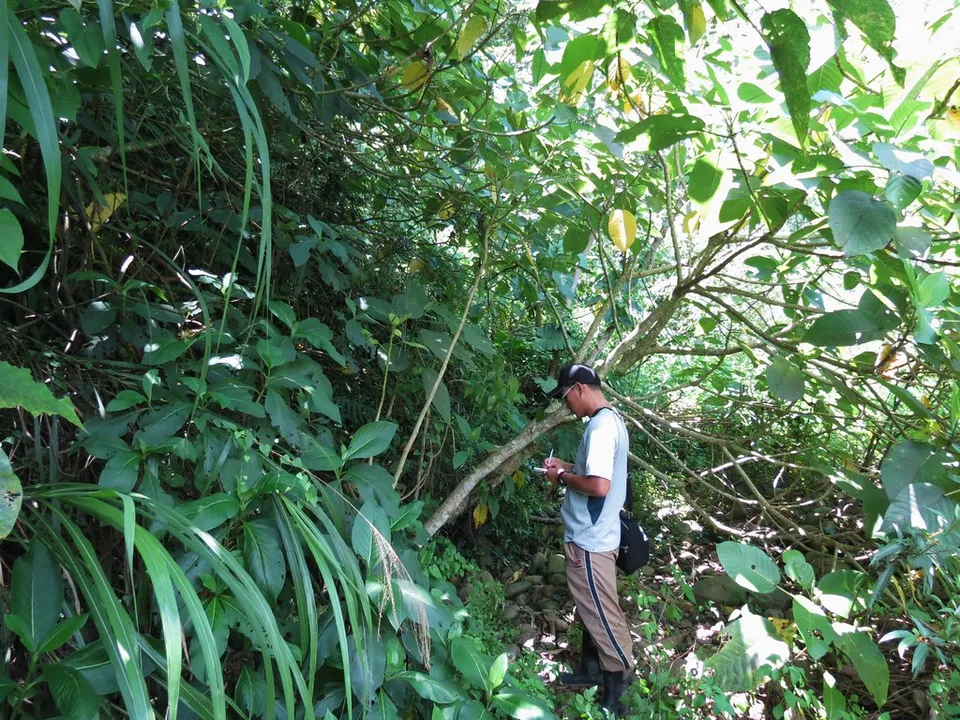
Survey work in the reservoir inundation zone in central Taiwan. Photo courtesy of Li Cheng-Han.
Related Links
- 【Prelude to the New Wind Farm EIA】"Trade Secrets" Cannot Stop History's Largest Marine Ecological Survey — EPA Takes First Step Toward Data Disclosure
- Taiwan's First Comprehensive Marine Ecological Survey — Ocean Conservation Administration Launches Four-Year Plan to Establish Basis for Conservation and Development
- Ecological Review Starts Fresh: Engineers Without an Ecology Background Meet Ecologists Without an Engineering Background
- Original article: Li Cheng-Han / On the Front Lines of Conservation — The Challenges Facing Ecological Practitioners
- Environmental Information Center website
Further Reading