Mermaid Whispering
Mermaid Whispering is an ocean film that generated considerable buzz in the diving community in 2017. What made it particularly special is that it wasn't a documentary, but a commercial feature weaving together romance, environmental conservation, and the culture of Orchid Island's Tao people. In Taiwan, where the filmmaking environment is rarely hospitable, choosing the ocean as a creative canvas makes the achievement all the more remarkable. Director Tiger Yuan poured every resource he had into returning to familiar Orchid Island — all in search of the mermaid in his script.
On the day of our interview, Director Yuan warmly invited the Editor to his home in Beitou. From the outside it looked like an ageing public housing block, but the moment the door swung open, a rich artistic sensibility flooded the senses — thoughtfully chosen furniture, a hand-poured cup of coffee, and an open-plan balcony that merged seamlessly with the living space. Beyond the railing, an endless green forest whispered its quiet, natural song. Yuan's two mischievous young sons darted back and forth through the house, and every few minutes they would dash out to the balcony and peek around the corner, eager to join their father's conversation with the Editor.


The Connection with the Ocean
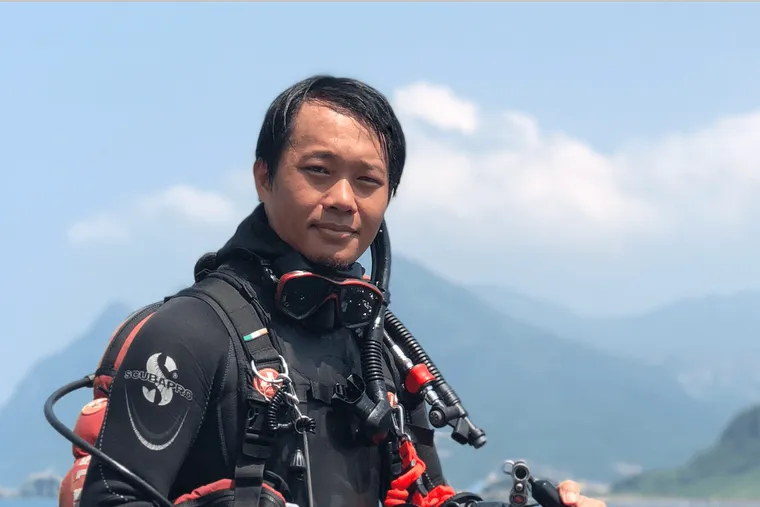
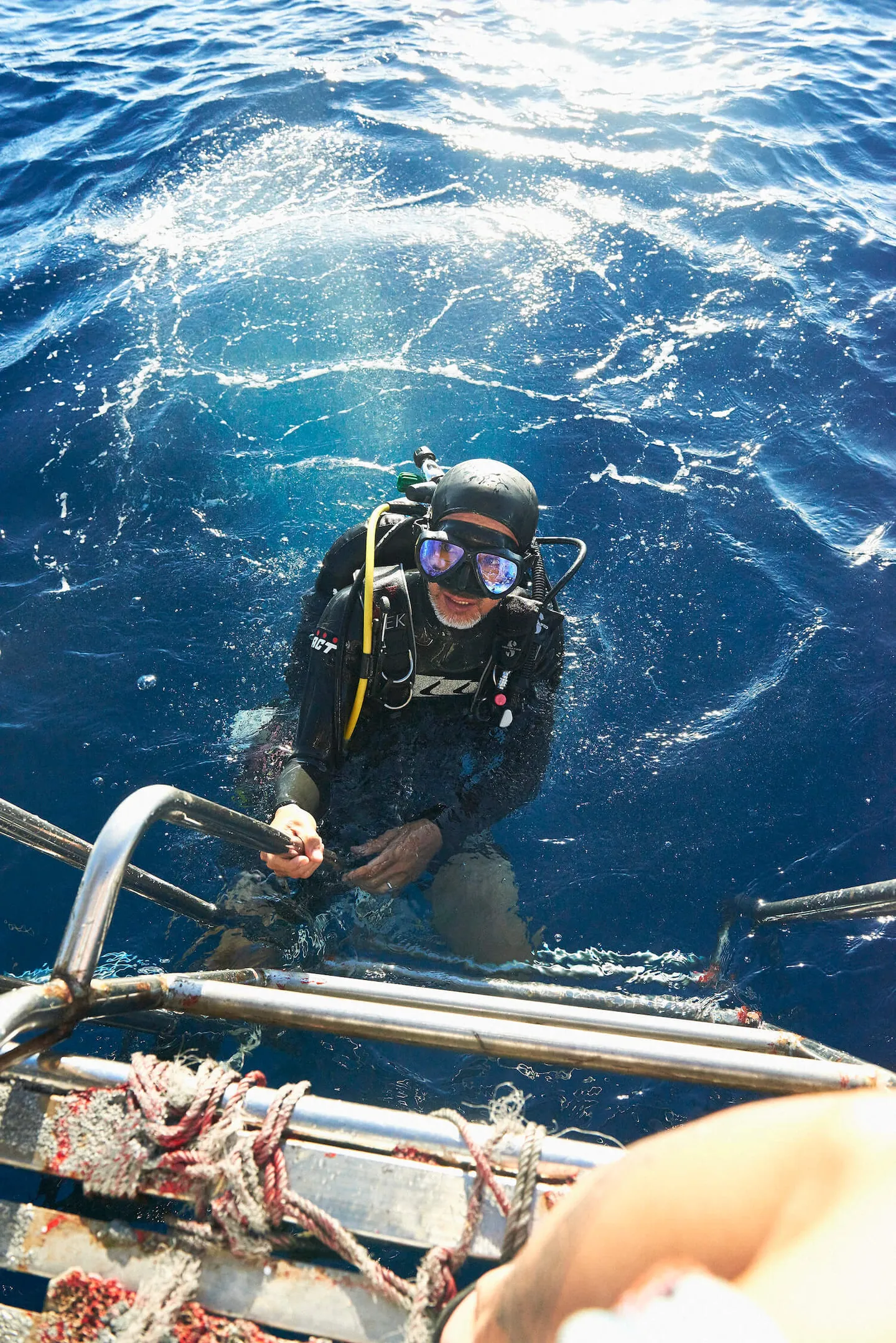
Director Yuan's encounter with the ocean came about simply because a friend wanted to learn scuba diving and invited him along to sign up for a course. That was all it took to forge the bond between him and the sea. With the flexible schedule that came with his work, Yuan — fresh off his certification in 2000 — was diving almost every day, sometimes going through 5 scuba tanks in a single day. He became a regular at the Northeast Coast, and by the end of his first year had accumulated an astonishing record of more than 300 dives. It was precisely this passion that led his instructor at the time to encourage him to pursue his dive instructor certification.
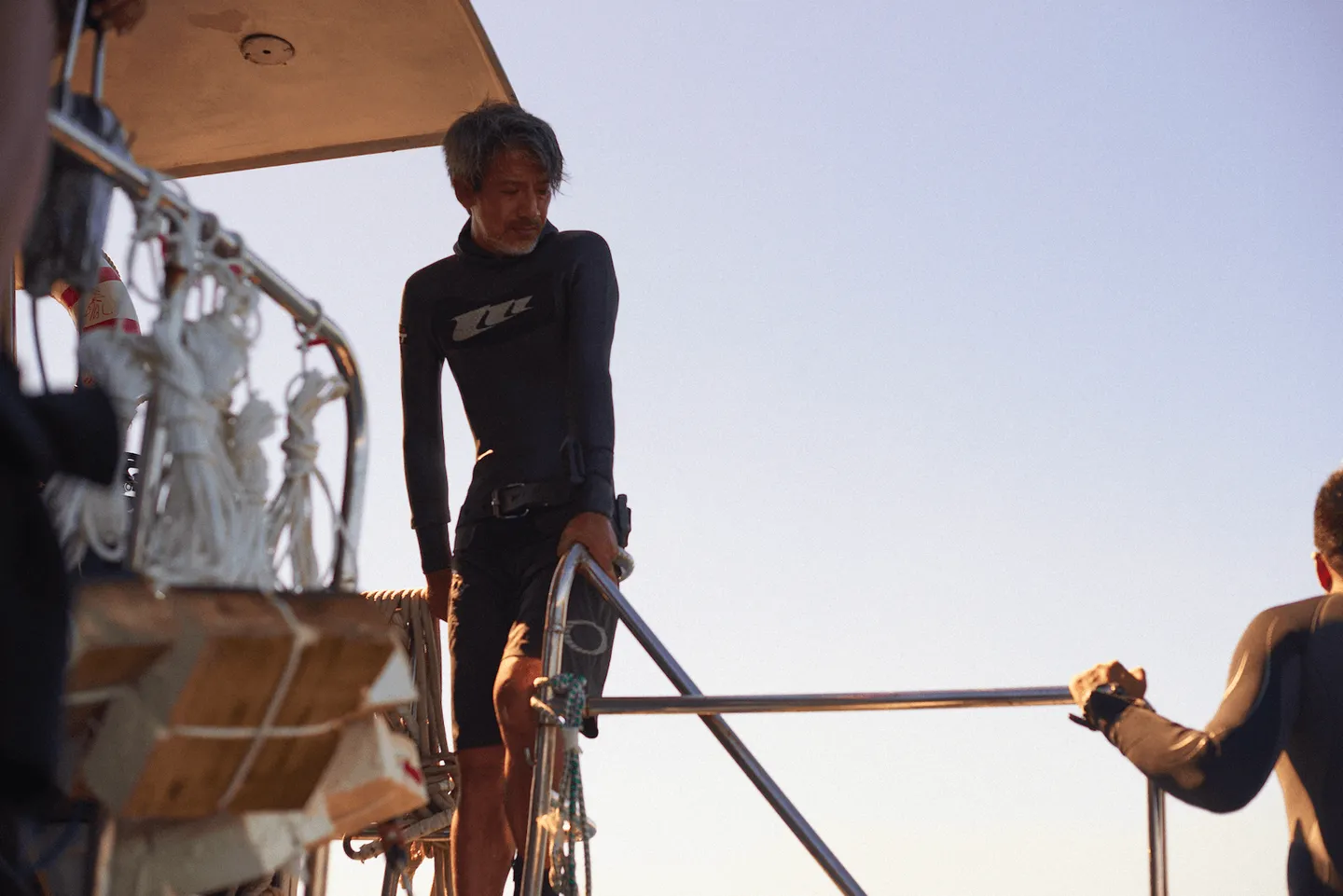
Becoming an instructor wasn't about earning an income from teaching — what Yuan truly valued was the chance to meet more ocean-loving people through the process, and over time he built up a loyal circle around him. With a professional background as a film producer, his experience as a dive instructor ended up reshaping his career in unexpected ways. More than a decade ago, the concept of commercial underwater cinematography barely existed in Taiwan. Production crews would typically hire an instructor to give a cinematographer a crash course in diving, then hand that person the camera. More often than not, it turned out that a young camera assistant with stronger swimming skills would simply take over on the spot. This approach meant a long learning curve, and the fundamental differences between above-water and underwater environments — light refraction, buoyancy, and so on — created significant gaps in aesthetic quality. Shooting underwater footage always required lengthy communication and, more often than not, the final image audiences saw was the result of happy accidents rather than deliberate craft.
Yuan's first fully realised underwater cinematography project came in 2010, when a director who wanted to shoot mermaid sequences asked him — by then already an established director himself — whether he had any suggestions. It happened that the Canon 5D Mark II had just launched, offering an alternative to traditional film cameras. The team invested in an expensive metal underwater housing all at once, and that was how Yuan's underwater shooting journey began. He recalls that the team back then had no concept of needing underwater video lights for fill; they started shooting with nothing but the camera and housing, relying entirely on studio lights positioned on the shore. After each underwater take, Yuan would surface, discuss light placement and intensity with the gaffer, and then dive back down to reshoot. Looking back now, he finds it remarkable how patient he was with himself.
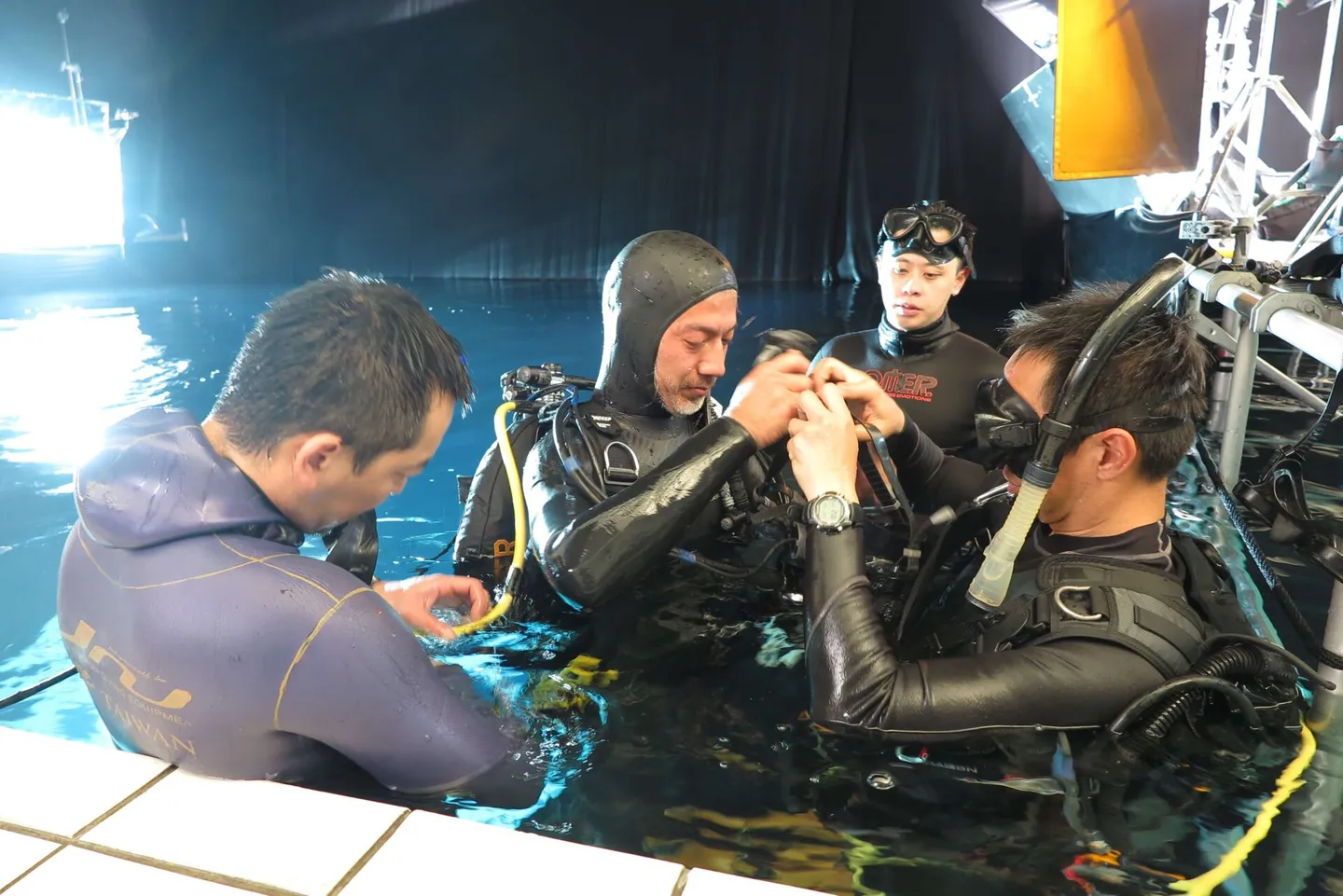
In the years that followed, Yuan worked on a wide range of underwater projects — commercial advertisements, documentaries, and feature films — making full and expressive use of everything the underwater world has to offer. But what is it that draws him so deeply to underwater cinematography?
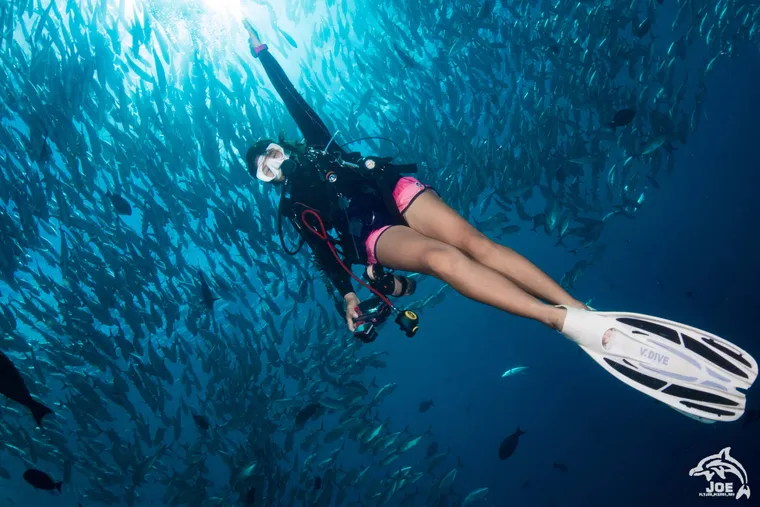
Because underwater you are in a near-weightless state, you can achieve camera movements that would be impossible on land — though a whole new set of challenges comes with that.
Yuan gives the example of shooting a drowning scene: custom pockets had to be sewn into the wetsuit and weights distributed according to the performer's buoyancy to recreate the realistic sensation of a body drifting at the water's surface. Every fabric behaves differently in water and produces different visual results, which means designing small mechanical solutions for each situation — fishing line, for instance, is a tool they use constantly. Yuan believes his real strength lies less in operating the camera and more in organisation and planning: confirming every detail of each scene through storyboards in advance, designing and building beautiful underwater sets, managing the safety of professional divers on standby, and coordinating equipment both above and below the surface — all the invisible labour that never makes it into the frame.
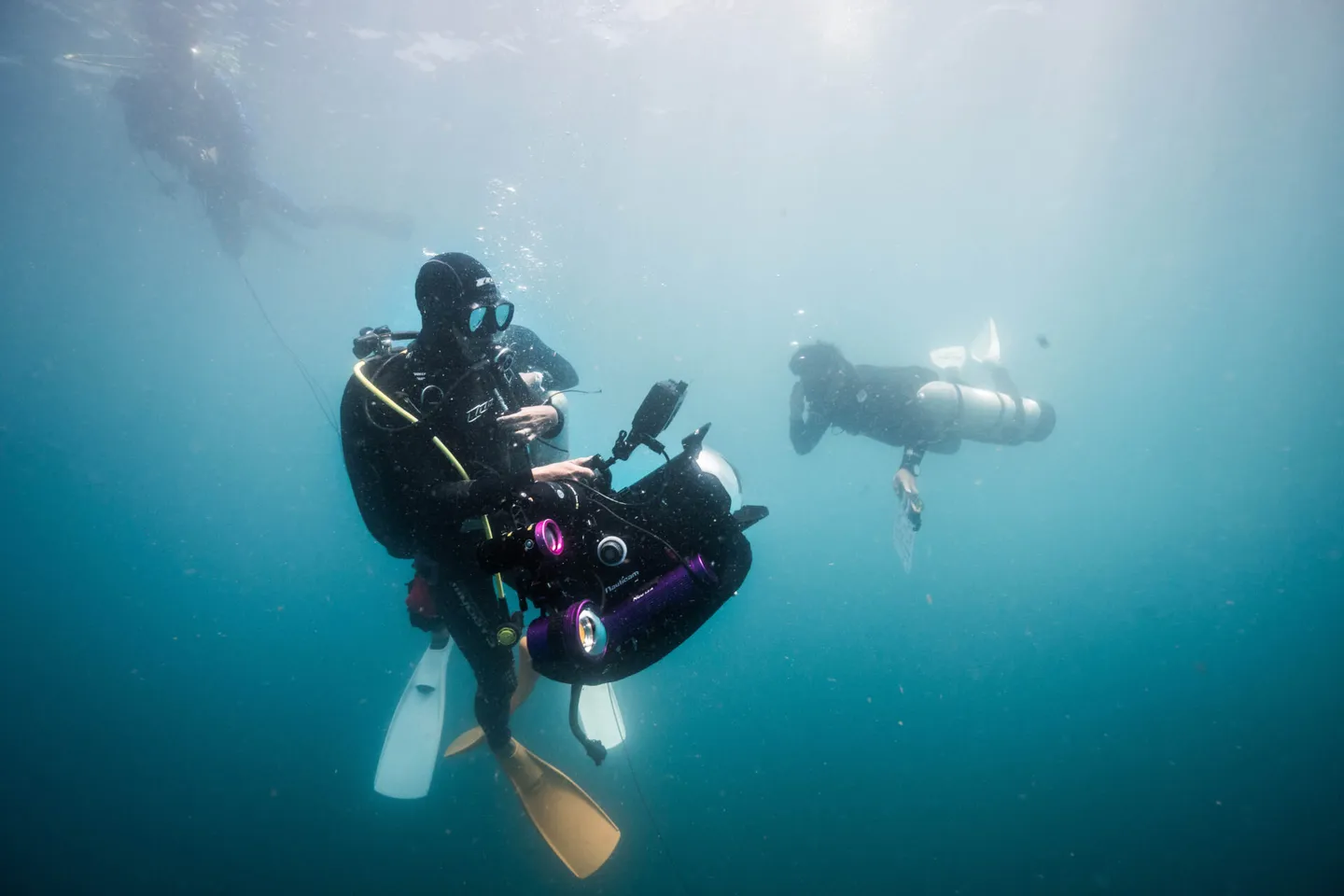
The greatest risk management challenge, however, has always been working with actors who aren't comfortable in the water. His own background as a dive instructor gives him a significant advantage in mitigating that risk quickly. An actor's behaviour underwater is completely different from how they are on land — without dive training, most performers start out rigid with anxiety, their bodies tense and unresponsive. Yuan's approach is to work on their facial expression first; once the face relaxes, the body naturally follows. But when an actor simply cannot overcome their fear of the water, Yuan will work through the storyboard layer by layer, exploring the possibilities of camera angles or stand-ins.
Coming back to Mermaid Whispering, the film didn't start out as the story it became. The original protagonist was supposed to be male. During a dive trip to Orchid Island, Yuan encountered an activist known as Chih-Wan holding an anti-nuclear banner underwater, and he felt instinctively that this "angry young man" had real potential. Using Chih-Wan as a template, he began developing the story of a young man trying to change the ocean's fate. After years of reflection, discussion, and extensive script revisions, the final version was sparked by an ocean cleanup event in Orchid Island in 2015. As one of the participants on the cleanup boat, Yuan reflected that reducing plastic use and cleaning up the ocean aren't just causes — they're a way of life. With environmental awareness growing steadily in recent years, he wove those ideas into the fabric of Mermaid Whispering, hoping that the underwater figure of the mermaid could serve as an accessible entry point into what can otherwise feel like an overwhelming conversation about conservation.
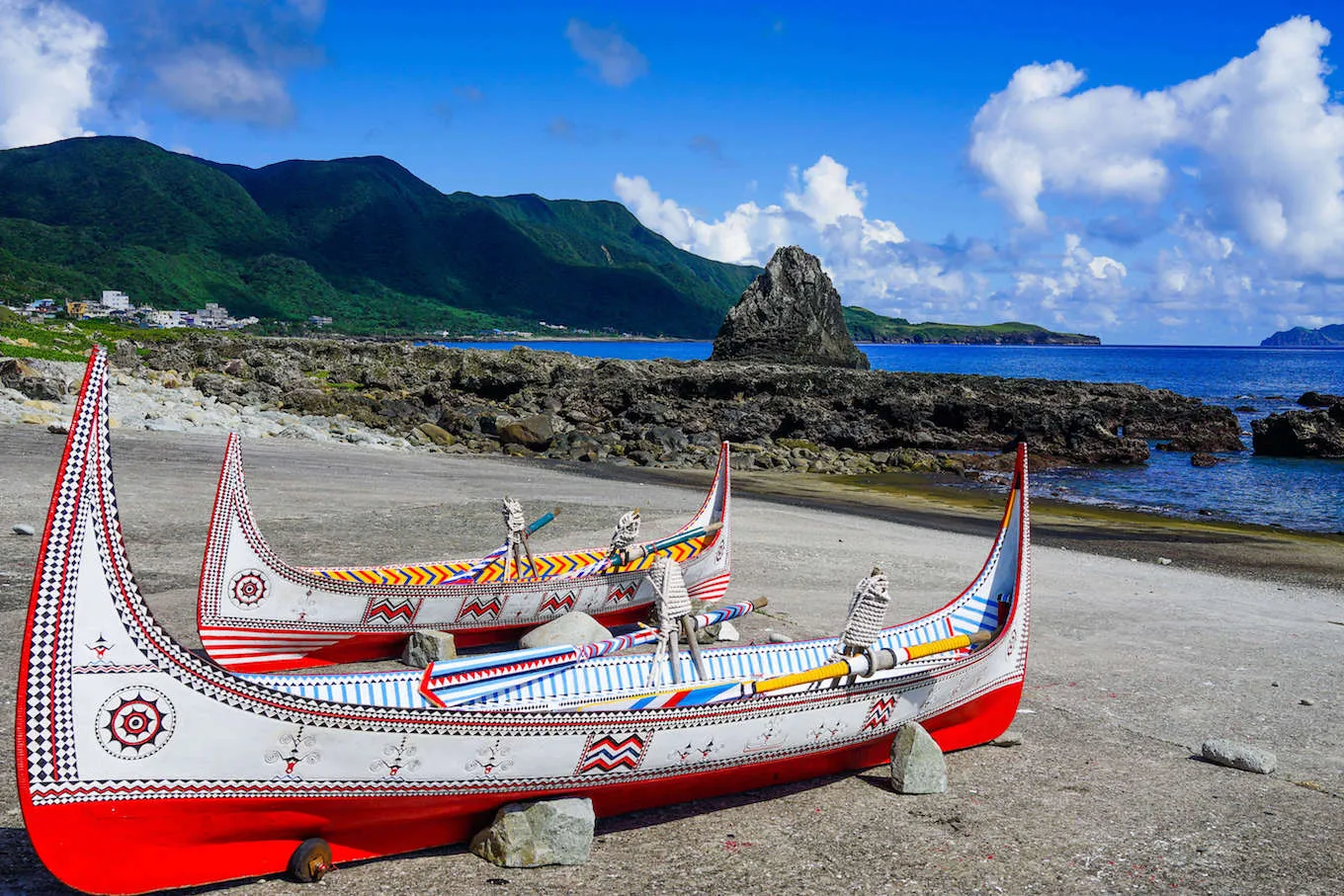
Filming Locations for Mermaid Whispering
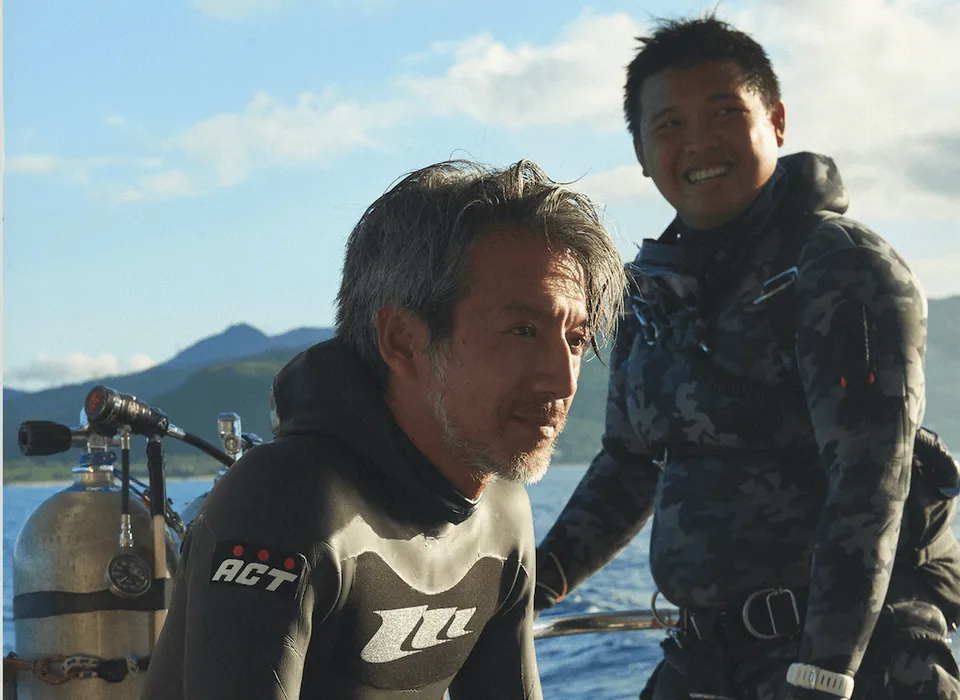
The entire film was shot on Orchid Island — Taiwan's most remote outlying island, and also the one that has best preserved the traditional culture of the Tao people. Throughout the production process, every scene, every camera movement, and every actor's blocking was mapped out in careful detail. Apart from typhoon disruptions, filming proceeded largely as planned. But what Yuan most wants to share is the warmth of the people of Orchid Island. The Tao themselves often say that a tribe is a nation unto itself — so how does an outsider manage to complete a film there? Beyond cultivating deep relationships with locals, understanding and genuinely respecting the local culture is the bare minimum any visitor should offer. In one particular scene, a distress signal flare was to be fired from a boat; but the actor playing the male lead's father, a Tao elder known as Nawai's Uncle, shared that in traditional Orchid Island practice, people sent distress signals by burning cloth to produce smoke. The community not only supported the cast with their performances, they also contributed an insider's perspective that grounded the film far more authentically in Orchid Island life.
Those who know Director Yuan well are aware that Mermaid Whispering was born out of an extraordinarily difficult journey. After the script outline was complete, it took five years to secure funding. Even with partial production support from the Indigenous Peoples Cultural Foundation, Yuan ultimately had to mortgage his Beitou home to the bank to finish shooting. Once completed, the film — an exploration of ocean culture and identity — fell quiet in a distribution vault, unseen by the wider audience it deserved. Yet when the Editor asked Yuan whether he would want to make another commercial film about the ocean, his answer came without a moment's hesitation: "Absolutely. I've already started planning a film centred on a male protagonist — set against a backdrop of pirate history — that explores the idea that Taiwan carries the DNA of an island seafaring people in its blood." Perhaps it is exactly this love of the ocean that keeps propelling him forward, one step at a time.
Further reading: