Contents(10)
- What Kind of Vessel Qualifies as Compliant for a Boat Dive? Get to Know These Categories
- Vessel Types That Comply with Regulations for Boat Diving
- Common Non-Compliant Vessel Types Used in Boat Diving
- Scenario: Assigning Responsibility When an Accident Occurs on a Group Boat Dive
- Reference: An Actual Court Case
- Boats Really Do Matter — The Editor's Own Close Calls
- No Boarding Ladder — Clinging to the Side to Get Back On
- A Dive Plan Gone Wrong — Like Sailing a Pirate Ship
- When Compliant Vessels Become the Norm, Boat Diving Will Be Safer and the Dive Industry Will Improve
- 衍生閱讀
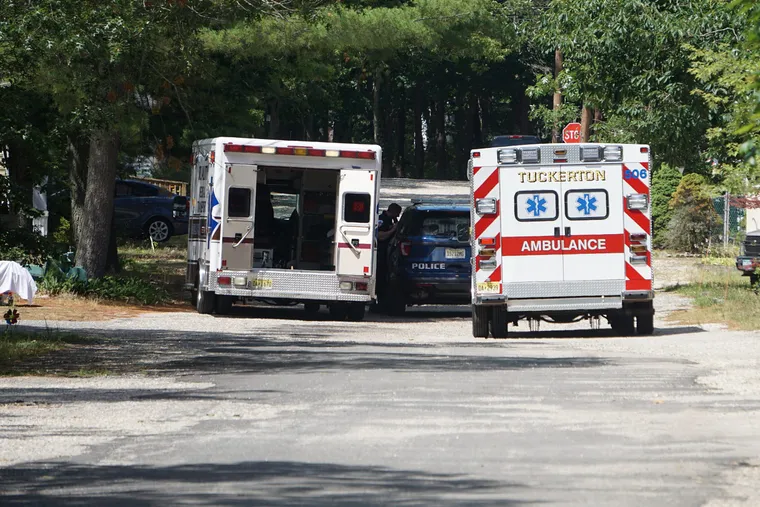
A diver visiting Orchid Island was struck by a boat propeller and left with a scar on his chest. The diver accused the dive shop of operating with "a fishing vessel and a captain who had no license." A compensation claim followed, and the matter remains unresolved⋯⋯
In recent years, cases in which a vessel is found to be operating outside legal requirements only after a diving accident has occurred have become increasingly common. When a dive shop or dive leader works with a non-compliant vessel to run boat dive groups, they too are implicated when an accident happens and cannot escape joint liability. When dive shops and dive leaders take dive groups out on boat dives, do you truly understand whether the vessels you use comply with operational regulations?
What Kind of Vessel Qualifies as Compliant for a Boat Dive? Get to Know These Categories
Imagine boarding a taxi only to discover it has no license plate, the driver has no license, and there is no passenger insurance. On land, you would never accept that situation — so why, when planning a boat dive at sea, would you look the other way and ignore the non-compliant conditions and the hidden risks they carry?
Under the Regulations for the Management of Water Recreation Activities, the rules governing diving state: "Vessels carrying passengers for diving activities shall be equipped with a platform or ladder for divers to board and disembark, and shall be fitted with a waterproof, GPS-enabled mobile phone or equivalent communication device for dive instructors to carry and use for communication."
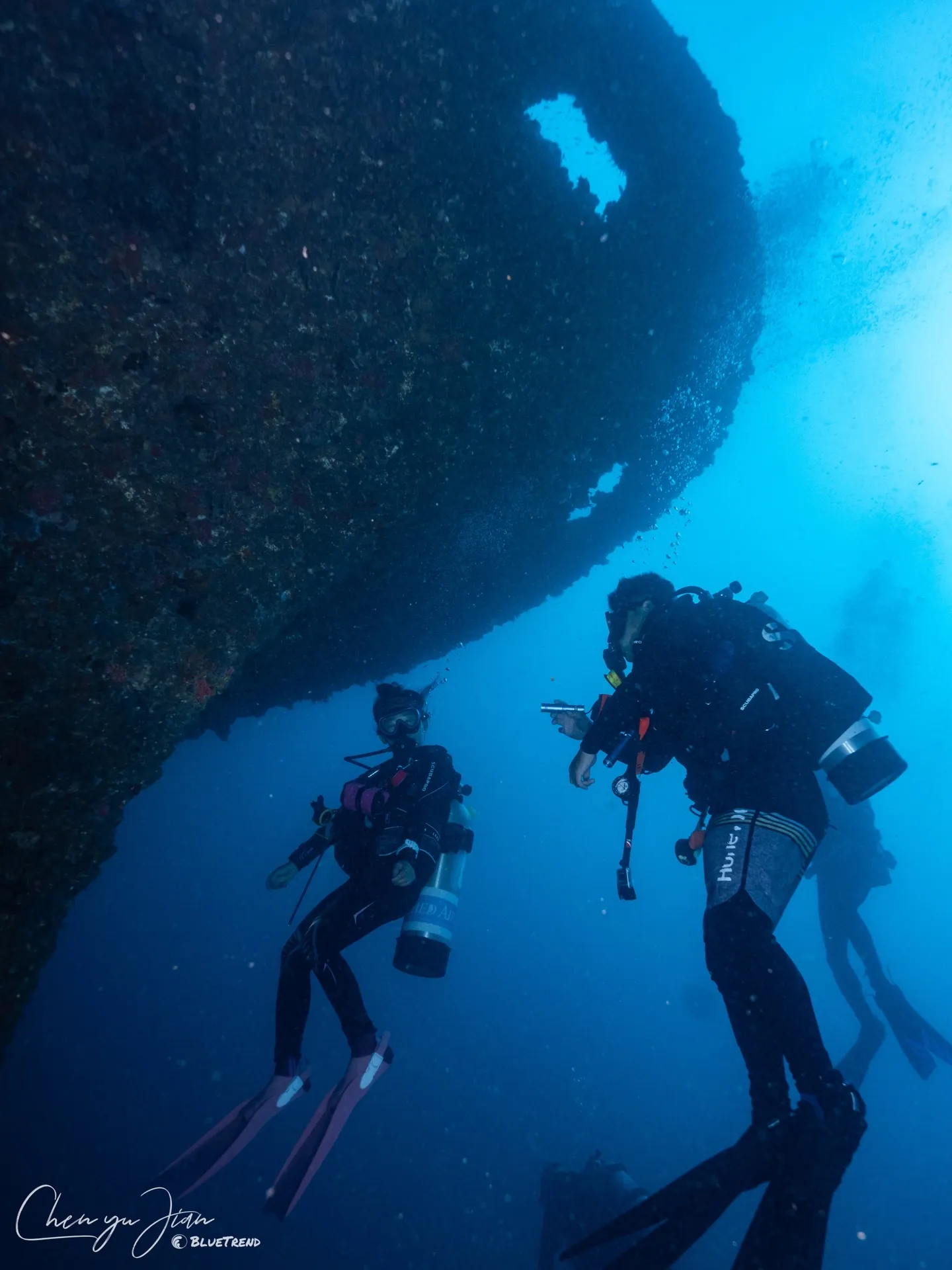
This photo is not related to the incident described; it is used for illustrative purposes only. Photo credit: 簡晨宇.
Currently in Taiwan, the only vessel types that meet this standard and are legally permitted to carry passengers for diving operations are: small passenger vessels, non-private yachts, and recreational fishing vessels (commonly referred to as recreational fishing boats). Each vessel type also carries its own corresponding insurance and premium requirements. If a dive shop or dive leader uses a non-compliant vessel for commercial passenger operations and an accident occurs, it will be very difficult to argue in court — failing to comply with operational regulations means starting the case already at a disadvantage.
The following is adapted from the Ship Act and the Regulations for the Management of Recreational Fishery, supplemented by the Editor's reading of the relevant regulations, offering a condensed overview of each vessel category and its associated insurance requirements:
Vessel Types That Comply with Regulations for Boat Diving
- Small passenger vessel:
- Defined as a small vessel whose primary purpose is the transport of passengers.
- Operators of small passenger vessels are required to carry operator's liability insurance, with a minimum coverage of NT$2,000,000 per passenger.
- Must hold a small vessel license; powered small vessel operators must hold a valid operator's license.
- Must be fitted with designated passenger cabins and comply with passenger capacity limits.
- Must meet emergency preparedness requirements, such as carrying prescribed life jackets and conducting monthly rescue and firefighting drills with crew assistants.
- Non-private yacht:
- Defined as a yacht chartered in its entirety, or provided to identifiable persons through other paid arrangements, for recreational activities.
- The yacht owner must carry liability insurance; the owner must also purchase personal accident insurance for all persons on board, with a minimum of NT$2,000,000 per person.
- Must hold a yacht certificate; the operator must hold a valid yacht operator's qualification.
- Must comply with the passenger capacity limit certified by the relevant inspection authority.
- Must be fitted with an Automatic Identification System (AIS) transponder.
- Must complete 19 special inspections and 11 periodic inspections.
- Recreational fishing vessel:
- Defined as an existing fishing vessel that has been converted, modified, or replaced to operate recreational fishery services.
- The fishery operator must carry liability insurance; death and injury coverage must not be less than NT$2,000,000 per incident, calculated by multiplying the passenger capacity plus crew count by NT$2,000,000; the fishery operator must also purchase personal accident insurance on behalf of crew and passengers, with a minimum of NT$2,000,000 per passenger or crew member.
- Must hold a recreational fishery license; depending on tonnage, the captain and officer crew must hold the appropriate licenses or professional certificates.
- Must comply with prescribed passenger capacity limits and minimum crew safety quotas.
Common Non-Compliant Vessel Types Used in Boat Diving
- Private yacht:
- Defined as a yacht used exclusively by the vessel owner for personal recreational purposes or lent free of charge to others for recreational activities.
- Under current practice, a number of operators attempt to circumvent the rules by framing the vessel as being provided for their own "club," yet the commercial reality of carrying paying passengers remains.
- Unregistered vessel:
- No vessel registration data; not recorded in any official registry.
- Under current practice, some boat dive operations use vessels of this type. An "unidentifiable vessel" is not bound by any regulations, is not subject to inspections of any kind, and presents risks that cannot be managed or controlled.


Scenario: Assigning Responsibility When an Accident Occurs on a Group Boat Dive
Having reviewed the differences between vessel categories above, let's work through a scenario to make things clearer! Suppose Bruce is a dive leader who has arranged a dive through an unregistered dive shop and sets out on a boat dive aboard an unregistered vessel. If a group member is involved in an accident, what risks does Bruce face?
As the dive leader, Bruce has a duty of care toward his group members' diving safety by virtue of the paid relationship between them. Should an accident occur, Bruce's immediate exposure is to criminal prosecution. If a group member seeks compensation — taking a personal injury case as an example — the injured party may claim medical expenses, loss of income, loss of earning capacity, and consolation damages; the total amount can vary enormously.
Further examination of Bruce's partner business reveals additional problems: an unregistered dive shop cannot obtain public liability insurance, and a vessel operating commercially without meeting regulatory requirements cannot insure its passengers, nor does the vessel operator carry operator's liability insurance. Operating outside the law directly limits the scope of insurance coverage and the amount that can be shared with Bruce. In the event of a large compensation claim, there is no safety net to fall back on.
If, on the other hand, Bruce were to work with a compliant dive shop and a compliant vessel, all applicable insurance policies would be eligible for claims, reducing the financial risk arising from an accident. These policies include:
- Water recreation activity liability insurance, which all commercial water recreation operators are legally required to carry
- Public liability insurance held by the dive shop
- Comprehensive marine activity insurance (diving insurance), which includes decompression sickness (DCS) coverage
- Travel personal accident insurance, commonly carried when travelling
- Passenger accident insurance held by the vessel operator
Diving accidents happen. As a dive leader, never assume "it won't happen to me." The strong recommendation is always to prioritize compliance. Should an accident occur, not only can the insurance companies handle the compensation liability, but the dive leader may also avoid being held professionally negligent for having chosen a non-compliant dive shop or vessel operator.
For example, if dive leader Bruce selects a "private yacht" and purchases water recreation activity liability insurance and diving insurance, the fact that the vessel is non-compliant means that even if the insurer assists with the payout, Bruce may still face civil compensation claims or criminal liability — and could even receive a custodial sentence.
Conversely, if you are a diver joining a regular boat dive group, one practical way to assess whether the trip is operating within the rules is to check whether passenger accident insurance has been arranged. While the combined total of all these insurance premiums may add around NT$1,000 or so to the cost of your trip — making it more expensive than trips run by non-compliant operators — buying insurance is precisely about being prepared for the unexpected.
Reference: An Actual Court Case
Taking the Orchid Island diving accident mentioned at the opening of this article as a reference: after the incident, the instructor faced prosecution on suspicion of negligent injury. During the investigation phase, the principle of presumption of innocence applied, and in the absence of any substantive supporting evidence, the prosecutor found insufficient grounds to establish criminal suspicion and issued a non-prosecution disposition. On the civil side, the dive leader also reached a settlement with the injured group member, and the insurance company indicated it could provide reimbursement on an actual-expense basis.
Whether a given accident ultimately results in criminal liability or a large compensation claim will vary depending on the specific circumstances of each case. To minimize risk and avoid finding yourself in serious trouble, make every effort to confirm that your partners are legally compliant operators — it makes leading dive trips a far more comfortable experience.
Boats Really Do Matter — The Editor's Own Close Calls
The vessel is the defining safety factor for any boat dive. In pursuit of photographs for work, the Editor has frequently needed to visit lesser-known dive sites, and has occasionally encountered inexperienced or non-compliant vessel operators. Here are two firsthand stories from the Editor's own experiences!
No Boarding Ladder — Clinging to the Side to Get Back On
Two years ago, the Editor was heading to a dive site near Turtle Island to shoot footage, and joined a group trip to save costs. Upon arriving, it became clear that the captain had no experience carrying divers, the vessel was not compliant, and there was not even a boarding ladder.
The Editor pressed on and dove to get the shots, but after the first dive — having literally climbed back aboard — the captain let slip during casual conversation that he had "set an alarm and listened to music for 30 minutes," paying no attention whatsoever to where the divers had drifted. He had no idea he was supposed to follow the bubbles, and had no clue how to spot a surface marker buoy (SMB) to locate the group. The Editor's thought at the time: getting back safely that day was pure luck.
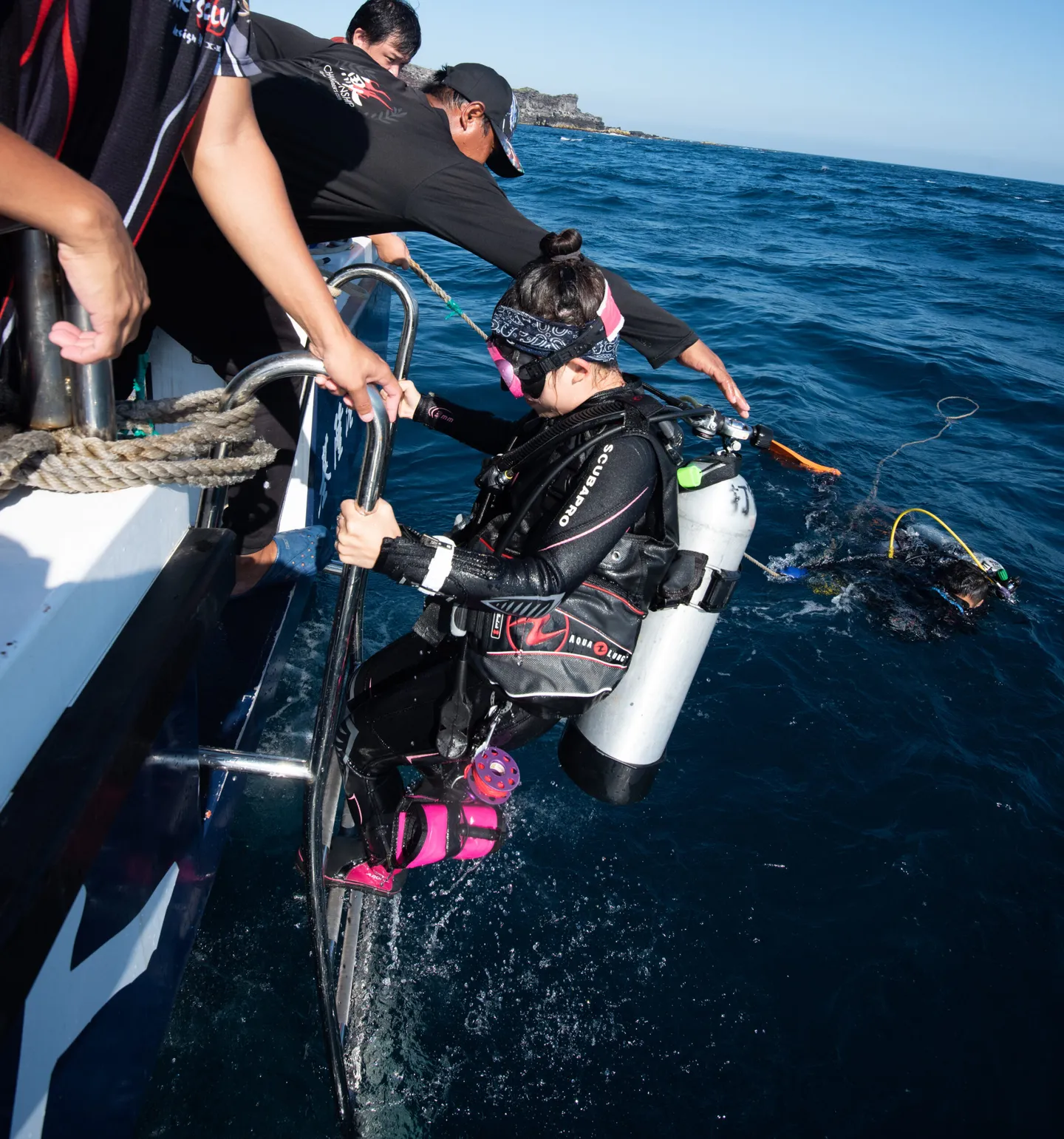
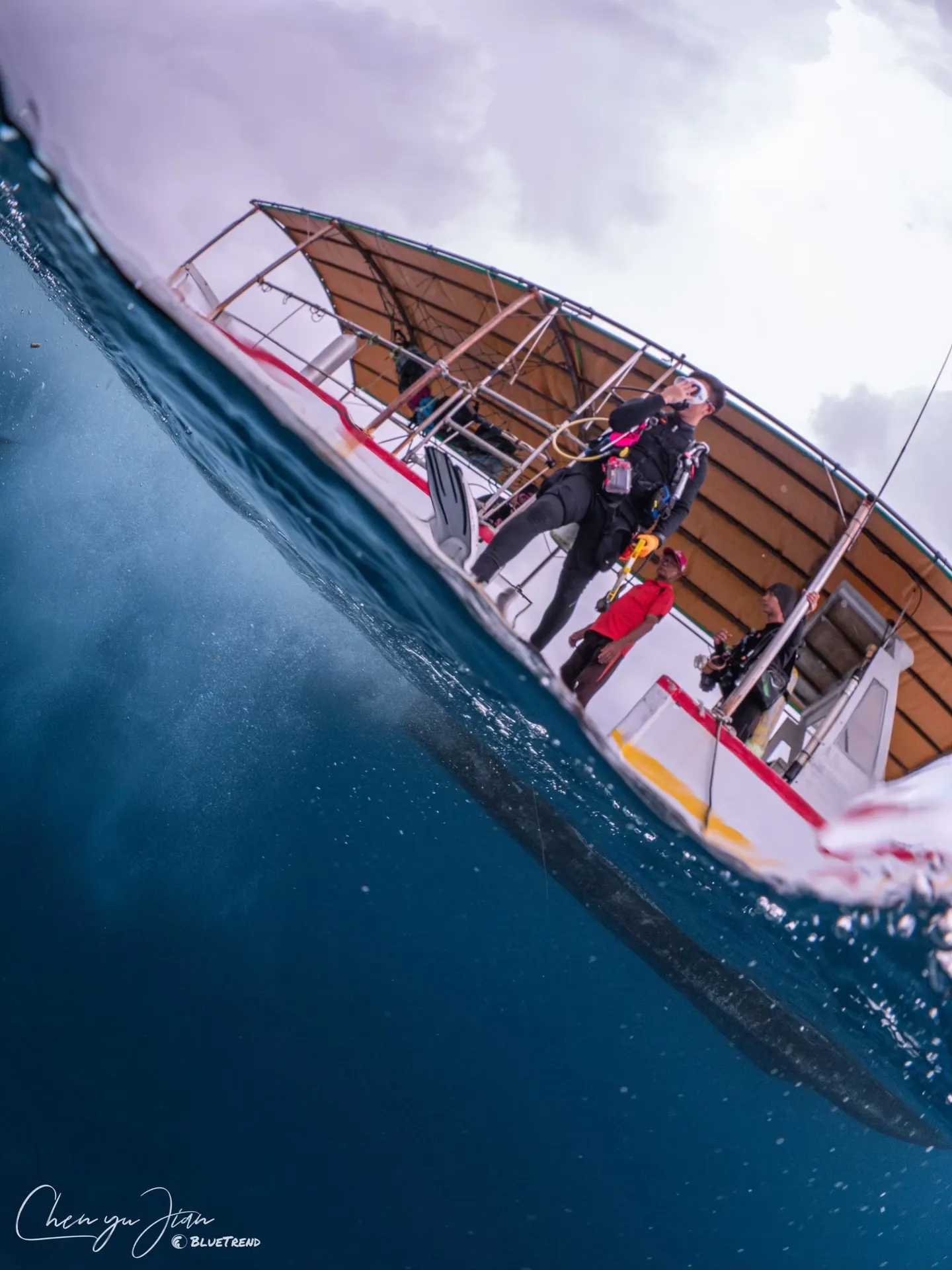
The vessel in this photo is not the one referred to in the account above; it is used for illustrative purposes only.
A Dive Plan Gone Wrong — Like Sailing a Pirate Ship
Four years ago, the Editor was on a shoot in Kenting at a site none of the dive guides had ever visited, and things went seriously wrong. The current was expected to run northward, but after descending it was apparent the current was heading south. At that point the dive should have been called, but the dive guide decided to let everyone drift with it. When the first dive ended and the group surfaced, there was no sign of the boat.
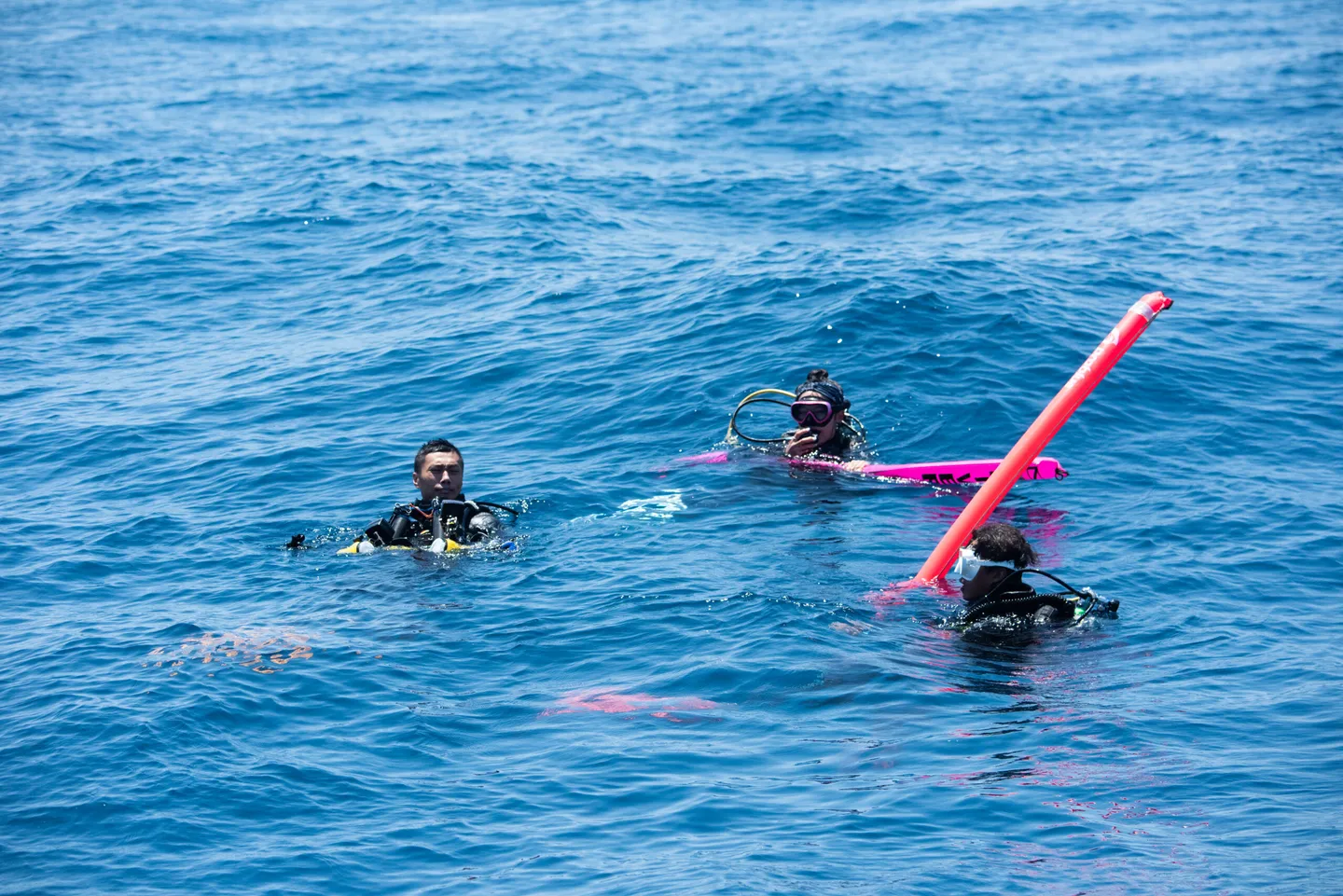
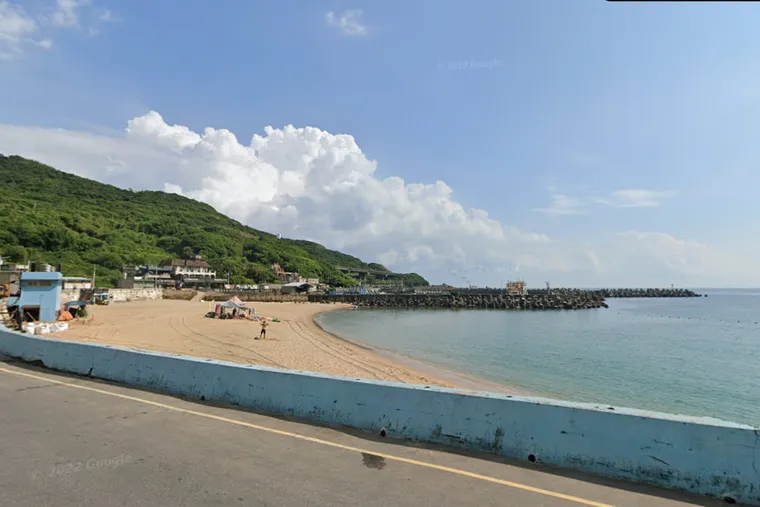
This photo is not related to the incident described; it is used for illustrative purposes only.
The entire group drifted for at least 40 minutes, being pushed steadily toward open water in strong currents and heavy swells. When the vessel finally appeared, the waves were crashing over it dramatically — rolling like a pirate ship — but there was no choice but to push through and pick everyone up. The Editor and the other divers scrambled aboard, noticing that even the stainless-steel boarding ladder had been bent by the waves. It truly felt like a lucky escape.
It is clear that boat dive safety is inextricably linked to the vessel operator and vessel you choose. The Editor learned important lessons from these experiences and has since made it a habit to confirm with the dive leader before departure that every aspect of the trip complies with operational regulations, and to seek out vessel operators with proven experience running dives.
When Compliant Vessels Become the Norm, Boat Diving Will Be Safer and the Dive Industry Will Improve
To better understand the differences between vessel categories and their corresponding insurance requirements, the Editor spoke directly with Blue Sea House (藍海屋), the dive shop mentioned in the opening incident. At the time of the accident, Blue Sea House was working with a local captain and using a non-compliant vessel. Nearly two years on, the shop invested close to NT$10,000,000 to build two non-private yachts in order to meet regulatory requirements for carrying passengers. Blue Sea House manager 強哥 (Brother Qiang) said: "Something that should never have happened, happened⋯⋯ We ran the business for over twenty years without ever buying a boat, but now that we're compliant, I finally feel like a weight has been lifted."
However, 強哥 noted that even with compliant vessels, inadequate port infrastructure — no water, no electricity, no stairs — combined with an annual mooring fee of NT$100,000 (while private yachts and unregistered vessels pay nothing) has made compliance deeply frustrating. He laughed bitterly, adding: "We get inspected every single day. I always want to ask — do they think we're drug dealers? Why is it every day, every single day?" Because compliant vessels have complete, easily verifiable documentation, they are straightforward to inspect, whereas non-compliant operators are "unfindable" and escape scrutiny altogether — creating a real risk of bad actors driving out good ones.
Despite the increased costs and more rigorous inspections, 強哥 had experienced firsthand the disadvantage of being non-compliant during the insurance claims process, mediation, and even litigation following the diving accident. He therefore hopes that by sharing his own story, he can encourage fellow operators to come into compliance. Beyond calling on the relevant authorities to improve port infrastructure, he hopes the government will "guide operators toward compliance, because that is the only way to make the diving industry as a whole better and safer."
In addition to 強哥, other operators who own compliant vessels have disclosed that the ongoing costs of vessel ownership — including mooring fees, onboard emergency equipment inspection fees, and more — amount to at least NT$600,000 to NT$700,000 in additional expenditure each year. When these costs are reflected in trip prices, many consumers balk. "A lot of consumers don't care whether something is compliant or not — they just want the cheapest option. But you get what you pay for. If everyone were compliant, operators would stop competing on price and start competing on service and quality."
Diving already carries many uncontrollable risks. Choosing a non-compliant vessel to save money only adds further uncertainty — it amounts to putting yourself in a high-risk situation. Choosing a compliant vessel gives dive shops, dive leaders, and divers alike at least one area where risk can be managed, making boat diving a little safer for everyone.
責任編輯:Jenny Tsai
衍伸閱讀:
- 2023 年水肺潛水必學的安全知識:船潛前的潛水簡報Boat Dive Briefing很重要,為了安全請你務必聆聽導潛指示!
- 你一定要知道的 4 點潛水安全基本觀念
- 12條必熟讀潛水安全觀念,潛水不是一場競賽
衍生閱讀