Contents(7)
- Island Nations on the Front Lines of Climate Change: How Do They Balance Economic Growth and Environmental Conservation?
- Putting Sustainable Tourism into Practice: Biosphere Reserves Where Environment and Economy Coexist
- Environmental Education: From Dive Shops to Divers
- After Protection: New Survival Challenges for Endangered Species
- Landfills: Another Hidden Threat to Marine Ecosystems
- Is There a Fix for Overtourism? Does a Perfect Solution Exist?
- Further Reading
When it comes to scuba diving in Indonesia, from the beginner-friendly Tulamben and Nusa Pedina to the remote Raja Ampat, Indonesia — sitting at the heart of the Coral Triangle — is widely regarded as one of the world's premier dive destinations. And yet, Indonesia is also the second-largest contributor to marine debris on the planet. With an underdeveloped waste management system and the mounting pressures of overtourism, how can this underwater treasure be protected?
The third edition of Bali Ocean Days wrapped up in late January 2026. Over two days and six thematic tracks, the event used Bali as its focal point to bring together government agencies, businesses, and non-profit organisations to explore urgent challenges and potential solutions.
If a few keywords were to capture the spirit of this year's forum, they would be "regeneration," "local engagement," and "Gen Z." Because conservation efforts in Bali have largely been led by foreigners — both in terms of hands-on participation and representation at the forum itself — how to increase local involvement emerged as a major talking point.
Indonesia's population is also 27% Gen Z, making the question of how to engage this generation a critical factor in the long-term sustainability of any conservation initiative.
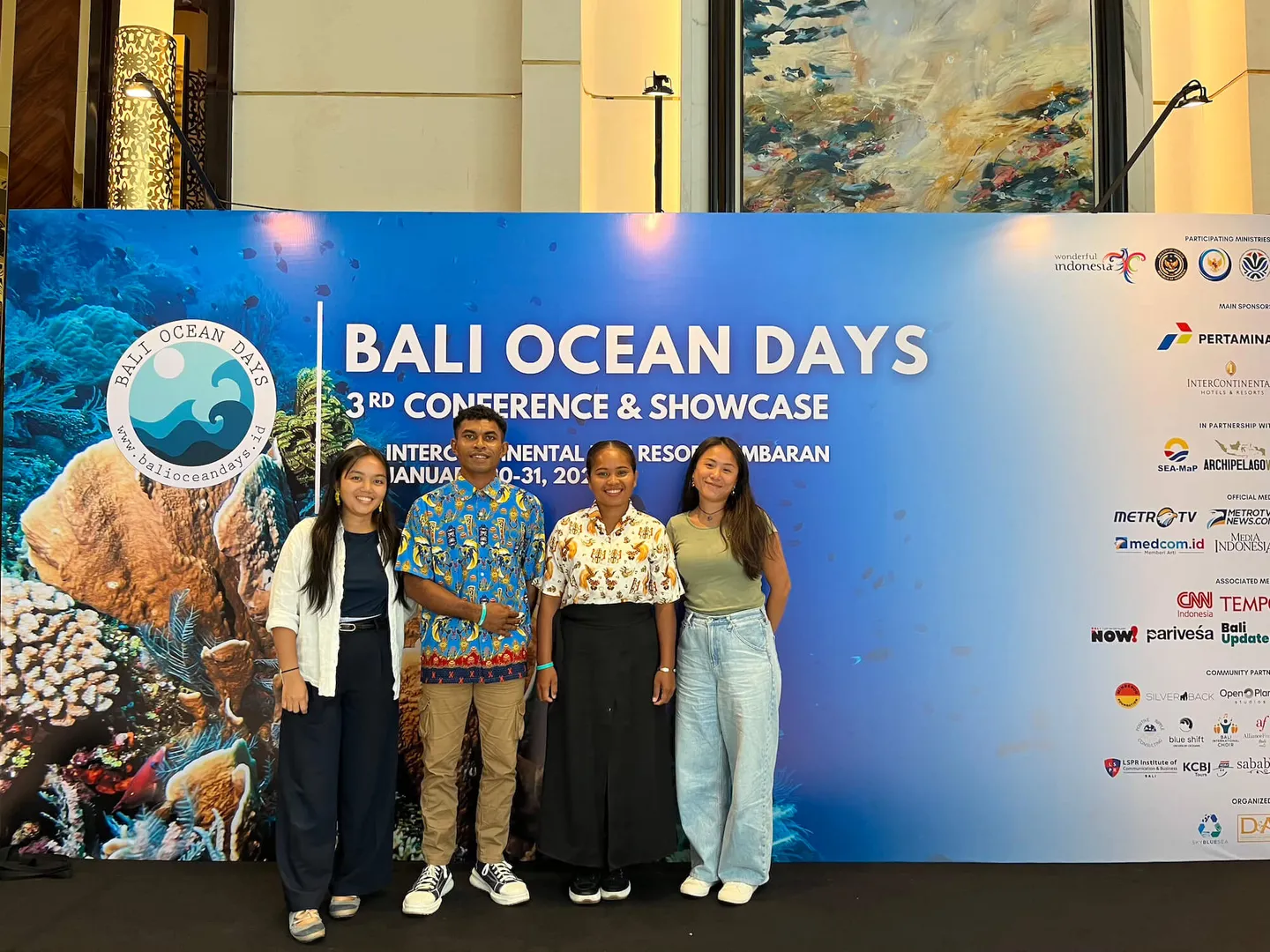
During the forum, we spoke with young Gen Z participants nurtured by the non-profit organisation The Sea People — they have been involved in coral restoration work and serving as dive guides in Raja Ampat.
Island Nations on the Front Lines of Climate Change: How Do They Balance Economic Growth and Environmental Conservation?
Like Indonesia, the Seychelles — an island nation off the coast of Africa — faces the same suite of threats: rising sea levels, coastal erosion, coral bleaching, and ocean acidification. The Seychelles and Bali also share a heavy reliance on international tourism, making the management of the tourism-environment balance a central challenge.
Indonesia's Ministry of Tourism has stated its intention to address Bali's overtourism problem by shifting its travel strategy from "Quantity to Quality." The Seychelles, meanwhile, shared how it is internalising the external costs of tourism through a Tourism Environmental Sustainability Levy (TESL), which spreads the environmental burden of travel between operators and visitors. The levy is charged per night based on accommodation category — the more upscale the hotel, the higher the tax.
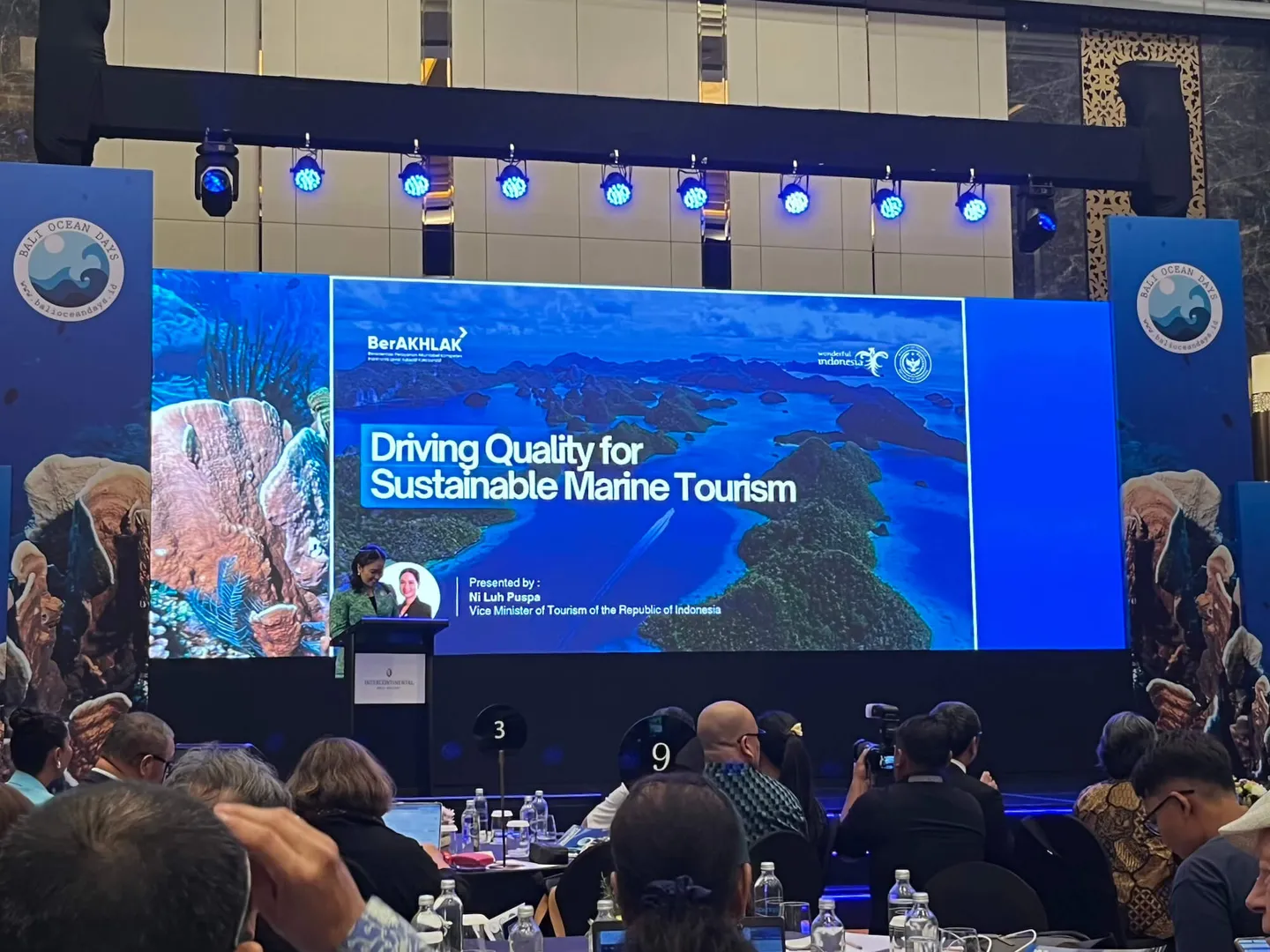
Indonesia's Deputy Minister of Tourism, Ni Luh Puspa, presented the Indonesian government's plans for sustainable marine tourism.


Putting Sustainable Tourism into Practice: Biosphere Reserves Where Environment and Economy Coexist
Ocean Gardener founder Chalias raised a thought-provoking question: what does sustainable tourism actually mean? For instance, have we ever verified that wastewater generated at tourist destinations is properly treated, rather than discharged directly into rivers and ultimately into the sea? Only by establishing a recognised and verifiable set of rules for sustainable tourism can we move beyond slogans and genuinely implement environmentally responsible travel.
Under the UNESCO Biosphere Reserve framework, the key lies in finding a balance between people and nature — protecting the environment while still allowing local communities to live and develop. This framework is inherently people-centred, responsive to local development needs, and aims to advance the blue economy while ensuring that natural resources can be maintained over the long term.
In Bali's case, where the economy is heavily dependent on tourism, sustainable tourism development must go hand in hand with stronger waste management and infrastructure — reducing the environmental costs of tourist activity so that tourism and nature can coexist rather than erode each other.
Environmental Education: From Dive Shops to Divers
Indonesia draws tens of thousands of divers every year. Managing diving behaviour and commercial operations is critical to protecting local coral reefs. The Green Fins initiative, jointly promoted by The Reef-World Foundation and the United Nations Environment Programme, was created to help the dive industry reduce its impact on coral reefs and build a more sustainable diving model. Under this programme, Green Fins has developed 15 codes of conduct governing diver behaviour underwater. According to programme data, divers make an average of 5.79 coral contacts per dive — which is why the initiative also offers courses to help divers and dive instructors raise their environmental awareness and improve their in-water practices.
Beyond divers themselves, Green Fins also provides practical guidance for dive shop operations, covering anchoring practices, waste management, and environmental education — establishing a comprehensive set of operating principles that spans everything from back-end logistics to in-water activities. Through these measures, Green Fins helps dive shops deliver memorable diving experiences while collectively safeguarding fragile and precious coral ecosystems.
After Protection: New Survival Challenges for Endangered Species
Nusa Penida, off the coast of Bali, is one of the few places in the world where visitors have a high chance of encountering manta rays, making Manta Point a highly popular destination. Although the Indonesian government has fully protected manta rays since 2014 — banning their capture and trade — the pressure brought by growing visitor numbers has created new challenges. Research shows that the number of boats heading to Manta Point has increased dramatically, averaging 28 vessels per trip in 2025, double the figure recorded in 2017. As dive activity intensifies, the manta rays' daily behaviour and movement patterns are being disrupted, leading to shorter stays and altered movement routes.
Furthermore, some unregulated tour operators lack clear guidelines on vessel conduct and minimum observation distances, causing harm to manta rays during transit and potentially forcing them to abandon established cleaning stations. As tourism becomes an ever-larger share of the local economy, reducing pressure on manta rays while maintaining tourism revenue has become an urgent challenge for local authorities — one that affects not only the survival of the manta rays themselves, but also the long-term ecological value of these waters.
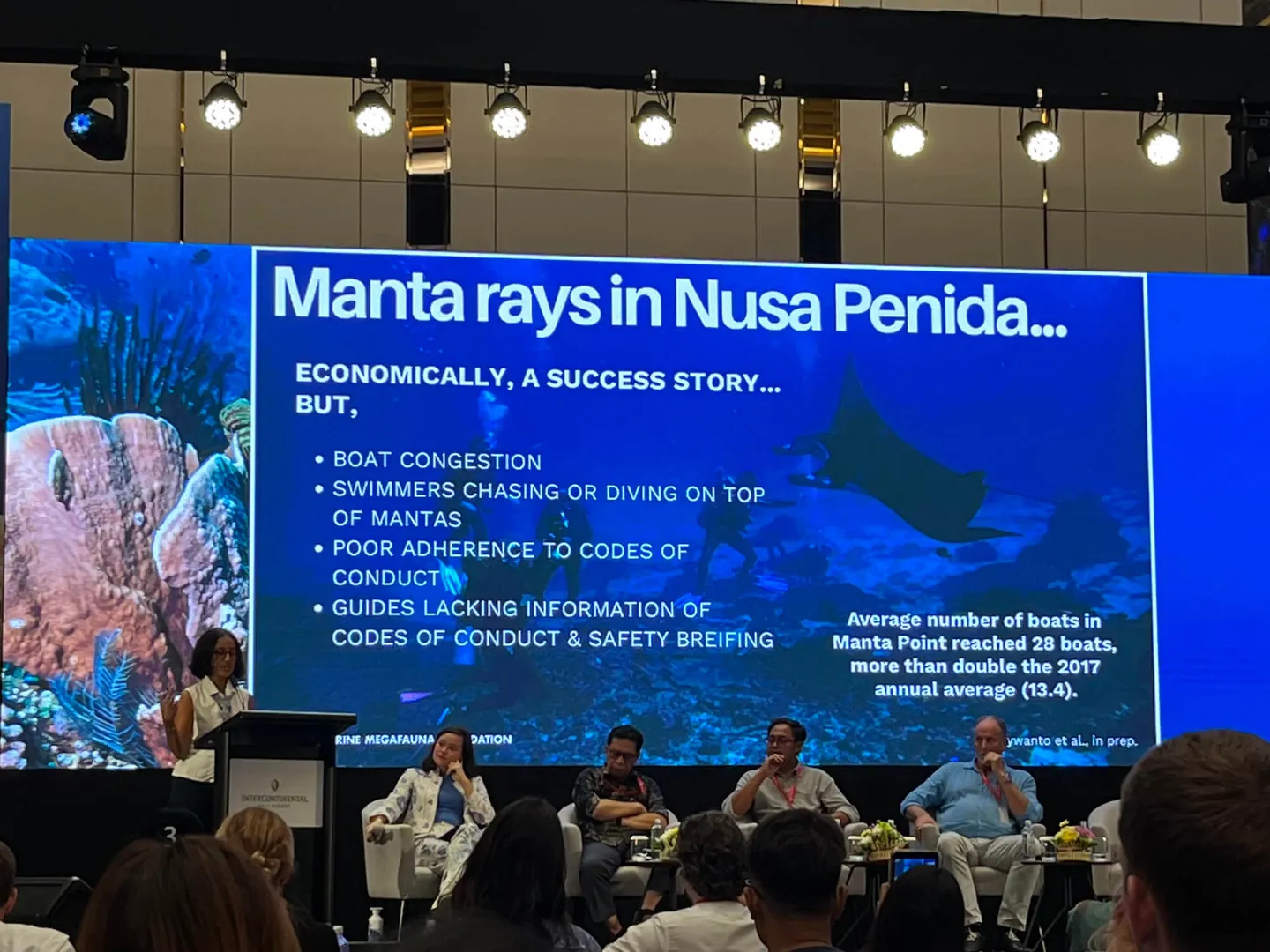
According to the Marine Megafauna Foundation, Manta Point has successfully attracted large numbers of tourists — but this has also given rise to new challenges, including boat overcrowding, disruptive visitor behaviour, and a lack of clear guidelines and enforcement.
Landfills: Another Hidden Threat to Marine Ecosystems
While the forum largely focused on environmental issues stemming from international tourism, Bali's waste management system is itself a serious environmental concern. With no comprehensive recycling infrastructure in place, local communities frequently dump rubbish into rivers or burn it on the spot — the smell of burning plastic is common on the streets — and this waste eventually flows into the ocean as pollution.
At the same time, the Suwung landfill near the airport is being considered for closure. As Bali's largest landfill, it has caused severe environmental contamination due to unsorted, direct dumping — particularly troubling given that it sits adjacent to one of Bali's largest mangrove areas, and has already exceeded its capacity. With no viable alternative yet identified, the planned closure date has been pushed back from the end of 2025 to 2026.
Is There a Fix for Overtourism? Does a Perfect Solution Exist?
During the rainy season, on Jimbaran Beach in Bali, marine debris arrives in waves — carried in from rivers, left behind by visitors, and carried along ocean currents to wash ashore. Along the stretch of beach lined with restaurants, tables are cleared and guests sit in the sand, dining and watching the sunset; walk 200 metres further, beyond the restaurant zone, and marine debris piles up on the shore. Two local fishermen cast their nets at the water's edge; in half an hour, they catch three small fish — and far more rubbish than fish. This scene feels like a microcosm of the tension between tourism development and local life: what visitors see is sunshine and beach, while what remains unseen is the environmental cost borne by those trying to make a living.
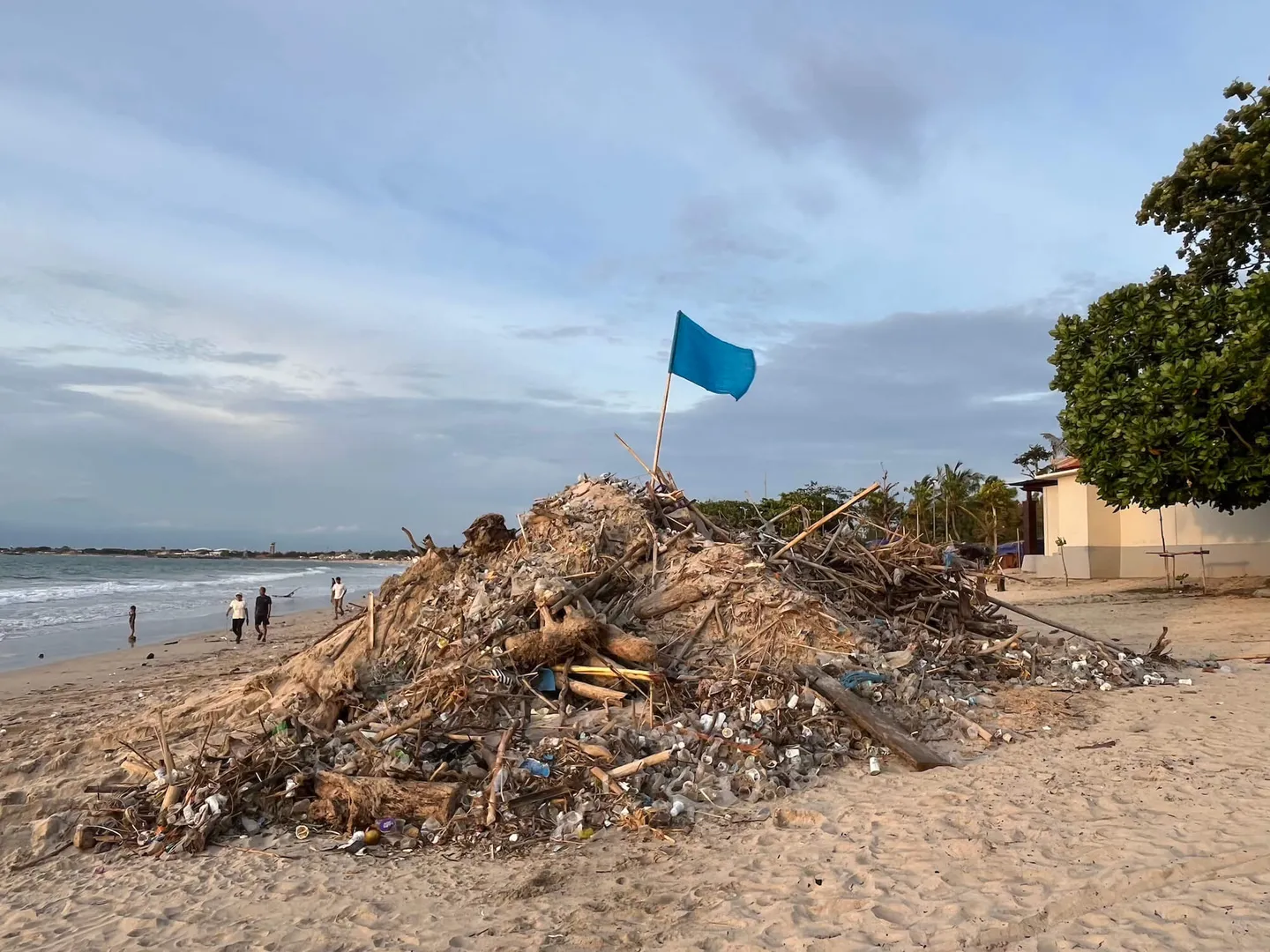
Marine debris piled high on Jimbaran Beach.
Local residents are well aware that their livelihoods depend heavily on tourism, and that the pressures tourism brings are gradually transforming this land. But when survival is on the line, any environmental protection measure risks meaning income uncertainty and fewer job opportunities — making the choice far more complicated. Tourism brings both opportunity and cost, and that cost is rarely shared equally.
There may be no perfect solution in the short term — but as travellers, we can reduce our use of single-use plastics, avoid chemical sunscreens that harm coral while diving, refrain from touching marine life, and choose dive centres that follow environmentally responsible guidelines. Together, we can help protect the beautiful underwater world of Bali.
Further Reading