Contents(5)
Fishing, shipping, and bioprospecting continue to expand, and the high seas — where "anyone can exploit but no one can easily govern" — have become a grey zone in ocean management. The international community has responded by adopting the Agreement on Biodiversity Beyond National Jurisdiction (BBNJ) through the United Nations, aiming to establish a framework for the protection and governance of the high seas.
The high seas will be bound by the treaty, supporting the conservation and sustainable management of high-seas biodiversity. Image credit: wanzi989813/Pixabay
The High Seas: The World's Largest and Most Difficult-to-Govern Waters
The high seas cover roughly two-thirds of the global ocean and account for ninety percent of Earth's total habitable volume. Belonging to no nation's jurisdiction, they harbour an extraordinary range of life — from plankton to blue whales. The high seas underpin global fisheries, food security, and access to marine genetic resources, yet without a binding global treaty, governance has remained fragmented and piecemeal, with marine protected areas covering only one percent of the ocean.


What Is BBNJ, and What Does It Cover?
After nearly twenty years of negotiations, the United Nations announced in September 2025 that 60 countries had ratified BBNJ, and the treaty formally entered into force on 17 January 2026. Participating nations are now legally bound to act collectively on climate change, biodiversity loss, and pollution.
The treaty addresses four major themes:
1. Area-Based Management Tools
Establishing marine protected areas on the high seas, using defined boundaries and legal measures to safeguard biodiversity and ecological integrity.
2. Marine Genetic Resources
Sharing the benefits derived from the commercial use of high-seas marine genetic resources — including applications in pharmaceuticals, cosmetics, food, and biotechnology.
3. Capacity-Building and Technology Transfer
Helping lower-income countries develop the capacity to participate in high-seas governance, and advancing marine conservation and sustainable management.
4. Environmental Impact Assessments
Establishing standardised assessment procedures, with a particular focus on high-risk activities such as ocean carbon removal.
The Test After Entry into Force: Who's In, Who's Watching?
As of March 2026, 86 countries had ratified the treaty, including China, Japan, France, and Brazil. China alone exports marine products — covering shipbuilding, aquaculture, fisheries, and offshore oil and gas — worth US$155 billion.
The United States, India, and Russia have not yet ratified. The US has signed but not ratified (marine product exports: US$61 billion); India has signed but not ratified (US$19 billion); Russia continues to uphold existing governance frameworks.
The treaty requires the first Conference of the Parties (COP1) to be convened within one year of entry into force, at which governance structures will be established and financial mechanisms discussed.
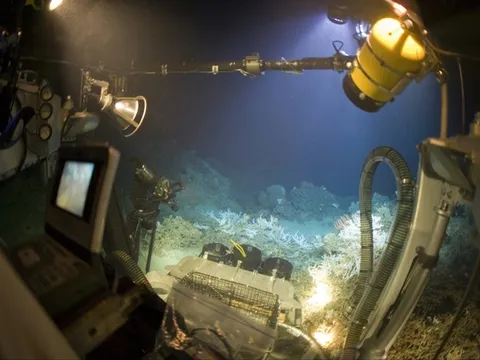
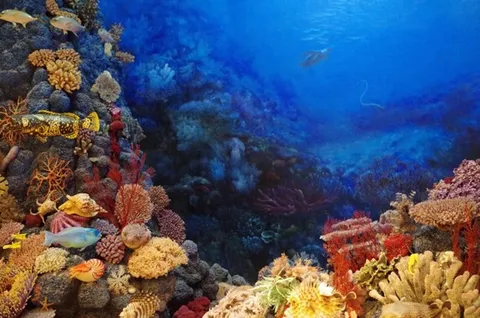
With the treaty in place, there is renewed hope for stronger protection of deep-sea biodiversity. Image credit: NOAA/Unsplash
From Fragmented Management to Integrated Governance
The high seas are currently governed in a patchwork manner — Regional Fisheries Management Organizations (RFMOs) manage fisheries, while the International Seabed Authority (ISA) oversees deep-sea mining. BBNJ will operate alongside these bodies through overlapping management and cooperation: fisheries will be required to meet environmental standards, and an ecosystem-based approach to marine resource management will be adopted, bringing human activities under a more comprehensive regulatory framework.
BBNJ represents an international milestone for protecting and sustainably sharing ocean resources — shifting the high seas from a free-for-all to a realm of collective governance and shared benefits, and making marine conservation a responsibility borne by the entire world.
References
- Harvard University, Background information on Ocean Governance and the BBNJ Treaty
- UN News, Game-changing international ocean treaty comes into force
- World Resources Institute, After 20 Years, an Agreement to Safeguard the 'High Seas' Takes Force
※ This article is republished from the Delta Electronics Foundation's Low-Carbon Living Blog: 〈公海條約生效!BBNJ如何終結「無人管理」的海洋時代〉, co-produced with BlueTrend.