Contents(6)
- What Is Deep-Sea Mining?
- Proponents Argue That Deep-Sea Mining Can Support the Green Transition
- Opponents Argue That Extraction Should Not Proceed Before the Research Data Is Complete
- Without Consensus, Why Is the ISA Still Rushing to Approve Mining Permits?
- Deep-Sea Mining: Hope or Hazard for Resource Transition?
- Further Reading
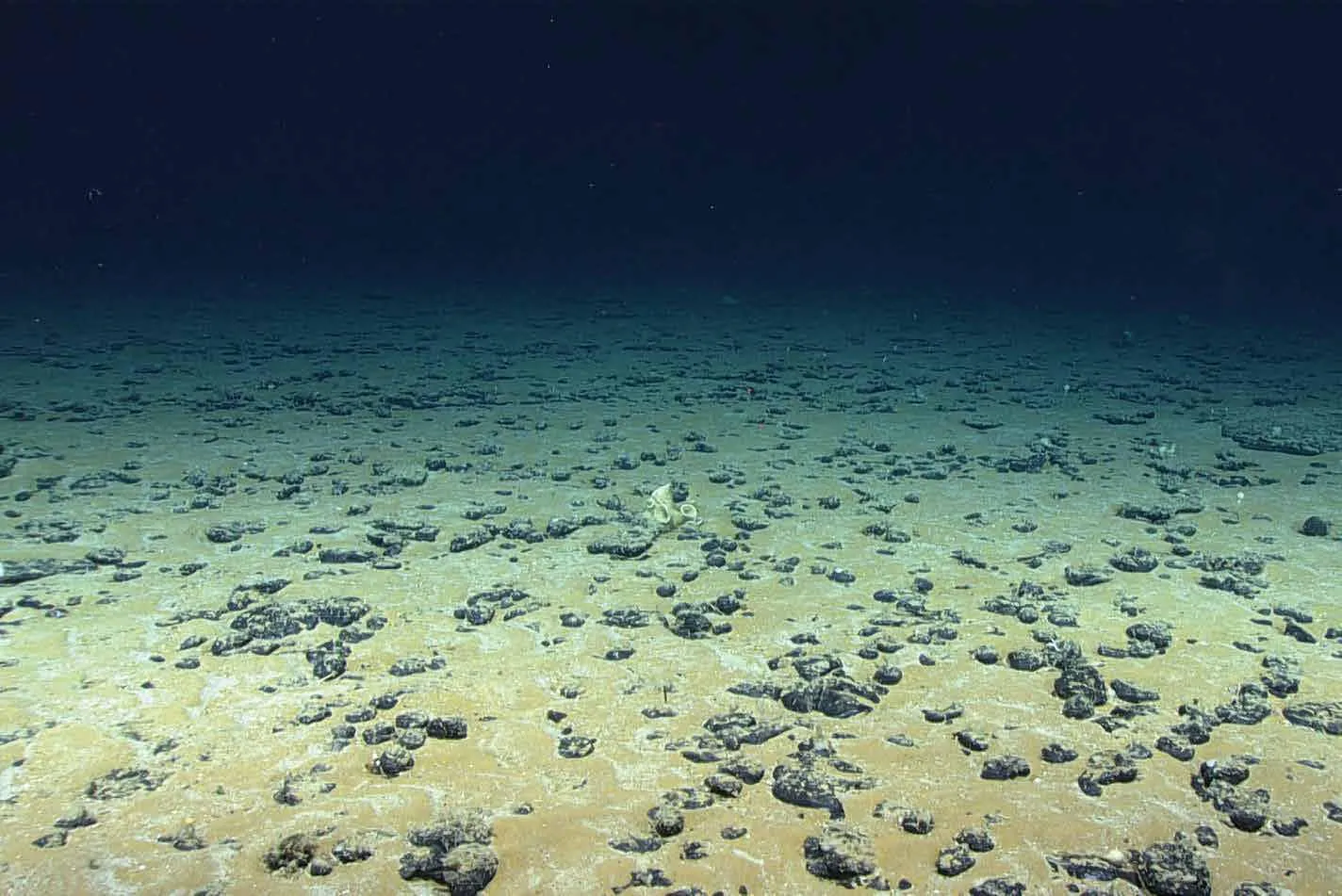
A deep-sea plain covered with polymetallic nodules. Image credit: International Seabed Authority, The contribution of the International Seabed Authority to the scientific objectives of the UN Decade of Ocean Science for Sustainable Development (2024)
The International Seabed Authority (ISA) is entering a new round of negotiations this year (2025) on deep-sea mining regulations. The ISA is an organisation established under the United Nations Convention on the Law of the Sea (UNCLOS) to oversee mining exploration and extraction permits in international seabed areas, while also ensuring the protection of the seabed environment.
What Is Deep-Sea Mining?
Driven by global demand for technological development and green energy transition, the need for cobalt and nickel is growing by the day. Beyond what can be extracted on land, polymetallic nodules found on the seabed at depths of 3,000 to 5,000 metres contain four metals — cobalt, nickel, manganese, and copper — making them prime targets for mining companies. Since nickel and cobalt are critical materials for electric vehicle batteries, international voices have begun pressuring the ISA to approve commercial extraction.
These polymetallic nodules are metallic ore formed from seabed sediments, growing only a few millimetres to a few centimetres per million years — an extraordinarily slow rate. Roughly the size of a potato, they are found mainly across deep-sea abyssal plains in the open ocean. Extracting them requires scraping the seafloor and using machines to suction the nodules to the surface, where they are then crushed and processed to isolate the target metals. In 1989, Germany conducted research into the environmental impact of deep-sea mining, clearing polymetallic nodules at a depth of 4,000 metres and generating sediment plumes. When researchers returned to the same site thirty years later, they found that while some organisms had returned, the ecosystem remained severely damaged and homogenised — indicating that the environmental harm caused by mining takes far longer to recover from than previously imagined.
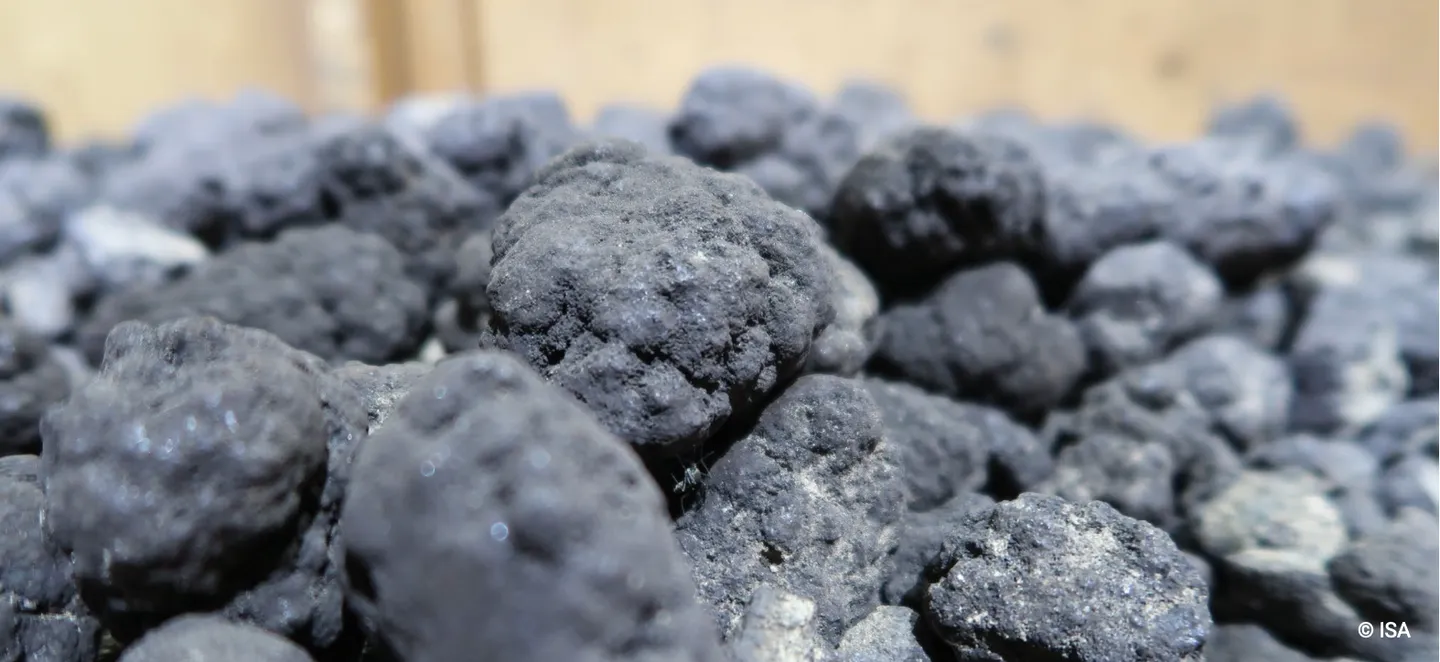
Polymetallic nodules. Image credit: ©International Seabed Authority, Secretary-General Annual Report 2024
No member state has yet been granted an extraction permit, though the ISA has issued numerous exploration licences, most of them in the Clarion-Clipperton Zone (CCZ) in the central Pacific Ocean. Given that humanity currently knows more about outer space than the deep ocean, the appropriateness of deep-sea mining at this stage remains deeply contested — a fact that has left more than 2,000 points of disagreement unresolved in the mining regulations, even after more than a decade of negotiations.


Proponents Argue That Deep-Sea Mining Can Support the Green Transition
Electric vehicles, wind power, and solar energy all rely heavily on these critical metals. Supporters argue that land-based mining is heavily concentrated in a handful of countries, and that deep-sea mining could reduce geopolitical risks. They also contend that an insufficient supply of these metals would impede the green transition. Additionally, proponents suggest that deep-sea mining could sidestep human rights controversies, create employment opportunities, and reduce environmental impact on human communities.
Opponents Argue That Extraction Should Not Proceed Before the Research Data Is Complete
In reality, there is currently insufficient data to explain how deep-sea mining will affect our lives or how long damaged areas will take to recover. With only 5% of deep-sea species known to science, it is genuinely difficult to assess the full scope of the impact. Furthermore, deep-sea ecosystems hold significant research potential for medical biotechnology and genetic data, supporting the development of anti-cancer drugs, antibiotics, and anti-inflammatory medications. The destruction of deep-sea biodiversity would also disrupt the carbon cycle and climate regulation, releasing more carbon and further warming the planet. Opponents therefore argue that extraction should be suspended until comprehensive research data is available.
Moreover, alternative technologies that can replace cobalt and nickel are already being developed. Lithium iron phosphate (LFP) batteries and sodium-ion batteries — which do not require cobalt or nickel — have already seen applications in the electric vehicle industry, and many companies are actively researching metal recycling technologies.
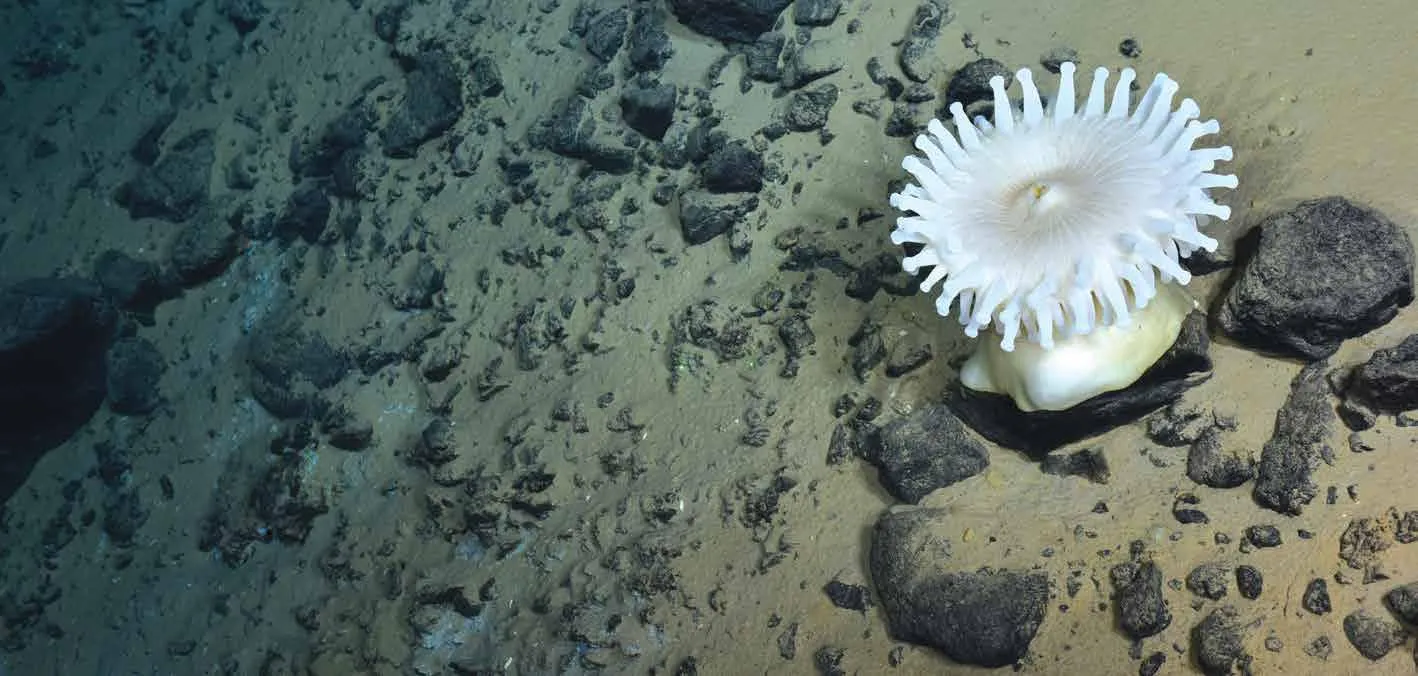
There is still much left to explore in deep-sea ecosystems. Image credit: International Seabed Authority, The contribution of the International Seabed Authority to the scientific objectives of the UN Decade of Ocean Science for Sustainable Development (2024)
Without Consensus, Why Is the ISA Still Rushing to Approve Mining Permits?
The ISA has suddenly accelerated its push for mining permits in recent years. Beyond pressure from the private sector seeking to satisfy investors and from green-transition advocates, the so-called two-year rule has become a key driver forcing action. Originally intended to prevent the ISA from stalling on decisions, the rule stipulates that if a country applies for a commercial mining permit, the ISA must finalise its mining regulations within two years — or be required to consider approving the application. It has since become a loophole exploited by proponents, now dubbed the "two-year loophole."
In 2021, the Pacific island nation of Nauru, acting on behalf of Canadian mining company The Metals Company, formally submitted an extraction permit application to the ISA, triggering the two-year rule and requiring that mining regulations be completed by 2023. This sparked international debate. Beyond the lack of sufficient research data and the absence of international consensus, the extraction technology itself is not yet mature: withstanding the extreme cold and pressure of the deep ocean, and transporting these heavy nodules from the open sea back to shore, are no small feats. The economics are also expected to be unfavourable, with costs predicted to be high and market competitiveness poor. Environmental damage would not be confined to the deep sea either — sediment plumes generated by mining would spread toward coastal areas, affecting coastal ecosystems and economies.
Deep-Sea Mining: Hope or Hazard for Resource Transition?
To date, 32 countries have opposed deep-sea mining before research data and policy frameworks are complete. Major corporations including Google, Volvo, Samsung, and BMW have also pledged not to use products derived from deep-sea mining. Countries in favour include Norway, China, Russia, India, Nauru, and Kiribati.
As the world pursues a sustainable transition, deep-sea resources appear to be emerging as a new option — yet the deep ocean remains one of the least scientifically understood domains on Earth. In the absence of clear ecological impact assessments and regulatory mechanisms, how humanity chooses to navigate this "deep-sea uncertainty" is a profound test of the values we hold between development and protection.
Further Reading