Contents(8)
- Where Is Sunshine Aquarium Ikebukuro: The Rooftop Aquarium of Sunshine City, Higashi-Ikebukuro
- Who Is Sunshine Aquarium For: Modest in Size, Best as a Stop Within a Shopping Day
- What Is Sei Ippai Ten: Sunshine Aquarium's Night-Only Special Exhibition
- Mating Behaviors of Special Creatures at Sunshine Aquarium: Indoor Exhibit Highlights
- Fiddler Crabs, Mudskippers, and Newts: Creatures That Court With Everything They've Got
- Outdoor Marine Garden: Sea Lions, Penguins, and Interactive Installations
- Practical Information for the Sunshine Aquarium Night Exhibition
- Closing Thoughts: A Small Aquarium That Fits Perfectly Into Two or Three Hours
A quick note first: the 2026 edition of "まだまだ♡性いっぱい展" closed on November 3rd, so this night exhibition is no longer running at Sunshine Aquarium. The series has been going since 2019 and this was already its 5th installment — attendance has grown year on year — so the next edition is well worth looking forward to, and this article can serve as a reference when you plan your next trip.
The night exhibition "まだまだ♡性いっぱい展" at Sunshine Aquarium Ikebukuro (サンシャイン水族館, Sunshine Aquarium) is the most talked-about aquarium event the Editor has seen in Tokyo this year. During the day, this urban aquarium draws mostly families with children; after 6:15 p.m., the halls are bathed in pink and purple light, and every tank gets a neon-style sign explaining how its inhabitants court, mate, and raise their young.
This article will first cover the aquarium's location and nearby places worth visiting, then share details on the night exhibition's ticket prices and queuing situation, before highlighting a handful of creatures with particularly remarkable reproductive behaviors — translating and expanding on what those signs say in Japanese. If your next Tokyo trip has you staying in Ikebukuro, or you're simply looking for an aquarium you don't need to dedicate a full day to, the information here should be enough to slot it straight into your itinerary.
The short version: Sunshine Aquarium is on the smaller side — two to three hours is just right — making it ideal as one stop within a shopping-focused Ikebukuro day. The night exhibition packages obscure natural history knowledge in a way that's witty without being crude. As long as you don't mind adult-oriented wordplay, it makes for an evening you won't easily forget.
Where Is Sunshine Aquarium Ikebukuro: The Rooftop Aquarium of Sunshine City, Higashi-Ikebukuro
Location and Getting There
Sunshine Aquarium is located in Sunshine City, Higashi-Ikebukuro, Toshima-ku, Tokyo — specifically on the rooftop of the World Import Mart Building. From the East Exit of JR Ikebukuro Station, walk straight along Sunshine 60-dori and you'll arrive. The Higashi-Ikebukuro Station on the Tokyo Metro Yurakucho Line connects via an underground passage, so you won't need an umbrella on rainy days.
Once inside Sunshine City, find the aquarium-dedicated elevator on the first floor of the World Import Mart Building and ride it straight up to the rooftop ticket area. An escalator route is also available, but escalators only go as far as the 9th floor — the final level requires stairs. For visitors traveling with luggage or a stroller, the elevator is far more convenient.

Nearby Attractions Around Sunshine City
Sunshine City itself is a large shopping complex, and the aquarium occupies just one floor within it. The same precinct houses the Sunshine 60 Building observation deck (てんぼうパーク), the planetarium "Manten," numerous Japanese fashion brands and lifestyle shops, and Pokémon Center Mega Tokyo — fans of anime merchandise tend to spend the better part of a day in this area.
The exhibition's guide leaflet even includes a venue special offer: show the leaflet to receive 20% off observation deck admission, and participating restaurants also offer dinner-hour discounts. The Editor suggests heading to the observation deck for the night view first, then taking the elevator down into the aquarium — the two stops flow naturally one after the other.


Who Is Sunshine Aquarium For: Modest in Size, Best as a Stop Within a Shopping Day
Scale and How Long to Allow
Sunshine Aquarium spans an indoor first floor, an indoor second floor, and an outdoor area called "Marine Garden." By Tokyo city-aquarium standards it's on the small-to-medium side. If you're expecting the kind of wall-to-wall panoramic tank you'd find at Okinawa Churaumi Aquarium, the scale here won't match — but the variety of species on display is impressive, and the outdoor "Sky Penguins" tank overhead is genuinely distinctive.
At a relaxed pace, two to three hours is just right — enough to see everything without sore feet, but not so long you feel like you've overstayed. That duration makes it a natural fit as a mid-shopping-day interlude rather than a destination that demands an entire day.
Staying in Ikebukuro with an Afternoon Flight: A Morning at the Aquarium Works Perfectly
The Editor stayed in Ikebukuro this trip, with a return flight in the late afternoon to early evening — a situation that's ideal for fitting Sunshine Aquarium into the final morning. After checking out, drag your luggage to Sunshine City, store it, tour the aquarium unencumbered, then head to the airport. The timing works out beautifully.
Luggage storage is located right next to the aquarium elevator, in the form of self-service coin lockers that accept IC card payment. The interface is available in Traditional Chinese — select your locker, place your luggage inside, and confirm. The machine prints a usage receipt. You will need this receipt to retrieve your belongings, so keep it safe.

What Is Sei Ippai Ten: Sunshine Aquarium's Night-Only Special Exhibition
The 5th Installment, with a Cumulative Attendance of Around 120,000
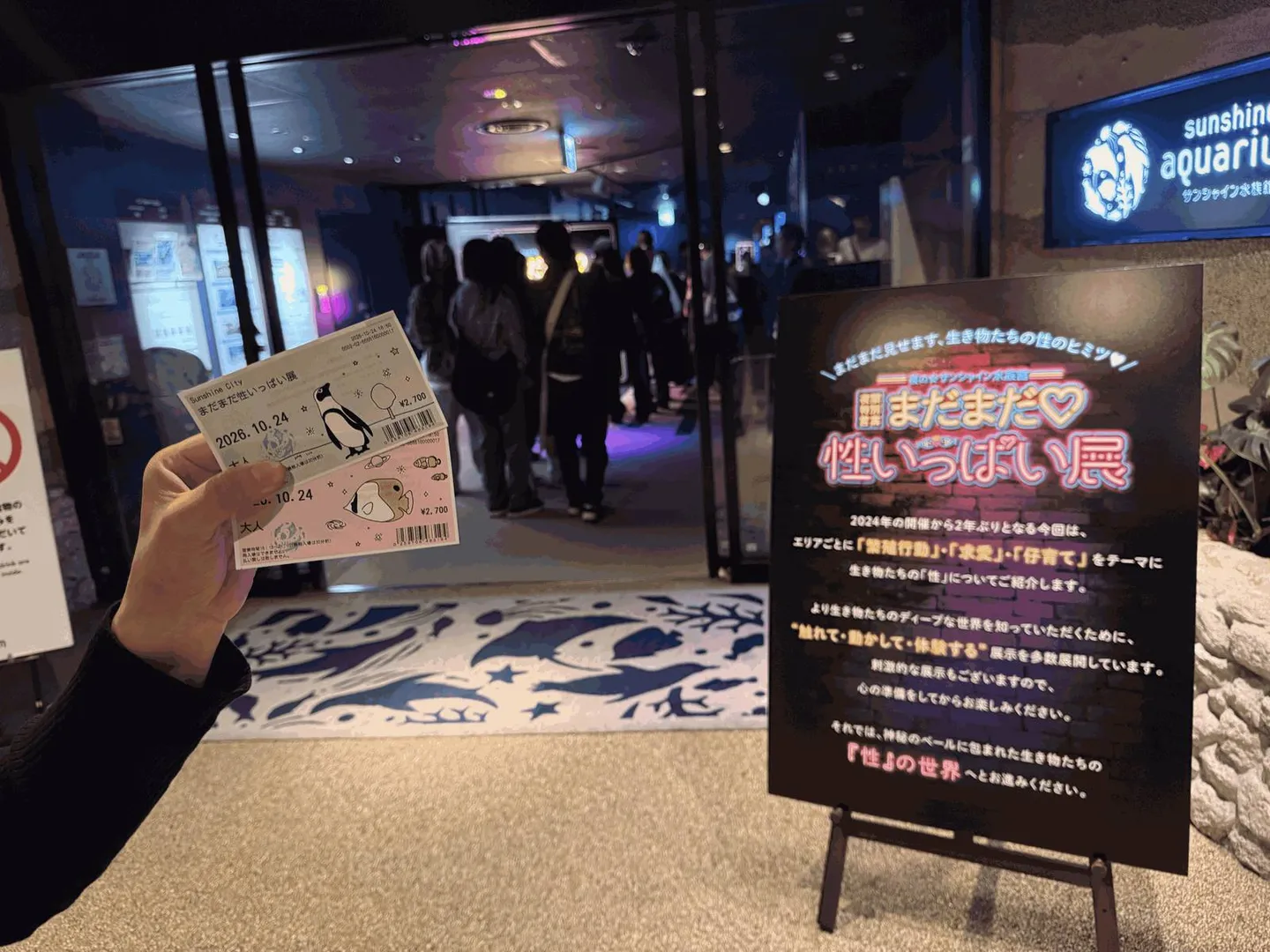
"性いっぱい展" (Sei Ippai Ten) is a series of night-only special events that Sunshine Aquarium has been running since 2019. In Japanese, "性いっぱい" (sei ippai) is a homophone of "精一杯" (sei ippai), meaning "with all one's might" — the concept being that living creatures put everything they have into passing on their genes. Follow-up editions came in 2020, 2021, and 2024; this year's "まだまだ♡性いっぱい展" is the 5th, with the series' cumulative attendance officially announced at around 120,000 visitors.
That loyal following means the crowds were much larger than the Editor had anticipated. We visited on a weekend evening in late October to find the ticket counter area packed with young people and couples; inside, the most popular interactive installations all had queues.

Night Exhibition Ticket Prices and Opening Hours
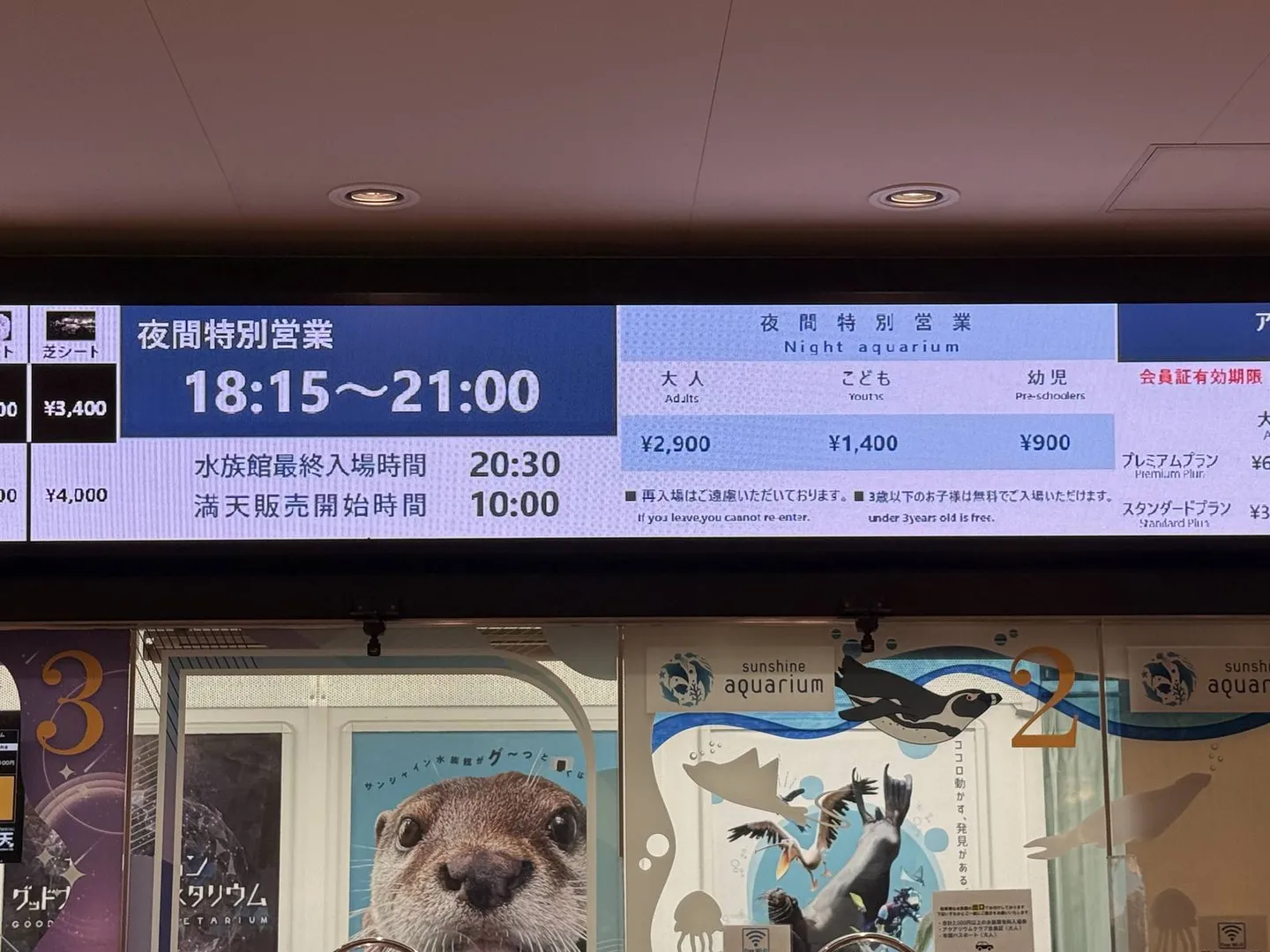
The 2026 night exhibition ran from September 11 to November 3, with operating hours of 18:15 to 21:00 and last admission at 20:30. Daytime general admission runs until 18:00; the two sessions are sold separately, and re-entry after leaving the building is not permitted.
| Ticket Type | Night Exhibition Price (2026) |
|---|---|
| Adult | ¥2,700–¥3,300 (varies by date) |
| Child | ¥1,400 |
| Infant | ¥900 |
The Editor's ticket on the day was printed at ¥2,700, while the signs at the venue showed ¥2,900 for the adult rate — genuine price variation exists between dates within the same exhibition run. Children aged 3 and under are free; annual pass holders receive complimentary admission or discounts depending on their plan. This year's run closed on November 3rd. The series has historically returned every one to two years, so for the next edition's dates and pricing, check the official website before you travel.
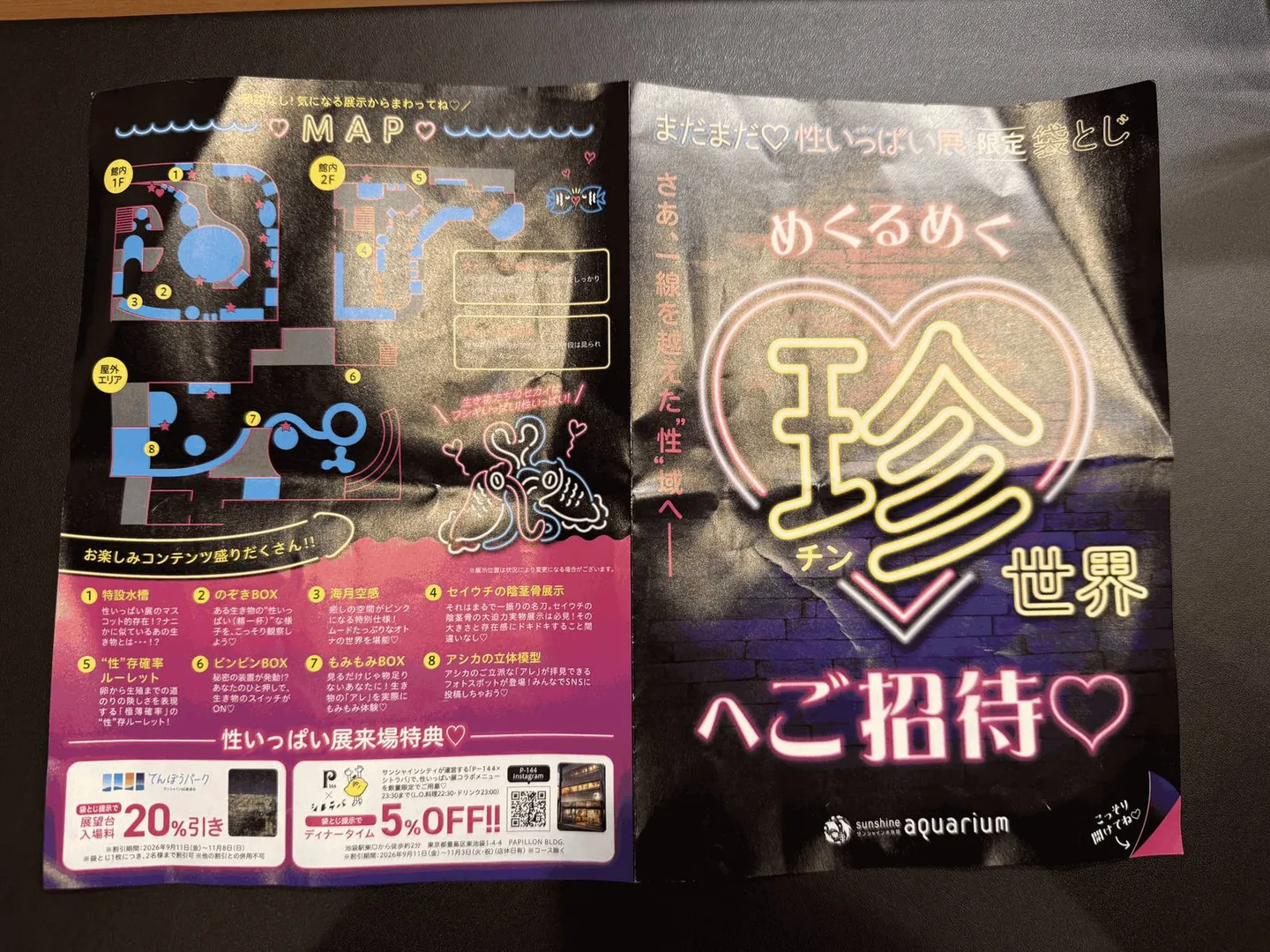
The guide leaflet includes a floor map marking 8 key exhibits, including a specially set-up tank, a peep box (のぞきBOX), the walrus baculum display, the sardine survival roulette, and several interactive installations in the outdoor area. Pick one up at the entrance and work through the numbers — it's the best way to make sure you don't miss anything.
Mating Behaviors of Special Creatures at Sunshine Aquarium: Indoor Exhibit Highlights
The most engaging aspect of this exhibition is that every sign leads with a punchy headline and then clearly explains one species' reproductive strategy. Below are a few that the Editor found particularly worth pausing at — with the Japanese sign content summarized in English and some additional context.
Innkeeper Worm: The Symbol That Needs No Explanation
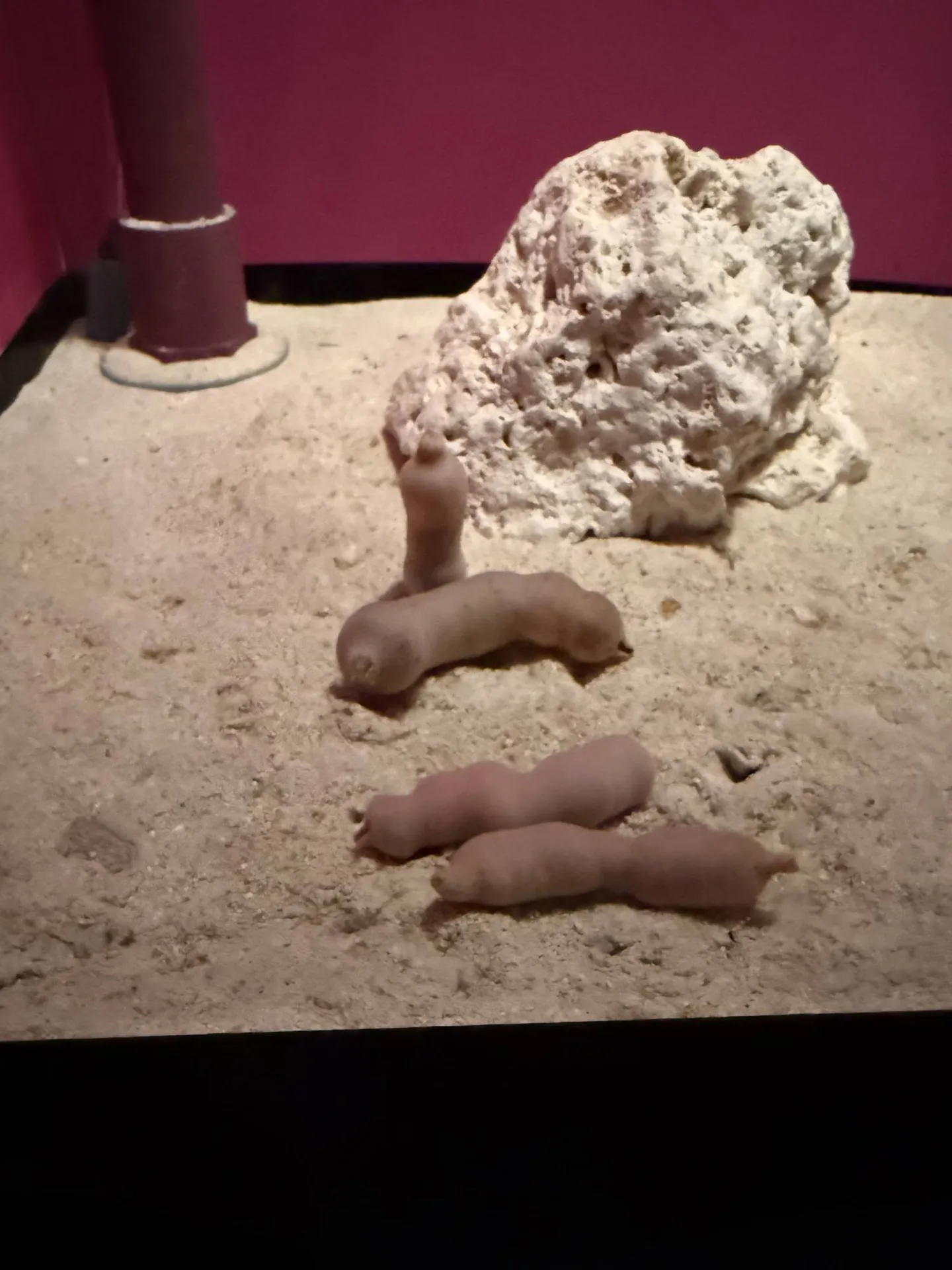
The very first tank stops visitors in their tracks. Lying across the sandy bed are several pink, cylindrical creatures: innkeeper worms (ユムシ, scientific name Urechis unicinctus), a common resident of sandy intertidal zones along Japan's coastlines and a popular seafood ingredient in South Korea and northern China.
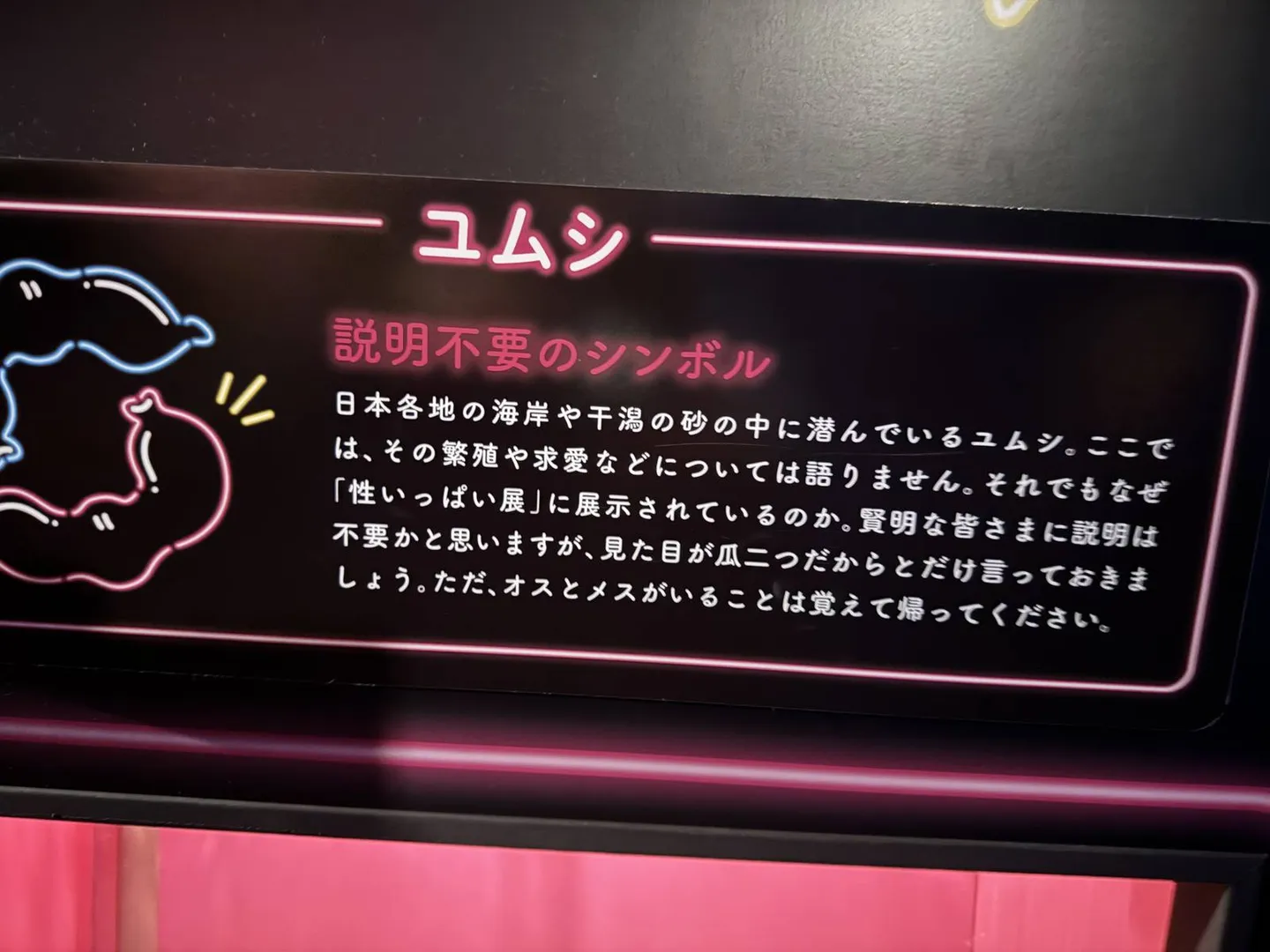
The sign's approach is brilliantly restrained: rather than discussing the innkeeper worm's reproduction or courtship, it simply notes that "clever visitors will need no explanation" for why this creature has appeared in this particular exhibition — only that it "looks exactly like one." A closing line reminds the reader that innkeeper worms do, in fact, come in male and female. The tone of the entire exhibition is established right here, with this single tank.
Pistol Shrimp and Goby: The "Burrow Family" Who Are Quite Open After Dark
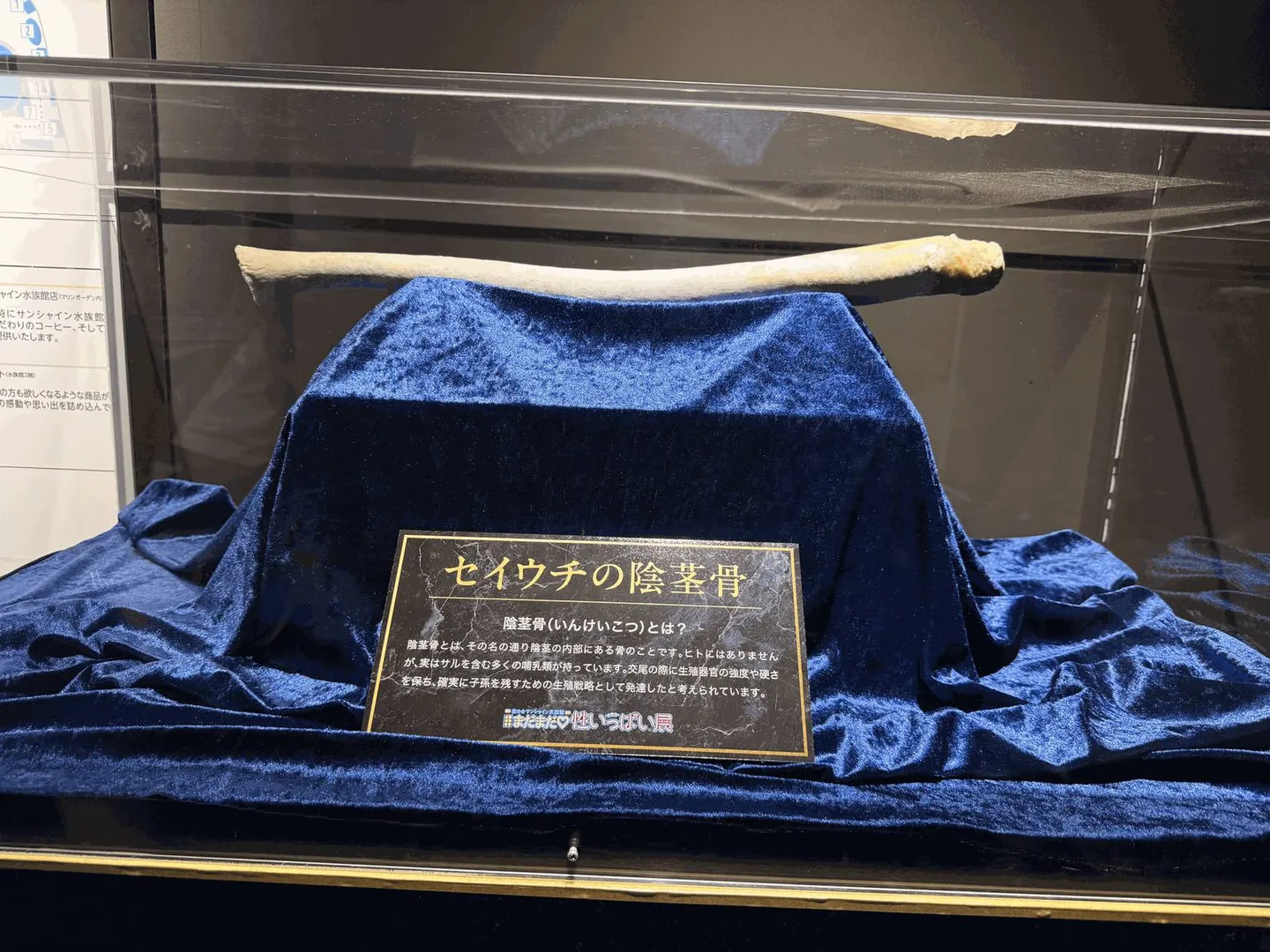
Any diver will recognize this pair immediately. The pistol shrimp (テッポウエビ) digs and maintains the burrow while the goby, with its sharper eyesight, stands guard at the entrance and signals the shrimp to retreat inside at any sign of danger — one of the most iconic symbiotic relationships on sandy reef floors.
The sign goes on to describe what happens inside the burrow — something you'd never witness on a dive: both species reproduce independently within the same hole, and the goby even feeds its waste back to the shrimp, allowing both families to grow larger together in a single shared home. Next time you spot a goby at a burrow entrance on a sandy bottom, spare a thought for all the activity going on just below.
Japanese Spider Crab: Iron-Clad Protection Before Mating
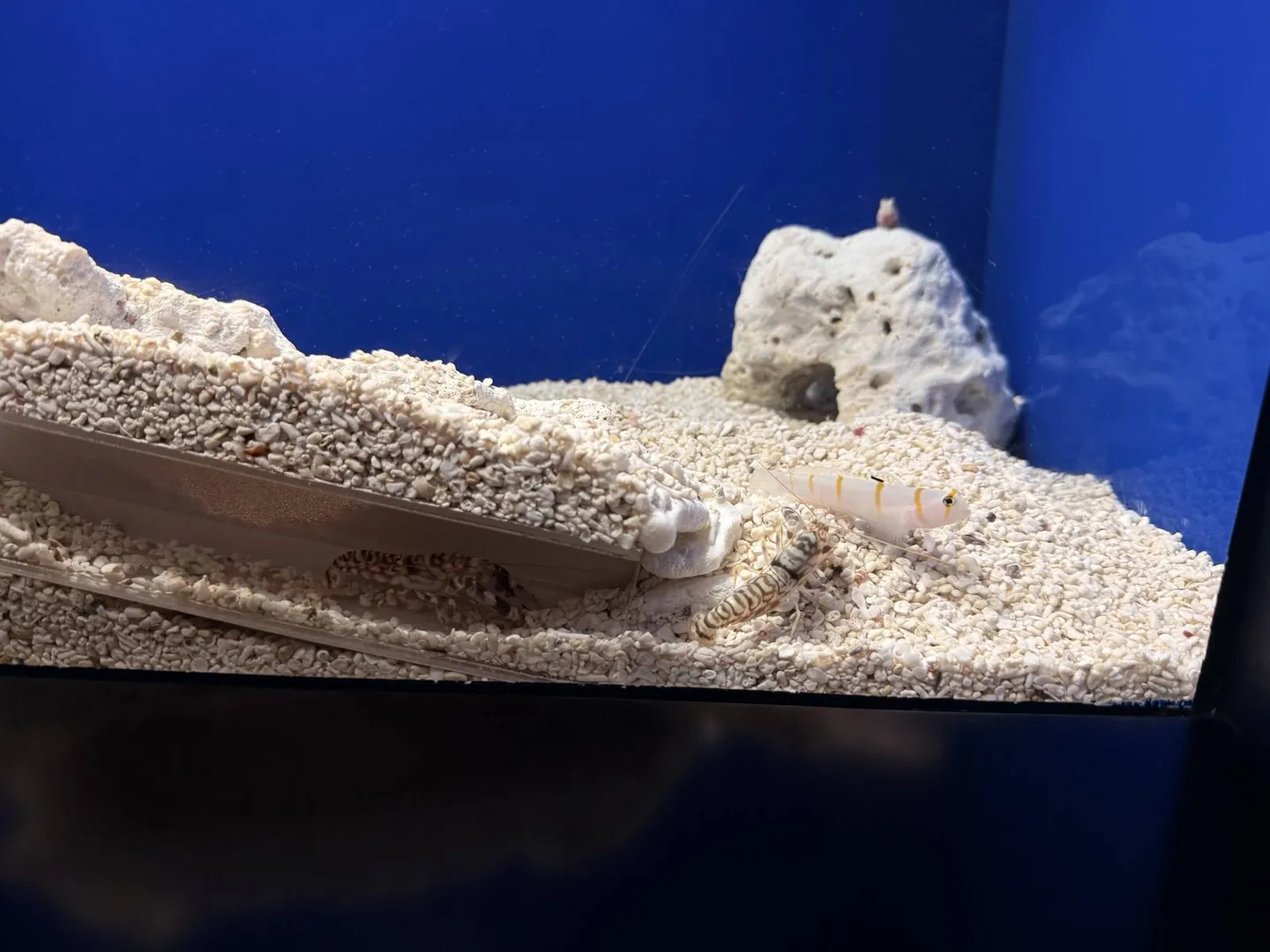
The Japanese spider crab (タカアシガニ, Macrocheira kaempferi) — the longest-legged crab in the world — engages in what's known as precopulatory guarding before mating. The male drapes himself completely over the female, preventing rival males from stealing her away.
The sign gives the male a line of dialogue: "You're mine — nobody is taking you anywhere." There is, admittedly, something faintly shoujo-manga about the image of a giant crab clasping a female beneath him. Because the exhibition described this behavior so vividly, the spider crab tank drew one of the longest-lingering crowds of the night — everyone pressed against the glass, waiting to see whether the male in the tank would actually clasp the female and produce a live demonstration of precopulatory guarding. A tank that most visitors would ordinarily walk past without a second glance became, thanks to a single explanatory panel, the most-anticipated display of the entire exhibition. That is the curatorial skill this event is built on.
Cuttlefish: A Fierce Union That Burns Through a Lifetime
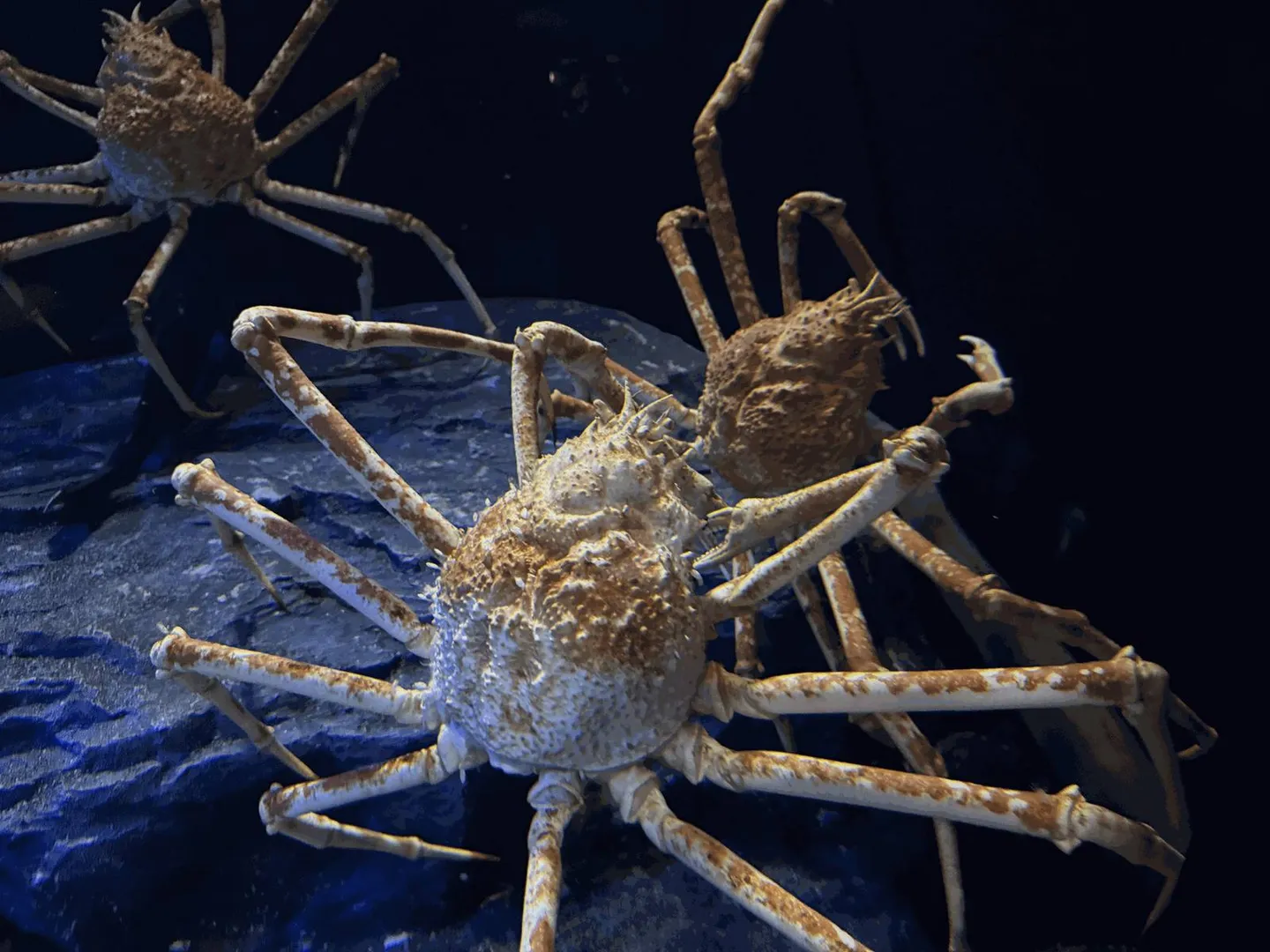
The mating of cuttlefish (コウイカ) is renowned for its intensity. Male and female wrap their arms around each other in what looks almost like a wrestling hold; the male transfers a spermatophore to the female, who retrieves the sperm to fertilize her eggs when she is ready to lay them.
The sign's final line is the one that stays with you: cuttlefish reproduce only once in their lives, and after doing so, both male and female exhaust themselves completely and die. That fierce union, then, is the total sum of a lifetime's energy poured into a single act. The Editor didn't capture cuttlefish mating on camera at the exhibition, so here's a photograph taken by a diver in the wild.
Walrus Baculum: A Display Specimen Approximately 70 cm Long
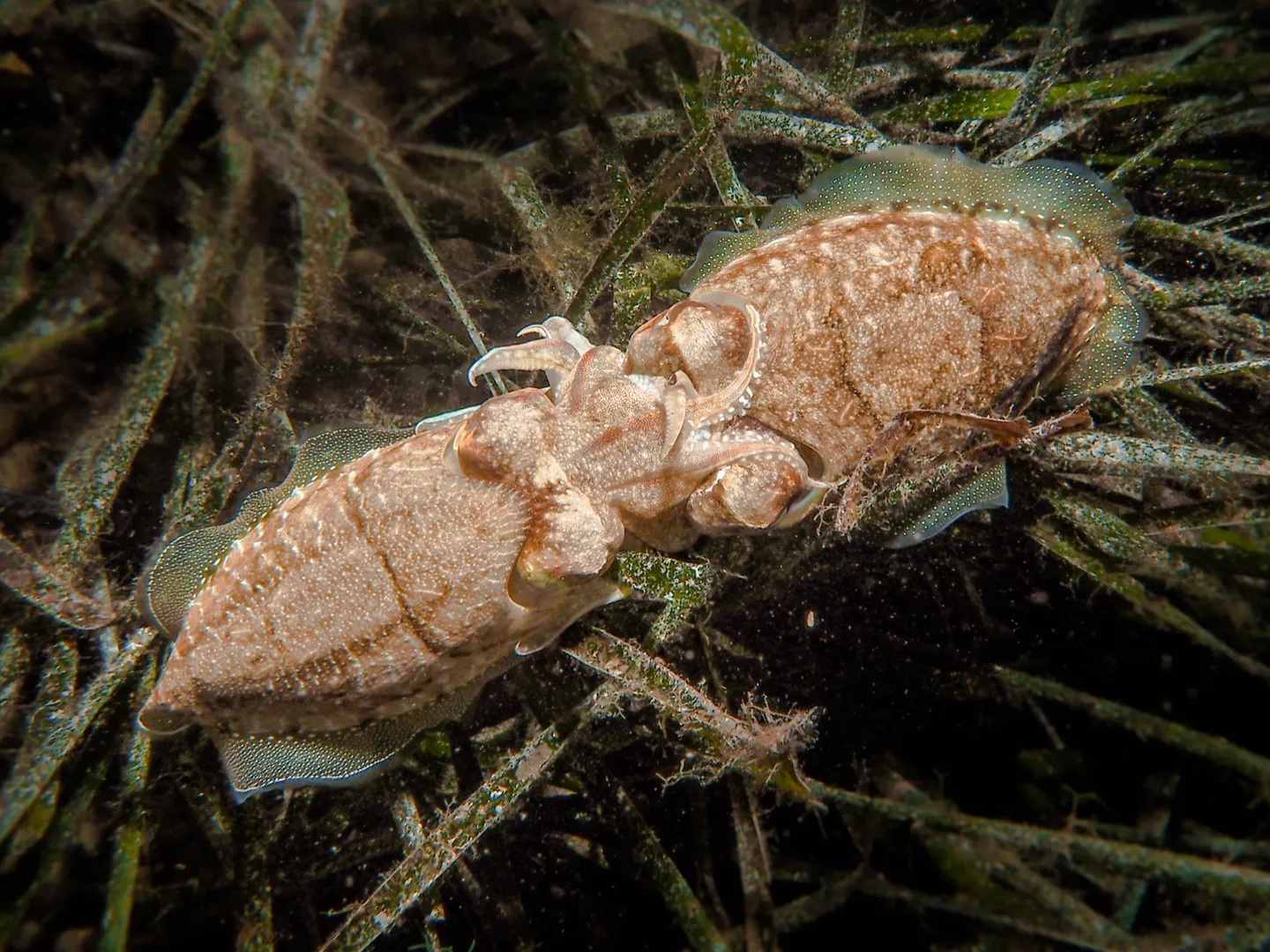
One of the highlight exhibits listed on the guide leaflet is a walrus baculum — a penis bone — displayed inside a glass case. The sign explains that this is the largest and most robust baculum of any mammal on Earth, measuring approximately 70 cm in length.
A baculum is, as the name suggests, a bone found inside the penis. Humans don't have one, but many other mammals do, including primates. Walruses live in the frigid waters of the Arctic, where body heat is easily lost; having this bone allows them to complete mating quickly and reliably under harsh conditions. Standing before the glass case and seeing the real thing in front of you, it is very difficult not to be taken aback by the size.
Kissing Gourami: That "Kiss" That Looks So Sweet
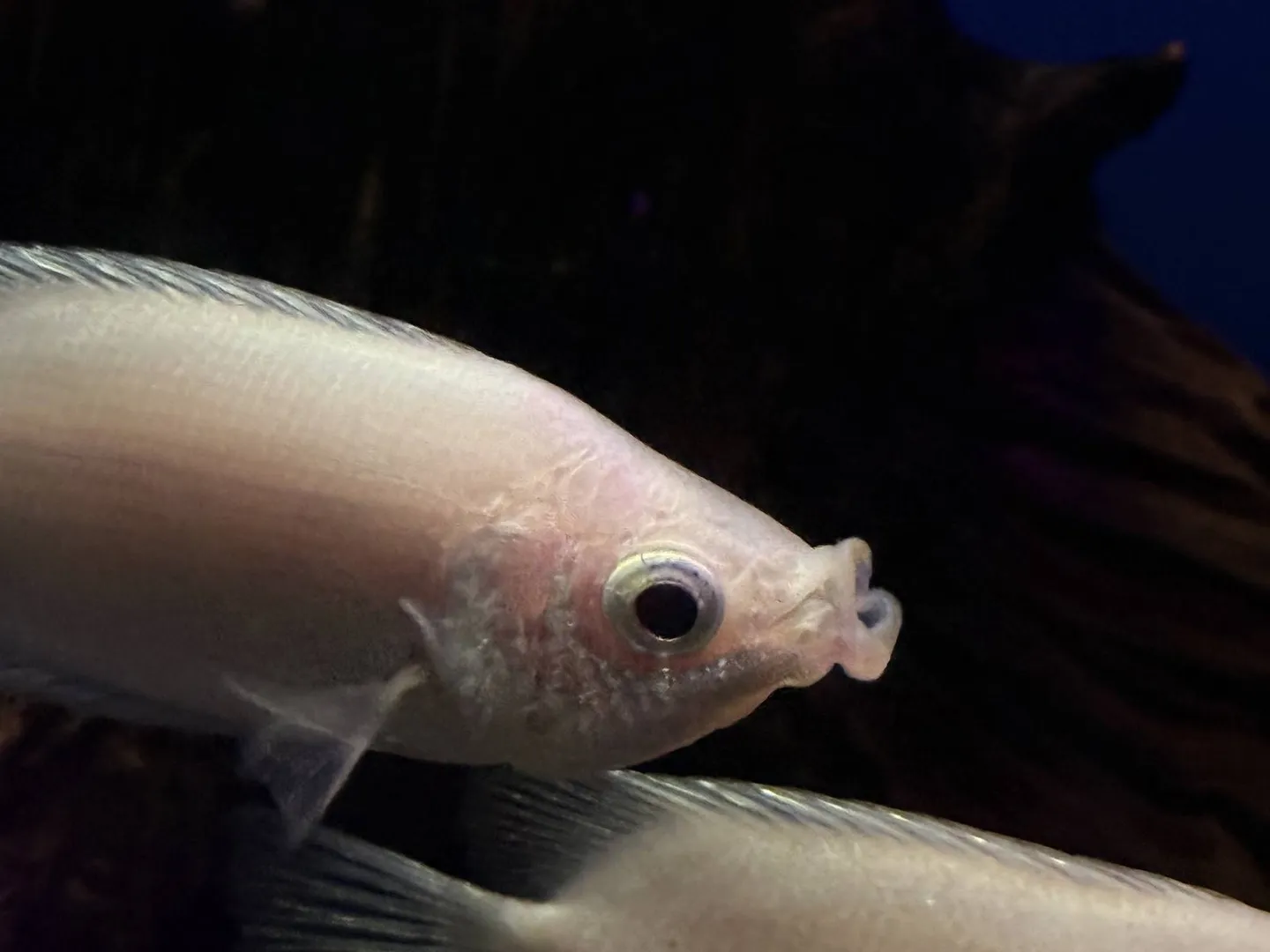
The kissing gourami (キッシンググラミー, Helostoma temminckii) has notably thick lips, and two fish frequently press their mouths together in a pose that looks for all the world like a kiss. However, the prevailing view is that this behavior is usually a form of competitive display between individuals — not an expression of romantic affection between mates.
Fiddler Crabs, Mudskippers, and Newts: Creatures That Court With Everything They've Got
Japanese Fire-Bellied Newt: A Trembling Tail Full of Pheromones
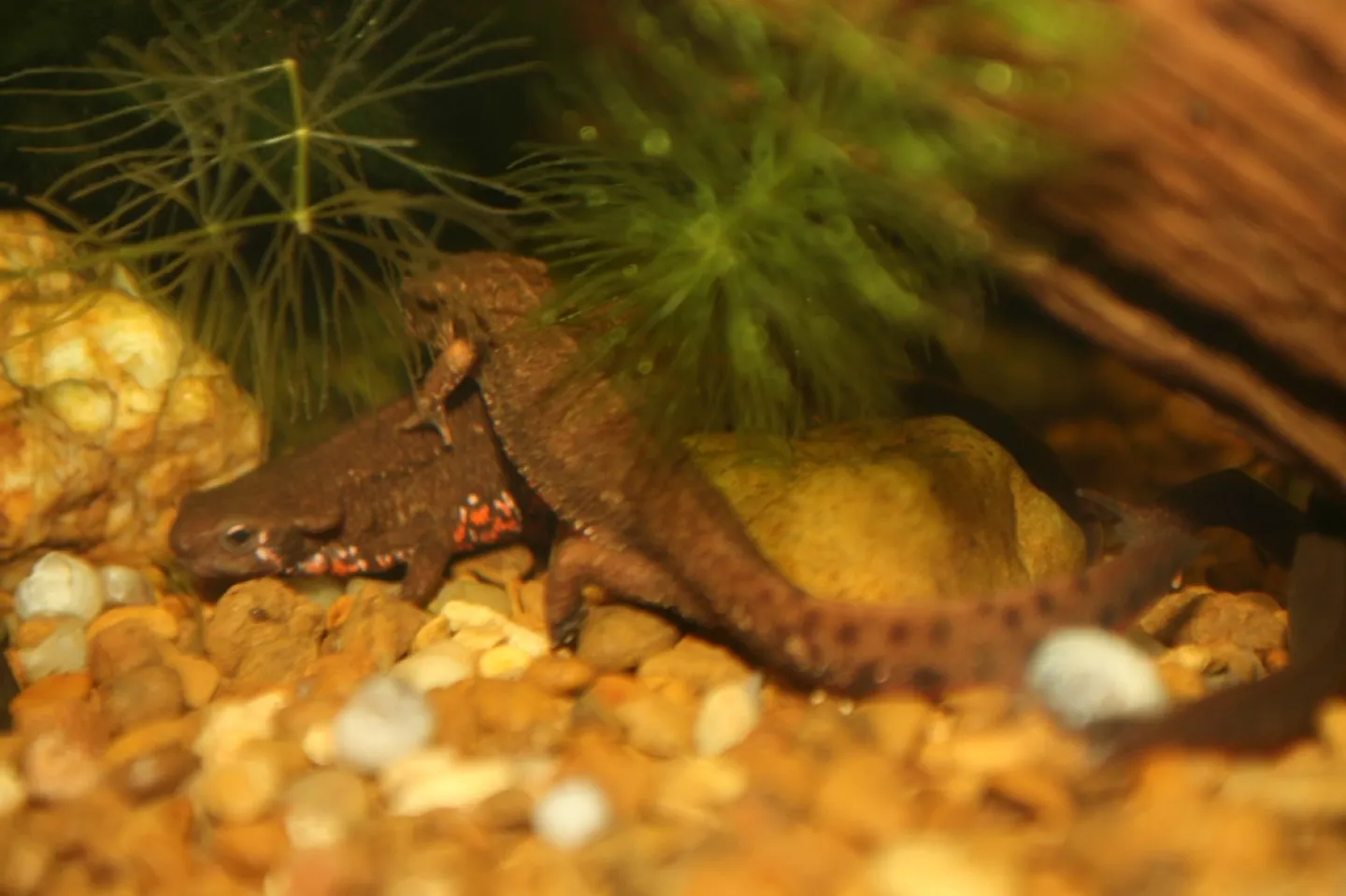
The Japanese fire-bellied newt (アカハライモリ, Cynops pyrrhogaster) is a species endemic to Japan. During the breeding season, males position themselves in front of females and fan their tails with intense, rapid vibrations — behavior that resembles the trembling of a warrior before battle, but is actually a mechanism for wafting pheromones toward the female.
The sign notes that this courtship effort frequently fails, yet the male does not give up — he simply keeps waving his tail until he eventually succeeds.
Fiddler Crab: Waving That Giant Claw to Win Her Over
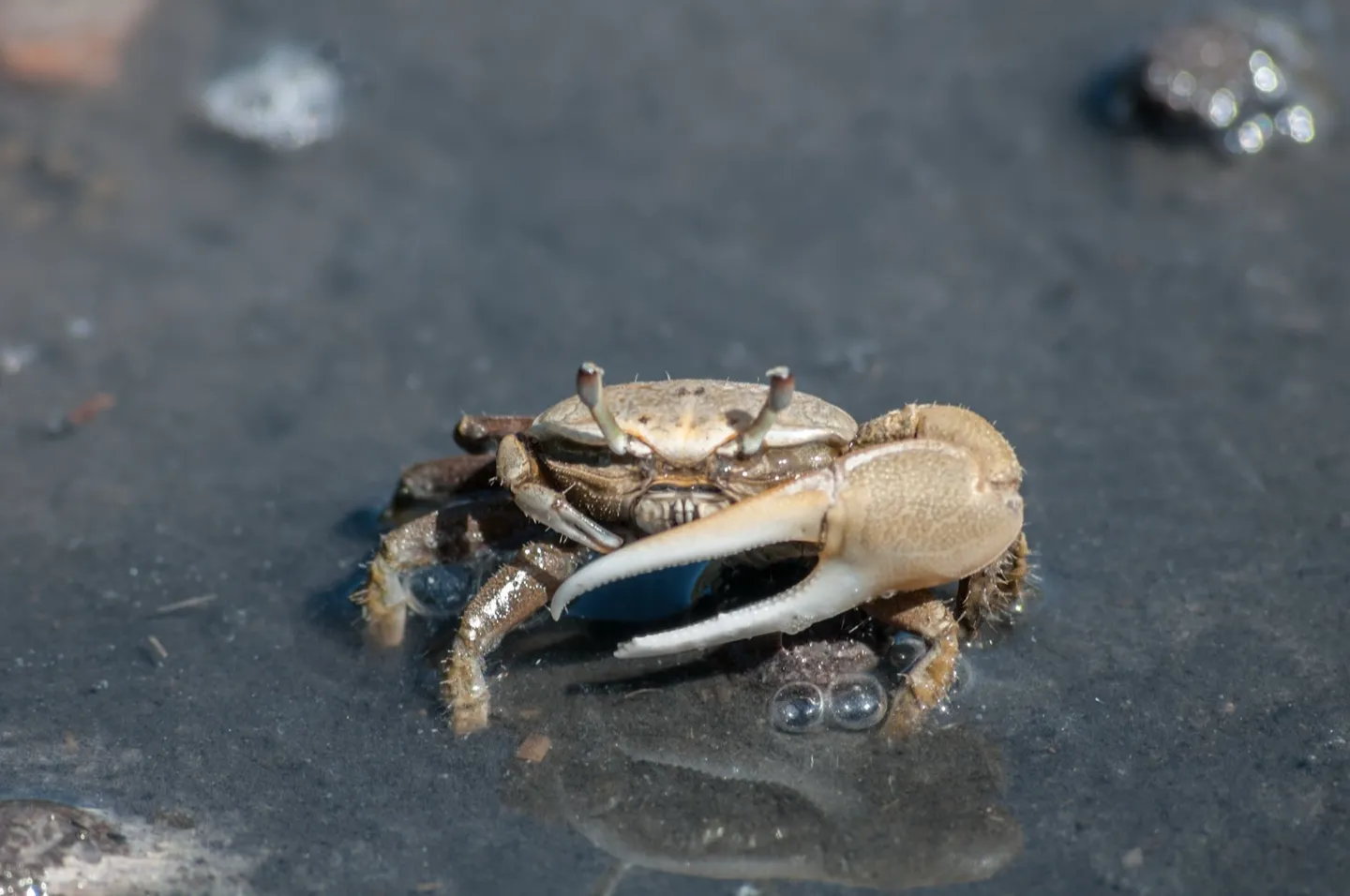
The fiddler crab (シオマネキ) — a familiar sight on intertidal flats in Taiwan too — is instantly recognizable by the male's one dramatically oversized claw. The sign opens with a wordplay joke before getting to the point: males wave that giant claw vigorously to signal females, and those attracted by the display are led into the male's burrow to mate.
Readers who have visited Xiangshan Wetland in Hsinchu or Sicao in Tainan will likely have seen the spectacle of an entire mudflat covered in males waving their claws in unison — that mass display is, in fact, one enormous, simultaneous courtship competition.
Mudskipper: The Higher You Jump, the More Popular You Are
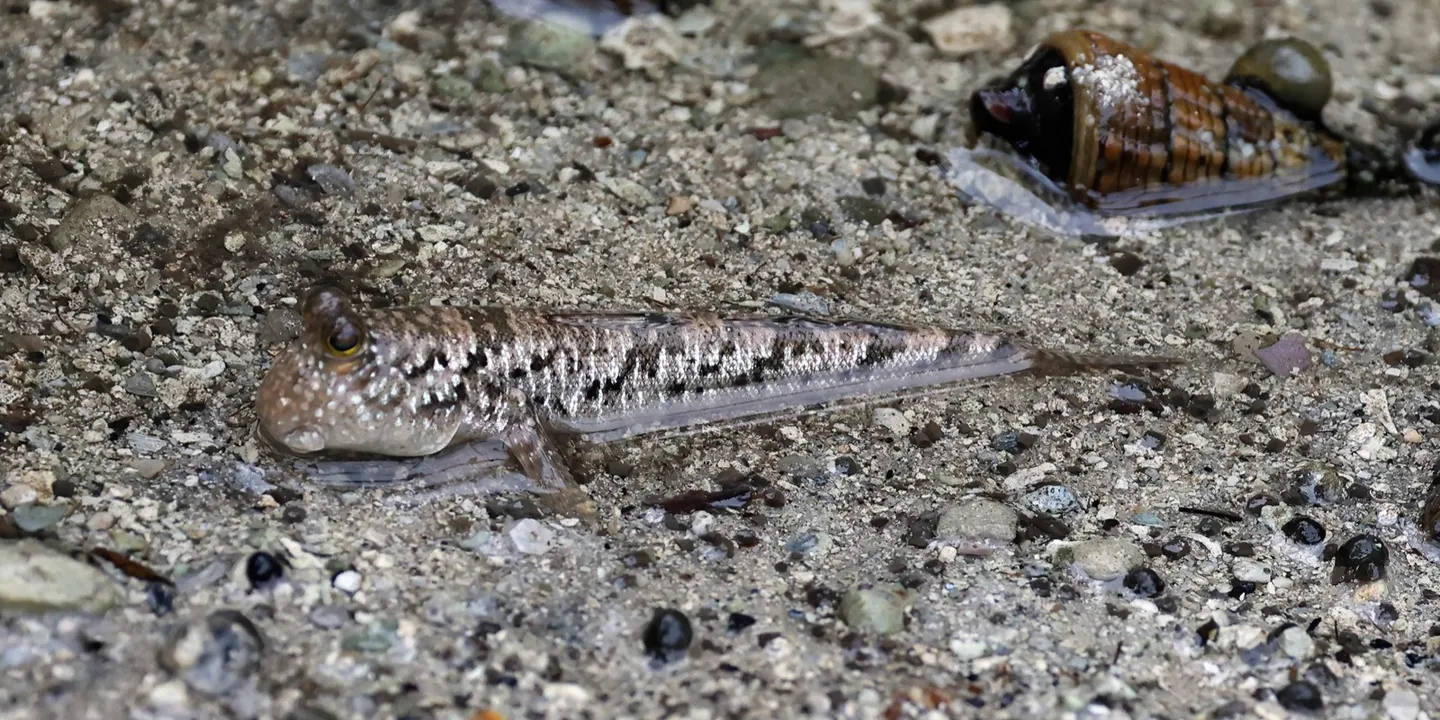
The mudskipper (ミナミトビハゼ) is adept at leaping across mudflats, and during courtship the male spreads all his fins and launches himself into the air to invite a female back to his burrow. The sign puts it simply: how popular you are depends on how well you jump — and when you finally win someone over, you'd probably leap for joy anyway.
Sardine Survival Roulette: A 1-in-50,000 Chance
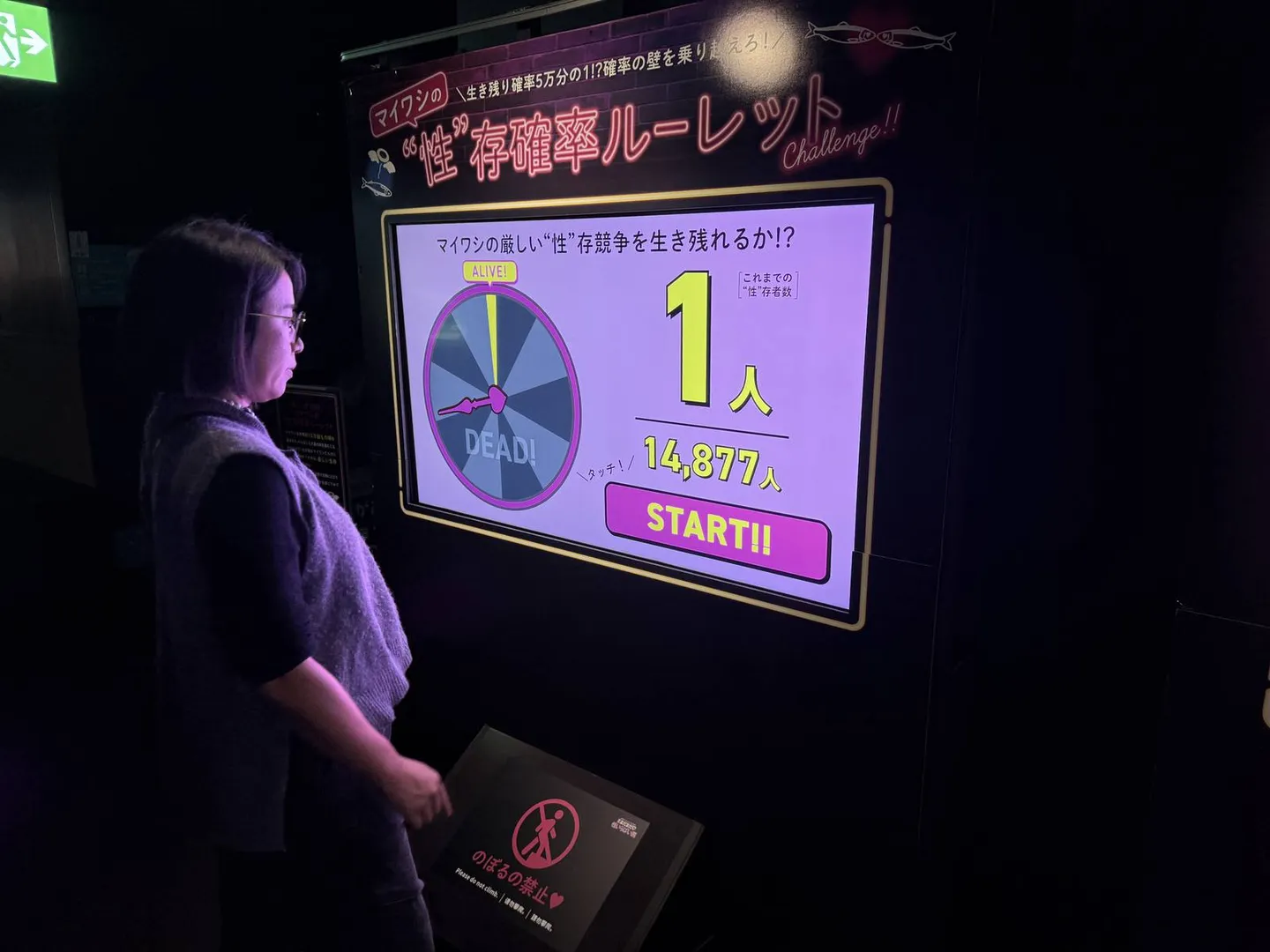
On the indoor second floor stands a touchscreen terminal posing the question: "Can you survive the brutal struggle for survival that sardines face?" Press start, the needle spins, and the vast majority of the time it lands on DEAD.
When the Editor tried it, the running tally displayed on screen read 14,877 attempts with just 1 survivor. Sardines spawn enormous quantities of eggs, but the probability of any individual egg surviving to adulthood and reproductive age is vanishingly small — the sign puts it at around 1 in 50,000. One spin is all it takes to make that number stick in your memory.
Outdoor Marine Garden: Sea Lions, Penguins, and Interactive Installations
California Sea Lion: The Responsibilities of a Harem King
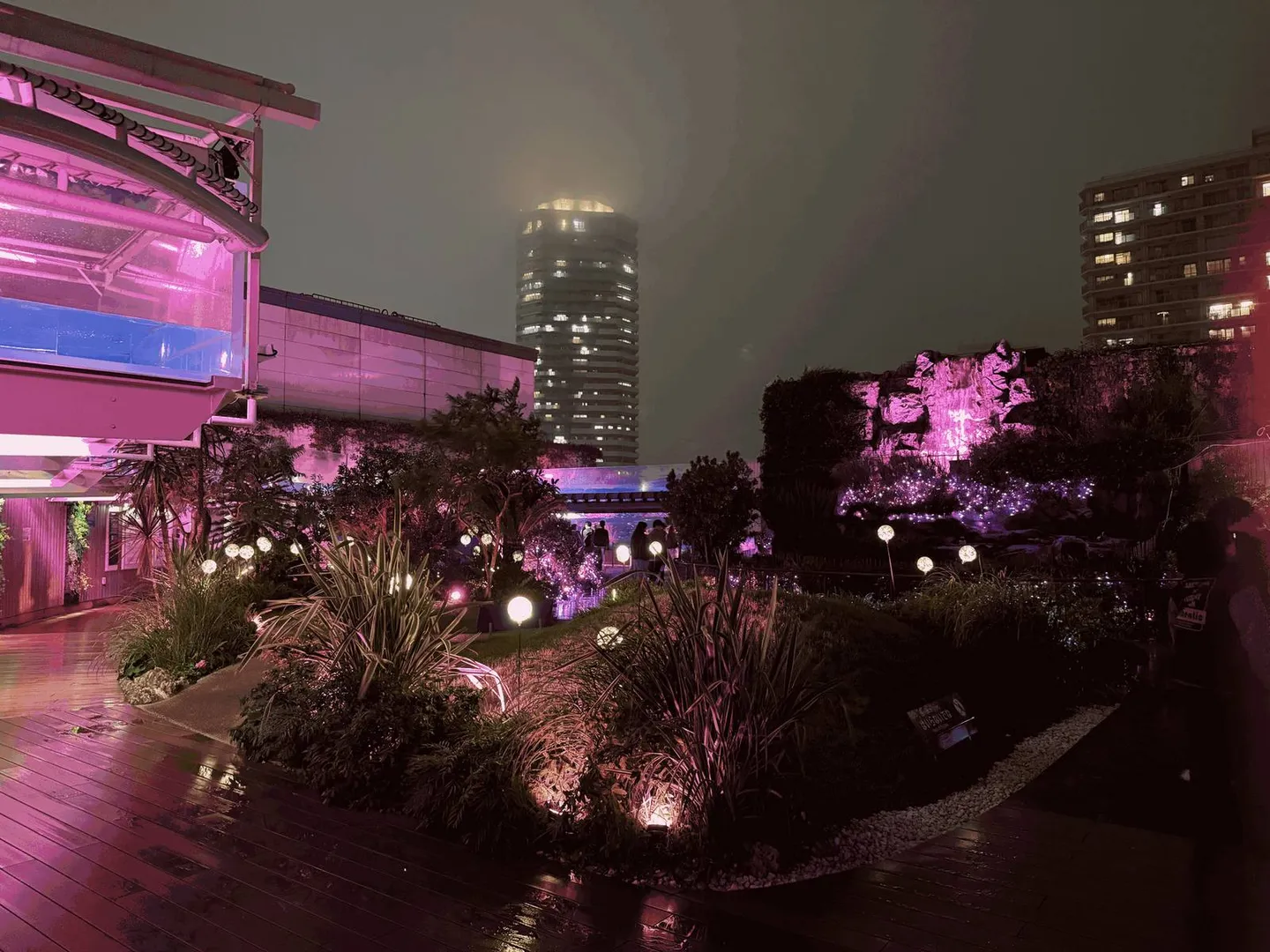
Stepping outside, the Marine Garden is wrapped in pink light; in the distance, high-rises glow through the rainy mist — an atmosphere completely unlike the daytime experience.
California sea lions (カリフォルニアアシカ) form groups in which one dominant male monopolizes multiple females — a harem. The sign explains that the larger and stronger the male, the more females regard him as capable of producing strong offspring. During the annual breeding season, male sea lions barely eat, spending their energy driving off rivals and mating — doing their utmost to meet the expectations of the females around them.
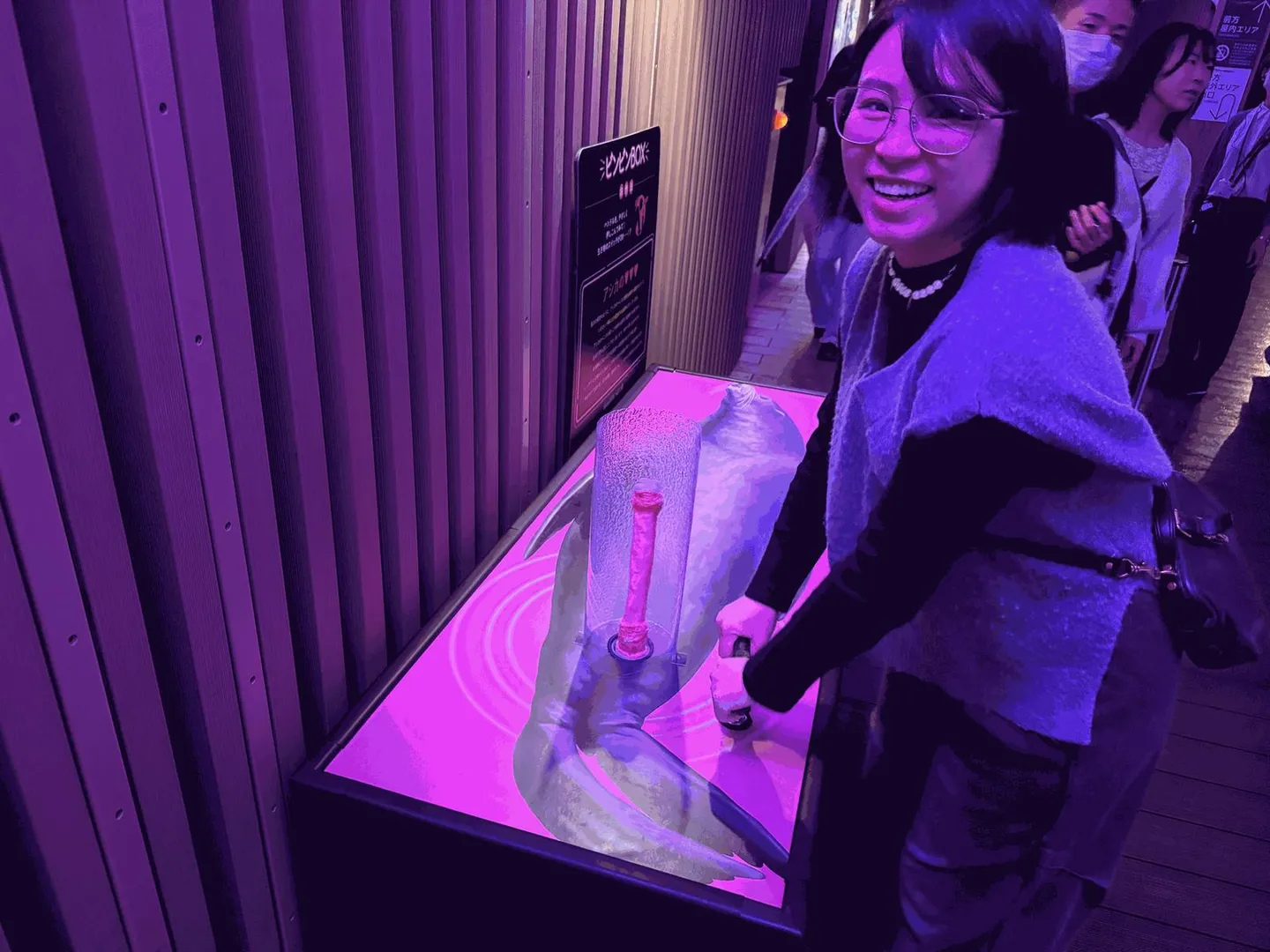
Beside the tank is "ピンピンBOX," a new interactive installation introduced this year: turn the handle and you can observe the mechanics of the male sea lion's reproductive anatomy at work. Plenty of visitors couldn't stop laughing once they'd given it a go.
African Penguin: More Dramatic Than a Midday Soap Opera
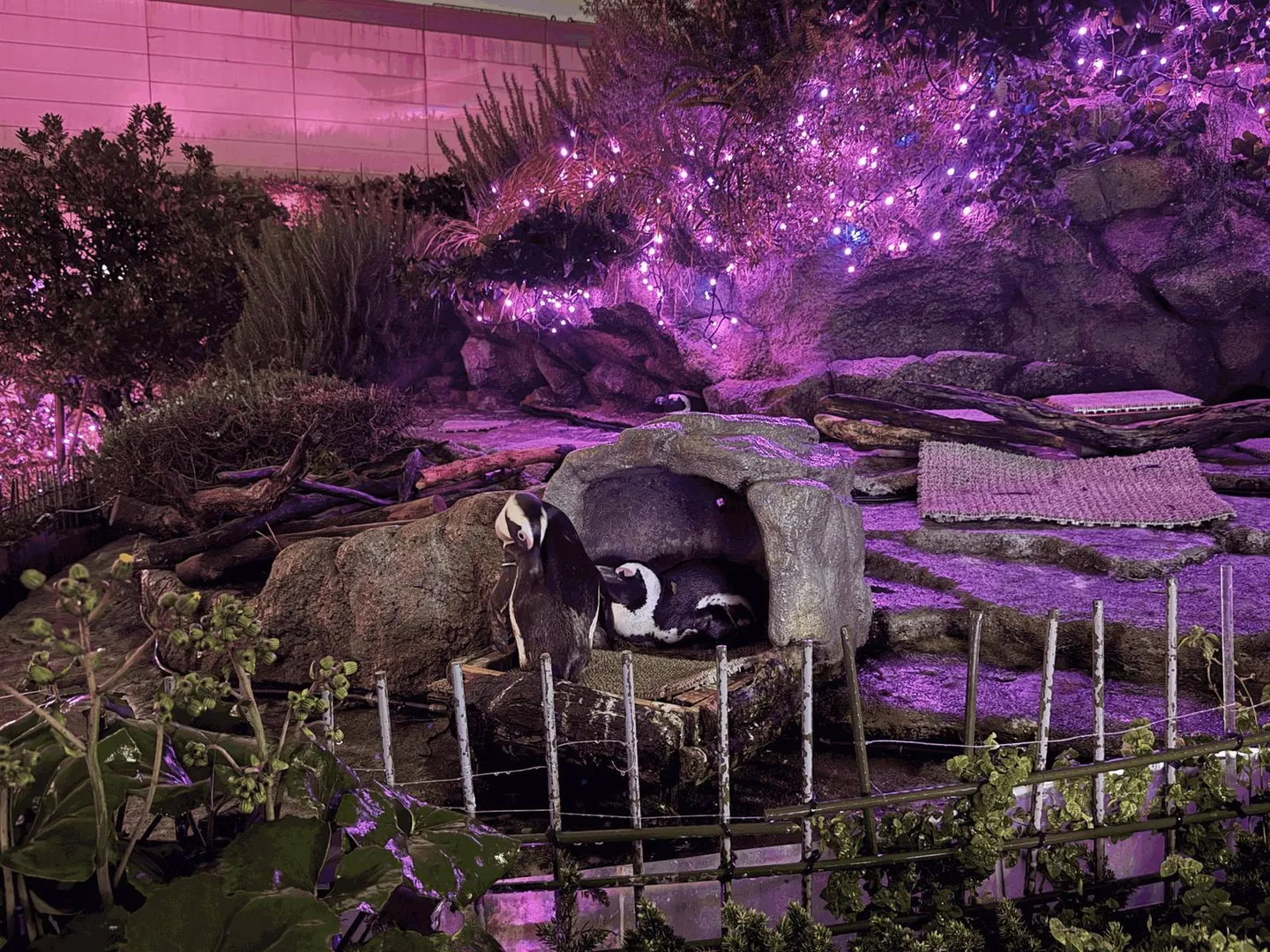
Penguin couples are thought to be devoted to each other, taking turns incubating eggs and raising chicks together. But the sign reveals that — just like in the human world — not every member plays by the rules: some males sneak off to court another female while their partner sits on the eggs, and when they're found out, the ensuing drama puts a midday soap opera to shame.
もみもみBOX and the Sea Lion Photo Spot
"もみもみBOX" is one of the most beloved recurring installations in this series: reach in through the opening on the side, feel around, then lift the lid to find out what you've been touching. The sign makes a point of declaring "spoilers strictly prohibited" — please take your reactions somewhere far away before discussing them. The Editor will honor that rule and reveal nothing here.
Nearby, a life-size sea lion sculpture serves as the exhibition's dedicated photo spot, with the "Sky Penguins" (天空のペンギン) transparent tank right behind it — penguins appear to soar through the air above the city lights below, and this angle is the most iconic image associated with Sunshine Aquarium.
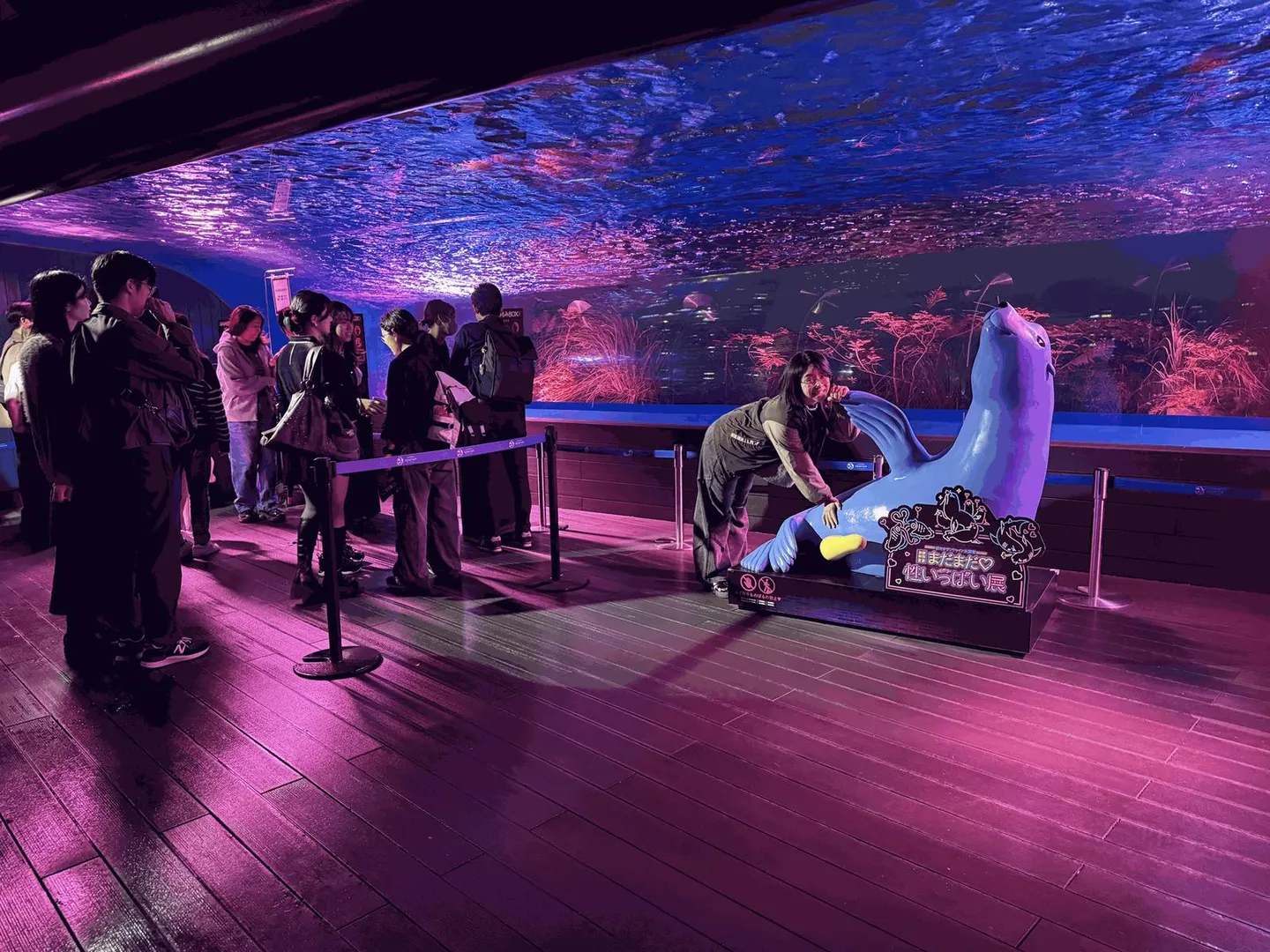
Gift Shop: Sunshine Aquarium Original Condoms
Passing through the gift shop on the way out, the shelves carry a special exhibition-limited item: "Sunshine Aquarium Original Condom 2026," in black packaging printed with neon-style illustrations of cuttlefish, dolphin, and penguin. This product caused a stir during the 2024 edition and once again became a top souvenir pick this year. Packaging sex education and natural history into something people actually want to take home is one of the reasons this exhibition keeps generating conversation.
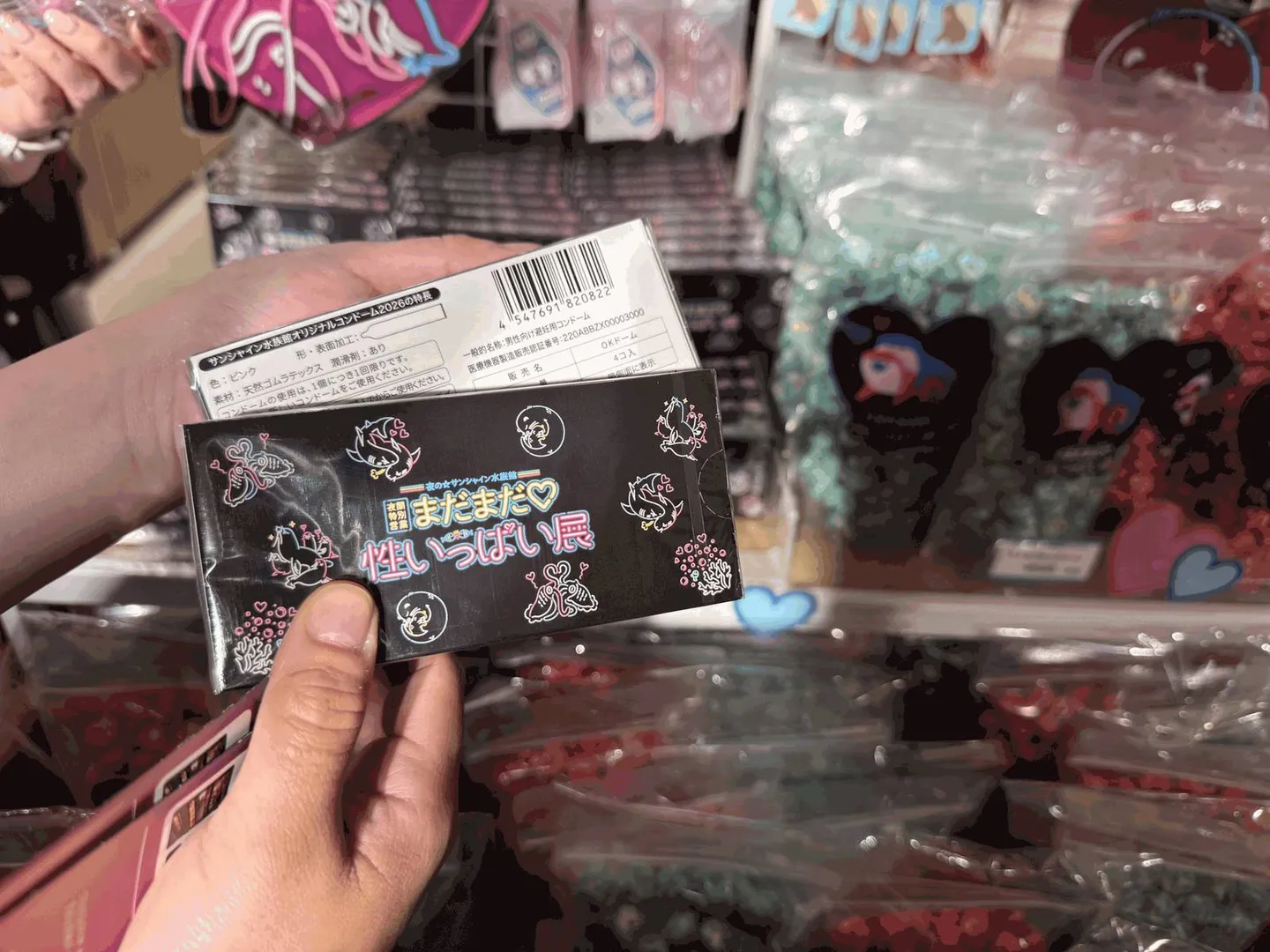
Practical Information for the Sunshine Aquarium Night Exhibition
| Item | Details |
|---|---|
| Location | Sunshine City World Import Mart Building Rooftop, 3-1 Higashi-Ikebukuro, Toshima-ku, Tokyo |
| Access | Walk from JR Ikebukuro Station East Exit, or take Tokyo Metro to Higashi-Ikebukuro Station via underground passage |
| Entrance | Aquarium-dedicated elevator on the first floor of the World Import Mart Building |
| Night Exhibition Dates | September 11 – November 3, 2026 (concluded) |
| Night Hours | 18:15–21:00, last admission 20:30 |
| Night Ticket Prices | Adult ¥2,700–¥3,300 / Child ¥1,400 / Infant ¥900 |
| Recommended Visit Duration | 2–3 hours |
| Luggage Storage | Self-service coin lockers beside the elevator; IC card payment accepted; Traditional Chinese interface available |
A few things you'll only know from actually going: on weekend evenings, budget extra time for queuing — both the elevator and the ticket counter have lines, and buying tickets online in advance will save you a significant wait. The popular interactive installations also require queueing; if you're short on time, use the leaflet map to pick out the three or four exhibits you most want to see and head there first. Also worth noting: this exhibition is clearly designed with adult visitors in mind. While children's tickets exist, if you're bringing kids along, it may be worth thinking in advance about how you'll answer their questions.
Closing Thoughts: A Small Aquarium That Fits Perfectly Into Two or Three Hours
Sunshine Aquarium Ikebukuro is a small aquarium — but two to three hours there is actually just about right. It doesn't have the sweeping panoramic tanks of a major facility, but it knows how to tell a story through curation, and "性いっぱい展" is the best proof of that: it takes the reproductive strategies of innkeeper worms, cuttlefish, and walrus and presents them with humor that never tips into vulgarity, leaving you with knowledge that actually sticks after the laughter fades.
For divers, this exhibition carries an extra layer of meaning. The pistol shrimp and goby we see on sandy reef floors, the fiddler crabs waving their giant claws on mudflats, the cuttlefish with arms entwined — all of them are running strategies shaped by millions of years of evolutionary pressure to leave offspring behind. The next time you encounter them underwater, you'll see them with new eyes. If you enjoy Japanese aquarium curation, the Editor's earlier pieces on Okinawa Churaumi Aquarium and Nagoya Port Aquarium may also be of interest; for marine creature courtship behavior in the wild, the Editor recommends the piece on the geometric courtship ritual of the Amami pufferfish.
For more Japanese aquarium and dive travel coverage, follow BlueTrend's official LINE account — the Editor will keep sharing firsthand scouting experiences as they happen.
Frequently Asked Questions
How is a BlueTrend dive trip different from an unknown, no-name dive group?
Choosing us means full peace-of-mind protection and a smooth experience from start to finish. Every trip we run holds to three things.
First, full legal protection and a professional dive leader: we strictly follow Taiwan's travel regulations and provide complete travel-agency liability insurance, travel insurance, trip-inconvenience insurance and dive insurance. Every group is accompanied by a certified, foreign-language dive leader who joins you on both the dives and the land itinerary, liaising seamlessly with local dive shops and operators on your behalf to keep things running smoothly — the person our travellers trust most.
Second, fully licensed with secure payments: every payment goes into a licensed travel agency's account, with multiple safe payment channels (bank transfer, credit card and more) and a legal collect-and-remit receipt, so every transaction is open, transparent and protected, avoiding the fraud and dispute risks of transferring money privately to an individual.
Third, hand-picked quality we vet in person: every trip, dive site and partner shop is scouted on the ground by our own team, from the guides' professionalism and safety standards to the food, lodging, environment and service details on land, all vetted by us so you don't get caught out.
I want to sign up for a dive trip. Are there certification-level or logged-dive requirements?
Each dive site is different, so the entry bar varies. 'Bali Tulamben', for instance, is relatively beginner-friendly. 'Malapascua in the Philippines' is also beginner-friendly, but since thresher sharks tend to cruise between 20 and 30 metres, we recommend AOW certification with 20+ logged dives to enjoy this trip comfortably. For 'the Maldives' or 'Palau', we suggest AOW with 50+ logged dives for a more relaxed experience. If you're not sure whether your experience fits the trip you want, message us and our dive editors will assess it and help you find the trip you'll feel safest on.
Can I join if I'm signing up alone? How are rooms arranged?
Plenty of our travellers sign up solo! For rooms and beds, we prioritise pairing you with a same-gender traveller, and if you'd rather have your own space you can pay the difference to upgrade to a single room. For the diving, our professional leader will pair you with a suitable buddy, and with the happy vibe on our trips you'll quickly make a great group of dive friends. Many people sign up alone, make new friends, and end up organising the next trip together!
Does the trip fee include dive insurance, gear rental, taxes and instructor tips?
It depends on the trip, the destination's regulations and the local operators. Every BlueTrend dive trip has a detailed web page with a clear 'included / not included' list, transparent and with no hidden charges. All payments are collected by a licensed travel agency, with a standard-form contract for your protection.
I'm a new diver / haven't dived in a long time — will I fall behind the group?
Before you complete your booking, our team assesses a suitable trip based on your certification level and experience. Before departure, we strongly recommend taking time to refresh in Taiwan with an instructor, or a fun dive to get your feel back. On the trip itself, our professional dive leader groups and pairs everyone by experience, keeps a close eye underwater on travellers who need extra care, and steps in to help right away.
Will the photos and videos taken during the trip be shared with us?
During the dives, 'safety' is always the leader's top priority, so whenever it's suitable and safe the leader will capture great shots and record the best moments. During or after the trip, we compile a cloud album for all travellers to download, so you go home loaded with memories!
Besides your scheduled trips, can you arrange a private group charter or independent travel for me and my friends?
Absolutely! Besides group trips, we also arrange private group charters and independent travel. We can communicate, enquire and coordinate services with local operators based on your needs, saving you time and effort and taking the language barrier off your plate, to tailor the smoothest, most reassuring dive trip just for you. Contact our LINE support and our editors will arrange it for you!