Contents(6)
- When Land Rules No Longer Apply: The Clash Between Longdong Fishermen and Divers
- Longdong as a Microcosm of Taiwan's Ocean Use Conflicts
- The Rashomon of Ocean Management: The Grey Areas of the Law
- Are Marine Protected Areas the Answer? Zoning Management May Be the Greatest Common Denominator
- Finding Common Ground: Making the Ocean Everyone's Asset
- Further Reading
When Land Rules No Longer Apply: The Clash Between Longdong Fishermen and Divers
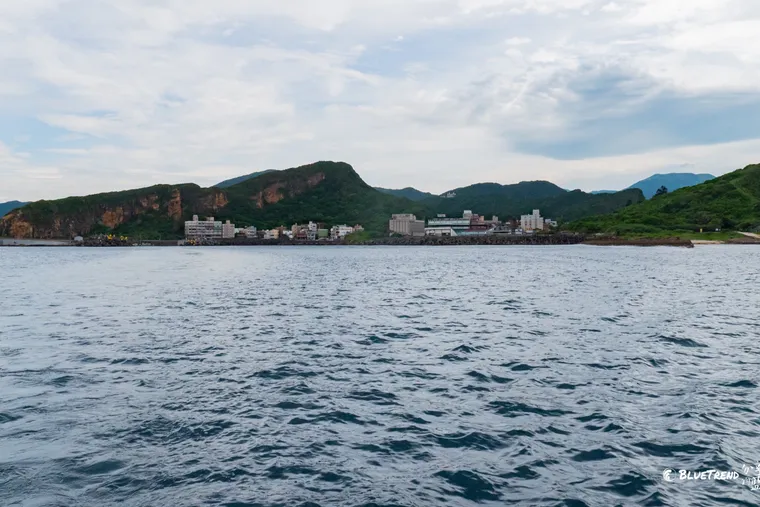
Longdong, on the Northeast Coast of New Taipei City, is a mecca for Taiwan's scuba diving community. Yet this seemingly tranquil bay made headlines this past September when a confrontation between divers and fishermen erupted — reigniting a heated public debate over the question of "ocean use rights."
The spark that set off this conflict came in late August and early September, when videos of dead fish filmed by divers in parts of Longdong began circulating widely. Divers also reported hearing what sounded like underwater explosions — suggesting illegal blast fishing — and took to social media to make their accusations public. Feeling stigmatised by these claims, local fishermen responded by rallying more than twenty fishing boats to circle the harbour, flying white banners bearing warnings such as "Enter the shipping lane at your own risk."
The tension between fishermen and divers has been building for years. Fishermen argue that divers frequently stray into shipping lanes without following regulations, creating dangerous situations for working vessels. Divers, however, point out that there are no clear markings on the water's surface, making it nearly impossible to identify lane boundaries once they are in the sea. Both sides stand firm in their positions, yet they point to the same underlying issue: when land traffic is governed by clear laws and signage, how should the right to use the vast open ocean be defined?
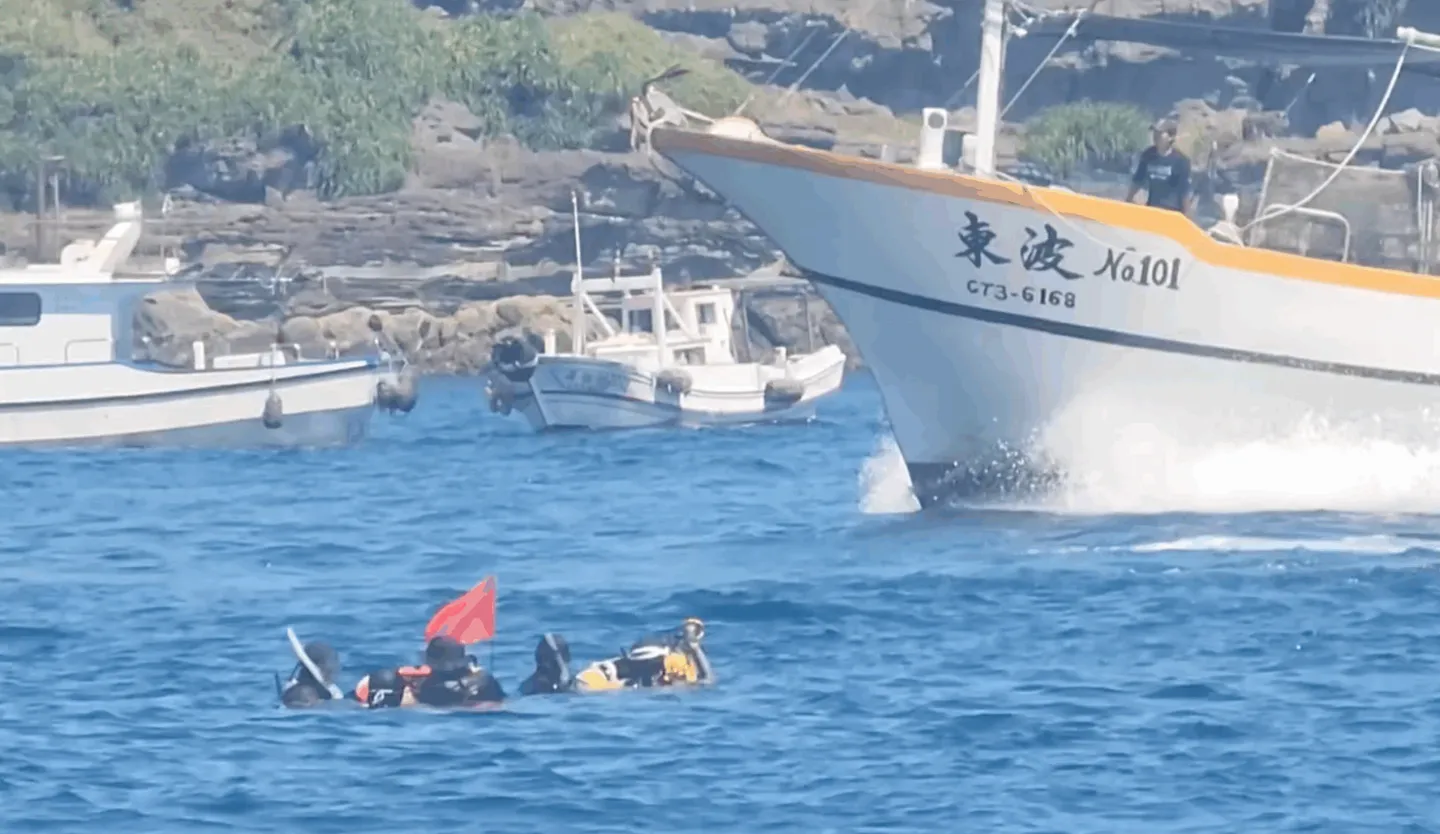
Multiple fishing boats displaying banners in protest inside Longdong Bay


Longdong as a Microcosm of Taiwan's Ocean Use Conflicts
In truth, the Longdong conflict is not an isolated incident — it is a microcosm of Taiwan's broader disputes over ocean use rights. As marine tourism and water sports have boomed in recent years, clashes between fishermen and divers over shipping lanes and fishing grounds have grown increasingly frequent. Similar conflicts have occurred at other popular dive destinations around Taiwan, including Xiaoliuqiu and Orchid Island.
For example, during the 2022 fishing season at Xiaoliuqiu, divers frequently appeared in fishing vessel lanes and catch areas, prompting fishermen — worried about collisions — to publicly release videos urging divers to clear the lanes. Conflict proved unavoidable nonetheless: a dive instructor was injured by a fishing hook from a passing vessel, highlighting even more serious safety concerns. In response, the Xiaoliuqiu District Fishermen's Association repeatedly called on the government to designate safe freediving zones at five locations, including Shanfu and Meirendong, to protect the interests of both parties.
The same situation has played out on Orchid Island. Local fishermen there have reported that divers sometimes enter vessel shipping lanes, sparking safety and rights disputes. Fishermen have called on the government to designate dedicated shipping lanes and safety zones, install buoys, and add shore-based facilities to clearly distinguish diving areas from fishing lanes. These cases make it abundantly clear: when marine space is subject to multiple competing uses, conflict between divers and fishermen is inevitable without clear regulations in place.
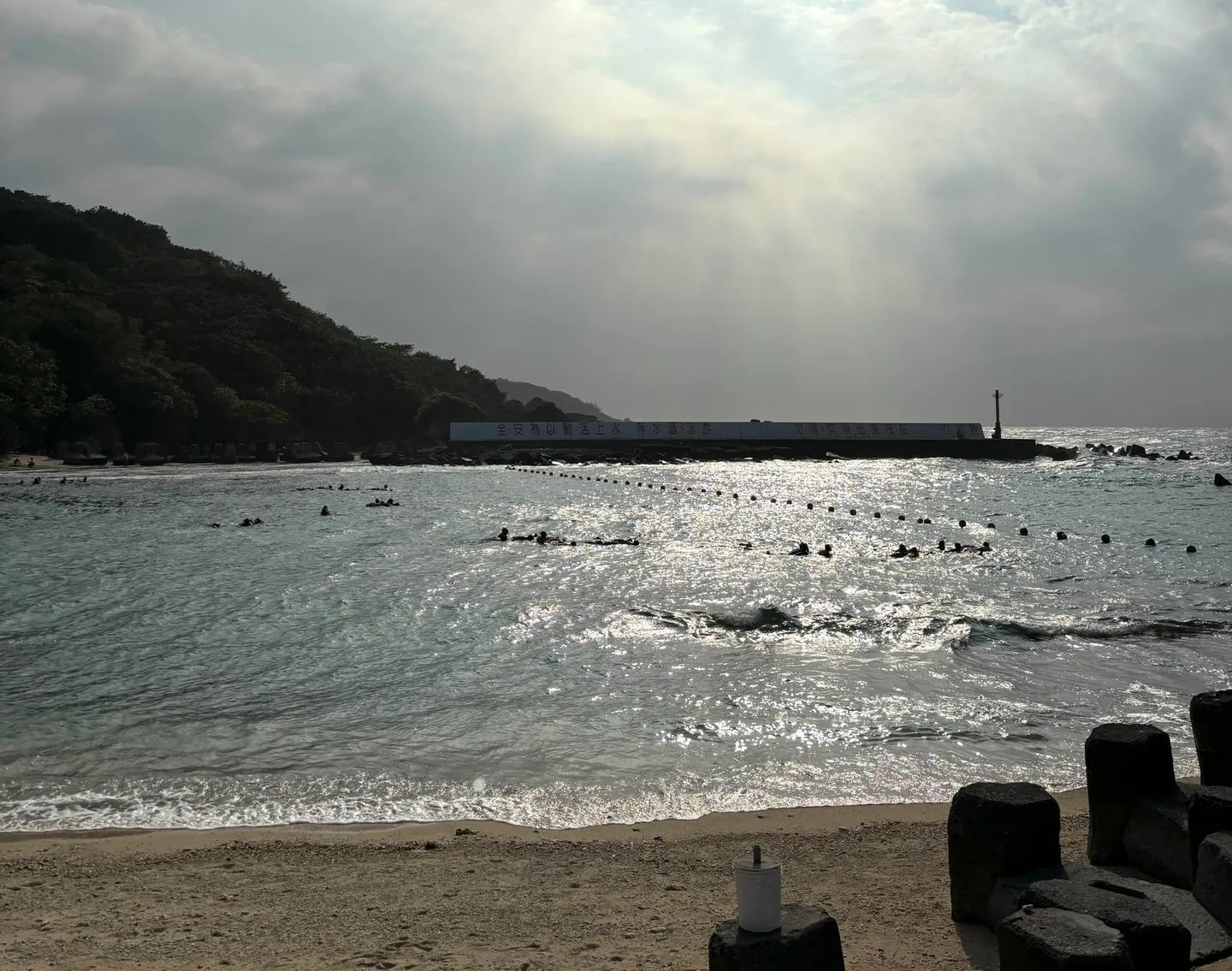
The buoy line at Shanfu Fishing Harbour, Xiaoliuqiu, installed by the Pingtung County Government to separate fishing vessel lanes from recreational zones
The Rashomon of Ocean Management: The Grey Areas of the Law
There are many causes behind these conflicts, including poorly defined maritime boundaries, a lack of effective zoning mechanisms, and insufficient communication and coordination among different user groups. But at the root of it all is the fact that Taiwan still has no clear set of "maritime traffic rules." The regulations governing Taiwan's waters are highly fragmented — like a jigsaw puzzle pieced together from different laws and competent authorities, with no way to see the full picture.
Currently, the relevant legislation includes the Fisheries Act, administered by the Fisheries Agency, and the Regulations for the Management of Water Recreation Activities, formulated by the Tourism Administration under the Ministry of Transportation. The former governs fishery operations and fishing ports; the latter regulates recreational activities such as scuba diving and surfing. However, these two bodies of law draw no clear "fence" between their respective jurisdictions in actual sea areas. While local governments do have the authority to designate marine zones for different purposes, they often struggle to act decisively — due to a lack of clear demarcation, insufficient enforcement manpower, or an unwillingness to antagonise either side.
The government is currently promoting a draft Ocean Management Act, which aims to enable more comprehensive spatial planning for marine areas. However, a closer examination of Article 5 of the draft — the principles for coordinating ocean use — reveals the following:
-
To take into account the sustainability of the marine environment, with priority given to ecological conservation and the preservation of underwater cultural heritage.
-
To safeguard the safety of maritime navigation and to maximise public welfare.
-
To protect national ocean rights and national security.
-
To align with national policy development without diminishing the sustainability of marine resources, while respecting existing uses.
-
To respect the culture and rights of indigenous peoples in their traditional use of the sea.
We find it concerning that this draft contains no specific provisions for coordinating marine recreational activities. Furthermore, while Article 6, Paragraph 1 states that the competent authority may designate functional marine zones based on "the needs of industrial development," the marine recreation sector in Taiwan remains relatively marginalised within the overall industrial structure and lacks a unified association or trade body. When it comes to conflicts with established industries and existing ocean users, the rights and interests of marine recreation operators and divers may well end up at a disadvantage, with no effective channel for advocacy. Taking stock of all these provisions, we can say that the boundary between marine recreation and fishery activities remains, for now, firmly in a grey zone.
Are Marine Protected Areas the Answer? Zoning Management May Be the Greatest Common Denominator
So, faced with this boundless grey zone, how do we write rules for the sea? The designation of marine protected areas (MPAs) has been put forward as a potential solution. By clearly delineating areas where fishing is prohibited or restricted, MPAs can effectively reduce the overlap between fishing vessels and diving activities, lowering safety risks and resource competition. At the same time, they give marine ecosystems room to breathe — which, in the long run, supports the sustainability of fishery resources.
Yet promoting MPAs comes with enormous challenges. Fishing bans directly affect fishermen's livelihoods, and many past MPA initiatives have met with strong resistance as a result. On the other side, dive operators may also feel constrained by area restrictions — all of which makes it genuinely difficult to put marine protected areas into practice.
For that reason, before any broad consensus is reached, "zoning management" may be the most pragmatic common ground available. This need not take the strict form of a protected area; it can be approached in a more micro-scale, flexible manner. By clearly delineating fishing operation zones and recreational activity zones — backed by the installation of buoys, improved signage, and public education — at least the disputes arising from undefined boundaries can begin to be reduced. The Wanghaijiao Chaoching Bay Aquatic Life Conservation Area, straddling the border between Keelung City and New Taipei City, stands as one of Taiwan's few successful examples of well-functioning zoning management. The conservation area implements strict zoning through the designation of core, buffer, and sustainable use zones — completely banning fishing to restore the rich rocky-reef ecosystem, while clearly establishing a no-navigation zone to keep motorised vessels out. Recreational visitors are also strictly regulated and barred from crossing into fishing shipping lanes. This system has successfully provided a concrete, balanced model for the harmonious coexistence of sustainable fishery resources and tourism activities such as scuba diving.
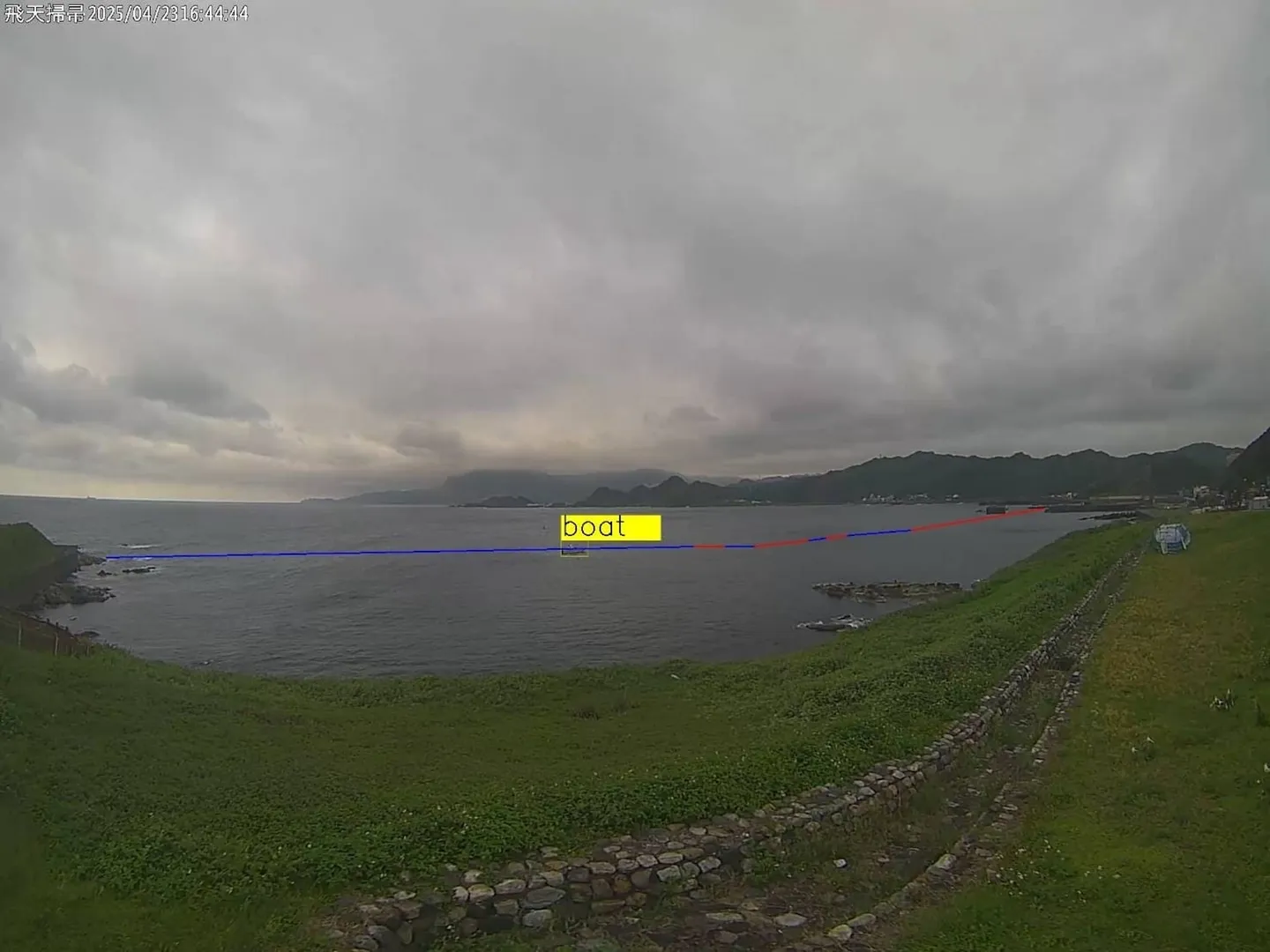
Zoning management lane boundaries at the Wanghaijiao Chaoching Bay Conservation Area
Finding Common Ground: Making the Ocean Everyone's Asset
From the conflict at Longdong to the cases at Xiaoliuqiu and Orchid Island, it is clear that the ocean is a precious asset belonging to everyone — it is both the fishing ground on which fishermen depend for their livelihoods and the playground where divers go to explore the unknown. When this precious space becomes a source of conflict due to a lack of clear regulation, resolving those disputes and creating a win-win outcome requires a collective effort from all parties.
Government agencies and regulatory authorities must take a more proactive lead in management, intervening actively to foster harmonious coexistence among all stakeholders. The government should convene relevant parties — fishermen, divers, recreation operators — to establish a regular platform for dialogue and negotiation, while simultaneously implementing practical measures such as buoy installation, improved signage, and public outreach to swiftly address disputes arising from unclear boundaries.
In the longer term, the law needs to catch up. Whether by accelerating the legislative process for the Ocean Management Act and incorporating recreational activity management, or by amending existing regulations, the boundary between marine recreation and fishery activities must be clearly defined, and an effective zoning management system must be established. Only when the law provides a clear basis for action will local governments have sufficient enforcement authority to chart clear courses for different users.
When fishing boats can return to port safely and divers can explore freely, this sea can truly become a shared asset for everyone. The conflict at Longdong may be just the tip of the iceberg, but it gives us the opportunity to think more deeply about how to build a more inclusive and more sustainable ocean future.
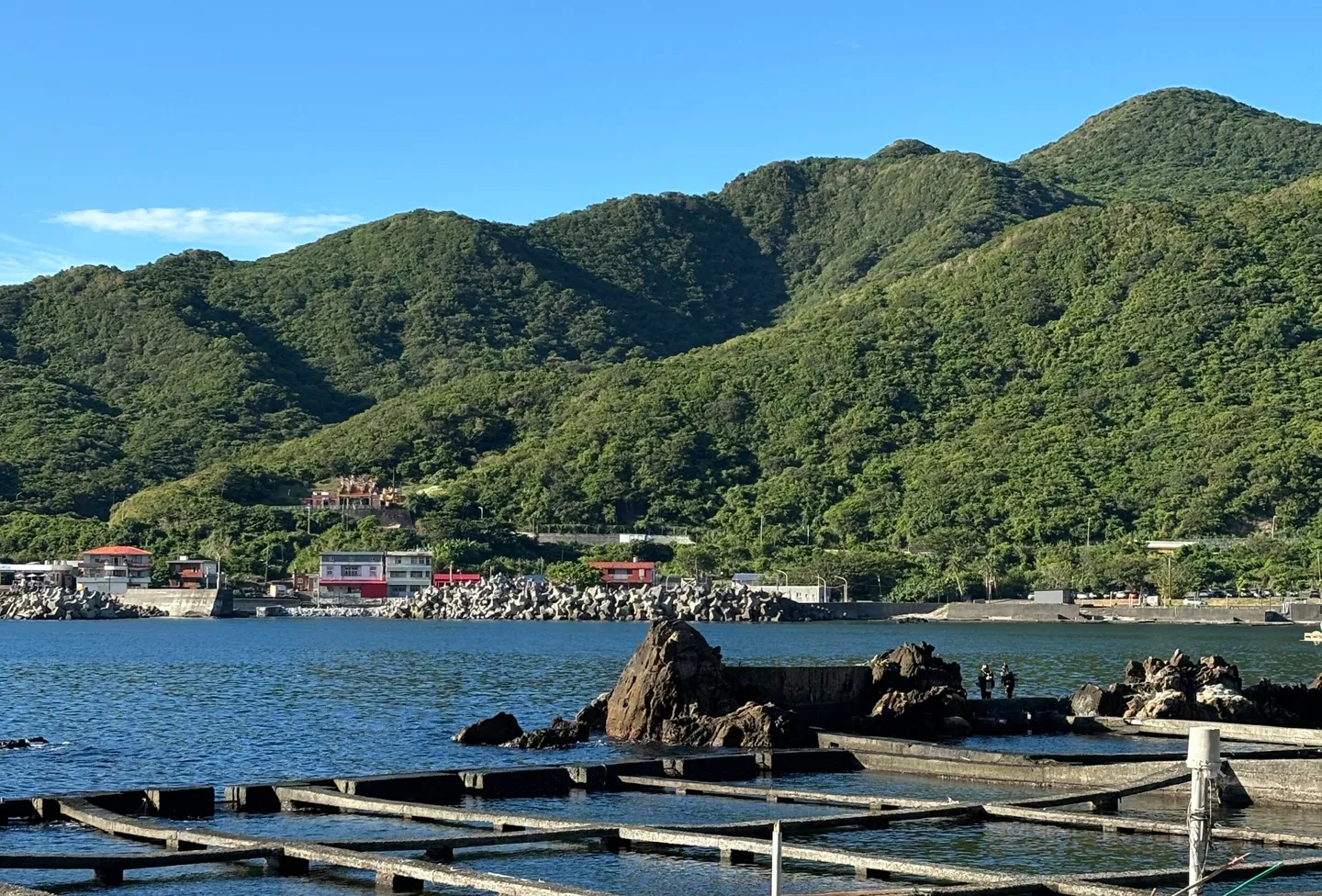
Longdong Bay serves as both a departure point for fishing vessels and a beloved destination for divers
Further Reading