Contents(12)
- AirAsia Maldives Transit Guide — Tickets, Baggage, Arrival & Visa Tips
- Are AirAsia Split Tickets Really Worth It? Transit & Baggage Tips
- How to Pack for Scuba Diving? AirAsia Baggage Weight & Add-On Tips
- Malaysia Digital Arrival Card (MDAC)
- Maldives IMUGA Traveller Declaration Form
- AirAsia Self-Service Baggage Check-In Tutorial at Kuala Lumpur Airport
- Step 1: Head to the AirAsia Self Check-In Area
- Step 2: Use the Kiosk to Check In
- Step 3: Attach the Bag Tag (Important)
- Step 4: Self Bag Drop
- Step 5: Proceed to Security + Departure
- Speedboat Transfer Guide After Arriving in the Maldives: Getting to Your Local Island
Dreaming of diving in the Maldives but worried about the budget? This budget-traveller's guide to Maldives local islands covers everything: how to book AirAsia tickets, navigating the Kuala Lumpur transit process, self-service baggage check-in details, and how to arrange your speedboat transfer from the airport to your local island. We'll walk you through the most cost-effective way to explore the Maldives!
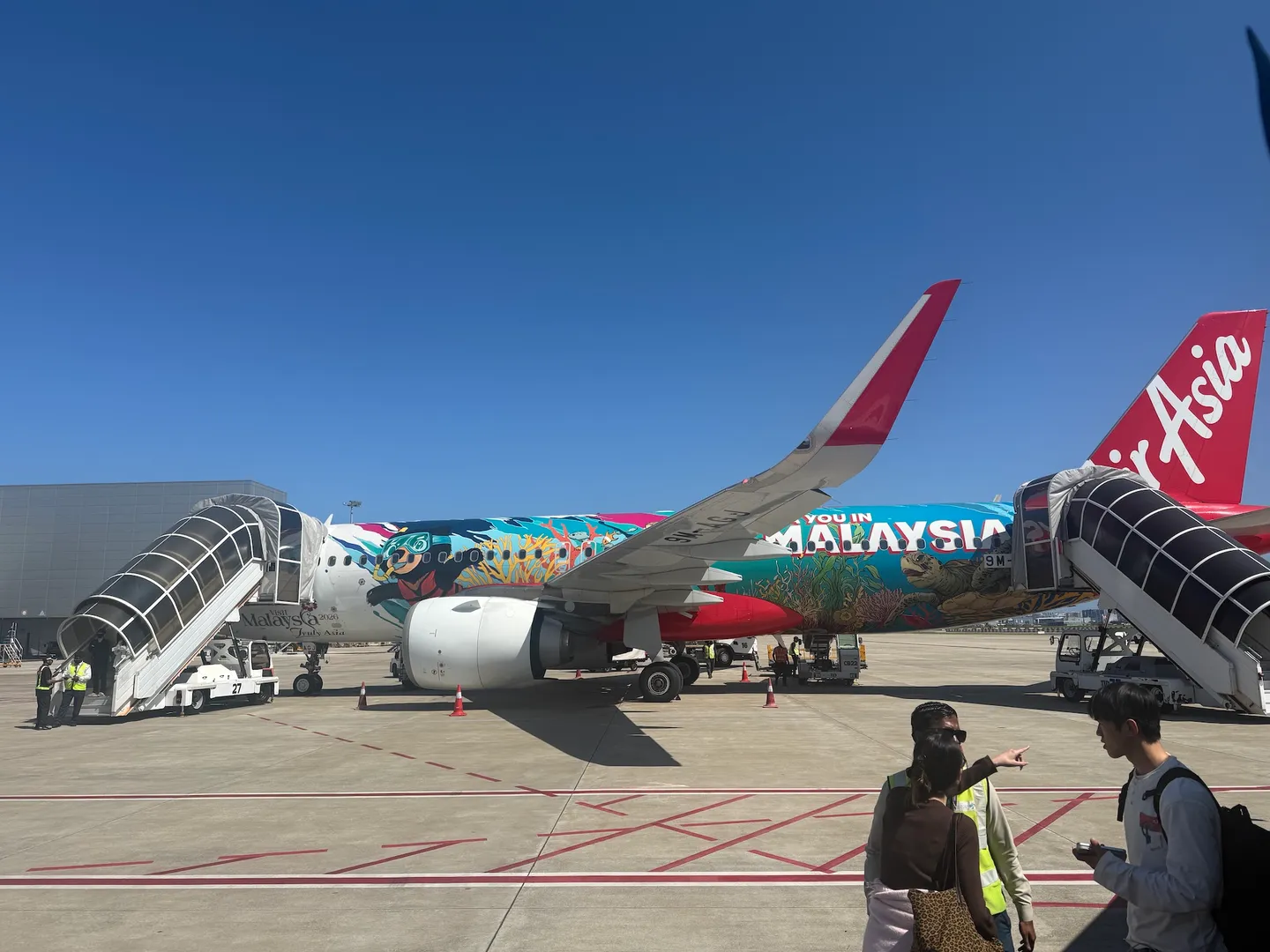
Follow the Editor's guide and explore the Maldives diving scene without breaking the bank
AirAsia is Malaysia's low-cost carrier with frequent flights — so frequent that it operates its own dedicated second terminal at Kuala Lumpur International Airport (KLIA T2). Thanks to its affordable fares and high flight frequency, it has become the go-to choice for budget travellers and divers heading to Maldives local islands.
This article shares tips and travel notes from a 2025 trip departing Taiwan aboard AirAsia, transiting through Kuala Lumpur, Malaysia, and onward to the Maldives for local island diving. The Editor chose to purchase separate tickets for each leg (which typically does not allow through-checked baggage), so the transit in Kuala Lumpur required completing arrival procedures → collecting checked baggage → clearing departure → and re-checking baggage. This is considerably more involved than a standard through-check flight.
Along the way, the Editor experienced the exhaustion of red-eye flights, navigated AirAsia's self-service baggage check-in process, and dealt with the ever-present risk of overweight luggage when travelling with dive gear. This guide is written to help future travellers plan their flights and baggage more smoothly, and to reduce the stress and fatigue of the transit process.
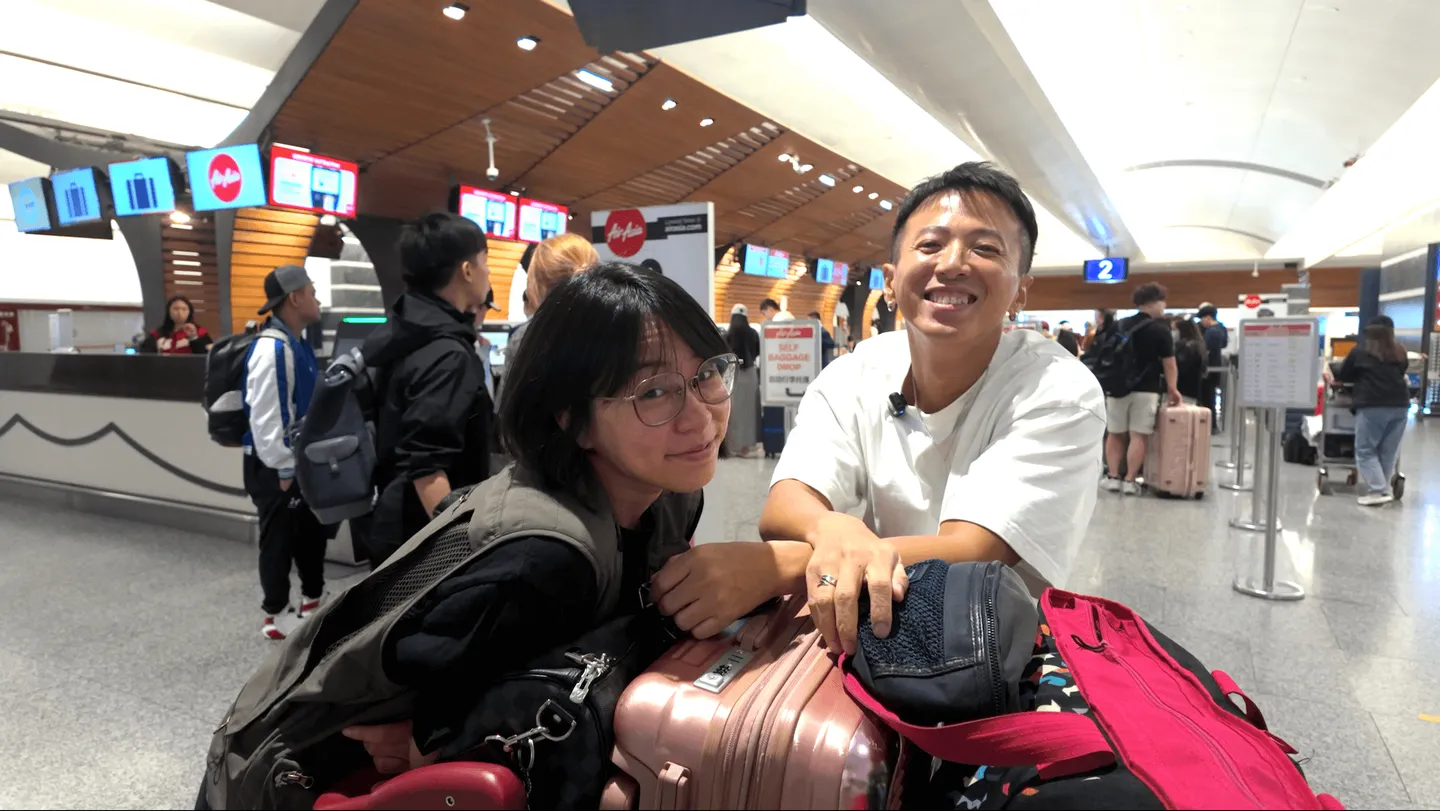
Jetting off with the Editor — a budget dive trip is about to begin
This guide covers:
-
Pre-trip preparation, visas, and baggage add-ons
-
AirAsia self-service baggage check-in tutorial at Kuala Lumpur Airport
-
Transportation options for reaching Maldives local islands for diving
AirAsia Maldives Transit Guide — Tickets, Baggage, Arrival & Visa Tips
Are AirAsia Split Tickets Really Worth It? Transit & Baggage Tips
Many travellers choose the budget carrier AirAsia for cost reasons, and when comparing prices, you'll notice that fares fluctuate significantly. Splitting your AirAsia itinerary into two separate round trips — "Taiwan → Malaysia" and "Malaysia → Maldives" — can sometimes work out to be NT$1,000 or more cheaper than purchasing a single through-ticket from Taiwan → Malaysia → Maldives. It pays to do your research before buying!
Things to watch out for when booking:
-
Make sure your transit time is sufficient to avoid missing your connecting flight
-
After arriving in the Maldives, check the speedboat schedule to your local island, or the transfer timing if you're on a liveaboard
For travellers heading to Maldives local islands for scuba diving, gear is bulky and heavy, and each flight leg is roughly 4–5 hours — with the added possibility of a red-eye connection in the middle. The transit process can be quite draining. AirAsia seats are on the smaller and more cramped side, so if your budget and stamina allow, the Editor recommends choosing a flight with through-checked baggage or a full-service carrier (such as Singapore Airlines) to minimise the number of times you have to handle your luggage and make the journey more comfortable.
The Editor recommends: Travellers who can afford it or who can't handle the fatigue should choose a flight with through-checked baggage or a full-service airline (such as Singapore Airlines).
How to Pack for Scuba Diving? AirAsia Baggage Weight & Add-On Tips
In the Editor's case, the purchased tickets did not include checked baggage, so extra allowance had to be added on. Travelling with a friend, the group had a total of 2 × 28-inch suitcases + 2 carry-on bags. One 28-inch suitcase held underwater camera equipment, and the other held two full sets of scuba diving gear. Clothing and everyday items were packed into the carry-on bags.
The Editor and friend added on 25 kg × 2 of checked baggage allowance, yet in practice the weight was still extremely tight — there was almost no spare capacity.
Another travel companion who was not bringing an underwater camera only needed to check one set of dive gear plus everyday items, so they added on just 20 kg of checked baggage along with one carry-on. Even so, because dive gear itself weighs quite a bit, the weight distribution was still a close call.
-
Basic baggage recommendation: A single set of dive gear plus light personal items fits in 20 kg of checked baggage — just about. However, there is little room to add anything on the return journey.
-
Recommended add-on: Upgrading to 25 kg is advised, as it gives you a buffer in case your dive gear hasn't fully dried by the return flight, and allows for any shopping or extra items on the way back.
-
Add baggage via App or website before your flight: Visit the AirAsia official website or App → Manage Booking → Add Baggage. You can add 5–40 kg, with pricing varying by route segment and weight.
AirAsia's baggage weigh-in is very strict — even 0.5 kg over the limit may incur extra charges. Once you're in the Maldives, you'll inevitably take plenty of photos and pack more outfits. If you're only bringing one set of dive gear, upgrading to 25 kg of checked baggage is well worth the peace of mind over 20 kg, so you won't be anxious about going overweight the entire trip.
The Editor recommends: Add at least 25 kg of checked baggage to save yourself the hassle of constantly repacking and redistributing weight.
Malaysia Digital Arrival Card (MDAC)
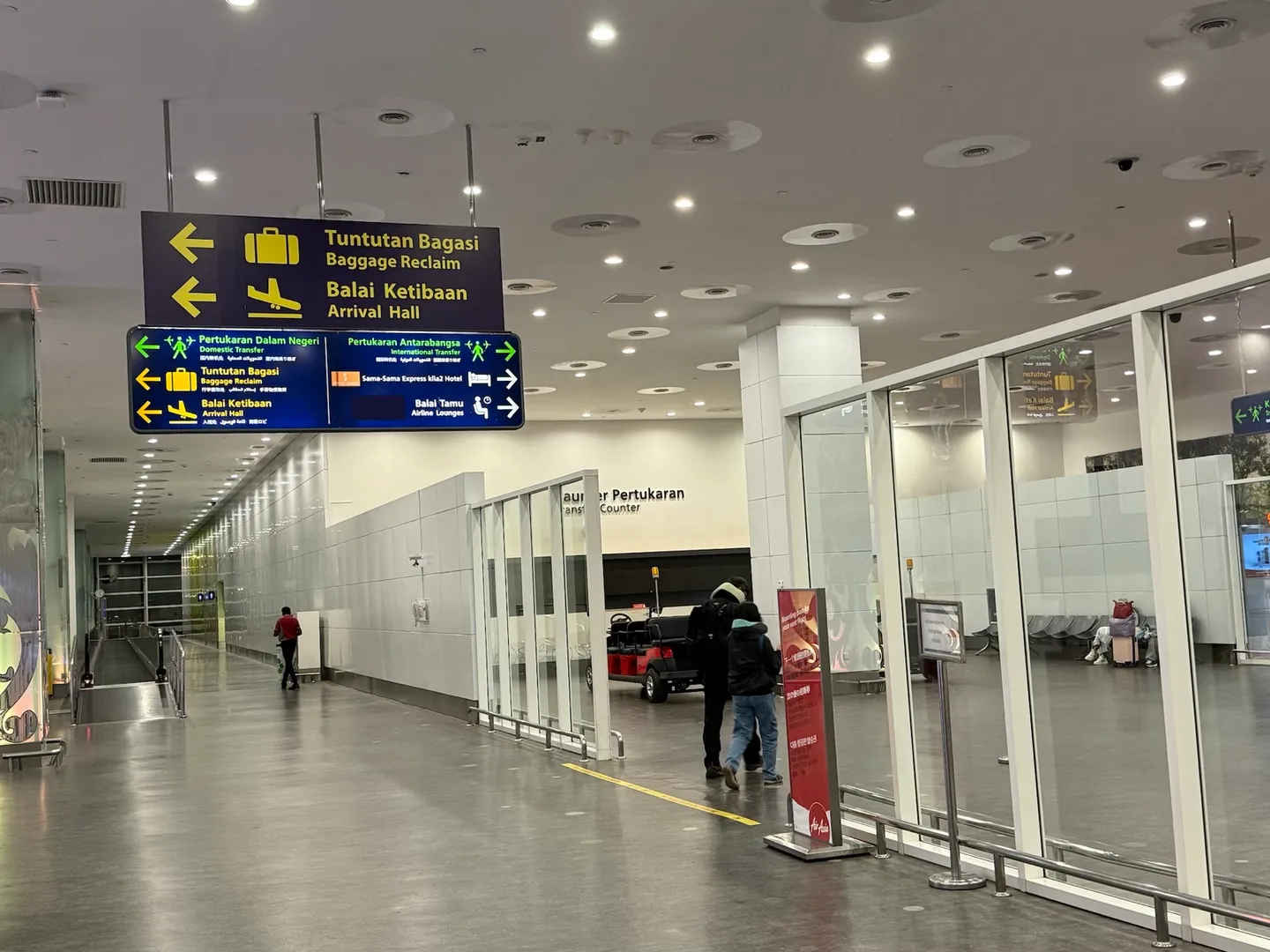
After landing, choose the arrival or transit lane. If your baggage is not through-checked, you will need to go through arrival first
-
When it applies: If you purchase separate AirAsia tickets and need to enter Malaysia — even if only for a transit — you will still need to apply for entry.
-
Visa-free eligibility: Taiwanese travellers can enter Malaysia visa-free for stays of up to 30 days.
-
Nationality selection: Be sure to select Taiwan as your nationality — do not select China, as this will prevent you from using the automated clearance machines.
-
When to fill it in: Must be completed online within 72 hours before arrival.
MDAC official website: https://imigresen-online.imi.gov.my/mdac/main
(Tutorial video — click here) -
Arrival method: You may use automated clearance; it is still recommended to take a screenshot or print your arrival card for inspection purposes.
-
Document check reminder: Airline ground staff have a high chance of checking your Maldives return flight ticket and accommodation booking at various checkpoints — be sure to have screenshots or printed copies on hand at all times (this is important! The Editor was personally asked to show these documents before boarding the flight to the Maldives!).
Inside the automated clearance area at Kuala Lumpur Airport, you can see the flags of countries eligible for automated entry. Taiwan's flag has been covered with a black graphic for special reasons, but the automated clearance function works normally for Taiwanese passport holders.
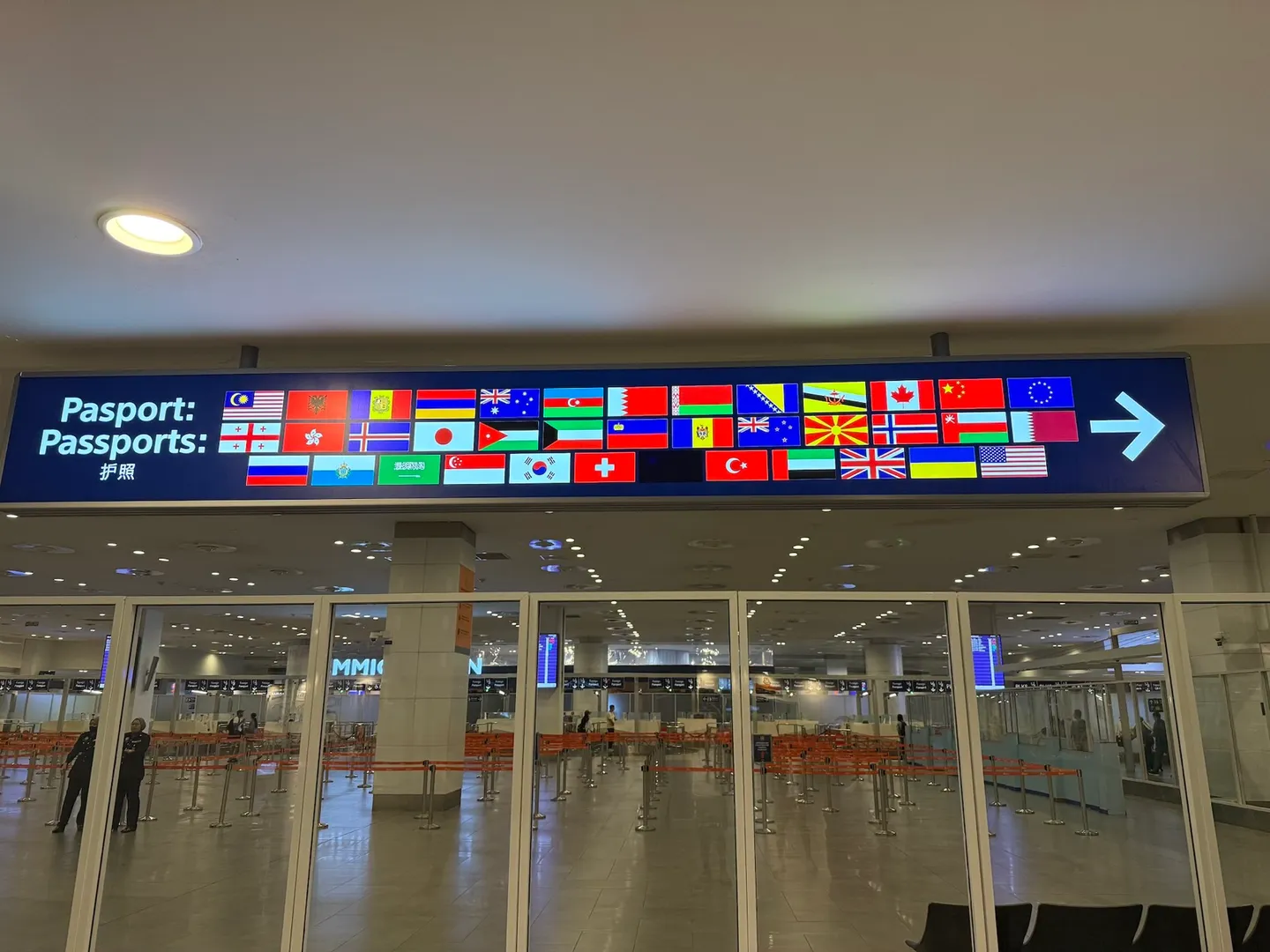
The missing flag is Taiwan's (╥_╥)
From the Editor's personal experience, Malaysia's automated clearance machines are less sensitive than Taiwan's — possibly due to lighting conditions. If your appearance has changed significantly or you're looking dishevelled after a long flight, the machine may fail to recognise you, and you'll need to queue at a staffed counter instead.
Important reminder: If you entered through a staffed counter, you must also use a staffed counter when departing. Allow extra time for this.
The Editor recommends: Always carry your Maldives return ticket and accommodation booking with you.
Maldives IMUGA Traveller Declaration Form
-
Visa-free eligibility: Taiwanese travellers can enter the Maldives visa-free for up to 30 days.
-
When to fill it in: Must be completed online within 96 hours before arrival.
IMUGA Traveller Declaration Form official website: https://travel.immigration.gov.mv/
Tutorial: https://www.clara7.com.tw/2024/05/31/travel-immigration/


AirAsia Self-Service Baggage Check-In Tutorial at Kuala Lumpur Airport
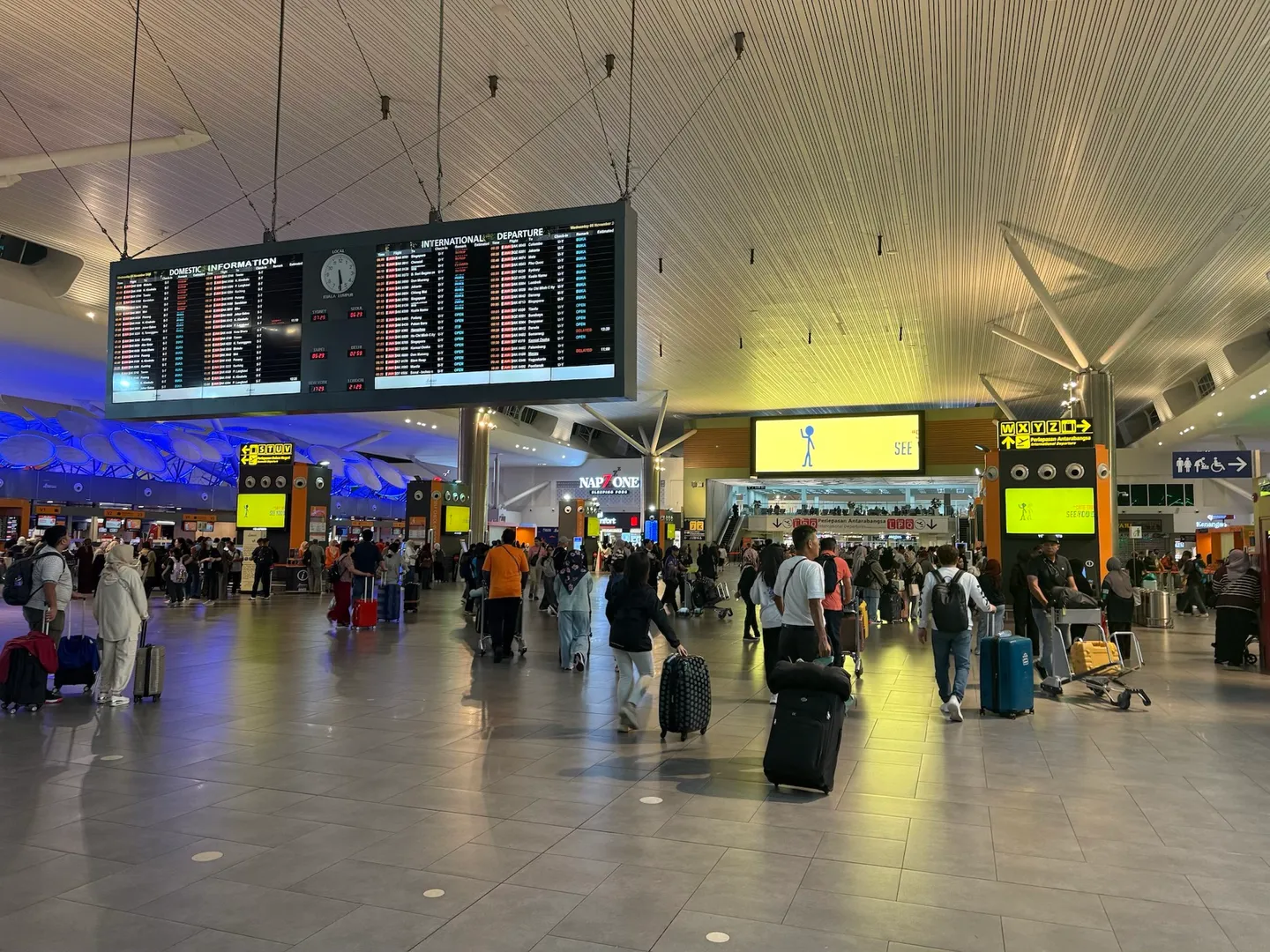
The enormous Kuala Lumpur Airport Terminal 2 — don't get lost!
Applicable to: Passengers at Kuala Lumpur KLIA Terminal 2
Everything is handled in the same area:
✔ Kiosk self check-in machines
✔ Self Bag Drop
Passengers need to complete three steps:
1️⃣ Print your boarding pass
2️⃣ Print your bag tag
3️⃣ Drop off your checked baggage (Self Bag Drop)
Step 1: Head to the AirAsia Self Check-In Area
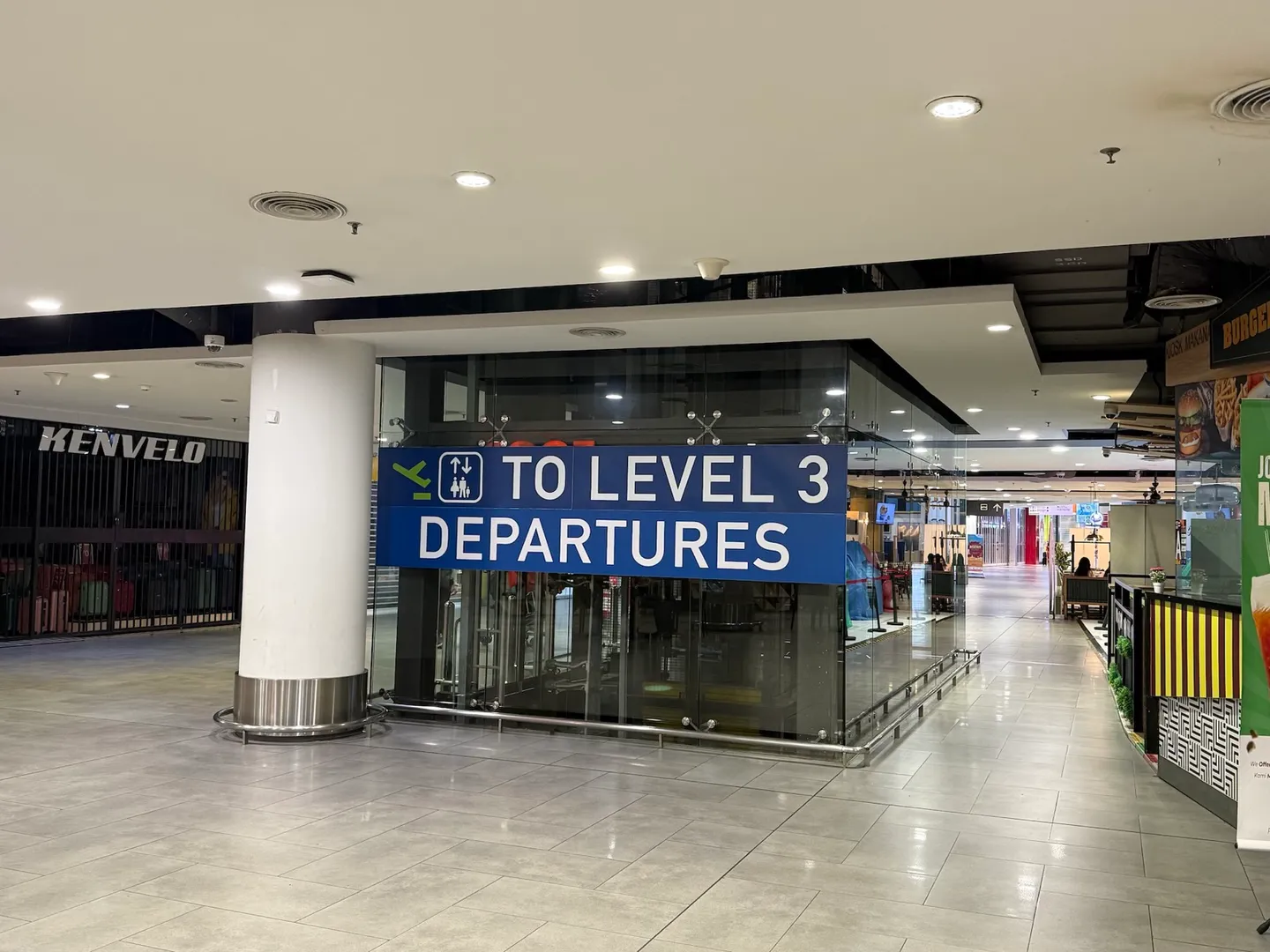
After arriving, follow the signs to Level 3 Departures
After arriving at Kuala Lumpur T2, proceed to Level 3 Departures and look for the row of red-and-white Kiosk self check-in machines.
Step 2: Use the Kiosk to Check In
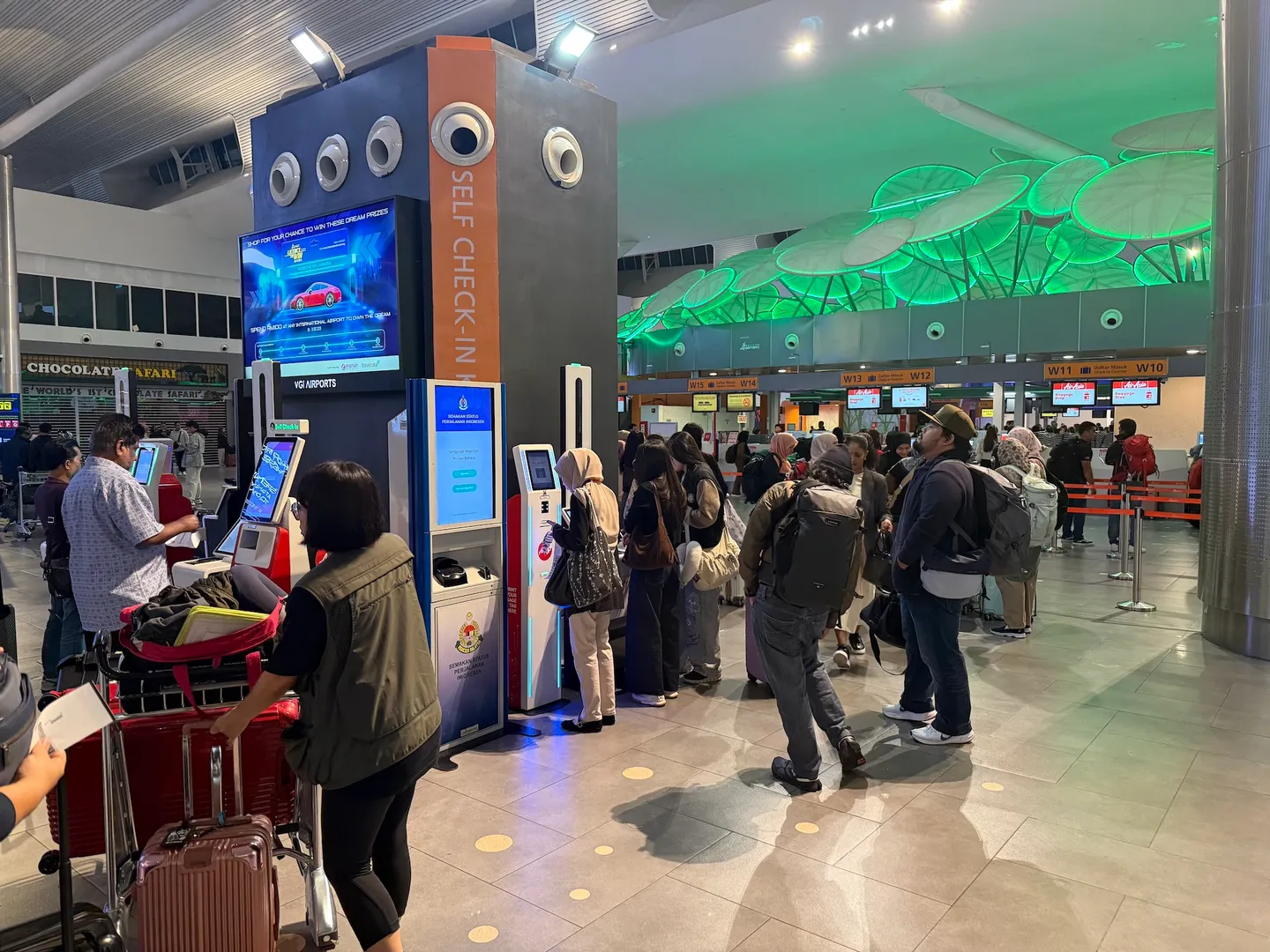
Find a free Kiosk and proceed with check-in
-
Select your language (English / 中文)
-
Enter your details: booking reference (PNR), scan your passport, or scan the QR code on your e-ticket
-
The system will display: passenger name, flight details, and baggage allowance (if you added extra baggage or it's included)
Once confirmed → the machine will print:
✔ Boarding pass
✔ Bag tag
⚠️ Tips
- You can complete check-in at the Kiosk even without having checked in online beforehand.
- During peak season, AirAsia occasionally requires passengers to check in via the App first.
- Lost your boarding pass? (It's easy to drop things when juggling luggage — the Editor misplaced theirs twice!) ➜ Simply go back to a Kiosk, re-enter your details, and print another one.
Step 3: Attach the Bag Tag (Important)
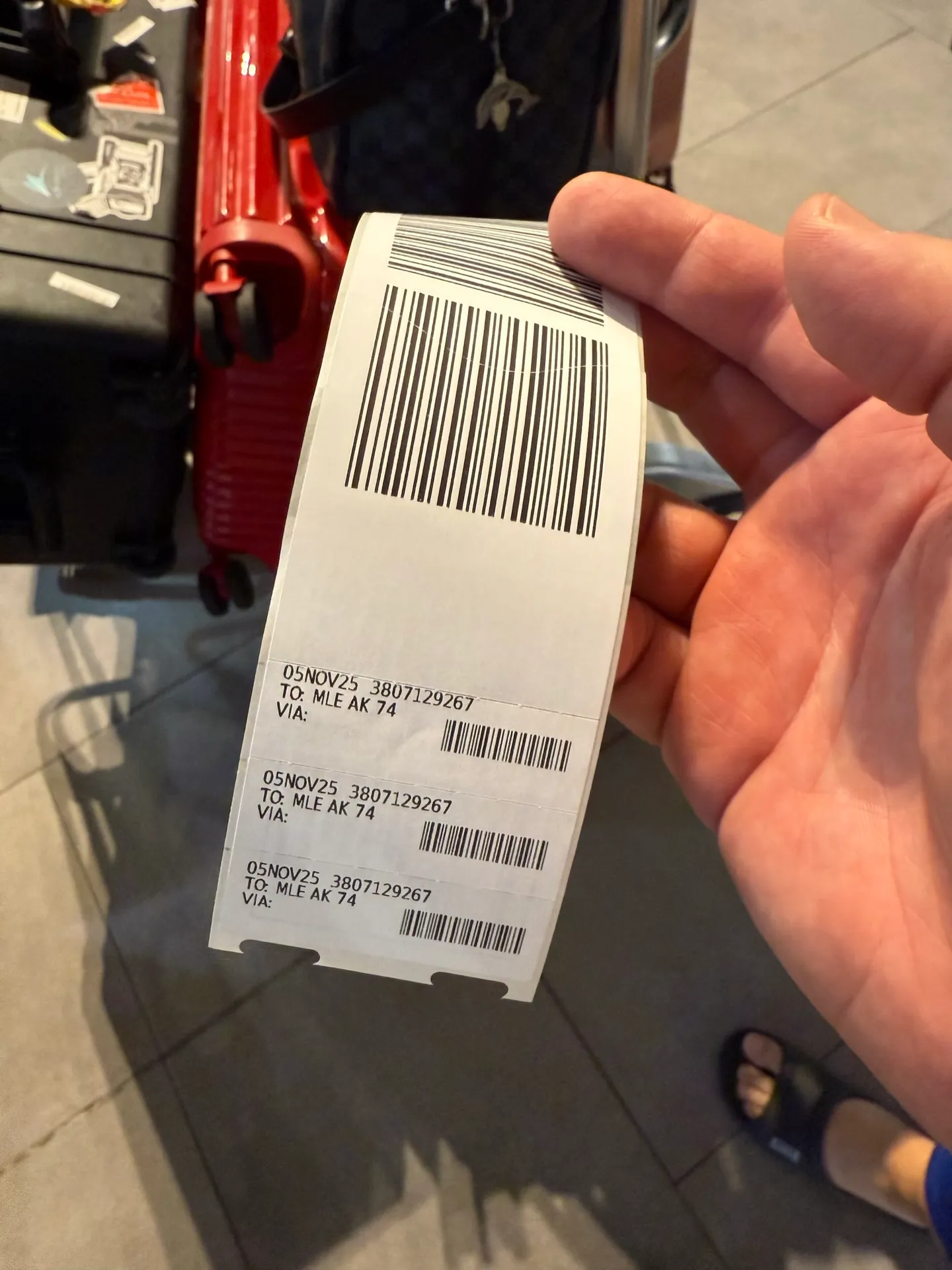
Keep the baggage receipt stub safe — it's your proof in case of lost luggage
The bag tag will have 3 identical barcode stickers at the bottom:
- Stick one on the front and one on the side of your suitcase
- Stick the remaining one on the back of your boarding pass (the receipt stub — the larger half)
Then wrap the full bag tag around the suitcase handle and press it firmly closed (to prevent it from falling off during handling).
Step 4: Self Bag Drop
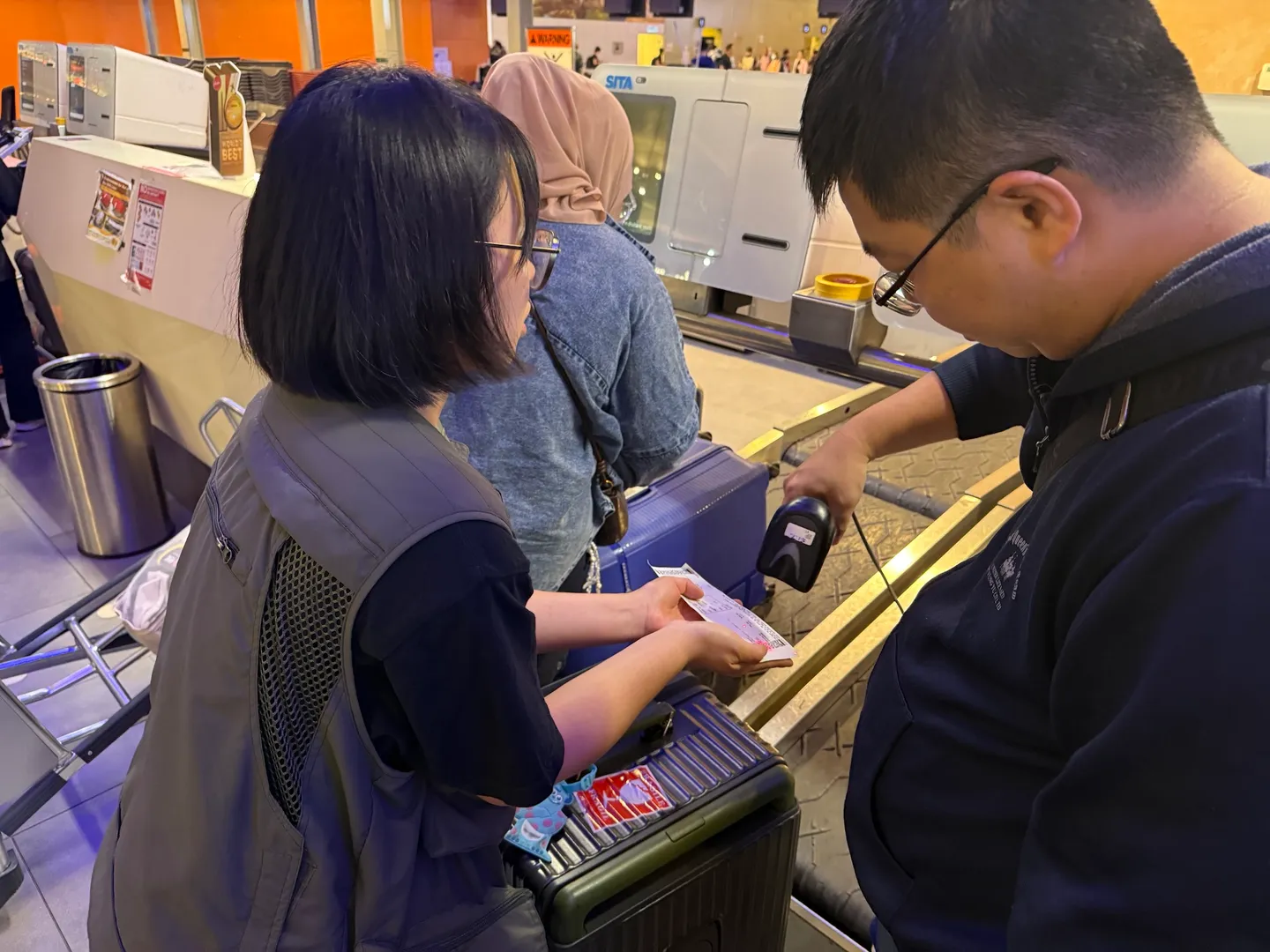
Place your bag on the conveyor belt, then scan the barcode
Located near the Kiosks, the Self Bag Drop conveyor belts are clearly visible.
How to use:
-
Place your bag on the conveyor belt
-
Scan the barcode
-
The machine will automatically weigh your bag, verify the bag tag, and display whether you are overweight
-
If the weight is within limits → green light → your bag automatically moves onto the belt and check-in is complete!
⚠️ Important: Weight limits are strictly enforced
- AirAsia's machines will reject bags that are even 0.5 kg overweight — sort out your weight distribution in advance.
- A large number of passengers get held up at this step. If your transit time is short, make sure to allow plenty of extra time.
Step 5: Proceed to Security + Departure
Allow the following time: Standard transit — 2.5 to 3 hours recommended; Peak season (if re-checking baggage) — 3 to 4 hours recommended.
Carry-on baggage (important):
The majority of passengers arriving at KLIA T2 are on AirAsia flights, and AirAsia is particularly strict about carry-on baggage size and weight. Wheeled carry-on bags in particular will almost certainly be required to fit into a metal sizing frame before security, along with a weight check. Most fare types allow a carry-on limit of 7 kg.
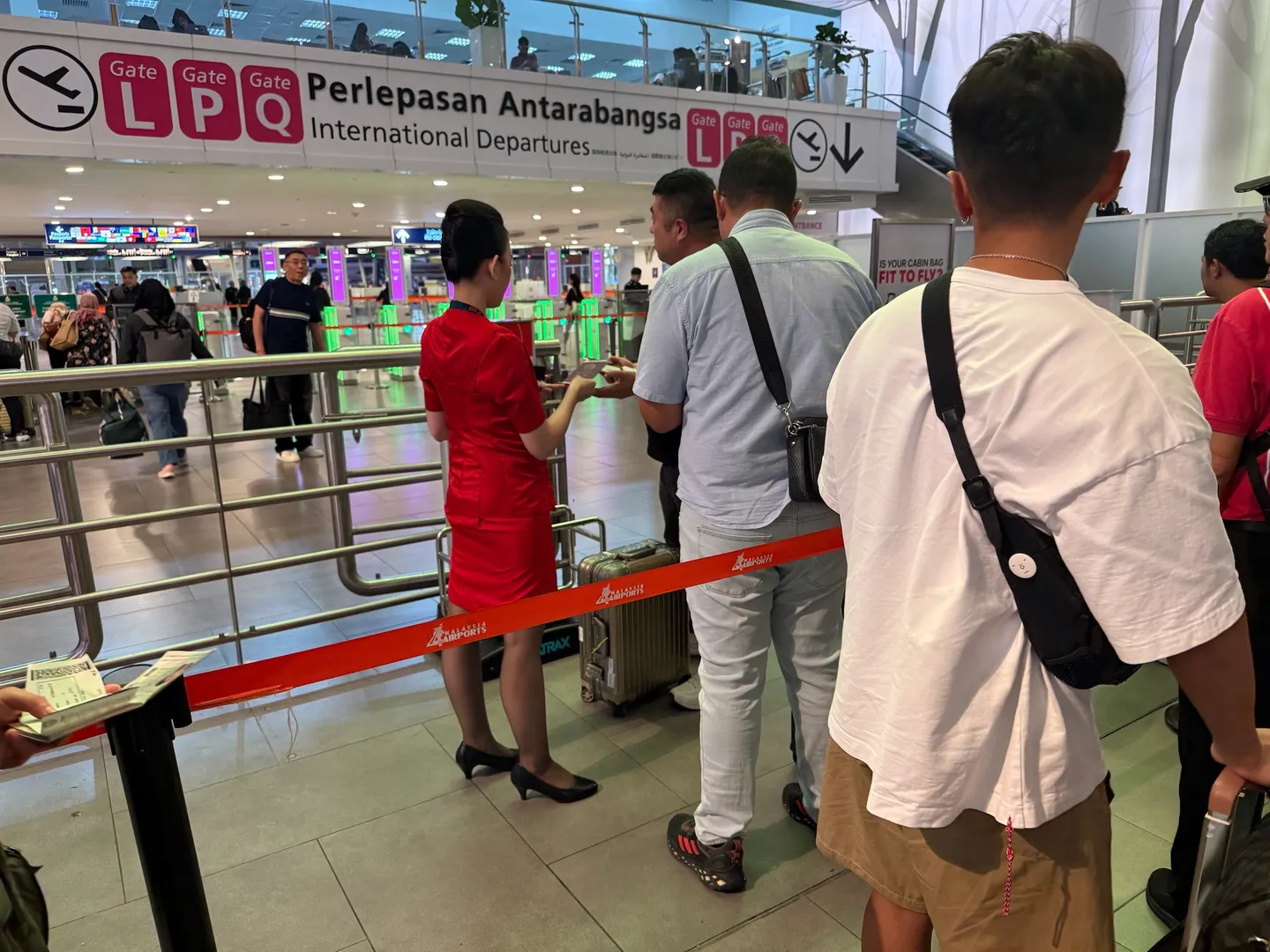
Always pay close attention to the weight and dimensions of your carry-on bag
If you have purchased additional carry-on baggage allowance, make sure to have the relevant confirmation ready so ground staff can verify it.
Drone photography is a must for Maldives travel and diving! The Editor brought a drone, dive camera batteries, and various other accessories on this trip — all of which had to travel in the carry-on bag, making them classic "weight killers."
The Editor's experience was that ground staff mainly measure wheeled carry-on bags for weight and size, and are less likely to inspect personal backpacks.
The Editor recommends: Bring an extra backpack to distribute the weight — it's much less likely to attract scrutiny.
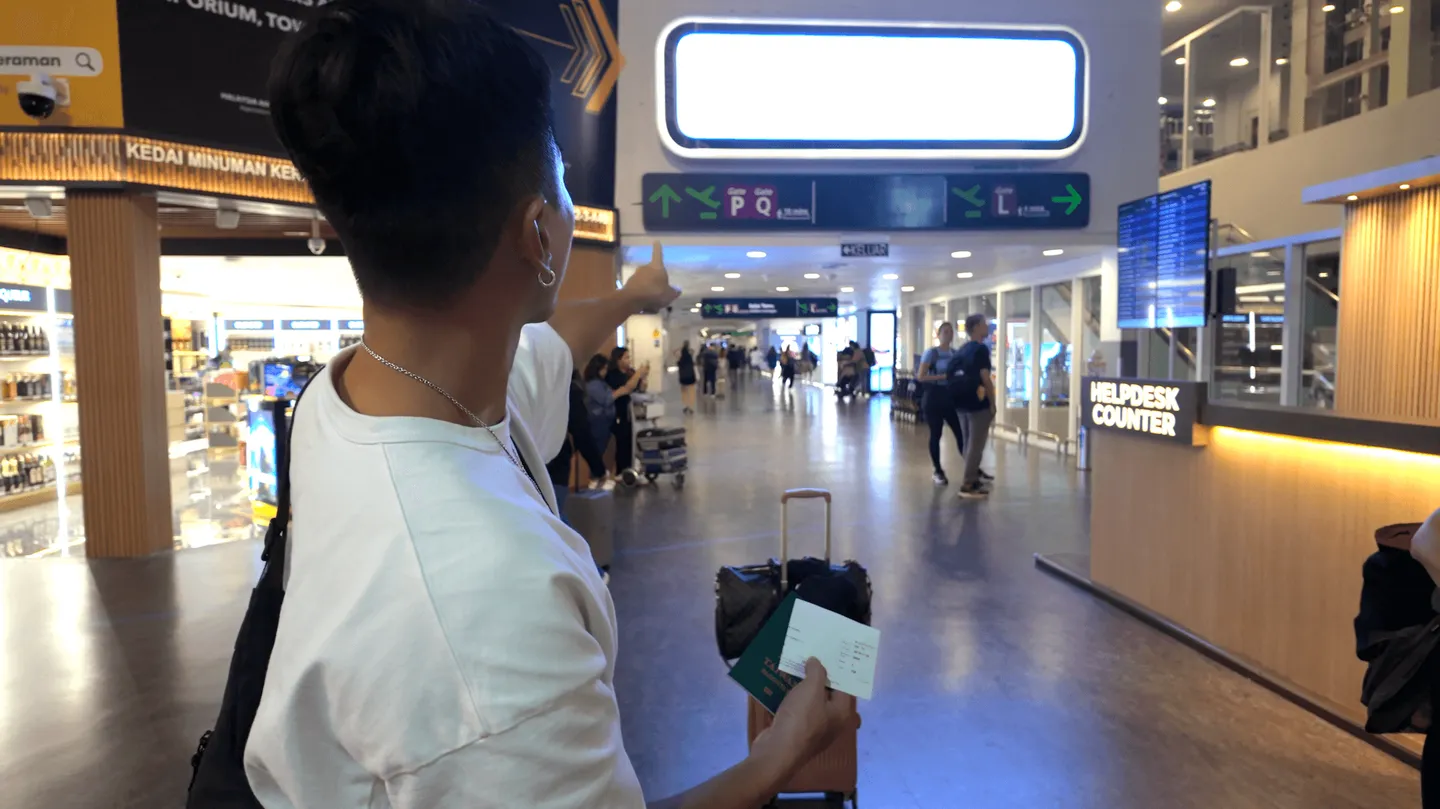
Terminal 2 is very large — always confirm your gate number. There will be another security check at the gate, so allow enough time
Speedboat Transfer Guide After Arriving in the Maldives: Getting to Your Local Island
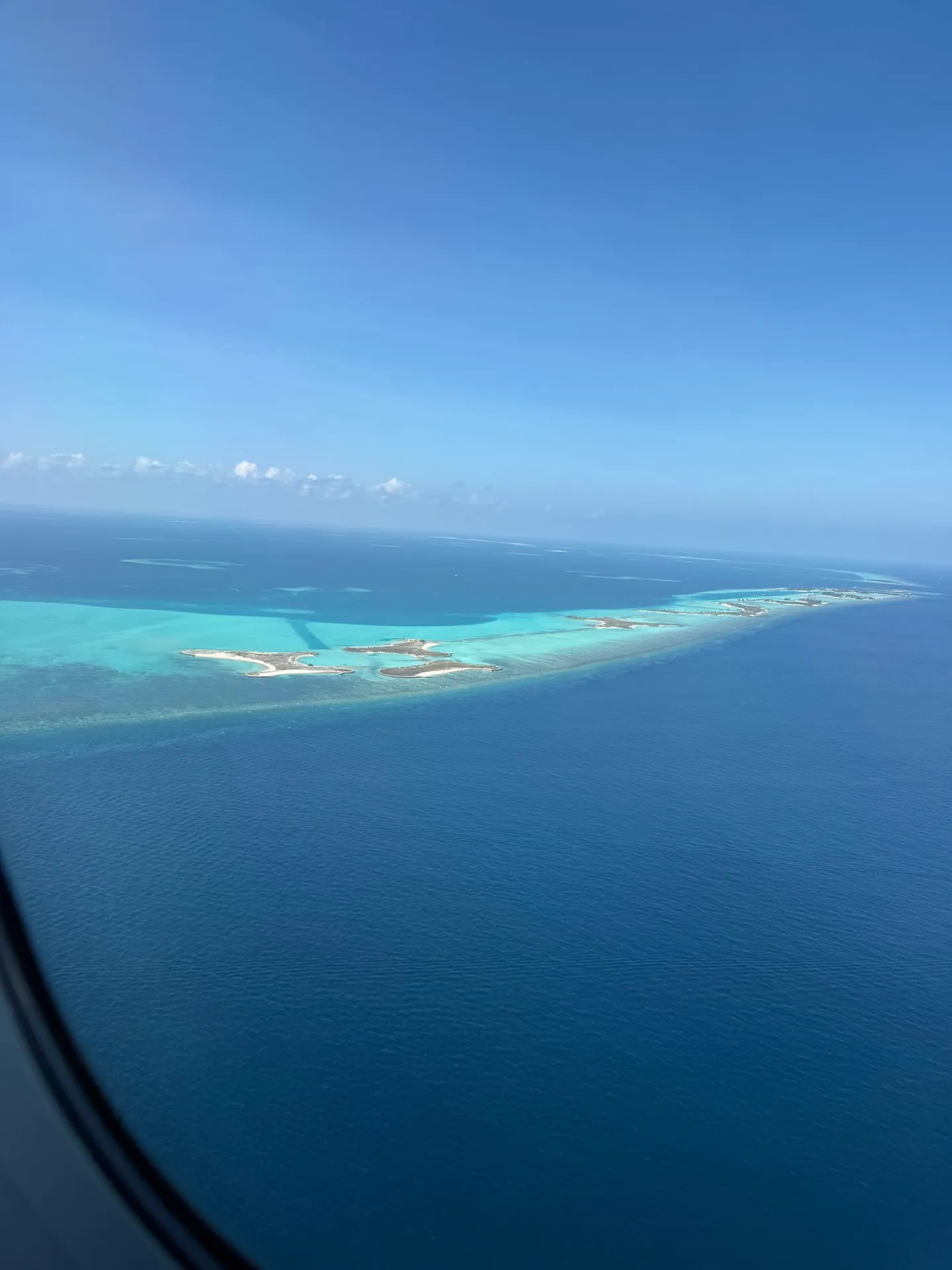
After a sleep on the plane, we finally arrived in the beautiful Maldives
After arriving in the Maldives, travellers have several options: heading to Malé city, or transferring by speedboat to a local island or a liveaboard. This section focuses on the speedboat transfer to a local island scenario.
Passengers can visit the airport's information centre or download the FollowMe Vessel Tracker app to find vessel schedules and board the correct transfer boat. Do note that the signage for boat berths is not always clear and is subject to change.
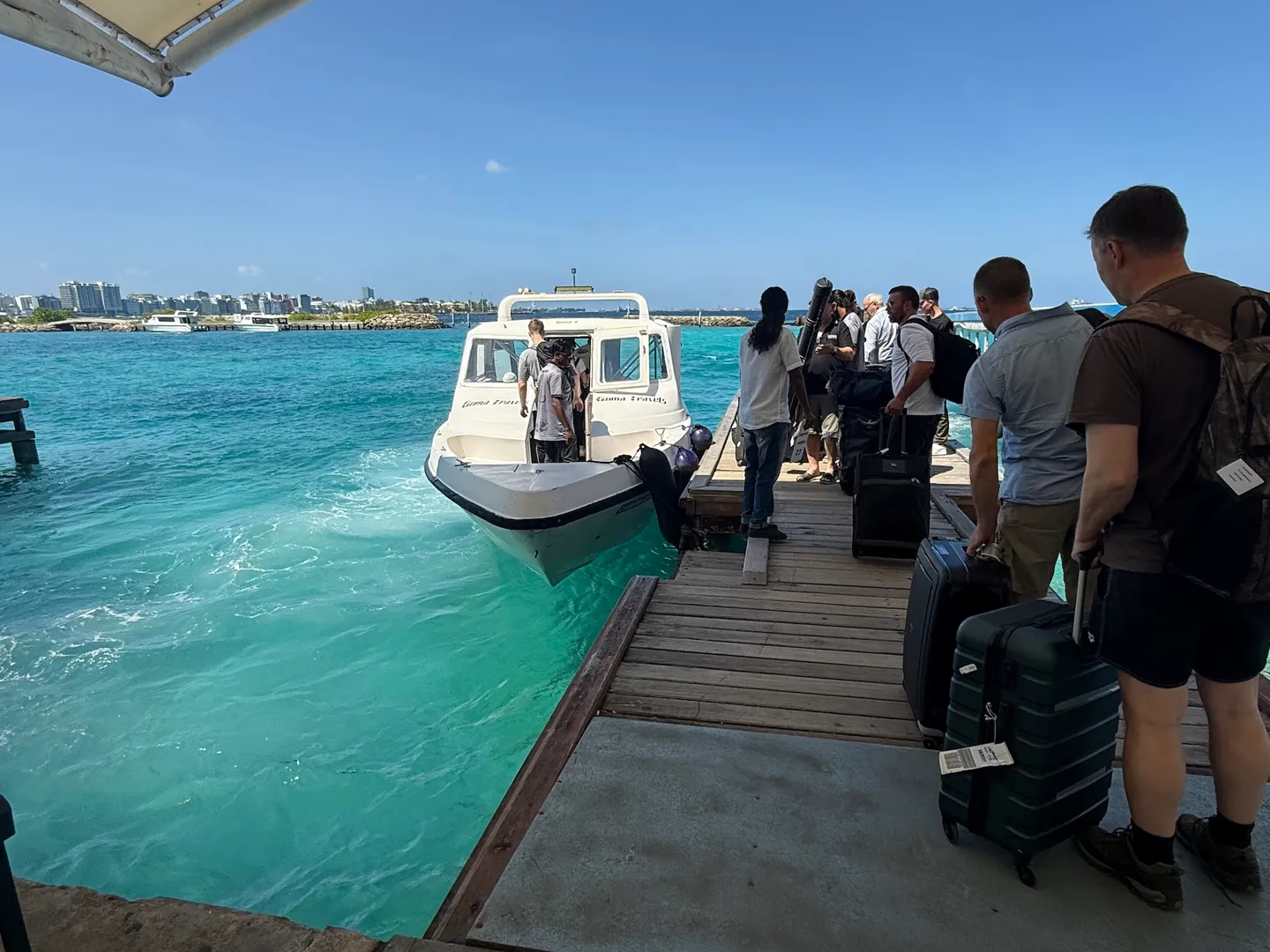
After exiting the airport, cross the road to reach the jetty — confirm the berthing position carefully to avoid missing your boat
For travellers on a trip arranged by BlueTrend, after clearing Maldives immigration, follow the connecting walkway from the T1 new terminal toward the T2 old terminal. Once you reach the T2 old terminal, you will see a service counter area for various resorts. Proceed to the C2 reception desk that works with us.
Present your passport, and the staff will guide you to the correct transfer boat, ensuring you don't end up in a panic searching for the right vessel and missing your departure.
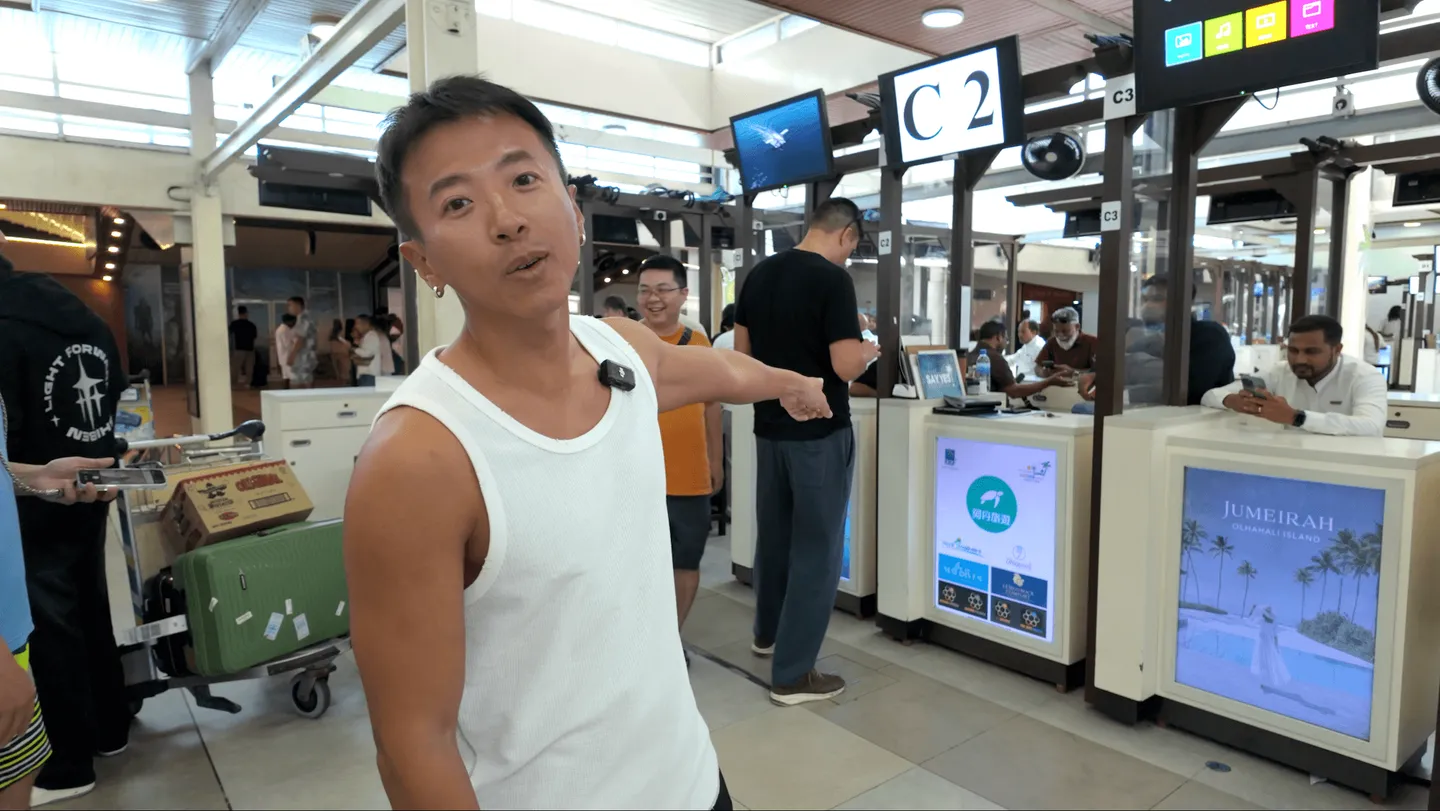
After clearing immigration, find the C2 counter in the old terminal for assistance
The Editor recommends: For independent travellers, consider using a travel agency to arrange your transfer. While English is generally spoken locally, the accents can be quite strong — the Editor frequently found themselves nodding along without fully understanding what was being said. Add to that the fact that speedboat boarding points are not fixed, and having to drag your luggage around looking for the right boat after a long-haul flight is genuinely exhausting.
Frequently Asked Questions
How is a BlueTrend dive trip different from an unknown, no-name dive group?
Choosing us means full peace-of-mind protection and a smooth experience from start to finish. Every trip we run holds to three things.
First, full legal protection and a professional dive leader: we strictly follow Taiwan's travel regulations and provide complete travel-agency liability insurance, travel insurance, trip-inconvenience insurance and dive insurance. Every group is accompanied by a certified, foreign-language dive leader who joins you on both the dives and the land itinerary, liaising seamlessly with local dive shops and operators on your behalf to keep things running smoothly — the person our travellers trust most.
Second, fully licensed with secure payments: every payment goes into a licensed travel agency's account, with multiple safe payment channels (bank transfer, credit card and more) and a legal collect-and-remit receipt, so every transaction is open, transparent and protected, avoiding the fraud and dispute risks of transferring money privately to an individual.
Third, hand-picked quality we vet in person: every trip, dive site and partner shop is scouted on the ground by our own team, from the guides' professionalism and safety standards to the food, lodging, environment and service details on land, all vetted by us so you don't get caught out.
I want to sign up for a dive trip. Are there certification-level or logged-dive requirements?
Each dive site is different, so the entry bar varies. 'Bali Tulamben', for instance, is relatively beginner-friendly. 'Malapascua in the Philippines' is also beginner-friendly, but since thresher sharks tend to cruise between 20 and 30 metres, we recommend AOW certification with 20+ logged dives to enjoy this trip comfortably. For 'the Maldives' or 'Palau', we suggest AOW with 50+ logged dives for a more relaxed experience. If you're not sure whether your experience fits the trip you want, message us and our dive editors will assess it and help you find the trip you'll feel safest on.
Can I join if I'm signing up alone? How are rooms arranged?
Plenty of our travellers sign up solo! For rooms and beds, we prioritise pairing you with a same-gender traveller, and if you'd rather have your own space you can pay the difference to upgrade to a single room. For the diving, our professional leader will pair you with a suitable buddy, and with the happy vibe on our trips you'll quickly make a great group of dive friends. Many people sign up alone, make new friends, and end up organising the next trip together!
Does the trip fee include dive insurance, gear rental, taxes and instructor tips?
It depends on the trip, the destination's regulations and the local operators. Every BlueTrend dive trip has a detailed web page with a clear 'included / not included' list, transparent and with no hidden charges. All payments are collected by a licensed travel agency, with a standard-form contract for your protection.
I'm a new diver / haven't dived in a long time — will I fall behind the group?
Before you complete your booking, our team assesses a suitable trip based on your certification level and experience. Before departure, we strongly recommend taking time to refresh in Taiwan with an instructor, or a fun dive to get your feel back. On the trip itself, our professional dive leader groups and pairs everyone by experience, keeps a close eye underwater on travellers who need extra care, and steps in to help right away.
Will the photos and videos taken during the trip be shared with us?
During the dives, 'safety' is always the leader's top priority, so whenever it's suitable and safe the leader will capture great shots and record the best moments. During or after the trip, we compile a cloud album for all travellers to download, so you go home loaded with memories!
Besides your scheduled trips, can you arrange a private group charter or independent travel for me and my friends?
Absolutely! Besides group trips, we also arrange private group charters and independent travel. We can communicate, enquire and coordinate services with local operators based on your needs, saving you time and effort and taking the language barrier off your plate, to tailor the smoothest, most reassuring dive trip just for you. Contact our LINE support and our editors will arrange it for you!