Contents(6)
- Why Dive in Brunei? Four Reasons You Absolutely Must Go
- Brunei Diving Costs, Visas, and Currency — Everything You Need Before You Go
- Day 2 — Three Dives for Beginners: Abana, Dolphin 88, Bolong Rock
- Day 3 — Three Classic Dives: Blue Water Wreck, Bolkiah Wreck, Rig Reef
- The Editor's Verdict: Who Is Brunei Diving For? How Do You Get the Most Out of It?
- The Editor's Gear Notes: GoPro 12 ✕ DIVEVERYDAY Camera Rig — Real-World Test
After years of crowded dive sites and their familiar chaos, the Editor finally found something rare and pure in Brunei. Six tanks, no exhausting currents, no desperate chasing after the dive guide trying to spot fish. Hovering motionless in the water, what appeared before me was the most magnificent wreck I've ever seen in my life, and a school of fish that swept past like a gentle storm. It's hard to believe that this secluded blue paradise is just a 3.5-hour direct flight from Taiwan. Leave on Thursday, return on Sunday — a perfect pause in the rhythm of everyday life.
Read this article and learn the right way to explore Brunei's dive scene:
- Four reasons you absolutely must go: Why is this place so seriously underrated?
- Brunei entry requirements and insider currency tips: Essential reading before you leave — clear customs without a hitch.
- A full log of three dives a day: Which wreck topped the Editor's all-time list?
Why Dive in Brunei? Four Reasons You Absolutely Must Go
Diving in Brunei? Isn't it kind of boring there? After jumping in myself, the Editor can only say loudly: Brunei is a drastically underrated dive destination. Especially for divers who love exploring wrecks, crave breathtaking wide-angle scenes, and hate sharing the water with crowds — the value for money and the soul-level satisfaction here are simply off the charts.
1. A World-Class Wreck Paradise — From WWII Warships to Cargo Vessels, Each One More Impressive Than the Last
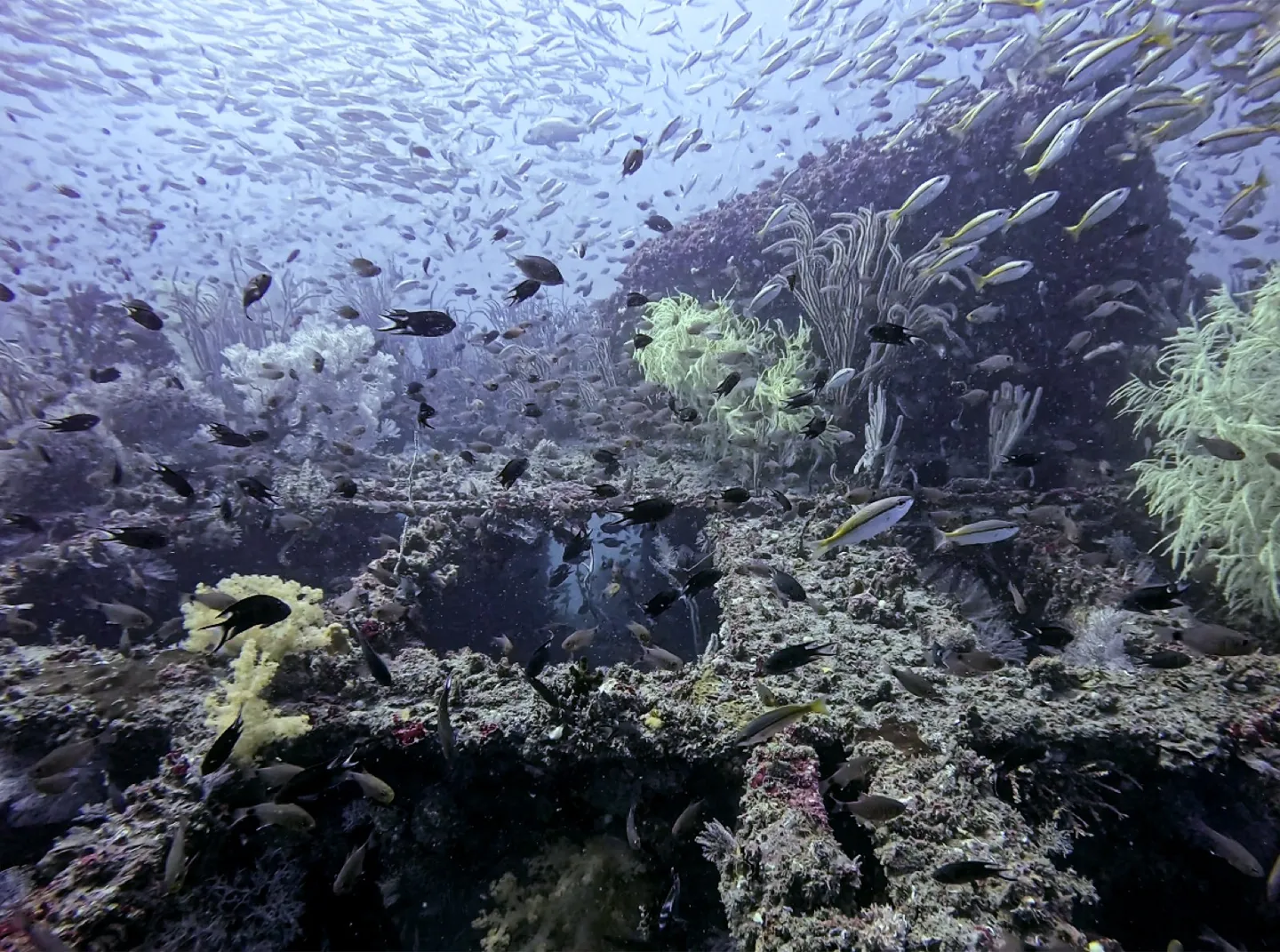
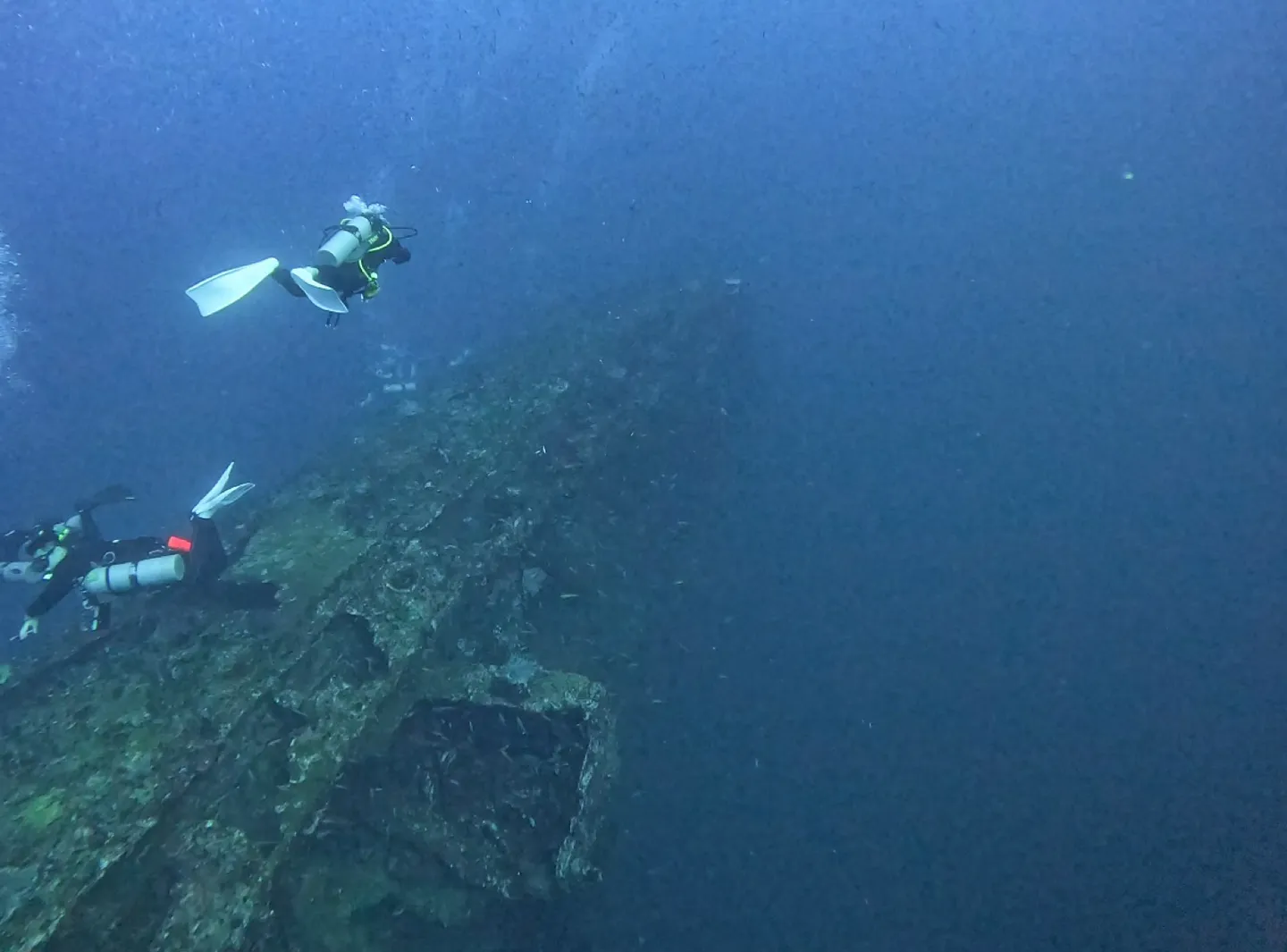
The thing that draws divers from around the world to Brunei's waters is, without doubt, the awe-inspiring historical relics hidden beneath the surface. In this seemingly calm sea, nearly 30 wrecks are concentrated in one area — a density that rivals the best in the world. From story-laden WWII warships and weathered cargo vessels to modern-era sinkings, this place is like an underwater museum. What you'll find beneath the surface are proud, imposing hull silhouettes still standing tall — not the kind that have collapsed into an indistinguishable heap of rusted metal and coral rubble. Hovering beside the massive frame of a WWII giant, that sense of traveling through time sends real chills down your spine.
2. So Niche It Hurts — You Basically Get a World-Class Wreck All to Yourself
Have you ever dived a popular wreck site only to find yourself staring at other people's fins, turning around to breathe someone else's secondhand bubbles? That will never happen in Brunei. Tourists are scarce here to begin with, and diving is an even more niche and lesser-known pursuit. On this trip, the Editor had the entire enormous wreck completely to our group alone — not another dive boat in sight above or below the surface. A queue-free, zero-interference, private charter experience. Those who know, know.
3. Steel Fantasy Island — Retired Oil Rigs Transformed into Artificial Reefs
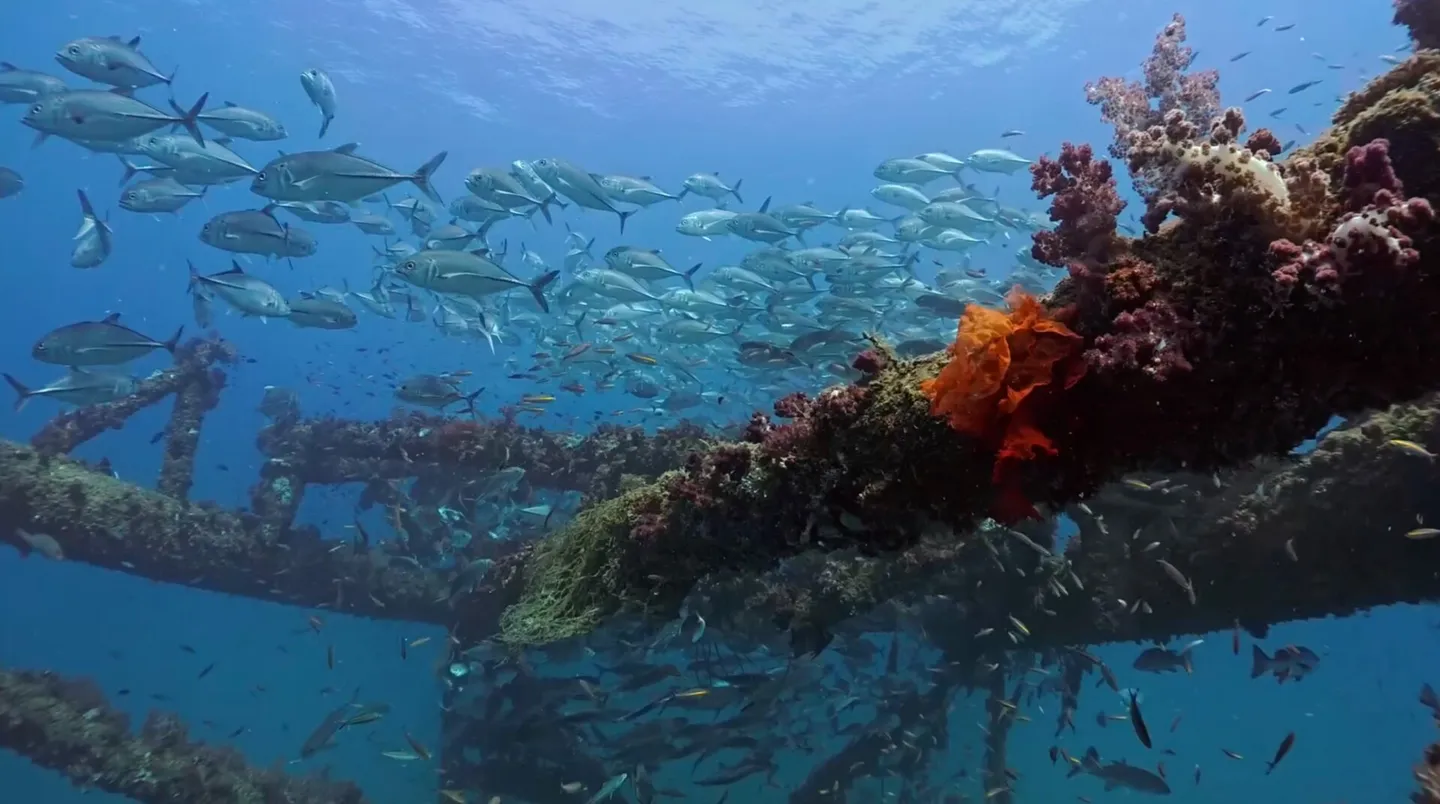
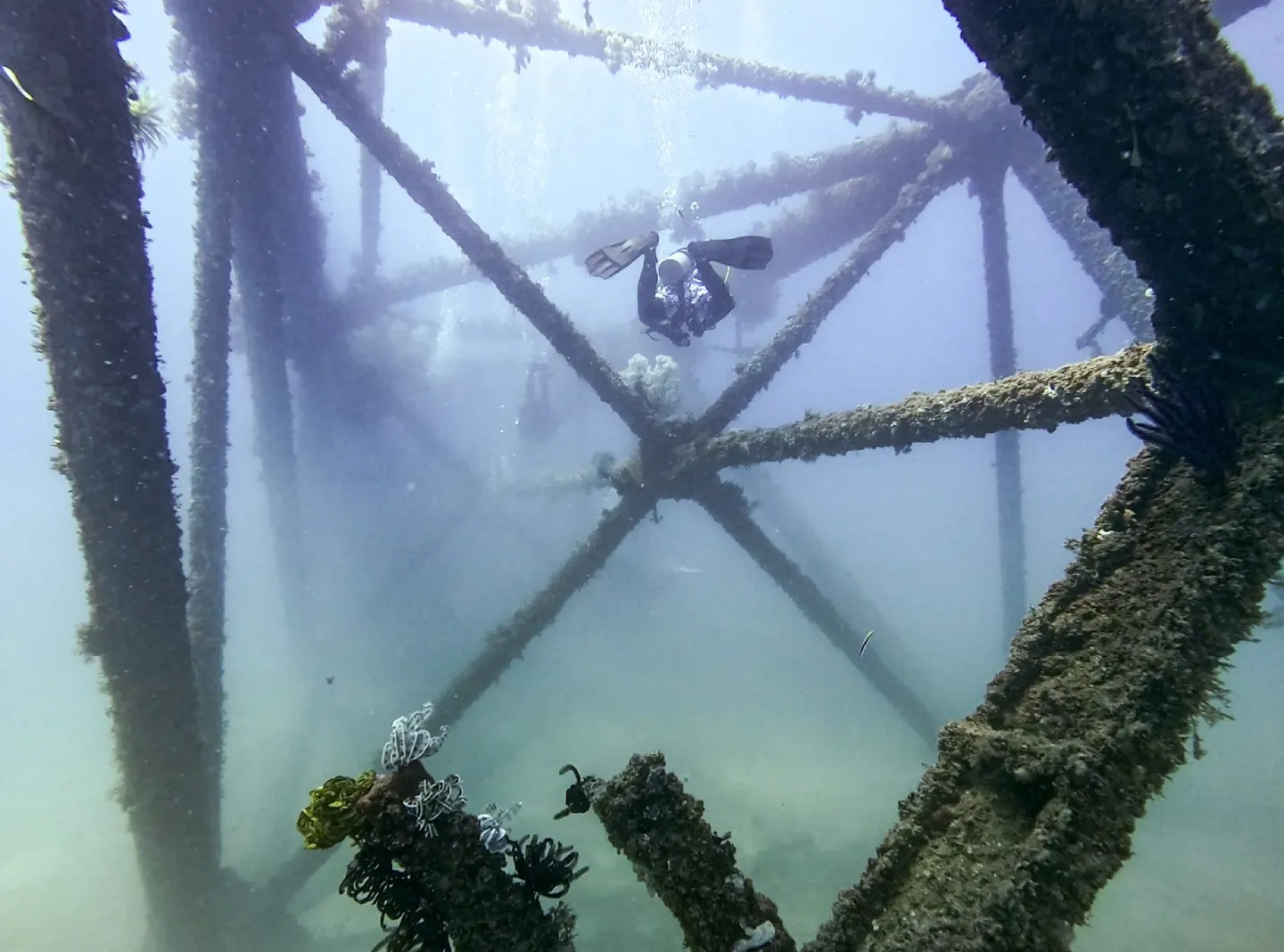
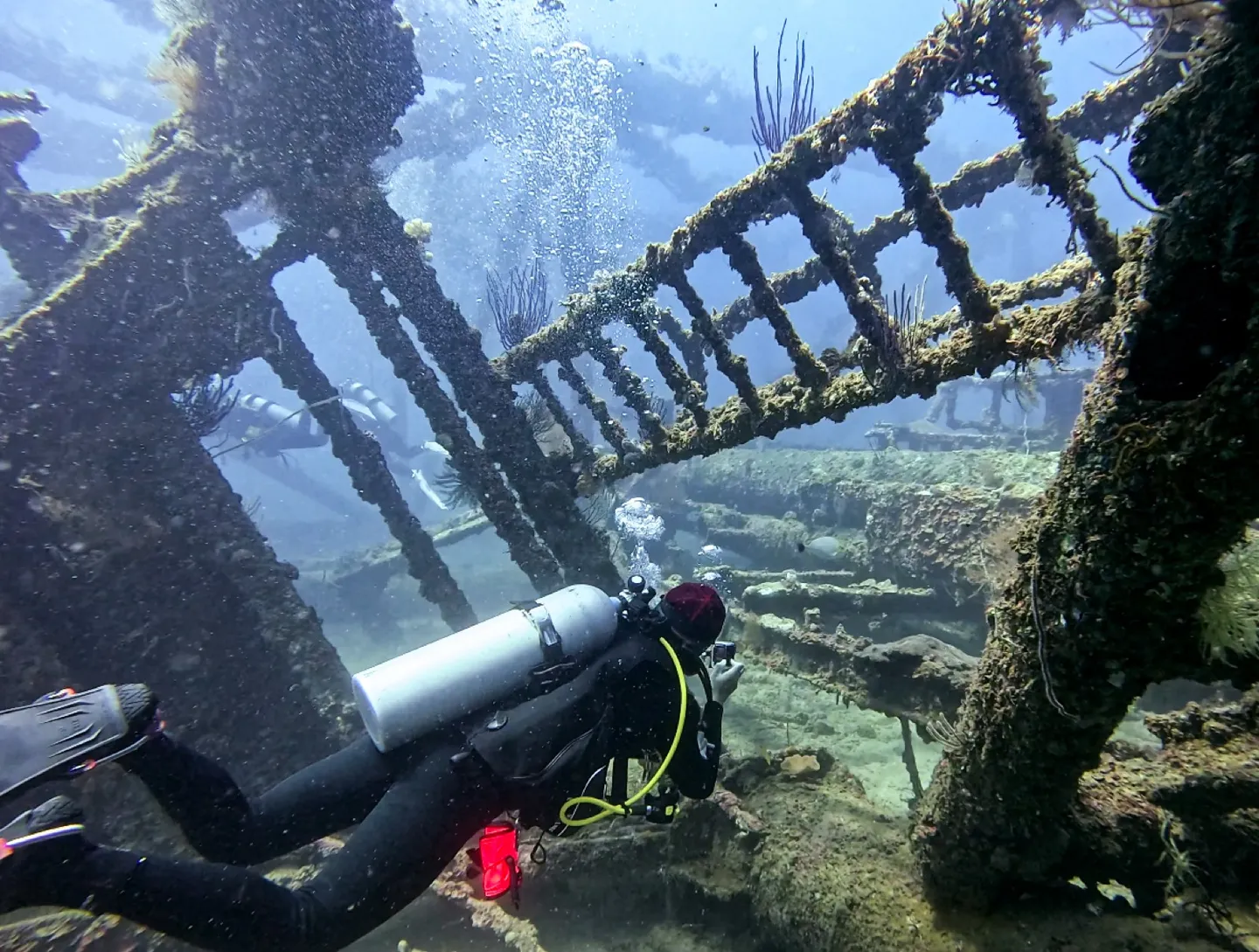
If you want underwater photos that stand apart from everyone else's, you absolutely cannot miss this distinctly Bruneian dive site. As an oil-producing nation, Brunei has a number of decommissioned offshore drilling platforms. Rather than dismantle them, the authorities chose to lay these steel behemoths down on the seafloor and let nature take over. The crisscrossing steel framework is now blanketed in coral, serving as refuge for countless marine creatures. The most captivating experience here is watching shafts of sunlight pierce through the steel beams, falling across the geometric lattice below, with silver fish gliding past — an underwater play of light and line that is utterly flawless.
4. 3.5-Hour Direct Flight from Taiwan — Just Two Days of Leave and You're Diving
The final reason to take the plunge, and the most compelling one for Taiwanese office workers: the travel time is almost unbelievably short. Royal Brunei Airlines flies direct from Taoyuan, with a flight time of around 3.5 hours — closer than Bali. Even better, it's only a 30–40 minute drive from Brunei Airport to the dive shop, and just 5 minutes from the dive shop to the jetty. From landing to diving, the transition is seamless.
For workers surviving on scraps of annual leave, the itinerary practically plans itself:
Depart on Thursday (take Thursday and Friday off), go all-in on diving Friday and Saturday — six full tanks — and on Sunday, squeeze in a day of Muslim cultural sightseeing on land before flying home that evening, satisfied and content.


Brunei Diving Costs, Visas, and Currency — Everything You Need Before You Go
Taiwan Passport = Visa-Free Entry, But Don't Forget These Two Online Forms
Taiwan passport holders can enter Brunei visa-free (maximum stay: 14 days). However, Brunei's government currently requires two online forms to be completed before departure:
- Brunei E-Arrival Card: Must be filled in online within 3 days before departure — if you skip this, you'll be stopped at check-in at the airport. (Completely free.)
- BruHealth Health Declaration: Must be completed online or via the mobile app within 72 hours before arrival.
In addition to having a passport valid for at least 6 months and a return ticket ready, customs officers are very likely to ask for your accommodation booking details. The Editor strongly recommends printing out a hard copy of your hotel's English booking confirmation to carry on your person — it's by far the fastest and most hassle-free option at the checkpoint.
Can't Exchange Brunei Dollars in Taiwan? Bring Singapore Dollars — That's the Insider Move
The Brunei Dollar (B$) exchanges at roughly 1:24 against the New Taiwan Dollar. The awkward reality, however, is that banks in Taiwan simply don't carry Brunei Dollars. The Editor's insider tip from this trip: exchange Singapore Dollars in Taiwan and bring those instead. Brunei and Singapore have a currency interchangeability agreement, meaning Singapore Dollars circulate at a 1:1 rate in Brunei (accepted by shops and dive shops alike). Getting smaller S$10 notes is recommended for convenience.
Don't Buy a Data Plan in Taiwan — Pick Up a SIM Card at Brunei Airport Instead
Brunei doesn't have the abundance of eSIM options you'd find in Japan or Korea. The Editor recommends skipping the Taiwan pre-purchase and heading straight to the counters in Brunei Airport's arrivals hall. For just B$10 you can get a SIM card with several gigabytes of data — far better value.
Day 2 — Three Dives for Beginners: Abana, Dolphin 88, Bolong Rock
Brunei's dive schedule runs on its own rhythm: boats depart around 6 a.m., and three dives are typically wrapped up and back at the jetty by noon to 1 p.m. The reason is that Brunei's waters are prone to thunderstorms and rain in the afternoon, so to ensure the best visibility and safety, all diving is packed into the morning.
This sounds like a constraint, but after experiencing it firsthand, it turns out to be the best possible arrangement. Back at the hotel by 1 p.m., showered, with an entire afternoon and evening free — perfect for seamlessly slotting in a land sightseeing itinerary. Wreck diving in the morning, exploring landmarks in the afternoon: underwater and overland adventures unlocked together, with time efficiency cranked to the maximum.
Dive 1 — Abana West Point (Check Dive / Warm-Up)
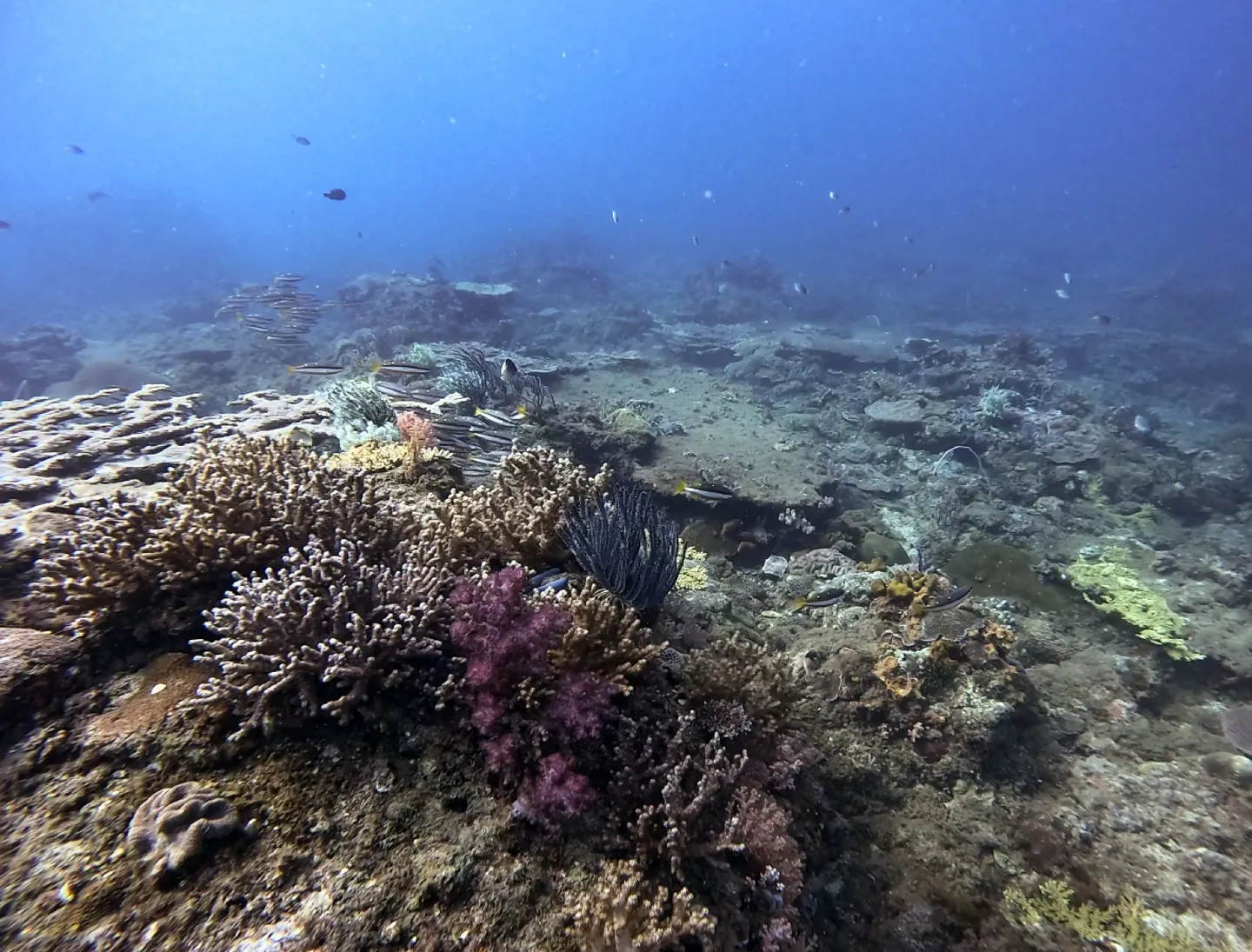
The terrain here is dominated by intact hard coral. Reportedly because Brunei's seabed supports active oil extraction, the government enforces strict fishing regulations — meaning coral reef conservation is in far better shape than you'd expect. For the full site profile, visit the Abana West Point dive site page.
Dive 2 — Dolphin 88 (A Modern Wreck That's Beginner-Friendly)
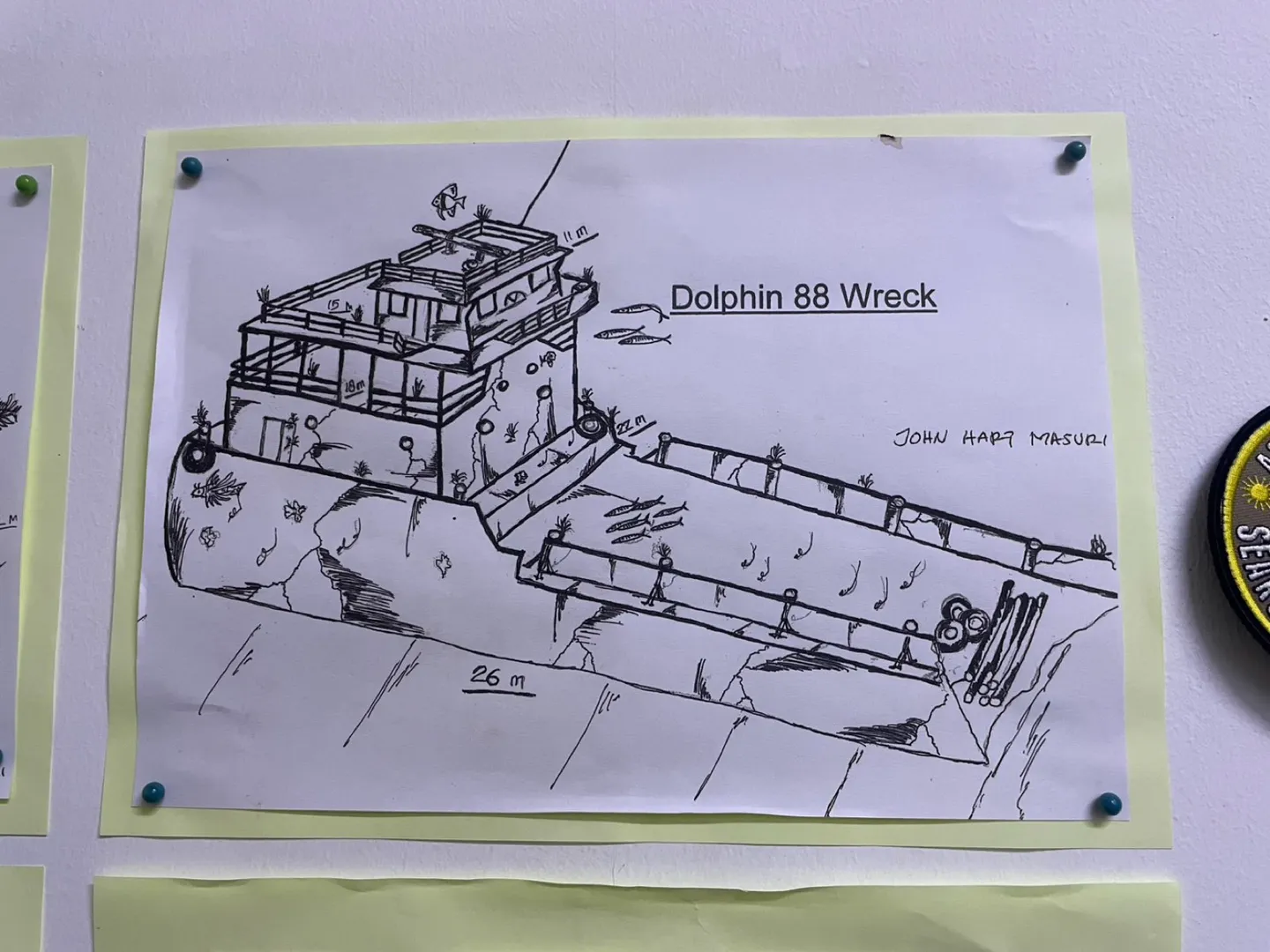
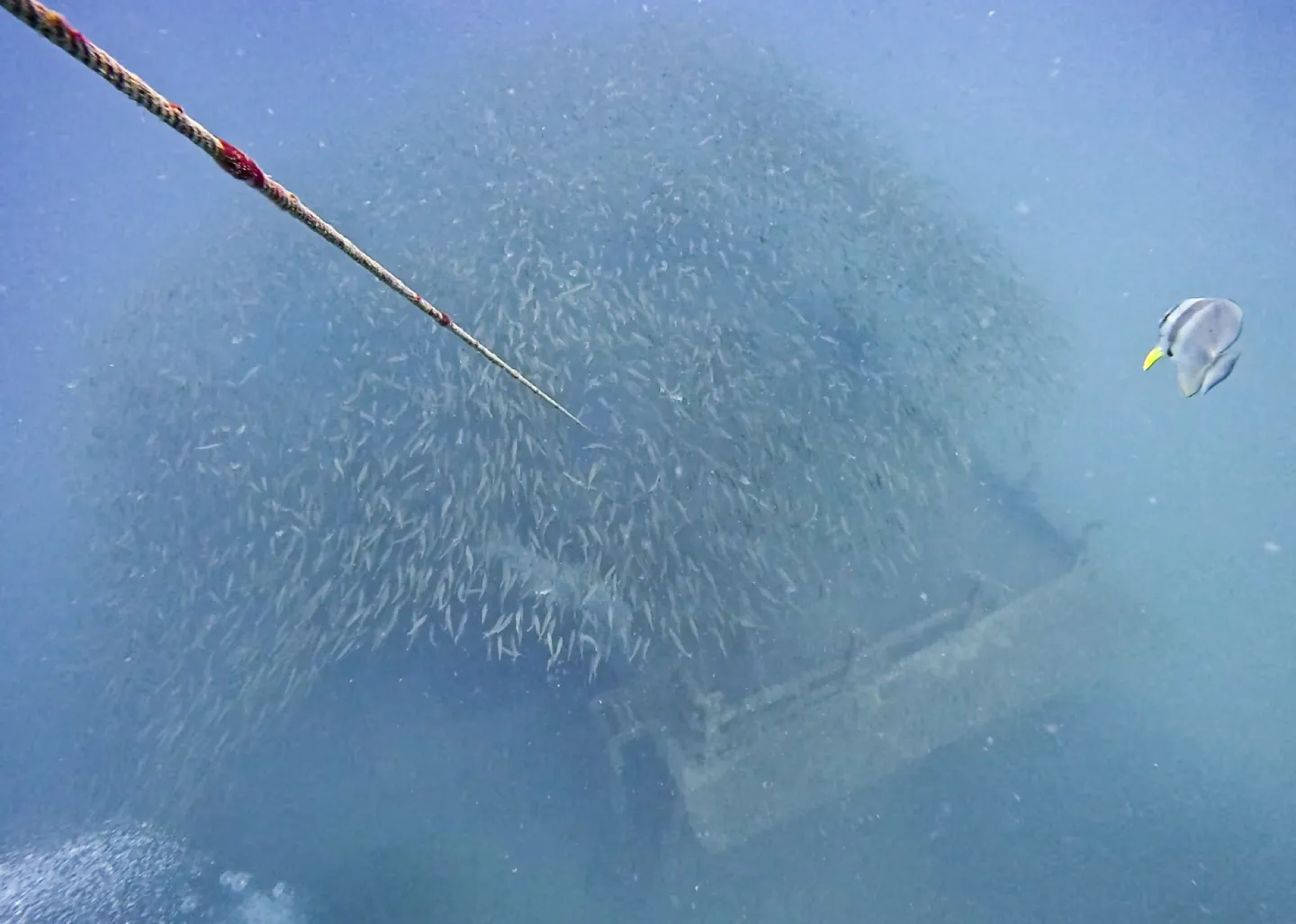
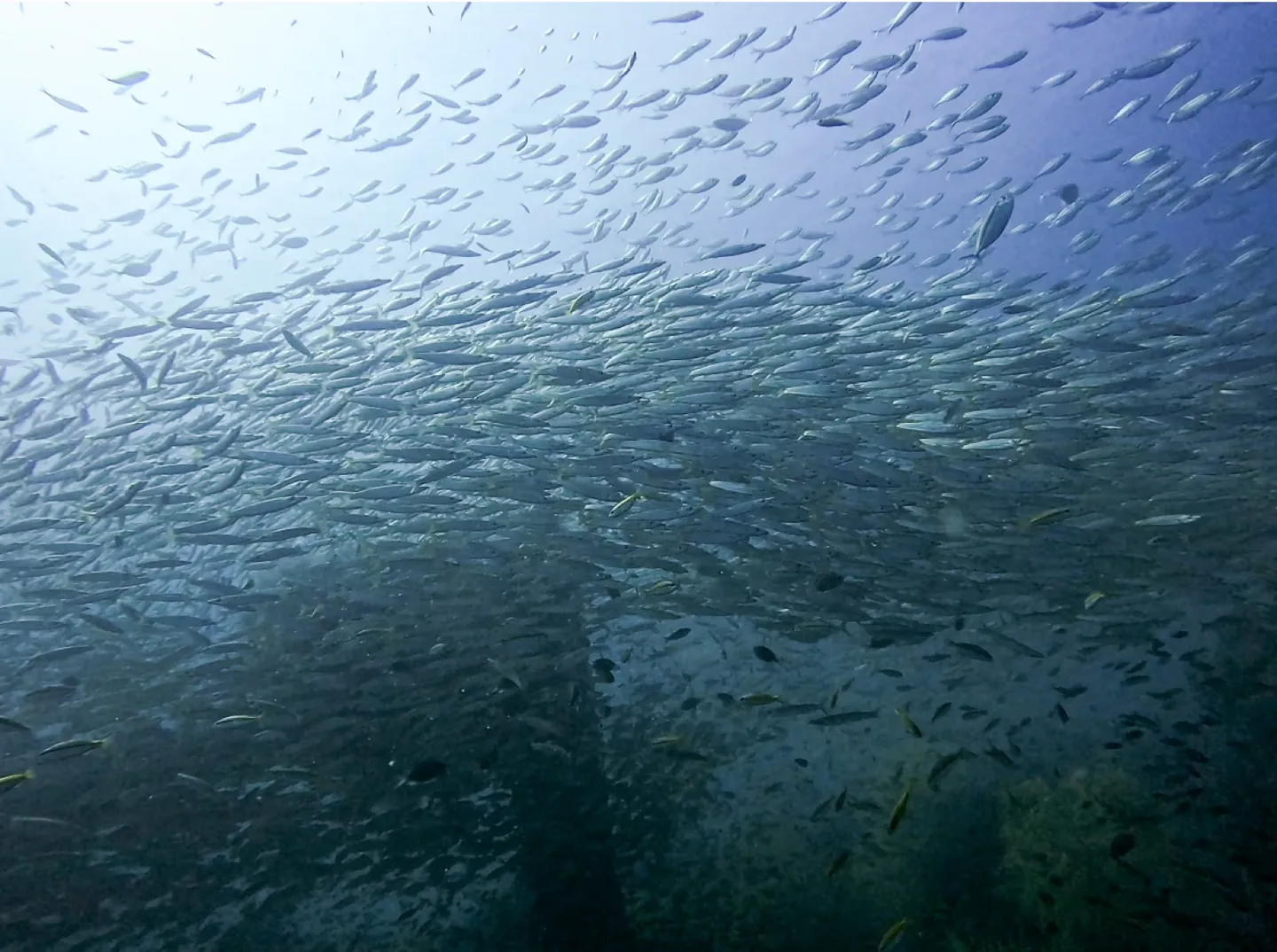
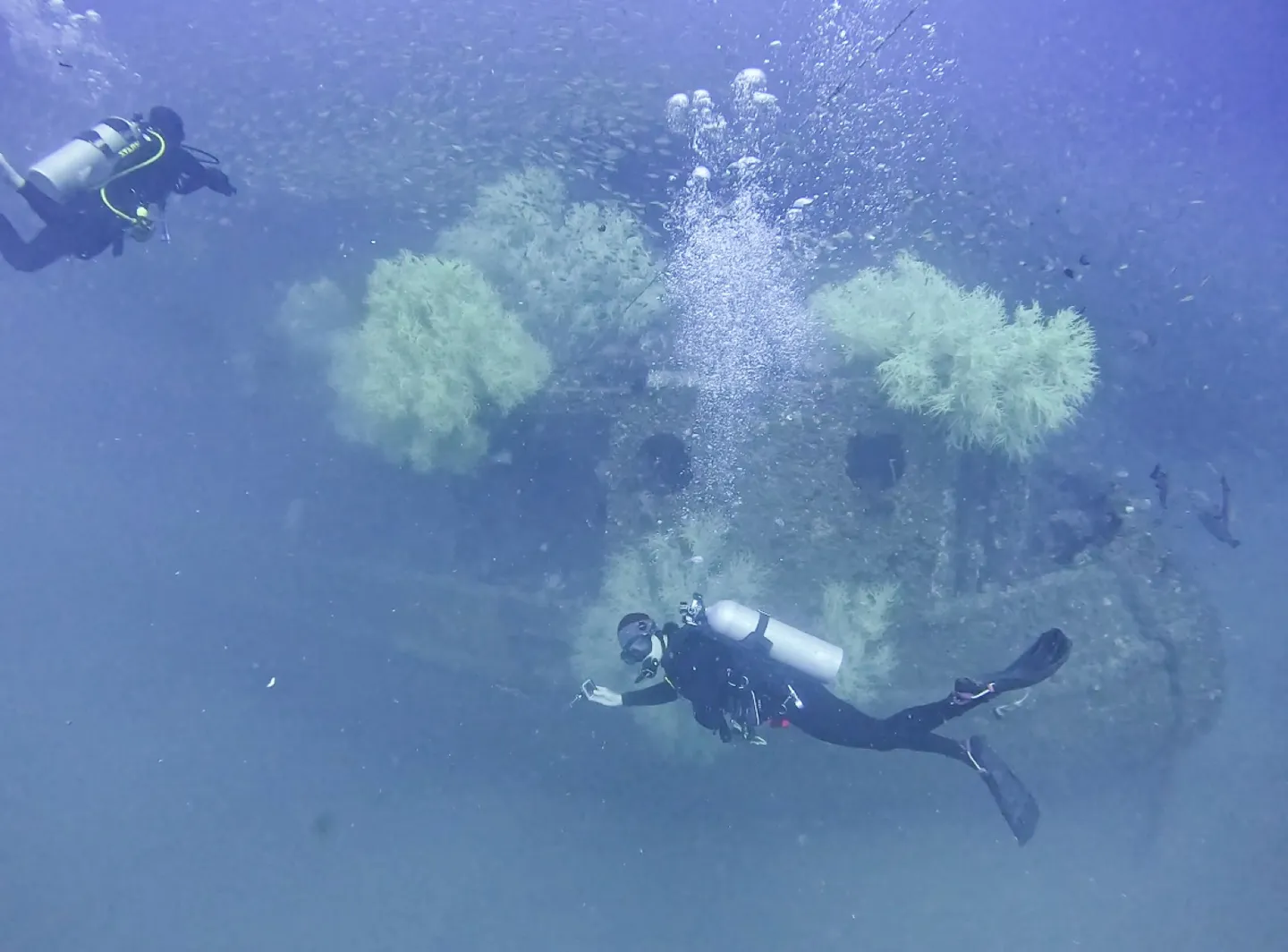
This is a relatively modern wreck that sank on 6 July 2013. A Malaysian cargo vessel registered in Kuching, Sarawak, she went down on a Saturday evening at 8:25 p.m. while on a voyage from Kuching to Lawas. In rough weather, she broke in two and sank off Pelong Rocks, approximately 3.5 nautical miles from Meragang Beach. Carrying 3,500 tonnes of rock, all 11 foreign crew members were rescued, and no oil spill occurred — making Dolphin 88 the youngest and best-preserved member of Brunei's wreck family. The hull lies at a tilted angle on the seabed, with a large breach in the underside; divers with good neutral buoyancy can easily slip inside and explore the internal structure. Light enters through the deck above, creating an illusion of traveling through a time tunnel. Full terrain and depth information can be found on the Dolphin 88 Wreck dive site page.
Dive 3 — Bolong Rock (A Relaxed Reef Dive to Close the Day)
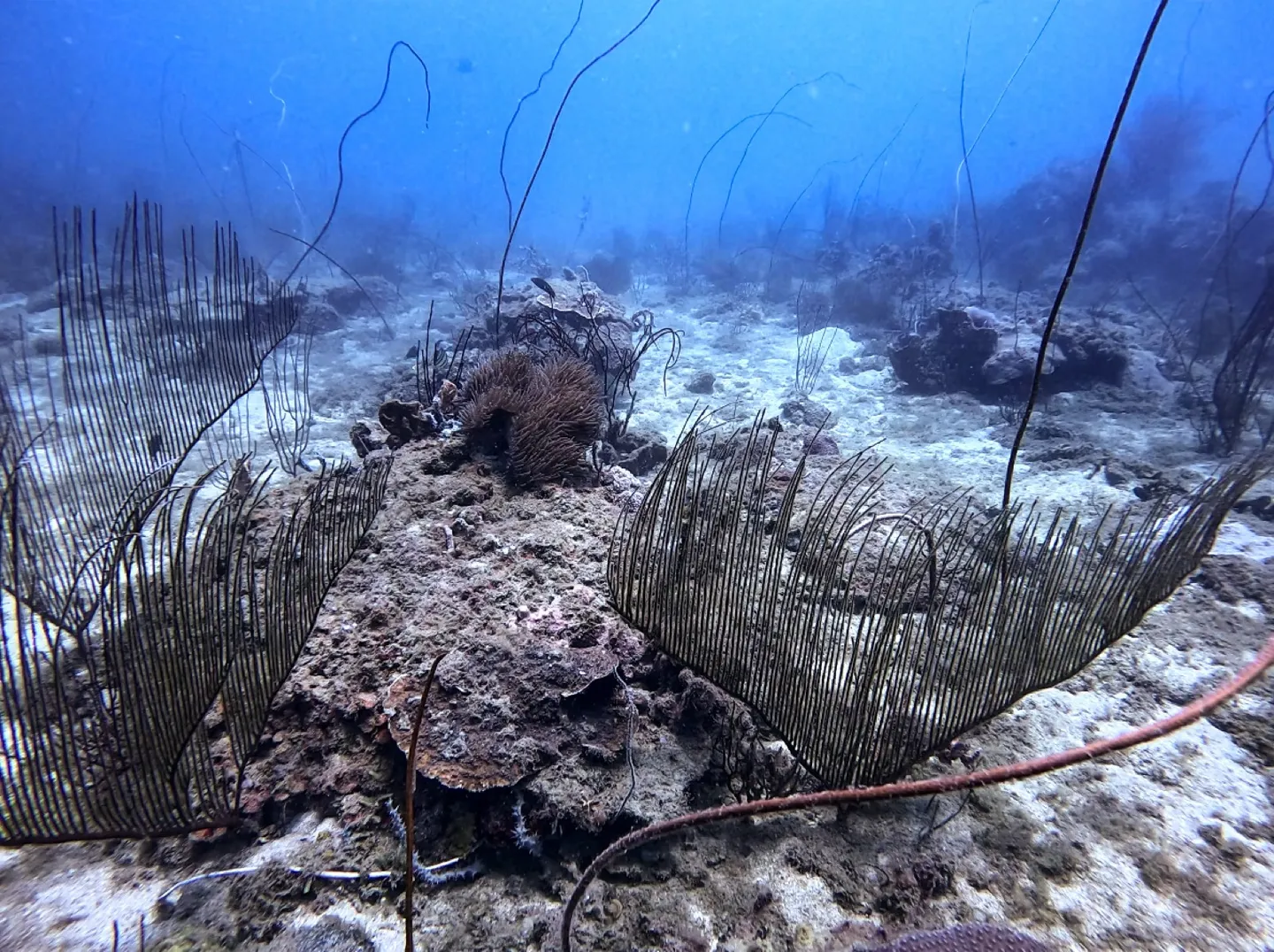
The terrain here is primarily coral reef, with Clownfish (Nemo), blue-spotted stingrays, and sea turtles commonly sighted — a gentle, easy close to Day 1. Further reading at the Bolong Rock dive site page.
Day 3 — Three Classic Dives: Blue Water Wreck, Bolkiah Wreck, Rig Reef
If Day 2 was your warm-up to get acquainted with the environment, then Day 3 is the main event of Brunei diving.
Dive 1 — Blue Water Wreck (Brunei's Most Accessible Giant Wreck)
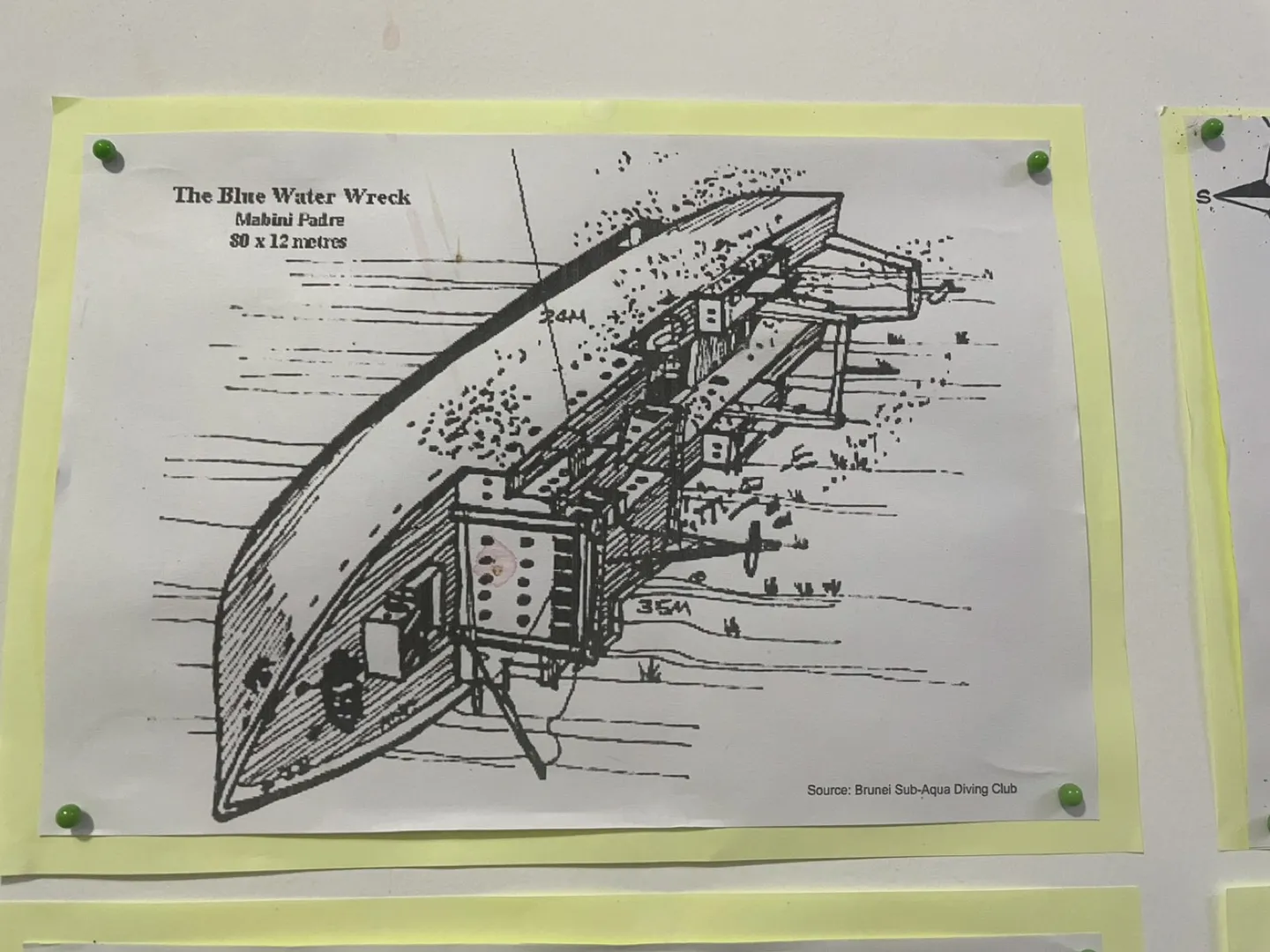
It's a 1- to 1.5-hour boat ride from the jetty, as it sits in open water 35 km offshore — hence the name Blue Water. In diving circles it's commonly called "Mabini Padre," though Japanese dive captain Masahiko Taneichi, after consulting Lloyd's maritime records, found that the registered name is Mabini Fadri — a Philippine stern trawler built in Hakodate, Japan in 1962. Lloyd's records give her dimensions as 70.3 m long by 12 m wide, while dive shop materials often cite 79–80 m. She caught fire in her engine room off Miri on 10 November 1981 and, while being towed, took on so much water used in firefighting that her hull became unbalanced. She sank on 13 November 1981, coming to rest on her side at 35 m, with her highest point at 24 m.
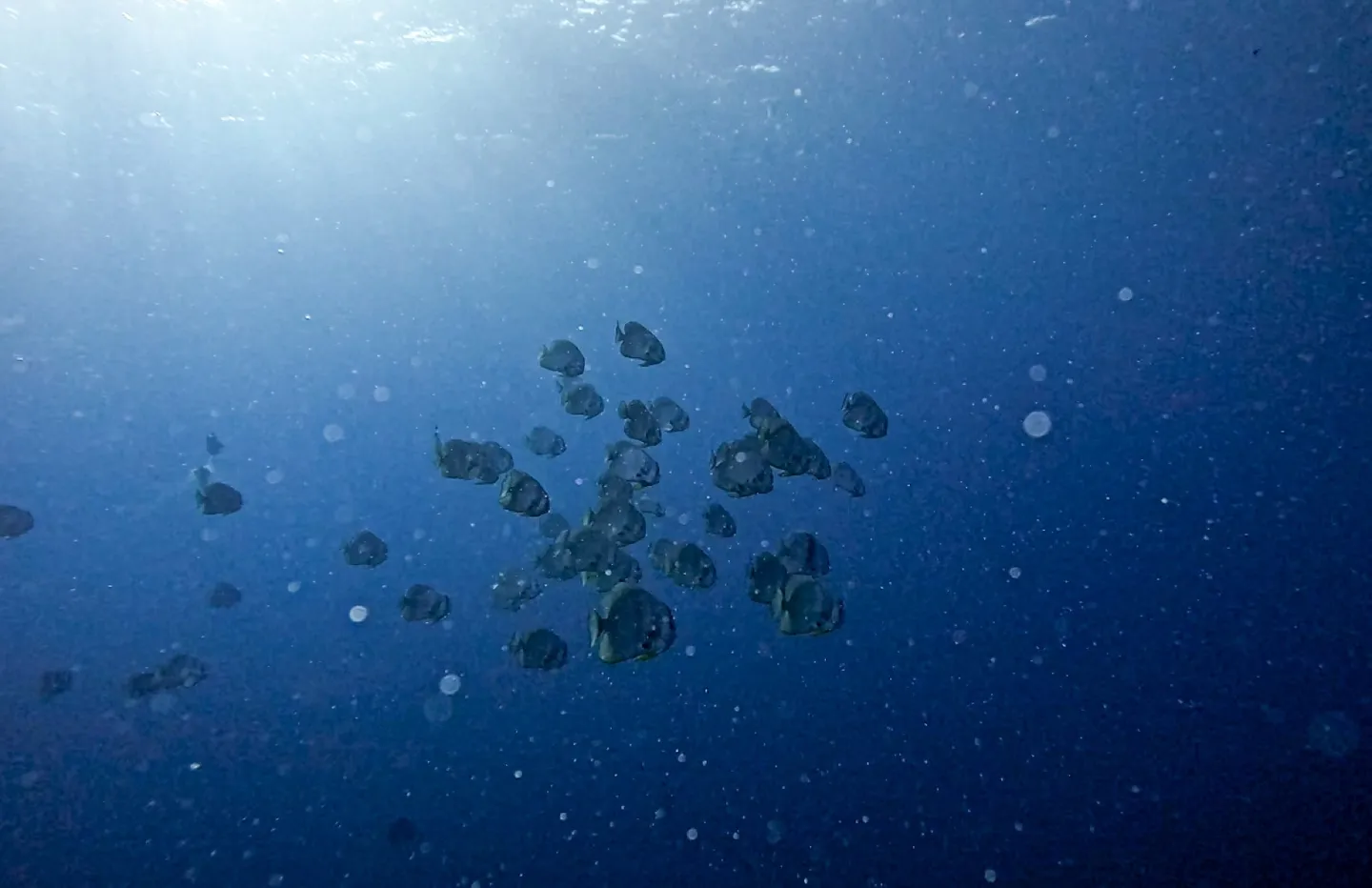
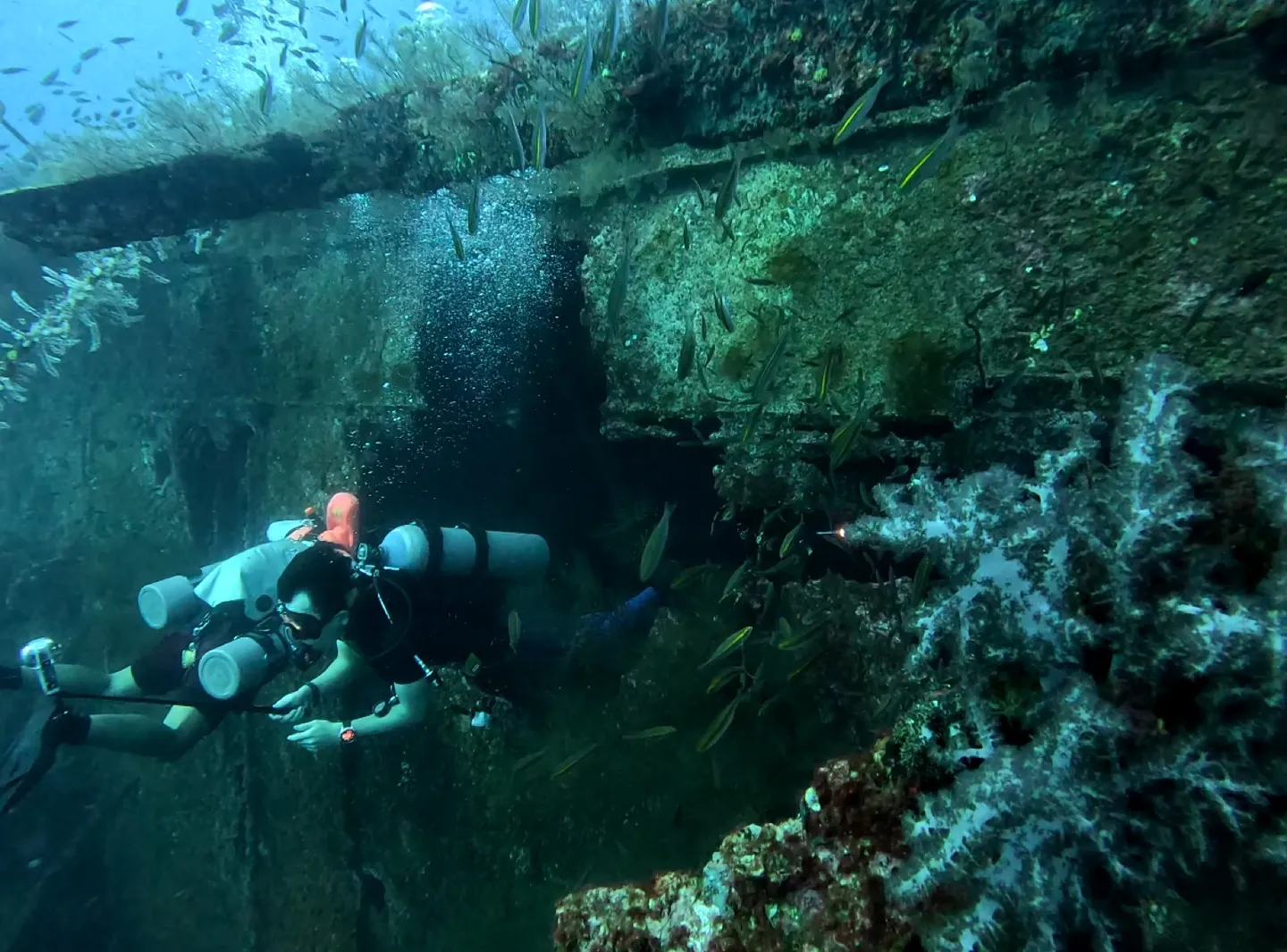
Because she lies so far from shore and sees so few divers, there's room to explore this underwater giant far more thoroughly. On this dive the Editor encountered schools of barracuda and batfish cruising in from the blue. Coral encrustation isn't as dense as on the nearshore wrecks, but hydroid and sponge coverage is extensive. Widely regarded as one of Brunei's four great wrecks, she also offers the best visibility of any wreck in Brunei's waters.
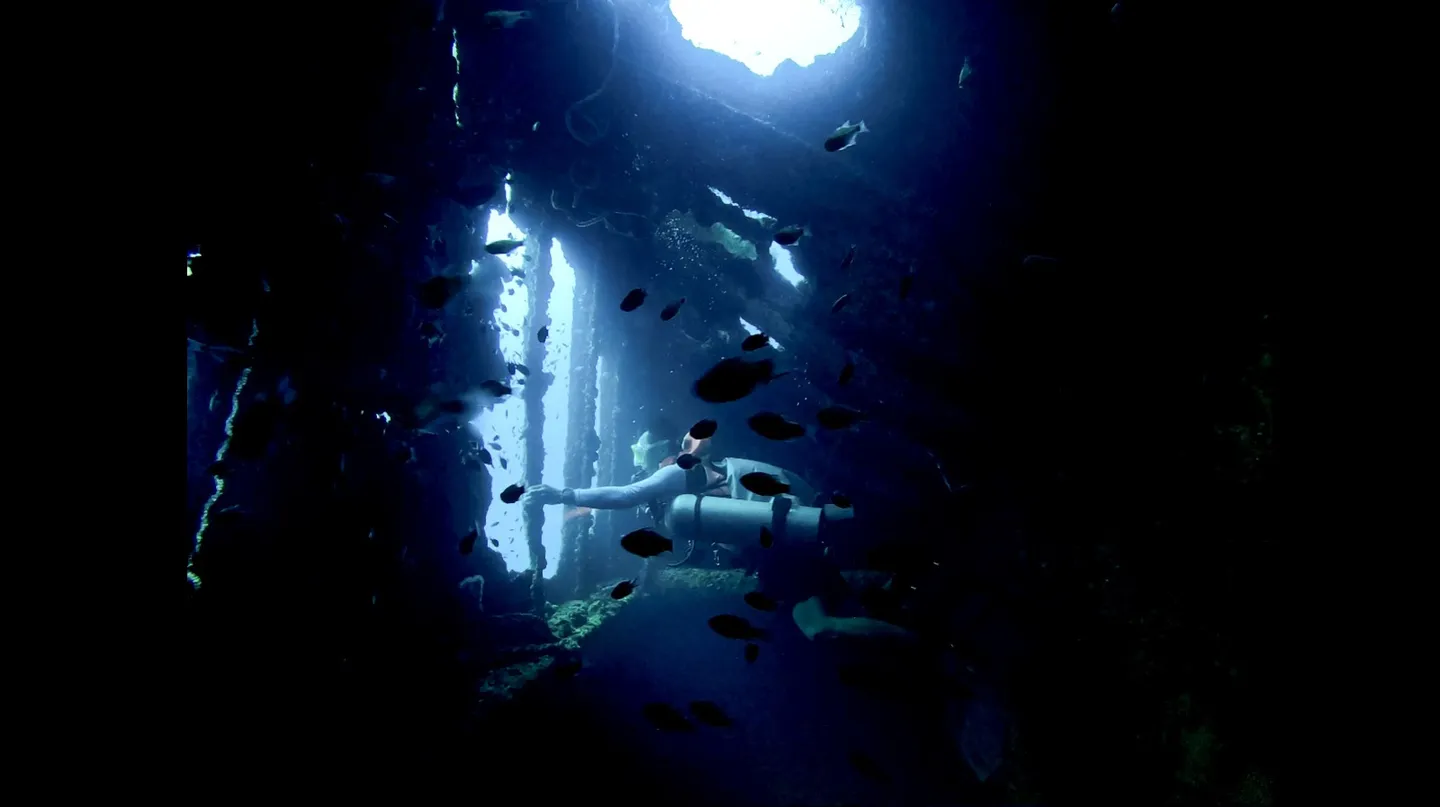
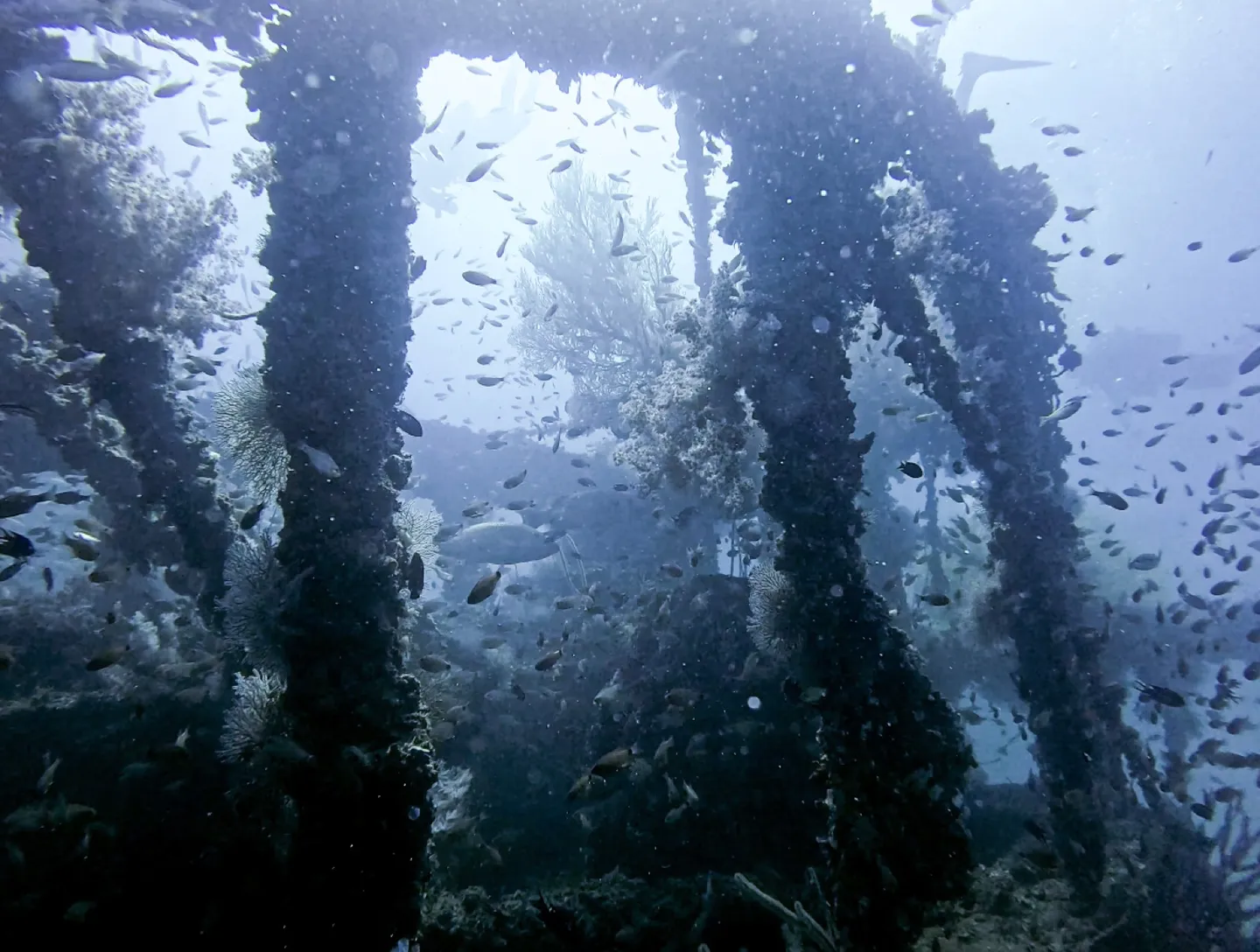
The Editor strongly recommends using enriched air nitrox (EANx) for this dive to extend your no-decompression limit (NDL) and buy more time to explore the extraordinary engine room and refrigeration hold. A word of caution: this wreck's resting depth reaches 35 m. Keep a close eye on your dive computer's NDL and air consumption at all times, and strictly manage your maximum depth to avoid oxygen toxicity (PO₂) risk. Entering enclosed spaces such as the engine room and refrigeration hold also requires an honest assessment of your wreck diving experience. The moment light filtered down through the gaps in the upper deck was the moment the Editor felt it — a genuine underwater cathedral. During the safety stop, hanging on the line and looking down, the entire ship lay perfectly intact below. For the full site overview, visit the Blue Water Wreck dive site page.
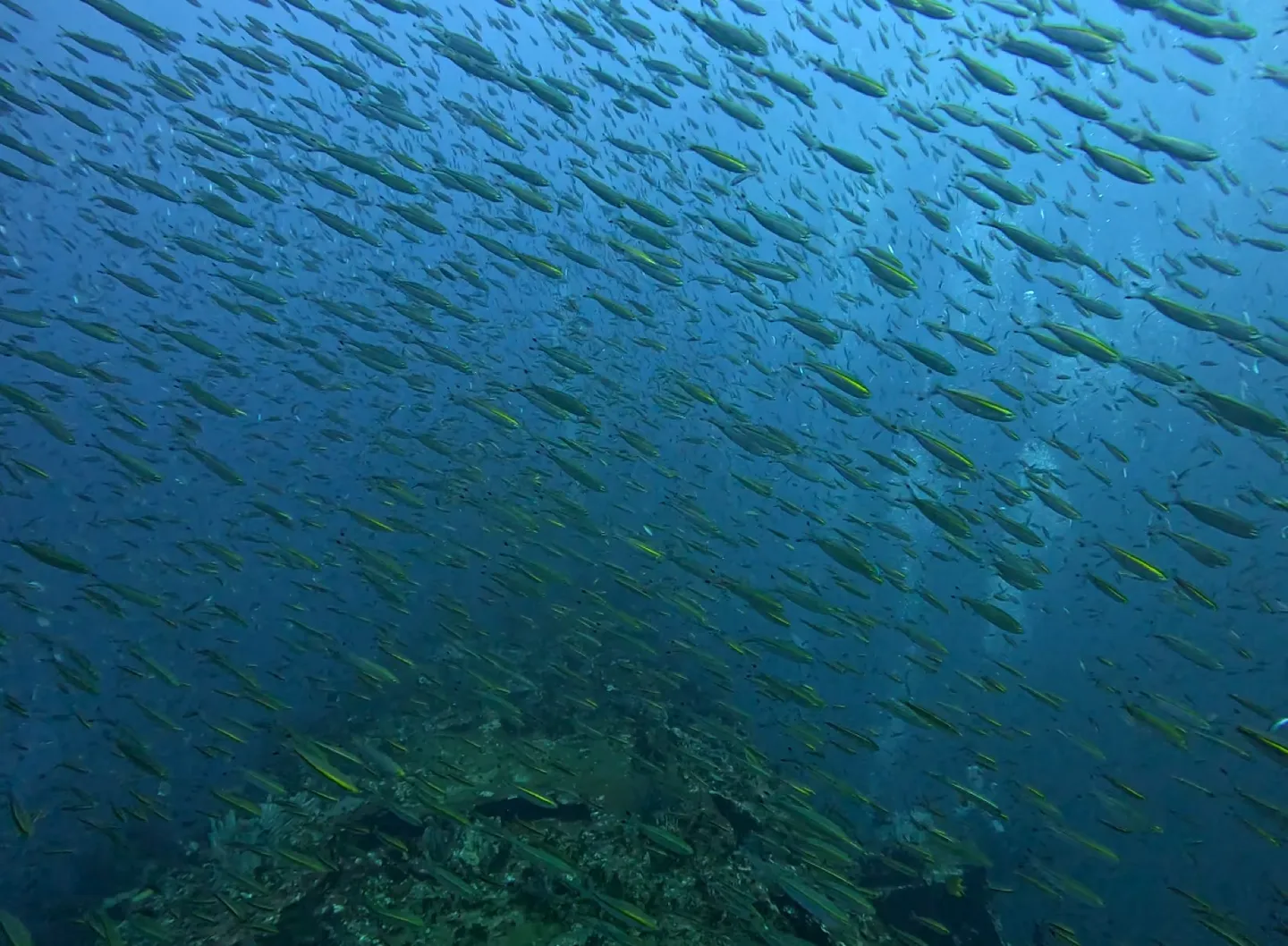
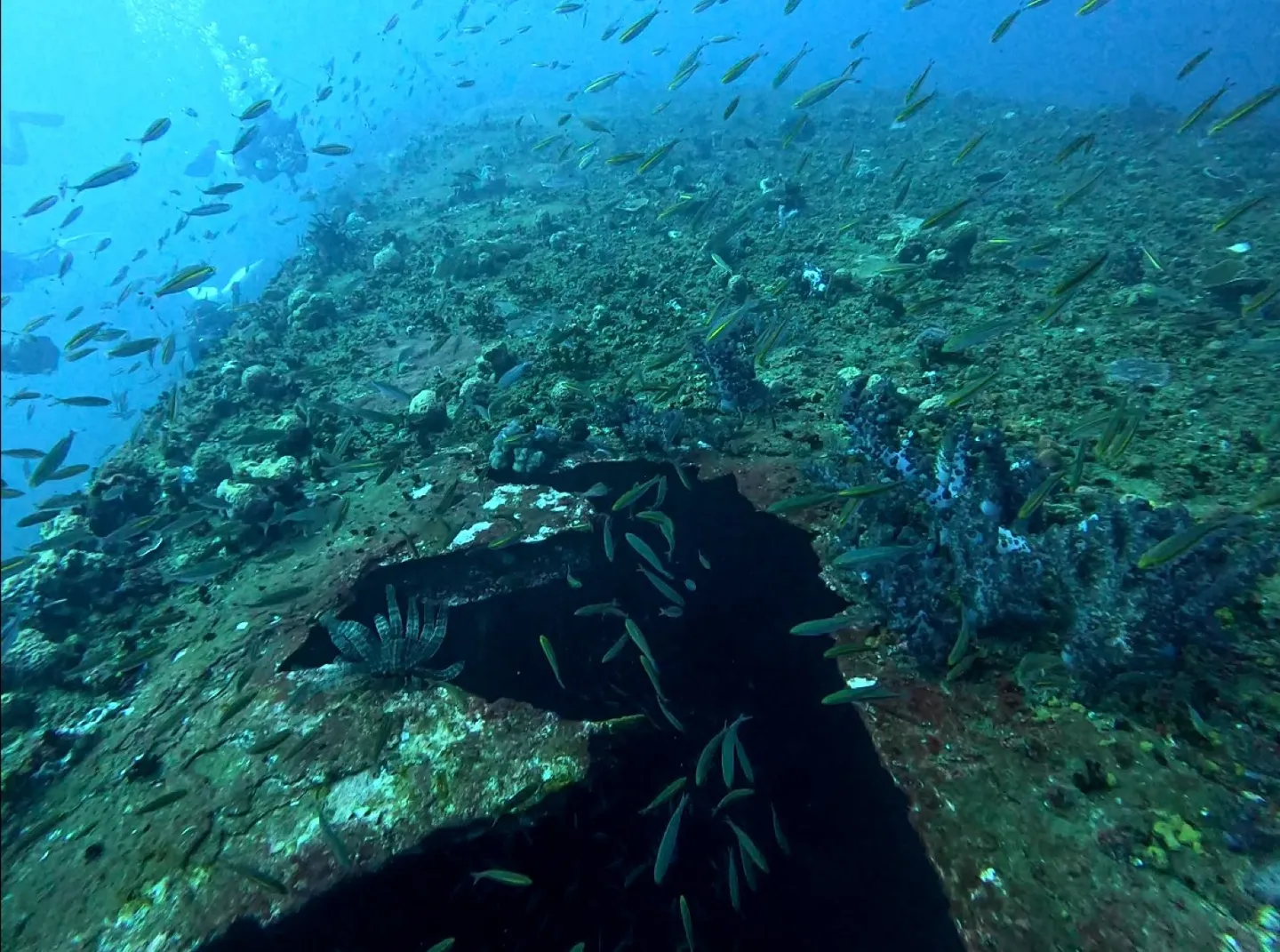
Dive 2 — Bolkiah Wreck (The Editor's Favorite: A Royal Time Capsule That Cannot Be Dismantled)
If you could only choose one wreck to dive on an entire Brunei trip, the Editor would cast that sacred vote, without a moment's hesitation, for Bolkiah Wreck.
Completed and launched at the Cheoy Lee Shipyard in Hong Kong on 14 September 1955 (hull number 649), she was a twin-screw mail and passenger vessel capable of carrying 6 first-class passengers plus 70 day passengers. At 34 m long, 7.3 m wide, and 200 GRT, she was powered by two diesel engines producing a cruising speed of 12 knots at 600 RPM. Here's the crucial twist: because her name bears a royal designation (Bolkiah is the surname of the Brunei Sultanate's royal family), Bruneian law forbids any vessel carrying a royal name from being sold for scrap or dismantled. Upon retirement, the Royal Brunei Navy scuttled her in 1992 and laid her deliberately on the seabed, preserving her as the most complete underwater time capsule in the country.
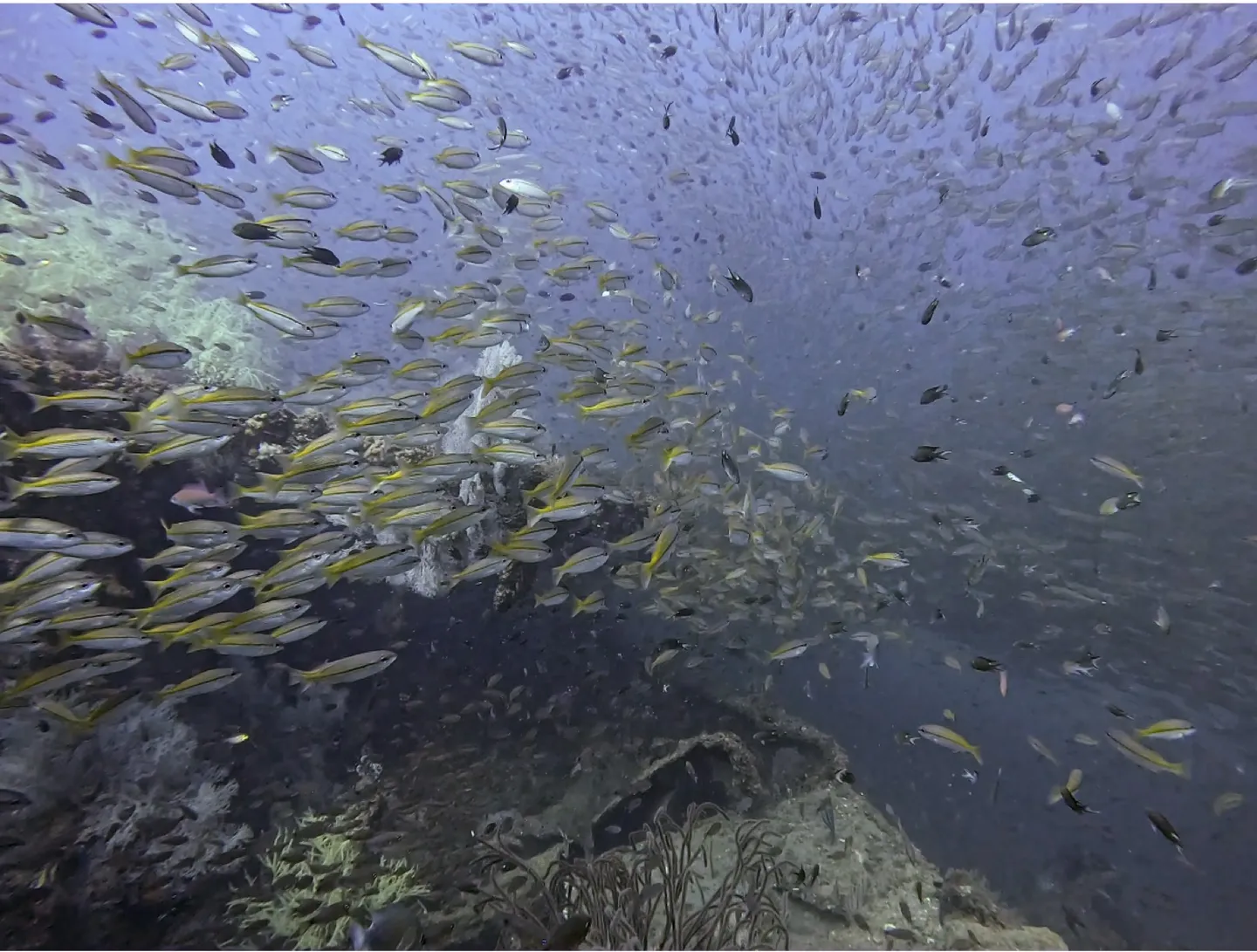
Precisely because she was gently "ceremonially buried" rather than lost in an accident, the structural integrity of Bolkiah Wreck is almost unbelievably complete. Swimming over her, you'll see the upper deck shimmering with darting fish that circle you in every direction. Peer into the weathered recesses of the deck and you'll spot large predatory fish lurking in the shadows, biding their time. And the most jaw-dropping moment: a 150 cm Giant Grouper has taken up residence at the bottom of the hull — the deep-sea guardian of this royal time capsule. The surrounding structure is blanketed in coral, with soft and hard coral coverage even higher than on the Blue Water Wreck, and every angle is breathtaking and hard to leave behind. The full terrain and marine life details are compiled on the Bolkiah Wreck dive site page.
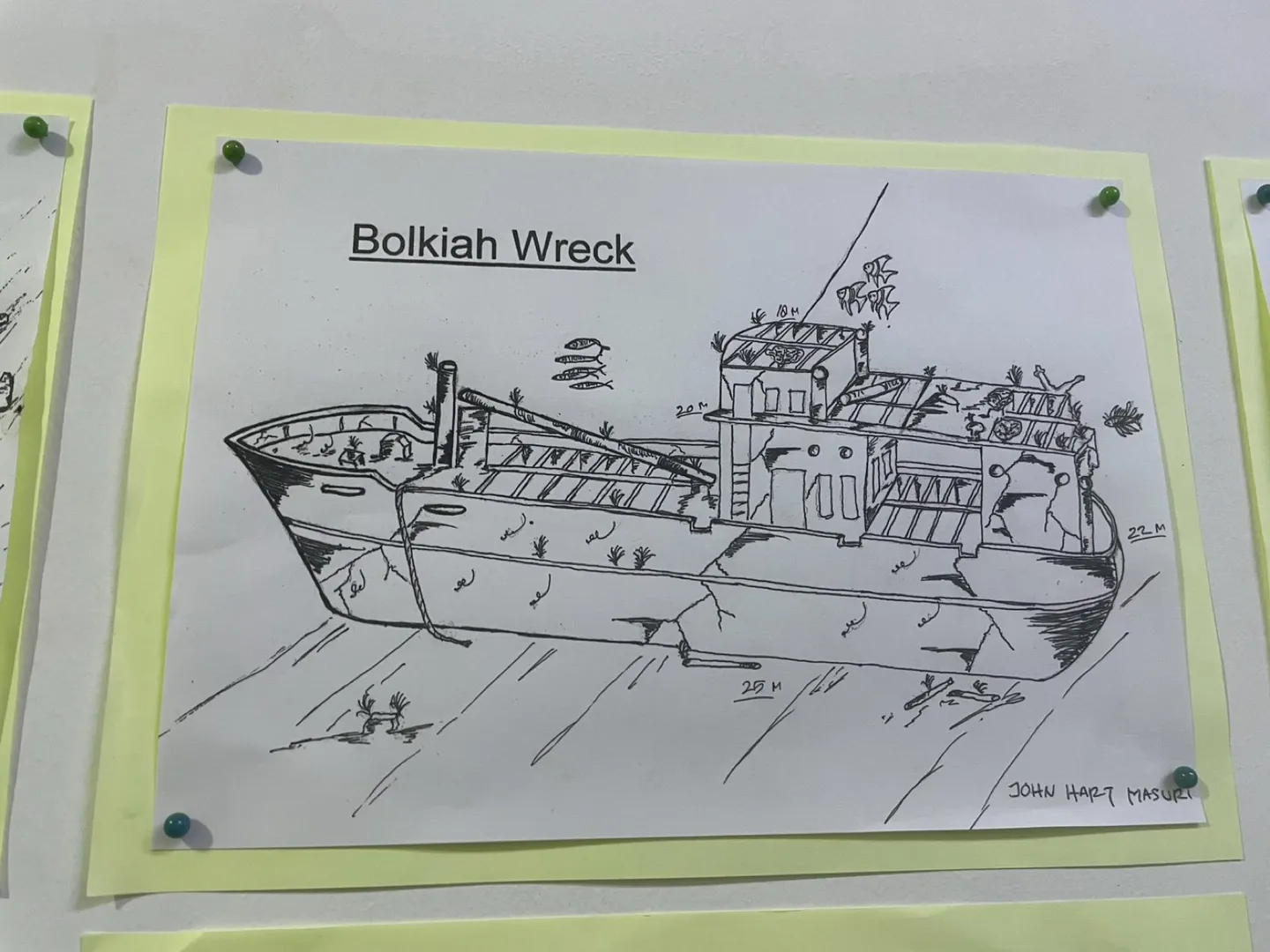
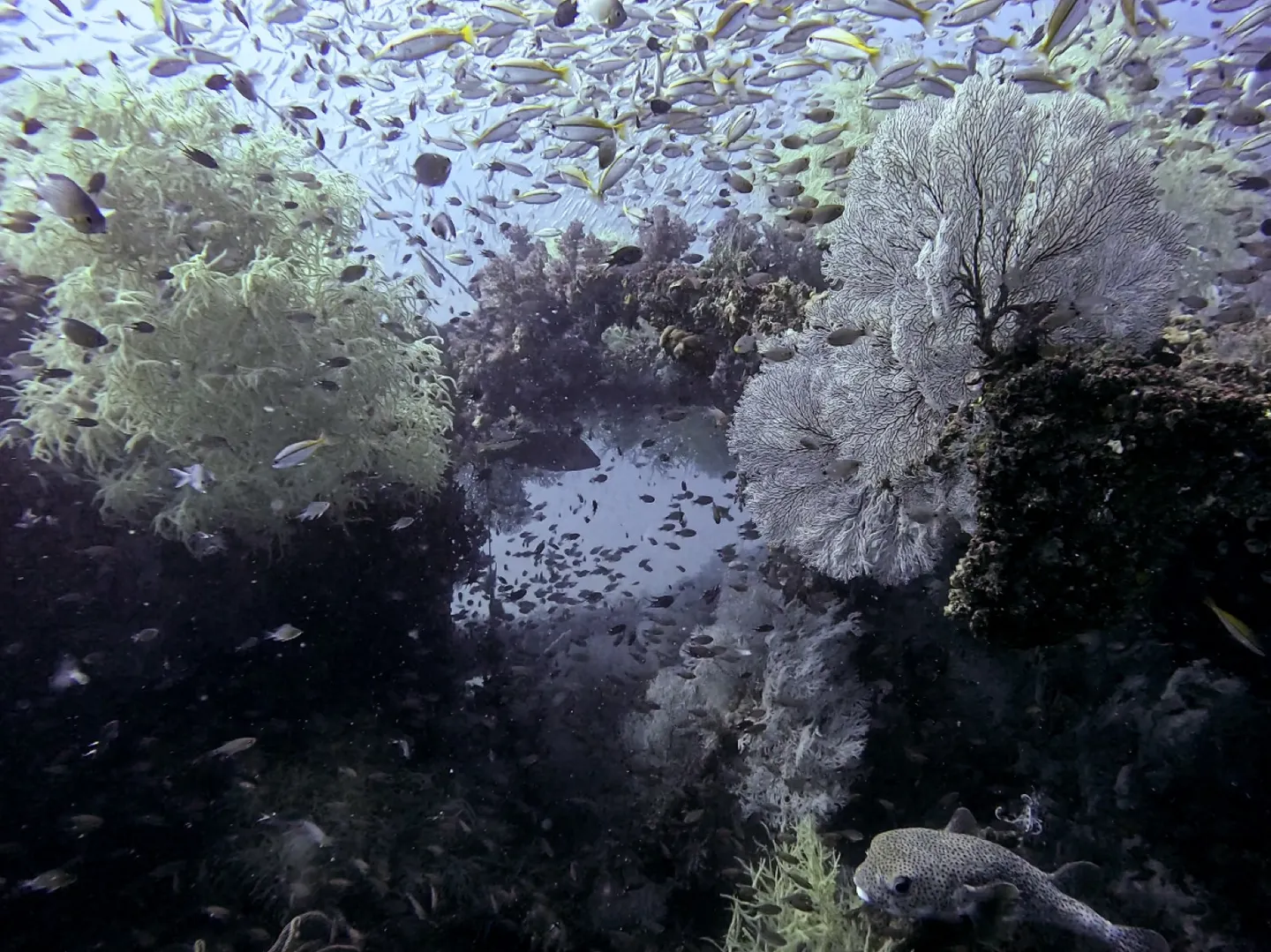
Dive 3 — Rig Reef (Decommissioned Oil Platform as Artificial Reef)
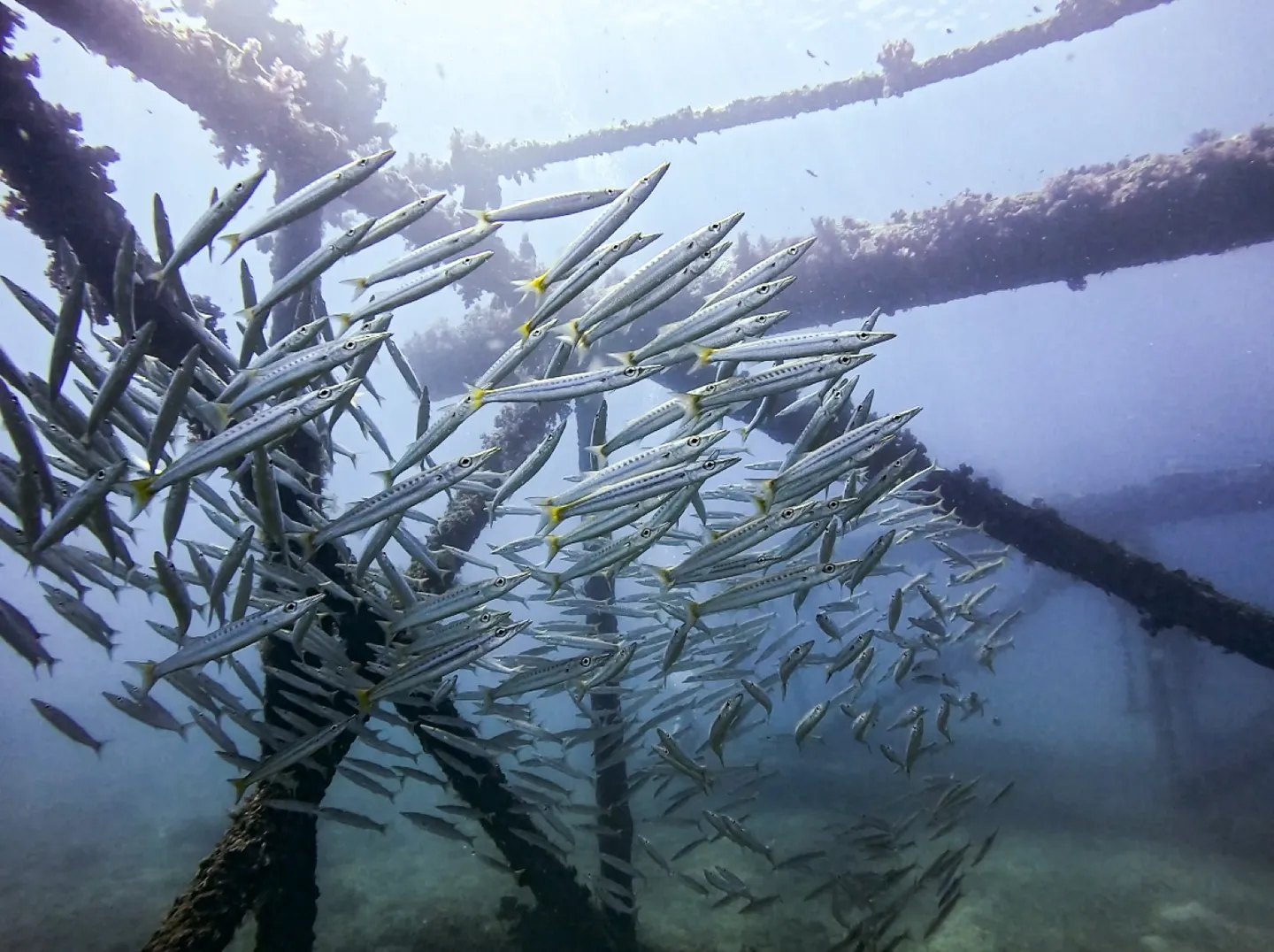
This is the most distinctive dive site in all of Brunei. A collaboration between the Brunei government and Royal Dutch Shell, decommissioned oil rigs were not dismantled — instead, they were laid down in the sea to form an artificial structure. The crisscrossing steel framework, layered with shafts of light filtering between the beams, is a playground that underwater photographers will absolutely lose their minds over — wide-angle, silhouette, and diver-inclusion compositions all come naturally. Open Water-certified divers can dive here with ease.
Adjacent to the rig structure is a coral reef section: shallow depth, extended no-decompression time, and the Editor found it a perfect nitrogen-purging final dive to close out Day 3. One of the Editor's travel companions had an early-morning flight the next day — with the mandatory 24-hour no-fly window after diving, the dive guide intentionally scheduled Rig Reef as the final dive: shallow, long, and ideal for thorough off-gassing. Full details at the Rig Reef dive site page.
The Editor's Verdict: Who Is Brunei Diving For? How Do You Get the Most Out of It?
At this point, the Editor will cut straight to the conclusions. Whether Brunei dive travel is right for you comes down to three things.
1. Office Workers With Fragmented Leave
If every overseas trip is crammed into 3–4 days of annual leave, Brunei is one of the very few Southeast Asian destinations where you can "take two days off and still do six tanks" — depart Thursday, return Sunday. Back in Taiwan by Sunday noon, with the afternoon to decompress.
2. Anyone Who Hates Crowds and Wants to Escape the Tourist Rush
Here in Brunei you'll essentially have an entire wreck to your group alone. Whether you're shooting photos, practicing skills as a beginner, or simply want to focus on the fish, you'll have the space to do it without breathing everyone else's bubbles.
3. Adventurers With a Strong Obsession for WWII Wrecks ✕ Oil Rig Reefs
Dolphin 88, Blue Water Wreck, and Bolkiah Wreck are all wrecks made for proper penetration diving — well worth bringing a Torch in to investigate. The adrenaline-charged sense of adventure holds its own against any celebrated wreck destination in the world.
Who is it not for? If diving is incidental and your priority is food, fun, and nightlife, Brunei has a nationwide alcohol ban and virtually no nightlife scene — you'll be bored. But if you're willing to trade early nights and early mornings for the underwater world waiting in return, the Editor gives Brunei diving a perfect score.
Total costs come in at around NT$30,000+, covering flights, accommodation, diving, and meals — excellent value by Southeast Asian dive travel standards. Has anyone asked the Editor if they'd go back? The answer is yes. Next time, the Editor wants to add Ulu Temburong National Park's tropical rainforest canopy walkway and take on a few more wrecks. Are your leave request form and scuba tank ready?
The Editor's Gear Notes: GoPro 12 ✕ DIVEVERYDAY Camera Rig — Real-World Test
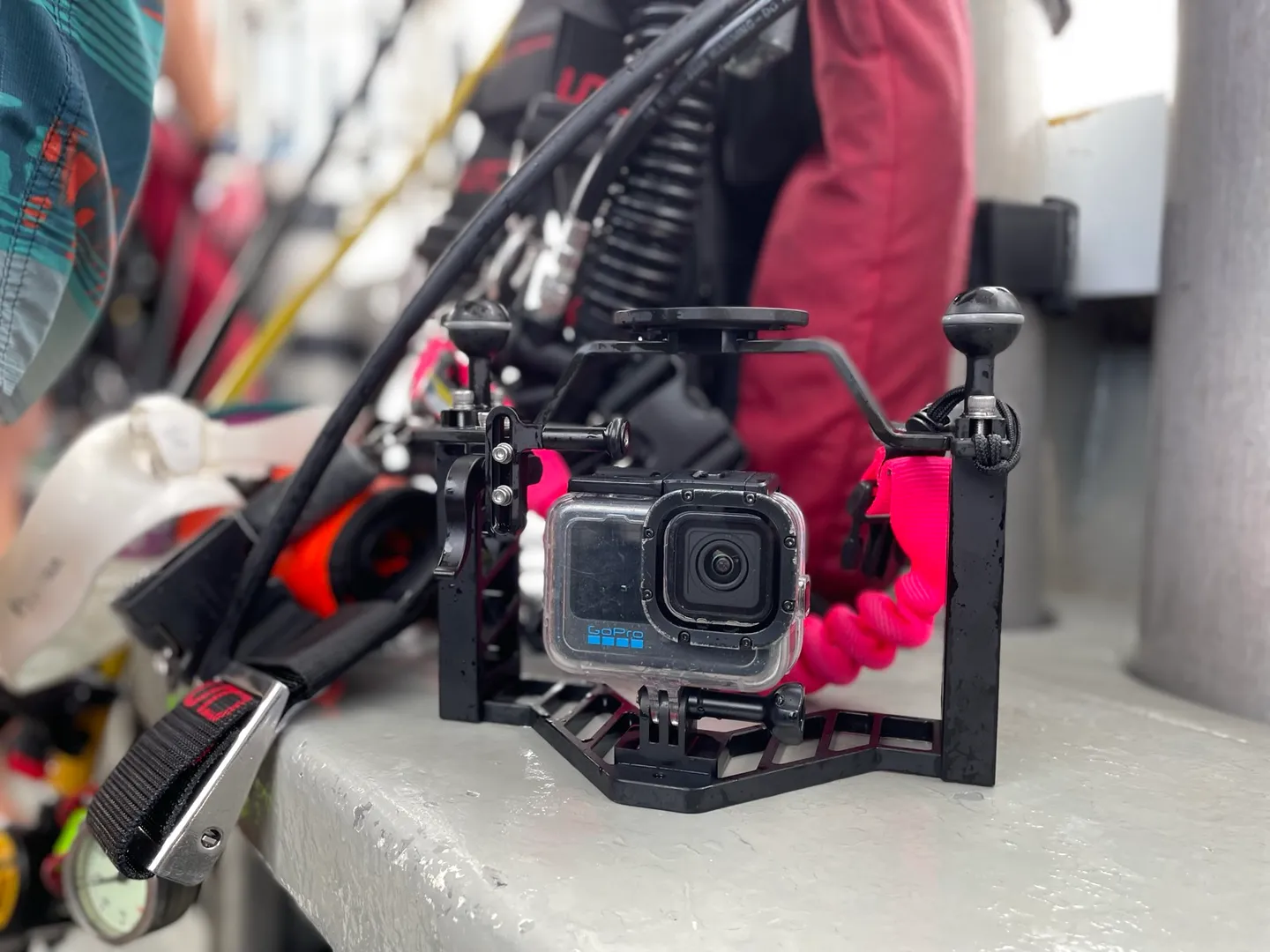
For capturing underwater footage throughout this Brunei wreck dive trip, the Editor used a GoPro 12 mounted on a DIVEVERYDAY camera rig. In the past, the Editor's go-to underwater setup was a selfie stick — but honestly, the shake on a selfie stick underwater is genuinely painful, and footage comes out looking like a nightmare to edit. Switching to the DIVEVERYDAY dual-handle camera rig made an immediate difference: rock-solid stabilization, and the rig's compact form factor meant that navigating the breach openings of Dolphin 88 and Bolkiah Wreck was never obstructed — passing through the hull gaps cleanly every time.
That said, the Editor did walk straight into one clear pitfall on this trip: not bringing an external video light. Brunei's wrecks generally sit at 20 m and deeper, which means natural light is already cut in half by the water column; inside the darker sections of the hull, light is barely enough to work with, and the footage came out underexposed overall — pushing brightness in post immediately introduces visible noise.
If the Editor returns to Brunei for another wreck pilgrimage, external video lights will definitely be mounted on both arms of the DIVEVERYDAY rig — to bring back the detail in dark ship interiors, the glint in fish eyes, and the true colors of the coral that this world-class wreck environment deserves. Without a light source, you're simply leaving the visual potential of these wrecks on the table.
Want to know what land activities are waiting after the morning dives? Was the "Empire Hotel" — that headline-grabbing luxury property — actually worth it? Read the next article: Breaking the Boring Stereotype! Highlights of a Mysterious Muslim Land Tour ✕ An Honest Review of the Beyond-Five-Star Empire Hotel.
Cover photo credit: Dyana Wu
Frequently Asked Questions
How is a BlueTrend dive trip different from an unknown, no-name dive group?
Choosing us means full peace-of-mind protection and a smooth experience from start to finish. Every trip we run holds to three things.
First, full legal protection and a professional dive leader: we strictly follow Taiwan's travel regulations and provide complete travel-agency liability insurance, travel insurance, trip-inconvenience insurance and dive insurance. Every group is accompanied by a certified, foreign-language dive leader who joins you on both the dives and the land itinerary, liaising seamlessly with local dive shops and operators on your behalf to keep things running smoothly — the person our travellers trust most.
Second, fully licensed with secure payments: every payment goes into a licensed travel agency's account, with multiple safe payment channels (bank transfer, credit card and more) and a legal collect-and-remit receipt, so every transaction is open, transparent and protected, avoiding the fraud and dispute risks of transferring money privately to an individual.
Third, hand-picked quality we vet in person: every trip, dive site and partner shop is scouted on the ground by our own team, from the guides' professionalism and safety standards to the food, lodging, environment and service details on land, all vetted by us so you don't get caught out.
I want to sign up for a dive trip. Are there certification-level or logged-dive requirements?
Each dive site is different, so the entry bar varies. 'Bali Tulamben', for instance, is relatively beginner-friendly. 'Malapascua in the Philippines' is also beginner-friendly, but since thresher sharks tend to cruise between 20 and 30 metres, we recommend AOW certification with 20+ logged dives to enjoy this trip comfortably. For 'the Maldives' or 'Palau', we suggest AOW with 50+ logged dives for a more relaxed experience. If you're not sure whether your experience fits the trip you want, message us and our dive editors will assess it and help you find the trip you'll feel safest on.
Can I join if I'm signing up alone? How are rooms arranged?
Plenty of our travellers sign up solo! For rooms and beds, we prioritise pairing you with a same-gender traveller, and if you'd rather have your own space you can pay the difference to upgrade to a single room. For the diving, our professional leader will pair you with a suitable buddy, and with the happy vibe on our trips you'll quickly make a great group of dive friends. Many people sign up alone, make new friends, and end up organising the next trip together!
Does the trip fee include dive insurance, gear rental, taxes and instructor tips?
It depends on the trip, the destination's regulations and the local operators. Every BlueTrend dive trip has a detailed web page with a clear 'included / not included' list, transparent and with no hidden charges. All payments are collected by a licensed travel agency, with a standard-form contract for your protection.
I'm a new diver / haven't dived in a long time — will I fall behind the group?
Before you complete your booking, our team assesses a suitable trip based on your certification level and experience. Before departure, we strongly recommend taking time to refresh in Taiwan with an instructor, or a fun dive to get your feel back. On the trip itself, our professional dive leader groups and pairs everyone by experience, keeps a close eye underwater on travellers who need extra care, and steps in to help right away.
Will the photos and videos taken during the trip be shared with us?
During the dives, 'safety' is always the leader's top priority, so whenever it's suitable and safe the leader will capture great shots and record the best moments. During or after the trip, we compile a cloud album for all travellers to download, so you go home loaded with memories!
Besides your scheduled trips, can you arrange a private group charter or independent travel for me and my friends?
Absolutely! Besides group trips, we also arrange private group charters and independent travel. We can communicate, enquire and coordinate services with local operators based on your needs, saving you time and effort and taking the language barrier off your plate, to tailor the smoothest, most reassuring dive trip just for you. Contact our LINE support and our editors will arrange it for you!