Contents(7)
- Who Are the Bumphead Parrotfish? The Bulldozers of the Coral Reef
- When Can You See Them? A Double-Exclusive: New Moon and Pre-Dawn
- Thousands Surge Toward the Surface: What's Actually Happening at a Spawning Aggregation
- Why Do They Choose to Spawn Before Sunrise?
- Beyond the Spawning Aggregation: Other Encounters on This Palau Trip
- Want to See This Pre-Dawn Exclusive in Person? Come to Palau With Us
- 參考資料
What would make you willingly drag yourself out of bed at 4:30 in the morning? For this Palau dive trip, every single one of the ten people on board had the same answer: the bumphead parrotfish spawning aggregation.
We boarded the boat in darkness before sunrise and headed straight for the waters off Ulong Channel. As the first light of dawn painted the horizon, everyone watched and waited for the bumpheads to keep their punctual appointment. The Editor will cut straight to the verdict: this underwater-only performance is absolutely worth sacrificing sleep for — and once you've witnessed it, you'll understand why people plan an entire trip to Palau just to time it with a new-moon morning.
Who Are the Bumphead Parrotfish? The Bulldozers of the Coral Reef
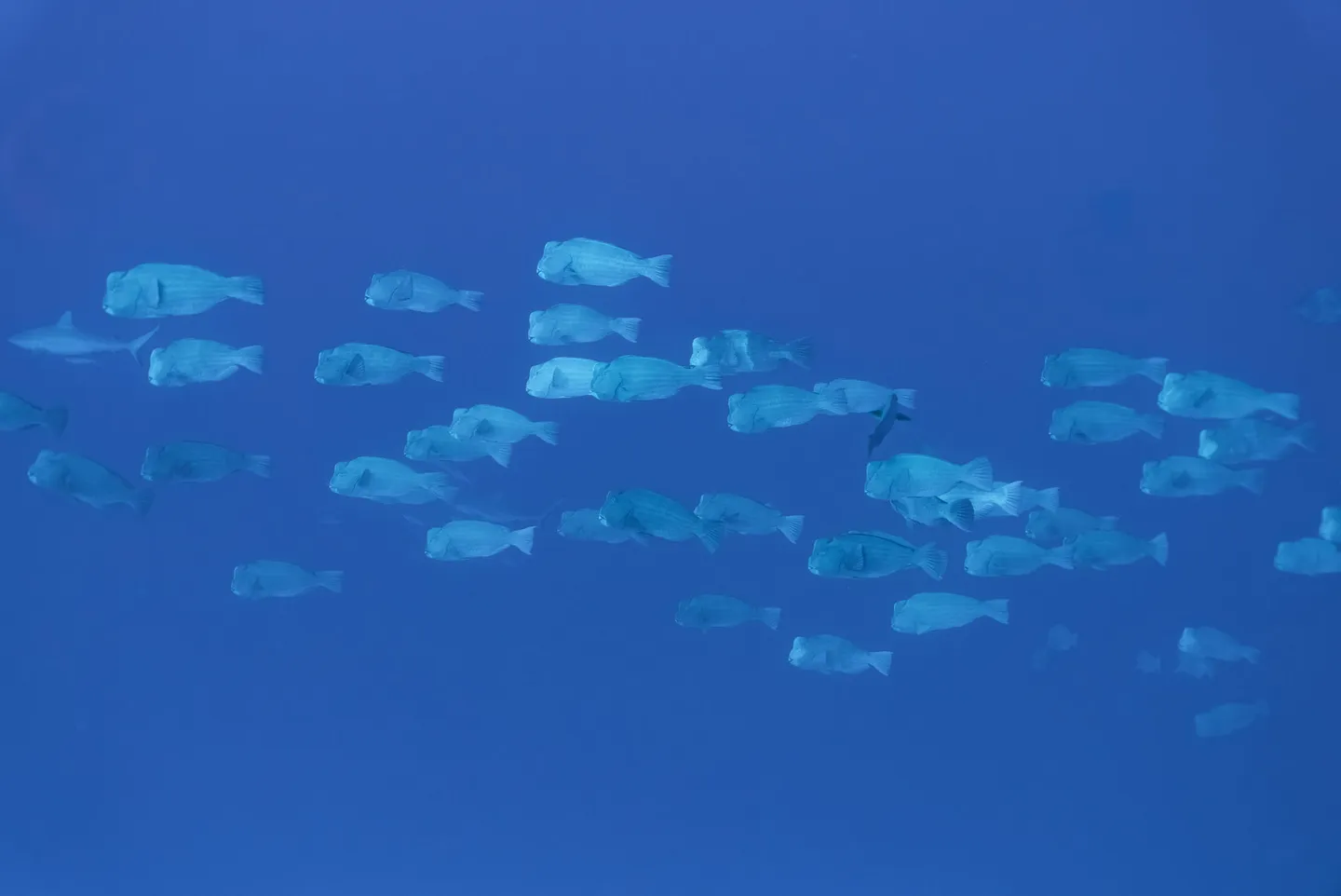
Let me introduce the stars of the show. The bumphead parrotfish (scientific name Bolbometopon muricatum, commonly known as the bumphead parrotfish) is the largest parrotfish in the world, reaching over 1.3 metres in length, tipping the scales past 70 kilograms, and sporting that signature bony hump on its forehead.
They patrol reef areas in schools during the day, using their hard, beak-like mouths to bite directly into coral — grinding up the limestone skeleton, swallowing it whole, and then excreting the processed material as white sand back into the sea. A good portion of the fine white sand you walk on in Palau is, quite literally, the handiwork of bumphead parrotfish. A single adult can produce several tonnes of sand per year, so calling them the bulldozers and sand factories of the coral reef is no exaggeration whatsoever.


When Can You See Them? A Double-Exclusive: New Moon and Pre-Dawn
This is what makes the bumphead parrotfish spawning aggregation both maddening and magical: it doesn't happen every day — it's a new-moon-only event.
Their mass spawning follows the lunar cycle, typically kicking off in the early morning hours in the days leading up to a new moon. Dive shops in Palau launch boats as early as 5:30 a.m. to reach the Ulong Channel area — the classic venue for this event — right as the sun breaks the surface. Miss that narrow window of one to two hours and the school may already have dispersed and gone home.
In other words, to see this show you need to align the right lunar phase, the right days of the month, and the willingness to get in the water before daylight. That's precisely why it has long held a place on every serious diver's bucket list.
Thousands Surge Toward the Surface: What's Actually Happening at a Spawning Aggregation
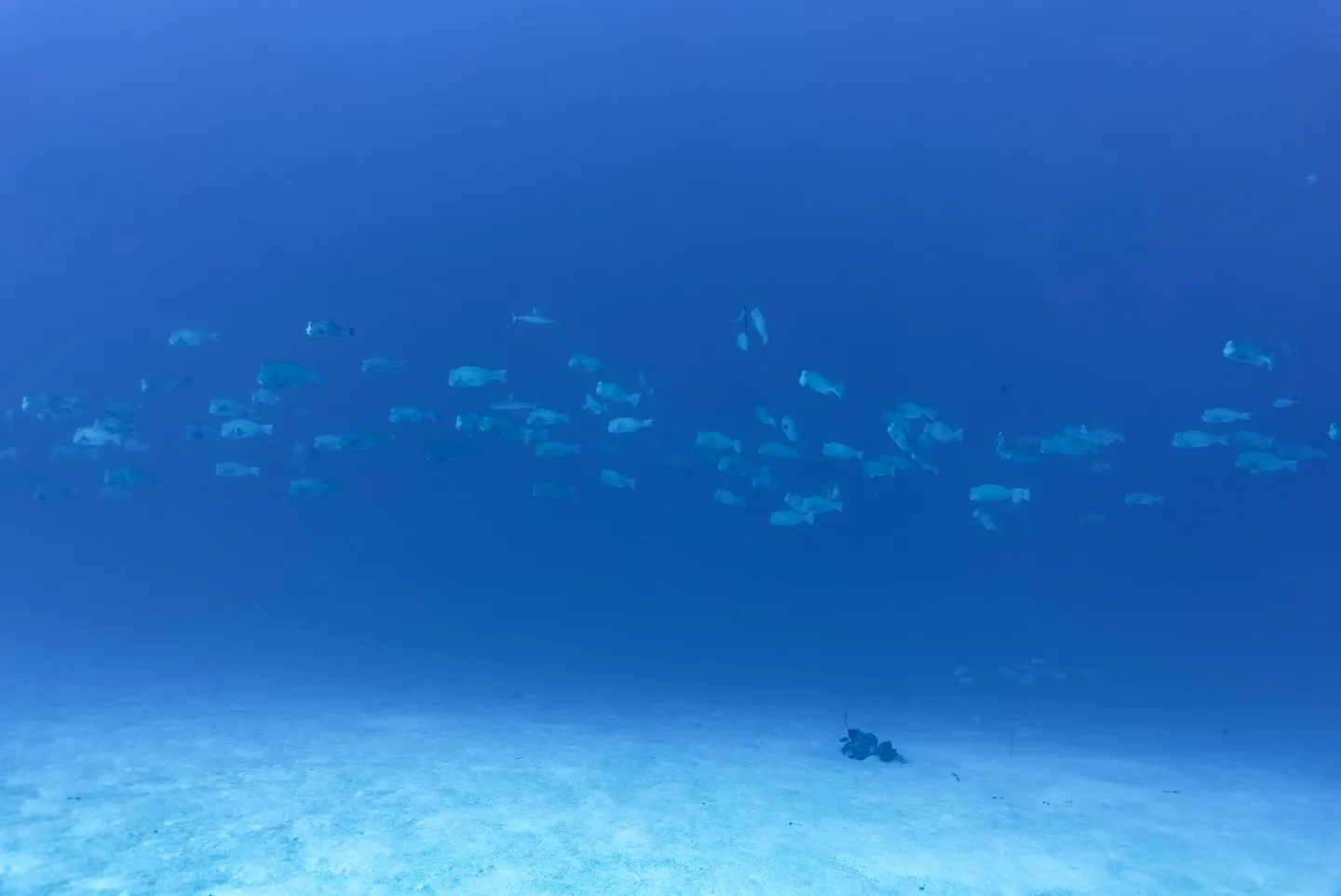
The moment the sun peeks above the horizon, the curtain rises. Bumphead parrotfish that spent the night sheltering in shallow areas across the region pour out in schools and converge on the spawning aggregation site. Palau's records have documented aggregations of over a thousand individuals — the largest bumphead parrotfish gatherings known to science. What's more, Palau is one of the very few dive destinations in the world where this ecological spawning behaviour can be observed on a regular basis.
Once on-site, the bumpheads don't launch straight into spawning. Instead, they gather in a mass above the reef and mill about for a while, slowly building up to the main event. The highlight — and the most dramatic part — is the fierce competition among males. To establish dominance and secure access to females, rival males charge at each other head-on, using that bony forehead hump as a battering ram. The impact is forceful enough that you can hear a dull, resonant thud underwater. After clashing heads, they'll circle around and bite each other's flanks. The Editor watched this unfold from below: the dominant males often bore rows of missing scales along their backs — a visual record of their battle history. Yes, you read that right — these fish clash hard enough to make an audible sound. (The head-butting, sound-producing, and flank-biting courtship fighting behaviour of males has been documented in a PLOS ONE study; see references below.)
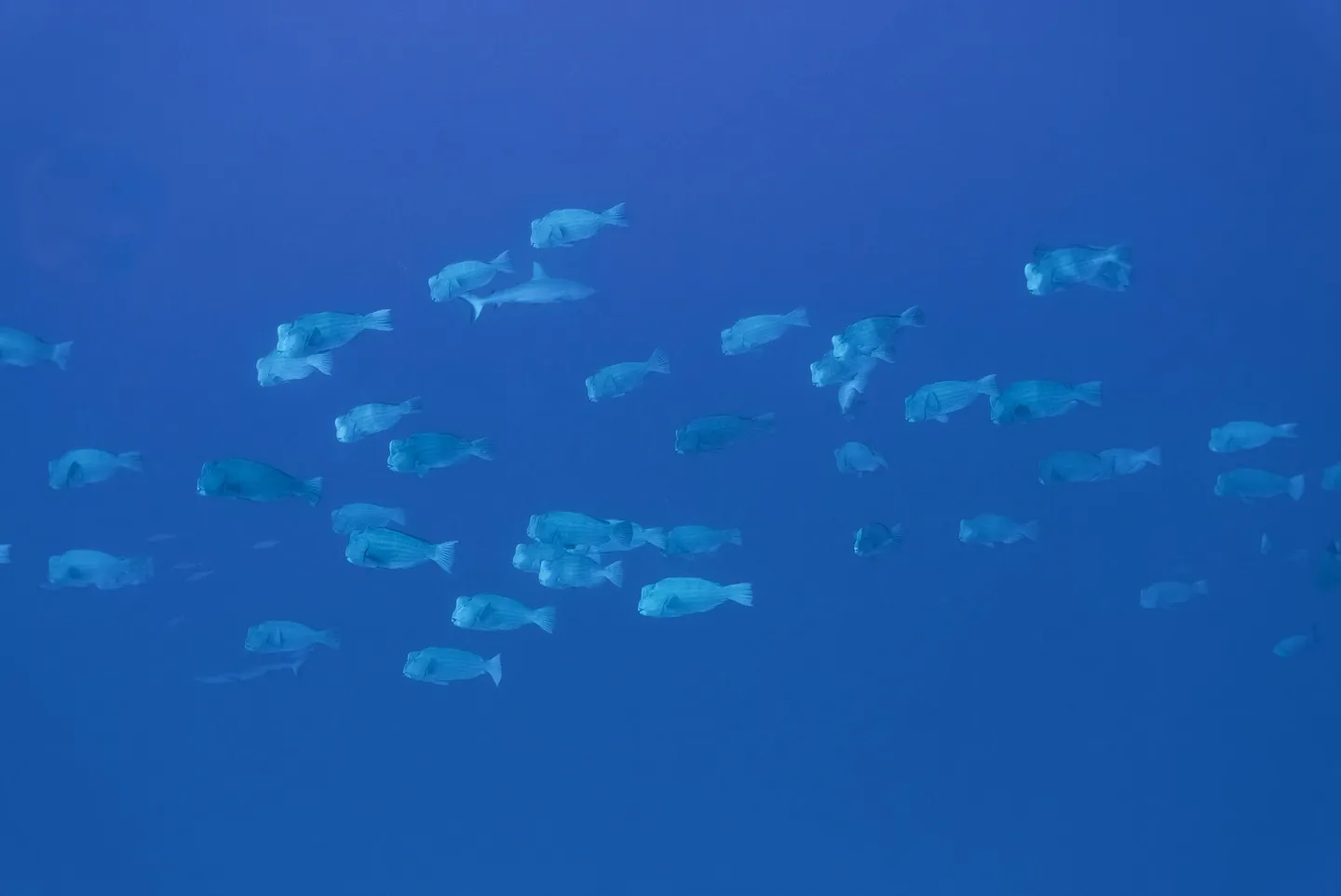
Once the tension has built to a peak, the school suddenly rushes up toward the surface, releasing eggs and sperm en masse just one to two metres below the waterline, instantly billowing out into a milky white cloud. In Palau, where population densities are high, this group spawning is particularly spectacular. In areas with lower densities, spawning typically occurs in male-female pairs instead. The whole event lasts roughly thirty to forty minutes, after which the fish gradually disperse, each returning to its own territory. The sea settles back to calm — as though nothing had happened at all.
Why Do They Choose to Spawn Before Sunrise?
It's not that bumphead parrotfish are early risers by nature — this is a precisely calculated survival strategy.
The key is water current. By spawning during an outgoing tide and releasing eggs and sperm close to the surface, they allow the current to carry fertilised eggs away from the reef. The reef is home to a whole community of small fish that feed on drifting eggs; fertilised eggs left in place are essentially a free meal. Being swept out into the open ocean dramatically improves their chances of survival. Around the new moon, tidal range is at its greatest and currents run strongest — the perfect conditions for transporting eggs offshore.
The dim light of early dawn also reduces the risk of the spawning aggregation itself attracting predators. Choosing the pre-dawn hours, the outgoing tide, and the new moon — each of these decisions gives the next generation a slightly better chance of making it. Once you understand this layer of meaning, watching that milky white cloud billow through the water feels entirely different. It isn't just a spectacle; it's an entire evolutionary script written into the species' DNA.
Beyond the Spawning Aggregation: Other Encounters on This Palau Trip
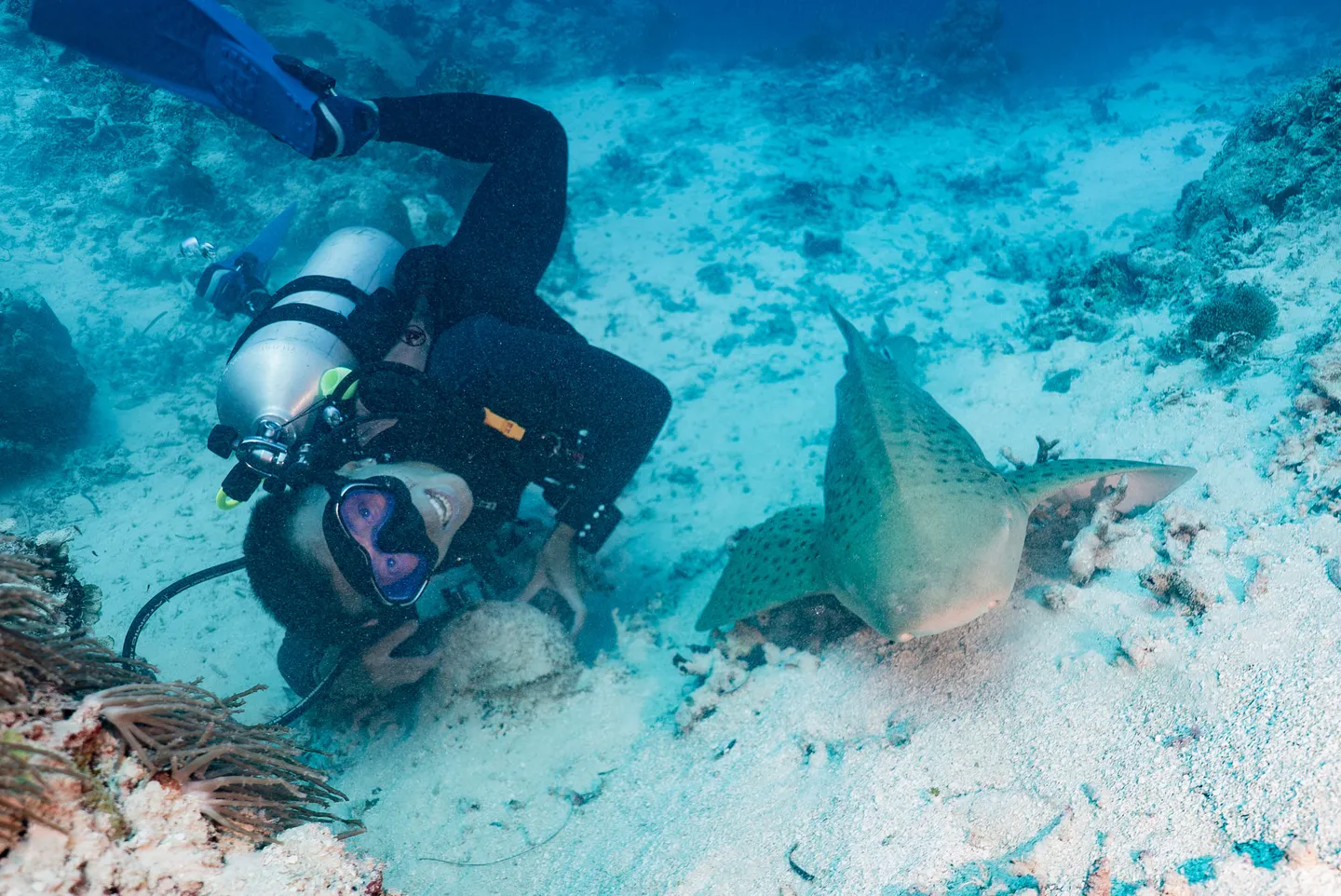
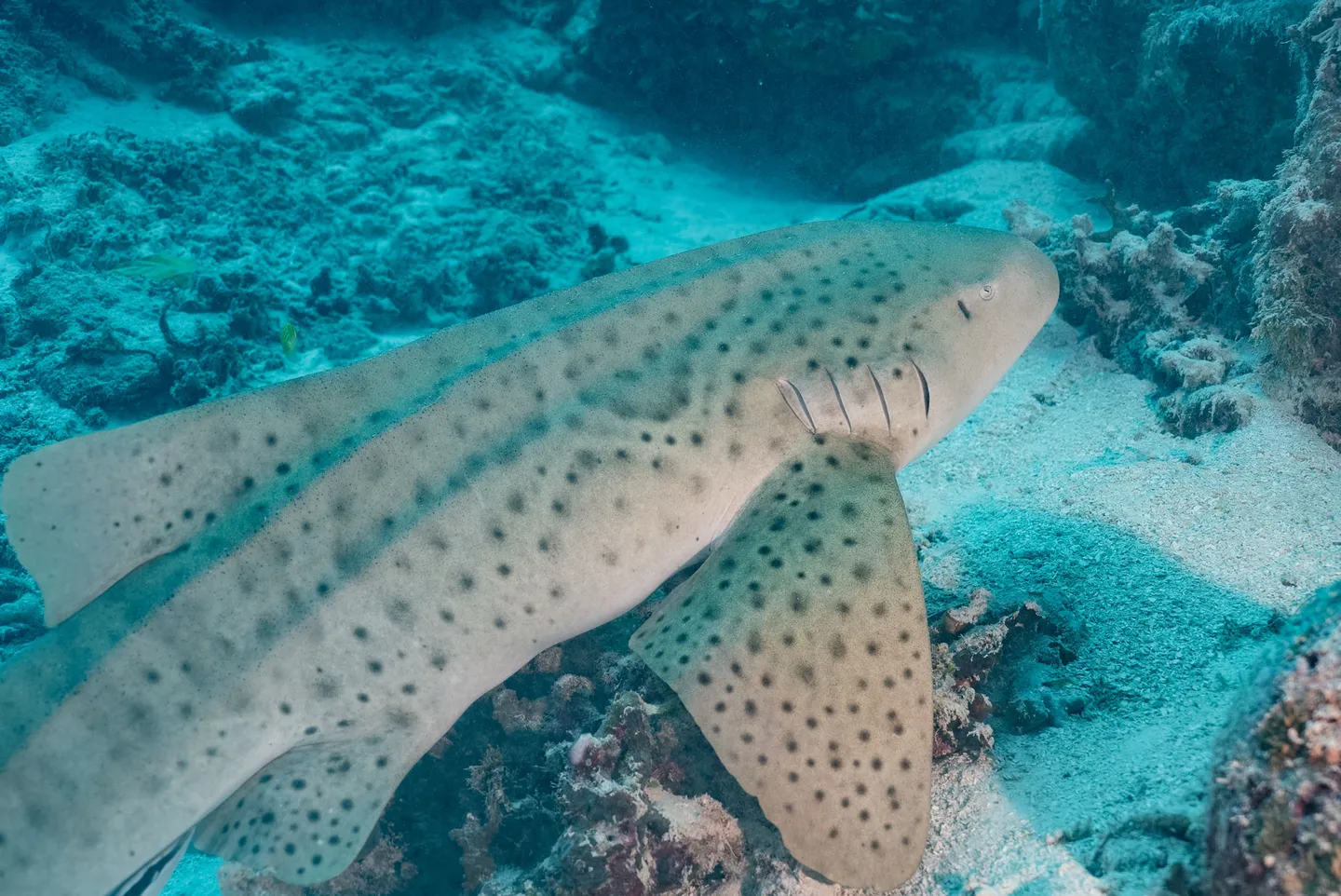
What makes Palau so remarkable is that the magic is never limited to just one moment. At other dive sites on this trip, group members stumbled upon a Leopard Shark resting on the sand — its polka-dot patterning draped lazily across the seabed. Even when divers sank down to lie beside it and lock eyes at close range, it barely acknowledged their presence. Utterly unbothered.
Want to See This Pre-Dawn Exclusive in Person? Come to Palau With Us
Watching a bumphead parrotfish spawning aggregation on video always puts a layer of glass between you and the experience. The sheer impact of being underwater, surrounded by thousands of these massive fish, hearing head-clashes resonating through the water around you — that is something no screen can deliver.
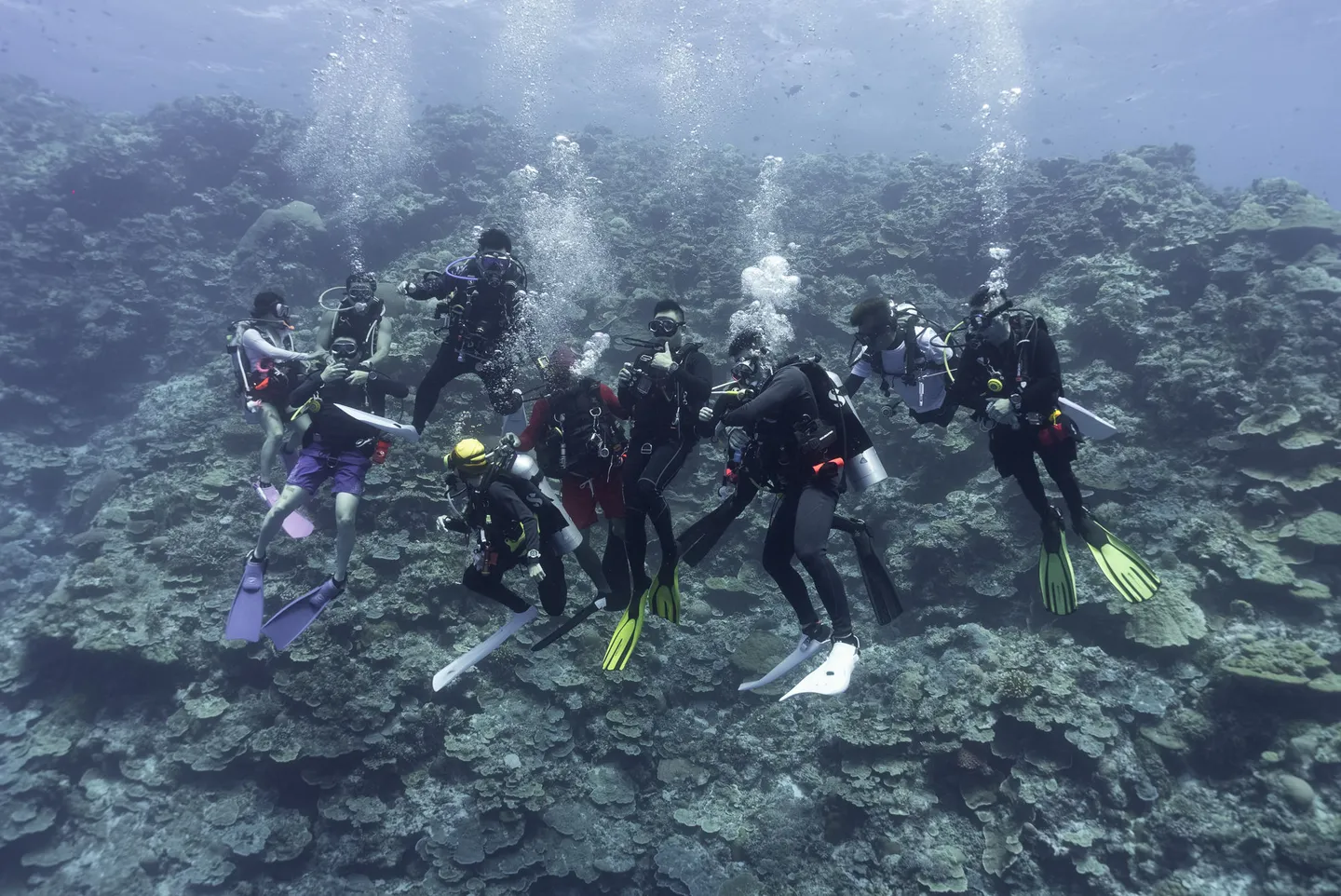
If you want to add this pre-dawn exclusive to your life list, don't miss the chance to dive into Palau together with BlueTrend! Our trips are led by experienced guides who take care of every detail, so all you have to do is immerse yourself in the wonder and joy that this dive trip brings.
Come dive into Palau with us — now!
參考資料
- PLOS ONE / PMC, Spawning aggregation behavior and reproductive ecology of the giant bumphead parrotfish, Bolbometopon muricatum
- PLOS ONE, Extraordinary Aggressive Behavior from the Giant Coral Reef Fish, Bolbometopon muricatum, in a Remote Marine Reserve
- ZuBlu, Palau spawning dive guide: when to visit
Frequently Asked Questions
How is a BlueTrend dive trip different from an unknown, no-name dive group?
Choosing us means full peace-of-mind protection and a smooth experience from start to finish. Every trip we run holds to three things.
First, full legal protection and a professional dive leader: we strictly follow Taiwan's travel regulations and provide complete travel-agency liability insurance, travel insurance, trip-inconvenience insurance and dive insurance. Every group is accompanied by a certified, foreign-language dive leader who joins you on both the dives and the land itinerary, liaising seamlessly with local dive shops and operators on your behalf to keep things running smoothly — the person our travellers trust most.
Second, fully licensed with secure payments: every payment goes into a licensed travel agency's account, with multiple safe payment channels (bank transfer, credit card and more) and a legal collect-and-remit receipt, so every transaction is open, transparent and protected, avoiding the fraud and dispute risks of transferring money privately to an individual.
Third, hand-picked quality we vet in person: every trip, dive site and partner shop is scouted on the ground by our own team, from the guides' professionalism and safety standards to the food, lodging, environment and service details on land, all vetted by us so you don't get caught out.
I want to sign up for a dive trip. Are there certification-level or logged-dive requirements?
Each dive site is different, so the entry bar varies. 'Bali Tulamben', for instance, is relatively beginner-friendly. 'Malapascua in the Philippines' is also beginner-friendly, but since thresher sharks tend to cruise between 20 and 30 metres, we recommend AOW certification with 20+ logged dives to enjoy this trip comfortably. For 'the Maldives' or 'Palau', we suggest AOW with 50+ logged dives for a more relaxed experience. If you're not sure whether your experience fits the trip you want, message us and our dive editors will assess it and help you find the trip you'll feel safest on.
Can I join if I'm signing up alone? How are rooms arranged?
Plenty of our travellers sign up solo! For rooms and beds, we prioritise pairing you with a same-gender traveller, and if you'd rather have your own space you can pay the difference to upgrade to a single room. For the diving, our professional leader will pair you with a suitable buddy, and with the happy vibe on our trips you'll quickly make a great group of dive friends. Many people sign up alone, make new friends, and end up organising the next trip together!
Does the trip fee include dive insurance, gear rental, taxes and instructor tips?
It depends on the trip, the destination's regulations and the local operators. Every BlueTrend dive trip has a detailed web page with a clear 'included / not included' list, transparent and with no hidden charges. All payments are collected by a licensed travel agency, with a standard-form contract for your protection.
I'm a new diver / haven't dived in a long time — will I fall behind the group?
Before you complete your booking, our team assesses a suitable trip based on your certification level and experience. Before departure, we strongly recommend taking time to refresh in Taiwan with an instructor, or a fun dive to get your feel back. On the trip itself, our professional dive leader groups and pairs everyone by experience, keeps a close eye underwater on travellers who need extra care, and steps in to help right away.
Will the photos and videos taken during the trip be shared with us?
During the dives, 'safety' is always the leader's top priority, so whenever it's suitable and safe the leader will capture great shots and record the best moments. During or after the trip, we compile a cloud album for all travellers to download, so you go home loaded with memories!
Besides your scheduled trips, can you arrange a private group charter or independent travel for me and my friends?
Absolutely! Besides group trips, we also arrange private group charters and independent travel. We can communicate, enquire and coordinate services with local operators based on your needs, saving you time and effort and taking the language barrier off your plate, to tailor the smoothest, most reassuring dive trip just for you. Contact our LINE support and our editors will arrange it for you!

![[Palau] First Dive in Palau — 3 Must-Dive Sites: Blue Hole, Blue Corner & German Channel, Warming Up for Spawn Diving](/_astro/DSC09052_Z1Gbc8g.webp)