Contents(7)
- Sharks Have Eight Senses — Five Familiar Ones Plus Three Hidden Add-ons
- Sharks Can Count: Grey Bamboo Sharks Tell Four from One
- Sharks Love Jazz: Picky Listeners Who Go Blank for Classical
- Sharks Have Personalities, Make Friends, and Remember You: Every One Is Different
- Sharks Can Hear Your Heartbeat: One Billionth of a Volt Through the Ampullae of Lorenzini
- Next Dive: Talk to a Shark with Your Breath
- Conclusion: Sharks Are Far Smarter Than You Think
Let's get straight to the point: sharks are not the sea's mindless eating machines. They possess eight senses — three more "add-ons" than we do — capable of detecting water pressure, electric fields, and even Earth's magnetic field.
Even more remarkably, scientific research has confirmed that sharks can count, can be trained to distinguish jazz music, and through the ampullae of Lorenzini on their heads, their senses are sharp enough to detect the heartbeat of nearby animals — including yours. In this piece, the Editor breaks down three studies on shark intelligence, and wraps up with how you can "talk" to a shark with your breath on your next dive.
Sharks Have Eight Senses — Five Familiar Ones Plus Three Hidden Add-ons
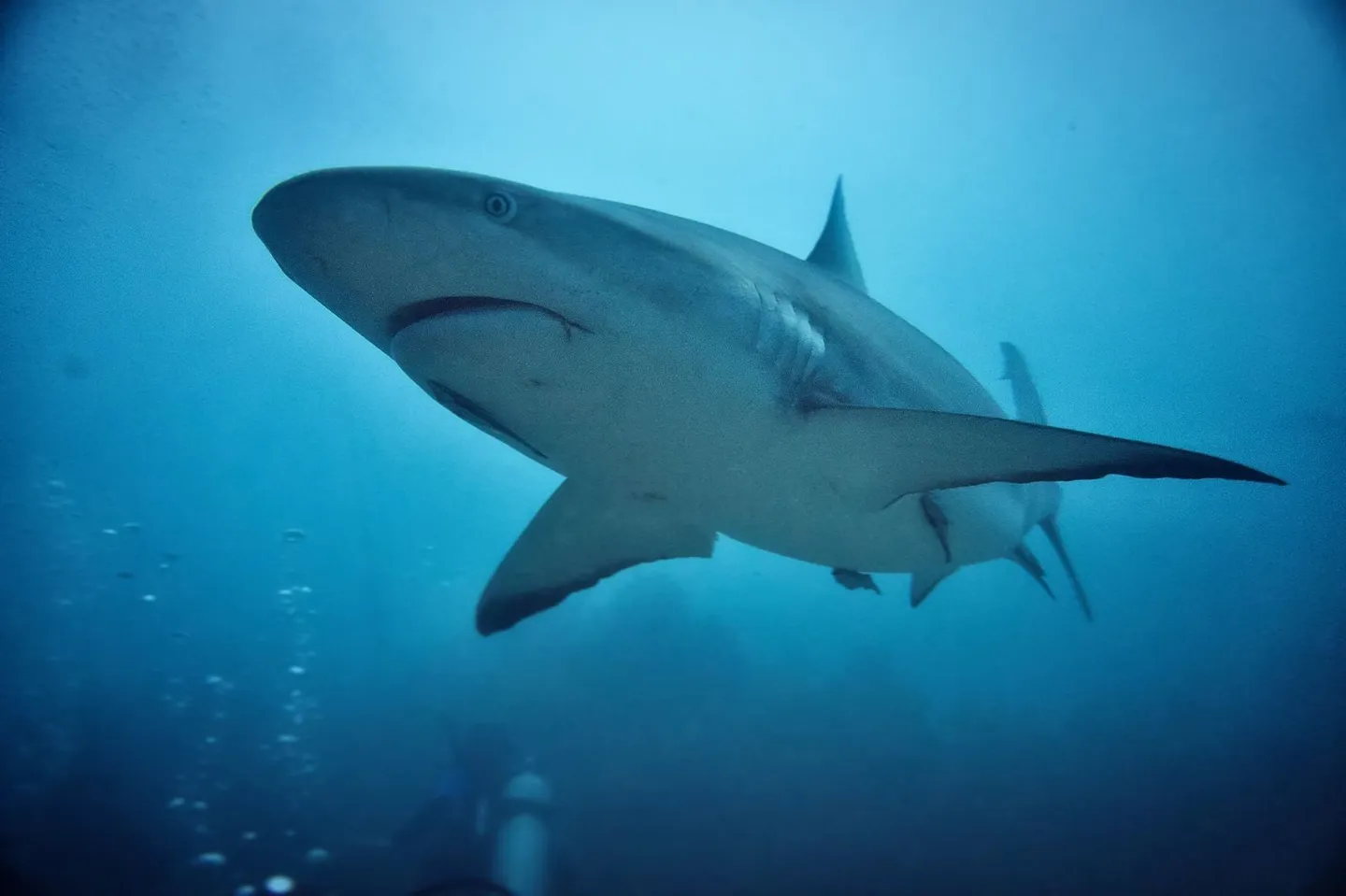
We humans get by with five senses — sight, hearing, smell, taste, and touch — and consider that sufficient. Sharks would find that amusing, because they carry eight senses, including three additional systems engineered specifically to perceive the underwater world. These three add-ons are what make shark senses truly extraordinary.
Lateral Lines: A Full-Body Vibration Radar
Running along both sides of a shark's body is a row of fluid-filled canals packed with hair cells — the lateral lines. The moment anything stirs in the water, the disturbance causes the hair cells inside to sway, and the shark instantly reads that vibration.
A wounded fish thrashing in distress dozens of metres away is completely imperceptible to us, yet a shark's lateral lines have already pinpointed the coordinates. This isn't smell — it's the shark's entire skin "listening" to the tremors in the water.
Pit Organs: Electric-Field Detectors for Hunting in Total Darkness
Pit organs are sensory hair cells scattered across a shark's body, dedicated to detecting the low-frequency electric fields produced by other animals. Thanks to this system, sharks can lock onto prey even in pitch-black night conditions or murky water where visibility is zero.
Hiding in the sand and playing dead won't help. As long as you're alive — muscles twitching, heart beating — you're leaking electricity, and the shark's pit organs will find you anyway.
Ampullae of Lorenzini: The High-Tech Head System That Senses Both Electric and Magnetic Fields
The most impressive of all is the ampullae of Lorenzini. Hundreds to thousands of these tiny pores are scattered across a shark's head, each packed with sensitive nerve cells, most likely capable of both "electroreception" and "magnetoreception."
On one hand, they allow sharks to sense the electrical pulses generated by the contracting muscles of nearby animals — such as a heartbeat. On the other hand, they may help sharks navigate with pinpoint accuracy across thousands of miles of open ocean using Earth's magnetic field. One cluster of tiny head pores handling both hunting and GPS — human technology still hasn't caught up.


Sharks Can Count: Grey Bamboo Sharks Tell Four from One
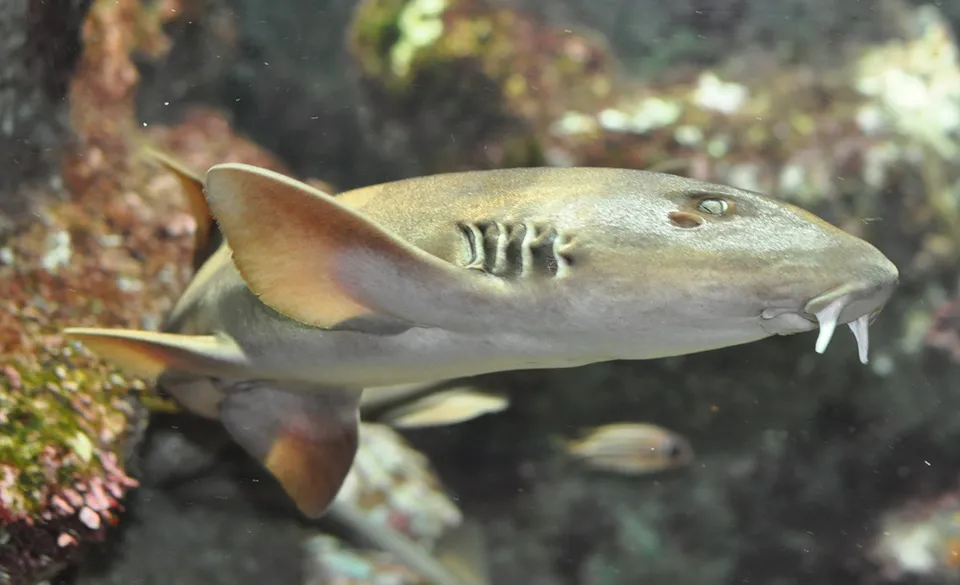
When it comes to shark intelligence, many people's first reaction is "do sharks even have brains?" The Editor will let a piece of research answer that: sharks can count, and it's been experimentally proven.
4 vs. 1, 5 vs. 2, 7 vs. 5 — They Got Them All Right
A team from the University of Bonn, Germany, trained grey bamboo sharks and freshwater stingrays to discriminate between quantities shown on cards. The researchers carefully controlled for confounding variables such as the size and total area of the shapes, ensuring the sharks were genuinely "counting" rather than simply choosing whichever side looked like "a bigger blob."
The grey bamboo sharks passed most of the tests, correctly discriminating 4 vs. 1, 5 vs. 2, and even the closely matched 7 vs. 5. Distinguishing 7 from 5 — a difference of just two — marks the first time in scientific history that numerosity has been confirmed in cartilaginous fish after ruling out all confounding factors.
Not Every Shark Is a Top Student
Interestingly, the study also found that not every shark could manage the task, with significant individual variation and a success rate that wasn't particularly high overall. In other words, shark classrooms have their maths prodigies and their maths failures — exactly like a human class. They are not hardwired automatons; shark intelligence is far more nuanced than we imagined.
Sharks Love Jazz: Picky Listeners Who Go Blank for Classical
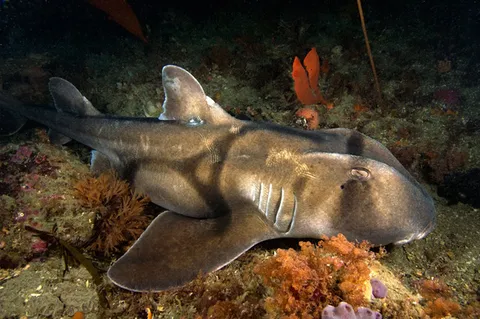
If the counting evidence hasn't convinced you yet, this one definitely will: sharks can distinguish jazz music — and are picky enough to be stumped by classical. This isn't the Editor making things up; it's a legitimate study published in the journal Animal Cognition by the fish lab at Macquarie University in Australia.
Five Sharks Learned That "Jazz Means Food"
The study was led by Portuguese biologist Catarina Vila-Pouca, with eight Port Jackson sharks — a species native to Australia — as subjects. The team played Bossa Beguine by jazz pianist Oscar Peterson and trained the sharks to swim to a specific corner of the tank whenever the music played in order to receive food.
Five of the eight learned the association, firmly linking "jazz music" with "there's something to eat" and darting to the correct corner the moment the music started. The Editor's mind immediately conjured an image of a group of sharks collectively swimming off to queue for their meal the moment a Bossa Nova beat drops — impossibly charming.
Switch to Classical, and the Sharks Are Lost
The research team then played Metamorphosis 1 by composer Philip Glass to test whether the sharks could distinguish jazz from classical. The sharks looked thoroughly confused, unsure which way to swim, and eventually gave up — still defaulting to the jazz corner as the "right" answer.
This demonstrates that sharks genuinely use hearing to learn and make judgements, treating sound as meaningful information — classical music was simply too complex for them to parse. The Editor's only thought: if even sharks find Philip Glass baffling, perhaps it's forgivable that the Editor once sat in a gallery utterly lost during a Glass performance.
Sharks Have Personalities, Make Friends, and Remember You: Every One Is Different

The sections above covered how intelligent sharks are. This one is about how much sharks are like us. Once you know that every shark is different, that they choose their friends, and that some of them may have been alive longer than your great-great-grandparents, you'll never again be able to think of them as a faceless species.
Every Shark Has Its Own Personality — Some Bold, Some Shy
A team led by Evan Byrnes at Macquarie University placed 17 Port Jackson sharks in an unfamiliar environment and measured how long each took to emerge from its hiding spot and explore. The results were clear: some sharks were naturally bold, charging out first in all four trials, while the timid ones consistently came out last.
This stable, repeatable individual variation is precisely what psychology calls "personality," and it was documented in sharks for the first time in history. It turns out that shark classrooms also have the kid who shoots their hand up first, and the one huddled in the corner waiting for class to end — just like humans.
Sharks Make Friends and Remember Them
The image of the "lone shark" was overturned by one study. Scientists tracked 41 grey reef sharks at the remote Palmyra Atoll in the Pacific over four years, finding that the sharks gathered in large groups in the morning, dispersed to forage during the day, and then reunited with the same companions each evening — some pairings lasting a full four years.
Their memory is equally impressive. Port Jackson sharks that had been trained to distinguish between images still remembered the correct answer when retested 50 weeks later. So the old "fish have a three-second memory" trope simply doesn't apply to sharks. If you're a dive guide who regularly feeds the same group of sharks, they very likely recognise you.
The Greenland Shark: A Deep-Sea Elder Possibly 400 Years Old
Scientists used radiocarbon dating of eye lens nuclei to estimate Greenland shark lifespans. One captured individual was estimated to be approximately 392 years old — currently the longest-lived vertebrate on record, with a potential lifespan range of 272 to 512 years. Even more extraordinary: they don't reach sexual maturity until around 150 years of age.
That means some of the Greenland sharks swimming in the ocean right now were born before electric light or the automobile existed. Every shark you encounter underwater is a life lived on a timescale you cannot truly fathom — and that deserves a measure of respect.
Sharks Can Hear Your Heartbeat: One Billionth of a Volt Through the Ampullae of Lorenzini

Back to that first add-on: the ampullae of Lorenzini. The Editor wants to spell this out in enough detail to give you goosebumps: shark senses are acute enough that they can genuinely "hear" your heartbeat.
An Electrical Signature That Can't Be Hidden Under Sand
Just how sensitive are the ampullae of Lorenzini? According to data from marine conservation organisation Oceana, sharks can detect electric fields as weak as one billionth of a volt. Say that number out loud once and you'll understand how staggering it is.
Every living animal — heart beating, gills breathing, muscles moving — produces a faint electrical signature. For prey to burrow into the sand and play dead in hopes of escaping a shark is futile, because that still-beating heart is the biggest giveaway of all. This is, however, a close-range weapon, typically effective only within a few centimetres to perhaps ten or so centimetres, making it the critical final targeting system a shark uses to pin down prey before striking.
To a Shark, You Are a Pulsing Electrical Signal
Think of it this way: when you dive alongside a shark, through its ampullae of Lorenzini, you are not a person in a wetsuit. You are a pulsing, leaking cluster of electrical signals. When you're nervous and your heart races, that electrical signal becomes faster and more erratic in the shark's senses.
So that thought you have underwater — "can it tell I'm scared?" — has an answer: it probably can, and it knows better than you do.
Next Dive: Talk to a Shark with Your Breath
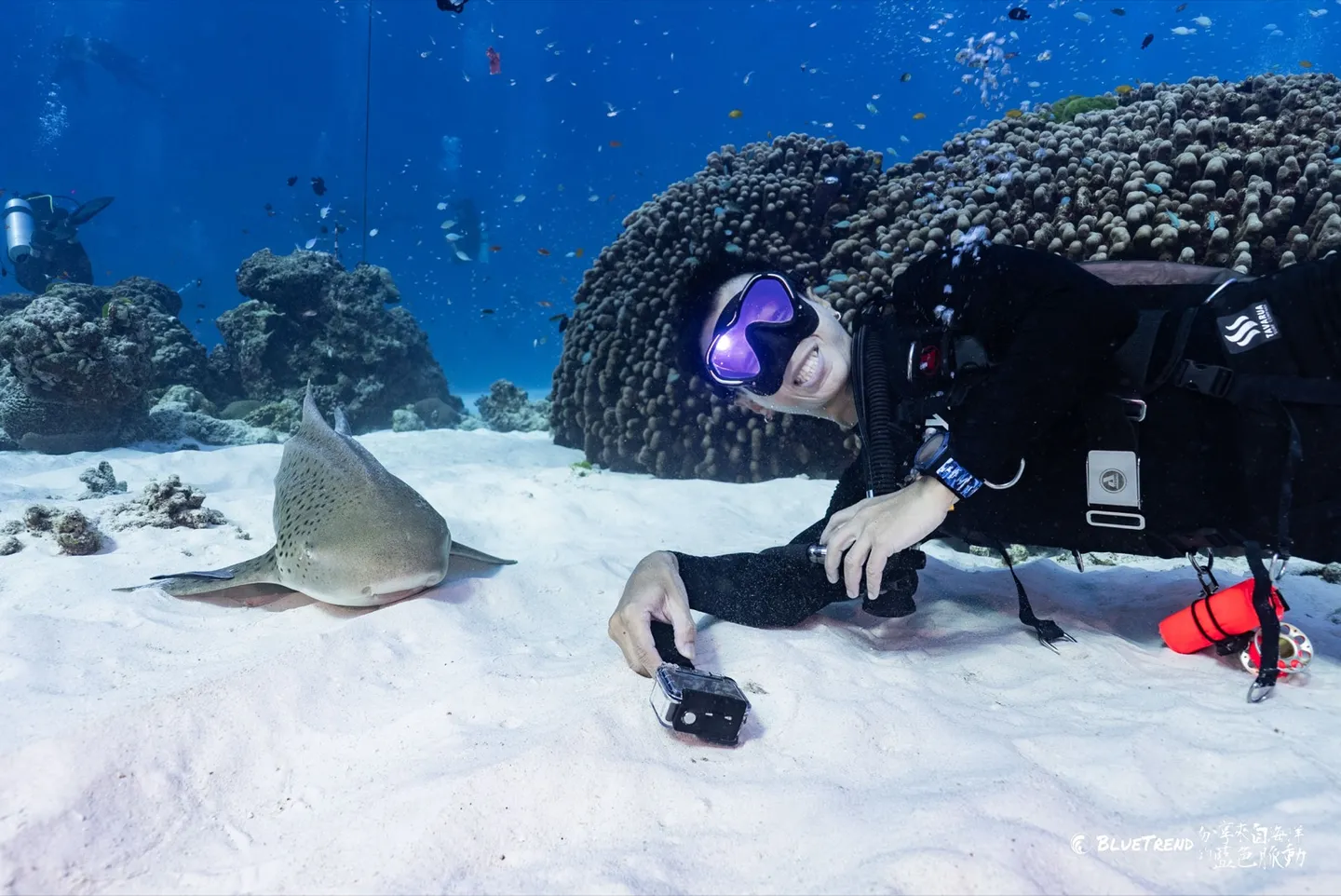
We've covered how intelligent sharks are and how extraordinary their senses are. This final section is what the Editor most wants to share with you — something you can actually take into the water.
Slow Your Breathing, and You Slow Your Heart
Since sharks can read your heartbeat, start there. You can't will your heart to slow down directly, but you can influence it through your breath. While diving, consciously stretch each breath — inhale deeply and exhale slowly. Your heart rate will naturally drop, and that anxious, rapid electrical signal will settle along with it.
This isn't just for the shark's benefit. Long, slow breathing is the most fundamental air-conservation technique in diving anyway — it extends your scuba tank / cylinder and steadies your neutral buoyancy. Everything you practise for the sake of getting along with a shark also happens to make you a better diver.
Etiquette for Sharing the Water: Don't Chase, Don't Block, Don't Flail
For a genuinely good shark encounter, the Editor's advice is simple: don't chase, don't position yourself in the shark's path, and don't suddenly wave or kick erratically. The steadier and more predictable your movements, the less likely the shark is to perceive you as a threat. Most sharks have little interest in humans — they're typically more afraid of you than you are of them.
Go horizontal, move slowly, breathe long. Make yourself look harmless. When you're truly calm, the shark that was keeping its distance may actually circle back out of curiosity to take a look at you. That moment, the Editor can promise you, is worth it.
Conclusion: Sharks Are Far Smarter Than You Think
From the counting grey bamboo shark, to the jazz-loving Port Jackson shark, to the eight-sensed hunter that can hear your heartbeat — everything in this piece comes down to one thing: shark intelligence will upend your assumptions. They are sentient, learning, sea creatures that deserve respect, not the monsters of horror films.
Global shark populations are collapsing rapidly due to overfishing and demand for shark fin, and whether people are willing to protect an animal often comes down to whether they're willing to understand it. Next time you have a chance to dive with sharks, take a deep breath, slow your heart, and greet one with the steadiest breathing you can manage. That's not just self-preservation — it's a form of respect, and one of the most important first steps in marine conservation.
Have you ever come face to face with a shark? Did your heart pound so hard you were sure it could hear you? Tell the Editor your story in the comments below.
References & Further Reading
- Shark numerosity study: Counting on Numbers—Numerical Abilities in Grey Bamboo Sharks and Ocellate River Stingrays (Animals, 2021)
- Shark and jazz music study: Sharks can acquire a taste for jazz music (Macquarie University), CNN report
- Shark personality study: Individual personality differences in Port Jackson sharks (Journal of Fish Biology, 2016)
- Shark social network study: Gray reef sharks form long-lasting social groups (FIU / CNN report)
- Shark memory and longevity: Sharks Can Remember What They've Learned For A Year (Gizmodo), Longest-lived vertebrate is Greenland shark (ScienceDaily)
- Ampullae of Lorenzini and electroreception: Sharks Have a Sixth Sense—and It's Electrifying (Oceana)
Image Credits
- Cover Leopard Shark, head-on shark (heartbeat section), diver with Leopard Shark: BlueTrend
- Grey reef shark close-up: Pexels (royalty-free commercial use)
- Grey bamboo shark, Port Jackson shark, grey reef shark group: Wikimedia Commons


![[Must-Read for Divers] Always Getting Turned Away When Joining Group Dives? How to Become a Self-Sufficient Diver](/_astro/71723046_2280349618943723_525180423337148416_o_aJHG.webp)