Do you truly understand your regulator? When faced with a wall of patented terminology, do you know what each feature actually does? This article breaks down the proprietary technologies from major brands so you can stop reading without comprehending — and start knowing exactly how to use your own regulator. (All content, images, and videos are sourced from official manufacturer websites.)
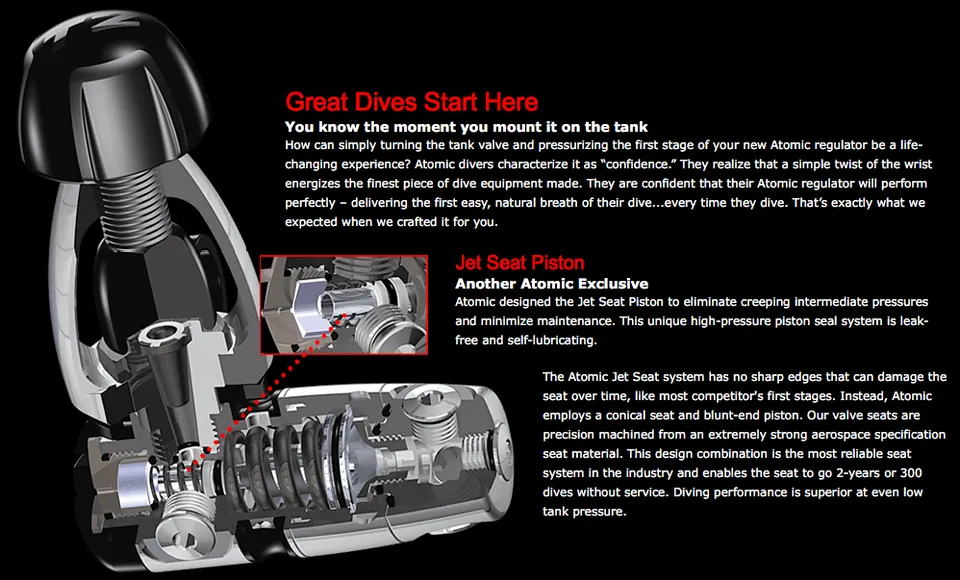
Atomic J-Seat Piston System
The core idea is to blunt the edge of the piston opening and design the seat's contact side as an inward-concave taper. This reduces seat-face deformation caused by long-term use. A conventional flat seat tends to leak as impressions form over time; the concave taper, however, provides even better sealing as it conforms to deformation rather than fighting it.
The O-ring on the piston stem is designed to be free-sliding, reducing friction caused by relative movement.
Regulator — Second Stage Regulator
Seat Saving Dynamic Orifice — a wear-saving dynamic valve seat. When no pressure is applied, the seat springs open and does not contact the medium-pressure diaphragm, preventing impression deformation caused by prolonged contact pressure.
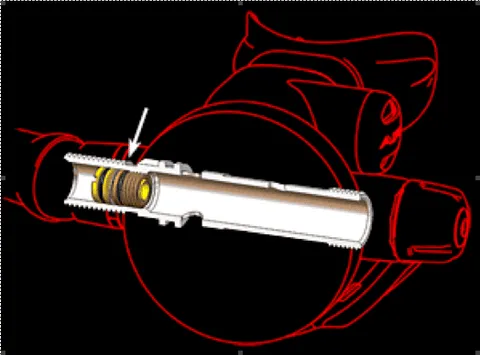
AFC (AUTOMATIC FLOW CONTROL)
In normal conditions, the AFC turbulator extends, allowing airflow to pass through its hollow centre and form turbulence that reduces flow velocity. As depth increases, the rising internal pressure inside the second stage regulator pushes the turbulator outward, converting it into a flat deflector. This automatically adjusts airflow according to depth.
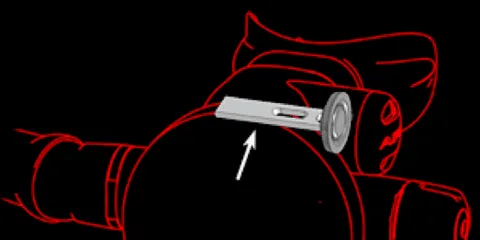
https://www.youtube.com/watch?v=ImUzyG2SnJU


Mares
Balanced Piston
https://www.youtube.com/watch?v=CYcyGKjVO6Q
DFC (DYNAMIC FLOW CONTROL)
A small chamber is created inside the medium-pressure chamber between the diaphragm and a partition, connected to the medium-pressure orifice. When air exits the medium-pressure orifice, it draws air from this small chamber along with it; because the chamber is small, pressure drops faster, causing the diaphragm to depress and open the inlet valve. This results in a more sensitive response and a smaller medium-pressure drop.
https://www.youtube.com/watch?v=axjyMdSSSQM
ACT VALVE
ACT (Advanced Coating Technology) is a patented technology developed to optimise performance, safety, and reliability. The high-pressure seat, coated with a hard polyurethane (PU) sealing surface, achieves a new level of durability. The new valve is 600% more durable than its predecessor.
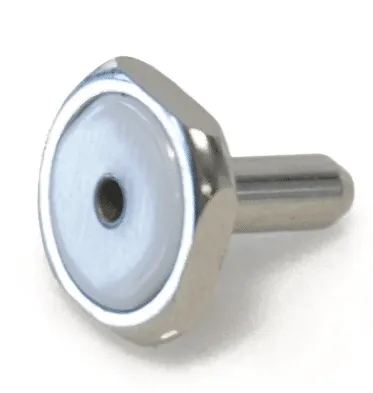
Second Stage Regulator VAD (VORTEX ASSISTED DESIGN)
When the second stage regulator valve opens, air enters the mouthpiece through the manifold. At the manifold opening, a specially angled turbulator sets the airflow spinning. The resulting vortex creates a low-pressure zone that pulls the second stage regulator diaphragm inward, assisting the lever in opening the valve.
https://www.youtube.com/watch?v=dFUye_QmShA
ALL METAL TECHNOLOGY
A fully metal second stage regulator offers superior heat exchange. The thermal exchange between the metal body and the surrounding water helps prevent icing during cold-water diving. In addition, moisture in exhaled air can be recaptured by the metal walls and used to re-humidify the incoming breath.
https://www.youtube.com/watch?v=dFUye_QmShA
MESH GRID
A mesh front cover uses fine perforations to reduce the pressure of water current on the diaphragm, preventing excessive freeflow.
https://www.youtube.com/watch?v=tfT5MrOSiq0
Scubapro
https://www.youtube.com/watch?v=rHaY3wghp0c
MK25 & MK17
https://www.youtube.com/watch?v=U-aKdJ9bDYw
S620
https://www.youtube.com/watch?v=dEHQAIYbe8k
A700
https://www.youtube.com/watch?v=cnkAUuqPbls
XTIS (EXTENDED THERMAL INSULATING SYSTEM)
The Extended Thermal Insulating System completely isolates the internal mechanism from the surrounding environment, improving freeze resistance in cold water by 30% and delaying the onset of icing under extreme cold-water conditions.
https://www.youtube.com/watch?v=4nZgIwRfeWc
VIVA (VENTURI-INITIATED VACUUM ASSIST)
The Vacuum Assist System uses the negative pressure generated by rapidly flowing gas to pull the second stage regulator diaphragm inward, helping the lever open the valve. It can be switched on or off depending on conditions to prevent freeflow.
Apeks
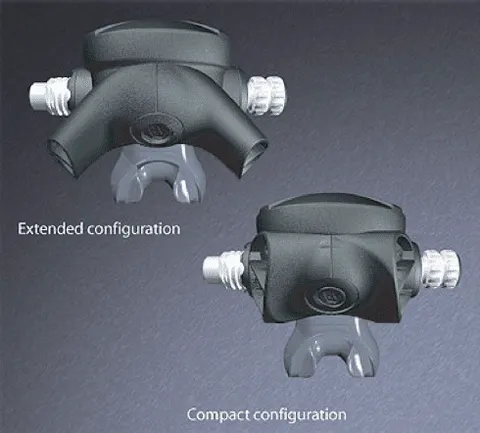
DCE (DIVER CHANGEABLE EXHAUST)
The Diver Changeable Exhaust system comes with two exhaust covers, giving divers the choice between minimal bubble interference (ideal for underwater photography) and a more compact, comfortable fit.
https://www.youtube.com/watch?v=wRGFJtMgri4
HEAT EXCHANGER
The connector is designed in a layered form to increase the surface area available for heat exchange.
https://www.youtube.com/watch?v=tEnU13Ioaaw
ANTI-BACTERIAL 2ND STAGE
An EPA- and FDA-approved non-toxic, odourless silver-ion additive provides antimicrobial protection, guarding against viruses, mould, yeast, algae, and bacteria that may accumulate in the second stage regulator.
https://www.youtube.com/watch?v=N_q5LDXuCi8
Aqua Lung
ACD (Auto Closure Device) — Once the regulator is disconnected from the scuba tank / cylinder valve, the Auto Closure Device automatically seals the inlet connector (both yoke valve and DIN valve). This prevents water and contaminants from entering the regulator during rinsing and storage.
https://www.youtube.com/watch?v=RAoeOGUNdJI
COMFO-BITE MOUTHPIECE
The patented mouthpiece is ergonomically designed to accommodate a smaller bite pattern, eliminating jaw fatigue.
https://www.youtube.com/watch?v=ASxM-kt4Pdk
Words and videos alone may not be enough for you to fully grasp the principles behind these designs. We can arrange seminars where physical materials and diagrams will help you gain a much clearer understanding.