Contents(12)
- Where Is Gorontalo? Whale Sharks and Macro Dive Sites on the Northern Coast of Sulawesi
- The Day the Liveaboard Ran Aground: A First-Hand Account
- The Refund Dispute: The Participant's Claims Regarding the Fuel Surcharge and Pro-Rata Refund
- Choosing a Licensed Travel Agency: Channels for Dispute Resolution When a Private Group Trip Goes Wrong
- Can a Liveaboard Grounding Be Claimed? Travel Inconvenience Insurance, Dive Insurance, Travel PA, DAN, and DiveAssure Compared
- Travel Inconvenience Insurance Covers Aircraft and Common Carriers — Liveaboards Are Not Included
- Dive Insurance Covers Bodily Harm — Not Itinerary Losses
- Taiwanese Divers Use DAN World — the Add-On Travel Plan Offers Some Room to Claim
- DiveAssure Liveaboard Rider: Grounding May Be Claimable as Mechanical Breakdown
- Shared Claim Risks for Both DAN and DiveAssure: Site Substitution and Operator Non-Performance — Ultimately Subject to Claims Assessment
- Conclusion: Insurance Mostly Excludes Operator Non-Performance — a Licensed Travel Agency Is the Reliable Basis for Compensation
- References
Did you know that if a liveaboard runs aground and your trip is cut short, the insurance you took out before departure will most likely not pay out? A diver friend of the Editor joined an 8-day, 7-night liveaboard departing from Gorontalo, Indonesia this year. The vessel struck a reef in the early hours of the morning and was stuck there for over 20 hours. Of the originally planned 22 dives, only 16 were completed. The trip fee was NT$132,000 per person, and the liveaboard operator's final refund offer came to US$425 per person.
This article is divided into two parts. The first half is a first-hand account from the person involved, covering the influence of a typhoon's outer bands, the grounding, and the post-return refund dispute — narrated by the participant and organised by the Editor. The second half verifies, one by one, whether insurance policies commonly held by divers — travel inconvenience insurance, dive insurance, DAN, and DiveAssure — would pay out in a scenario where a "liveaboard runs aground and the trip is not completed."
The findings show that insurance policies typically cover bodily injury, baggage loss, flight delays, and other additional out-of-pocket expenses. Losses arising from an operator's failure to deliver promised services are generally excluded from coverage. For divers, the more fundamental protection is choosing a licensed travel agency when booking, so that liability insurance, performance bond insurance, and a standardised contract are already in place before departure.
Where Is Gorontalo? Whale Sharks and Macro Dive Sites on the Northern Coast of Sulawesi
Gorontalo is located on the northern side of Indonesia's Sulawesi island and is the capital of Gorontalo Province. Travellers from Taiwan typically need to fly to Jakarta first before taking a domestic connection. Compared to Manado to the north and the nearby Lembeh Strait, Gorontalo is less well known among Taiwanese divers.
The area is most commonly promoted for Whale Shark encounters in the Botubarani waters and macro dive sites along the coast. According to a research article by WWF-Indonesia, the aggregation of Whale Sharks here is thought to be linked to shrimp heads and shells discharged by a nearby shrimp-processing factory, as well as tourist feeding — though fishermen have noted that Whale Sharks were appearing here long before tourism development, and the cause is still under investigation.
The original itinerary for this liveaboard was to depart from Gorontalo, head first to the volcanic island of Una Una, then continue to the Togean Islands, and finally return to Gorontalo. The Togean Islands' biggest draw is the wreck of a World War II B-24 bomber sitting upright on the sandy bottom at around 20 m depth, with additional wrecks and a marine lake to visit.


The Day the Liveaboard Ran Aground: A First-Hand Account
The following is narrated in the first person by the participant; the Editor has only reorganised the sequence and lightly polished the language.
"We happened to set off under the influence of a typhoon's outer bands. The vessel waited in Gorontalo harbour for a while before heading out, and the nearby dive sites were all off-limits. What was originally scheduled as one day at Una Una ended up being three days, during which we completed 12 dives. On the fourth day, the weather improved and the boat finally headed towards the Togean Islands. Everyone was most looking forward to the B-24 bomber wreck on day five, so we sailed through the night to get there."
At around 4 a.m., the guy in the next cabin was thrown out of his bunk by a loud bang. When I got up at 6 a.m., the water outside was so clear you could see straight to the bottom, and the boat wasn't moving at all — that's when we realised we had run aground.
"The bow had driven up onto a circular, flat reef, with roughly two-thirds of the hull resting on the reef platform. The water depth was less than 1 m in the morning and had dropped to just 50–60 cm by midday. That stretch of sea only had one high tide per day, so we'd have to wait roughly 24 hours to get free. The nearest rescue vessel was in Gorontalo, and there were no boats available in the harbour that day, nor any other dive boats nearby that could ferry the passengers away."
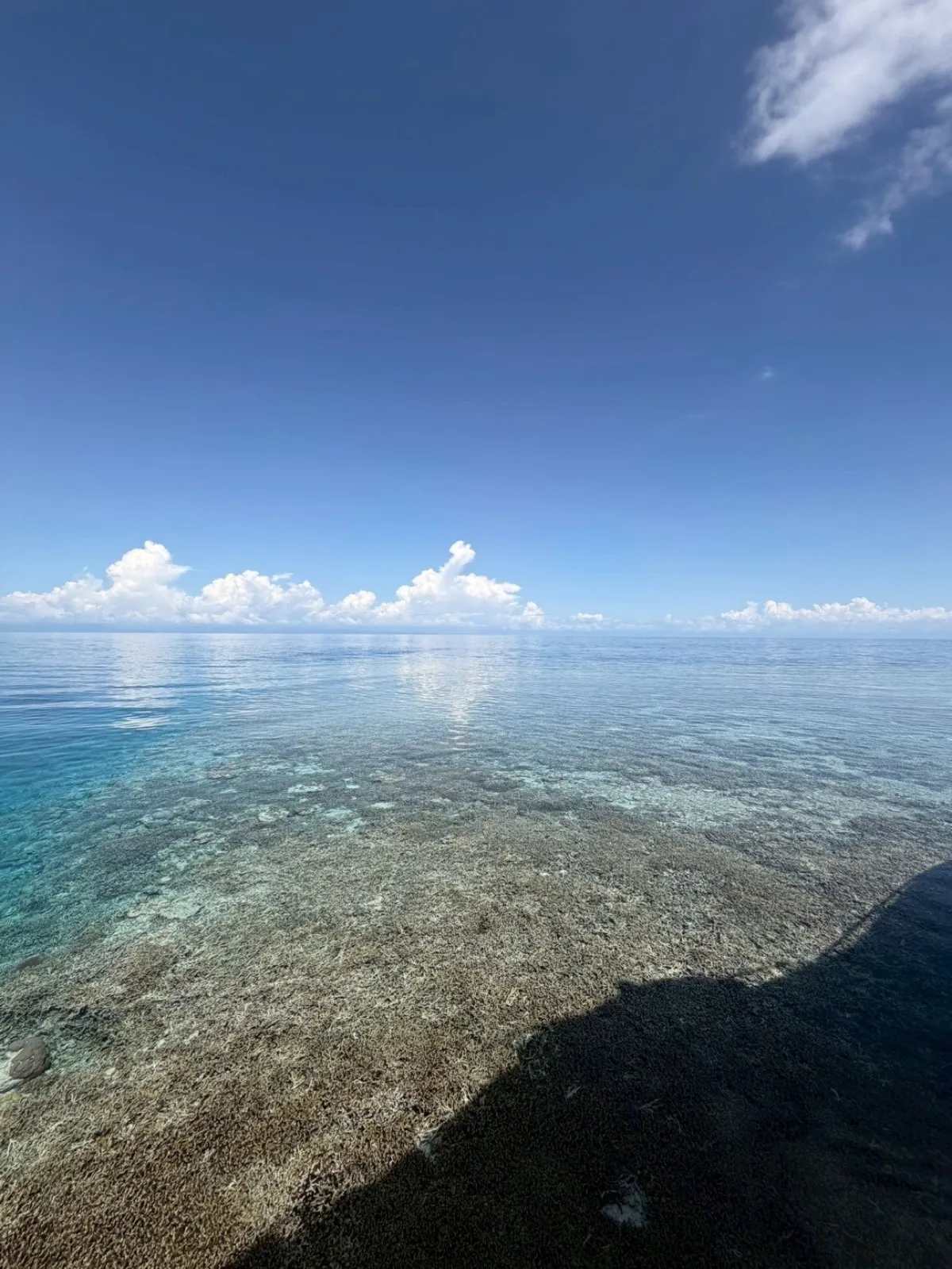
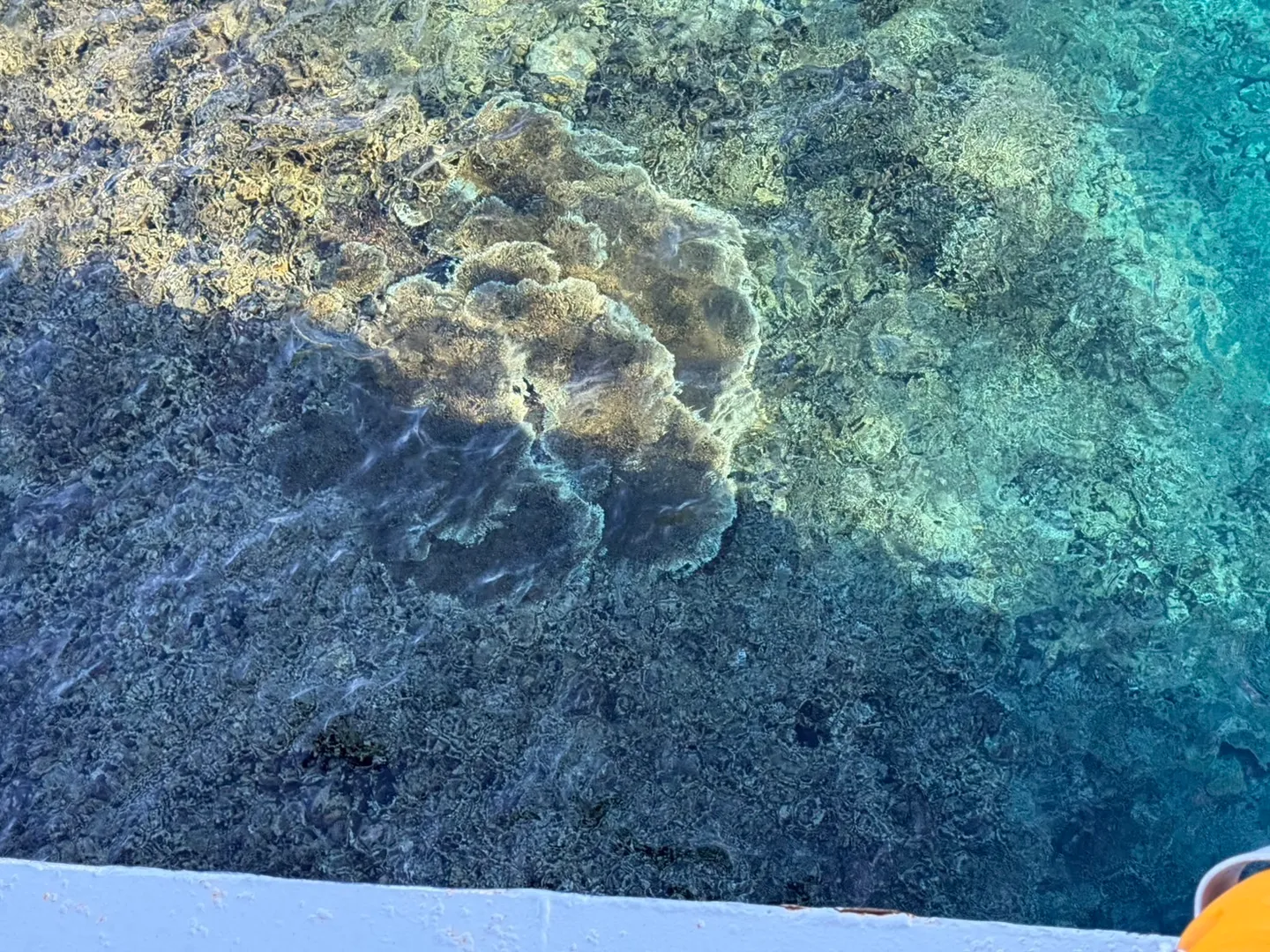
I served in the navy for two years. With the hull resting on the reef and no water providing buoyancy underneath, the boat could capsize at any moment if the water dropped further — and if swells picked up in the afternoon, the consequences would have been hard to predict.
"While the situation was still unclear that morning, the trip leader organised a dive at the grounding site. The local crew said the area had been blast-fished in the past, and sure enough, there was nothing to see down there. Those 2 dives were later counted towards the total, making what the operator called 18 dives."
"After water levels rose in the middle of the night, the crew reversed the vessel off the reef. But by then it was already day six. Day seven had to be kept as a pre-flight no-dive day, so the boat had to motor straight back to Gorontalo for over ten hours. The B-24 bomber wreck in the Togean Islands was never reached."
On the way back I spoke with the captain. He told me the crew member on the night watch had fallen asleep and failed to turn the boat along the planned route to avoid the reef.
"But the operator's official explanation to the entire group the next day was that a strong current had pushed the boat off course. This is a 1,600-horsepower vessel, and the sea was calm that night — I couldn't accept that explanation."
The Refund Dispute: The Participant's Claims Regarding the Fuel Surcharge and Pro-Rata Refund
There were 16 people on this trip, with the original per-person fee set at NT$124,000. One month before departure, the organiser added a fuel surcharge of NT$8,000 per person, citing rising oil prices due to the international situation, bringing the total to NT$132,000 per person. After returning to port, the liveaboard operator offered a refund of US$425 per person, with the trip organiser adding a personal top-up of US$100, for a total refund of US$525 per person — approximately NT$16,784 (based on the Taipei foreign exchange market rate of NT$31.97 per US$1 on 13 October 2026).
The participant did not accept this offer, and put forward two claims. The first was that the fuel surcharge should be refunded first: the actual route was drastically shortened due to weather and the grounding — spending three days circling near Una Una, then only reaching part of the Togean Islands before turning back. Of the NT$128,000 in fuel surcharges collected from the 16 passengers, at least a portion should be refunded in proportion to the actual distance travelled. The second was a pro-rata refund based on completion rate: of the planned 22 dives, only 16 were completed — or 14 if the 2 dives at the grounding site are excluded — giving a completion rate of roughly 70%. The participant therefore claimed a refund of approximately 30%, or US$1,000 per person.
| Item | Details |
|---|---|
| Trip | 8 days / 7 nights, 16 participants |
| Per-person fee | NT$124,000, plus a fuel surcharge of NT$8,000 added before departure |
| Dives | 22 originally planned; 16 actually completed (operator counted 18, including 2 at the grounding site) |
| Operator's offer | Liveaboard operator: US$425 per person; trip organiser added US$100 top-up; total US$525 per person |
| Participant's claim | Refund of the fuel surcharge difference first, then a pro-rata refund based on completion rate — US$1,000 per person |
The participant also noted that it was only after the dispute arose that they found, on an overseas booking website, that open-berth itineraries on the same vessel for the same 8-day, 7-night trip cost the equivalent of roughly NT$80,000. There had been no price comparison before booking, because this was the third trip the participant had taken with the same organiser — entirely on trust.
Choosing a Licensed Travel Agency: Channels for Dispute Resolution When a Private Group Trip Goes Wrong
The organiser of this trip did not hold a travel agency licence and only used a licensed travel agency to book the flights. After returning home, the participant filed complaints and appeals separately with the Tourism Administration of the Ministry of Transportation and Communications and the Executive Yuan Consumer Protection Committee.
The most fundamental difference between the two comes down to insurance. Under the Travel Agency Management Regulations, licensed travel agencies are required to hold two insurance policies when organising group tours, with the travel agency as the policyholder. Private trip organisers do not have this status, and therefore lack these two layers of protection.
- Travel Agency Liability Insurance: Covers group members who suffer accidental injury, disability, or death during the trip, regardless of whether the operator was at fault.
- Performance Bond Insurance: If the travel agency collects fees but is unable to operate or complete the trip due to financial difficulties, the insurance covers the loss of those fees.
- In this case: No one was injured, and the operator did not go bankrupt, so neither policy — even if they had existed — would have been triggered. However, they represent the most basic protection for overseas travel and should be confirmed at the time of booking.
The BlueTrend team also wrote to the Tourism Administration of the Ministry of Transportation and Communications seeking clarification. The Administration responded with reference number 觀業字第 1150009704 號, the key points of which are summarised below.

What Constitutes "Operating a Travel Business Without a Licence"
- Either recruiting or arranging is sufficient: According to Supreme Administrative Court Judgment No. 277 of 2017, "recruiting tourists" and "arranging travel, accommodation, and transportation" — either one alone constitutes operating a travel business.
- Recruiting is not limited to any particular method: Promoting an itinerary online or privately to an unspecified group of people in a way that objectively allows others to understand and sign up for the trip constitutes recruitment.
- Having the itinerary arranged by a foreign operator does not affect the determination: Organising a group solely within Taiwan and collecting and passing on payments still constitutes illegal recruitment.
- Not profiting from a price margin is still a violation: The offence does not require that bookings be made at a marked-up price, that a margin be earned, or that funds flow into a personal account. Claiming to act merely as a "broker" under civil law does not exempt a person from administrative penalties.
- Individuals are subject to penalties: The penalty applies to the individual actually engaged in the unlicensed activity — no commercial registration or company is required.
Penalties
- Operating a travel business without a licence: Under Article 55, Paragraph 4 of the Tourism Development Act, a fine of between NT$100,000 and NT$2,000,000 is imposed and the operation is ordered to cease. Under the penalty schedule: NT$100,000 for a first offence, NT$500,000 for a second, NT$1,000,000 for a third, and NT$2,000,000 for a fourth.
- Each trip may be penalised separately: Under Article 25 of the Administrative Penalty Act, where multiple instances of recruitment can be clearly distinguished by time, target audience, and trip, each may be treated as a separate violation and fined cumulatively at escalating tiers.
- Posting advertisements alone is also penalisable: Even before any trip has taken place, simply publishing commercial information online or in the media is subject to a fine of between NT$100,000 and NT$1,500,000 under Article 55-1, with an order to remove the content within a specified period. If a trip has already taken place, the penalty for unlicensed operation applies directly.
The following table summarises the difference in available remedies when a dispute arises between an unlicensed organiser and a licensed travel agency.
| Item | Unlicensed Operator (Private Organiser) | Licensed Travel Agency (as stipulated in the Standard Form Contract for Overseas Travel issued by the Tourism Administration, Ministry of Transportation and Communications, R.O.C.) |
|---|---|---|
| Travel contract | Usually no standardised contract; difficult to establish rights and obligations | Must sign a standardised overseas travel contract (Tourism Administration template, version dated 8 September 2023) |
| Foreign operator breach | Must seek compensation directly from the organiser or the foreign operator | Travel agency bears the same liability; travellers do not need to pursue foreign travel agencies or related service providers directly (Contract Article 20) |
| Promised items not delivered | No standardised liquidated damages provisions | Can claim twice the price difference as liquidated damages; at least 5% of the trip fee if the travel agency fails to provide a calculation breakdown (Contract Article 22) |
| Itinerary delays | Must independently prove losses | Can claim compensation on a per-day basis, calculated as the trip fee divided by the number of travel days (Contract Article 24) |
| Force majeure changes (e.g., weather) | Whether a refund is issued depends on the organiser | Reduced costs must be refunded; no additional charges may be levied (Contract Article 26) |
| Complaints and mediation | Outside the scope of the Travel Quality Assurance Association; if the organiser qualifies as a business operator, a complaint may be filed under Article 43 of the Consumer Protection Act | Can file a complaint with the Travel Quality Assurance Association of the Republic of China; compensation may be advanced from the guarantee fund when specific conditions are met |
| Last resort | Civil litigation | Civil litigation, if mediation fails |
The organiser of this trip held no travel agency licence, leaving only the left-hand column of options available — which is why the participant ultimately turned to the Consumer Protection Committee and the courts.
Can a Liveaboard Grounding Be Claimed? Travel Inconvenience Insurance, Dive Insurance, Travel PA, DAN, and DiveAssure Compared
This was the participant's primary concern from the outset, and it reflects a common combination of policies held by divers travelling abroad. The Editor compared the terms of Taiwan's travel inconvenience insurance, dive insurance, and travel personal accident insurance, as well as the policy terms of DAN and DiveAssure. The conclusions are summarised in the table below, with detailed explanations in the sections that follow.
| Policy Type | Core Coverage | Can This Case Be Claimed? |
|---|---|---|
| Travel inconvenience — trip cancellation | Trip cancelled entirely before departure due to a specified event | No — the trip had already begun, and cancellation or alteration by the liveaboard operator is not among the listed triggering events |
| Travel inconvenience — trip alteration | Additional costs incurred due to being forced to alter the itinerary mid-trip because of a specified event | No — no additional out-of-pocket costs were incurred, and a liveaboard vessel does not qualify as a common carrier under the policy definition |
| Dive insurance | Death, injury, and medical costs from a diving accident | No — no one was injured |
| Travel PA insurance | Accidental death, injury, and medical costs during travel | No — no one was injured |
| DAN World | Dive medical coverage; trip cancellation, interruption, and baggage with add-on plan | Dive plan does not cover this case; add-on plan offers some grounds for a claim, but may be excluded by the operator non-performance exclusion |
| DiveAssure Liveaboard Rider | Lost dive days due to weather, itinerary changes, vessel sinking or mechanical breakdown | Possible — the operator confirmed that grounding can generally be classified as mechanical breakdown; the policy covers up to US$250 per day / US$1,000 total for lost dive days due to trip interruption, but not for site substitutions; may also be excluded by the operator non-performance exclusion |
Travel Inconvenience Insurance Covers Aircraft and Common Carriers — Liveaboards Are Not Included
There is a threshold in travel inconvenience insurance related to the definition of a transportation vehicle. The new version of the "Reference Terms for Personal Overseas Travel Inconvenience Insurance" introduced by the Non-Life Insurance Association of Taiwan from 1 April 2026 defines a common carrier as a waterborne, land, or air transportation vehicle providing carriage services to the general public, and explicitly excludes cruise ships. Scheduled flights must operate from fixed terminals with fixed timetables, and charter aircraft used exclusively for specific passengers are excluded. A liveaboard vessel — chartered by the entire group, with no fixed timetable — is neither a common carrier nor a scheduled carrier. Delays, groundings, or rerouting of the liveaboard itself fall outside the scope of travel inconvenience insurance from the outset. Policy terms may vary between insurers; please refer to the definitions in your specific policy before purchasing.
Dive Insurance Covers Bodily Harm — Not Itinerary Losses
The core of dive insurance and travel personal accident insurance is death, injury, and medical costs arising from a diving accident — for example, hyperbaric oxygen treatment for decompression sickness (DCS) or emergency medical evacuation overseas. In this case, everyone on board was unharmed, which means no insured event occurred under these policies. Dive insurance is designed to address physical risk and does not cover losses arising from an "incomplete itinerary."
Taiwanese Divers Use DAN World — the Add-On Travel Plan Offers Some Room to Claim
The dive medical insurance brand most familiar to divers is the Divers Alert Network (DAN), which operates separate websites for different regions. dan.org is the website for DAN Americas, whose Trip Insurance is underwritten by Generali and covers trip cancellation, interruption, delays, and baggage — but DAN Americas' travel insurance is for US residents only. Divers in Taiwan and the Asia-Pacific region should visit world.dan.org to join DAN World.
The BlueTrend team also wrote to DAN to ask about this case. DAN's official response was received on 13 August 2026. We also compared the full policy text of the DAN World Asia-Pacific Preferred Plan and the Travel Assistance add-on (version dated 1 June 2025). Key points are as follows.
- Limitations of the Dive Accident Assistance Packages: Most people purchase a Dive Accident Assistance Package, which covers medical treatment and emergency evacuation for diving accidents. Only the Preferred plan includes dive holiday cancellation and interruption, up to US$5,000 each, triggered when you or a travelling companion become ill or injured to the point of being unable to dive, supported by written medical advice. Since no one in this case was injured or ill, holders of only this plan cannot make a claim.
- Recommendation to add the Annual Travel Assistance Package: The Annual Travel Assistance Package lists 13 triggering events for trip cancellation and interruption. One of them covers delays or cancellations of a licensed vessel you are booked to travel on due to severe weather or mechanical breakdown. Both the typhoon-related harbour delay and the grounding could be cited under this provision to claim for non-refundable liveaboard costs. This plan can only be purchased as an add-on with the Master or Preferred plan and must be purchased before departure.
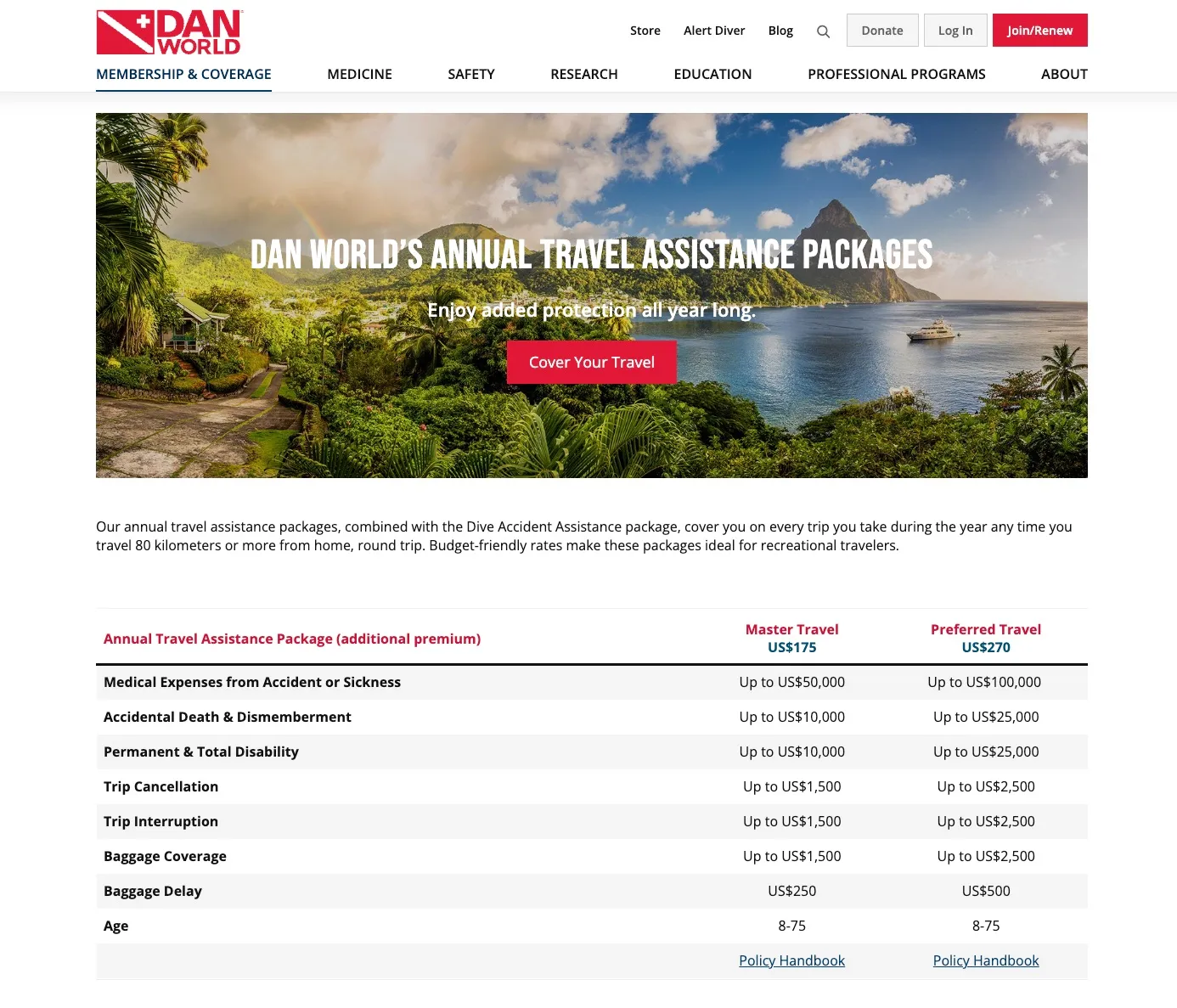
Comparing this to the present case: those who only purchased a Dive Accident Assistance Package definitely cannot claim. Only those who also added the Annual Travel Assistance Package have a basis in the policy terms to try — but may still be excluded by the operator non-performance exclusion.
DiveAssure Liveaboard Rider: Grounding May Be Claimable as Mechanical Breakdown
DiveAssure is one of the few dive insurance providers that offers a dedicated Liveaboard Rider, and after reviewing the policy terms, the Editor considers it the provider with the best chance of a successful claim in this situation. We obtained the full text of the Dive&Travel terms applicable to the Rest of World (July 2026 version). The BlueTrend team also wrote to DiveAssure, and the official response was received on 5 October 2026. Key points are summarised below.
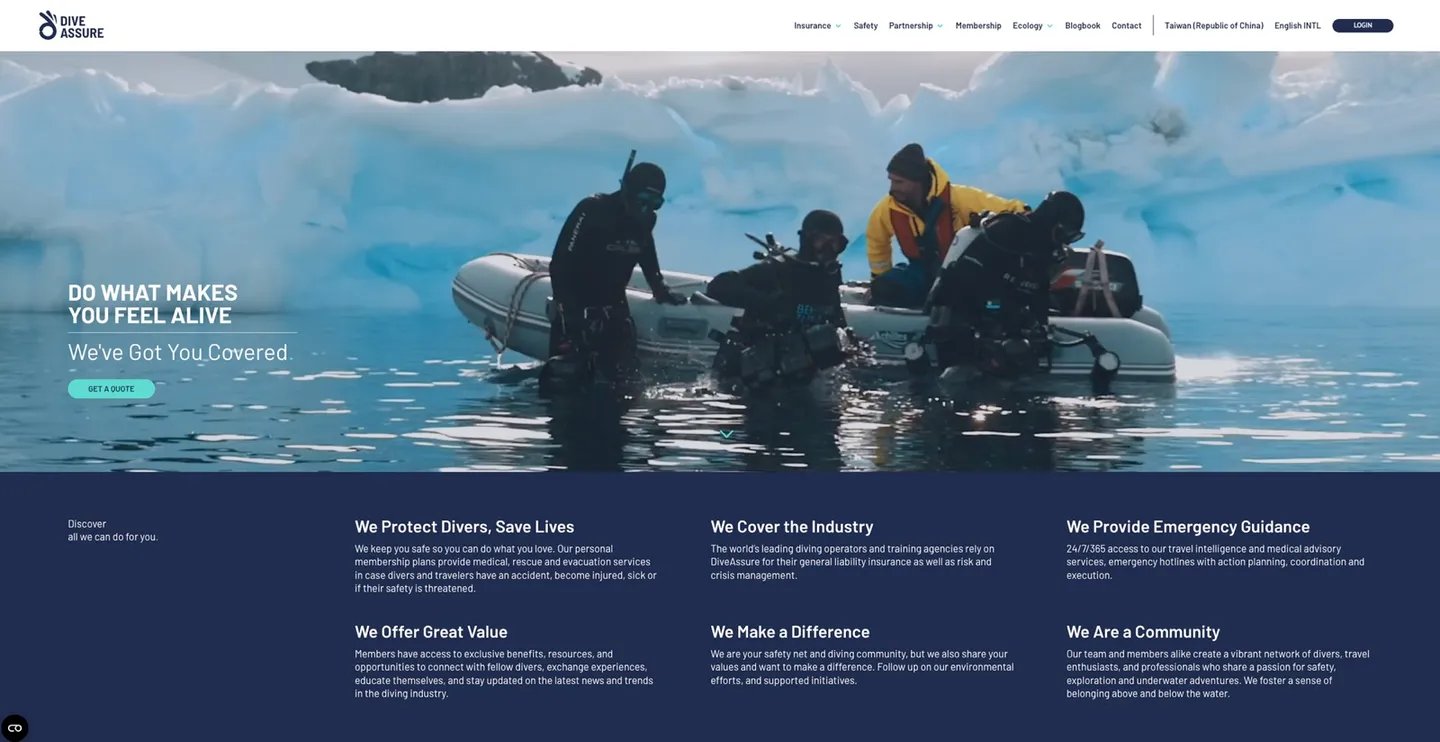
- Grounding may be classified as mechanical breakdown: The vessel incidents listed in the policy are sinking and mechanical breakdown — "grounding" is not explicitly named. In its official response, DiveAssure stated that although grounding is not defined in the policy, such incidents can generally fall under mechanical breakdown. Under the policy terms, lost dive days resulting from evacuation or trip interruption caused by mechanical breakdown are covered at up to US$250 per day, to a maximum of US$1,000.
- The vessel must hold an operating licence: General exclusion clause 32 covers only licensed liveaboard vessels or common carriers — private vessels are excluded. DiveAssure stated that the policy does not require travellers to produce specific licence documents, but reasonable supporting evidence may be requested at the time of a claim. Confirm the vessel's registration and local operating permit with the operator before booking, and retain the documentation provided, to avoid disputes over the vessel's legal status when making a claim.
- Taiwan residents may purchase coverage: The applicable plans are Dive&Travel and Dive&Travel Plus (which includes the Liveaboard Rider), underwritten by Redbridge Insurance Company, Ltd., with disputes subject to the jurisdiction of the courts of Barbados, regardless of the policyholder's nationality.
- Trip alteration limit of US$250: This applies to additional costs incurred when a covered event forces a change to pre-paid flights or other travel arrangements. US$250 is the maximum benefit for this item.
Shared Claim Risks for Both DAN and DiveAssure: Site Substitution and Operator Non-Performance — Ultimately Subject to Claims Assessment
Comparing the policy terms and official responses from both providers, even if you hold DAN's Annual Travel Assistance Package or DiveAssure's Liveaboard Rider, there are two shared claim risks in this case.
- Operator non-performance is not covered: Both policies contain the same type of exclusion clause. If the liveaboard operator simply failed to deliver the itinerary it originally promised — for example, fewer dives completed, or certain dive sites not visited — the insurer will not pay out; compensation should be sought from the operator. The relevant DAN general exclusion (Clause 2, Item z) reads: "failure of any tour operator, Common Carrier, liveaboard, or other travel supplier, person or agency to provide the bargained-for travel arrangements other than Financial Insolvency." The DiveAssure general terms (Article 14) read: "Benefits will not apply to failure of any tour operator, common carrier, person or agency to provide the bargained travel arrangements."
- Site substitution is not the same as trip interruption: DiveAssure's official response clarified that if diving continues at an alternative site and the only issue is not reaching the originally planned site, this does not constitute lost dive days; a shortened trip does not cover site substitutions. For DAN, trip interruption requires being "unable to continue the journey." In this case, 12 dives were completed at Una Una during the first three days; dives were still organised at the grounding site on day five; and Whale Shark snorkelling was arranged on the way back to port on day six — all of which could be treated as site substitutions rather than trip interruption.
Therefore, whether this case can ultimately be claimed depends on more than just the policy terms — a formal submission must be made, and the insurer will make a determination based on the actual circumstances. Documentation gathered at the time of the incident — including the captain's statements, weather data, and actual dive logs — will be the most critical supporting evidence when filing a claim.
Conclusion: Insurance Mostly Excludes Operator Non-Performance — a Licensed Travel Agency Is the Reliable Basis for Compensation
Based on the findings of this investigation, whether it is Taiwan's travel inconvenience insurance, dive insurance, or the policies of DAN and DiveAssure, most policies list "operator failure to deliver the promised itinerary" as an exclusion. Itinerary shortfalls caused by a liveaboard grounding may ultimately be excluded or denied. The mechanism that truly allows travellers to seek compensation in accordance with their agreement is choosing a licensed travel agency: under the standardised overseas travel contract, the travel agency bears the same liability when a foreign operator breaches its obligations; travellers can claim twice the price difference as liquidated damages or per-day compensation; and if negotiations fail, a complaint can be filed with the Travel Quality Assurance Association for mediation. Private group trips have none of these mechanisms — participants must gather their own evidence and pursue litigation.
The following summarises 5 steps you can complete before departure, none of which require any additional cost, yet each can significantly reduce disputes in the event of an incident.
- Verify the licence on the Tourism Administration's travel agency search system: Enter the agency name to check. For private group trips, confirm which licensed travel agency is actually operating the itinerary — not just booking the flights.
- Require a standardised travel contract: The overseas travel contract template is published by the Ministry of Transportation and Communications; it clearly spells out provisions for itinerary changes, refunds, and breach of contract.
- Check the vessel name, condition, and operating permit in advance: Once you have the vessel name, look it up on international booking platforms for cabin types, photos, and reviews, and compare against open-berth pricing. Also ask the operator to provide vessel registration and local operating permit documents — these are the supporting evidence an insurer may request when processing a claim.
- Choose your insurance based on your actual needs: Dive insurance covers physical safety; travel inconvenience insurance covers additional out-of-pocket costs. If you want protection against weather-related lost dive days on a liveaboard, look for a plan with a Liveaboard Rider and read the exclusion clauses carefully.
- Gather evidence immediately when an incident occurs: Photograph the vessel's position, water depth, weather, and sea conditions; retain any written or recorded statements from the operator; log the time and location of every actual dive — all of this serves as supporting evidence when seeking compensation from the travel agency or filing a claim with your insurer.
Everyone on this trip returned safely to Taiwan, with no injuries — and that is the most important thing to be grateful for. But from an insurance perspective, precisely because no one was hurt, virtually every policy the divers held turned out to be useless, leaving refunds to be pursued only through appeals and litigation.
Liveaboard groundings are uncommon, but typhoons, mechanical failures, and navigational errors are risks that exist on every liveaboard trip. Spending 10 minutes before you book to verify whether the organiser is a licensed travel agency, whether a contract will be signed, and what your policy actually covers is far more worthwhile than the drawn-out ordeal of a consumer dispute after the fact.
Further reading: Is the dive shop or instructor you're using operating legally? Don't expose yourself to unknown risks!, Does the operator you've booked with actually provide qualified dive insurance?
References
- Tourism Administration, Ministry of Transportation and Communications, Letter No. 觀業字第 1150009704 號 (Response to queries for clarification)
- Tourism Administration, Ministry of Transportation and Communications Legal Database, Standardised Overseas Travel Contract Template (version dated 8 September 2023)
- CTS News, Influencers and bloggers organising tours as "expert guides" — possible violations and no recourse for disputes
- Laws & Regulations Database of the Republic of China, Tourism Development Act
- Commercial Times, New definitions under the revised travel inconvenience insurance regulations
- WWF-Indonesia, Another Perspective Behind the Appearance of Whale Sharks in Gorontalo
- DAN World, Preferred Dive Accident Plan certificate of insurance and travel add-on terms (version dated 1 June 2025)
- DAN, Official website, Trip Insurance, DAN World Asia-Pacific plans, and official response dated 13 August 2026
- DiveAssure, Official website, Dive&Travel terms (Rest of World, July 2026 version), and official response dated 5 October 2026
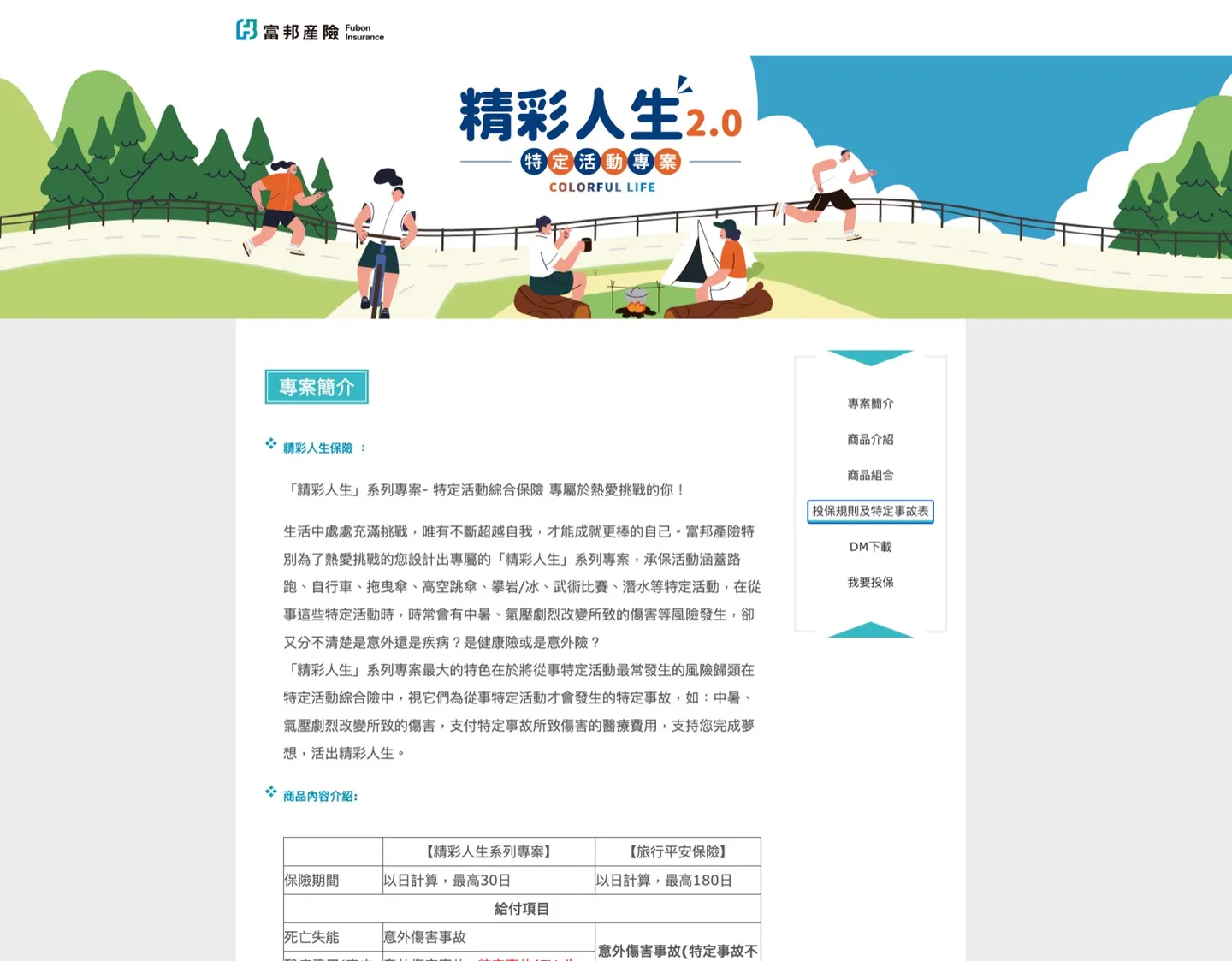
- Fubon Insurance, Colourful Life 2.0 Specific Activity Plan
Note: Travel and insurance regulations are subject to change over time. Please refer to the most current announcements from the relevant government authorities and insurance providers.