Contents(3)
Between 2023 and 2025, nearly 84% of coral reefs across 83 countries and territories were affected by elevated ocean temperatures, triggering widespread coral bleaching. While many have grown pessimistic about the state of coral reefs, a newly published study reveals that heat-tolerant, climate-resilient corals are far more widespread than expected — covering as much as 166,000 square kilometres. Varying conservation strategies adopted by different countries are also opening new avenues of hope for the future of coral reefs.
Good news about coral reefs is rare.
Over the past two years, most of the world's coral reefs have endured sustained high temperatures, intense tropical storms, and pollution, resulting in mass bleaching events. In the southern section of Australia's Great Barrier Reef, hard coral mortality in some areas reached as high as 40%. Even the Red Sea's corals — long considered relatively heat-tolerant — could not escape the heat in 2024, suffering severe mass bleaching. Some scientists have warned that coral reefs are facing irreversible decline.
Yet a recent study suggests that corals are far more resilient than we thought.
This research drew on 45,000 coral reef survey records and decades of climate and ocean data to identify climate-resilient coral reefs in 71 countries and 100 territories — including previously unrecognised reefs in the Caribbean, the Pacific, and the Atlantic.
The researchers collaborated with the technology non-profit SkyTruth to map coral reefs capable of withstanding high temperatures. They found that these resilient reefs span 166,000 square kilometres — three times the previously estimated area — with the majority located in the coastal waters of five countries: the Bahamas, Cuba, Australia, Indonesia, and the Philippines.
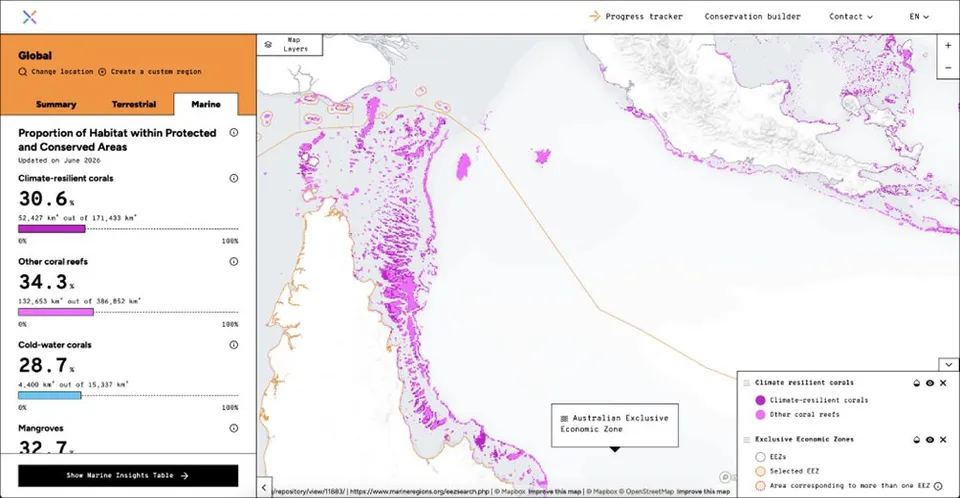
The global distribution of heat-tolerant corals as shown on the SkyTruth website. Image source: SkyTruth
"Coral reefs are often seen as ecosystems that can't be saved," said Emily Darling, Director of Coral Reef Conservation at the Wildlife Conservation Society (WCS) and one of the report's authors. "But this research shows that's not the case: we know where the hope is, and what we need now is political will."
The analysis revealed that fewer than 28% of these heat-tolerant reefs lie within protected areas, meaning as much as 119,000 square kilometres of coral reef remain exposed to threats from water pollution, unsustainable fishing practices, tourism, and coastal development. "These unprotected areas represent one of the most obvious opportunities to advance the Kunming-Montreal Global Biodiversity Framework," the authors noted.
Adopted in 2022 by 196 countries, the framework aims to protect biodiversity and establish the 30x30 target — ensuring that at least 30% of land, inland waters, coastal areas, and ocean are effectively protected or restored from degradation by 2030. "The new research data can provide governments with the information they need to decide how to allocate limited funds and maximise the survival chances of the most resilient reefs," said Stacy Jupiter, Executive Director of the Global Ocean Programme at WCS.
Saving Elkhorn Coral with Heat-Tolerant Symbiotic Algae
Saving coral reefs requires a multi-pronged approach, and the contributions of scientists around the world are indispensable. For example, research conducted by the University of Miami in collaboration with the Coral Restoration Foundation, Shedd Aquarium, and other institutions found that heat-tolerant symbiotic algae can help elkhorn coral (Acropora palmata) survive marine heatwaves. Elkhorn coral is a foundational species in Caribbean reef ecosystems and a priority species for coral restoration efforts in Florida, currently listed under the Endangered Species Act.
Researchers tested 172 elkhorn coral specimens sourced from restoration nurseries stretching from Miami to the southern Florida Keys, using a custom rapid thermal stress testing system aboard a Shedd Aquarium research vessel to subject the corals to a series of temperature experiments. They found that corals harbouring the heat-tolerant symbiotic alga Durusdinium could tolerate temperatures nearly 2°C higher over short periods compared to corals hosting more common symbiotic algae.
These more resilient corals were juvenile specimens that had acquired Durusdinium at the Mote Marine Laboratory. This demonstrated that controlling symbiotic algal communities during the early life stages of corals is an effective strategy for cultivating heat-tolerant specimens. "By incorporating novel interventions such as heat-tolerant symbionts into coral restoration efforts, we can increase coral resilience and help recover this iconic species," said Richard Karp, lead author of the study.


Using Assisted Evolution to Boost Coral Reef Heat Tolerance
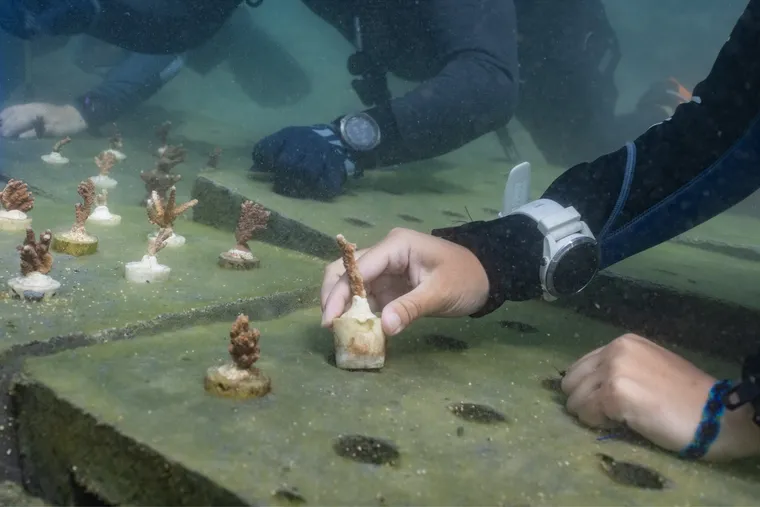
In Australia, coral restoration and adaptation programmes led by the Great Barrier Reef Foundation and the Australian Institute of Marine Science (AIMS), among other organisations, are exploring the use of artificial propagation and assisted evolution to unlock corals' capacity to withstand heat. Assisted evolution refers to human intervention that accelerates natural evolutionary processes, helping corals adapt more rapidly and recover from stressors such as marine heatwaves.
The team has successfully developed several approaches to enhance coral heat tolerance, including selective breeding — pairing naturally heat-tolerant corals with one another, or crossing them with less heat-tolerant populations, so that the next generation inherits greater thermal resilience. Another approach is thermal conditioning: exposing corals to gradually increasing water temperatures over extended periods to stimulate the development of higher heat tolerance, before breeding the next generation. Corals are also given specialised probiotics, nutritional supplements, and other treatments to improve their overall health, making them more capable of withstanding environmental change.
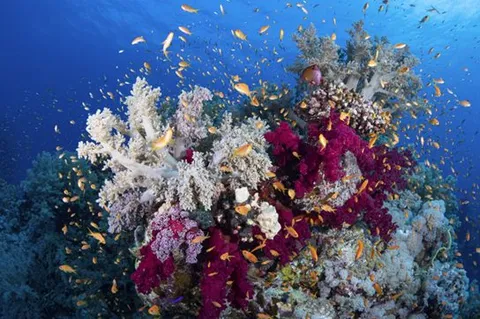
NOAA has stated that the fourth global coral bleaching event, occurring between 2023 and 2025, has affected approximately 84% of the world's coral reef areas. Image source: Pascal van de Vendel / Unsplash
Coral reefs are the rainforests of the ocean, supporting 25% of all marine biodiversity. Research into heat-tolerant corals offers both hope for survival and a sense of direction for conservation strategies in the face of the climate crisis. The efforts of scientists around the world to propagate heat-tolerant corals also give us reason to believe that coral reefs can survive and recover even in these challenging times.
References
- Reuters, Scientists identify 64,000 sq miles of coral reef capable of surviving climate crisis
- Earth.Org, Scientists Identify Three Times More Climate-Resilient Coral Reefs Than Previously Estimated
- Great Barrier Reef Foundation, Growing heat tolerant corals
- University of Miami, Heat-tolerant symbionts a critical key to protecting Florida's elkhorn coral from bleaching during marine heatwaves
※ This article is republished from the Delta Electronics Foundation's Low Carbon Life Blog: Research Finds Heat-Tolerant Corals Are Three Times More Widespread Than Previously Estimated, co-produced with BlueTrend.