Contents(11)
- Why Does 100% Coral Coverage Not Equal a Healthy Ocean?
- Shin Kong Life Charitable Foundation: Coral Restoration from Yilan Rice Fields to Penghu's Hang Bay
- Five Steps: Extending Conservation from Land to Ocean
- Open Data and a Replicable Model
- Professor Cheng Yu-jung: Circumisland Data Shows Taiwan's Coral Is in Decline
- The Low Baseline Hidden Behind "Long-Term Stability"
- Looking Only at Coverage Is Like Running Just One Test in a Health Check
- Coverage Unchanged, but Composition Has Shifted Dramatically
- Coral Restoration Requires Scientific Data Support
- BlueXplore: Becoming the Data Foundation for Taiwan's Marine Restoration
- Conclusion: Ecological Resilience Starts with Truly Understanding a Stretch of Sea
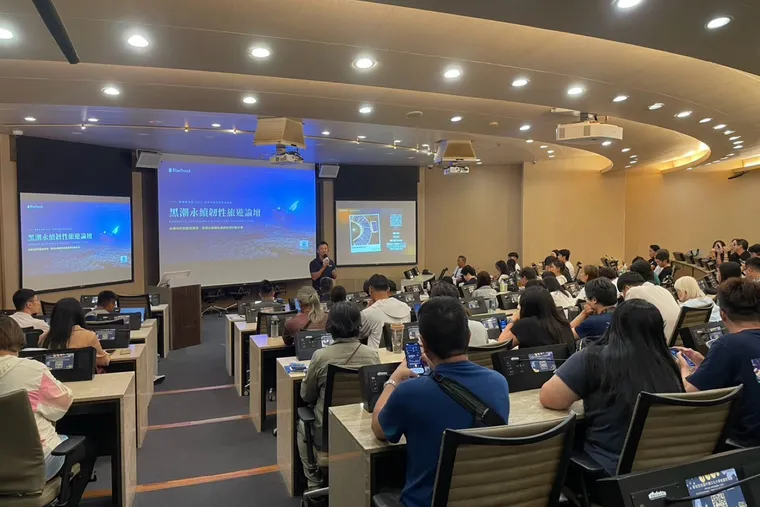
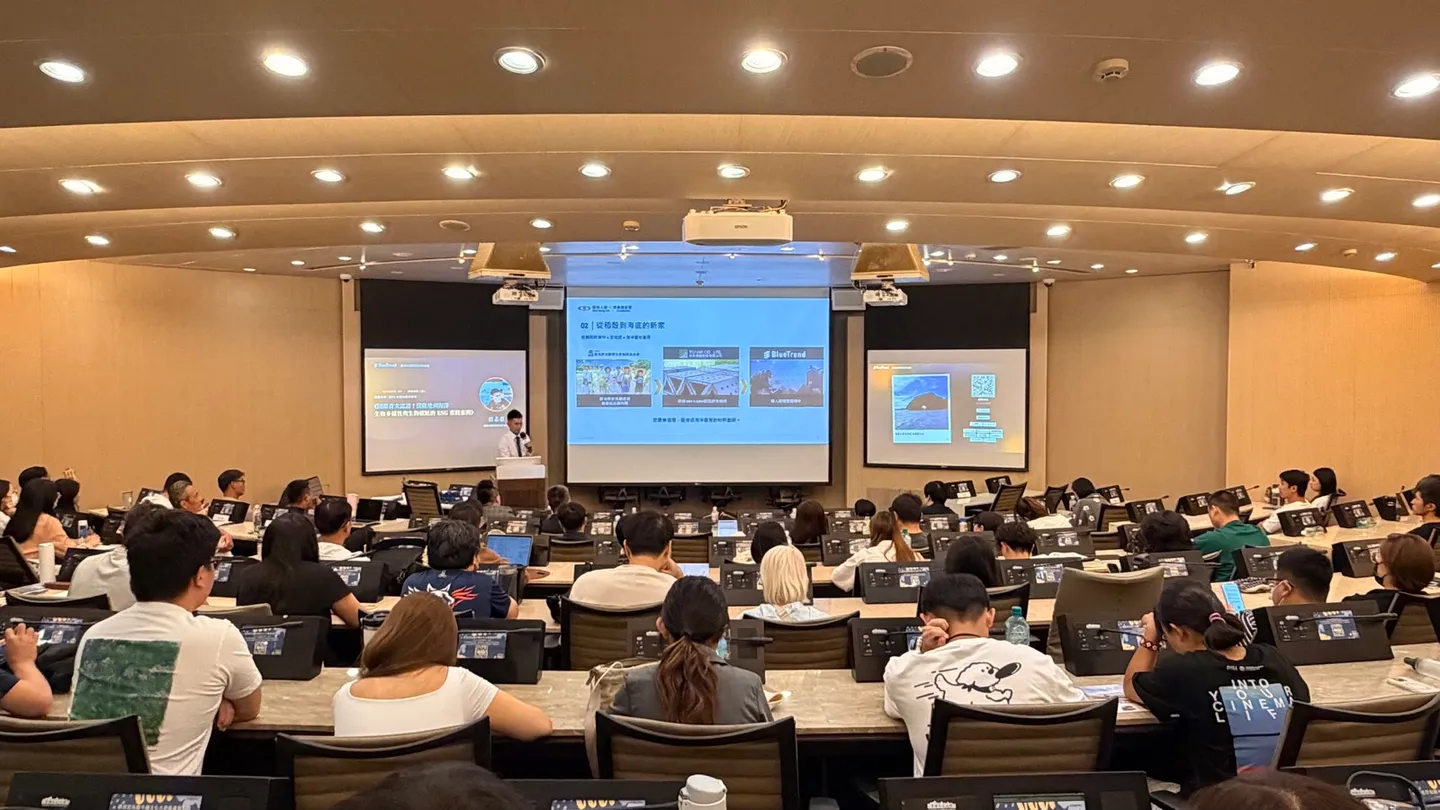
Does higher coral coverage mean a healthier ocean? The answer is no. At the "Kuroshio Sustainable Resilience Tourism Forum" held by BlueTrend on 18 October 2026, the second half of the programme was themed "Data-Driven Ocean: The Cornerstone of ESG Practice," returning to another dimension of resilience: ecological resilience. Even if coral coverage in a given sea area reaches 100%, if that coverage consists of only a single species or a single growth form, one typhoon or one heat event could cause a total collapse.
This article summarises the three key takeaways from the second half. First, the Shin Kong Life Charitable Foundation has been accumulating restoration and monitoring results at Hang Bay in Penghu using biochar coral restoration bricks; the next phase will switch to biochar made from Yilan rice husks, putting the land-to-ocean philosophy into practice. Second, Professor Cheng Yu-jung, head of the Department of Fisheries Technology and Management at National Kaohsiung University of Science and Technology, used circumisland survey data to show that Taiwan's coral is in decline, and that coral restoration must be supported by scientific data. Third, BlueTrend introduced the BlueXplore platform, with the goal of becoming the data foundation for Taiwan's marine restoration.
The first half of the forum focused on industrial resilience in the blue economy; for that content please refer to From Tateyama to Sipadan: How Can Marine Tourism Diversify? Kuroshio Forum on the Industrial Resilience of the Blue Economy.
Why Does 100% Coral Coverage Not Equal a Healthy Ocean?
Before the second half began, a citizen scientist video filmed at Hang Bay in Penghu was screened. The video noted that many people intuitively believe that fast-growing coral is most beneficial to the ocean, because it can form large coral stands in a short time. In reality, however, this is not the case: coral growth forms need to be balanced, with adequate numbers of each type, for the marine environment to be genuinely healthy.
Host Jerry posed the same question in his introduction: "Even if coral coverage in the sea reaches 100%, that doesn't necessarily mean the sea area is healthy." Coverage can only tell us how much area coral occupies, not which species are present or what ecological functions they provide. This is precisely the challenge that all three speakers in the second half addressed: ecological resilience must be understood through the lens of biodiversity and long-term data.
Coral growth forms can be divided into six types: branching, encrusting, massive, free-living, foliose, and plating. Different forms correspond to different ecological functions. When one form dominates, the ecological functions of that sea area become one-dimensional, and its capacity to recover from disturbance diminishes accordingly.
The following table highlights three common growth forms as examples:
| Growth Form | Ecological Characteristics |
|---|---|
| Branching | Fast-growing, provides shelter for fish, but relatively vulnerable to typhoons and high temperatures |
| Encrusting | Grows flush against rock, simple structure, provides limited habitat space |
| Massive | Slow-growing, structurally robust, better able to withstand environmental disturbance |


Shin Kong Life Charitable Foundation: Coral Restoration from Yilan Rice Fields to Penghu's Hang Bay
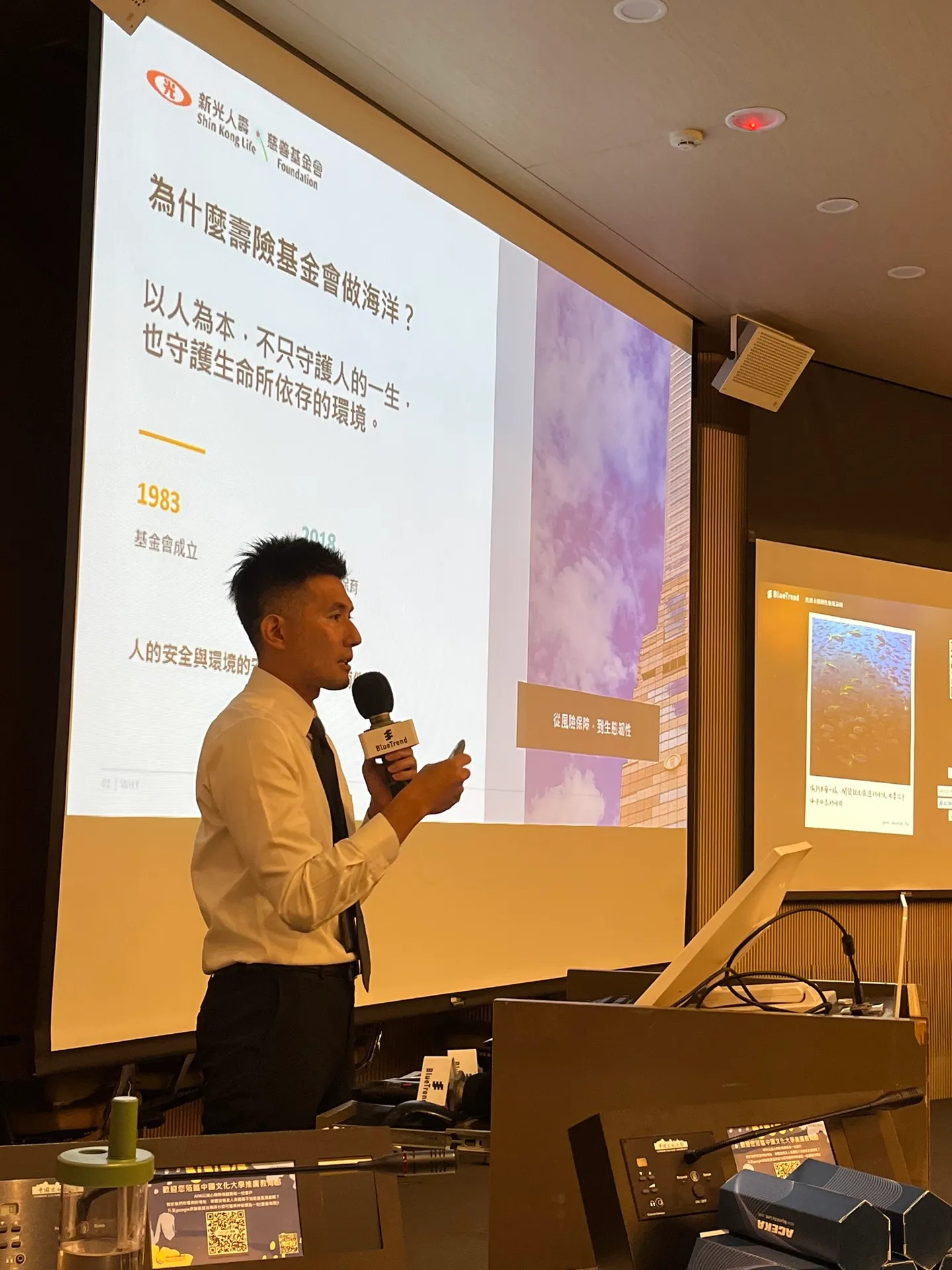
The first speaker was Tang Chih-hao, Executive Director of the Shin Kong Life Charitable Foundation. Tang opened by saying that what he wanted the audience to remember was not insurance, but what Shin Kong has done for marine conservation.
The Shin Kong Life Charitable Foundation was established in 1983. Marine conservation is its youngest programme, launched in 2018. Tang noted that every programme the Foundation runs is premised on long-term commitment, and marine conservation is no exception.
We believe marine conservation cannot be a one-off event. We're not doing this for ESG, and we're not doing it for CSR.
During the panel discussion, Tang shared an experience from this year's ocean cleanup in Penghu. When divers entered the water, thick layers of fishing nets blanketed the coral, and the team could only cut through them one cut at a time. After two consecutive days of cutting, the coral buried beneath the nets gradually emerged, and some divers were moved to tears underwater. Tang said the feeling in that moment could only be described as "deeply moving."
Five Steps: Extending Conservation from Land to Ocean
Beyond beach and ocean cleanups, Shin Kong began thinking about what more could be done for the ocean, leading to the development of a five-step process from land to sea.
| Step | Content |
|---|---|
| 1. Establish baseline | Survey the appropriate coral species and planting methods for the sea area, and establish an observation baseline |
| 2. Produce biochar from rice husks | Shin Kong Security promotes the "Youth from Yilan" young farmer homecoming programme in Yilan; harvested rice husks and straw are made into biochar |
| 3. Deploy restoration bricks | Biochar is mixed into low-carbon cement to produce coral restoration bricks, which BlueTrend assists in placing at Hang Bay in Penghu |
| 4. Citizen scientists | Train divers visiting Penghu as coral observers to record coral growth |
| 5. Biodiversity credits | Using long-term monitoring data as the foundation, work toward the long-term goal of biodiversity credits |
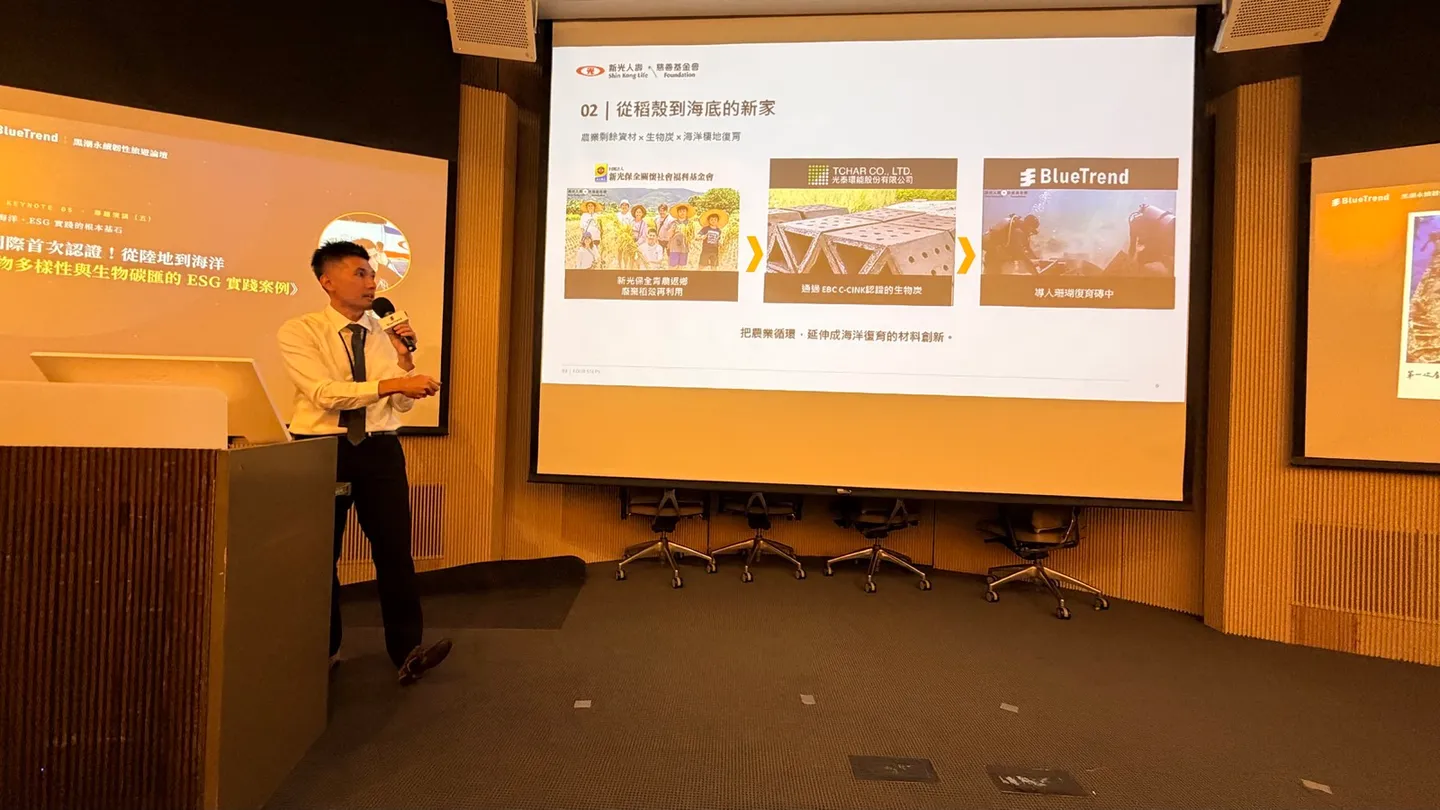
The land-to-ocean journey begins in Yilan. Shin Kong Security has long promoted the "Youth from Yilan" young farmer homecoming programme, supporting young people returning to their hometowns to grow organic rice using sustainable farming methods, with harvested rice shared with disadvantaged families. The rice husks and straw left over after harvest were once treated as agricultural waste; under this programme they are handed over to the Shin Kong Life Charitable Foundation to be made into biochar as material for future coral restoration bricks. In July 2026, both parties formally partnered in a ceremony witnessed by the Ministry of Agriculture, linking their long-term commitments to land and ocean into a single sustainable cycle. For full details, see From Yilan Rice Fields to Penghu Coral Reefs.
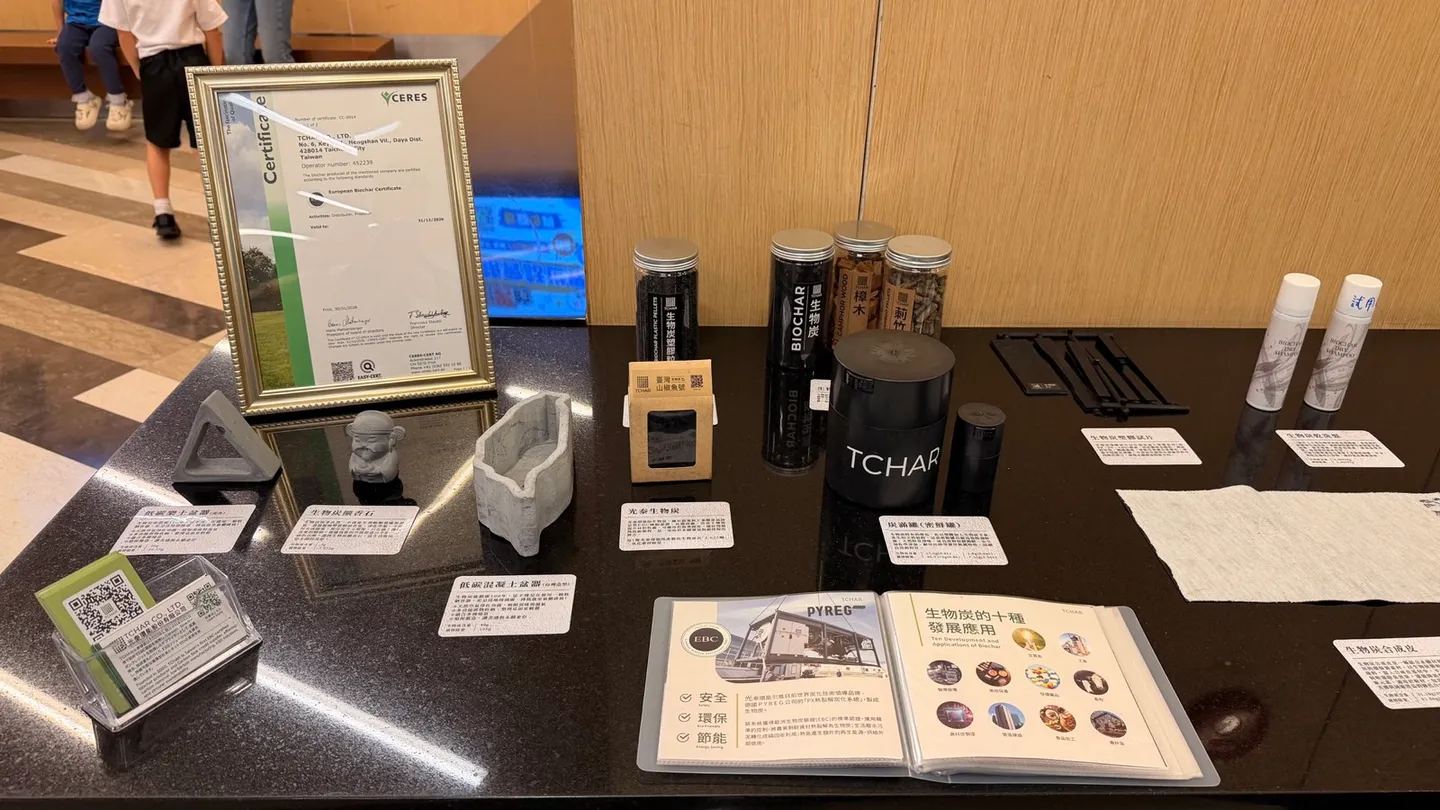
This batch of biochar is produced by Tchar, holds the European Biochar Certificate (EBC), and has its carbon removal volume registered under the Global Biochar C-Sink standard. Tang emphasised that third-party certification is central to this programme: the feedstock, production process, and carbon content of the biochar are all rigorously controlled — this is not self-reporting.
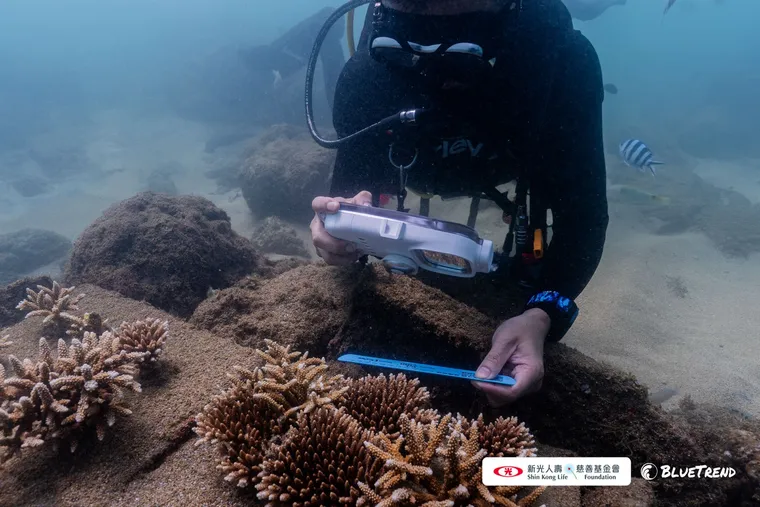
In 2025, Shin Kong experimentally deployed 100 biochar coral restoration bricks at Hang Bay, planting 552 coral specimens. Those bricks used biochar made from wood. Tang shared observation photos taken one year later, showing that what had once been small coral seedlings had grown into a full coral stand. According to the project team's survey in September 2025, hard coral coverage at Hang Bay reached 45.6%, with dead coral coverage at 0%. The next phase of restoration bricks will use biochar made from Yilan rice husks, extending the agricultural cycle on land into the ocean and giving full meaning to the land-to-ocean spirit.
Open Data and a Replicable Model
Tang specifically noted that the data collected by the programme does not belong to Shin Kong — anyone interested in coral research is welcome to use it. Companies wishing to engage in coral restoration can also replicate this model in its entirety.
We believe replicability is the most important quality of genuine sustainability.
Tang also expressed the hope that, in the future, a portion of the fees visitors pay at local dive shops would be returned to coral research and restoration, rather than flowing back to Shin Kong. When asked during the panel discussion about the original motivation for the programme, Tang replied: "From the very beginning, we weren't saying we wanted to plant a certain number of corals — we really hoped to see different species of coral, different species of fish, come back." This remark resonated perfectly with the central theme of the second half: the goal of restoration is biodiversity, not merely coverage.

Professor Cheng Yu-jung: Circumisland Data Shows Taiwan's Coral Is in Decline
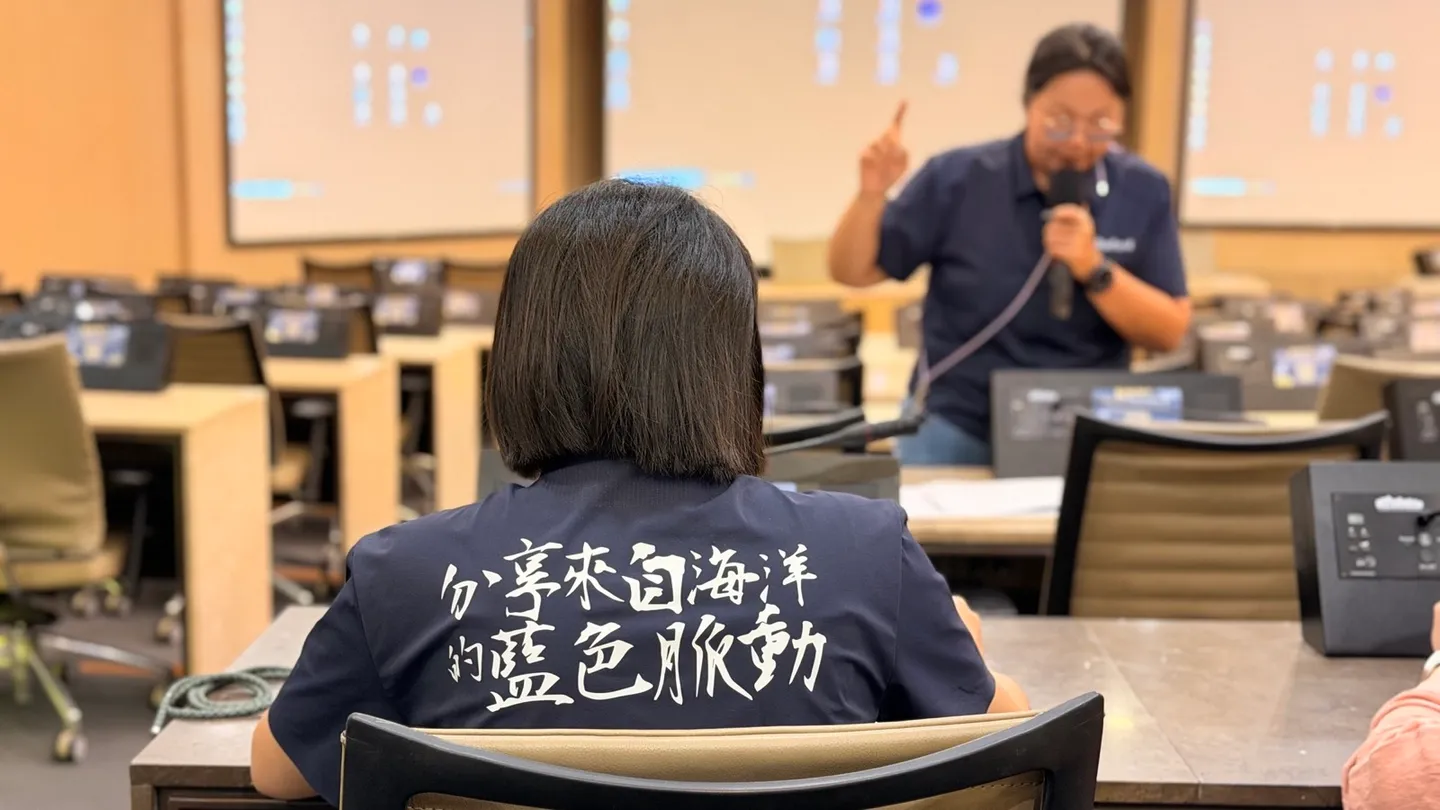
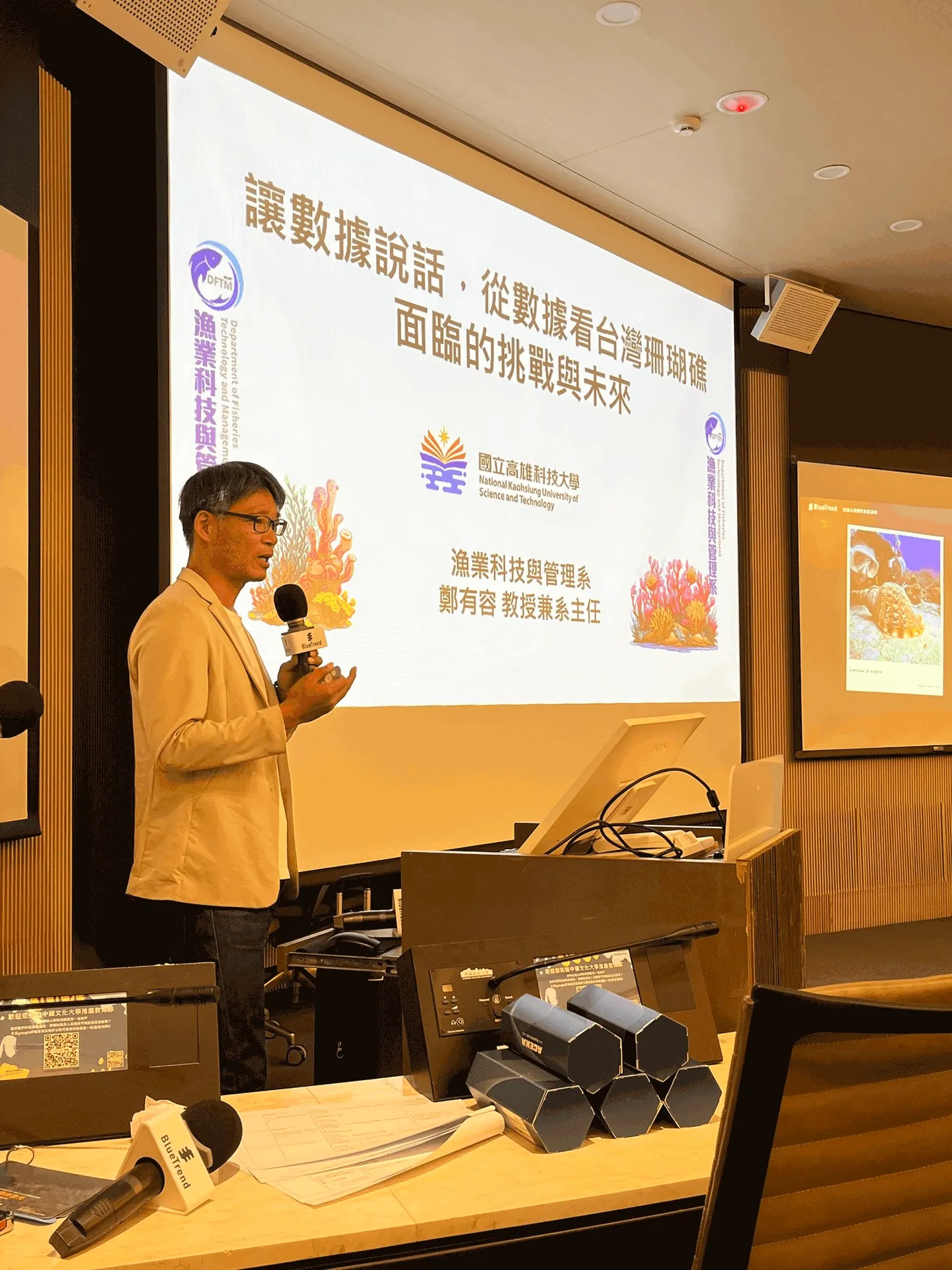
The second speaker was Professor and Department Head Cheng Yu-jung of the Department of Fisheries Technology and Management at National Kaohsiung University of Science and Technology, and a key driving force behind Shin Kong's coral restoration work in Penghu. Professor Cheng spoke under the theme "Let the Data Speak," presenting the latest research findings on the current state of Taiwan's coral reefs.
Cheng opened by noting that the world is in the midst of the fourth mass coral bleaching event, and Taiwan is no exception — this year's sea surface temperature data shows a sea of red around Taiwan's waters. While high temperatures are hard enough for humans to bear, marine life faces even greater pressure, because they have long lived in an ocean-buffered environment of relatively stable temperatures and are acutely sensitive to temperature changes. Once sea temperatures remain persistently elevated, adaptation becomes all the more difficult.
The Low Baseline Hidden Behind "Long-Term Stability"
Cheng first cited the 2025 coral reef status report compiled by an international organisation. Taiwan's data spans from 2009 to the present across 40 sites, including 32 tropical coral reef areas and 8 atypical coral assemblage areas — one of the few long-time-scale surveys available for Taiwan.
The results show no clear upward or downward trend in hard coral coverage in Taiwan, which on the surface appears stable over the long term, yet large algae have continued to increase, indicating elevated nutrients and poor water quality. Researchers in the report also sounded a cautionary note: this apparent "absence of change" may represent resilience, or it may mean that Taiwan's coral has long been sitting at a persistently low baseline. Cheng pointed out that whether coral reefs can recover after disturbance — that is, ecological resilience — is the key factor that will determine the future of Taiwan's coral reefs.
A separate long-term survey, supported by the Ocean Conservation Administration and running from 2021 to 2026, covers 60 sampling sites. Approximately 65% were in good condition, while roughly 35% showed decline or functional loss — and that proportion continues to grow. Cheng noted that the sites deteriorating most are often those that were previously considered the best, including Xiaoliuqiu and Kenting; this year's survey newly added Wanlitong.
| Survey | Scope | Key Findings |
|---|---|---|
| 2025 International Coral Reef Status Report (Taiwan section) | 2009 to present, 40 sites | No clear upward or downward trend in hard coral coverage; large algae increasing |
| Long-term survey supported by the Ocean Conservation Administration | 2021–2026, 60 sampling sites | Decline and functional loss approx. 35%, proportion continues to increase |
| Citizen science survey led by NTOU, assisted by NKUST | 22 partner dive shops, 40 monitoring stations | Average coverage on the east coast 66%; encrusting coral most prevalent in all sub-regions |
Looking Only at Coverage Is Like Running Just One Test in a Health Check
Cheng argued that the biggest limitation of existing surveys is that coverage is the only metric used, drawing a comparison to a medical check-up: a regular health examination looks at many indicators, but coral surveys often rely on a single number, making it very difficult to see the full picture.
Furthermore, most surveys use only a single transect line and tend to be placed in areas where coral is already present, which means that Taiwan's reported coral coverage figures are generally overestimates. Taking Xiaoliuqiu as an example, Professor Cheng's team found actual coverage of approximately 5% in their surveys, while a single-transect survey yields approximately 10%.
We keep talking about biodiversity. Hand on heart: we call Taiwan a coral kingdom — do we actually know how many coral species we have? We don't.
Taiwan's historical records document approximately 558 coral species, but under Cheng's team's reassessment in the context of global climate change, approximately 246 extant species have now been recorded. The surveys also found that encrusting coral is the most prevalent form in every sub-region of Taiwan, indicating that habitat complexity is declining and the marine ecosystem is becoming progressively simplified.
Coverage Unchanged, but Composition Has Shifted Dramatically
Surveys in national parks provide even more direct evidence of the risks of looking only at coverage. In Dongsha Atoll National Park, coral coverage fluctuates high and low — and the average has not changed — yet species composition and community structure have shifted by 64%. Penghu South Islands National Park, following a cold-water bleaching event in 2022 and compared against the 2009 historical baseline, shows a 90% change in composition.
This also explains why 100% coral coverage does not equal a healthy ocean. Cheng illustrated this with a common restoration scenario: a reef damaged after a disturbance is restored through intensive effort to a visually attractive state, and many people regard this as success — but her laboratory does not agree.
That kind of coral — all branching — has no ecological resilience. It grows fast, but it has little resistance to environmental disturbance. One typhoon, one heat event, and it all reverts to what it was before.
Coral Restoration Requires Scientific Data Support
Cheng emphasised that Taiwan will inevitably face the need for coral restoration, but without data, fundamental questions remain unanswered: which coral species to restore, in what quantities, with what ecological functions, and to what standard can a reef be considered healthy.
This isn't necessarily wrong, but it has no scientific basis — and the probability of getting it wrong is quite high.
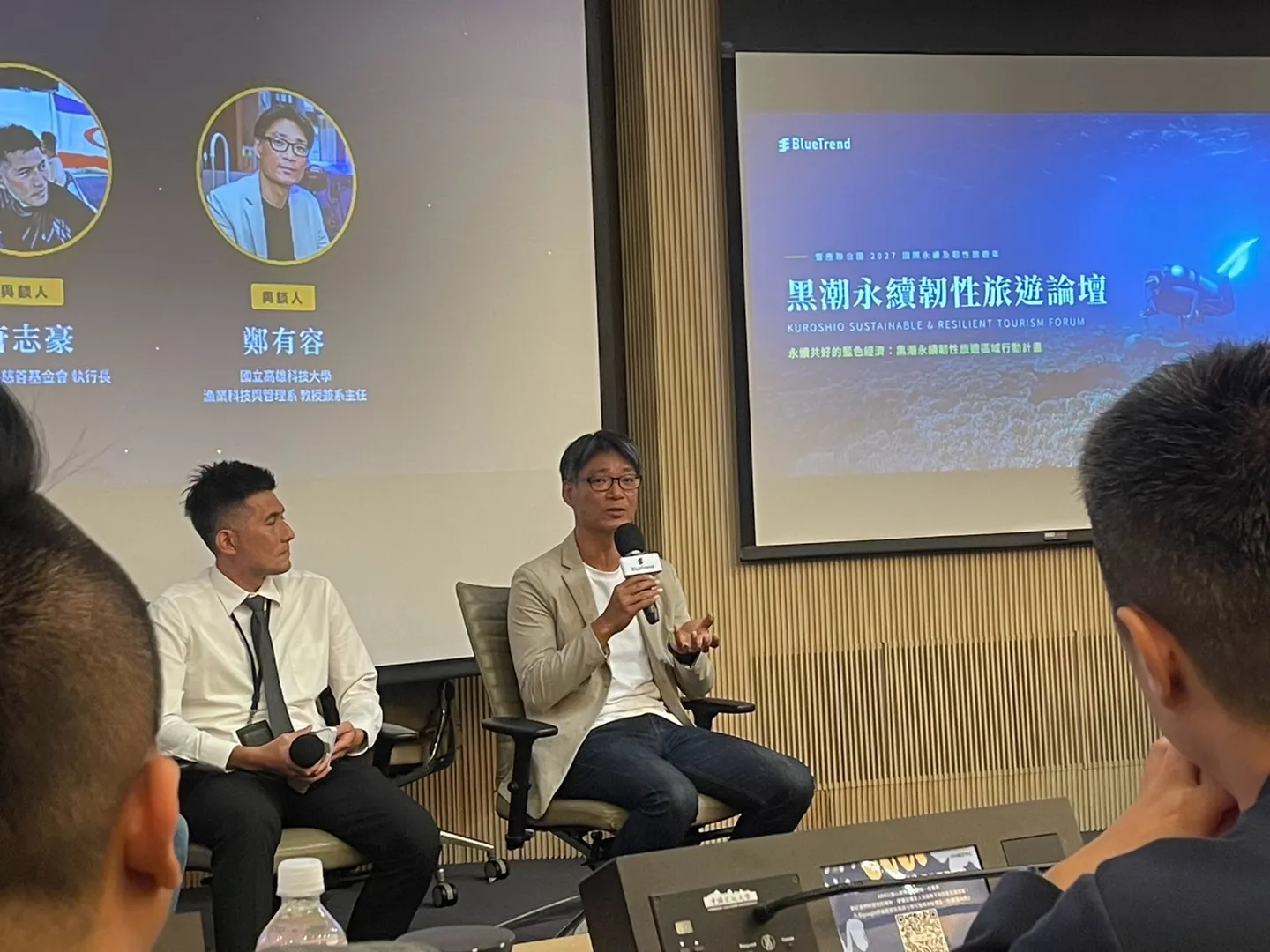
At Hang Bay, Professor Cheng's team individually recorded the species and growth form of every coral within the survey area, establishing a baseline for long-term monitoring. Cheng noted that with this baseline in place, returning the following year makes it possible to know exactly how much has been lost and how much needs to be replenished — "that's not doing it blindly."
As for whether it is "better to do less" in marine conservation, Cheng believes that statement comes with a prerequisite: when our understanding of the ocean is still insufficient, hasty intervention may cause stress. Therefore, before committing resources, one should first find a professional partner with a solid scientific foundation and start from the right knowledge base.
BlueXplore: Becoming the Data Foundation for Taiwan's Marine Restoration
In the final segment of the forum, BlueTrend founder Chao Chien-shun (Spark) introduced the BlueXplore Biodiversity Platform. Over BlueTrend's 10 years of collaboration with numerous companies and government agencies, a common pain point has emerged: resources invested in marine conservation typically produce only a one-off results report that is difficult to quantify and difficult to accumulate.
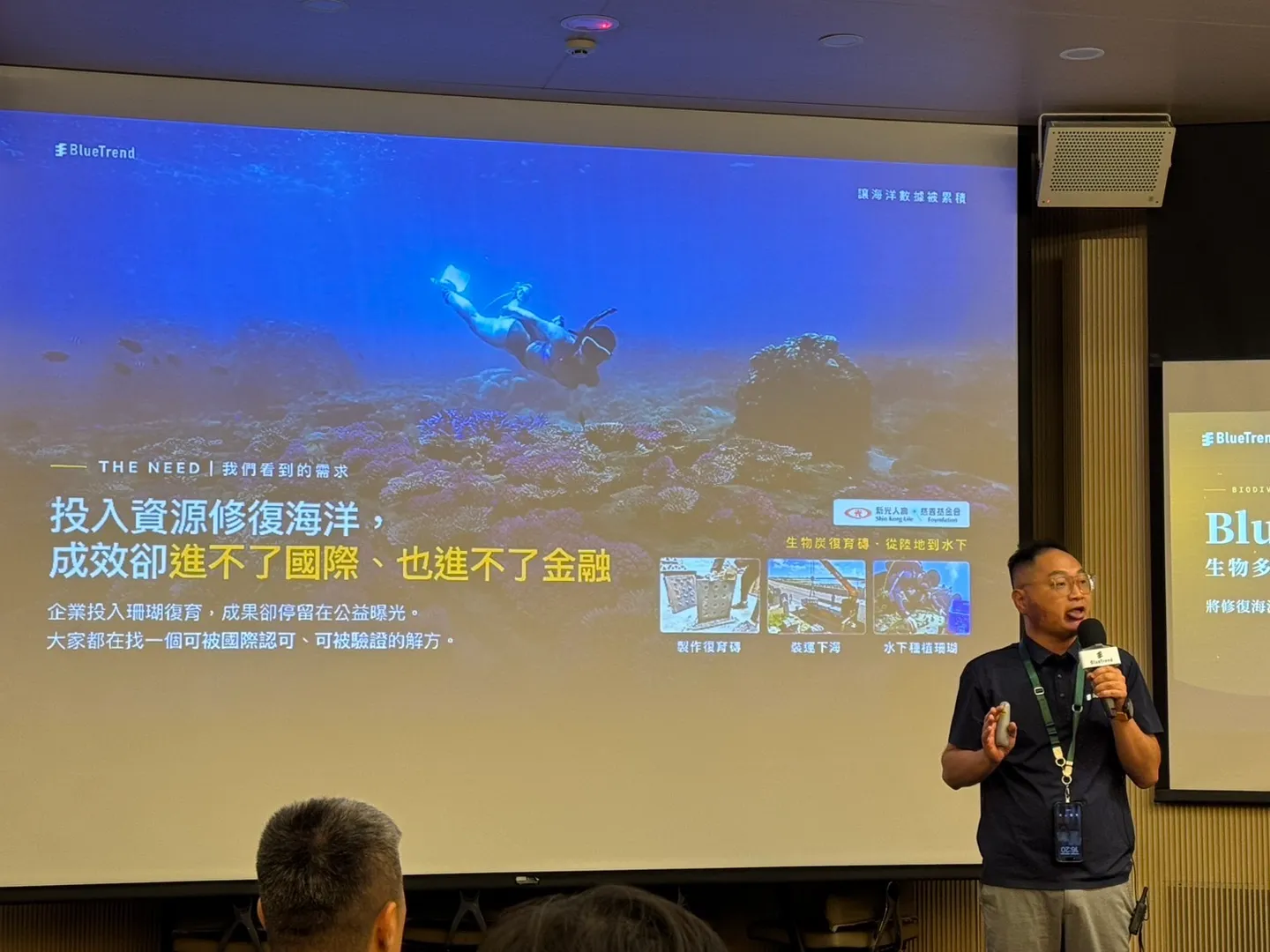
BlueXplore aims to integrate survey data from various teams into a standardised format that can be accumulated and verified over the long term, with Professor Cheng Yu-jung's team serving as scientific advisors to build a data foundation for Taiwan's marine restoration. This year BlueTrend also joined the Biodiversity Credit Alliance (BCA), continuing to work toward the long-term goal of biodiversity credits.
In 2027, Shin Kong Security and the Shin Kong Life Charitable Foundation will invest resources to support BlueTrend in the continued development of the biodiversity database, progressively accumulating long-term monitoring data to put the biodiversity credit programme into practice step by step.
We can't issue credits, and we don't have the capacity to conduct research. What we can do is build the database properly — bringing together the data collected by divers and the data collected by researchers.
Conclusion: Ecological Resilience Starts with Truly Understanding a Stretch of Sea
The three speakers in the second half — representing industry, academia, and platform — all responded to the same core insight: the health of a coral reef cannot be measured by coverage alone. The Shin Kong Life Charitable Foundation demonstrated how companies can engage through long-term commitment and open data; Professor Cheng Yu-jung used circumisland data to show that Taiwan's coral is in decline and that restoration must be built on a scientific baseline.
BlueTrend hopes that through BlueXplore, the efforts of divers, researchers, and companies can be connected, turning every underwater observation into a data point for Taiwan's marine restoration. Ecological resilience requires long-term, sustained monitoring — and every diver can be part of that effort.
If you would like to participate in coral monitoring at Hang Bay in Penghu, or to learn about the latest developments with BlueXplore, please reach out to us via the BlueTrend LINE official account.
Further reading: From Yilan Rice Fields to Penghu Coral Reefs: How a Grain of Rice Becomes a Force for Ocean Protection
This article is compiled from the second half of the 2026 Kuroshio Sustainable Resilience Tourism Forum. The forum was organised by BlueTrend and guided by the Ocean Affairs Council.