Contents(6)
- First, What Is a "Carbon Sink"? Not All "Carbon Reduction" Is the Same
- How Does Taiwan's Common Voluntary Carbon Reduction Differ from International Carbon Removal Certification?
- How Was the Carbon Sink in These Restoration Bricks Verified? The Complete Process of the Penghu Pilot Project
- An Honest Take on 0.313 Tonnes: It's Not a Large Amount, but the Editor Thinks This Path Is Worth Taking
- Next Steps: Connecting Carbon Sinks to Sustainable Tourism and Biodiversity Credits
- Conclusion: The Carbon Sink Is Just the Starting Point — The Editor Is Testing an Entirely New Set of Possibilities
After the previous article on Penghu's biochar coral restoration bricks went out, the question the Editor received most wasn't about how well the coral was growing — it was: "How exactly is that carbon sink calculated?" This article is here to answer that clearly. The batch of restoration bricks deployed in Penghu's Hang Bay by the Shin Kong Life Charity Foundation, Taiwan Shin Kong Security, Guangtai Huanneng, and BlueTrend has received the world's first international carbon removal certification for a coral restoration project, with a net carbon sink of 0.313 tonnes of CO₂ equivalent. Here's the key point: that number isn't large, but the verification process it went through is very different from the voluntary carbon reduction most people in Taiwan are familiar with. The Editor will use this pilot project to help you understand what a carbon sink is, how Taiwan's voluntary carbon reduction differs from international carbon removal certification, and why the Editor believes this path is worth continuing to explore.
First, What Is a "Carbon Sink"? Not All "Carbon Reduction" Is the Same
A Carbon Sink Is the Earth's "Carbon Warehouse"
The term "carbon sink" comes up often these days, but it's easy to get confused about. The Editor will put it in the plainest possible terms: a carbon sink is a "carbon warehouse" that absorbs CO₂ from the atmosphere and locks it away. Forests, oceans, and soil are all natural carbon sinks — plants absorbing carbon through photosynthesis is the most classic example of carbon storage in action.
The problem is, having a warehouse isn't enough. You also need to prove that "the carbon really went in and won't quietly escape" before that carbon account can be considered valid. This is the most critical part of the whole story — you'll get a much better feel for it when we get to the verification process.
Carbon Reduction and Carbon Dioxide Removal (CDR) Are Not the Same Thing
Here's a concept that trips a lot of people up, and the Editor wants to clear it up first. There are actually two very different approaches to "reducing carbon."
The first is called "emissions reduction" — reducing or avoiding emissions. When you swap old machinery for energy-efficient equipment or switch to solar power, carbon that would have been emitted simply isn't released. That's emitting less. The second is called "Carbon Dioxide Removal," abbreviated as CDR — it means actively pulling CO₂ that's already floating in the atmosphere back out and storing it long-term. The first approach is "producing less waste"; the second is "picking up the waste you've already thrown out." They are completely different things. Biochar is listed by the UN's IPCC as one of the CDR technologies with significant potential, because it can take the carbon that plants have absorbed and lock it into a stable solid form for hundreds of years.


How Does Taiwan's Common Voluntary Carbon Reduction Differ from International Carbon Removal Certification?
Now that you understand the difference between emissions reduction and carbon removal, this section is the core of the article. The "carbon credits" and "voluntary reduction" that Taiwanese people hear about most often, and the "international carbon removal certification" that the Penghu bricks received, are actually two quite different systems.
Taiwan's Voluntary Reduction: Mostly "Emitting Less," Registered Domestically
Taiwan is currently operating under a carbon fee framework, supplemented by the Ministry of Environment's "Voluntary Emission Reduction Projects." Simply put, a company submits its own carbon reduction project — say, switching to energy-efficient equipment, afforestation, or installing renewable energy — to the Ministry of Environment for review. Once approved, it receives "reduction credits," commonly known as carbon credits, which can be registered domestically and traded on the Taiwan Carbon Credit Exchange.
This mechanism is important, but did you notice? The majority of reduction credits currently issued in Taiwan are "emissions reduction" type credits. Domestic methodology for natural carbon sinks is still in its early stages. And it operates under domestic rules, primarily corresponding to domestic carbon fee offsets and ESG disclosure — international buyers don't necessarily recognise it.
Biochar Carbon Sinks: Internationally Certified "Permanent Carbon Removal"
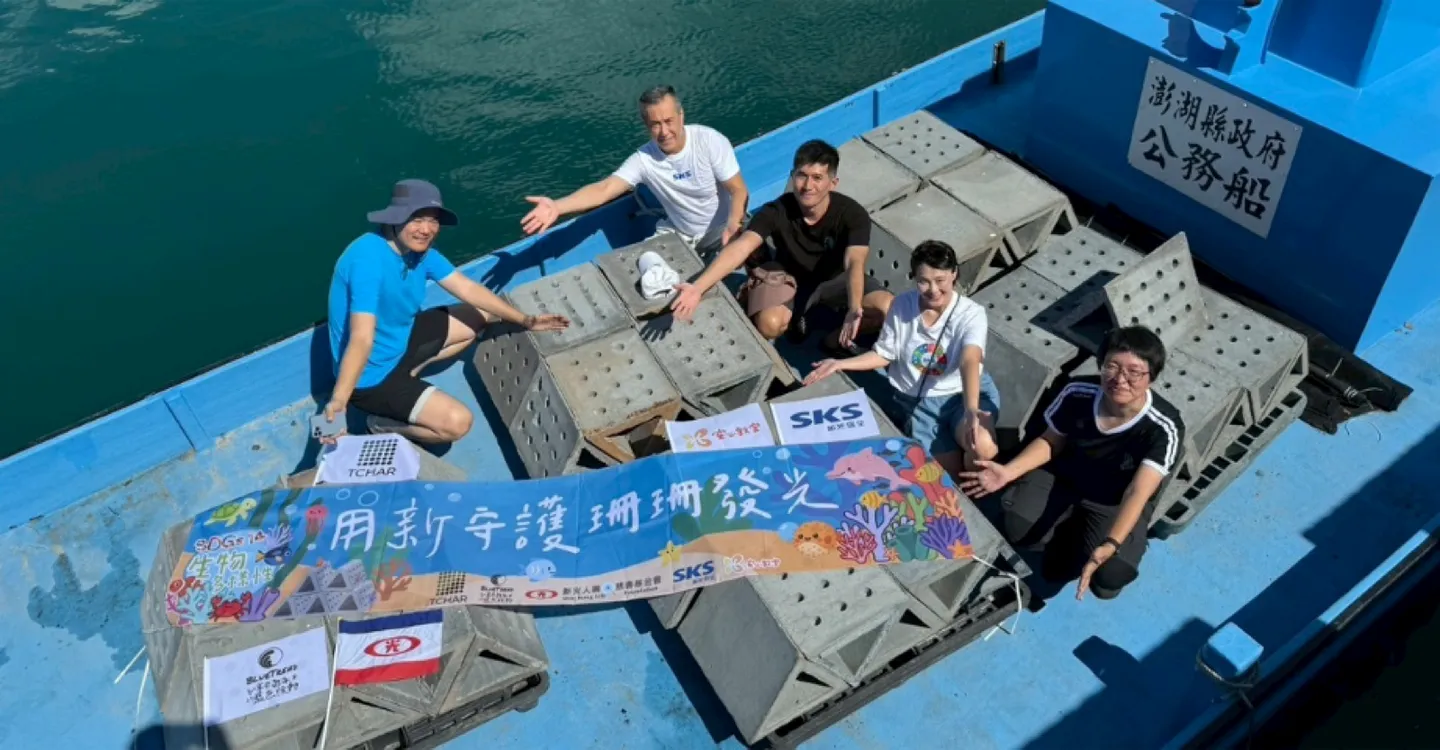
The Penghu bricks took a different path. The biochar used passed EBC — the European Biochar Certificate — administered by Carbon Standards International (CSI) in Switzerland. Guangtai Huanneng is the first and currently the only biochar manufacturer in Taiwan to hold EBC certification.
After passing EBC, the biochar's net carbon removal volume was calculated according to the Global Biochar C-Sink international standard and registered in the Global C-Sink Registry. In other words, this is a "permanent carbon removal" credit recognised by the international voluntary carbon market — not a domestic version. Just how seriously does the international community take biochar? According to CDR.fyi statistics, approximately 87% of removal-type carbon credits on the voluntary carbon market currently come from biochar, which shows just how significant it is in the field of carbon removal.
One Sentence to Set Them Apart: Voluntary Reduction vs. Carbon Removal
If you only want to remember one line, the Editor will boil it down for you: Taiwan's common voluntary reduction is mostly "emit less, register domestically." The international carbon removal certification that the Penghu bricks went through is "pull carbon back, register internationally, store permanently." One proves you produced less carbon; the other proves you actually deposited carbon into the warehouse. Their value and degree of international recognition are on different levels. This is also why, despite its modest carbon sink volume, the Editor still considers this pilot project highly meaningful.
How Was the Carbon Sink in These Restoration Bricks Verified? The Complete Process of the Penghu Pilot Project
After all that talk about standards, you're probably wondering: in practice, how was that 0.313 tonnes of carbon sink verified, step by step? The Editor has broken down the entire process for you.
Starting with EBC-Certified Biochar
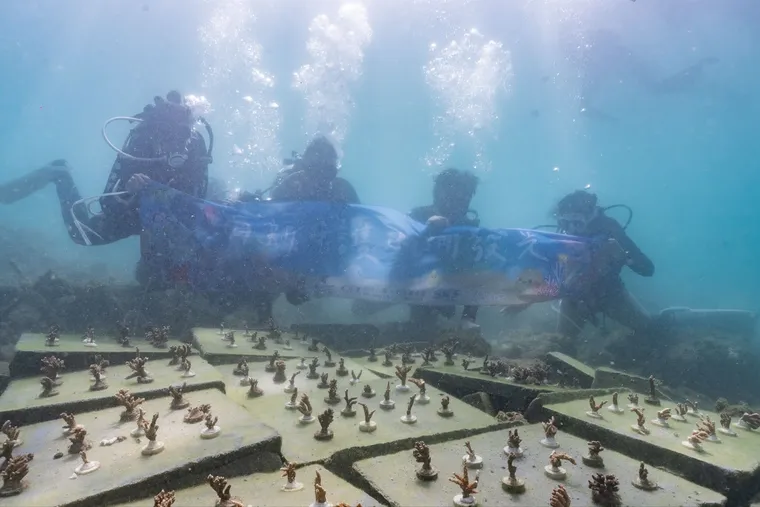
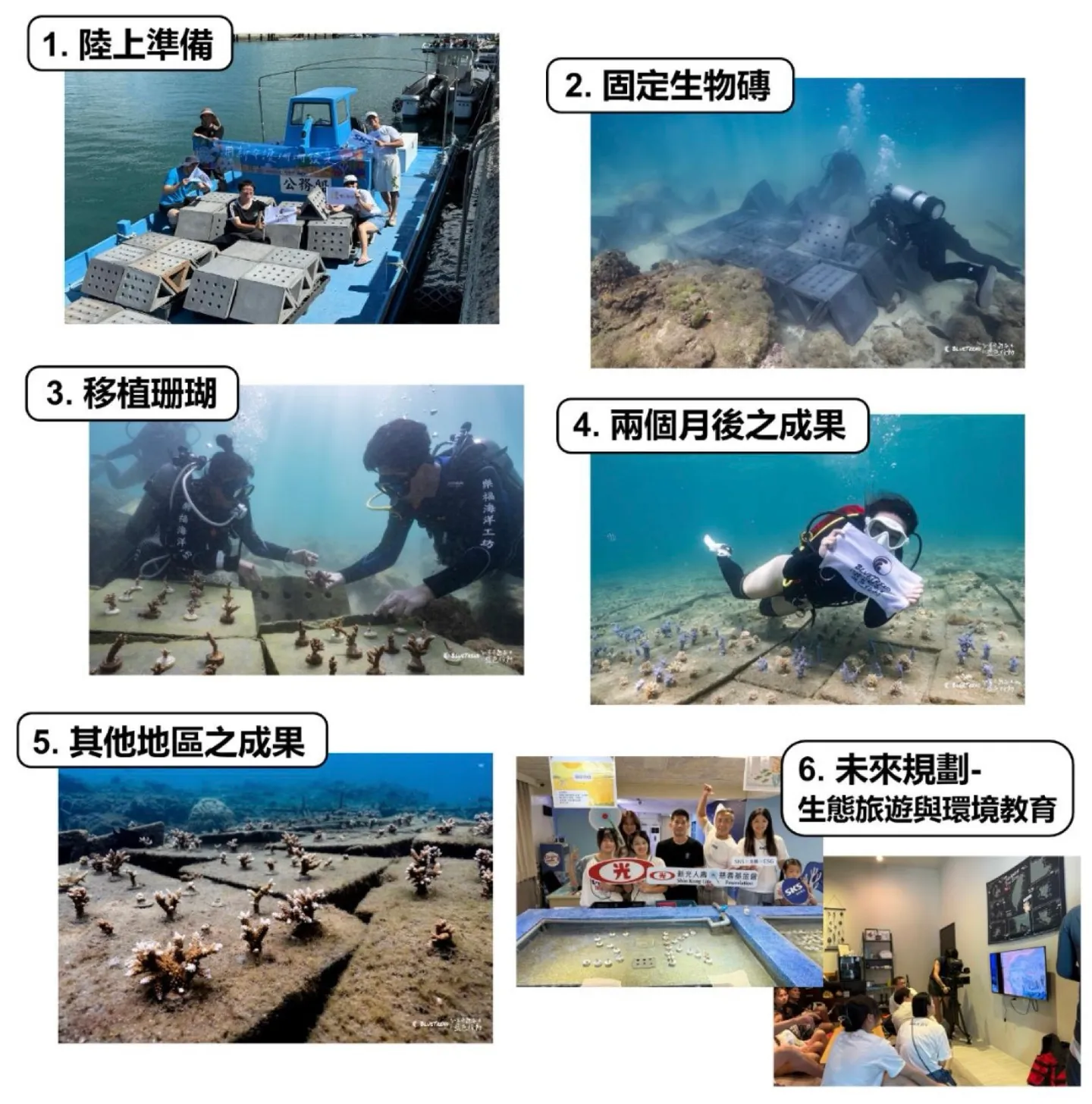
The first step happens on land. Biomass feedstocks — wood, bamboo, agricultural and forestry residues — are subjected to high-temperature pyrolysis in an oxygen-deprived environment to produce stable biochar. This batch of biochar must first pass EBC certification, confirming that both the production process and carbon content meet the required standards. The biochar is then mixed into low-carbon cement to form coral restoration bricks. The team also repeatedly adjusted the biochar particle size, addition ratio, and formulation, all to ensure the bricks can withstand the high salinity, high corrosion, and long-term water flow of the marine environment.
dMRV Digital Monitoring: Making Every Data Point Traceable
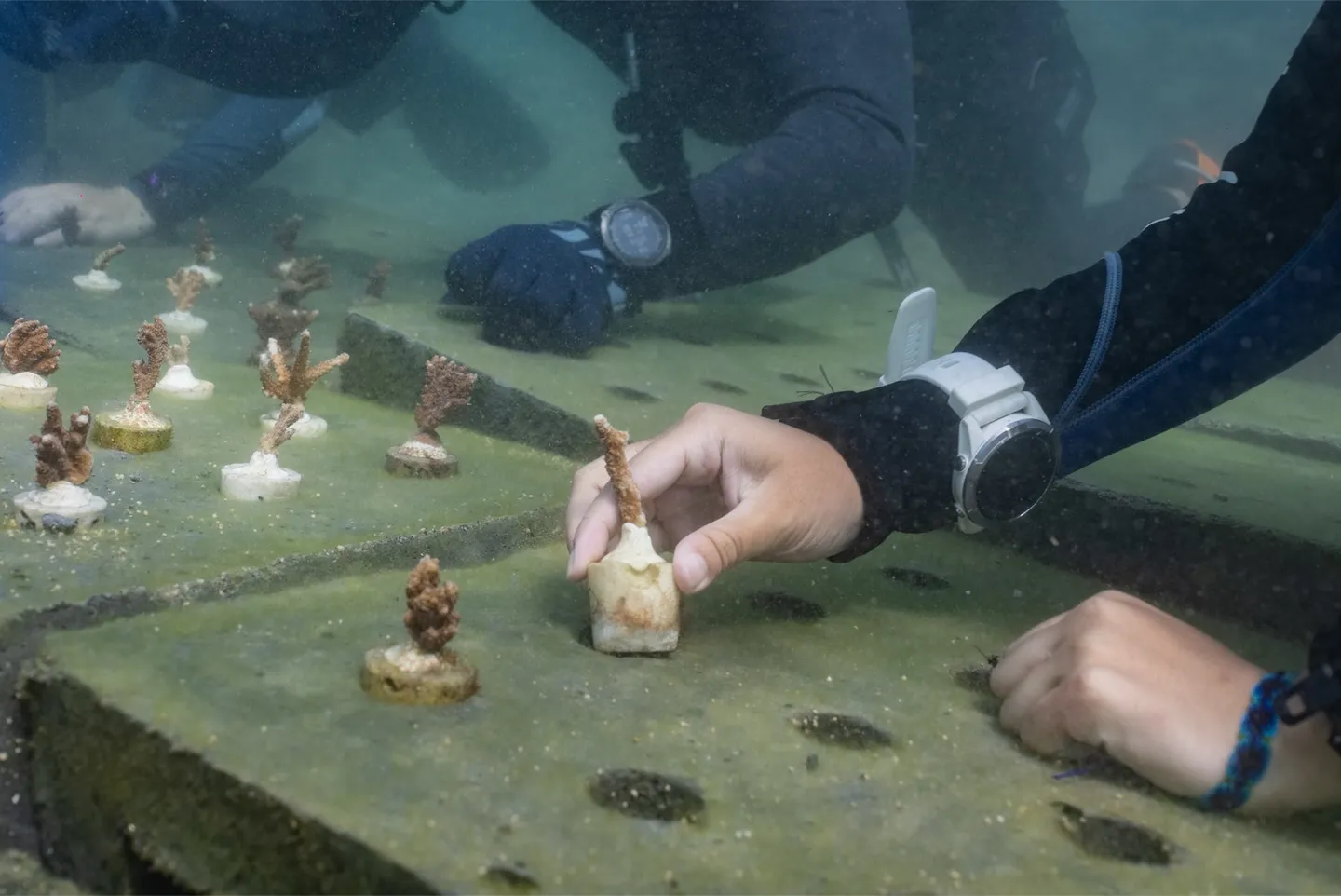
Once the bricks are deployed underwater, the main event is monitoring. This project introduced dMRV — digital Measurement, Reporting, and Verification. It automates and real-time-enables as much of the underwater monitoring data collection and upload as possible, with the goal of making every data point transparent and traceable so that anyone who wants to check can do so — rather than taking the team's word for it.
The Editor believes dMRV is one of the most critical links in this process. The biggest risk with carbon sinks is "self-reporting without accountability." Only by laying the data out in the open and subjecting it to third-party standards review can a carbon account truly hold up.
Calculating 0.313 Tonnes and Registering in the Global C-Sink Registry
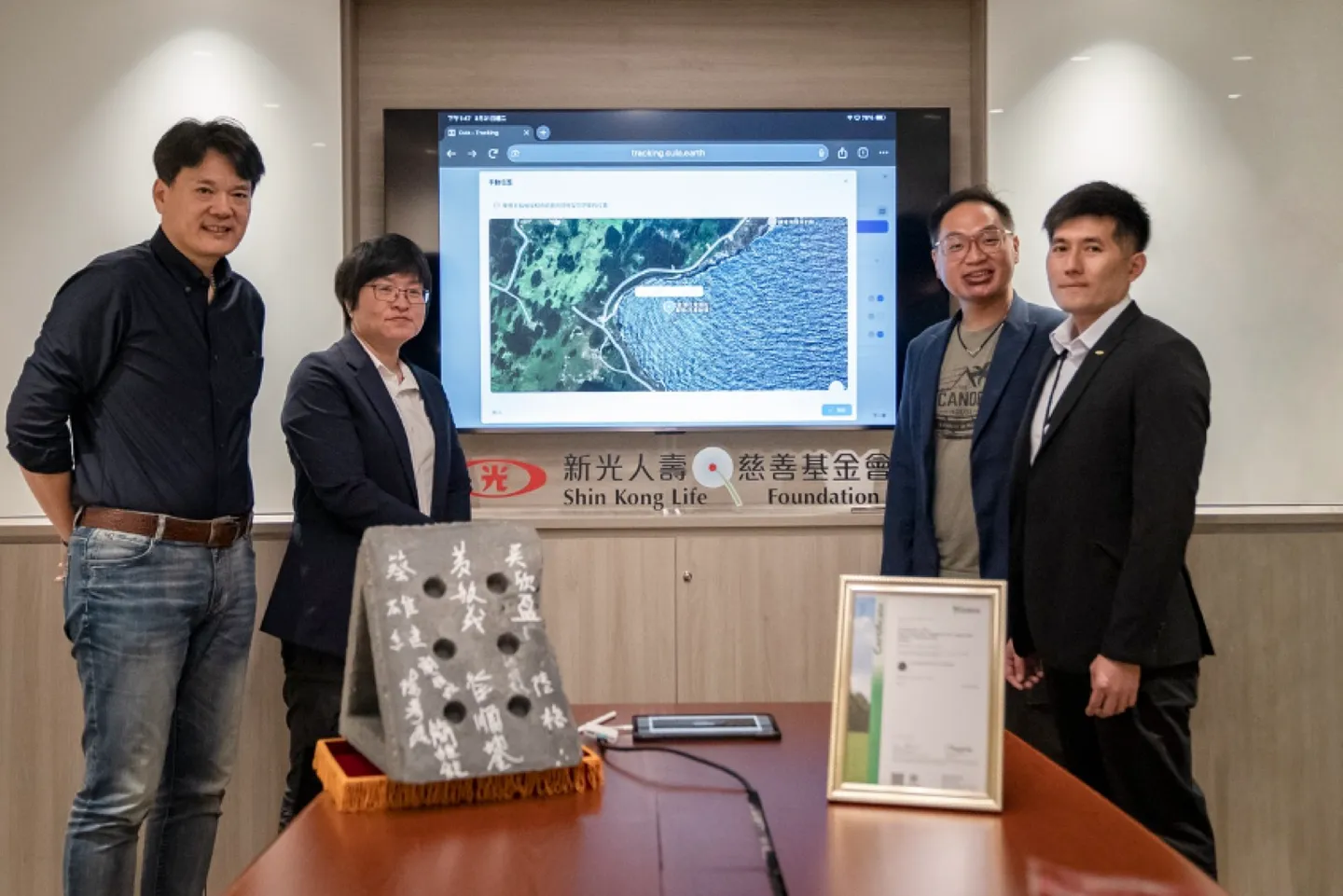
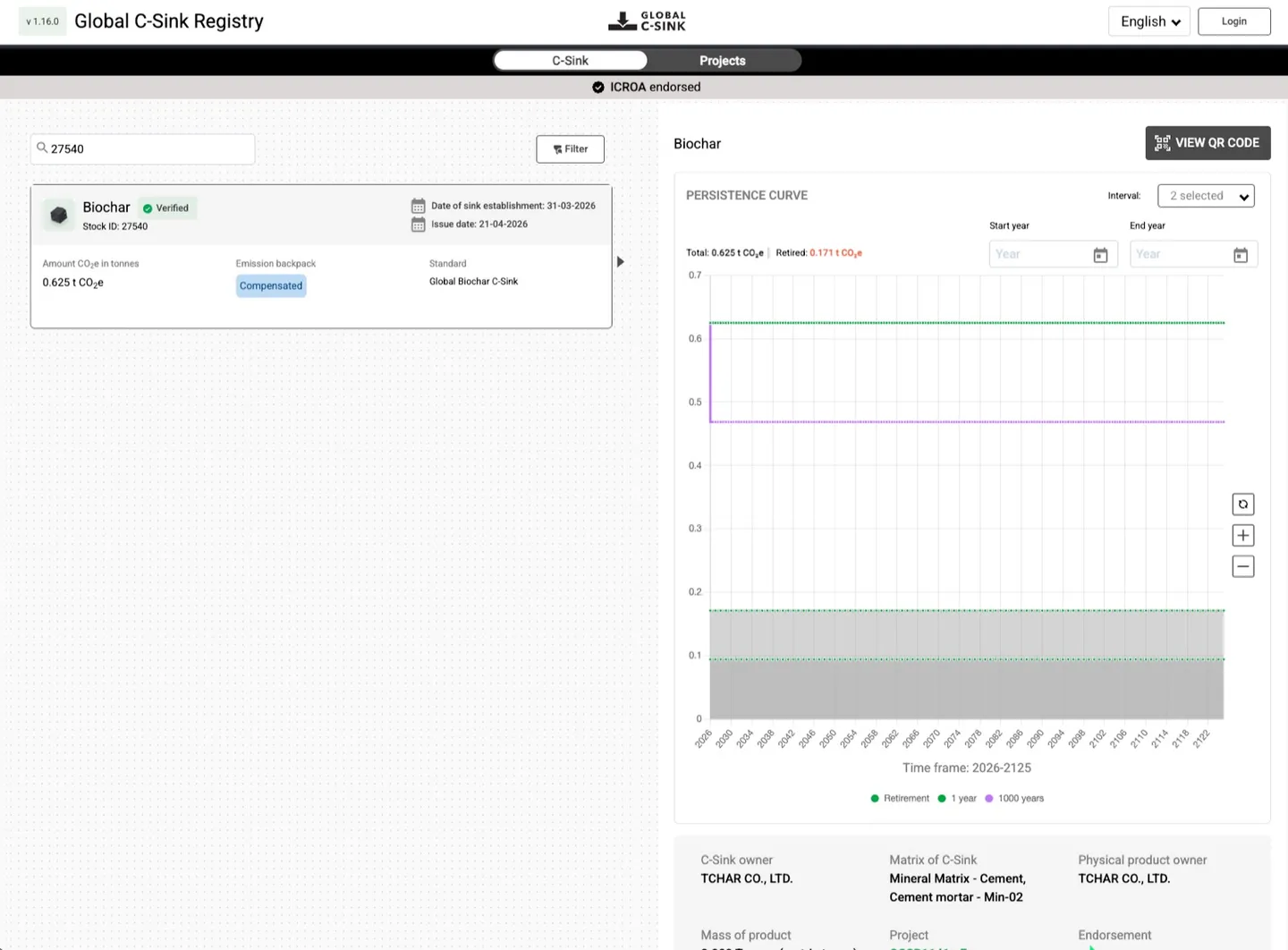
The final step: following the Global Biochar C-Sink methodology, the carbon actually sequestered by this batch of bricks was calculated, yielding approximately 0.313 tonnes of CO₂ equivalent in net carbon removal, and the result was registered in the Global C-Sink Registry. From a handful of biochar on land, to a brick on the seafloor, to a carbon sink record in a registration system — the entire chain has been completed. It's also worth noting that after real-world ocean conditions, the bricks' structural integrity remains intact, confirming that the biochar composite material can indeed withstand the marine environment.
An Honest Take on 0.313 Tonnes: It's Not a Large Amount, but the Editor Thinks This Path Is Worth Taking
The Editor wants to be straightforward here: 0.313 tonnes of carbon sink is not a large number. To put it in perspective, it's roughly equivalent to the amount emitted by a small petrol car driving around 1,000-plus kilometres — one lap around the island of Taiwan. At this stage, relying solely on the carbon sink from these bricks to generate revenue and sustain a business is simply not feasible.
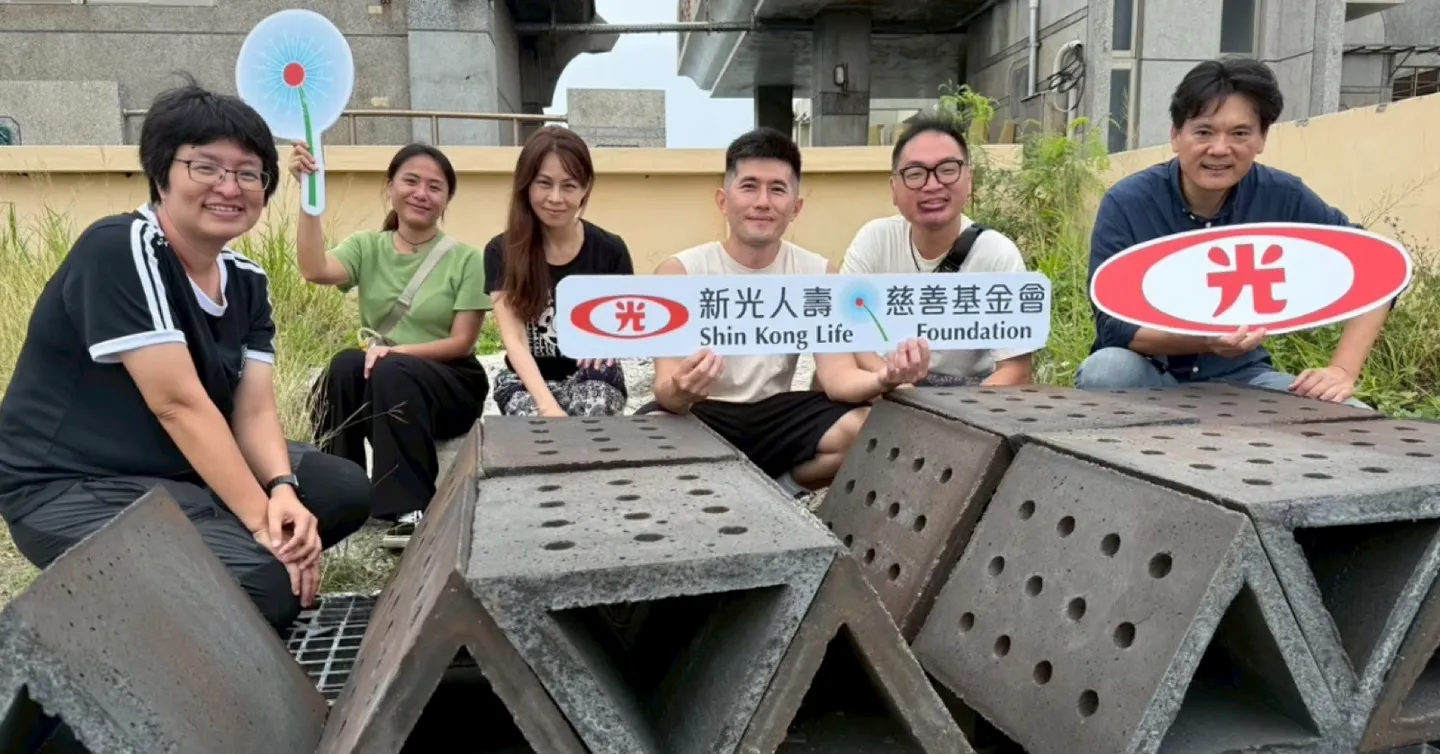
So where does the value of this pilot project lie? The Editor believes it lies in "proving the methodology works." This is the world's first coral restoration case that moved from land to ocean and obtained international carbon removal certification. It shows us that biochar doesn't have to stay buried in the ground — it can go underwater and become a home for coral, while also running a measurable, reportable, and verifiable process through a real marine environment for the first time. A pilot project isn't designed to chase volume; it's designed to validate whether "this path is viable." You have to map the road first before you can hope to scale it up. The Editor believes that being willing to honestly acknowledge "the volume isn't high" while still building a rigorous, step-by-step verification process is something genuinely worth doing.
Next Steps: Connecting Carbon Sinks to Sustainable Tourism and Biodiversity Credits
If carbon sink volume can't be scaled up in the short term, what is the future of this project? The Editor believes the key isn't to build up the carbon sink alone, but to connect it with two other tracks — that's where the value compounds.
Sustainable Tourism: Dive a Tank, Be a Citizen Scientist for a Day
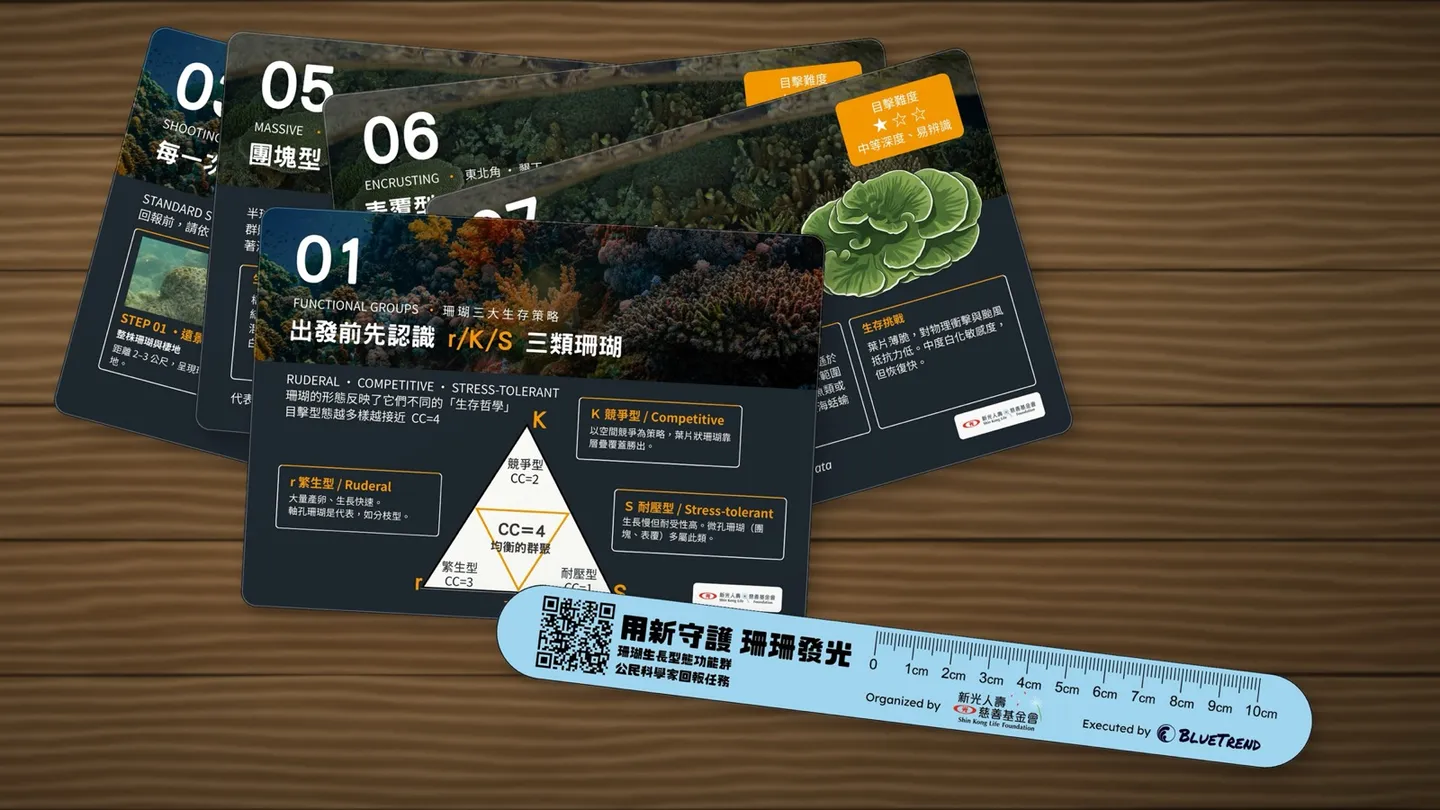
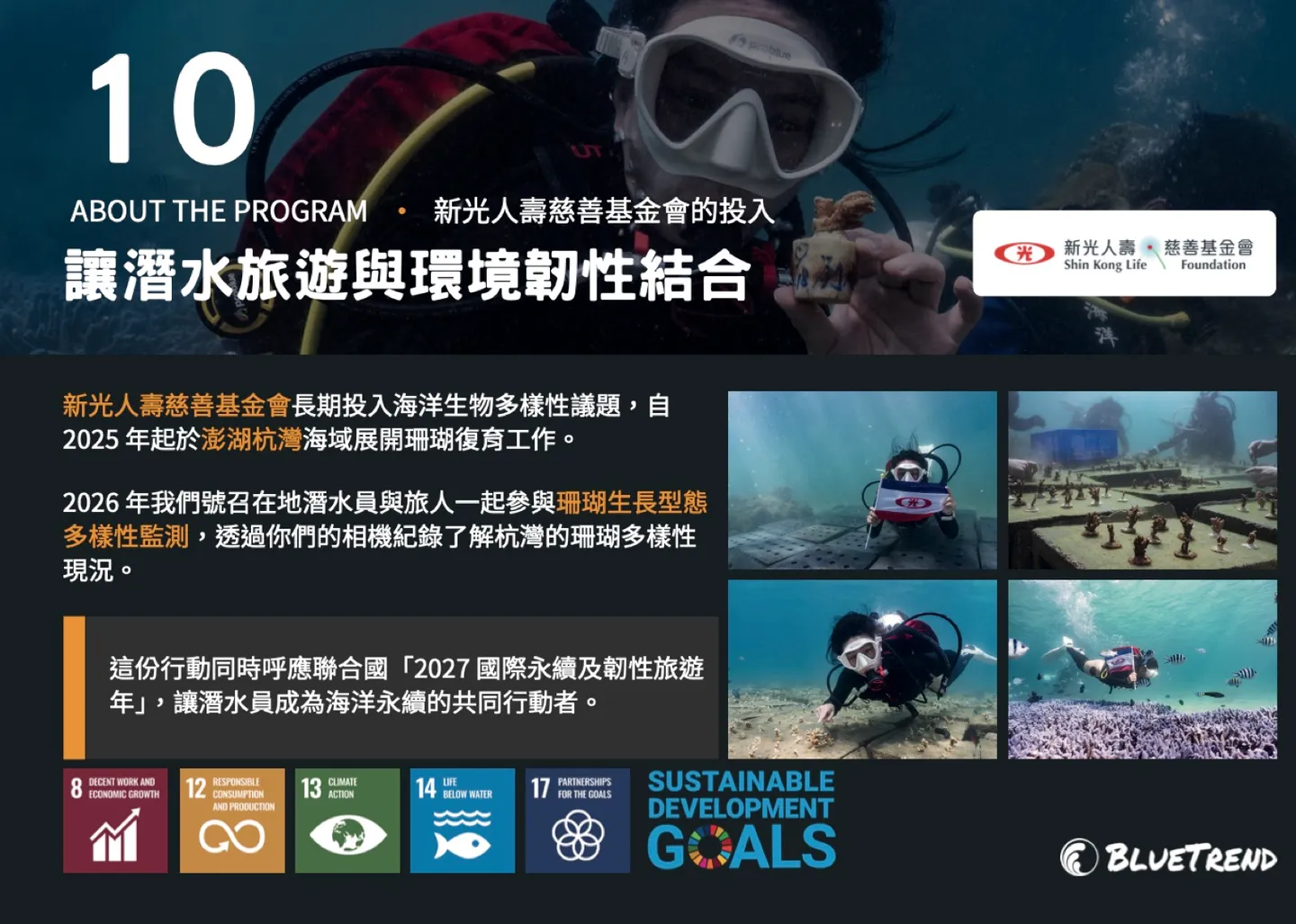
The first track is sustainable tourism. Starting in 2026, with support from the Shin Kong Life Charity Foundation, BlueTrend and local dive shops have transformed the Hang Bay restoration site into a live venue for "sustainable resilience tourism." Visitors don't need to be scientists — as long as you can dive and take photos, you can follow the dive guide and help document coral growth patterns, turning underwater observations into real scientific data. The Editor's team has also designed a set of coral growth pattern identification cards, making it as easy and engaging as completing a mission to submit your observations.
Biodiversity Credits: The Next Piece of the Puzzle the Editor Is Exploring
The second track is "biodiversity credits" — something the Editor's team is currently promoting and still exploring. To be upfront: this mechanism is still in the stage of international rule-setting, and the Editor's team is still researching how to connect to it. No one can issue these directly right now, and this article is not announcing that we are ready to sell them.
But the direction is clear. When the coral diversity and returning fish populations recorded by divers can be converted one by one into verifiable data, there is a future opportunity to connect that data to a biodiversity credit mechanism. Carbon sinks address "carbon"; biodiversity credits address "the diversity of life" — the two happen to fill each other's blind spots. Binding carbon sinks, sustainable tourism, and biodiversity credits together into a single framework is what gives corporate ESG resources a long-term reason to keep flowing in — and ensures coral restoration doesn't stall after just one round.
Conclusion: The Carbon Sink Is Just the Starting Point — The Editor Is Testing an Entirely New Set of Possibilities
Back to the opening question: how exactly is a carbon sink calculated? The answer is: through an entire system of international standards, third-party certification, and dMRV digital monitoring — verifying the fact of carbon sequestration step by step. This is precisely where Taiwan's voluntary carbon reduction and international carbon removal certification diverge most fundamentally.
The Penghu pilot project's carbon sink volume is not high, and the Editor has no intention of overstating its results. But what it is genuinely doing is bringing biochar from land into the ocean, running a verifiable carbon removal process through a real marine environment from start to finish, and then attempting to connect it to sustainable tourism and the still-developing biodiversity credit system. This path has only just begun — whether the volume will grow and whether the mechanism can take shape are things the Editor is still watching closely. But being willing to try honestly, and to build the verification process on solid ground, is itself something worth doing.
Further Reading
Related Links
- Organiser: Shin Kong Life Charity Foundation
- Biochar producer: Guangtai Huanneng
- Local partner dive shop: Ocean Channel
References
- EBC (2012–2025), European Biochar Certificate – Guidelines for a Sustainable Production of Biochar, Carbon Standards International (CSI), Switzerland, Version 10.5E, 14 August 2025.
- Global Biochar C-Sink Standard & Global C-Sink Registry Documentation.
- IPCC, Climate Change 2022: Mitigation of Climate Change, Carbon Dioxide Removal (CDR) Pathways.
- Economic Daily News, "Shin Kong Life Charity Foundation Promotes Marine Conservation — World's First Biochar Coral Restoration Bricks Land in Penghu," 5 June 2026, money.udn.com.
- K. Chowdhury, S. Basu, M. Pramanik & T. Pleninger, "Blue infrastructure as nature-based solutions for urban sustainability: Evaluating local perceptions from four Indian megacities", Nature-Based Solutions, Volume 7, June 2025, sciencedirect.com. Explores the role of blue infrastructure in ecological restoration, climate resilience, and sustainable development, providing a theoretical foundation for the integrated application of ocean restoration and natural carbon removal.
(This article is adapted from a Guangtai Huanneng press release, with supplementary science communication on carbon sinks and carbon removal certification added by BlueTrend.)