Contents(8)
- Where the Journey Begins: A Concrete Architecture Building and Our Partnership with Ocean Channel
- Pre-Dive Homework: Understanding Coral Growth Forms
- Six Growth Forms You Need to Know Before You Dive
- Reproductive, Competitive, Stress-Tolerant: A Healthy Reef Needs All Three
- How It Works Underwater: One Coral Monitoring Ruler, Three Shots
- Where the Data Goes: From One Coral to an Entire Bay
- Supported by the Shin Kong Life Charitable Foundation — Sign Up Now
- Further Information
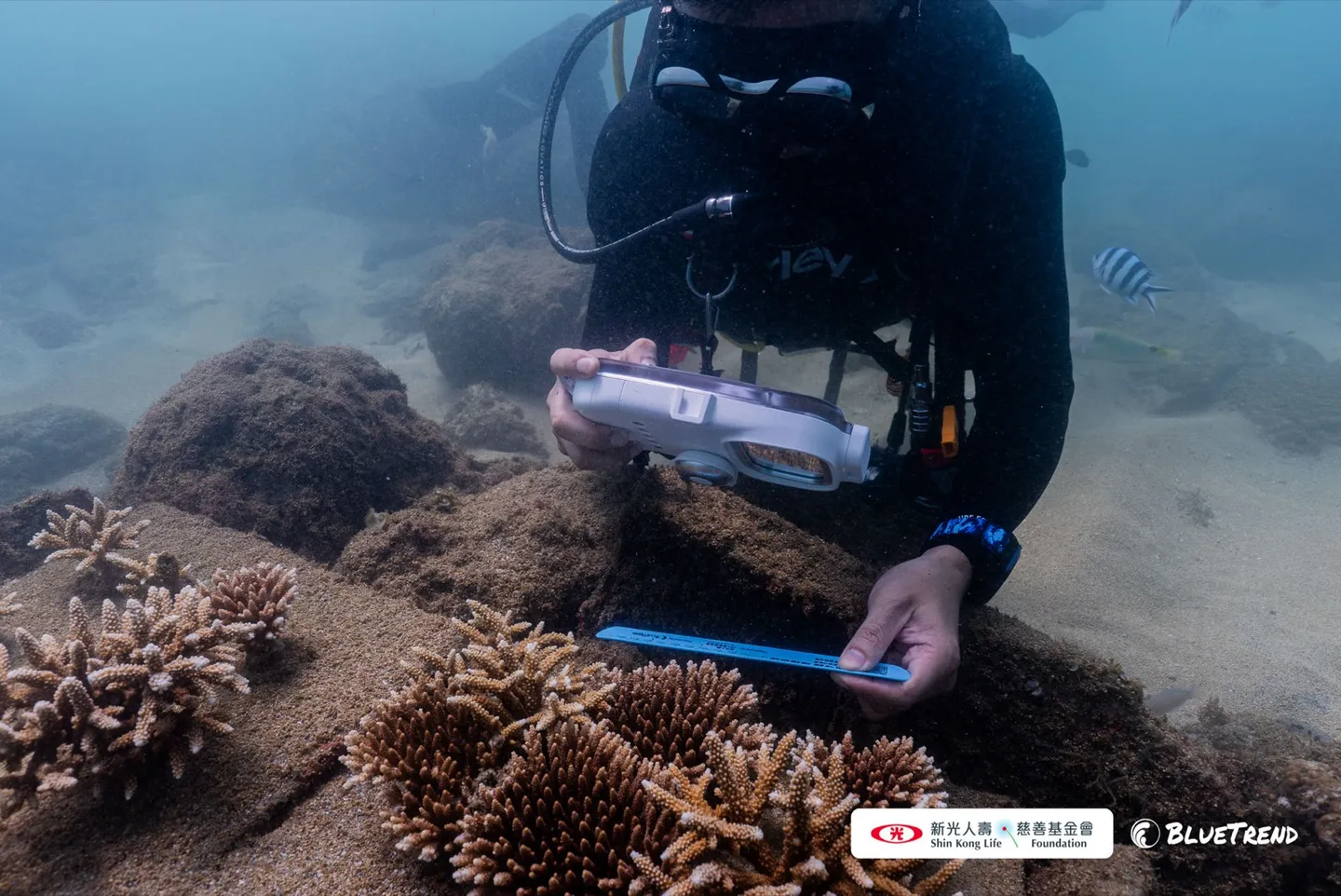
The coral growth form monitoring mission at Hangwan, Penghu is now open to everyday recreational divers. Supported by the Shin Kong Life Charitable Foundation and co-executed by BlueTrend and Penghu-based ocean-friendly dive shop "Ocean Channel," the mission involves selecting corals during a dive, using a wrist-clip coral monitoring ruler as a scale reference, photographing each colony from three distances, and recording its growth form — turning underwater observations into usable scientific data. No research background is required; one scuba tank is all the time you need, and the data feeds directly into site selection and monitoring for Penghu's coral restoration efforts. Join us as we walk through the entire coral monitoring mission firsthand.
Where the Journey Begins: A Concrete Architecture Building and Our Partnership with Ocean Channel
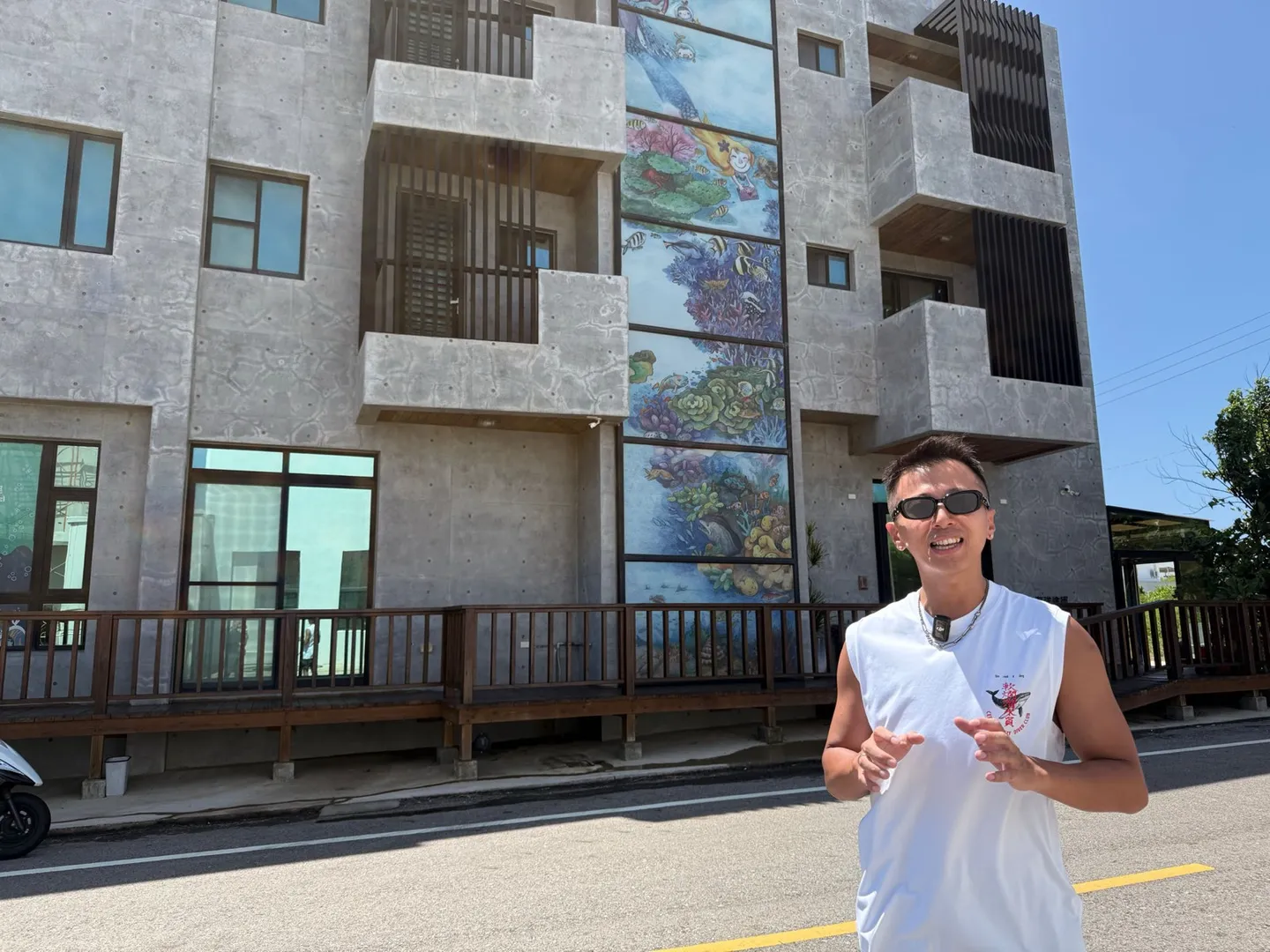
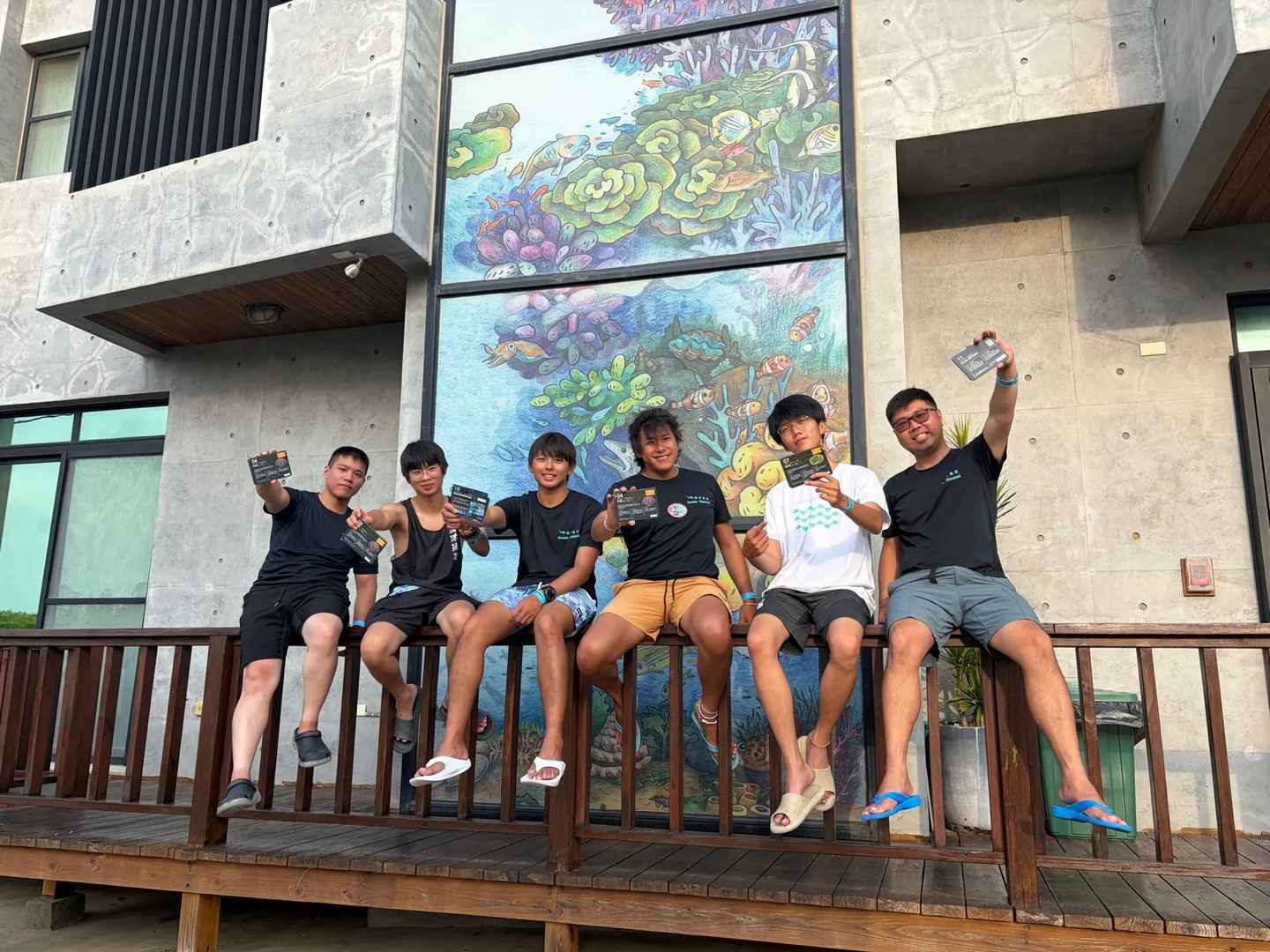
Our partner for this sustainable dive trip is Ocean Channel, which guides participants through every step from the indoor briefing to the underwater mission. The dive shop itself occupies an entire bare-concrete building, its exterior wrapped in a three-storey mural depicting the iconic marine life and corals of Penghu. For first-time divers to the main island of Penghu, this mural serves as a preview of what awaits beneath the surface.
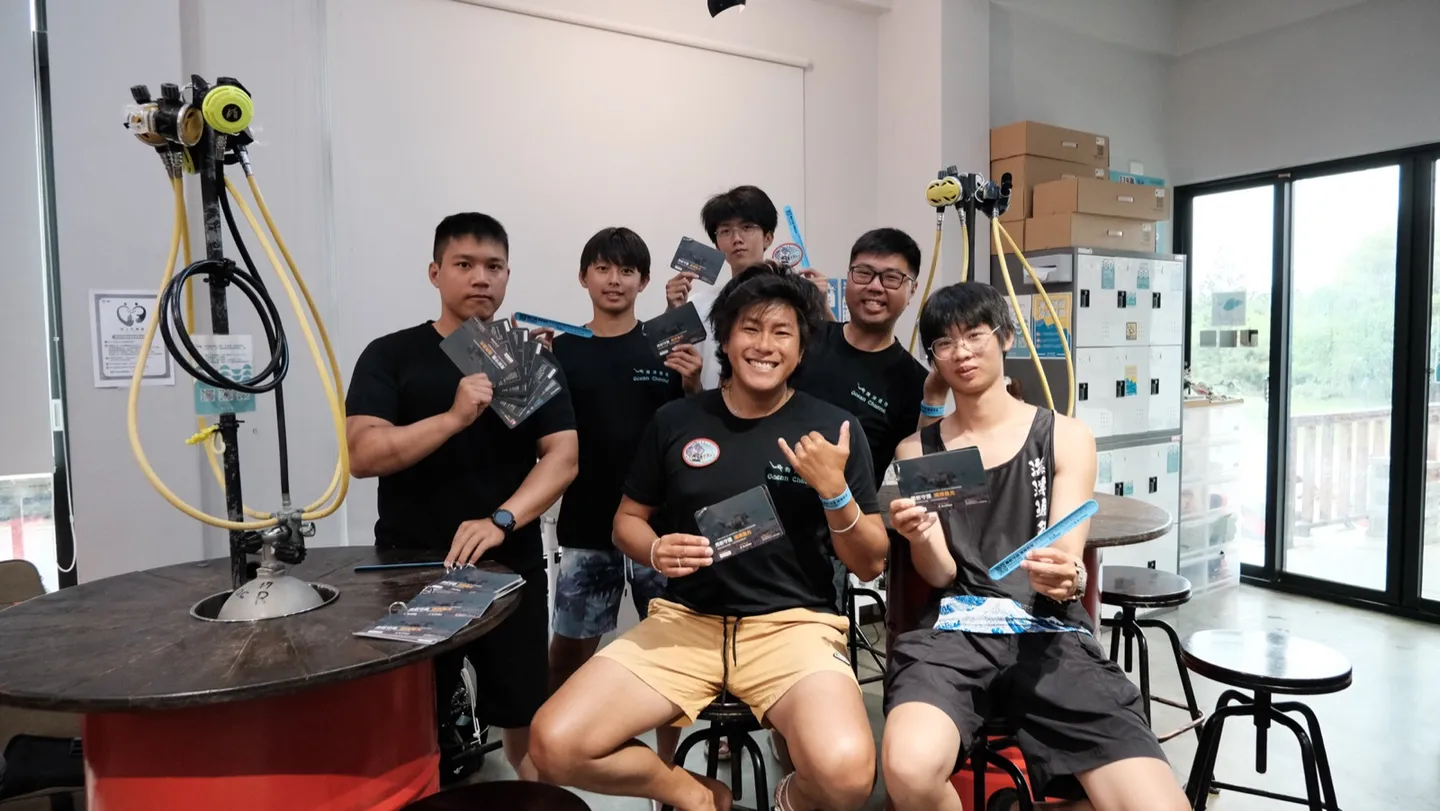
Before heading out, we also had a special activity: writing a postcard to ourselves to be mailed later. The words we wrote — "Protecting the ocean starts with understanding it" — turned out to capture the spirit of the entire trip. Monitoring isn't about filling out forms; it's about first making sense of what's happening in this stretch of sea.


Pre-Dive Homework: Understanding Coral Growth Forms
Six Growth Forms You Need to Know Before You Dive
The first order of business in the indoor session is learning growth forms. Corals are classified into six categories based on appearance: branching, encrusting, massive, free-living, foliose, and plating. This is the foundation for identification underwater. The instructor will quiz participants on each form before the dive, because once you're in the water there's no time to look things up — you have to categorise what you see on the spot.
BlueTrend has developed a complete curriculum and identification tools for this mission, including a waterproof growth form ID card and the coral monitoring ruler. The materials follow the professional guidance of the Invertebrate Research Lab (colloquially known as the "No Backbone Lab") at National Kaohsiung University of Science and Technology, compressing expert coral taxonomy into growth form categories a diver can identify in under ten seconds underwater. This design principle is precisely what makes the entire workflow accessible to recreational divers.
Reproductive, Competitive, Stress-Tolerant: A Healthy Reef Needs All Three
Beyond form, there are functional groups — broadly divided into reproductive, competitive, and stress-tolerant types. The question that trips up most people in class is: which one should be most abundant for a reef to be considered healthy?
Instinct says reproductive, because those corals grow fast and proliferate quickly, making the reef look bustling. The correct answer, however, is that all three should be present in relatively balanced numbers. When a single functional group dominates overwhelmingly, it usually signals that some environmental pressure is filtering the community — only corals with a particular survival strategy are making it. This is exactly why monitoring records growth forms rather than just cover percentages.
How It Works Underwater: One Coral Monitoring Ruler, Three Shots
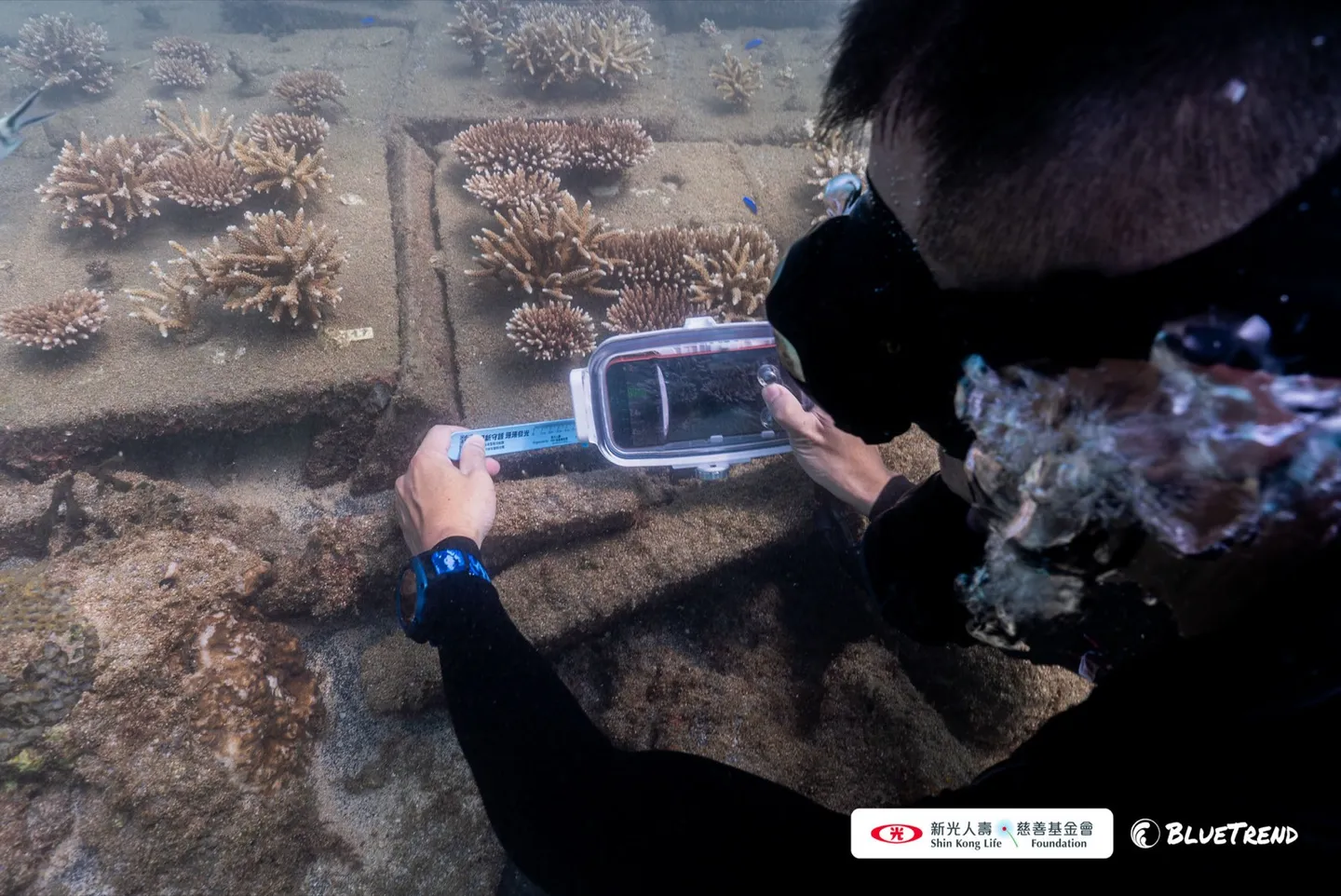
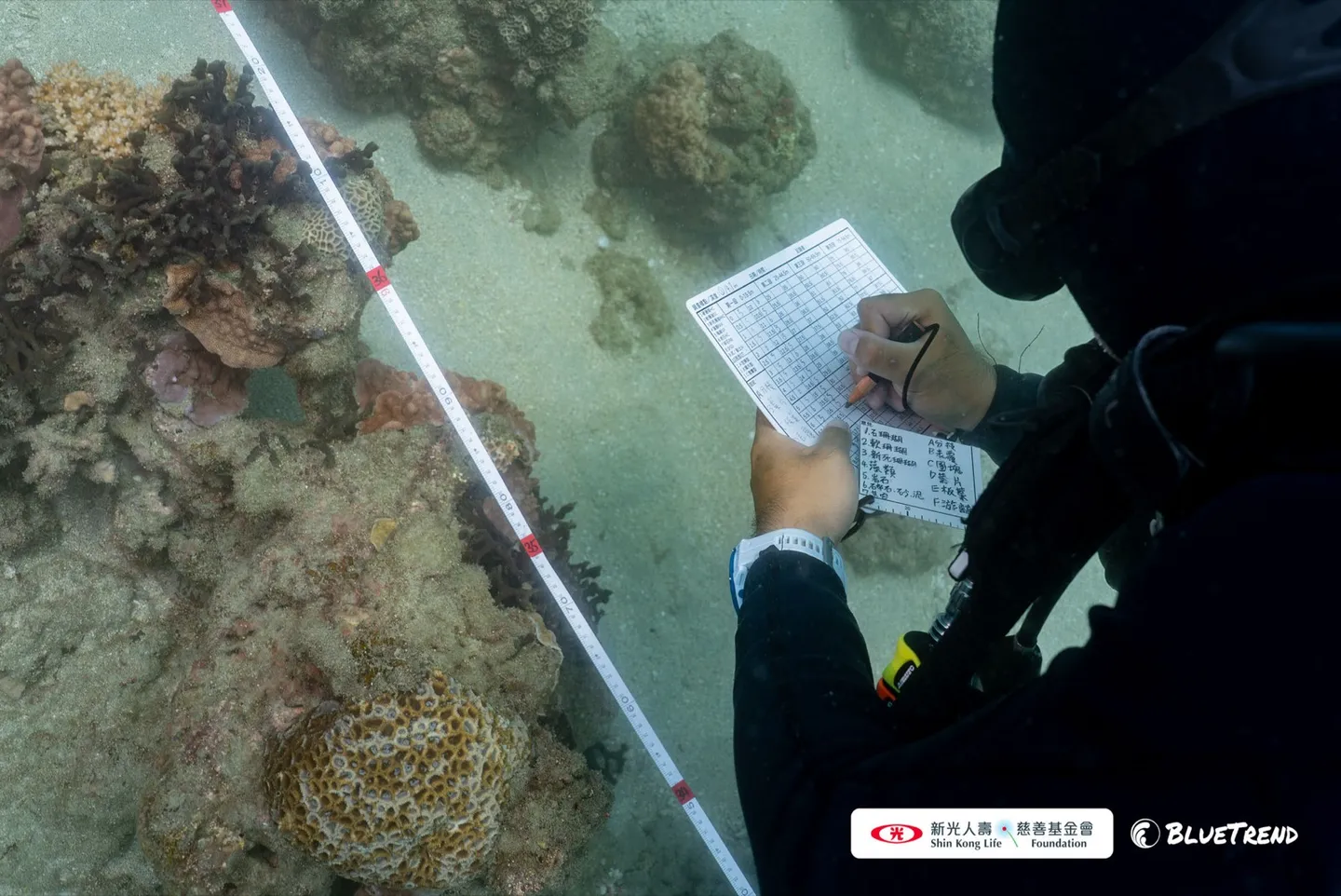
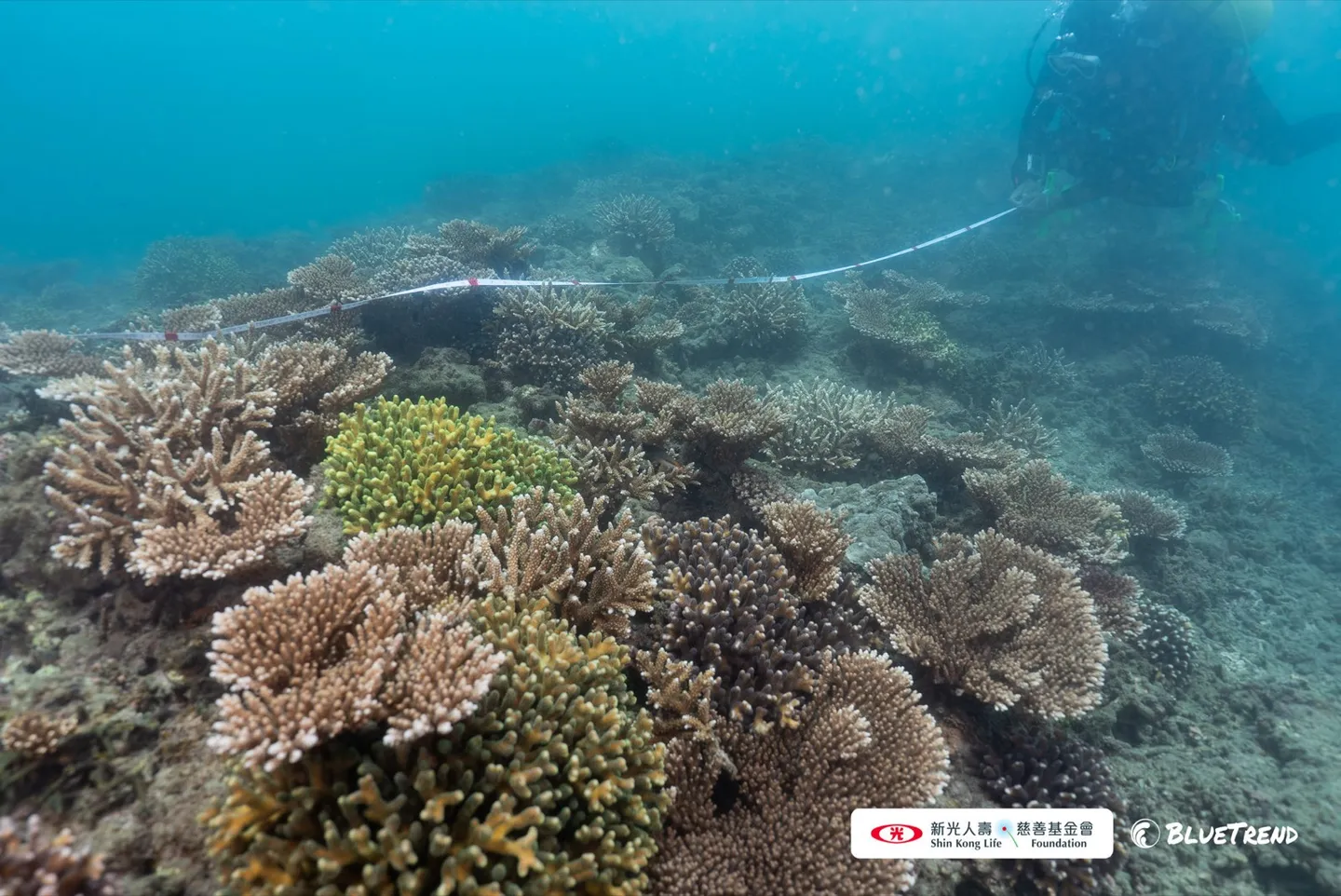
The actual process is simpler than you might expect. When you spot a coral worth documenting during your dive, pause, unclip the coral monitoring ruler from your wrist or gear, place it beside the coral as a reference, and take three photos: a wide shot to establish the coral's surroundings, a mid-range shot to capture the overall profile and size of the colony, and a close-up to compare individual polyp size against the ruler.
The most common mistake on a first attempt is not getting close enough for the close-up. Identifying a coral to species requires seeing the polyps; a single wide-angle shot has limited scientific value. The instructor made real-time framing adjustments underwater, and the difference in image quality was immediately apparent.
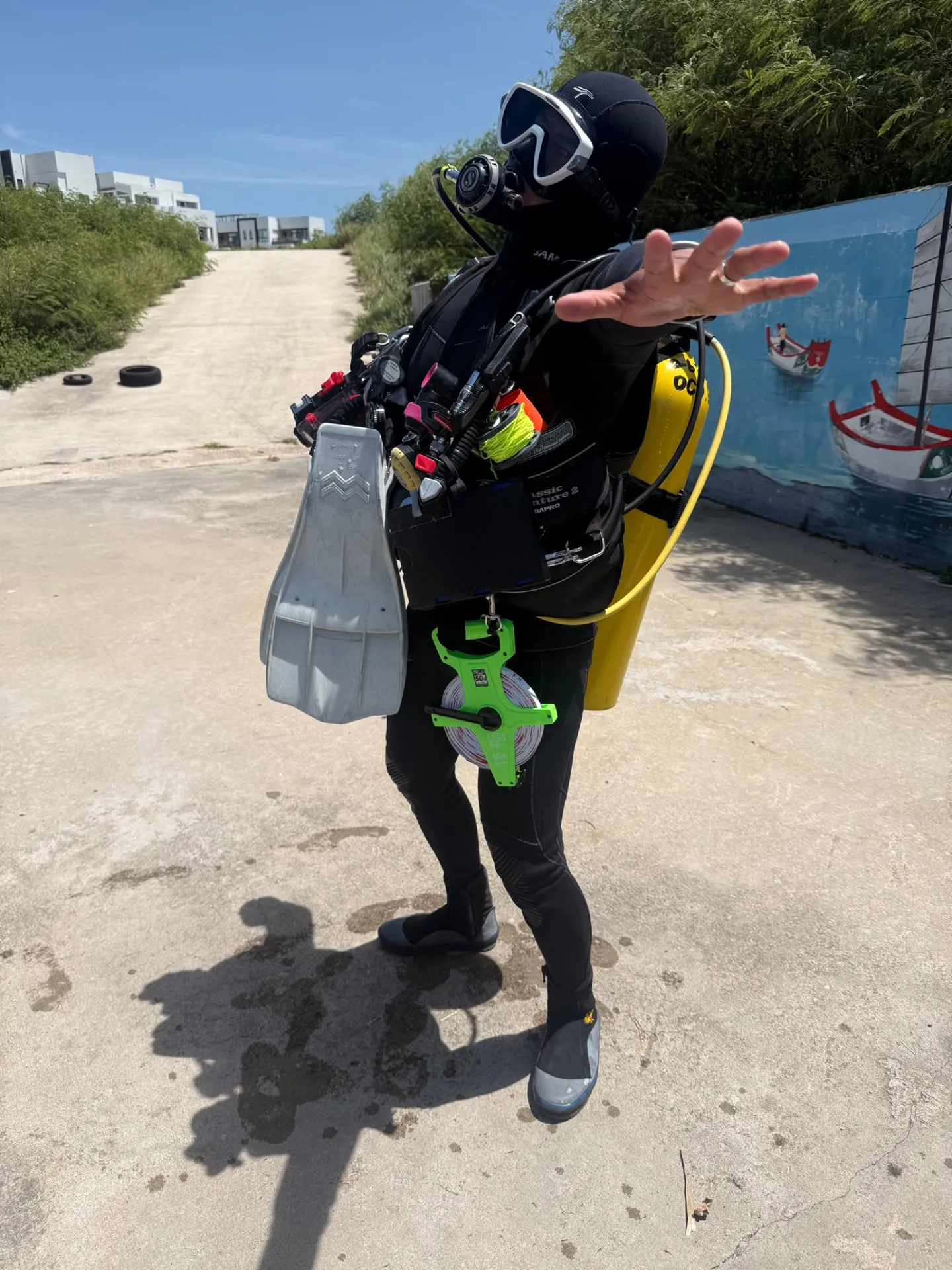
The design of the coral monitoring ruler is one of the keys to making this workflow practical. It clips onto your wrist or BCD, so you can pull it out the moment you see a target without interrupting the flow of the dive.
Where the Data Goes: From One Coral to an Entire Bay
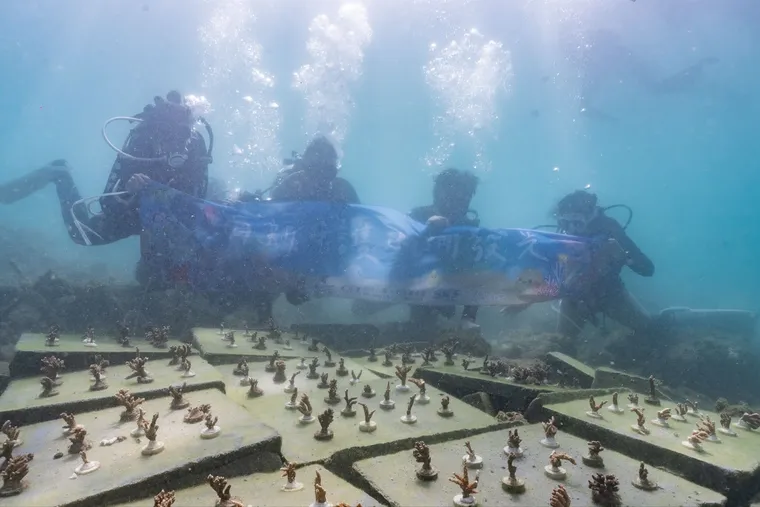
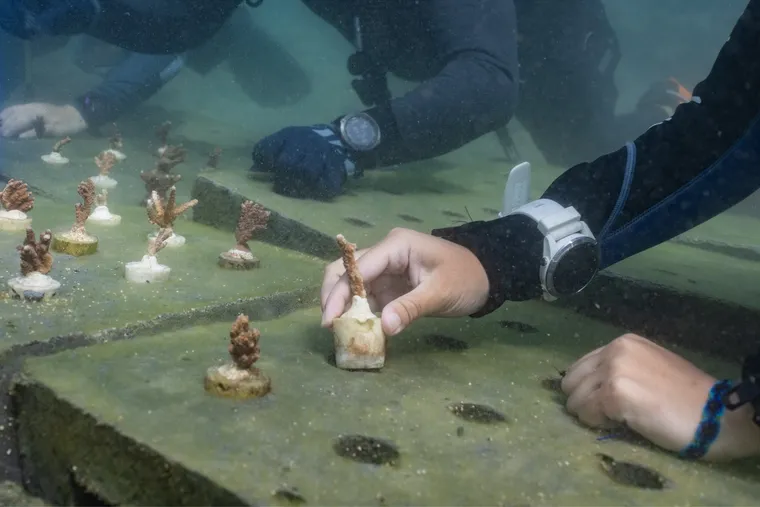
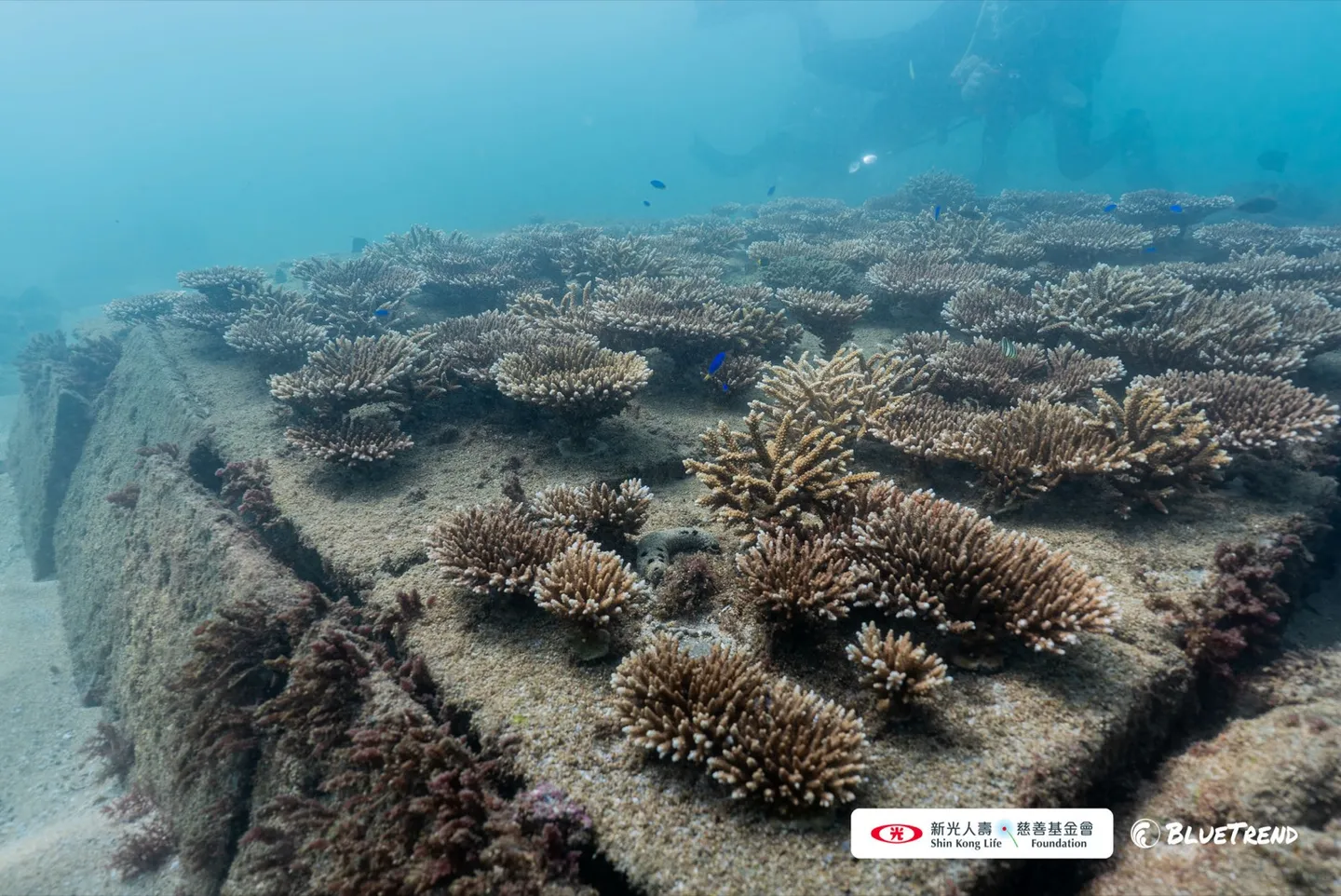
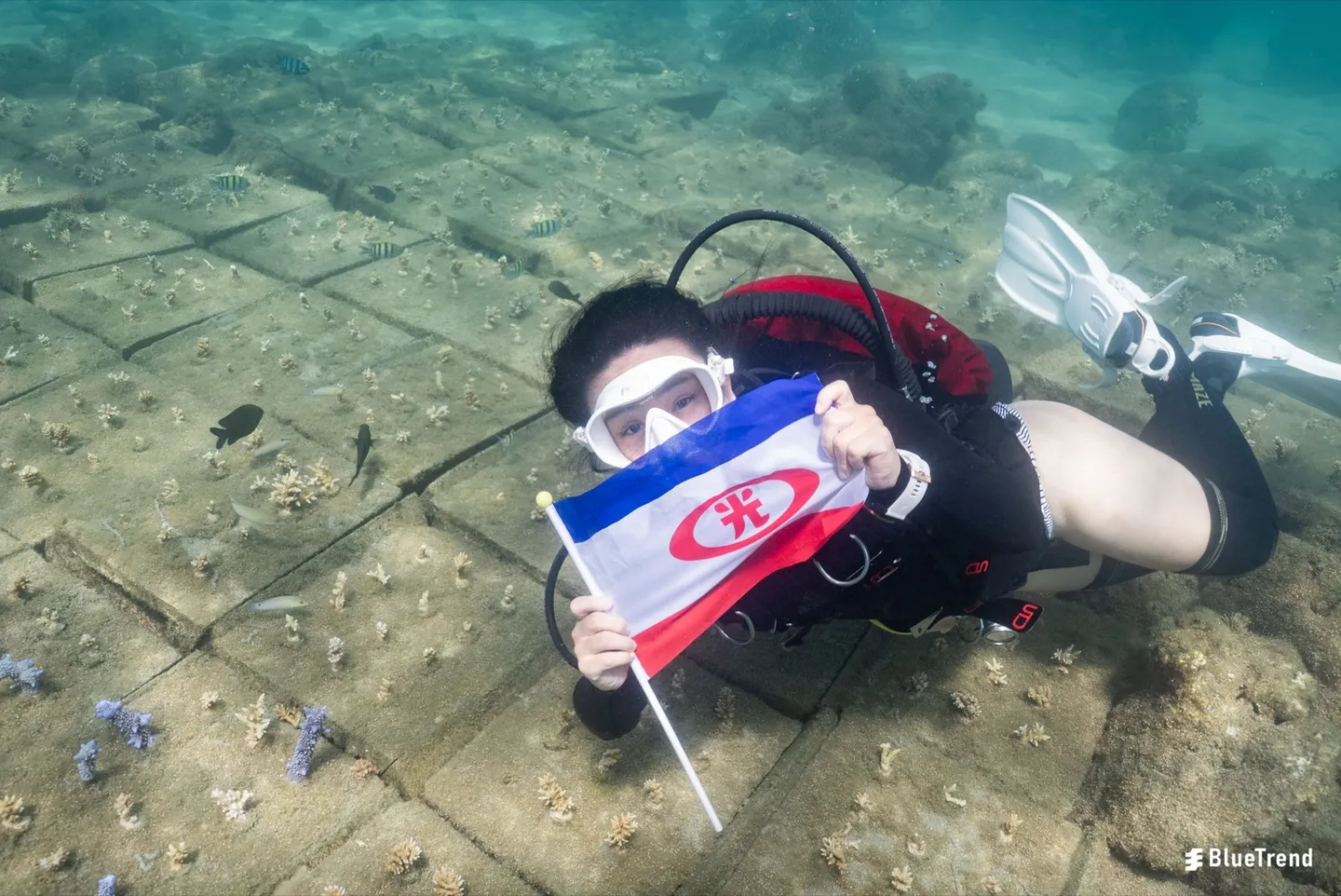
The restoration plots at Hangwan have shown clear growth after a year in place. The tiny coral fragments transplanted at the start have now formed dense colonies across the nursery bricks, and fish have begun to move in. Tracking these changes requires someone to keep measuring and photographing over time — and that is exactly the gap citizen scientists fill.
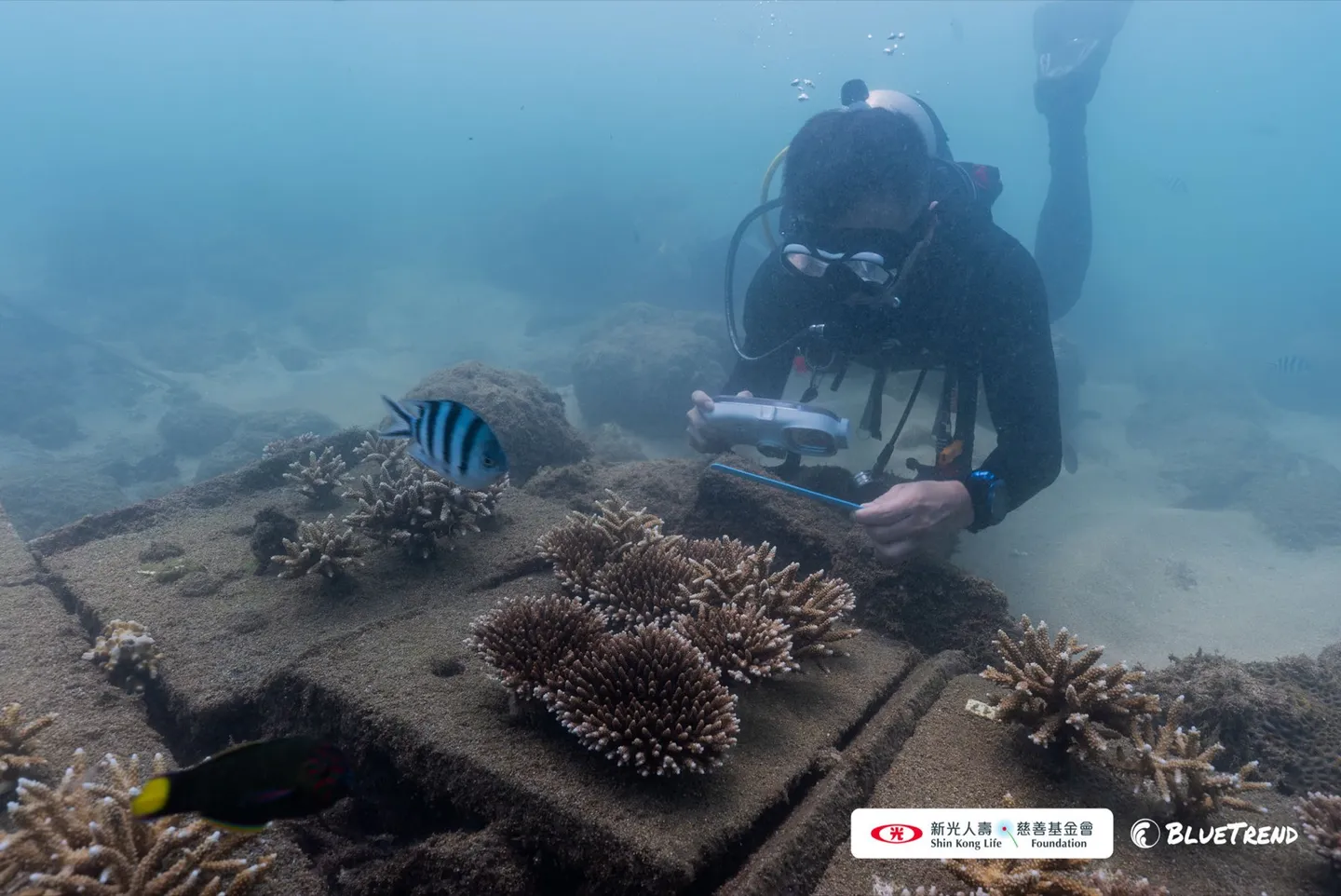
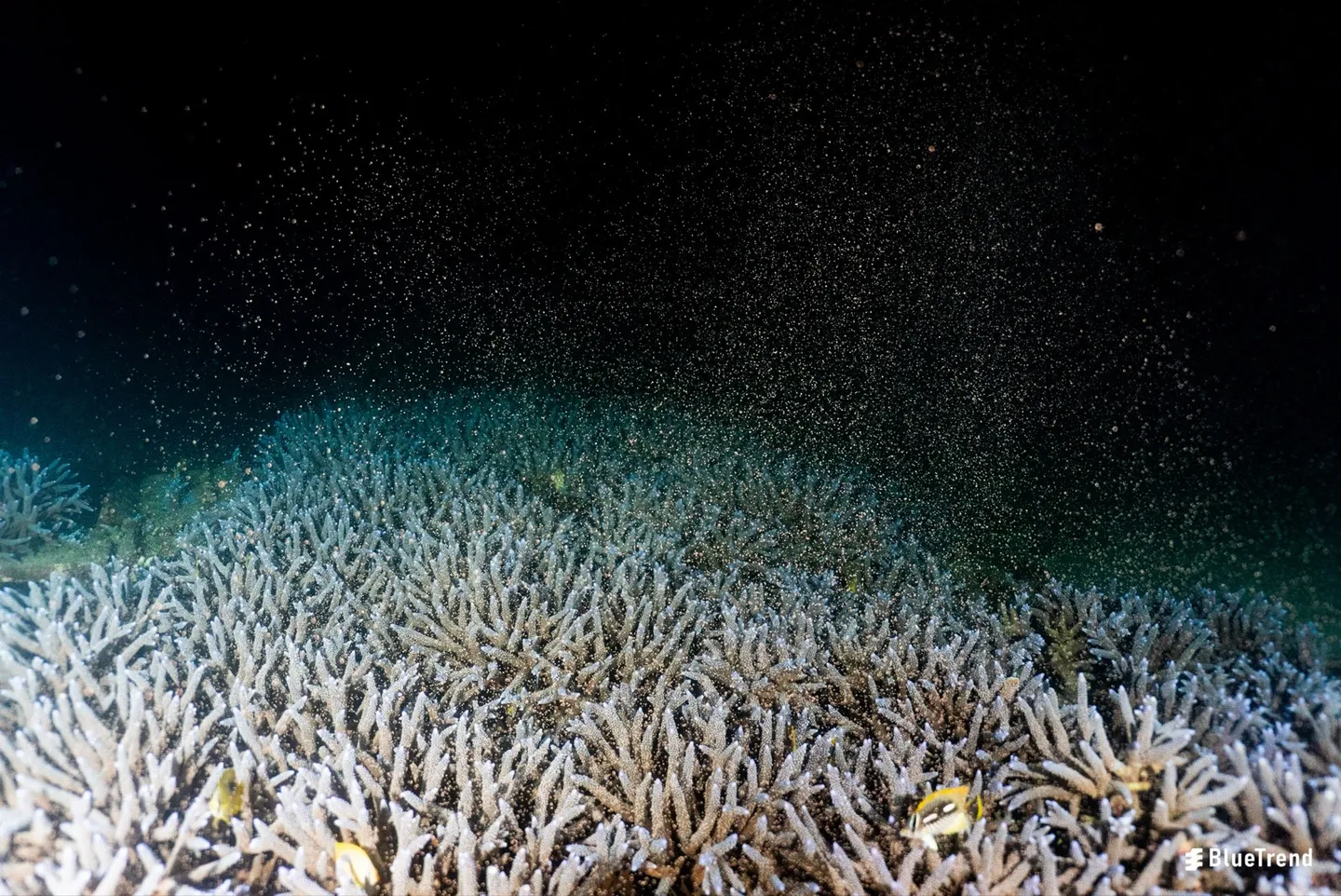
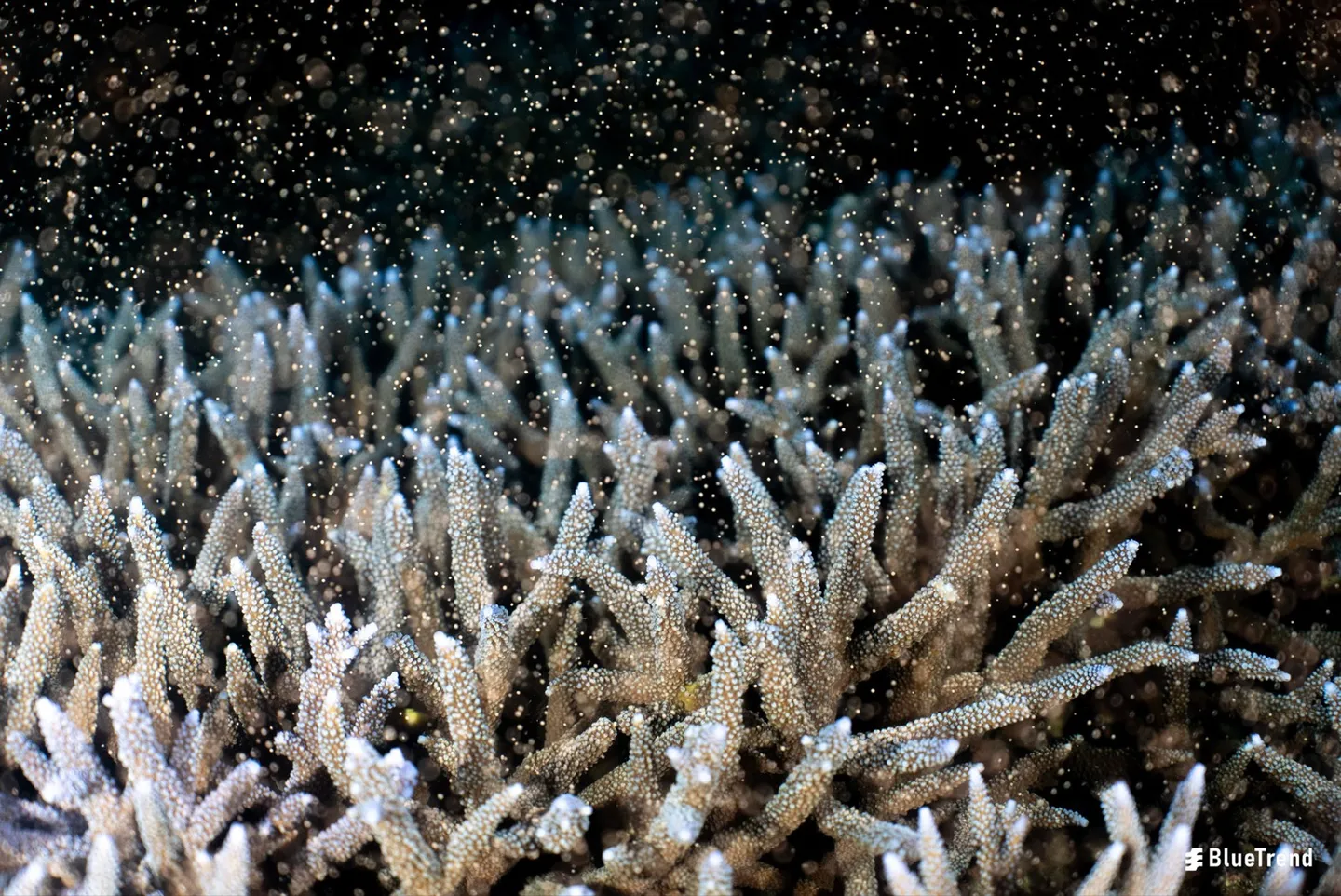
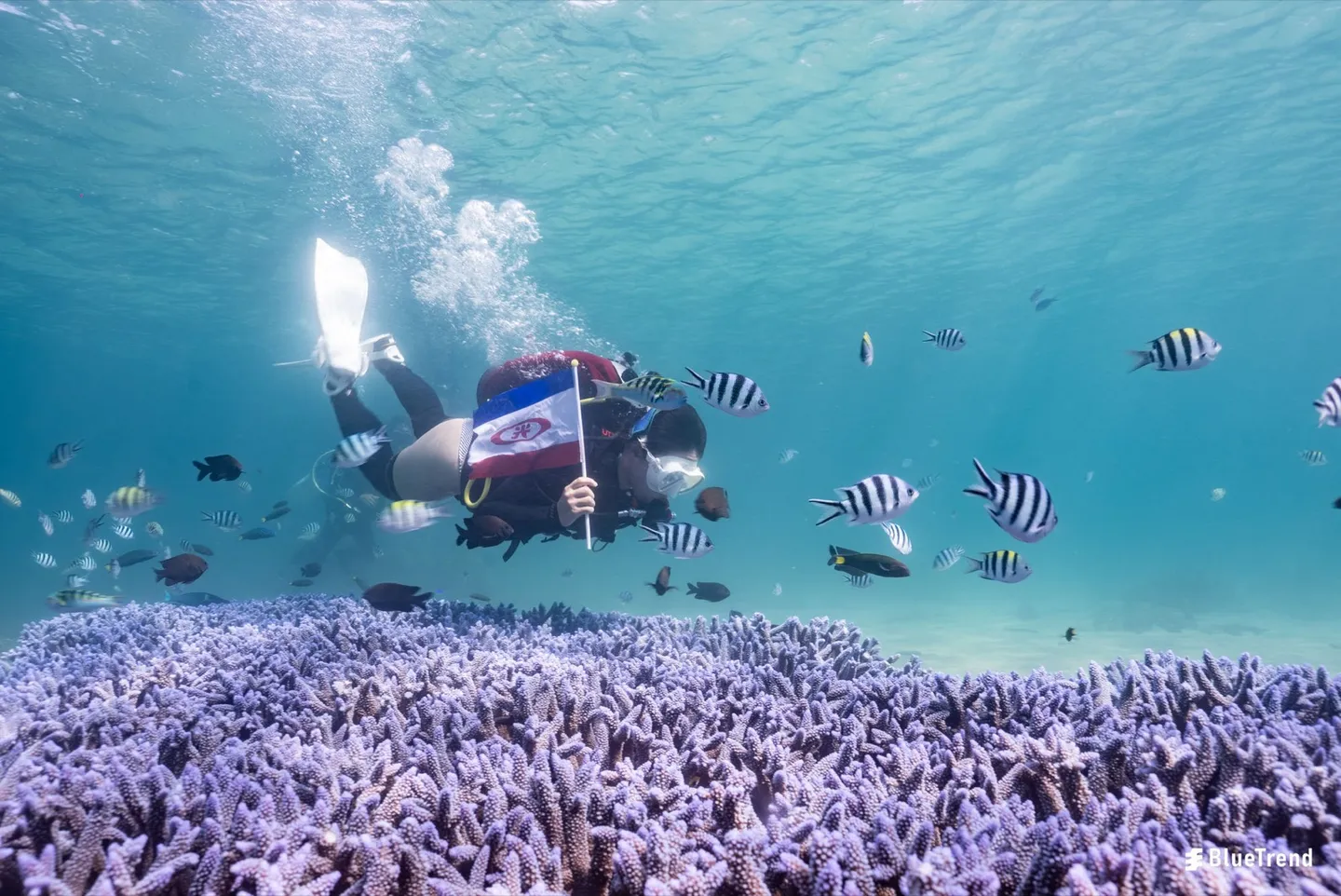
Hangwan is best known for its purple coral forest, often called the lavender garden. A few years ago, the team captured this coral spawning at night on video — the footage looks like snow falling underwater. The timing is later than in Kenting, where spawning typically occurs around the days of the Mazu birthday festival; in Penghu it happens roughly two weeks after that. This means Penghu has the potential to become not just a destination for viewing coral, but also for witnessing coral spawning events.
The data also serves another purpose: site selection. Penghu has many bays, and determining which ones are suitable for coral restoration — and which species of coral to plant — requires on-site surveys. In addition to data submitted by citizen scientists, the team also conducts formal transect surveys in other bays and compares the results. The 2026 monitoring season revealed that coral growth conditions across several Penghu bays are exceptionally good and well worth protecting.
Divers who complete the mission receive a citizen scientist patch to stick on their dive computer or gear. It has no monetary value, but it represents a dive that left behind real data — not just a video clip.
Supported by the Shin Kong Life Charitable Foundation — Sign Up Now
This coral growth form monitoring mission is supported by the Shin Kong Life Charitable Foundation as part of the "Guarding with Shinkong, Coral in Full Glow" programme. The Foundation began deploying biochar coral restoration bricks at Hangwan, Penghu in 2025, and in 2026 further transformed the restoration plots into a sustainable tourism experience where visiting divers contribute directly to data collection. Committing resources to long-term monitoring that accumulates meaningful records — rather than simply staging a one-off event for photos — is something that rarely happens in corporate marine conservation.
If you're planning a dive trip to Penghu this year, add Ocean Channel to your itinerary and sign up for the coral growth form monitoring mission directly with the shop. The prerequisite is an Open Water Diver (PADI/SSI cert) certification and the ability to take photos; ID cards, coral monitoring rulers, and instruction are all provided by the shop. With the same single scuba tank, you can simply go down and look around — or you can leave behind a set of data. The Editor's recommendation is the latter, because these waters of Penghu are worth documenting.
Further Information
- Supporting organisation: Shin Kong Life Charitable Foundation
- Local partner dive shop: Ocean Channel
- Further reading: Penghu Biochar Coral Restoration Bricks in Practice: A Sustainable and Resilient Tourism Experience Where Diving Becomes Conservation
This article was produced by BlueTrend. We thank the Shin Kong Life Charitable Foundation for their support.