Contents(3)
Every year around World Ocean Day on June 8th, the Editor's social media feed fills up with posts about reducing plastic, coral bleaching, and overfishing. As ocean people, we often witness the sea's beauty beneath the surface — and are also the most direct witnesses to its fragility. From an international perspective, however, the Editor has noticed that as the global tourism market has rebounded in recent years, the backlash of pent-up travel demand has pushed sustainable tourism and the blue economy into the spotlight like never before. The health of marine ecosystems is no longer just a concern for ecologists — it directly determines tourism revenue, local employment, and an industry's resilience against risk. For island nations and coastal economies that depend heavily on ocean resources, marine conservation is no longer a simple "expenditure," but an "investment" deeply intertwined with economic development.
Two recent reports struck the Editor as particularly thought-provoking. One focuses on the blue economy value of manta rays in the Maldives, demonstrating how tourism revenue generated by activities like scuba diving and snorkeling can make a single flagship species a crucial pillar of the local tourism industry. The other approaches the issue from the angle of industry risk in Australia, warning that if marine resources are not adequately protected, the diving and coastal tourism market could suffer losses running into billions of Australian dollars. Both reports point to the same core message: the economic value of marine ecosystems.
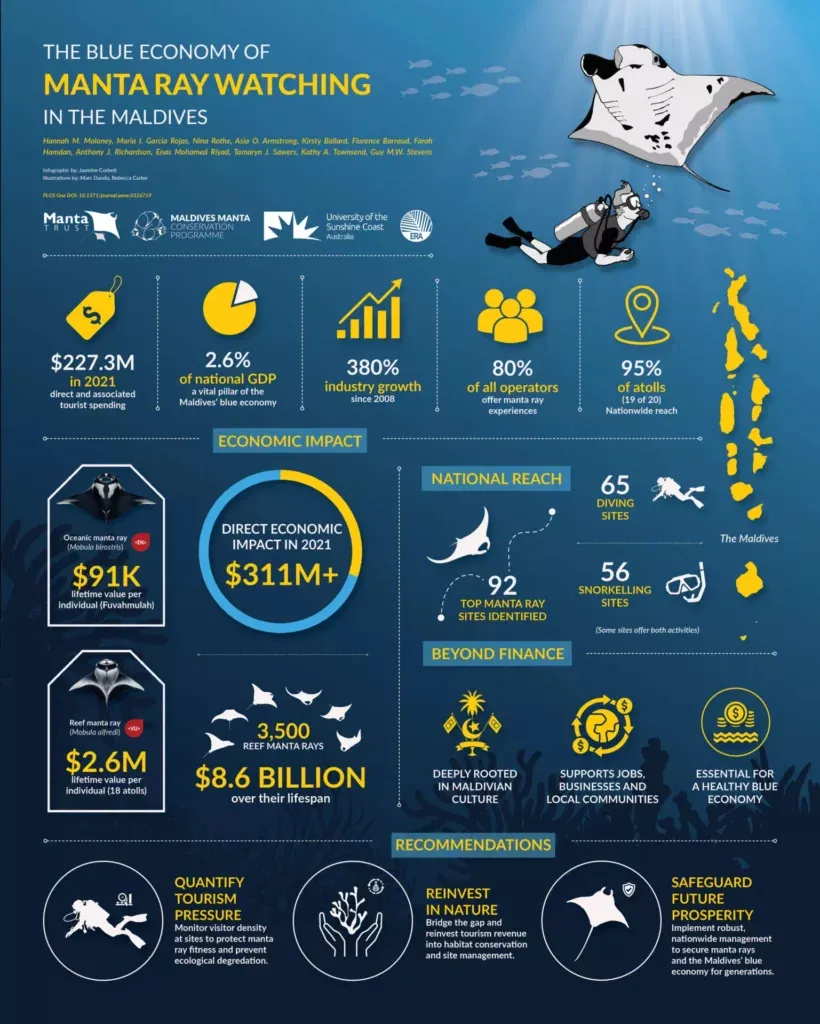
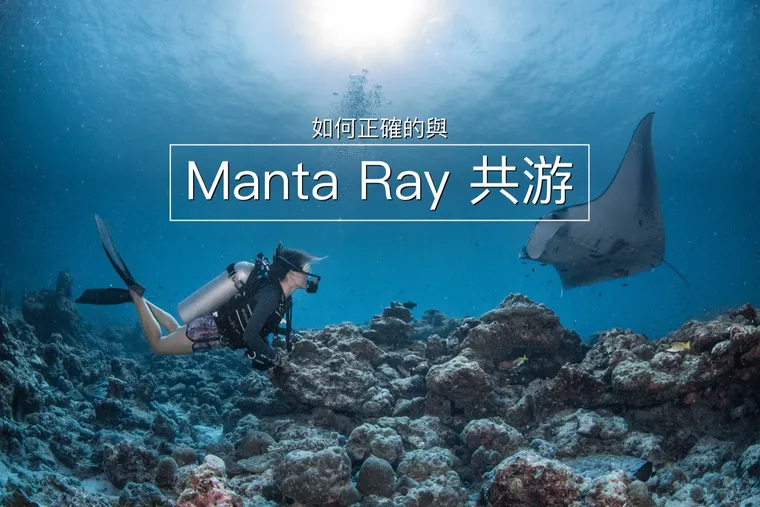
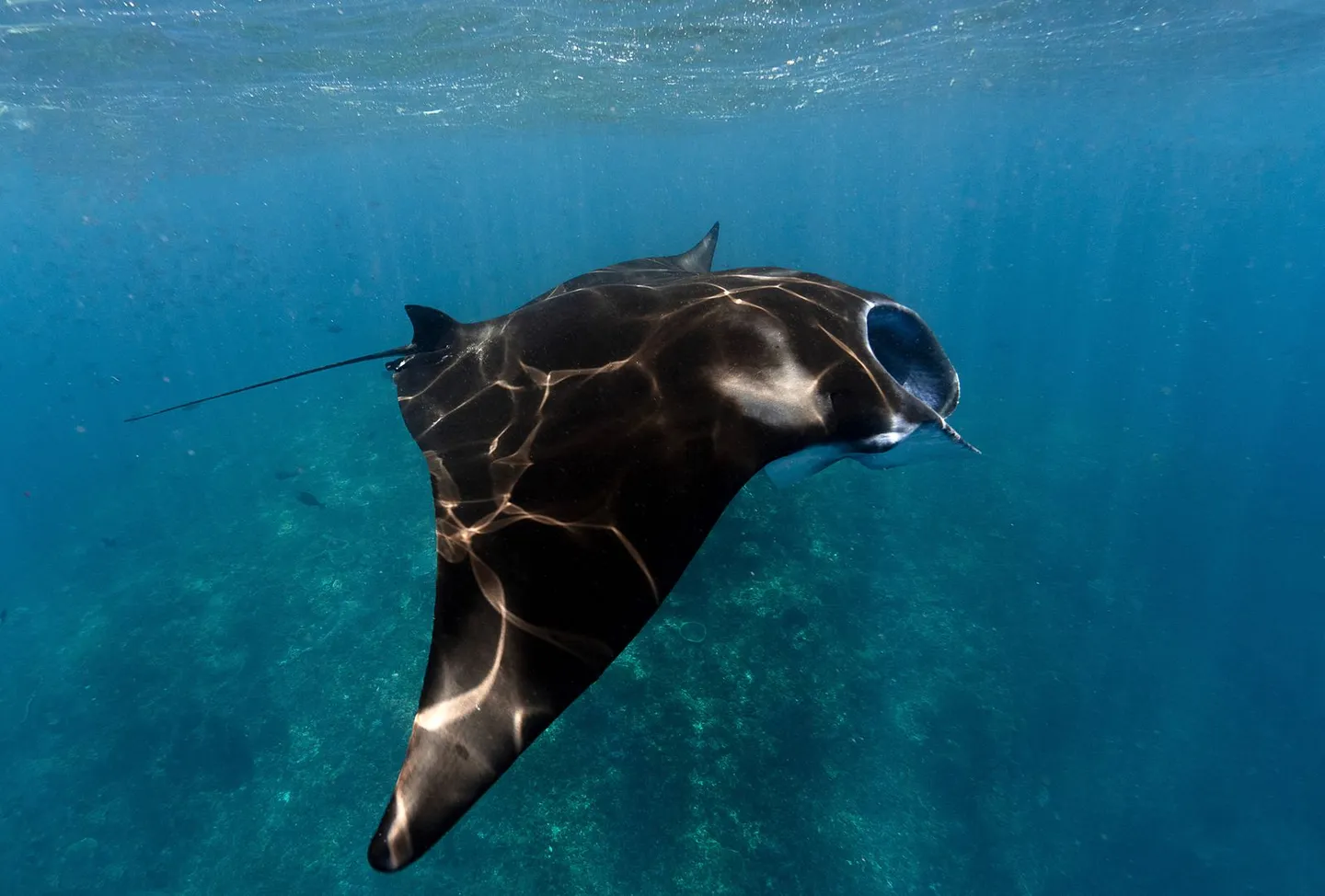
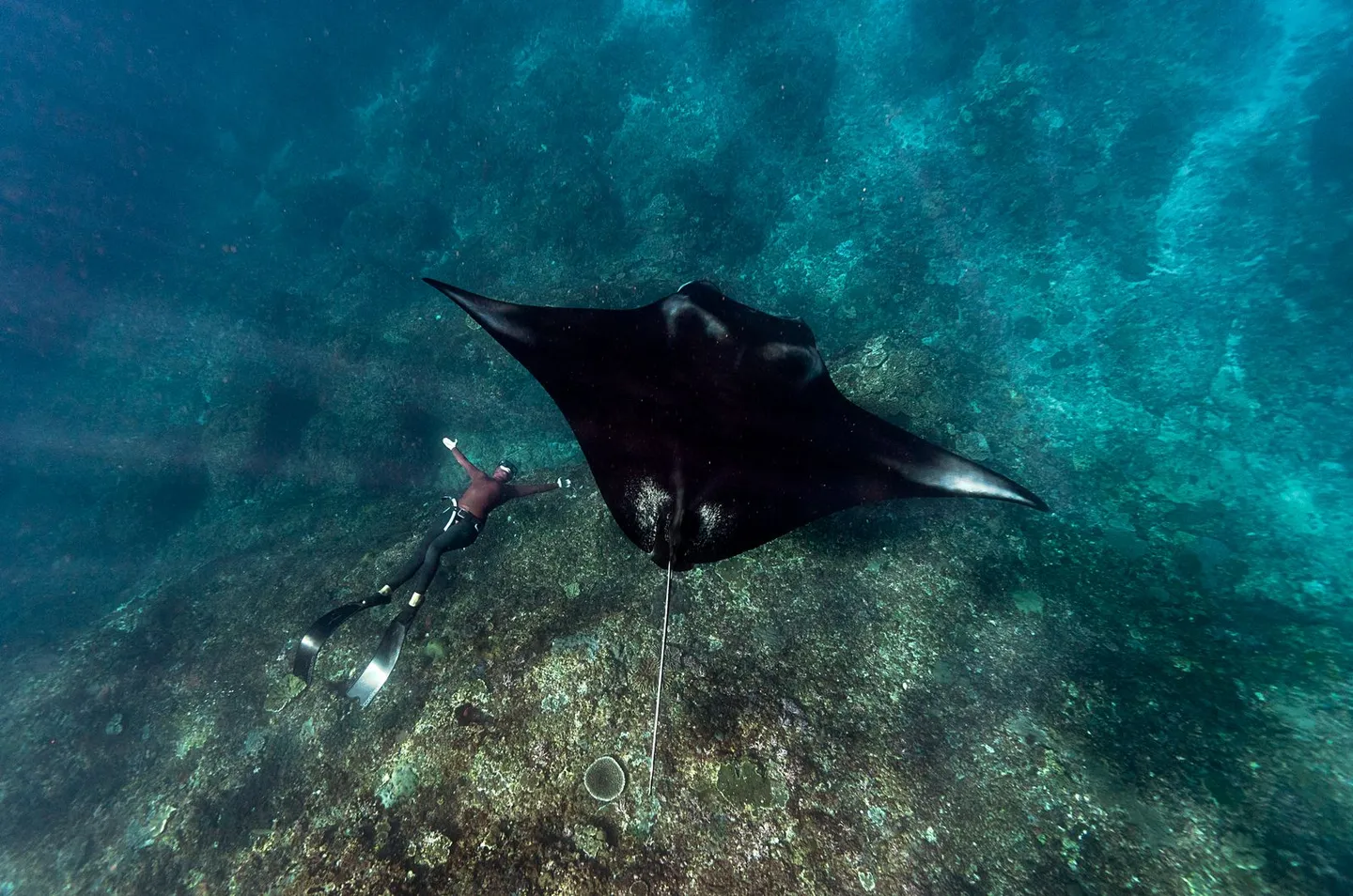
The Maldives is one of the world's premier destinations for manta ray encounters, attracting legions of divers from around the globe year after year. To understand just how much economic value manta rays bring to the country, the globally renowned marine conservation and charitable organisation Manta Trust collaborated with research partners to "calculate their worth." The findings are staggering: manta ray tourism alone generates as much as US$311 million in annual output for the Maldives. When you factor in all the encounters a single manta ray has with divers and snorkelers throughout its lifetime, each individual ray contributes a lifetime economic value of up to US$2.6 million (approximately NT$83 million) to the local economy. Surprising, isn't it? Those few minutes we spend eye-to-eye with a manta ray underwater — the ray isn't just a miracle of nature, it's also a "blue major shareholder" supporting countless dive guides, boat captains, guesthouses, and restaurants in the community.
That said, this kind of blue economy value depends entirely on these animals continuing to appear in healthy waters, and on whether tourism management can maintain the right balance. If their habitat is damaged, water quality declines, or tourism pressure becomes too intense, the entire industry chain suffers. In other words, marine ecosystems are not an accessory to tourism — they are the true foundation of it.
No Protection, No Profit — Australia's Dive Industry Takes Out Full-Page Ads
The second report concerns a recent open letter jointly signed by Australia's dive industry and sent to the government, calling for an expansion of marine protected areas (MPAs). Australia's Department of the Environment is currently conducting its once-a-decade review of the country's Commonwealth Marine Parks. Seizing the moment, the Australian dive industry placed full-page advertisements in major national newspapers, warning that without stronger protections for key marine environments, Australia could lose as much as AU$4.2 billion (approximately NT$93.3 billion) in dive tourism revenue — a devastating blow to the industry.
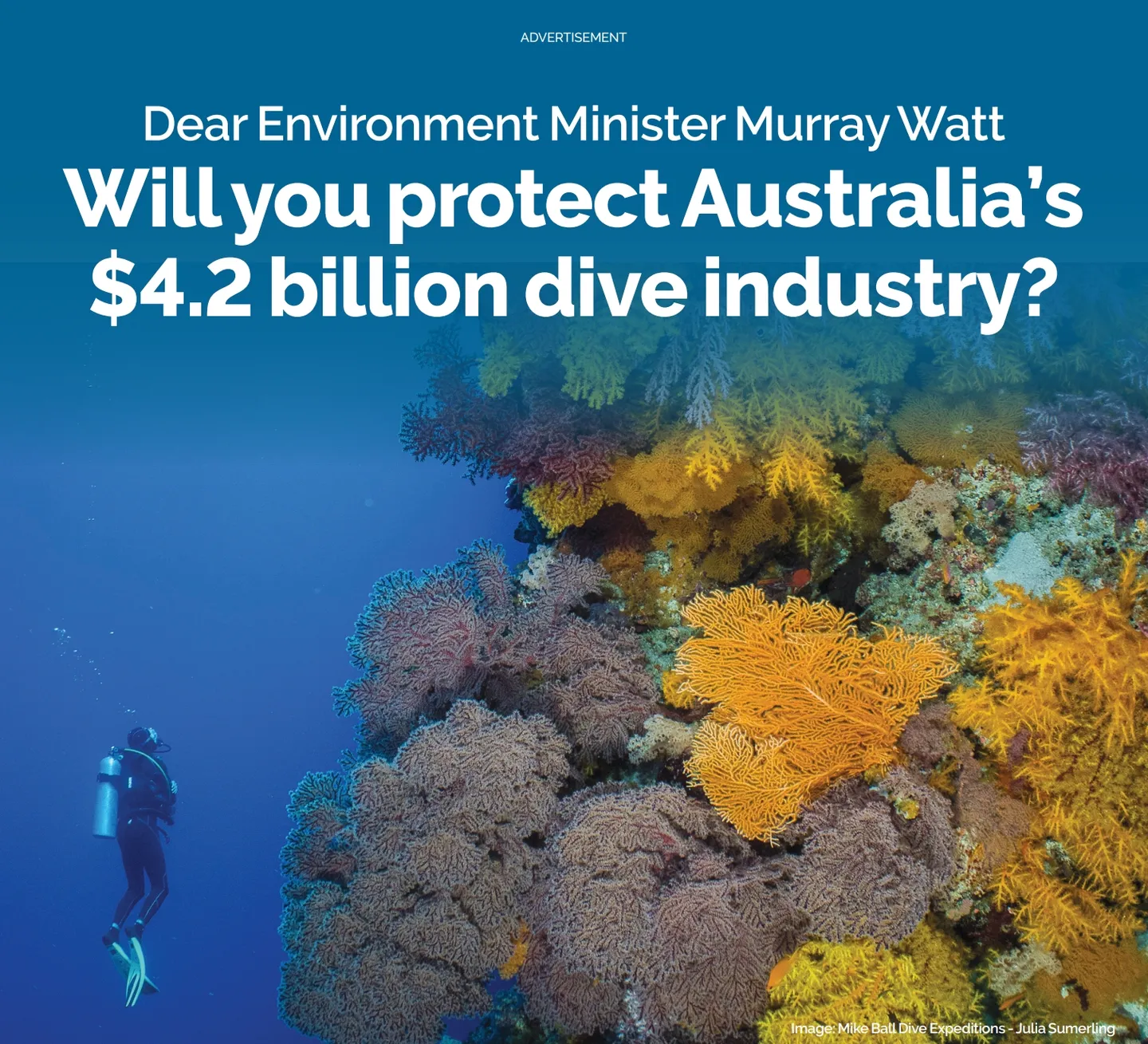
The ads specifically noted that many of Australia's famous dive sites attract international divers not just because of their geography, but because they still retain relatively intact marine environments — environments that are currently "not receiving adequate protection." Taking the world-class dive destination of the Great Barrier Reef as an example, it contributes approximately US$9 billion annually and supports around 77,000 jobs, with tourism accounting for the vast majority of that value. "This sets a compelling benchmark for the economic potential of well-protected marine environments across the entire Commonwealth marine estate."
Australia's experience resonates deeply with the Editor, because it demonstrates that ocean protection is not solely the responsibility of environmental agencies, nor merely the cause of conservation groups — it is a comprehensive economic strategy. When a country begins to view marine protected areas as tourism assets, employment foundations, and components of brand competitiveness, conservation shifts from an ideal into a policy tool. This kind of thinking matters, because it allows governments, industry operators, and communities to discuss long-term returns within the same framework, rather than focusing only on short-term development gains.


Marine Conservation Is the Key to Developing the Blue Economy
Every time the Editor gazes at the vivid blue seas of Kenting, the Northeast Coast, Xiaoliuqiu, Penghu, Green Island, or Orchid Island, one thought always surfaces: isn't Taiwan in exactly the same position? The captivating sea turtles of Xiaoliuqiu, the breathtaking marine life of Green Island, the crystalline, flawless waters of Orchid Island — these everyday wonders we take for granted every time we slip beneath the surface are silently underwriting the homecoming dreams of countless young Taiwanese, and sustaining the livelihoods of coastal villages and families all across the country.
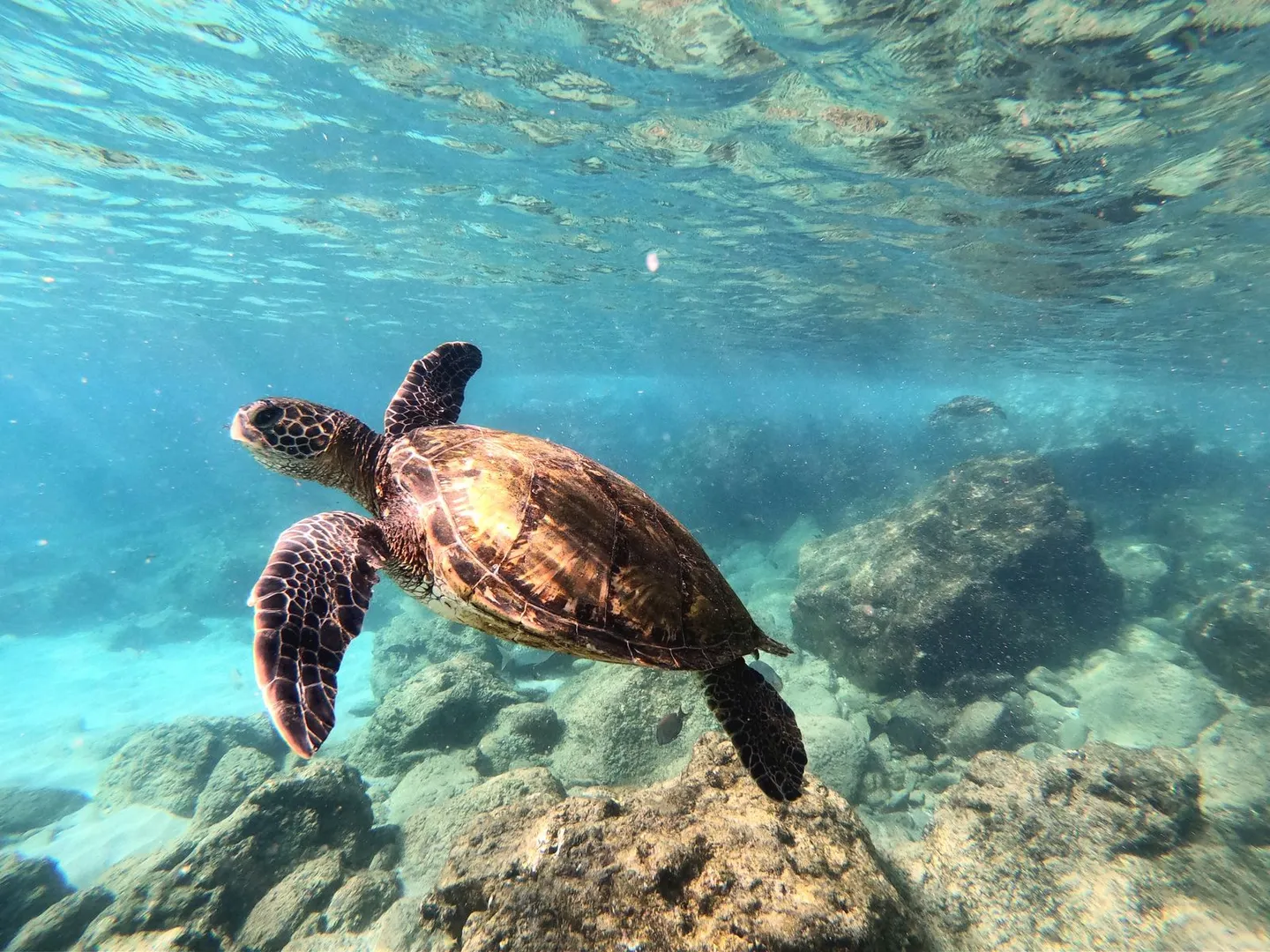
Tourism talks about "short-term traffic," and governments like to discuss "regional revitalization," but if we destroy the coral reefs underwater, frighten away the sea turtles, and let dive sites fill up with rubbish, those one-off booms will ultimately amount to nothing but foam on the waves. The Editor has always believed that ocean protection shouldn't be treated merely as an environmental advocacy issue — it is a "sustainable survival strategy." Only by embracing it as such can we, and the generations that follow us, always have an ocean to look at, and a livelihood to sustain.
Sources
- Maldives manta ray blue economy research (Manta Trust): Moloney et al. 2026
- Report on Australia's dive industry warning to government: Dive industry govt warning (Nature Media Centre)
- Original full-page advertisement by Australia's dive industry: Dive ad media (PDF)
Cover image source: Pexels / Emma Li.