Contents(6)
- From the Memory of Bleaching to a Zero-Mortality Miracle: Hang Bay's Resilient Comeback
- What Are Biochar Coral Restoration Bricks? Locking Carbon into the Sea and Giving Coral a Home
- What the Editor Did on Site: From Communication to Coral Monitoring
- Sustainable Resilience Tourism from 2026: One Tank, One Day as a Citizen Marine Scientist
- Good News Deserves to Be Told — But So Do the Warning Signs
- Closing Thoughts: Let Every Unexpected Encounter Become the Beginning of Stewardship
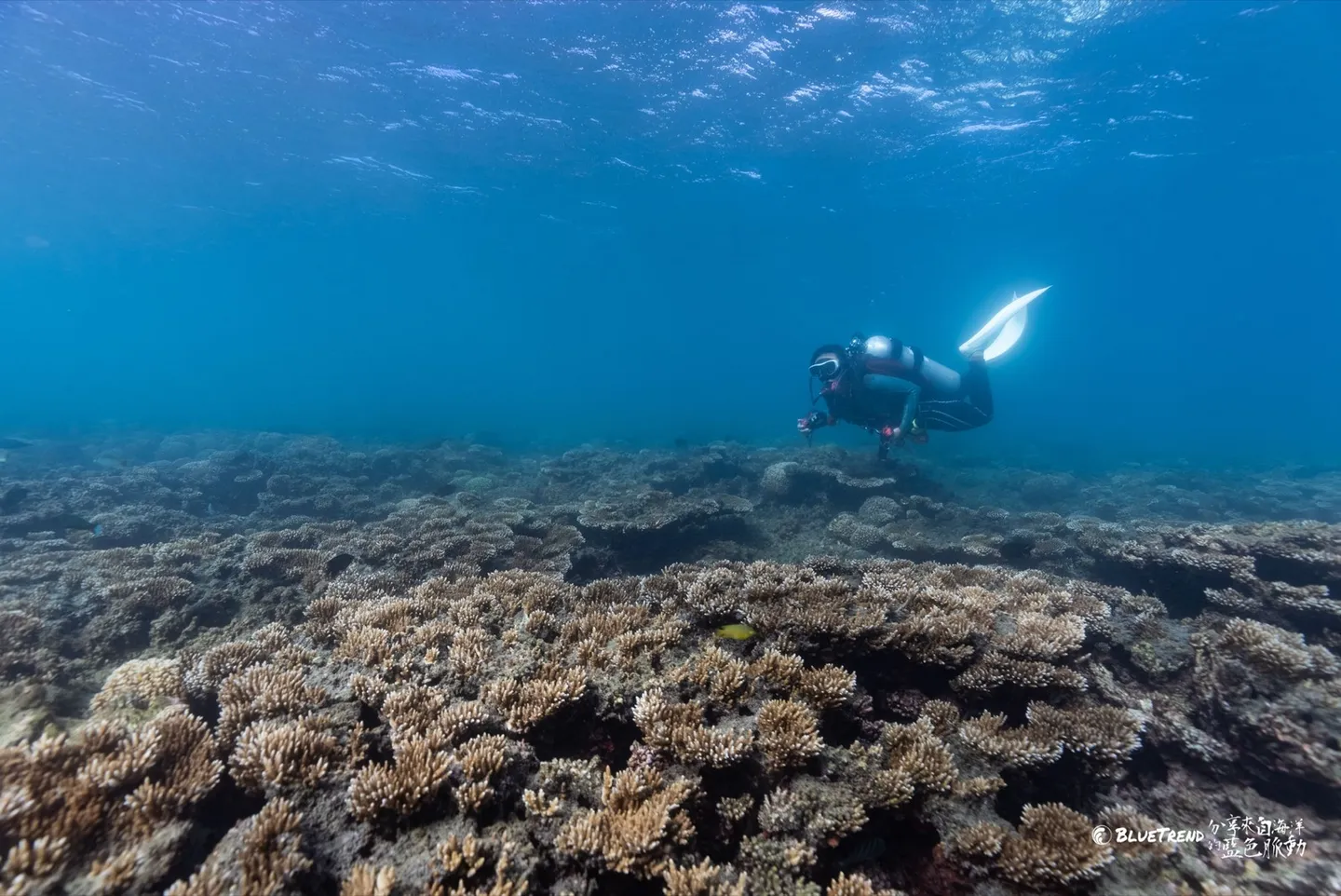
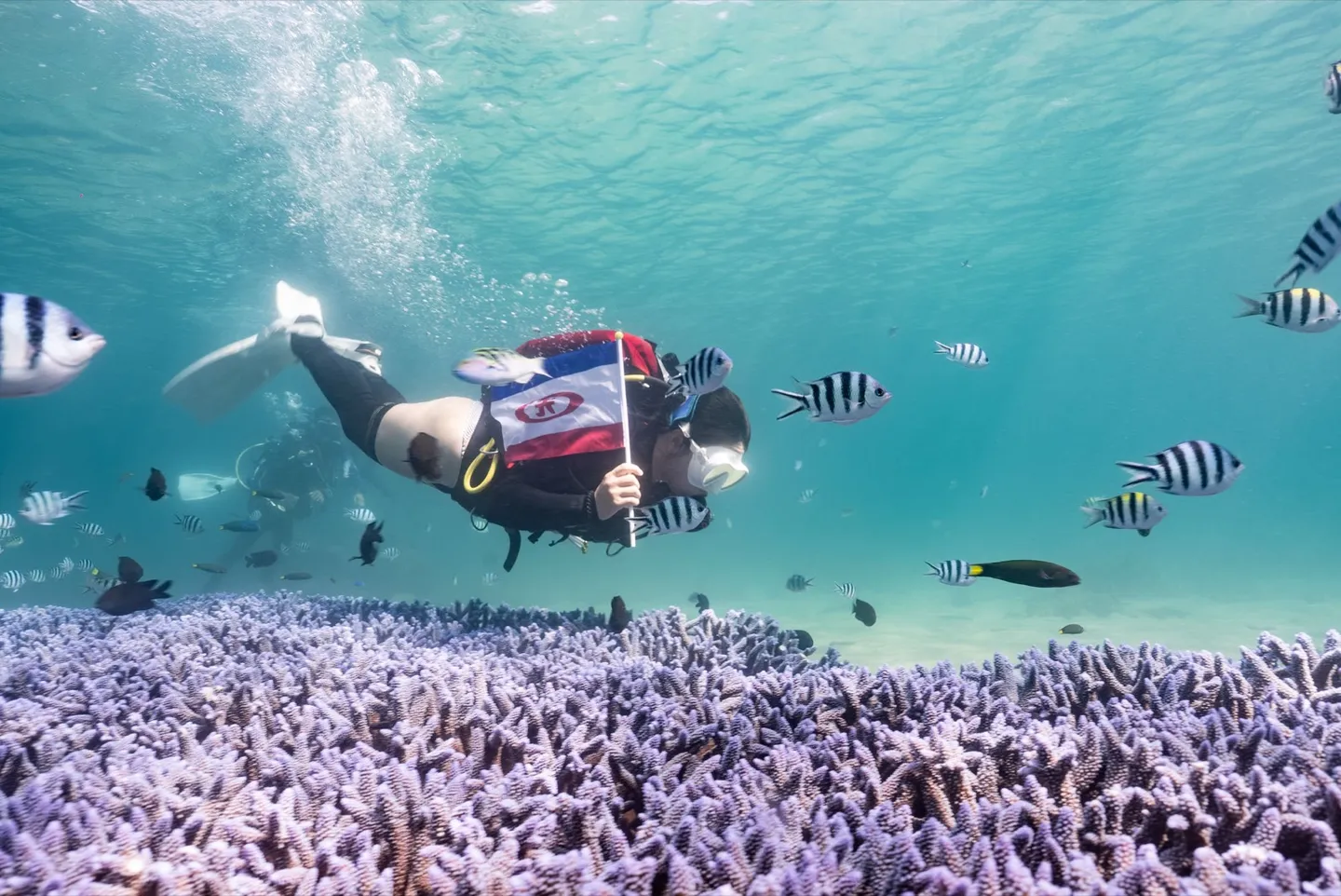
Penghu's seafloor, blanketed in lavender-hued coral reefs reminiscent of a flower garden, has long been the island's most iconic dream dive site. To protect this stunning stretch of ocean, Shin Kong Life Charity Foundation launched a "Biochar Coral Restoration Brick Project" in 2025, adding new momentum to the existing ecological foundation. According to native coral survey data released by the project team in September 2025, hard coral coverage in the area has reached 45.6%, dead coral coverage has fallen to zero, and — for the first time — 46 species of stony coral across 8 families and 17 genera have been fully identified, demonstrating remarkable ecological resilience. From 2026, this thriving marine zone will be transformed into a sustainable resilience tourism destination, inviting visitors to dive in and collect data firsthand, experiencing what it means to be a citizen marine scientist.
From the Memory of Bleaching to a Zero-Mortality Miracle: Hang Bay's Resilient Comeback
The project team slipped beneath the surface on 4 September 2025. At a depth of 5 m, water temperature of 29°C, and visibility of 12 m, they systematically documented conditions along five transect lines. The final data was exhilarating: hard coral coverage stood at 45.6%, rock at 31.7%, and dead coral coverage at 0%.
Just how rare is that 0%? In 2024, corals worldwide endured a severe bleaching event, and Penghu's reefs were no exception. The fact that Hang Bay achieved 0% dead coral coverage within just one year means that the symbiotic zooxanthellae have returned, the reef structure has stabilized, and the coral is growing back on its own terms.
Yet, given the unpredictability of extreme climate events, and in order to consolidate this hard-won reef health and provide long-term reinforcement for local coral restoration, Shin Kong Life Charity Foundation deployed biochar coral restoration bricks in 2025, injecting new vitality into the local marine ecosystem. So what exactly are these "biochar coral restoration bricks" that are generating such high hopes?


What Are Biochar Coral Restoration Bricks? Locking Carbon into the Sea and Giving Coral a Home
Many people assume coral restoration simply means gluing broken fragments back onto the reef — the Editor will admit to having once thought the same. But the "biochar coral restoration bricks" deployed by Shin Kong Life Charity Foundation take a very different, technology-driven ecological approach.
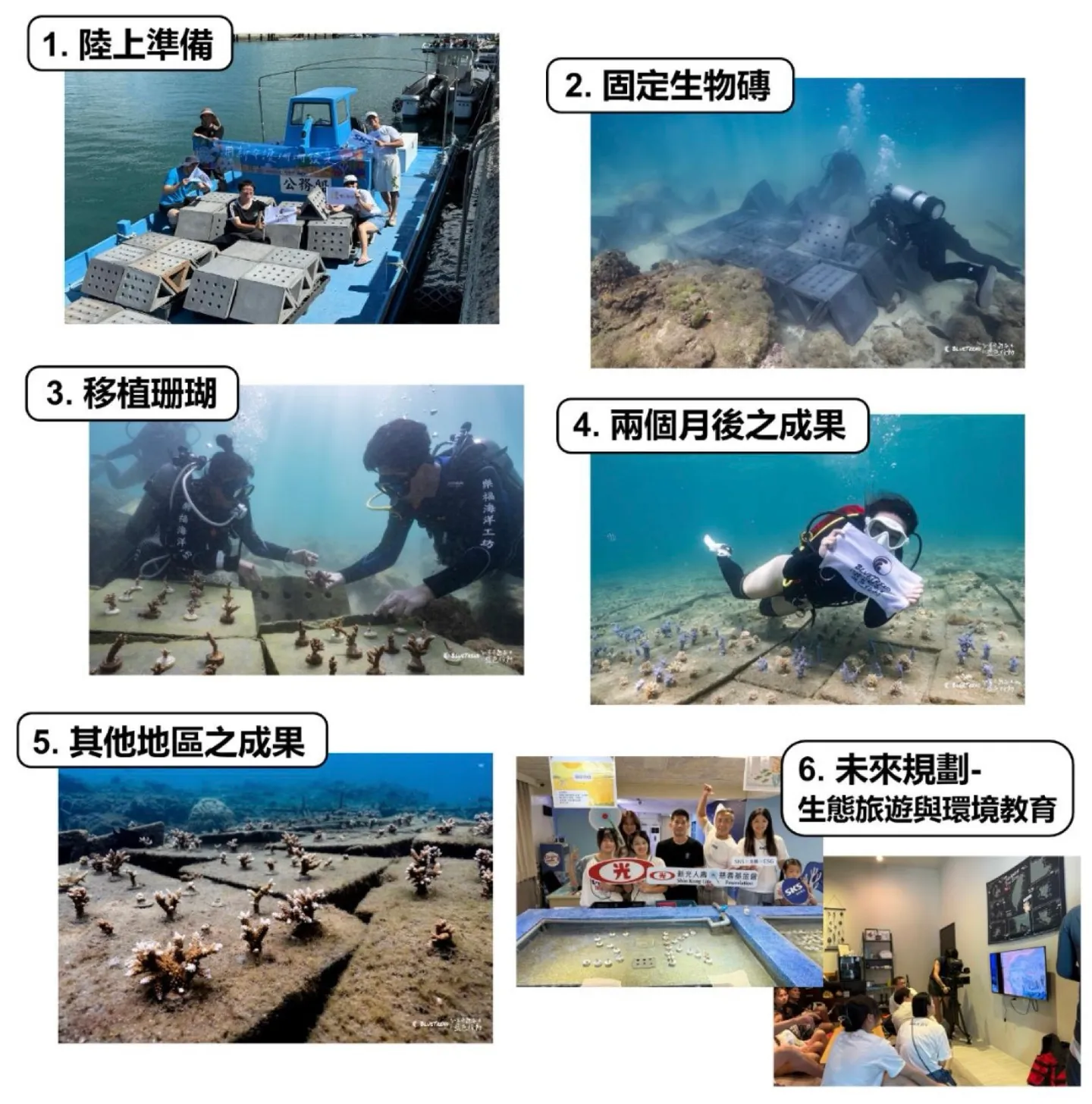
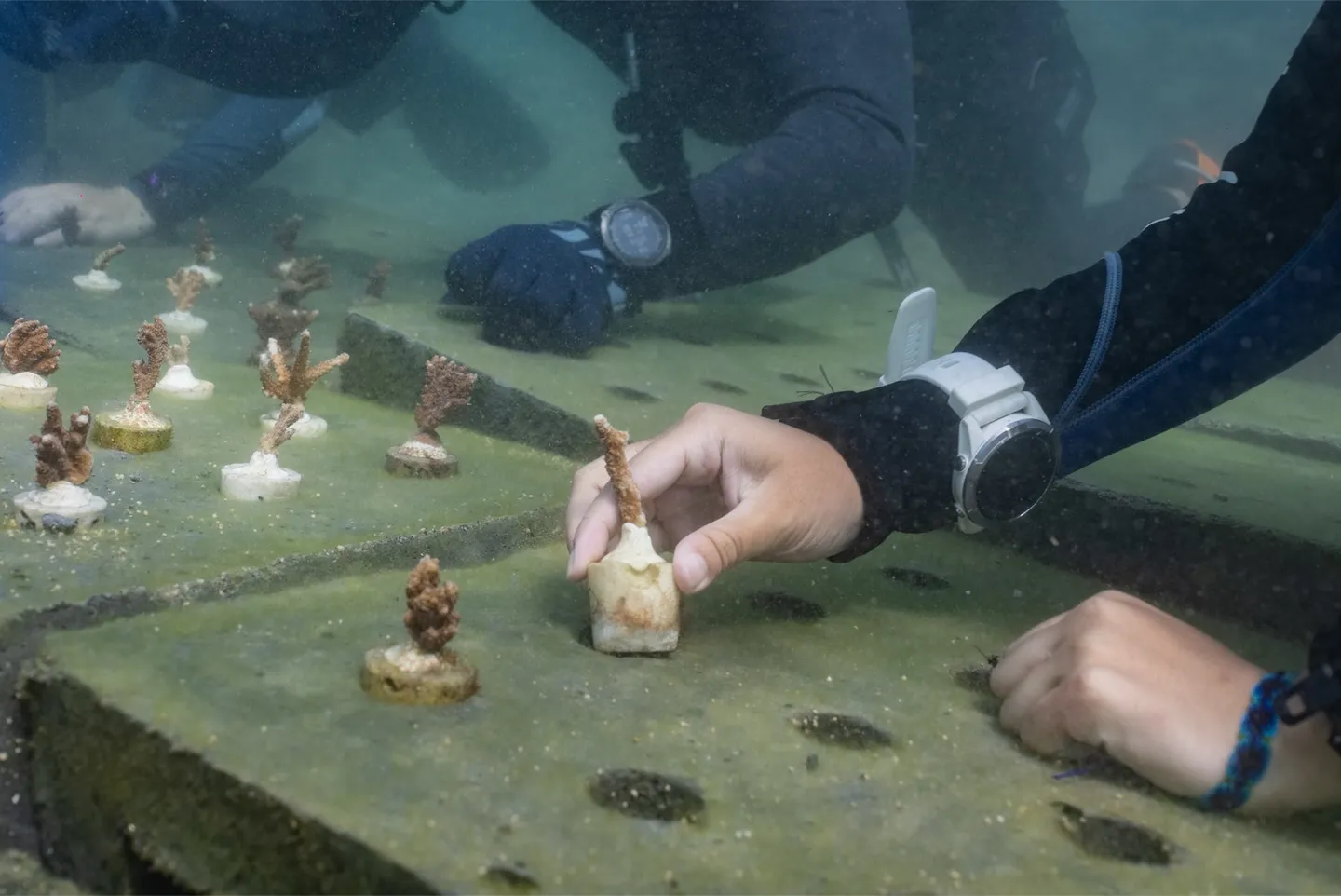
"Biochar" is a carbon-rich solid produced by burning organic biomass at high temperatures in an oxygen-deprived environment. It is exceptionally stable — capable of remaining on the seafloor for hundreds of years without decomposing — effectively locking carbon into its structure for the long term. Shaped into restoration bricks and placed on the seabed, these structures serve a dual purpose: on one hand, they act as a blue carbon sequestration medium; on the other, their rough surface provides the perfect sheltered attachment point that coral polyps love. This is precisely the kind of "nature-based solution" that the international community has been championing in recent years.
Even more significantly, the biochar used here is no ordinary charcoal. It has been certified under the European Biochar Certificate (EBC) and is recognized by the Intergovernmental Panel on Climate Change (IPCC) as a material with verified CO₂ removal capability. Once crafted into coral restoration bricks, this project became the world's first coral restoration case to receive international carbon sink certification. Using the relevant carbon sink methodology, the project has generated a net carbon removal benefit of 0.313 metric tons of CO₂ equivalent (t CO₂e), now registered in the Global C-Sink Registry. In other words, as the coral slowly grows back, the seabed is simultaneously securing a solid carbon credit for the planet.
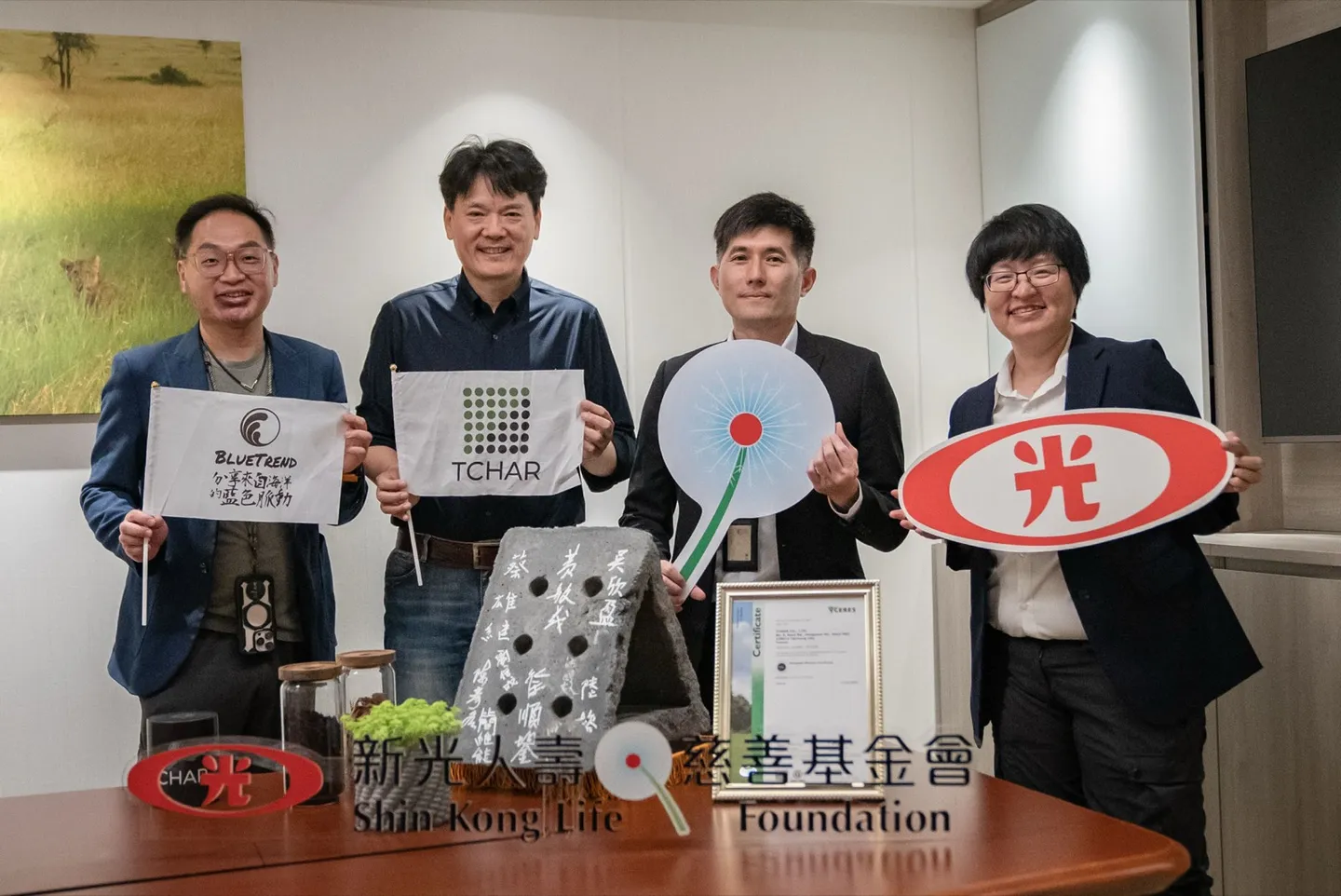
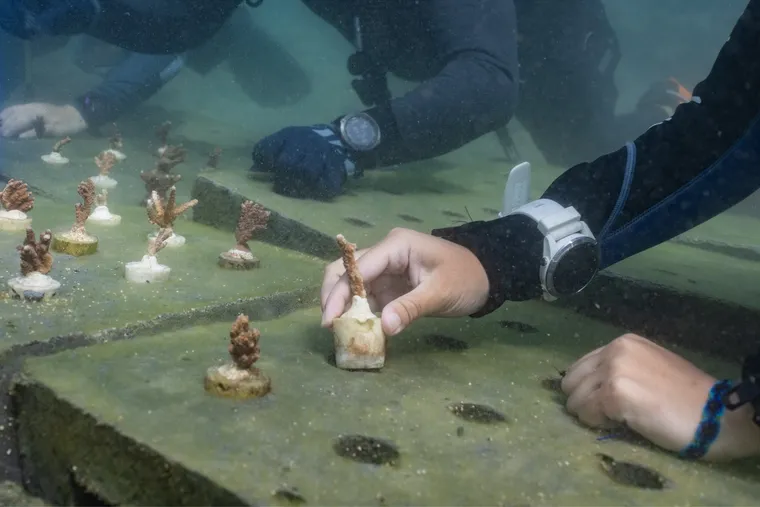
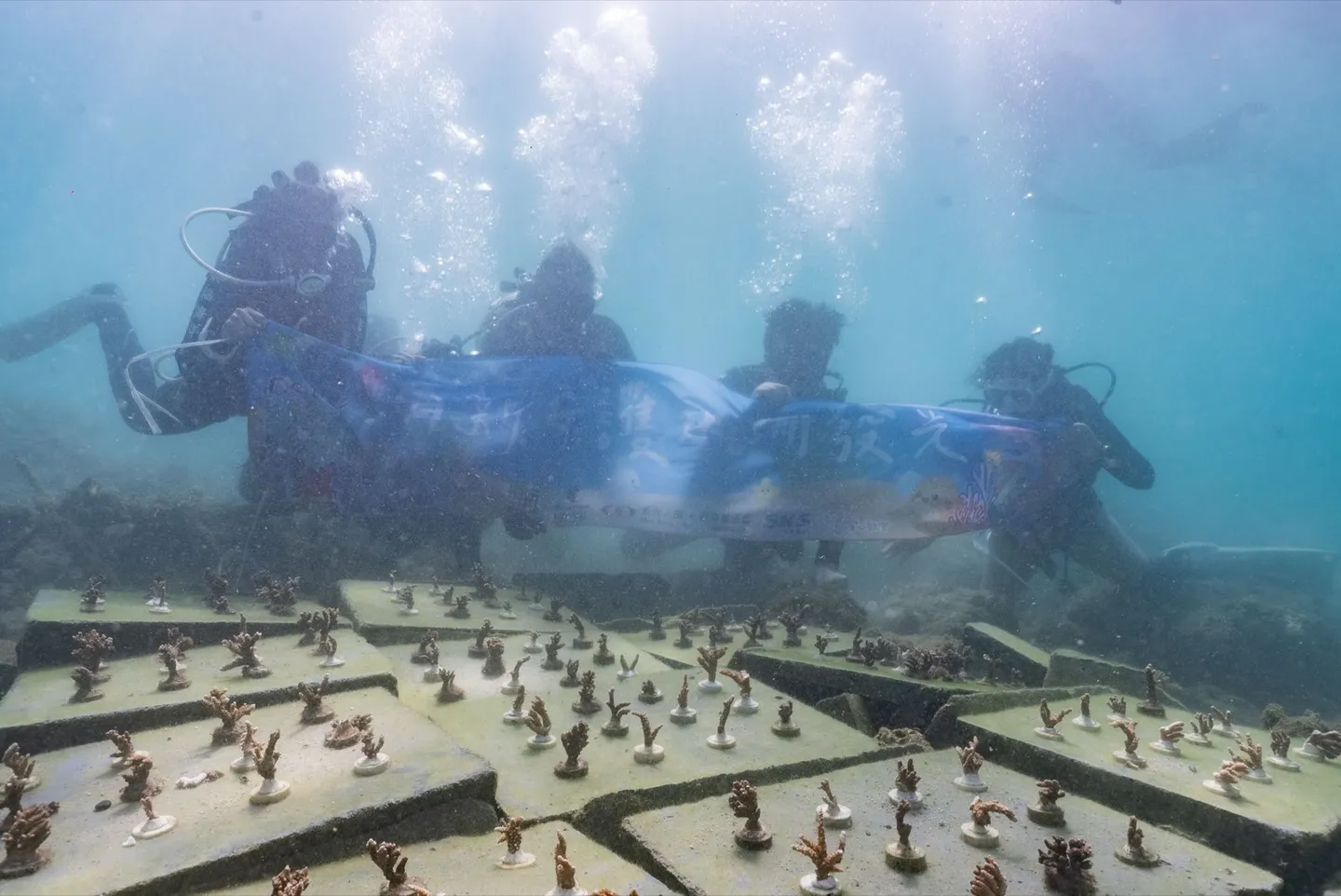
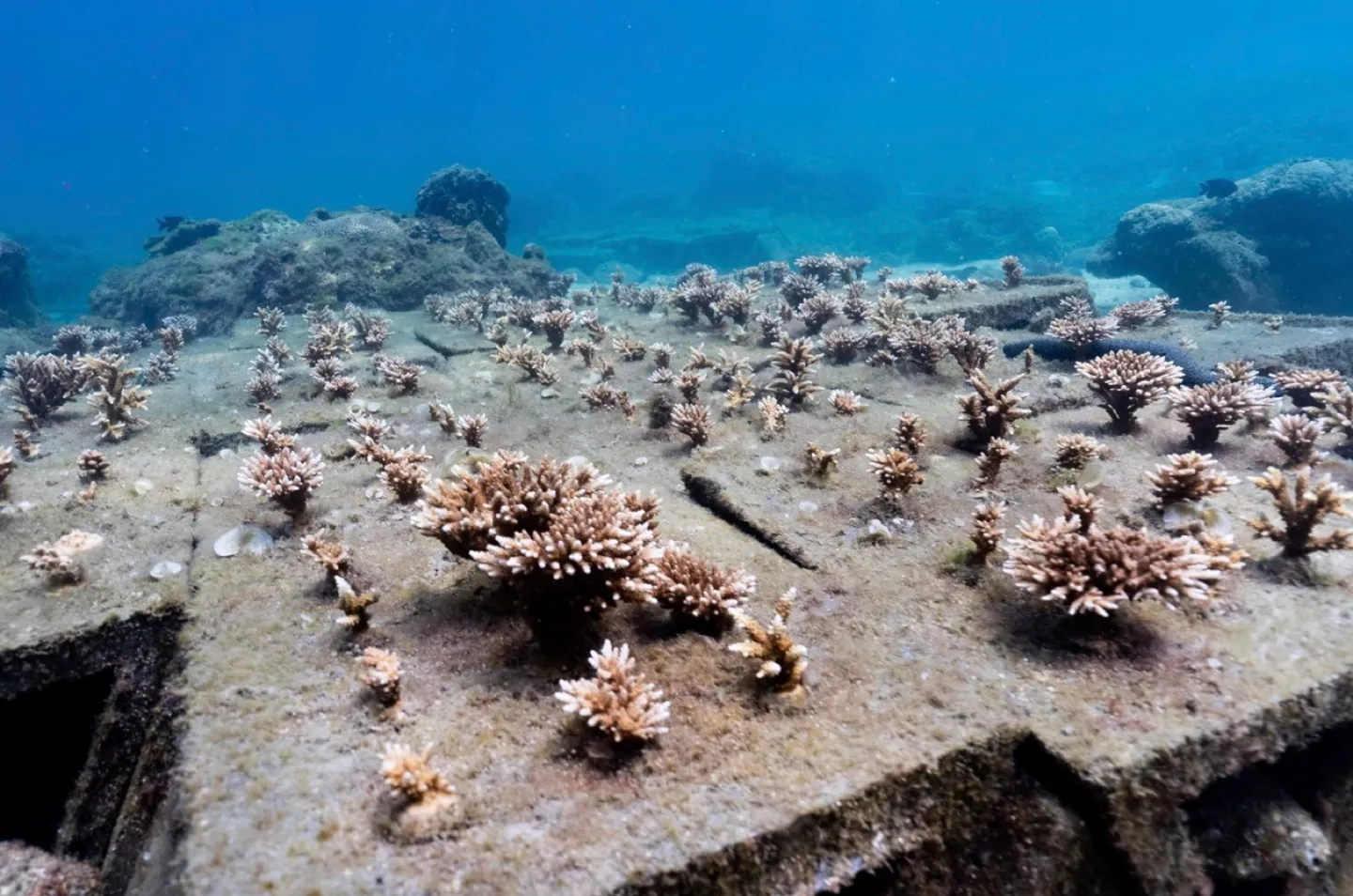
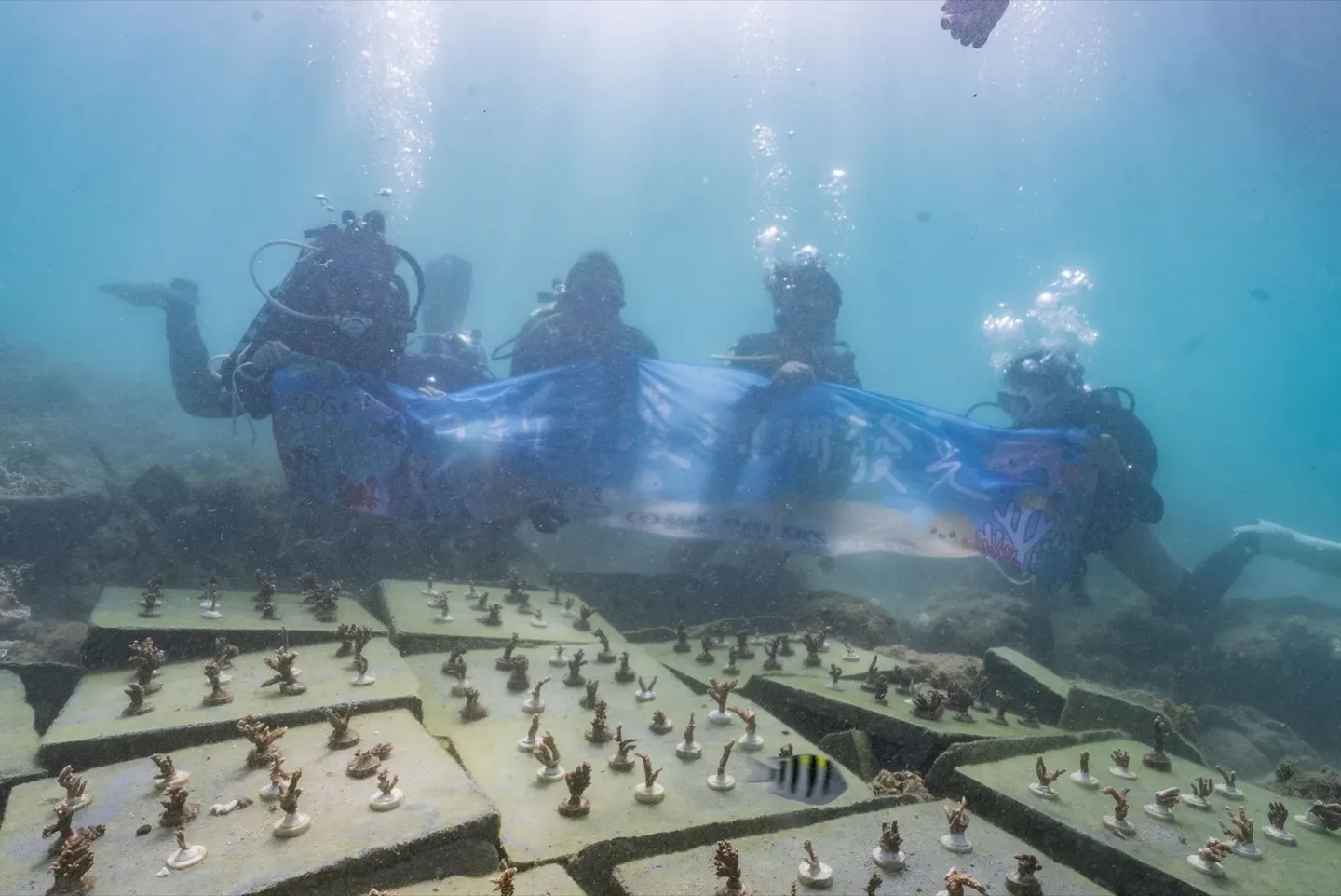
In 2025, Shin Kong Life Charity Foundation deployed 100 biochar bricks and transplanted 552 coral fragments at Penghu's Hang Bay, designating the area as a long-term monitoring site. This is no one-and-done spectacle — plant the coral, snap some photos, and leave. Shin Kong Life Charity Foundation has continued to invest resources in partnership with BlueTrend to track how the baby corals are growing and whether fish and other marine life are finding their way back home.
What the Editor Did on Site: From Communication to Coral Monitoring
In this project, BlueTrend's role extended beyond translating complex scientific language to make Penghu's restoration story accessible to a wider audience. The team also worked closely with local dive operator Ocean Channel to advance future coral monitoring efforts.
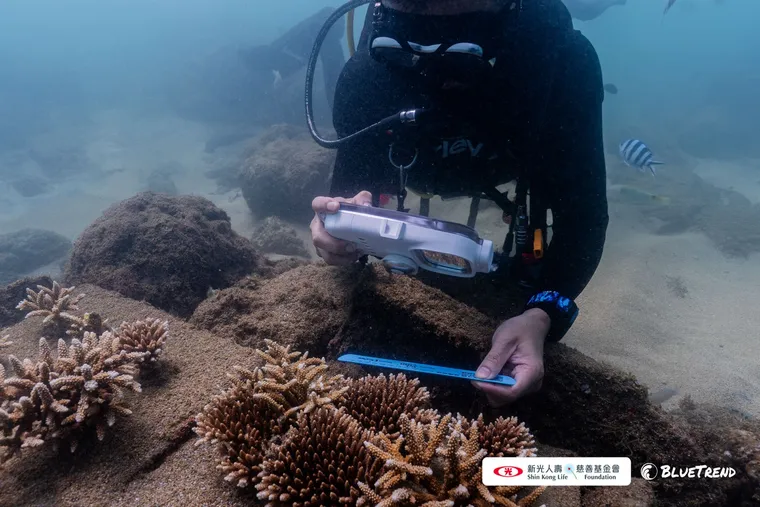
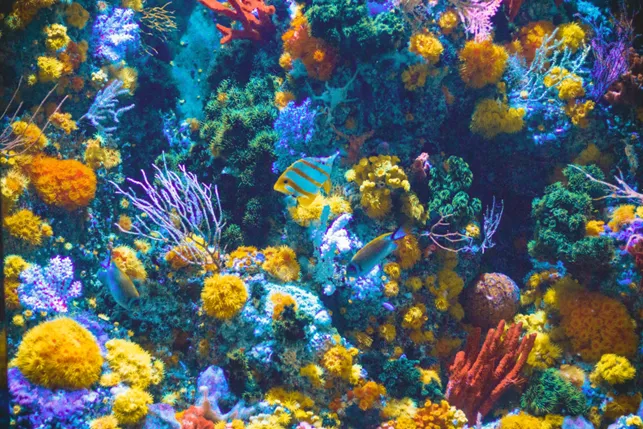
The complexity of underwater monitoring exceeded all expectations. The Editor's colleagues had to press close to the reef and measure each coral colony one by one with a tape measure, documenting growth form and morphology. The dreamlike underwater scene that divers lovingly call the "Lavender Garden" is composed of the 490 stony coral colonies — spanning 8 families, 17 genera, and 46 species — recorded during this survey. The fastest-growing Acropora corals alone accounted for 23 species and 438 colonies, their dense branching spreading outward in sweeping underwater tapestries. Beyond the coral, indicator fish species also made an appearance: parrotfish, Grouper, and butterflyfish were among the 36 species across 12 families recorded on site.
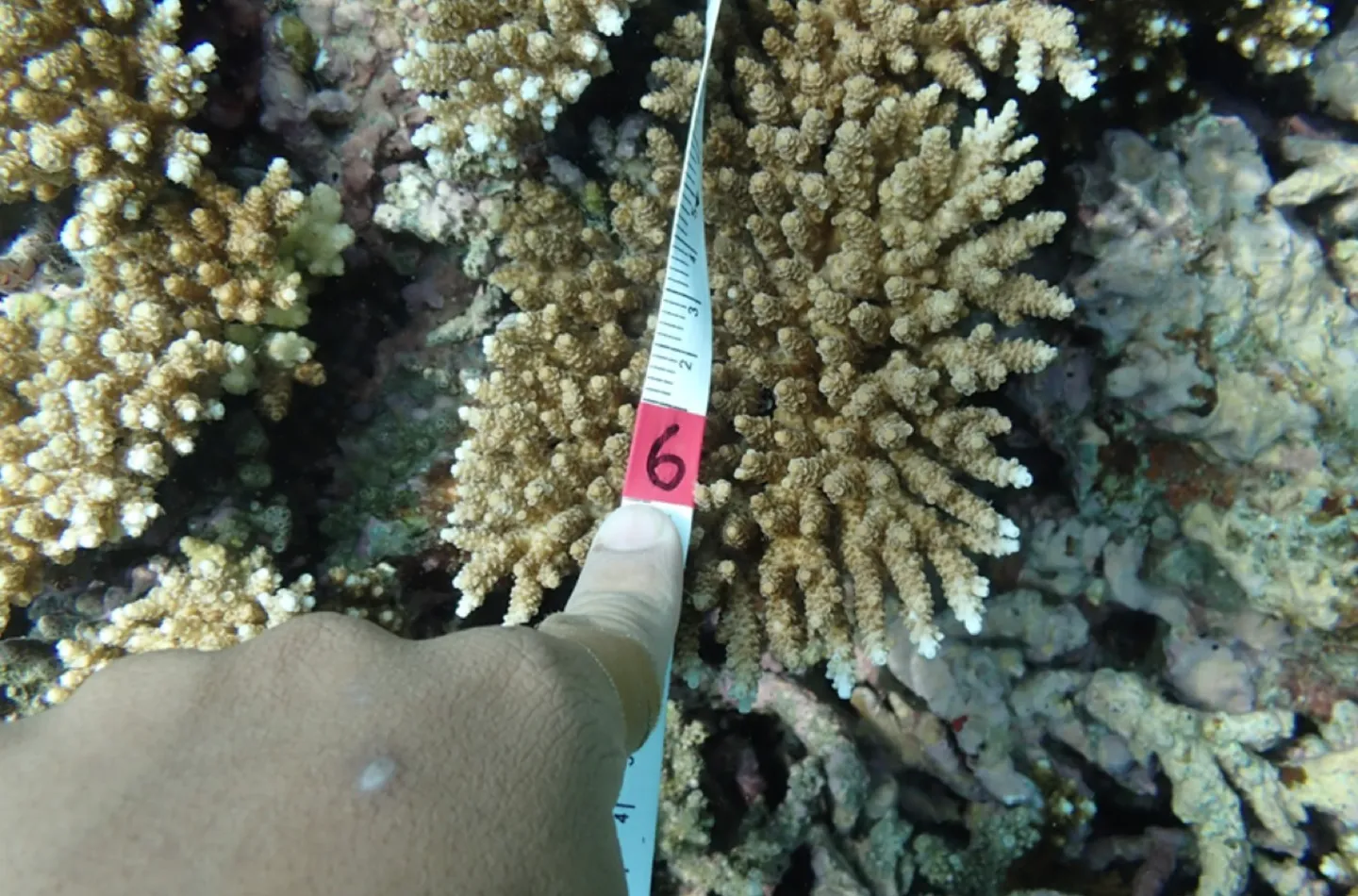
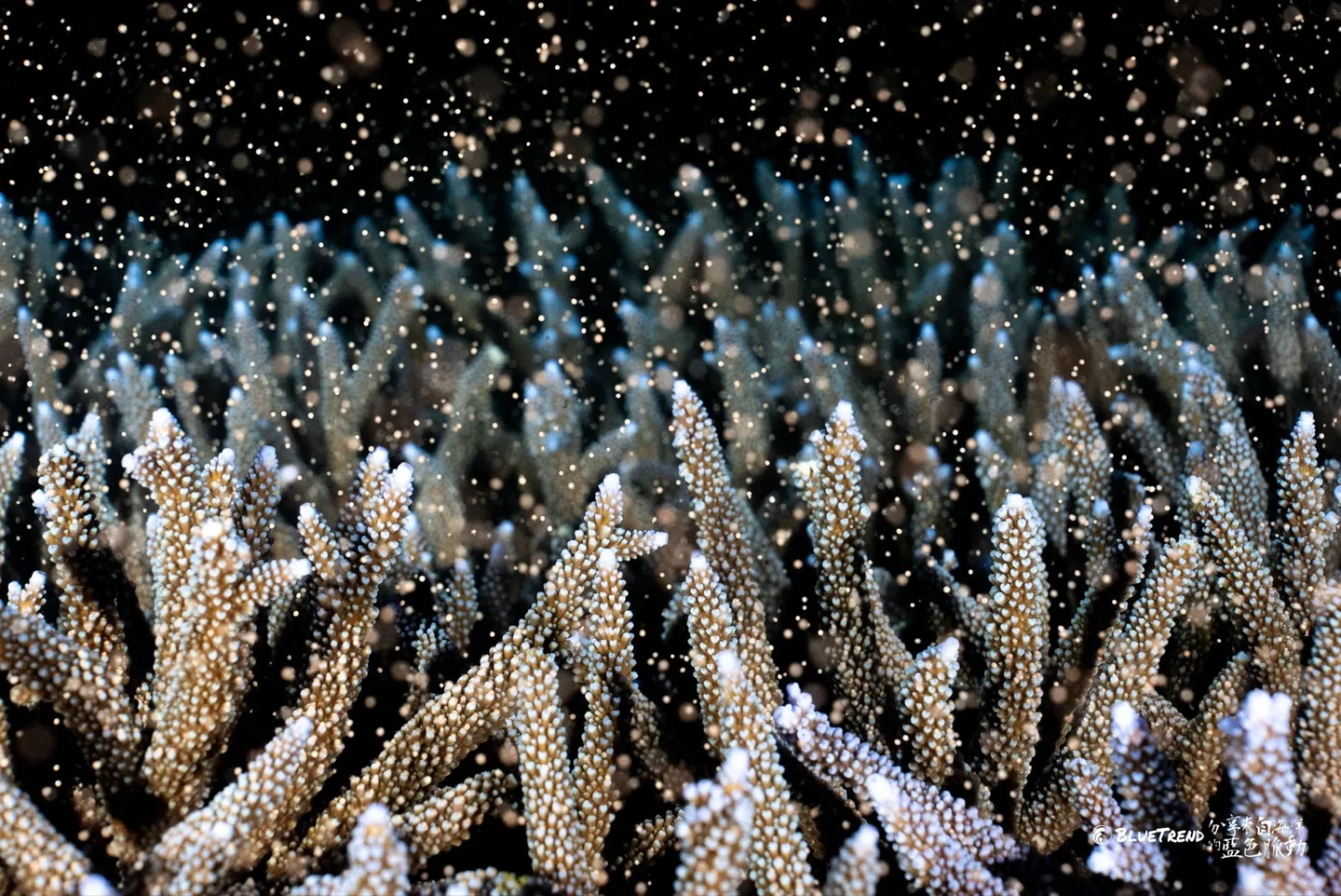
In fact, the Penghu County Government's Aquatic Seed Farm has been quietly deploying restoration bricks and cultivating coral through asexual reproduction in the Hang Bay area since as far back as 2006. In 2024, the team even captured the spectacular sight of artificially transplanted coral spawning en masse for the very first time. Standing before this coral garden built up over years of patient effort, the Editor felt a swell of hope: the biochar coral seedlings planted in 2025 will surely grow into an equally dazzling landscape in the years to come.
Sustainable Resilience Tourism from 2026: One Tank, One Day as a Citizen Marine Scientist
Excitingly, from 2026 onwards, with the support of Shin Kong Life Charity Foundation, BlueTrend and local dive operator Ocean Channel will join forces to transform the Hang Bay biochar restoration site into a hands-on sustainable resilience tourism destination.
Visitors coming to Penghu to dive don't need to be professional scientists. As long as you can dive and take photos, you can actively participate in this coral diversity project on every single dive. Guided by a dive guide, anyone can help document coral growth, and through BlueXplore — BlueTrend's forthcoming citizen science platform — you'll be able to revisit and track the coral's growth record over time. Your underwater observations will become real data for scientific research.
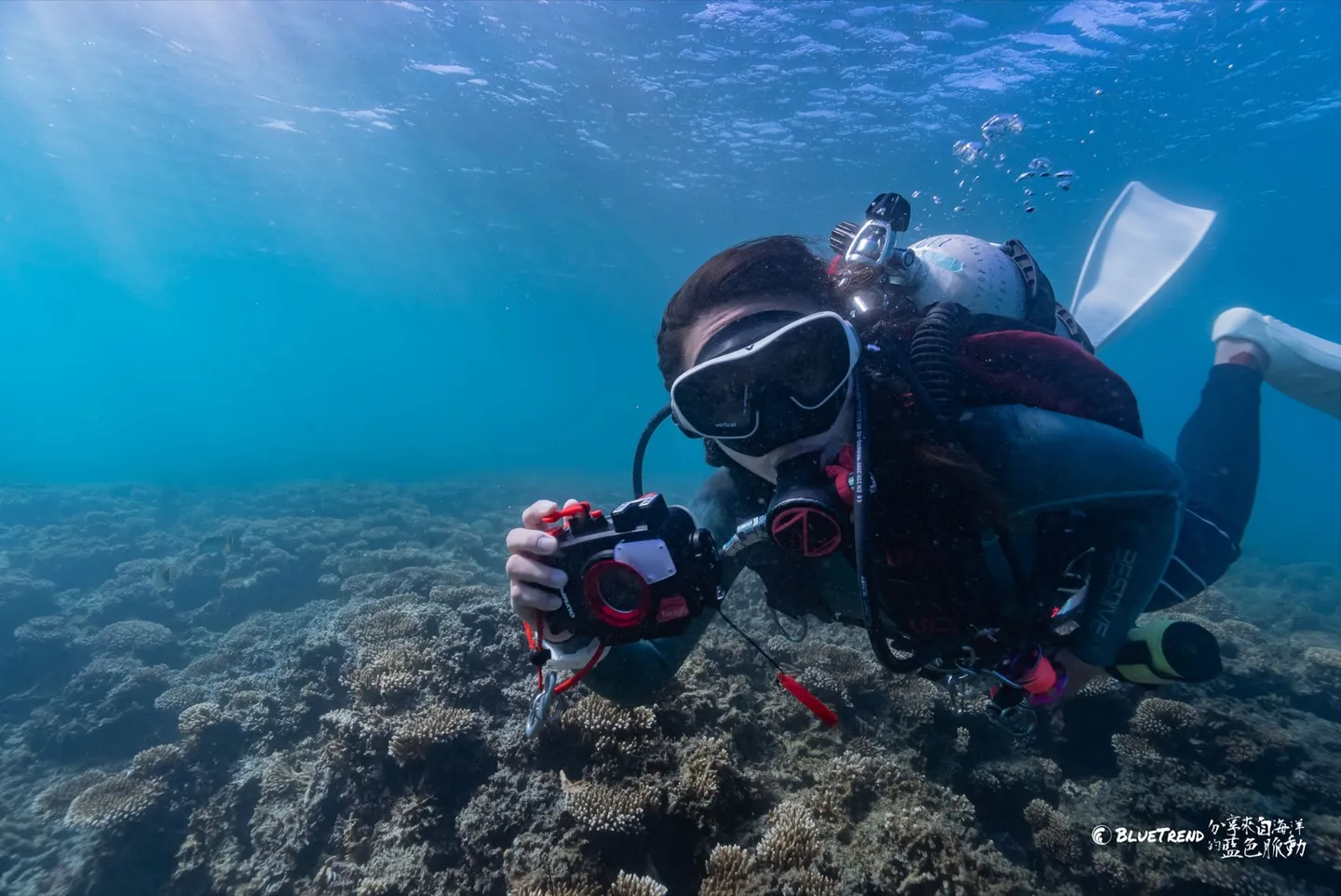
The Editor believes that turning conservation into an immersive sustainable tourism experience is far more meaningful than simply diving for photos. For the coral, every extra pair of eyes underwater helping to document what's there means one more chance for the ocean to be protected.
Good News Deserves to Be Told — But So Do the Warning Signs
That said, the Editor doesn't want to only report the bright side. Within the same monitoring report, we also observed the pressures that Hang Bay is currently bearing: 21 pieces of general marine debris, 1 instance of anchor damage, and 2 entangled ghost nets were documented underwater. Furthermore, large fish species such as the Napoleon Wrasse and the humphead parrotfish were nowhere to be found, and even the parrotfish observed were mostly juveniles — a clear sign that poaching pressure in the area remains severe.
So while the localized data from this survey is genuinely encouraging, the overall resilience of Hang Bay's coral ecosystem is still in recovery, given the shadow of global climate change and the mass bleaching event of 2024. These impressive numbers are no reason for complacency. This is precisely why the project must incorporate "biodiversity credits" and commit to long-term monitoring. Only by converting restoration outcomes into verifiable, visualizable scientific data will corporate ESG funding commit for the long haul — and only then will coral restoration receive the sustained resources it needs to endure.
Closing Thoughts: Let Every Unexpected Encounter Become the Beginning of Stewardship
Biochar coral restoration bricks aren't just about locking carbon beneath the waves — they are actively transforming Penghu's Hang Bay into an accessible, participatory sustainable resilience tourism destination.
For Shin Kong Life Charity Foundation, this pilot study is only the beginning. The Foundation plans to commit to coral monitoring in Hang Bay over a five-year period and will progressively expand the model to other marine areas across Penghu, weaving a regional restoration network. Beyond that, Shin Kong Life Charity Foundation is also investing in marine environmental education, helping more people understand the value of coral reefs and the ocean. It is through the sustained injection of corporate sustainability resources that coral restoration can move beyond a one-time event and evolve into a genuinely enduring conservation effort.
If you're planning a dive trip to Penghu in 2026, consider adding "spend a day as a citizen marine scientist" to your itinerary — and give your journey a deeper layer of meaning as a guardian of the sea.
Related Links
- Organizer: Shin Kong Life Charity Foundation
- Biochar provider: Tchar Energy
- Local partner dive shop: Ocean Channel
(This article is adapted from a press release by Shin Kong Life Charity Foundation. The original report can be found on China Times: Planting Trees on the Seabed — The World's First Biochar Coral Restoration Bricks Land in Penghu.)