Contents(9)
- Two Days, 3,420 kg: This Penghu Corporate Ocean Cleanup Breaks Last Year's Record
- Nets on the Seabed: Coral and Artificial Reefs Buried Under Abandoned Gear
- Clearing Nets in Zero Visibility: Ocean Cleanup Is Nothing Like You'd Expect
- A First-Time Cleanup Diver: From "Recreational Diving Is More Fun" to Unable to Stop
- Day One: Eyes Full of Nothing but Nets
- Day Two: Thirty Minutes In and There Were No More Nets to Clear
- Before / After: Giving This Ocean Back What It Was Always Meant to Have
- Without the Navy Frogmen, These Nets Could Not Have Come Ashore
- The CEO Was Also Hauling Nets: How a Corporate Ocean Cleanup Proves It Means Business
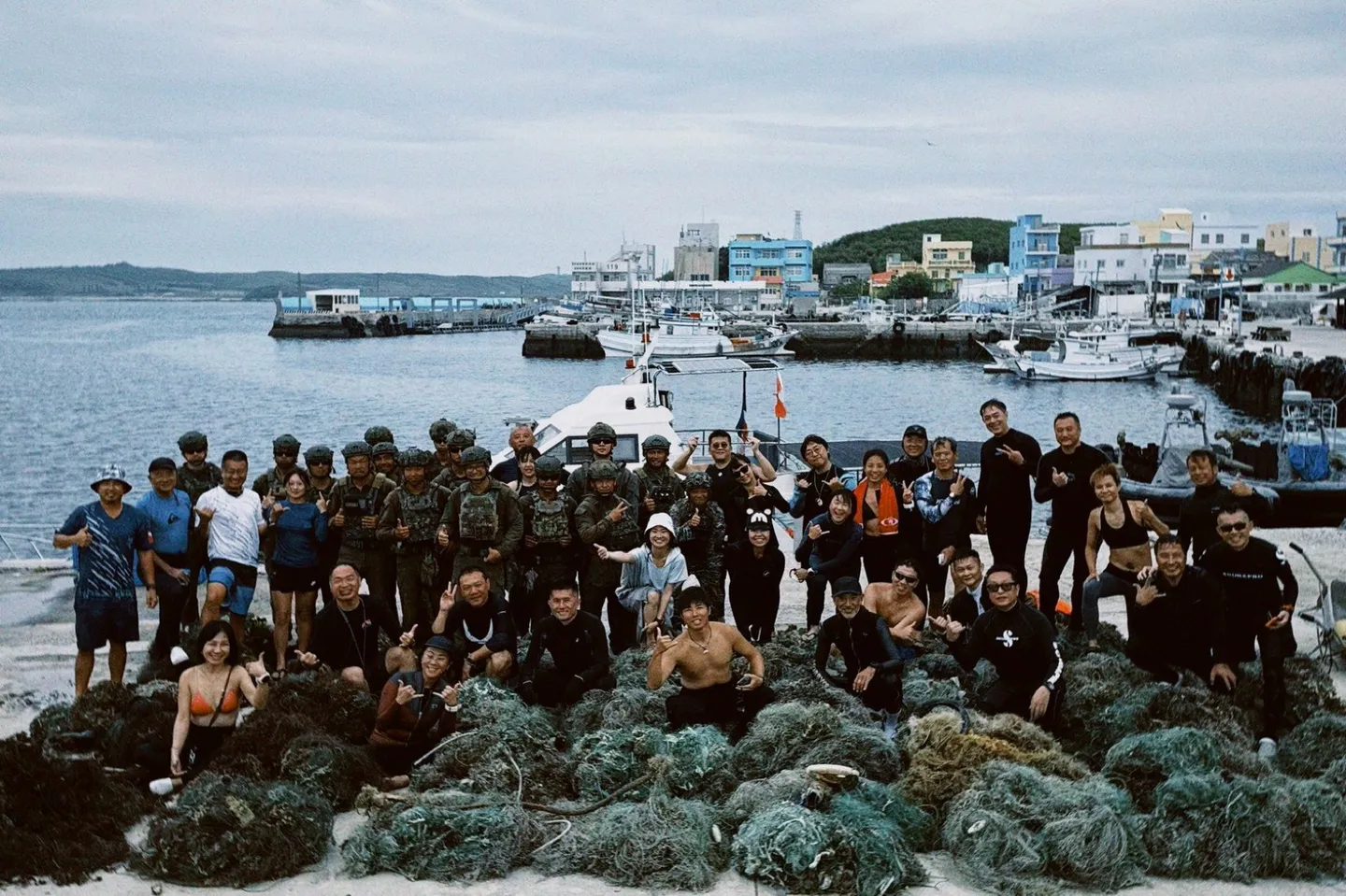
3,420 kg. That is the total weight of material recovered from the seabed around Jiangjun'ao Islet in Penghu during the corporate ocean cleanup held on 8–9 August 2026 — 420 kg more than last year's 3,000 kg, and a new record. The Shin Kong Life Charity Foundation, which organised the event, returned to the same stretch of water for the second consecutive year. Co-organised by the Shin Kong Security Social Welfare Foundation, the two-day operation saw a cumulative 136 diver-sessions of underwater work.
The most memorable moment of this year's event happened on shore. Navy frogmen conducting the Han Kuang military exercise on the island watched divers drag bundle after bundle of fishing nets back to the water's edge, and during a break from their drills they came over to help haul on the ropes. On day two they went further, loading the nets onto vehicles and transporting them to the landfill site on the other side of the island. And the most moving image from underwater was not the sheer volume of debris brought up — it was the moment on day two when a diver ran out of nets to clear, paused, looked up, and finally saw what this ocean was supposed to look like.
Two Days, 3,420 kg: This Penghu Corporate Ocean Cleanup Breaks Last Year's Record
Jiangjun'ao Islet sits beside Penghu's Wang'an Island and is classified as a second-tier outlying island. The density of abandoned nets blanketing its seabed is considerable. When the Shin Kong Life Charity Foundation first came here last year, they removed 3,000 kg; this year, the team expected a lower figure — and instead, the number went up.
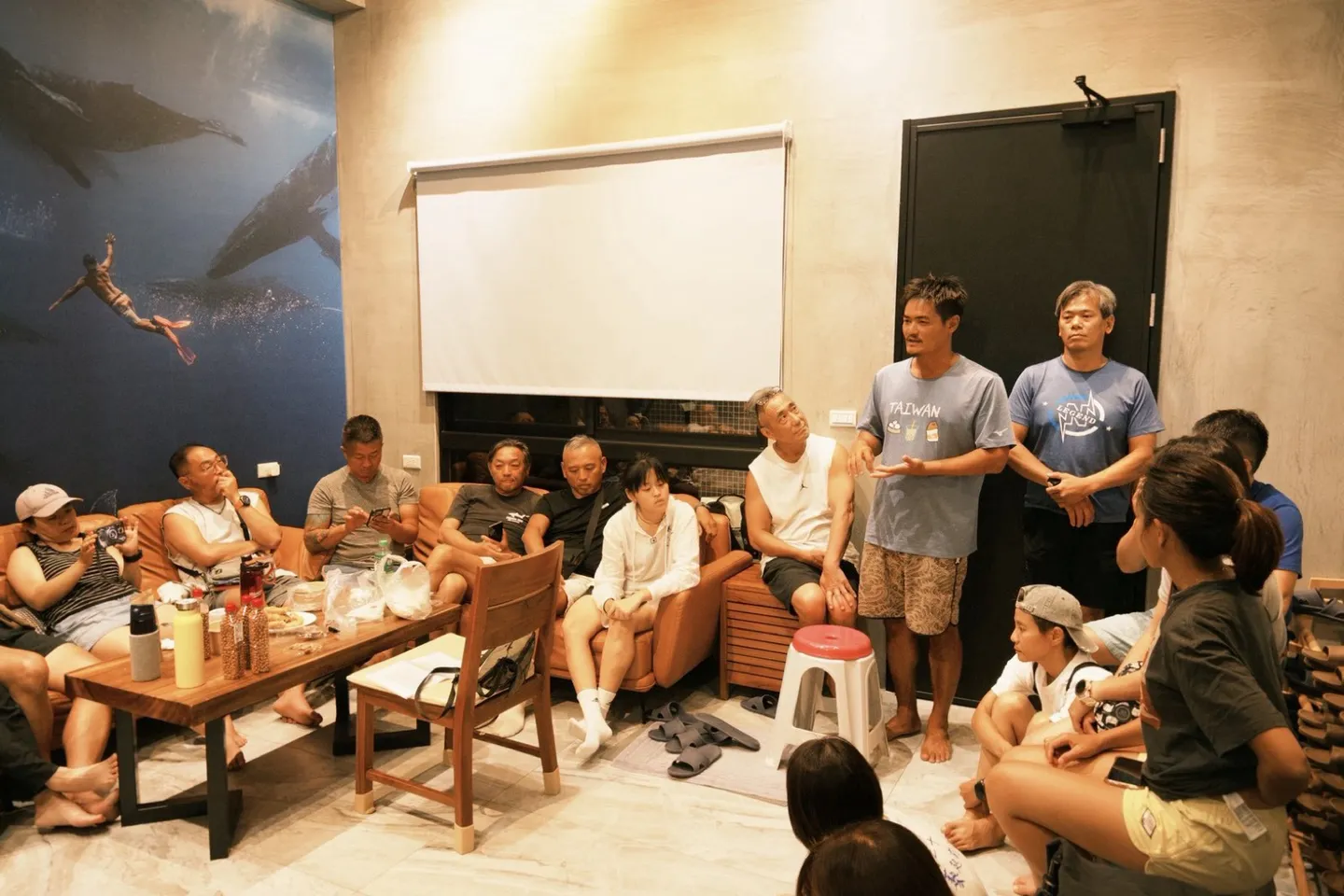
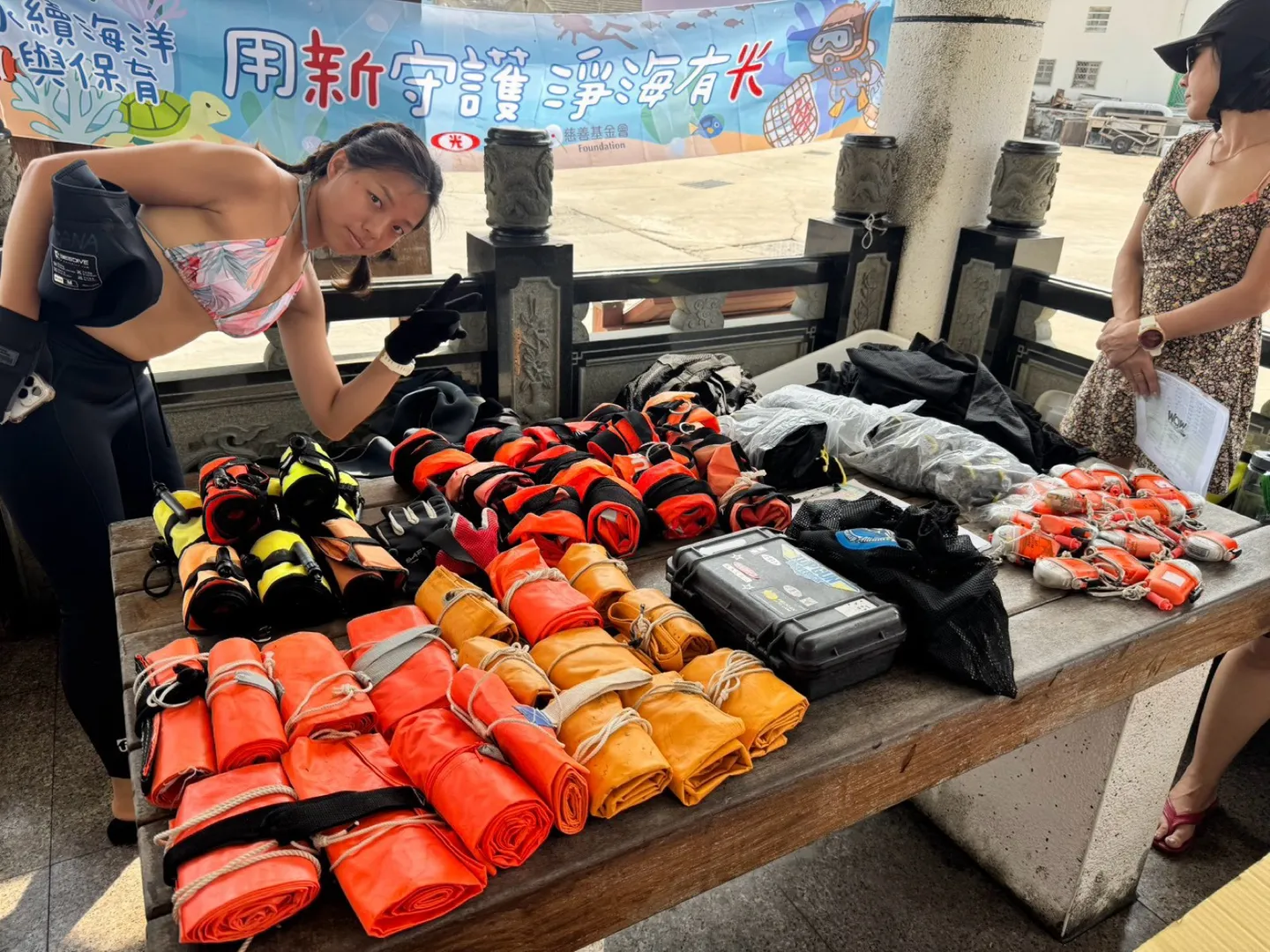
A cumulative 136 diver-sessions went into the water over two days, each diver using two tanks per day. On a typical recreational dive, a single tank lasts roughly 40 to 50 minutes before you surface. On this cleanup, every tank stretched beyond 70 minutes — the shallow depth and stationary work meant the air lasted longer, but the physical toll was very real.
Day one ended with the scales reading 2,600 kg. Alongside fishing nets, the haul included rope, float balls, assorted unidentifiable plastic fragments, and even a ship's anchor. Day two added another 820 kg, bringing the two-day total to 3,420 kg.


Nets on the Seabed: Coral and Artificial Reefs Buried Under Abandoned Gear
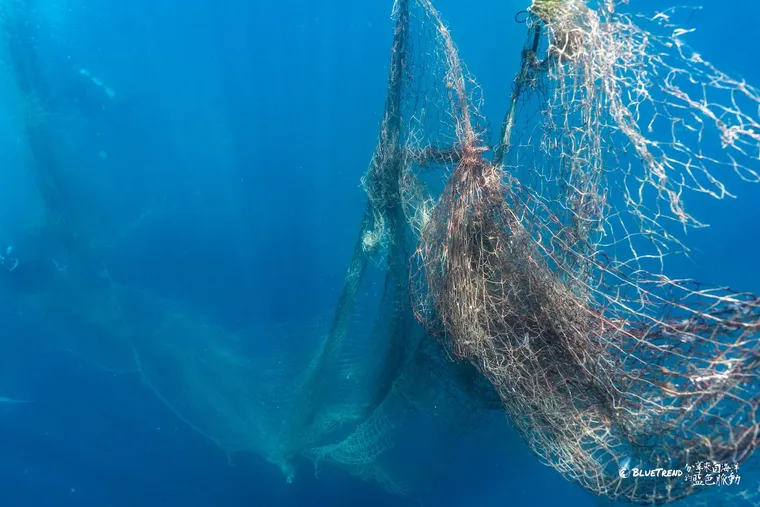
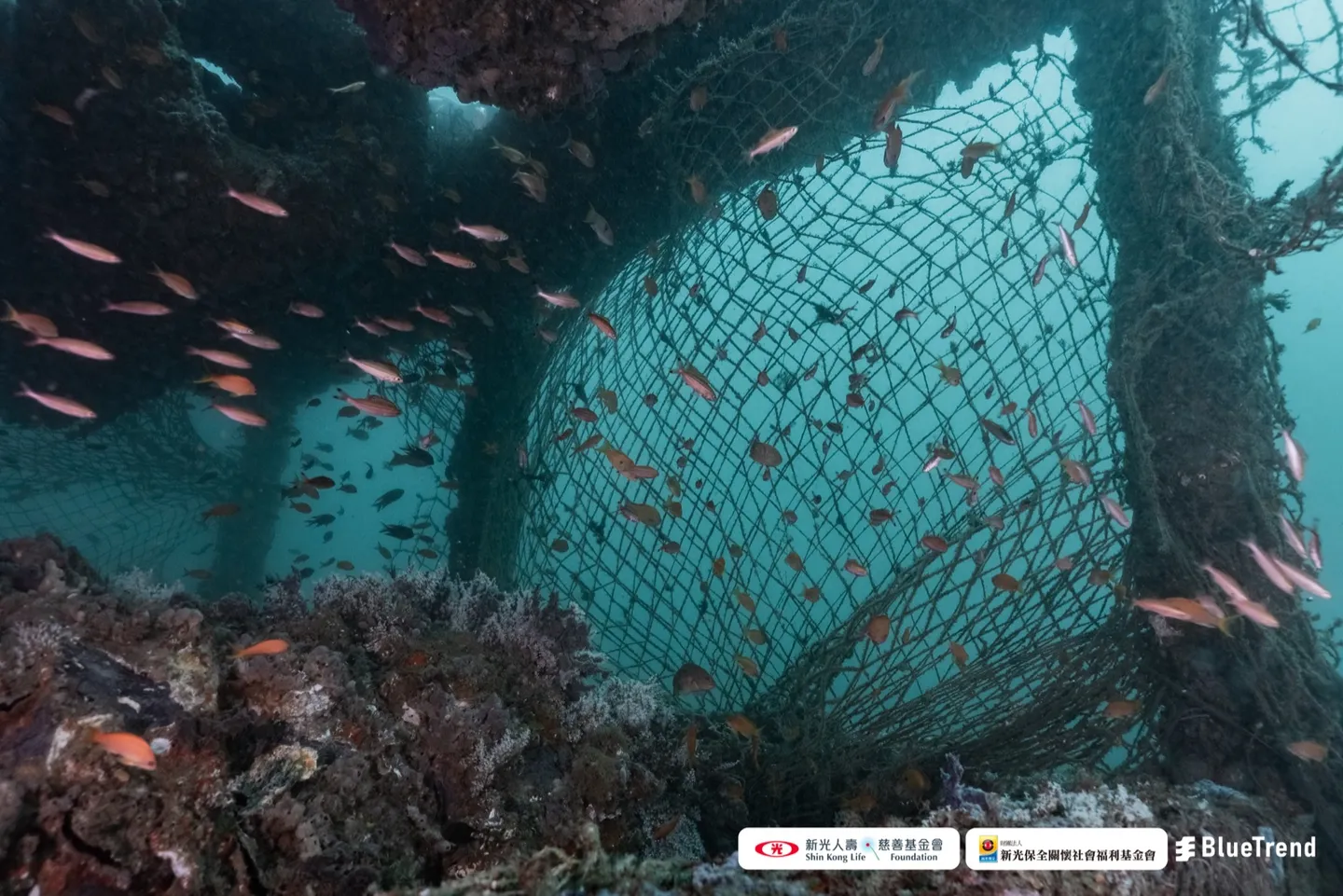
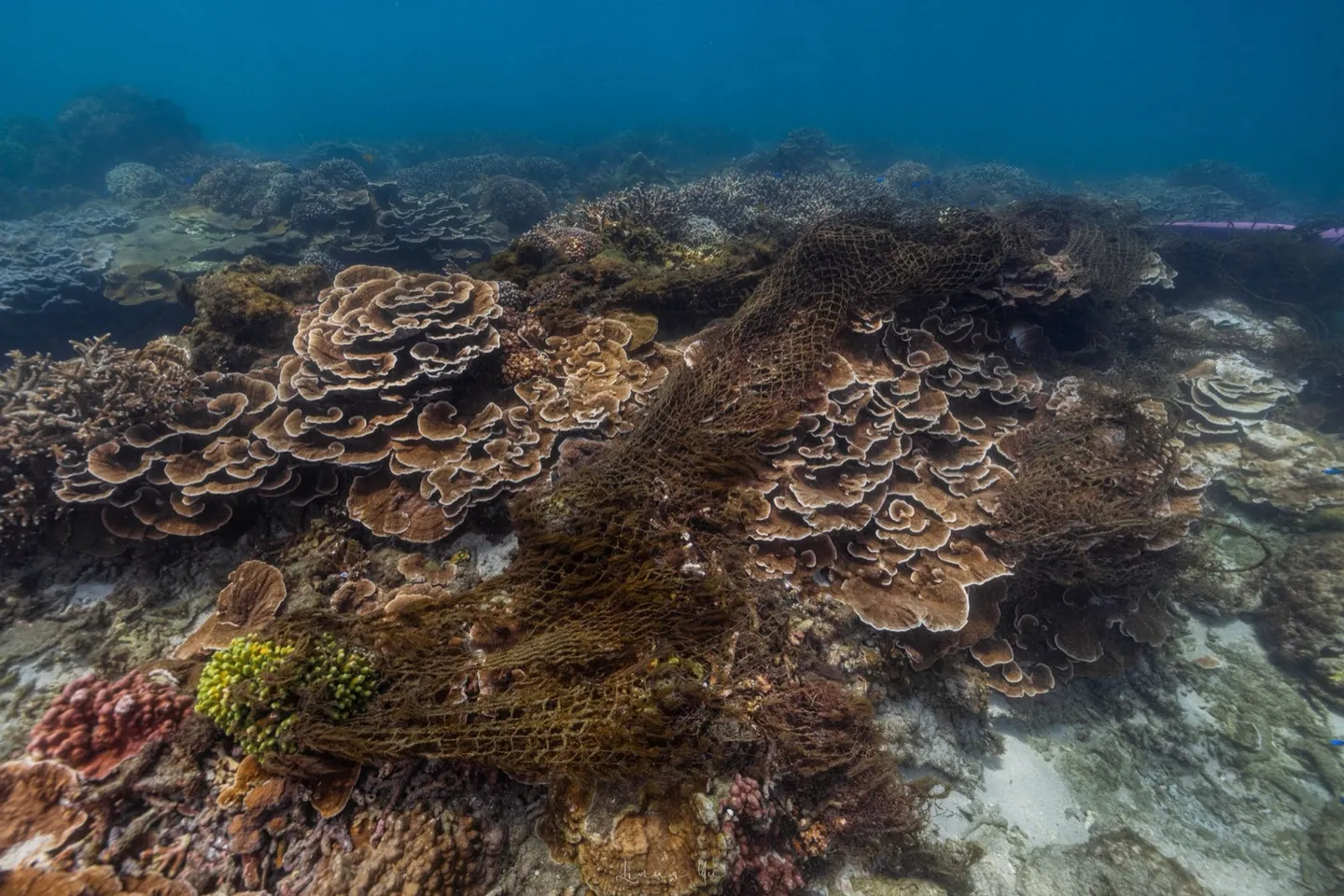
These nets have an internationally recognised name: ghost nets. Once discarded or lost overboard, they sink to the seafloor — but they do not stop fishing. They continue to entangle fish, sea turtles, and crabs indefinitely, becoming an endless, unstaffed trap. Approximately 640,000 tonnes of fishing gear enter the ocean every year worldwide, and the most intractable form found in Taiwanese waters is the bottom-covering net: sheets of gear draped directly over reef.
The most immediate damage a covering net causes is shading and abrasion. Coral pressed beneath a net is cut off from sunlight; the net then drags back and forth across the coral's growing surface with every passing current, and what follows is bleaching, breakage, and death — which is why it has earned the name "the wall of death."
The situation with artificial reefs is particularly contradictory. They are deployed by the government to give fish somewhere to shelter and breed — yet their three-dimensional structure makes them exactly the kind of surface that snagged nets cling to most readily. Layer by layer, what was meant to be a refuge becomes a trap.
As for where all these nets came from: in earlier decades, fishermen had little awareness of the issue. When a net was worn out or beyond repair, the easy solution was to throw it overboard. Over the years, the seabed of this area became an underwater landfill — except that it was hidden below the surface, invisible to anyone looking out from shore.
Clearing Nets in Zero Visibility: Ocean Cleanup Is Nothing Like You'd Expect
Ocean cleanup is, of course, diving down and collecting rubbish — the Editor will not deny that. But this kind of rubbish is nothing like bending down on a beach to pick up a plastic bottle.
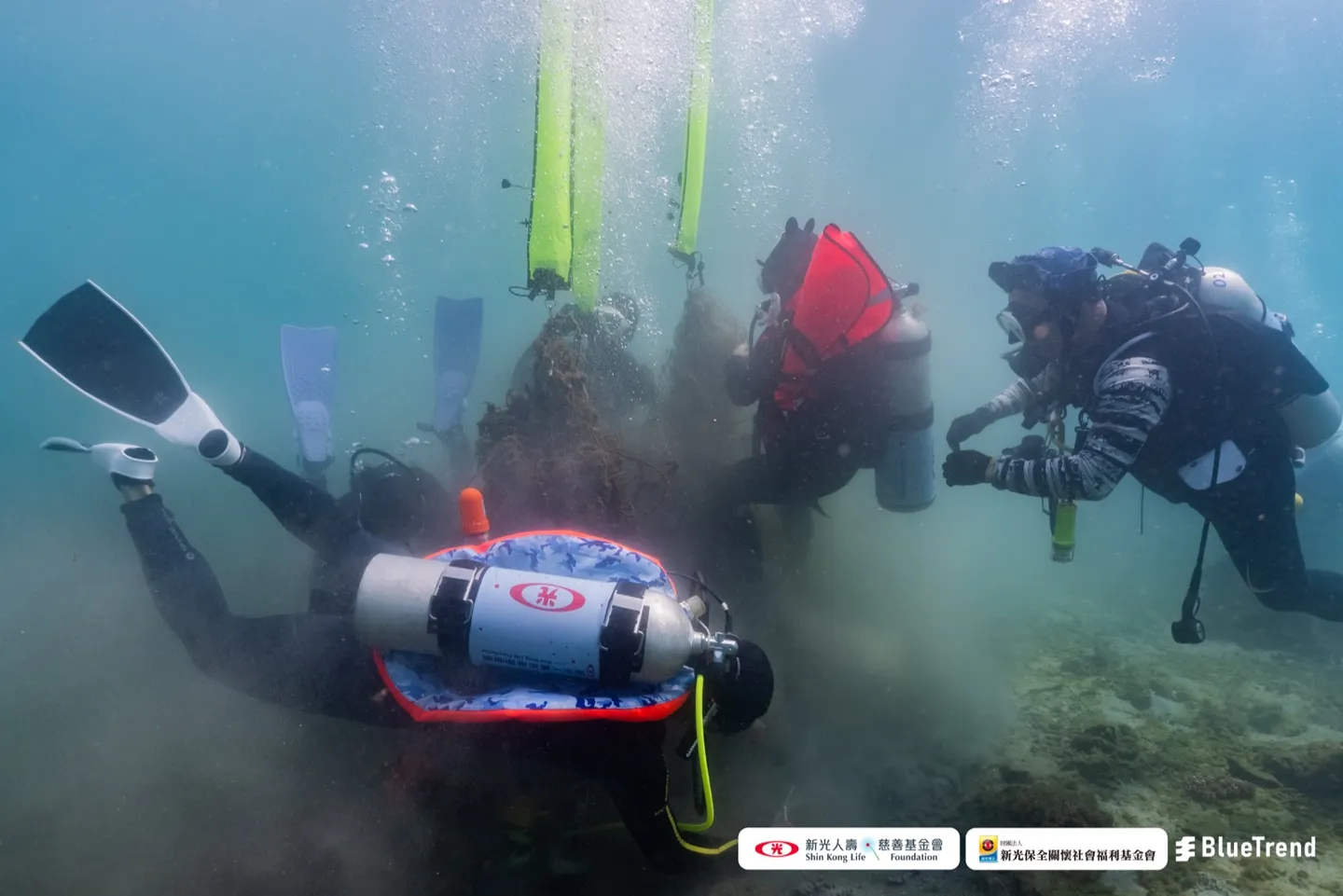
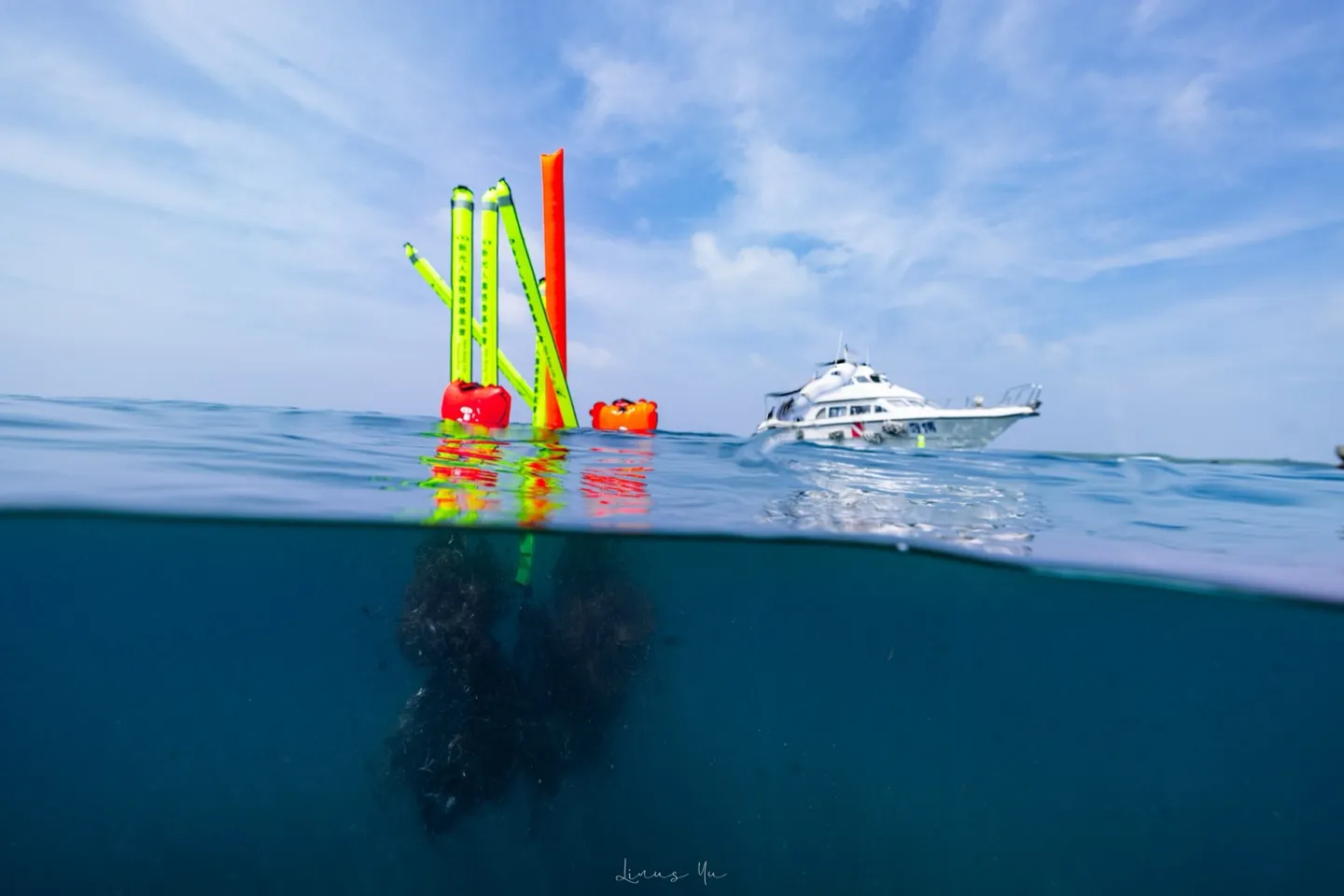
Fishing nets are tangled into coral and rock; they are not sitting there waiting to be lifted. A diver must first work out where to cut so as not to tear the coral out along with the net, slice through the sections that are hopelessly snagged, roll the whole mass into a bundle, attach a surface marker buoy (SMB), inflate it, and send everything to the surface. The waters around Jiangjun'ao Islet frequently run with current, and completing all of these fine-motor tasks in a current raises the difficulty by another level entirely.
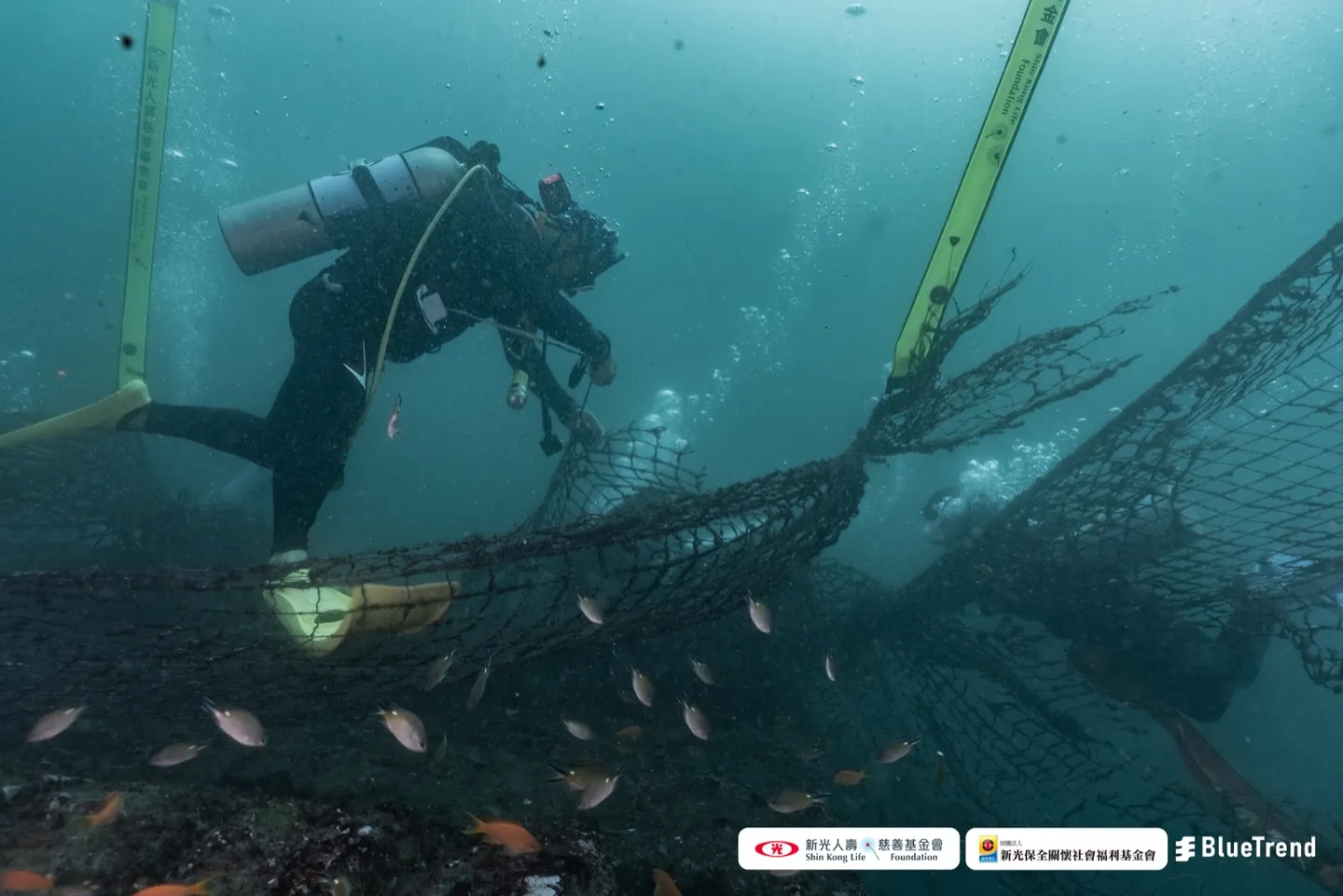
But the hardest part is not the physical effort. Susie Liu, one of the divers who took part in the cleanup, put it this way: "The thing divers dread most is poor visibility — and when you're clearing nets tangled into the sand and coral, the visibility is genuinely zero." The moment a net is lifted, the sediment and debris clinging to it billow up in a cloud, and everything in front of you turns brown.
In that moment, the only thing you can see is the small section of net in your hands. You cannot see where your dive buddy is. You navigate by feel alone, distinguishing net from coral by touch, trying not to scrape anything alive.
A First-Time Cleanup Diver: From "Recreational Diving Is More Fun" to Unable to Stop
Susie Liu, mentioned above, received her certification in 2016. For the first five years, a busy work schedule meant she dived only once a year; it was not until 2020 that she began diving regularly, and she has now logged more than 300 tanks. This was her first ocean cleanup — and her first time diving in Penghu for a cleanup.

Day One: Eyes Full of Nothing but Nets
She had assumed the cleanup would simply involve going down and picking up rubbish. After surfacing at the end of the first tank, she said something completely honest to Joe: "I think recreational diving is more fun."
It was not exhaustion — it was a sense of disconnection. Pick up a net, pick up a net, pick up a net: the same action repeated, without any clear sense of what she was actually accomplishing. When she dives abroad she often tucks stray rubbish into a pocket as she goes, but that is incidental. What she was facing here was a large-scale operation covering an entire section of sea floor — a completely different scale.
Day Two: Thirty Minutes In and There Were No More Nets to Clear
On the first tank of day two, about thirty minutes into the dive, everything changed. She started running out of nets to clear.
Everyone stopped and looked around. And I was genuinely stunned. Oh my god — this ocean is beautiful.
Staghorn coral, rose coral — all of it was exposed. Tropical fish darted between the rocks. There were four or five enormous giant clams. On day one, what she had seen was a seabed she described as a "ruin" — blanketed in net, with nothing else visible.
"That was the moment I truly understood: ocean cleanup isn't just about pulling rubbish out of the sea. It's about giving the ocean back, piece by piece, to what it was supposed to look like."
It is worth noting that reducing plastic waste was not something Susie started thinking about over these two days. She says that since she began diving, her daily habits had already shifted considerably — avoiding plastic bottles, carrying a reusable water bottle and containers when she goes out, skipping straws wherever possible. What this cleanup changed was something different: she now has a deep desire for more people who have never done this to come and do it themselves.
I believe that if more people could experience what I did — starting from a truly terrible environment and then, by the time you finish, seeing it restored to what it should have looked like — anyone who has witnessed that will know what they need to do.
She also touched on a question many people share: the ocean is so vast, and two days of work by this many people covers only a tiny patch — does it actually matter? Her answer is that anyone who has seen the before-and-after with their own eyes will find their own answer.
Before / After: Giving This Ocean Back What It Was Always Meant to Have
Numbers carry weight, but images are more honest. The same area, before and after:
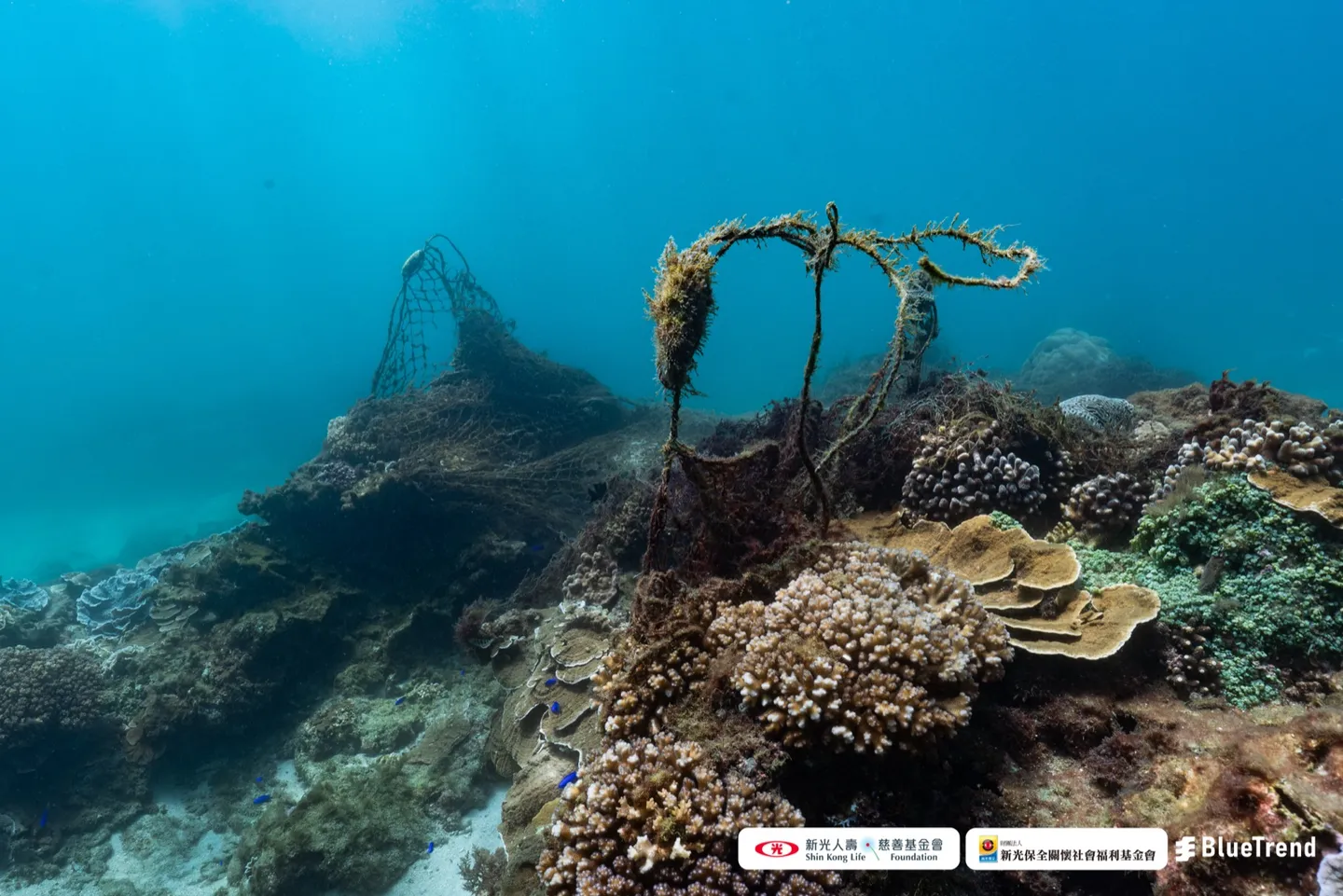
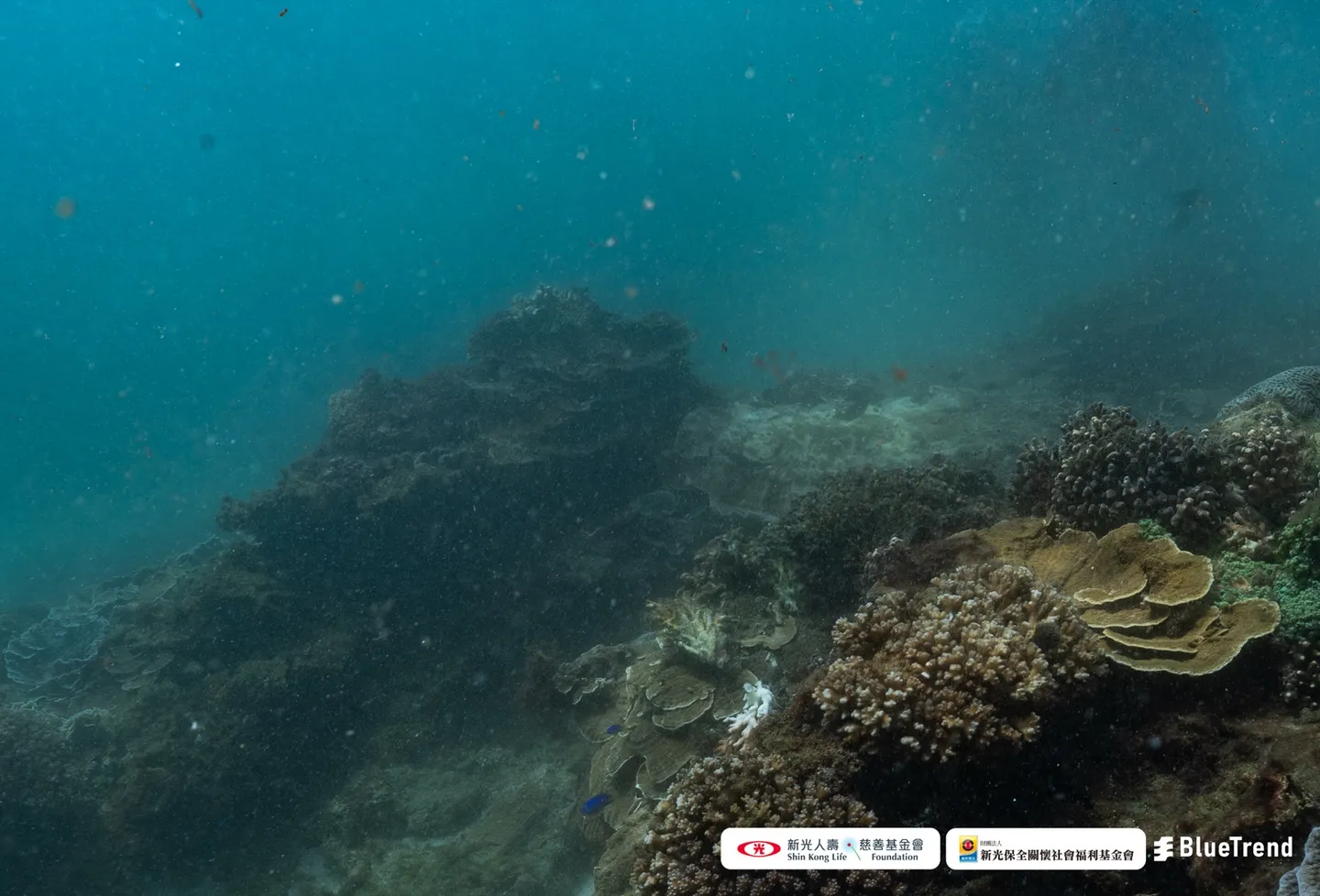
And once that sediment settled and visibility returned, the seabed revealed what it had always been:
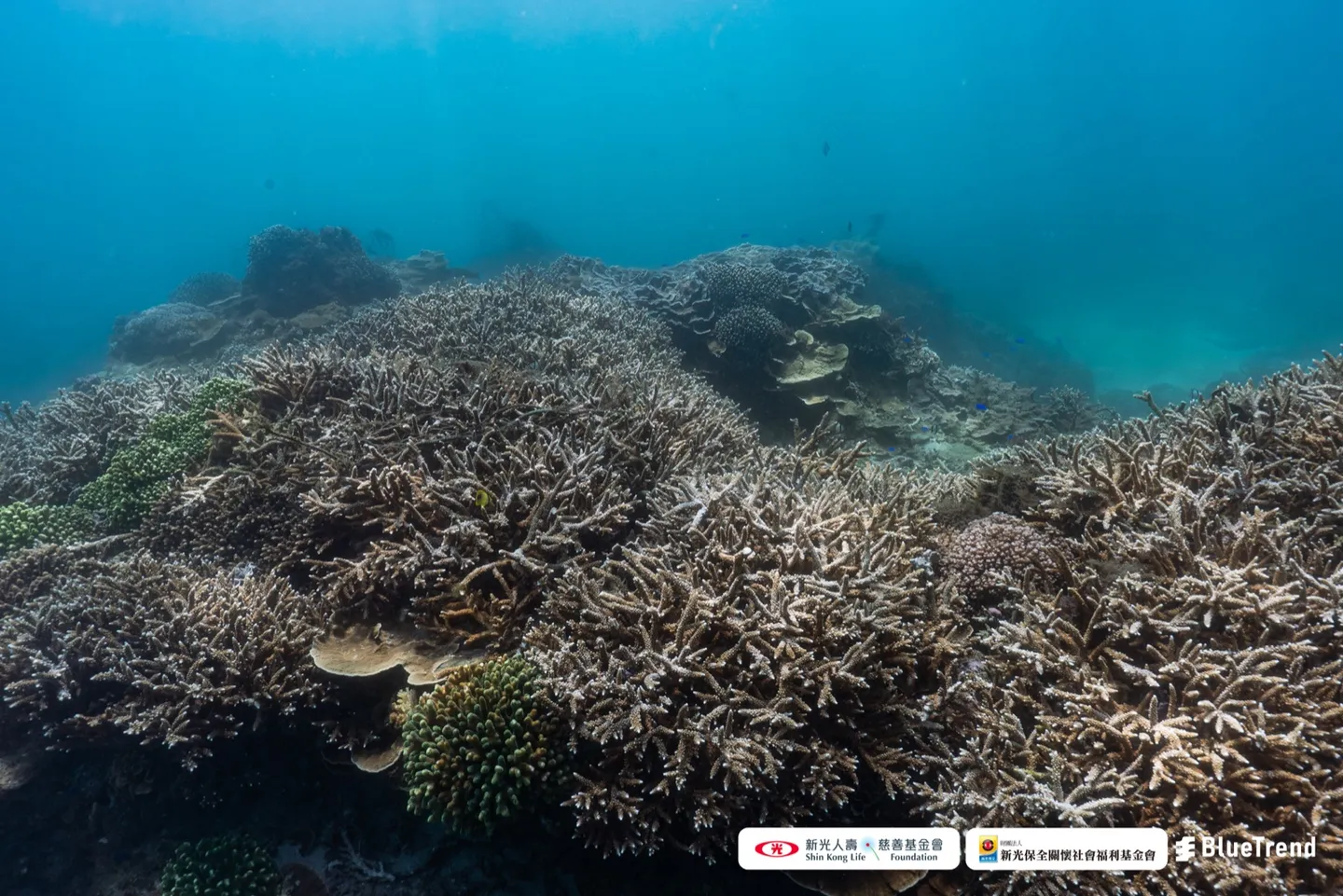
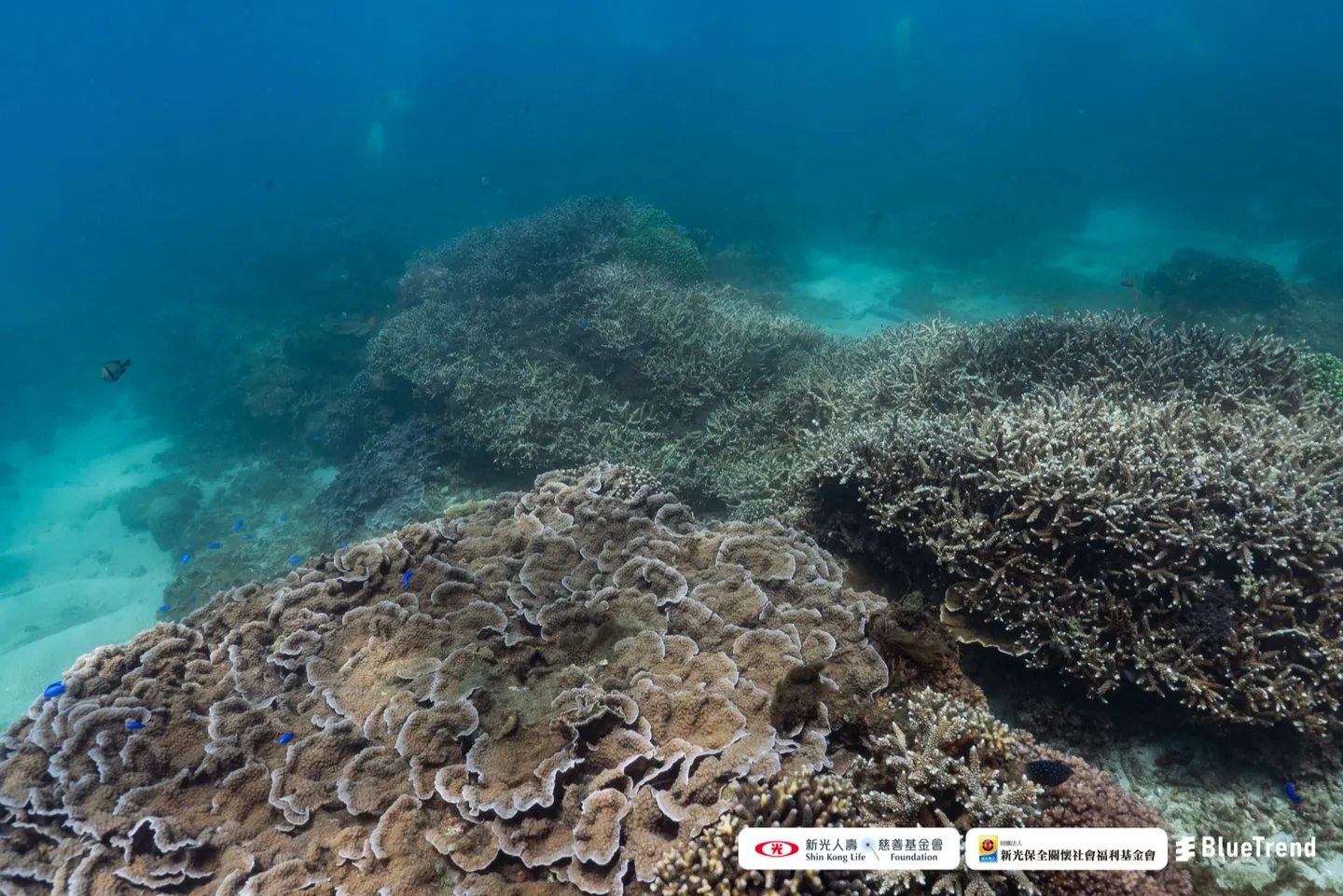
The Editor's view is this: Taiwan's seas are every bit as good as the places we spend a fortune flying to dive — the only difference is whether anyone is willing to remove what has been piled on top of them.
Without the Navy Frogmen, These Nets Could Not Have Come Ashore
Getting the nets to the surface was only half the job. 3,420 kg of fishing net, waterlogged and fouled with algae — hauling it from the water's edge up onto the pier was by far the most physically punishing stage of the entire operation.
This year the Han Kuang military exercise happened to be underway, with Navy frogmen stationed on the island. They watched a group of people wrestling bundle after bundle of net at the pier, and during a break in their drills they came over unprompted, took hold of the ropes, and joined the haul.
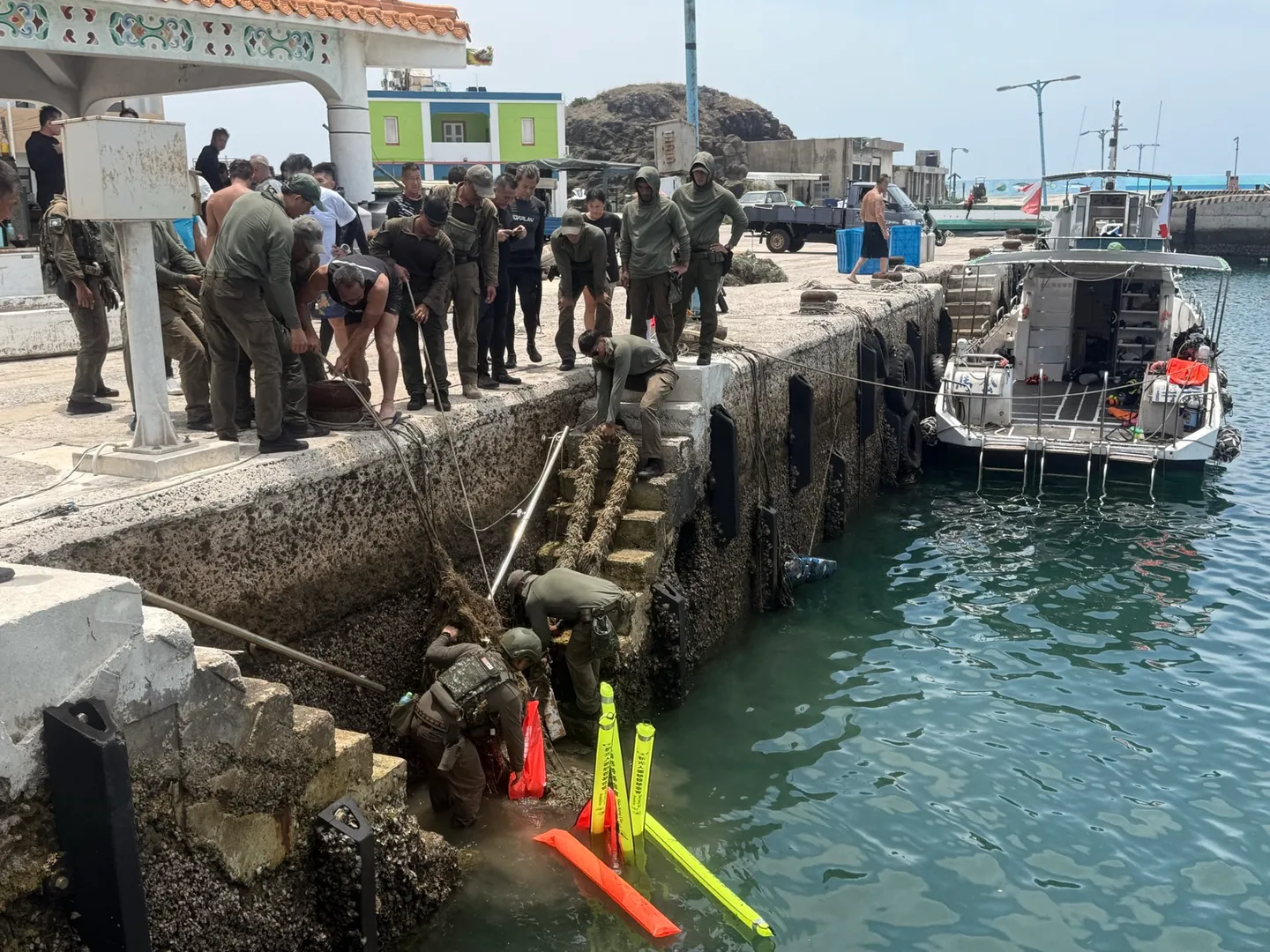
On day two they committed even more, helping to load the nets onto vehicles and transport the entire haul to the landfill site on the far side of the island. Jiangjun'ao Islet is a remote outlying island with very limited manpower and vehicles; without assistance, the cleanup team would have had to make trip after trip themselves — a crushing physical burden on top of two consecutive days of underwater work.
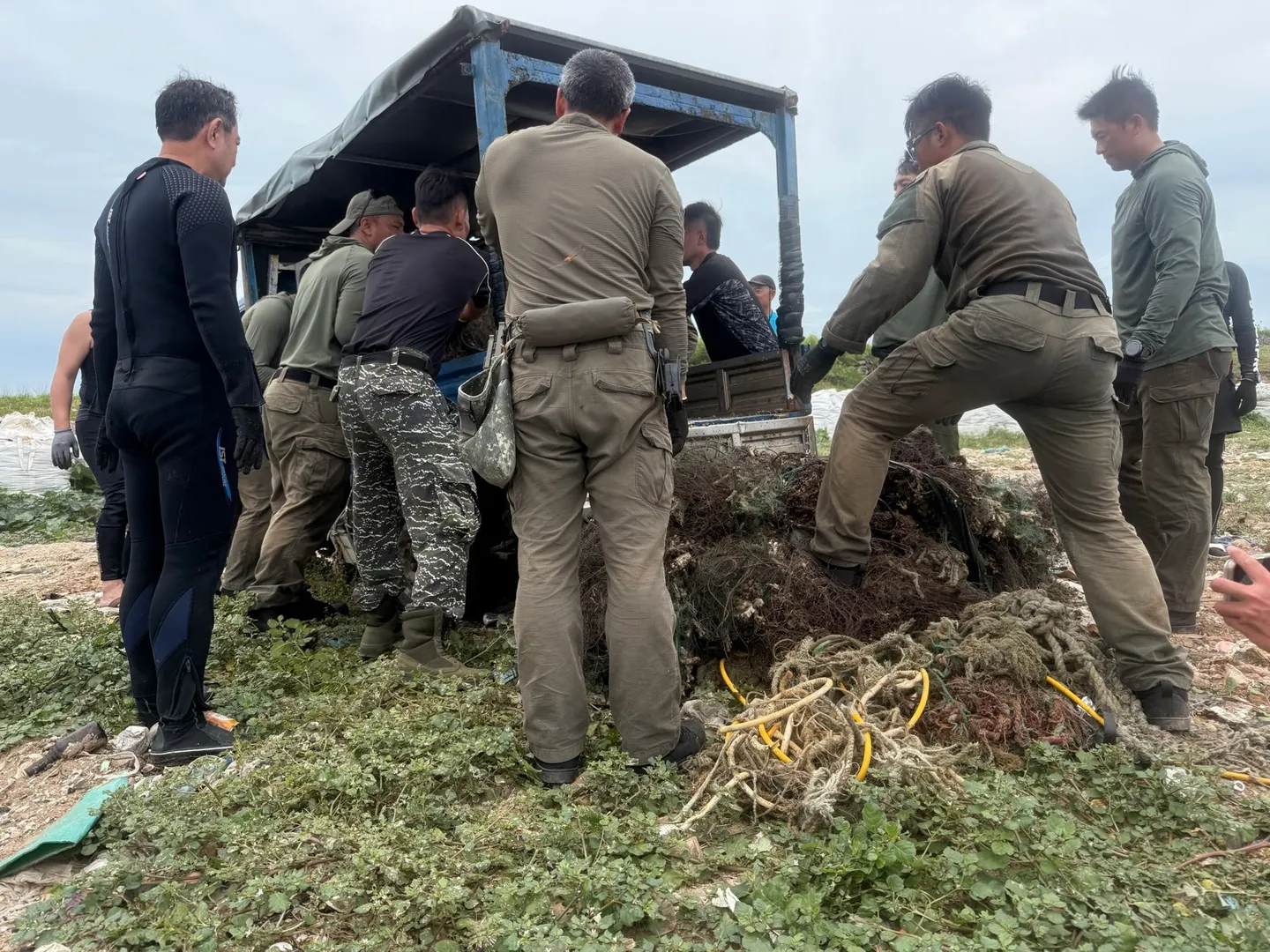
Susie made a point of singling this out during her interview: "I'm truly grateful the military was there to help us. Without them, there is no way we could have managed as smoothly as we did. Getting just the debris ashore was already a massive challenge on its own."
The CEO Was Also Hauling Nets: How a Corporate Ocean Cleanup Proves It Means Business
Beach and ocean cleanups are not uncommon in Taiwan. What is less common is a programme that commits year after year and produces concrete numbers.
What sets this corporate ocean cleanup apart is that Tang Chih-hao, Executive Director of the Shin Kong Life Charity Foundation, was not standing onshore for a ribbon-cutting photo. He was alongside everyone else, hauling and sorting nets — proving with his actions what he meant to say: we mean business.
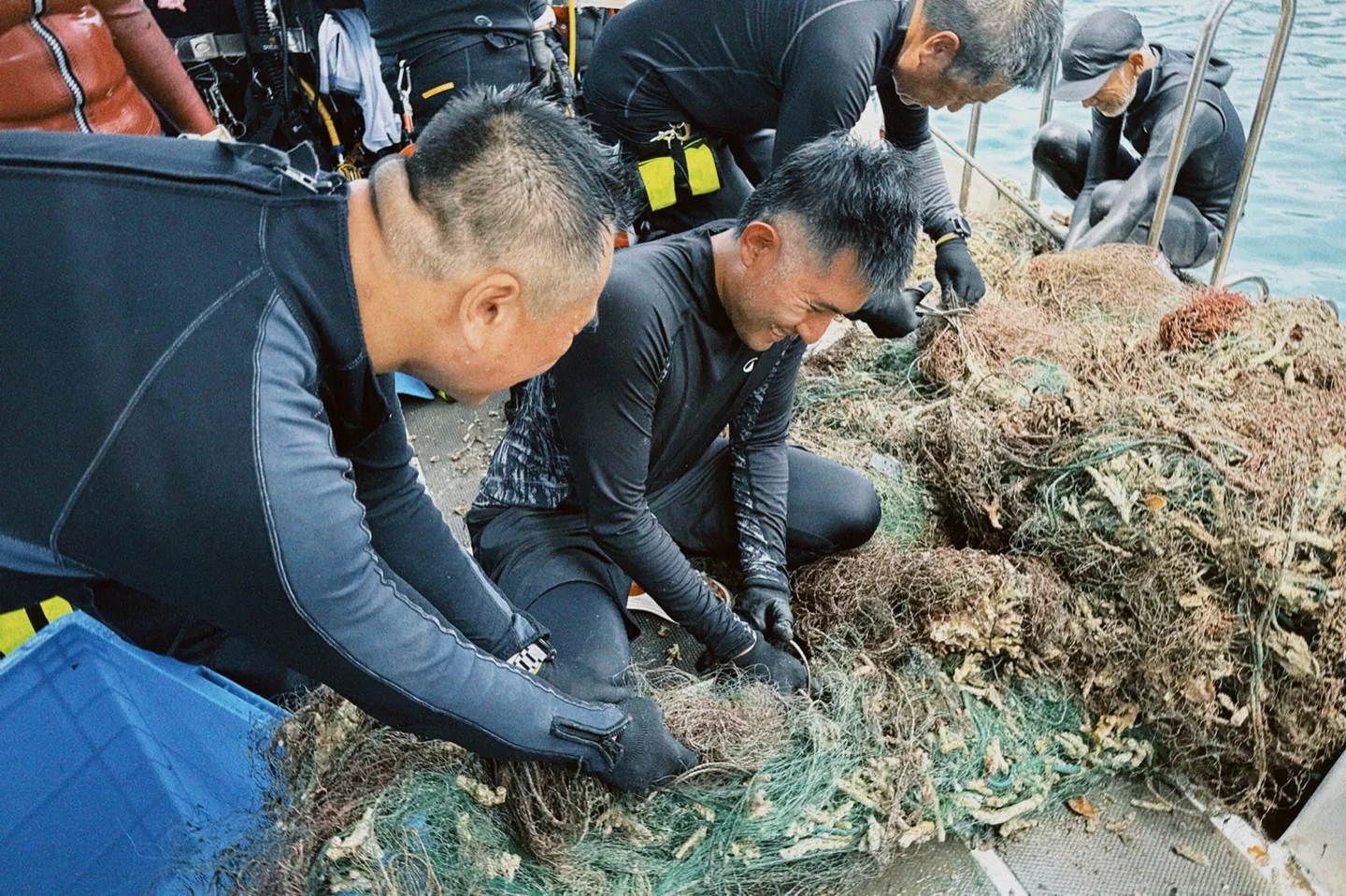
Tang Chih-hao stated that the Shin Kong Life Charity Foundation hopes to lead by example and encourage more companies to join hands in improving the marine environment and restoring biodiversity. This, in the Editor's view, is what marine conservation ESG should look like — not a photograph in a report, but returning to the same stretch of ocean for two consecutive years and delivering the numbers.
Shin Kong's commitment in Penghu extends beyond ocean cleanup. The Foundation is simultaneously advancing coral restoration and sustainable tourism, applying biochar to coral bases and working to connect conservation efforts with the local tourism industry. For more on that work, see Shin Kong's approach to coral restoration and sustainable tourism in Penghu. The full removal record and results from this cleanup are compiled on the BlueXplore Penghu Shin Kong Ocean Cleanup Mission results page.
3,420 kg sounds like a lot — but spread across the map, it covers only a small patch of Jiangjun'ao Islet's seabed. The ocean is vast. Does cleaning it like this actually matter? The Editor's answer is the same as Susie's: what matters is not only how much debris was removed, but the fact that once the debris was gone, this stretch of sea was finally seen again. The moment on day two when there were no more nets to clear, and a diver stopped and looked up — that was the real outcome of this cleanup.
If you are a diver, the next time an ocean cleanup comes around, it is worth genuinely considering signing up. You will see something underwater that recreational diving never shows you.
An ocean cleanup is not only about the two days in the water. Arranging the ferry schedule, sourcing the tanks, keeping headcount and running surface watch on shore — all of that has to be handled in advance so that divers can put their full attention on the nets below.
Special thanks are owed to three partner organisations: Joe Loves Diving, Ocean People Productions, and Island Cove 77. From pre-event planning through underwater safety to on-site logistics, they stayed with this team throughout — and made sure every cleanup could close safely and completely.