Contents(7)
- Why Does the Middle East Situation Have Anything to Do with Plastic?
- Why Does the Netflix Documentary Make Your Skin Crawl?
- Have Microplastics Really Entered the Human Body?
- Was Plastic Originally an "Eco-Friendly Invention"?
- Can Humans Really Live Without Plastic?
- Can't Go Plastic-Free? At Least Go Plastic-Less
- References
Plastic is no longer just a convenient material — it is the foundational infrastructure of modern life. From food packaging to everyday household goods, humanity is deeply dependent on plastic. As the energy crisis unfolds and a microplastics documentary makes waves, supply disruptions and health risks have become impossible to ignore. Yet plastic products are already everywhere, woven tightly into the fabric of our daily lives. What was once celebrated as an alternative that would reduce the plundering of natural resources has become an environmental burden we can barely escape.
Plastic has recently become a hot-button topic. On one hand, escalating tensions in the Middle East are rattling oil and petrochemical supply chains, driving up the price of plastic goods. On the other, the Netflix documentary The Plastic Detox has reignited debate over the harm microplastics do to the human body. People are suddenly realising that plastic has already seeped deep into everyday life.
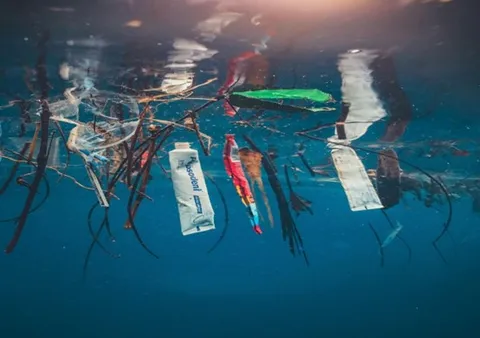
Almost everything in modern life involves plastic in some way. Photo: Naja Bertolt Jensen/Unsplash
Why Does the Middle East Situation Have Anything to Do with Plastic?
The answer is straightforward: plastic is almost an extension of fossil fuels. According to the Center for International Environmental Law, more than 99% of the world's plastic is derived from fossil fuels. CNN reported that on 20 March 2026, crude oil prices surged from US$67 per barrel to US$98, while benchmark natural gas prices in Asia and Europe jumped more than 60% in tandem.
More critically, the Strait of Hormuz is not only a vital oil corridor — it is the lifeblood of the global petrochemical supply chain. This waterway carries approximately one-fifth of the world's oil and liquefied natural gas supply, and the Middle East accounts for roughly one-quarter of global polyethylene and polypropylene exports.
In Taiwan, reports emerged that plastic bags and other petrochemical products were beginning to run short. The Executive Yuan promptly instructed government ministries to closely monitor import prices and supply conditions for petrochemical products, to help businesses in the daily-essentials sector identify additional overseas sources, and to crack down hard on price gouging — all in an effort to stabilise raw material costs and consumer prices.
This makes it clear that the plastic supply chain is a system highly susceptible to global energy conditions and geopolitical shifts.


Why Does the Netflix Documentary Make Your Skin Crawl?
The reason the plastic price crisis is so alarming is that modern life has become inseparable from plastic. The Plastic Detox has led many viewers to a startling realisation: from the moment they wake up in the morning to the moment they fall asleep at night, they are essentially immersed in plastic.
Your day might begin like this. You wake up and shower, using toiletries that contain plastic ingredients, stored in plastic bottles. You then reach for hair oil, hair wax, and deodorant — all in plastic containers — before putting on clothes made from synthetic fibres, which are themselves a form of plastic. You head out and drink from a plastic water bottle. You chew gum (also made of plastic), buy a sandwich in plastic packaging, and take a receipt coated in a plastic film.
Back home, you pull ingredients from a plastic bag, defrost last night's leftovers in a plastic container in the microwave, and then pack the remaining food back into the same box. Finally, you wash the dishes with a cleaning product that contains plastic compounds, and brush your teeth with a plastic toothbrush and toothpaste that contains plastic.
There are many ways humanity might be marching toward its own undoing — but has anyone considered that "excessive dependence on petrochemical plastics" might be one of them?
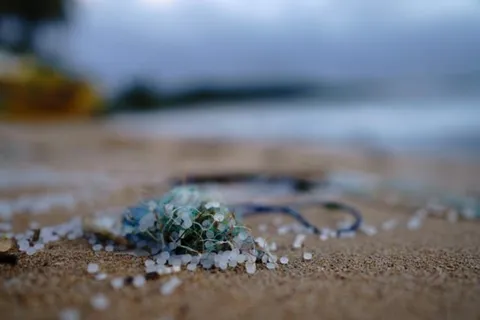
Microplastics have genuinely entered the human body, and that warrants serious concern. Photo: Sören Funk/Unsplash
Have Microplastics Really Entered the Human Body?
What we can say with certainty is that plastic has made its way into the human body — and far more deeply than most people imagine. Scientists have detected microplastics in human blood, semen, lungs, breast milk, bone marrow, placentas, testes, and even the brain. Sources include food, bottled water, tea bags, and the air, as well as the packaging, clothing fibres, and everyday products we come into contact with each day.
As for how much harm microplastics can cause, scientific research to date suggests they may increase the risk of oxidative stress and cardiovascular disease. Animal studies indicate links to infertility, cancer, endocrine and immune system disruption, and impaired learning and memory. Environmental toxicologist Stephanie Wright of Imperial College London has also noted that while data from human studies is not yet complete, "reducing exposure to plastic particles, including microplastics, is broadly beneficial to health."
Was Plastic Originally an "Eco-Friendly Invention"?
Interestingly, plastic did not make its debut as an environmental villain. The first synthetic plastics of the 19th century were even tinged with a conservationist hue. Ivory was not merely a luxury item at the time — it was a material used in countless everyday objects, including billiard balls. The craze for billiards sent demand for ivory soaring, leading to the large-scale slaughter of elephants.
In 1869, John Wesley Hyatt invented Celluloid, the plastics industry's first product. Because Celluloid could mimic natural materials such as ivory and tortoiseshell, it was hailed as a saviour for animals, with advertisements even proclaiming it "the material that saved the elephant and the sea turtle."
It was not until 1907, when Bakelite was introduced — the world's first fully synthetic plastic — that the era of modern plastics truly began. After two world wars and rapid industrialisation, plastic quickly spread through everyday life: durable, cheap, mass-producible, and capable of replacing traditional materials like wood and metal. Over the following decades, plastic thoroughly infiltrated human existence, transforming from a miracle material into "an environmental problem that is everywhere."
Can Humans Really Live Without Plastic?
If we are being honest, the answer is: not in the short term, at least not easily. CNN notes that plastic is already deeply embedded in the packaging, construction, automotive, and medical industries. Switching to paper, glass, or other materials would not only be expensive — it would require overhauling entire production processes. New York University economics professor Joseph Foudy was blunt: in the short term, viable alternatives to plastic remain extremely limited.
Because plastic is so difficult to replace, policy discussions tend to focus on "which plastics can be reduced first." A Cambridge University study specifically called out the fact that while regulations frequently target single-use plastics, they often overlook the microplastics found in festival glitter, decorations, and cosmetics — microplastics that serve no purpose beyond aesthetics. The study therefore argues that any future global plastics treaty should not simply blacklist a handful of products, but should instead apply a more comprehensive framework based on whether a plastic is hazardous, difficult to recycle, and truly necessary. Put plainly: phase out the plastics that are dispensable yet harmful to both the environment and human health.
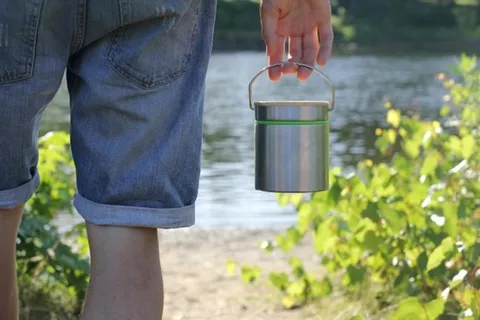
A plastic-free life is a tall order, but we can start with everyday choices and examine where we might use a little less. Photo: Sandra Harris/Unsplash
Can't Go Plastic-Free? At Least Go Plastic-Less
What about the rest of us? We can start with small changes at home. When replacing kitchen utensils, consider choosing more natural materials — a wooden spatula, for instance, or a cutting board made from untreated, unvarnished wood. You might also swap your dish soap for a natural cleaning product.
Look carefully at the objects around you, and it is genuinely hard to find anything free of plastic. It is hard to imagine that this material was originally invented to replace scarce natural resources and reduce the plundering of nature. Today, because it is so convenient and so cheap, it has become one of humanity's hardest habits to break. The conflict in the Middle East has laid bare just how tightly plastic and fossil fuels are intertwined; the documentary reminds us that plastic is far closer to our bodies than we ever thought. Are you willing to change your habits and bring a little less plastic into your life?
References
- CNN, Plastic is the hidden cost of the war in Iran
- The Guardian, The Plastic Detox review – a film so terrifying you will want to change your life immediately
- The Guardian, Are microplastics really in everything – even my brain?
- Science History Institute, History and Future of Plastics
- Cambridge University Press, A call to ban non-essential microplastics used in cosmetics, festival and holiday decorations
- 中央社, 塑膠袋傳缺貨潮引關注 卓榮泰:嚴查哄抬價格
※ This article is reprinted from the Delta Electronics Foundation's Low-Carbon Life Blog: 〈從拯救大象到入侵人體 塑膠如何改變人類世界?〉, co-produced with BlueTrend.