Contents(4)
From land reclamation and housing construction to semiconductor manufacturing, sand is an essential raw material underpinning modern society. Yet as demand surges, the world faces a dual crisis of sand supply shortages and ecological destruction. As development, climate adaptation, and biodiversity protection all compete for finite sand resources, how can humanity strike a balance between growth and sustainability?
Demand Outpacing Replenishment — The Ecological Crisis Beneath the Sand Shortage
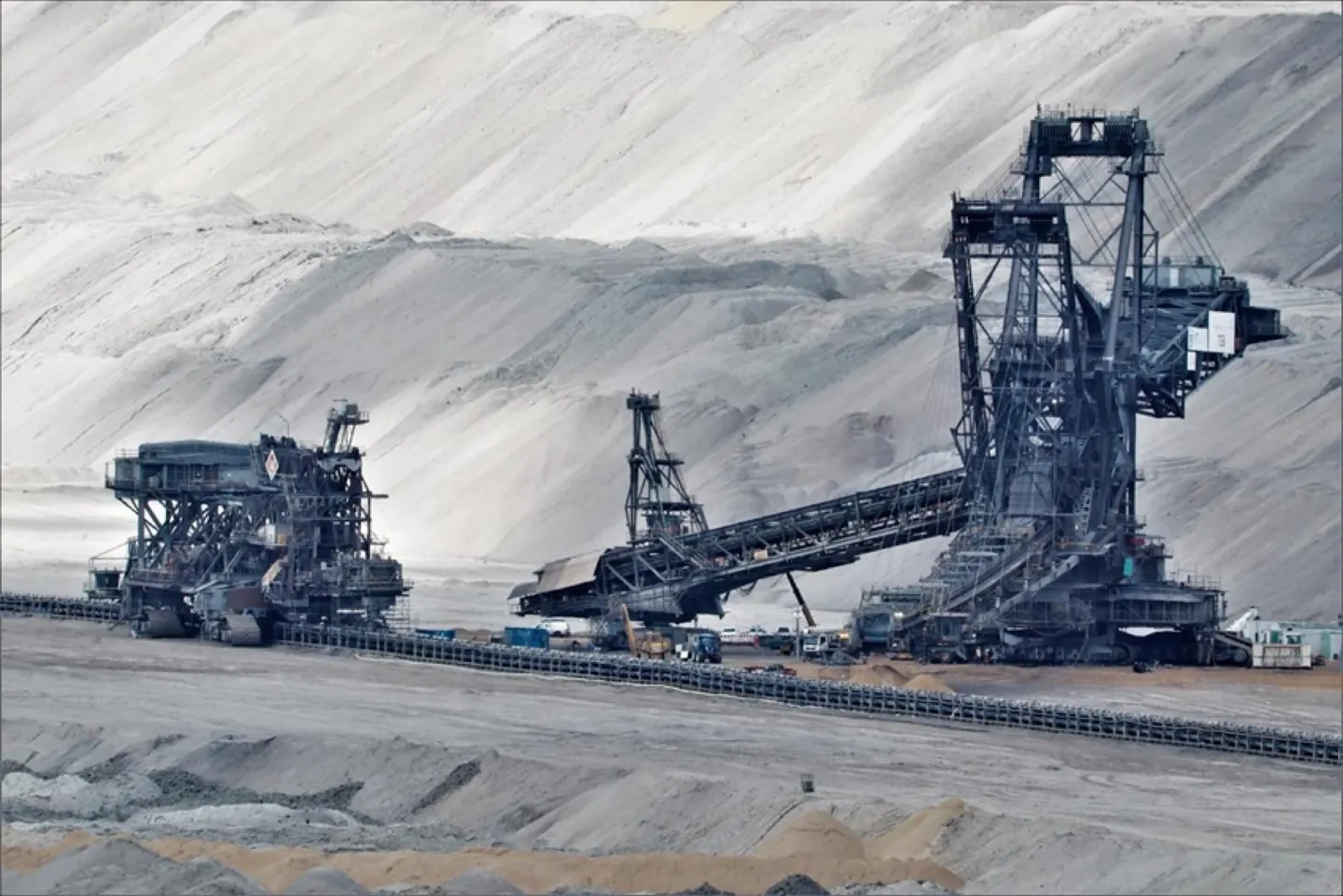
Sand and gravel may seem like the most unremarkable of materials, yet in the global economy, sand extraction is a remarkably complex industry. Data from the Observatory of Economic Complexity (OEC), a global trade database, shows that sand trade accounts for approximately 0.011% of global trade, with a value of nearly US$2.5 billion. From land reclamation and civil infrastructure to precision semiconductor fabrication, sand is indispensable across the board — and it is precisely because of this versatility that sand now faces a crisis of rampant illegal extraction and critical undersupply, giving rise to a host of environmental problems.
According to research by the United Nations Environment Programme (UNEP), sand ranks second among the world's most over-exploited natural raw materials, behind only water. Global extraction has tripled over the past 20 years. Depending on its origin and properties, sand is used across a wide spectrum of applications: the largest share goes to infrastructure and construction; next come land development and coastal protection (including land reclamation and beach nourishment); followed by the energy transition (renewable energy and electronics); and finally industrial manufacturing (glass, foundry work, and chemicals). Yet natural sand takes an average of 200 million years to form, and annual global consumption has reached 50 billion tonnes — far exceeding the rate of natural replenishment.
As part of geological processes, sand recovers at an extraordinarily slow pace — making it, on a human timescale, a non-renewable resource. Many offshore marine sand deposits are not even part of modern sediment systems, meaning that once extracted, they will not regenerate. Compounding this, infrastructure such as dams intercepts sediment flows, drastically reducing the natural sand supply downstream. A UNEP report published in 2019 had already found that the continual growth in demand for sand was causing river pollution and flooding, as well as aquifer depletion and worsening drought.


Built on Sand, Undone by Sand — Why "Live Sand" and "Dead Sand" Can't Both Win
Some may wonder: with so much sand in deserts and on beaches, how could there possibly be a shortage? To answer this question, we must first understand that not all sand is interchangeable — and Saudi Arabia's situation offers a telling illustration.
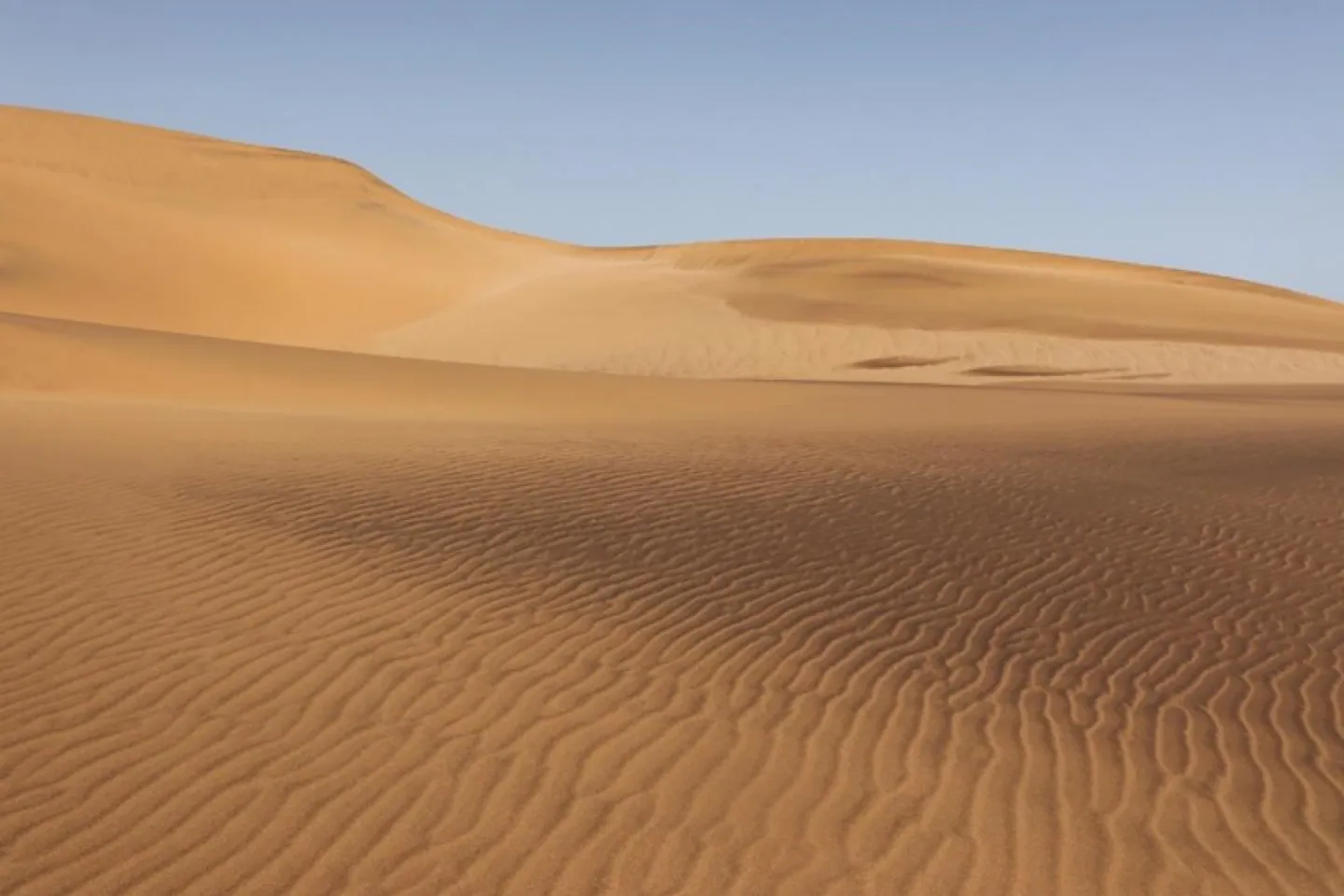
The vast majority of Saudi Arabia's territory is covered by the Rub' al Khali (Empty Quarter), the world's largest continuous sand desert, and most of the country's construction sites are located around its edges. If all sand were the same, Saudi builders would have no need to import it from abroad. In practice, however, importing sand from Australia remains a necessity. Desert sand is continuously sculpted by wind into smooth, near-spherical grains. When mixed into concrete, these grains behave like ball bearings — sliding past one another rather than interlocking — creating microscopic voids and weak joints in the finished structure. The high chloride content also corrodes the steel reinforcement inside concrete. Such sand might be fine for a garden wall, but it is entirely unsuitable for buildings or bridges.
Because sand use is so highly specialised, there is demand for sand in both its "dead" state (sand extracted as a commodity — the raw material for construction, electronics, and land reclamation) and its "live" state (sand left within natural ecosystems — whose benefits are long-term and difficult to quantify, yet vital for maintaining landscape stability, regulating river flow, protecting coastlines, and supporting biodiversity). The two states are in direct competition: satisfying the demands of one inevitably diminishes the other.
The UNEP report highlights several cases of extraction imbalance. In the Mekong Delta in Vietnam, severe sand deficits have led to riverbank collapse, delta subsidence, and worsening saltwater intrusion. In Kenya, Ghana, Uganda, Rwanda, and other countries, tens of thousands of dispersed, informal artisanal sand mining (ASM) sites are placing enormous ecological pressure on river systems. In Caribbean island nations such as Saint Kitts and Nevis and Jamaica, inadequate regulation has allowed extraction from sensitive beaches and nearshore areas, causing severe habitat destruction and coastal erosion.
A particularly concrete example: in 2019, the Maldivian government commissioned a Dutch company to carry out land reclamation on Gulhifalhu Island near the capital Malé. This 192-hectare reclamation project dredged as much as 24.5 million cubic metres of sand from approximately 13.75 km north of Malé Atoll. Half of the operations took place within a marine protected area (MPA), destroying 200 hectares of coral reef and lagoon habitat and causing the loss of critical breeding grounds for fish, sea turtles, birds, crabs, and other species — severely affecting the country's vital tourism industry. Yet on the other hand, more than 80% of the Maldives' land area sits less than one metre above sea level: without reinforcing its islands, the nation faces inundation from climate change-driven sea level rise. Whichever path is chosen, negative consequences seem unavoidable.
Indeed, more than 700 million people currently live in coastal areas, a number projected to exceed 1 billion by 2050. Demand for marine sand is driving a rapid expansion of dredging activity: since 2000, 78% of coastal cities with populations over one million have undertaken land reclamation, adding a total of 253,000 hectares of new land — 70% of which lies in areas at high risk from sea level rise. Paradoxically, the very dredging activities associated with coastal development may disrupt the natural movement of sediment, accelerate erosion, and ultimately undermine a coastline's capacity to withstand climate change.
From Monitoring to Circular Economy — Finding the Best Model for Sustainable Sand Resource Management
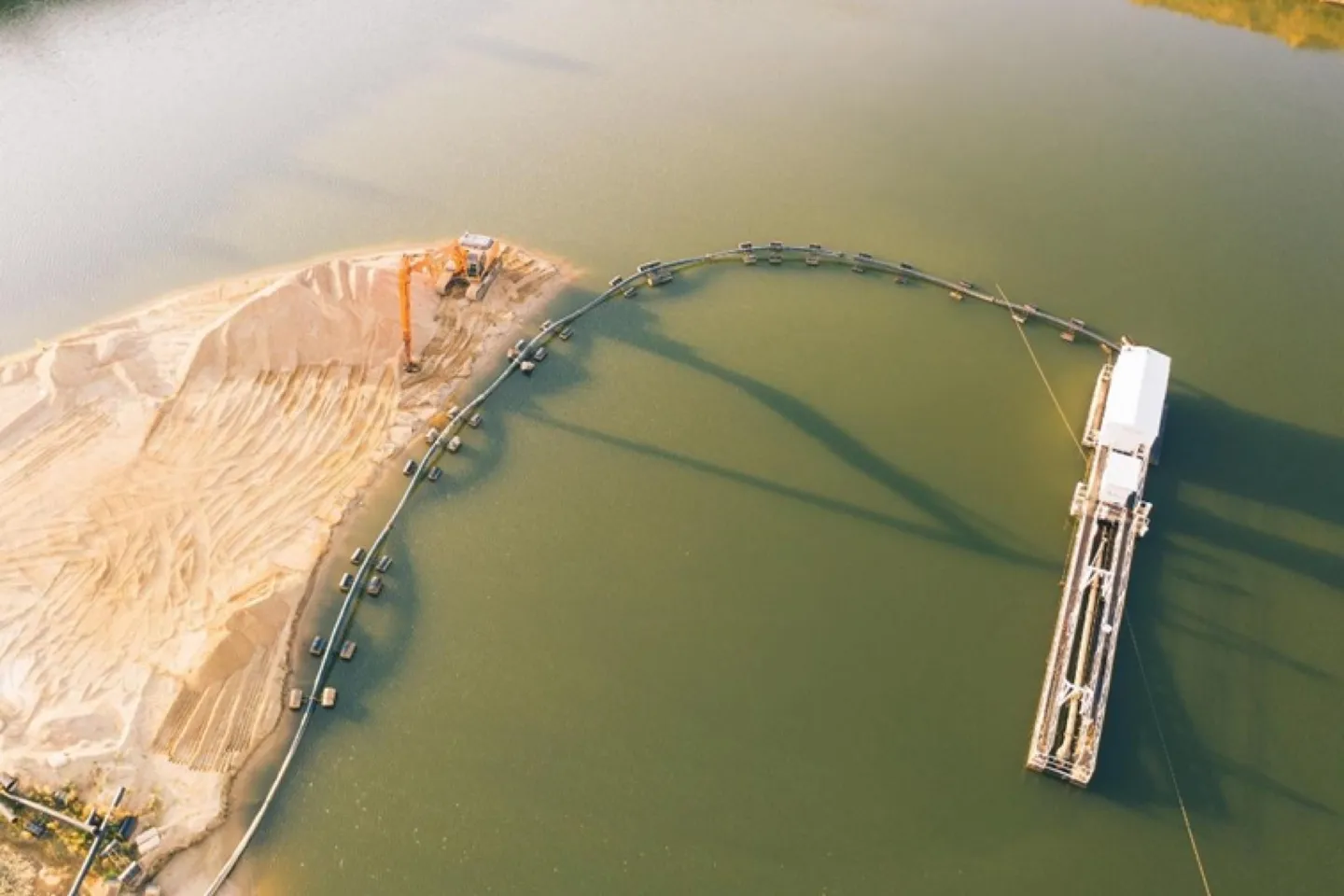
The expanding scale of dredging activities poses an increasingly serious challenge to biodiversity conservation. In response, the UNEP Global Resource Information Database–Geneva (GRID-Geneva) co-launched the Marine Sand Watch programme in 2022 — the first global initiative dedicated to monitoring marine sand extraction. It uses advanced algorithms combined with the Automatic Identification System (AIS) for vessels to track the operations of large dredging ships worldwide.
Beyond strengthening regulation, the prevailing "take, make, dispose" model of sand use must also change. This model has made the construction industry the single largest consumer of raw materials. Due to damage, loss, over-ordering, or miscommunication, as much as 10% to 30% of materials delivered to construction sites is wasted. Buildings are also frequently demolished prematurely due to shifting market demand or changes in ownership, resulting in the disposal of vast quantities of material. Even foundry sand can only be reused a limited number of times, generating up to 100 million tonnes of waste sand annually.
Architect, academic, and environmentalist Duncan Baker-Brown has urged the construction industry in his writings to mine "anthroposphere resources" rather than continuing to deplete the natural environment. Even so, a circular economy alone cannot address the ever-growing demand for sand and its alternatives — what is ultimately needed is a fundamental reduction in sand consumption, including the search for suitable substitute materials.
Beyond the construction industry, there is also a need for a framework capable of revealing the direct and indirect — and often overlooked or underestimated — impacts that sand mining has on biodiversity at, near, and far from extraction sites. The "Metacoupling" framework, which systematically maps the complex interactions between human and natural systems, offers a useful lens for analysing sand supply networks. It organises analysis around three types of systems linked by sand flows: the sending system (the extraction site), the receiving system (the point of consumption, such as beach nourishment projects or construction sites), and the spillover system (areas affected by either the extraction site or the movement of sand from sending to receiving systems). This approach can be used to assess the degree to which human and natural systems mutually influence one another.
The ever-growing demand for sand threatens biodiversity, ecosystem services, and coastal resilience. Without long-term supply chain planning, effective governance mechanisms, and transparent monitoring, marine protected areas (MPAs) alone have limited potential to prevent and reverse the industry's impacts on biodiversity. By applying the Metacoupling framework to provide an integrated approach to research and management — and by more thoroughly evaluating overlooked and underestimated impacts — it becomes possible to strike a balance among mining, infrastructure development, and biodiversity conservation, thereby securing a more resilient and sustainable future.
References
- ScienceDirect, Rethinking sand circularity through sufficiency
- ScienceDirect, Reducing sand mining's growing toll on marine biodiversity
- UNEP, Sand and sustainability: An essential resource for nature and development
- UNEP, Sand and sustainability: 10 strategic recommendations to avert a crisis
- UNEP, The problem with our dwindling sand reserves
- Autonocion, Saudi Arabia sits on the largest sand sea on Earth, a desert the size of France, and still imports sand from Australia to build its towers. The reason is in the shape of every single grain.
- The Guardian, The global sand crisis: it's being used up faster than it can be replaced
- Stockholm Resilience Centre, How sand mining threatens our planet—and what we can do about it
- OEC, Sand
- Jan De Nul, Sand and sustainability
- ResearchGate, Sand geographies: Disentangling the material foundations of the built environment
※ This article is reprinted from the Delta Electronics Foundation's Low-Carbon Life Blog: 砂子成稀缺資源 發展與永續能兩全嗎?, co-produced with BlueTrend.