Contents(7)
- From "Hard Revetments" to "Living Shorelines" — Coastal Protection in Transition
- Mangroves: Blue Carbon Forests That Block Waves, Trap Sediment, and Store Carbon
- Coral Reefs: The Coast's First Natural Line of Defence
- Salt Marshes: Coastal Guardians That Rise with Sea Levels
- Beaches and Sand Dunes: Self-Restoring Natural Revetments
- Seagrass Beds: Underwater Forests That Stabilise the Seabed
- References
As sea levels rise and extreme weather intensifies, coastal protection is gradually shifting away from "hard engineering" solutions such as wave-dissipating blocks toward nature-based approaches. From mangroves, coral reefs, salt marshes, and seagrass beds to beaches, these ecosystems inherently possess the capacity to reduce disasters and flooding, serving as a "natural line of defence" for our coastlines.
Many people assume that the higher the seawall, the safer the coast — but the World Bank has recently offered a thought-provoking perspective. Mangroves, coral reefs, salt marshes, seagrass beds, and sand dunes are not merely objects in need of protection; they are also natural coastal infrastructure with built-in flood-control and wave-dissipating functions.
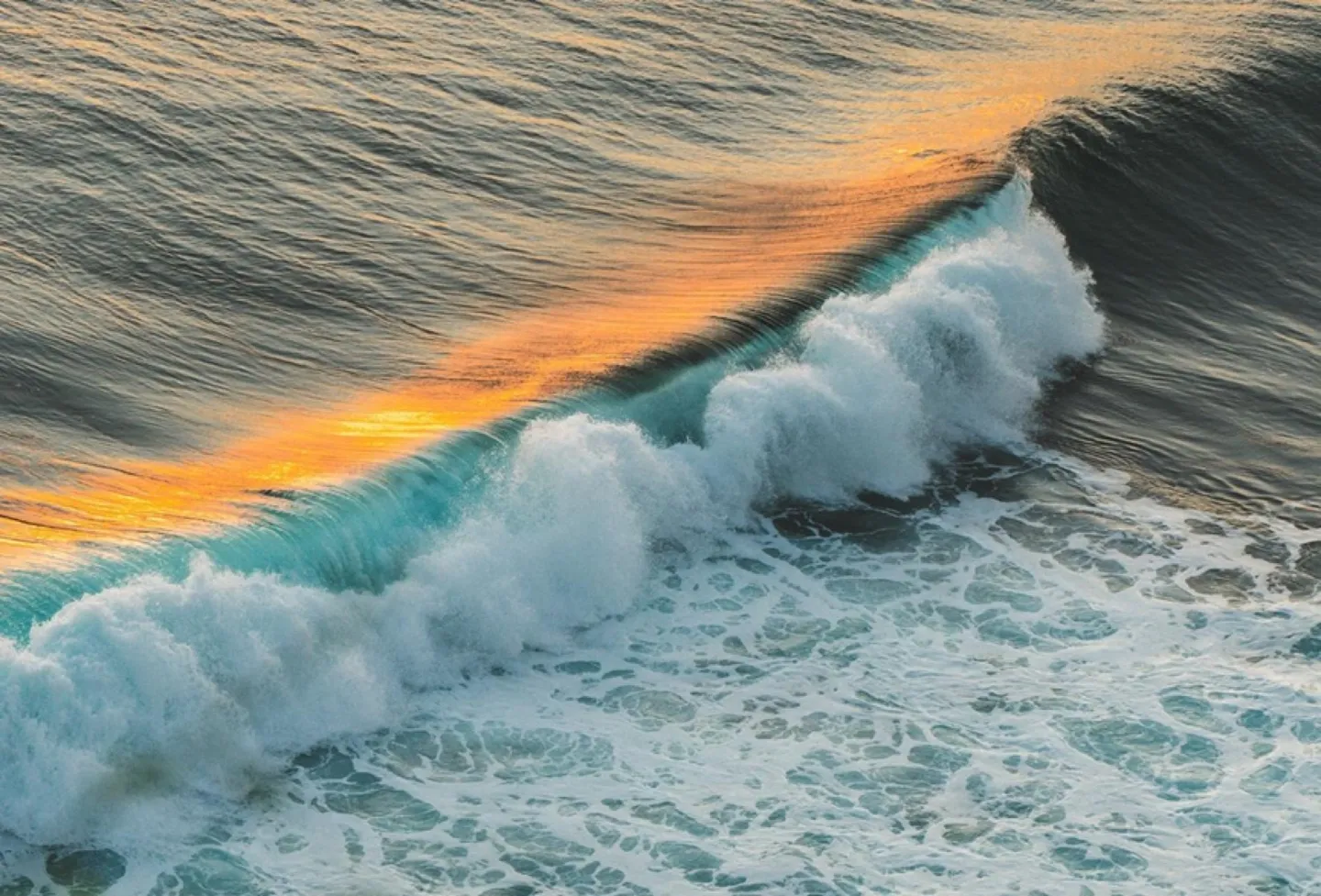
From "Hard Revetments" to "Living Shorelines" — Coastal Protection in Transition
Approximately 40% of the global population lives within 100 kilometres of the coast, yet climate change is exposing these areas to unprecedented threats — rising sea levels, intensifying storm surges, and coastal erosion. By 2050, more than one billion people worldwide are projected to be affected by coastal climate risks.
For decades, nations facing these threats have largely turned to "grey infrastructure" — seawalls, wave-dissipating blocks, breakwaters, and revetment works. In recent years, however, scientific research has revealed that nature has already built disaster-mitigation systems operating for thousands of years, spurring international interest in Nature-Based Solutions (NBS).
A living shoreline takes this idea further: it uses natural elements such as salt marshes and oyster reefs to stabilise the shoreline, supplemented where necessary by low-profile artificial structures. Compared with hard revetment works like wave-dissipating blocks, living shorelines offer far greater resilience in the face of storms.


Mangroves: Blue Carbon Forests That Block Waves, Trap Sediment, and Store Carbon
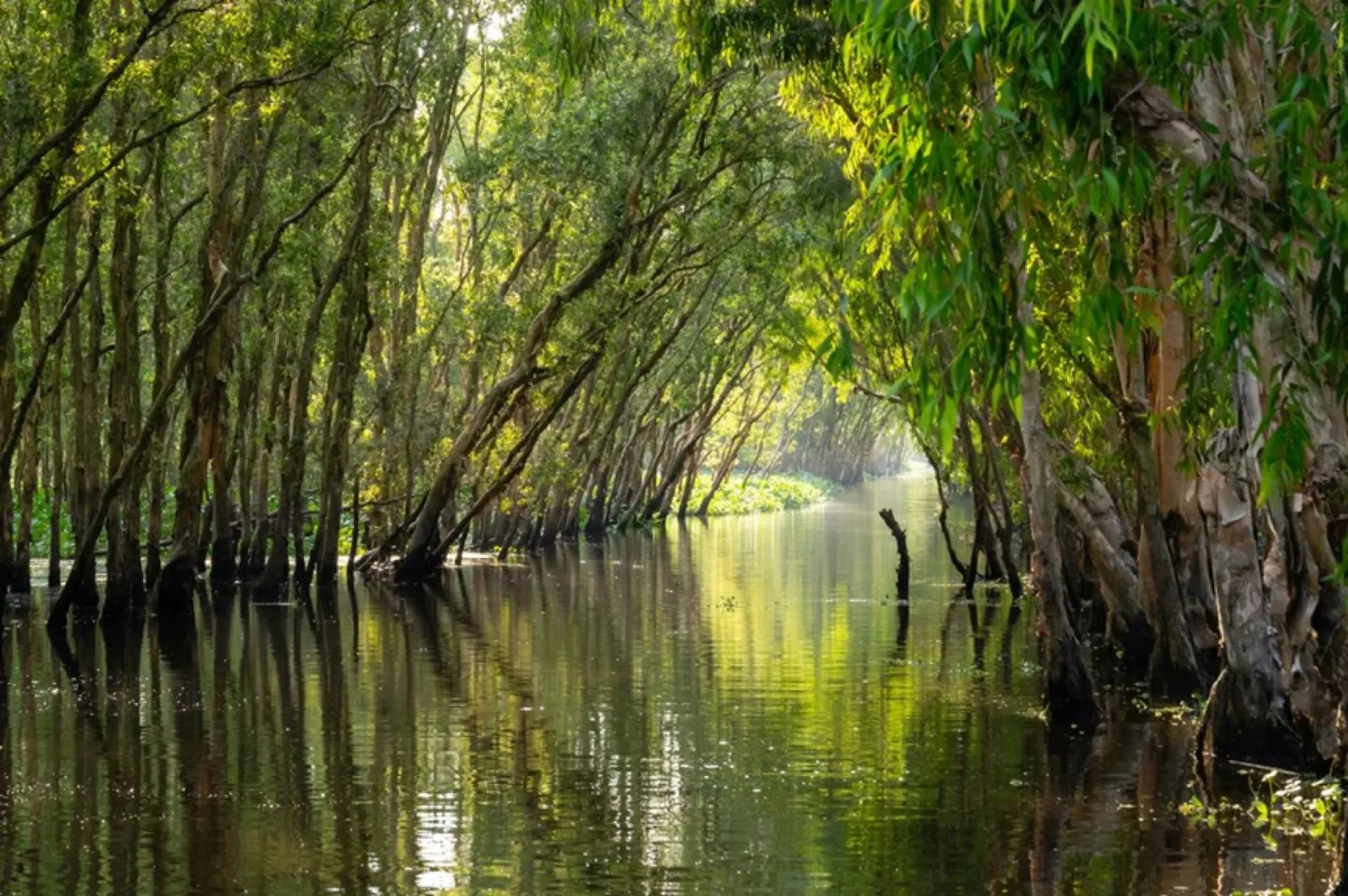
Mangroves grow in the intertidal zones of tropical and subtropical coasts and are composed of salt-tolerant plants. Their defining feature is a network of intertwining roots and trunks that forms a natural barrier, dramatically reducing wave energy. These prop roots and pneumatophores not only anchor the trees but also intercept sediment, absorb wave impact, and promote sediment accumulation, making the coastline more stable. Research estimates that mangroves worldwide reduce flood losses by more than US$65 billion every year.
Equally important, mangroves also serve a carbon-reduction function: their deep, organically rich soils store vast quantities of blue carbon. Research estimates that each hectare of mangrove forest provides ecosystem services valued at up to US$21,000 per year.
Coral Reefs: The Coast's First Natural Line of Defence
Coral reefs are built by reef-forming coral and other calcifying organisms into complex, robust reef structures. Along many coastlines around the world, coral reefs serve as the first natural barrier against waves, dissipating most of the wave energy before it reaches the shore, thereby reducing flooding, storm surges, and coastal erosion.
A World Bank report found that during a once-in-a-century major storm, coral reefs can reduce flood losses by 91% — equivalent to protecting US$272 billion in economic value. The Mesoamerican Reef is a prime example: the largest coral reef system in the Western Hemisphere, it has long protected tourism facilities and infrastructure along the coast of Quintana Roo, Mexico, sustaining the region's tourism economy.
Salt Marshes: Coastal Guardians That Rise with Sea Levels
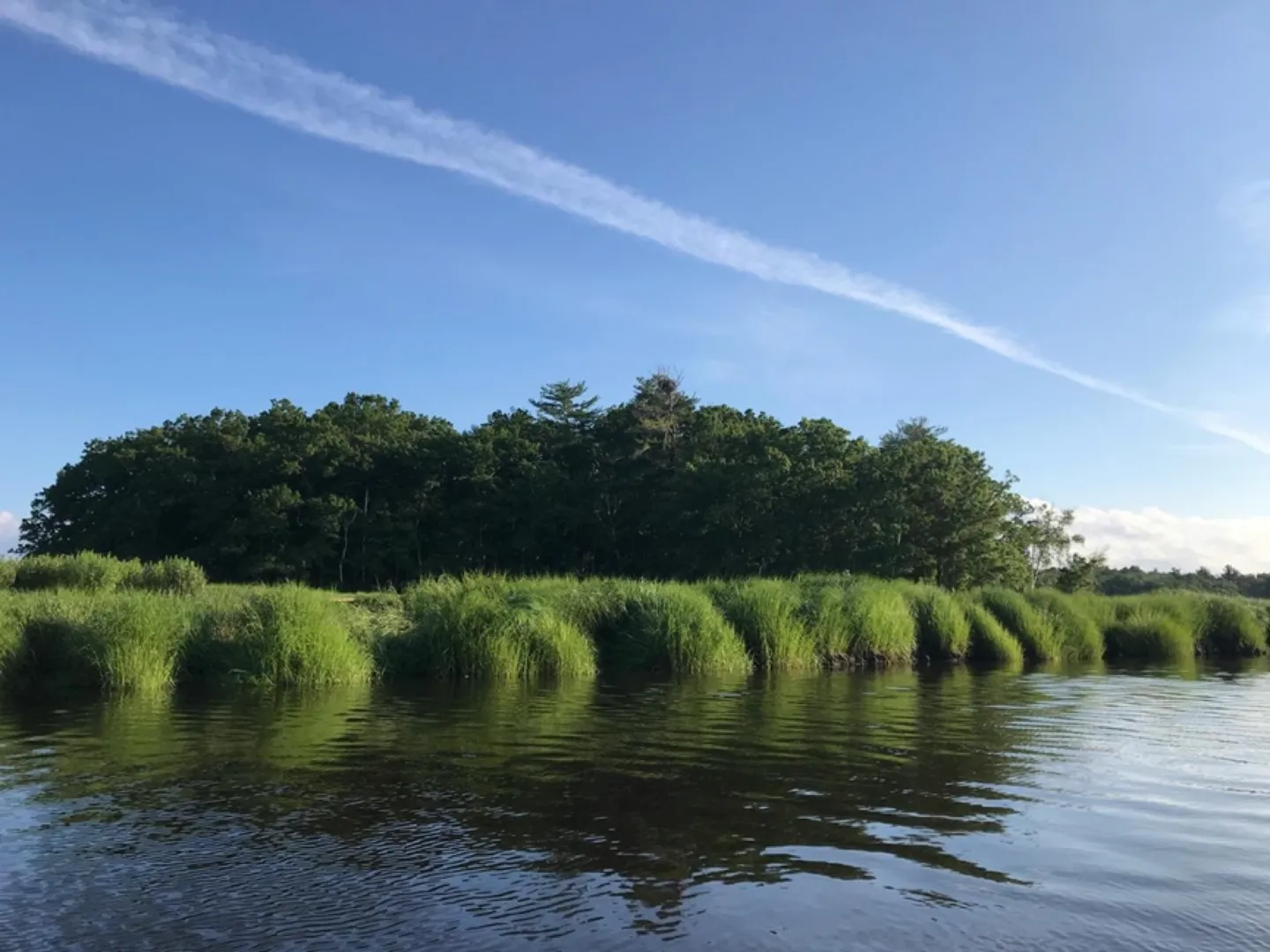
Less celebrated than mangroves or coral reefs, salt marshes are nonetheless vital natural coastal defences. They are found primarily in mid-to-high-latitude estuaries and bays and are composed of salt-tolerant vegetation. These plants reduce wave energy and storm-surge impact, and their dense root systems trap sediment to prevent coastal erosion. Provided sediment supply is adequate, salt marshes can even grow vertically to keep pace with rising sea levels.
When Hurricane Sandy struck the US East Coast in 2012, salt marshes demonstrated their disaster-mitigation value — reducing flood risk in the northeastern United States by 16% and preventing more than US$625 million in damage.
Salt marsh restoration also tends to be more cost-effective than conventional engineering. Restoring salt marshes in the San Francisco Bay Area of California, for instance, has proven to be a sound flood-mitigation investment: in such a densely populated region, the flood-protection benefits can reach as much as US$9 million per hectare.
Beaches and Sand Dunes: Self-Restoring Natural Revetments
Many people think of beaches only as tourist attractions, but from a disaster-mitigation perspective they are remarkably resilient natural coastal defences. When storms strike, beaches absorb and dissipate wave energy; sand dunes act like large natural sediment reservoirs, buffering erosion by releasing stored material. After a storm, waves and wind gradually return sediment to the shore, restoring the original landform.
Beyond their disaster-mitigation value, beaches and sand dunes are also a vital pillar of the global tourism industry. Coastal tourism in Europe alone generated €238 billion in turnover in 2022 and supported more than 2.5 million jobs.
Seagrass Beds: Underwater Forests That Stabilise the Seabed
Recent research has confirmed that seagrass beds are also important natural coastal-protection infrastructure. Seagrass blades slow current speeds, intercept suspended sediment, and promote seabed deposition, while the underlying root systems anchor sediment and reduce the risk of storm damage and erosion.
In the northeastern Pacific, Zostera marina (eelgrass) can reduce current speeds by 40% to 70%. Under certain conditions — when the seagrass canopy height approaches the water depth — every metre width of seagrass bed can attenuate up to approximately 40% of wave energy, a level of protection that rivals that of salt marshes.
For generations, humanity's instinct has been to resist the ocean with concrete. But the climate crisis is forcing us to rethink our approach to coastal protection. The science is clear: truly effective disaster-mitigation strategies do not necessarily mean building seawalls higher — they mean learning to work with nature. Nature-based coastal governance not only strengthens surrounding communities' capacity to cope with coastal erosion and climate change, it also delivers nature-positive benefits such as ecosystem maintenance and enhanced biodiversity. Rather than erecting a concrete barrier between people and the sea, perhaps finding a way of life that allows humans and the ocean to coexist is the path to a genuine win-win.
References
- World Bank, Publication: A Catalogue of Nature-Based Solutions for Coastal Resilience
- NOAA, What is a living shoreline?
- Resilience, The Role of Assertive Communication in the Effectiveness and Sustainability of Nature-Based Solutions (NbS)
- UNDP, Climate Box- How climate change affects coastal regions
※ This article is reproduced from the Delta Electronics (company name) Foundation's Low-Carbon Living Blog: 〈Higher Seawalls Mean Greater Safety? "Natural Defences" Are Rewriting Coastal Governance Worldwide〉, co-produced with BlueTrend.