Contents(4)
The Convention on Biological Diversity (CBD) has set a "30x30" target, aiming to protect at least 30% of the world's ocean and land area by 2030. Yet as nations race to meet coverage quotas, problems such as biodiversity loss and overfishing persist, prompting growing doubts about whether simply expanding protected areas is enough to improve marine ecosystem health.
Can Marine Protected Areas Really Protect the Ocean? Only Two of the UK's Marine Health Indicators Are on Track
As of April 2026, only around 10% of the global ocean has been designated as a marine protected area (MPA) — far short of the 30% target. While the urgency of expanding MPA coverage is undeniable, the pressure to meet deadlines may be driving governments to designate areas that are easy to establish but offer little conservation value. These areas may still legally permit activities that harm the environment, reducing "protected areas" to little more than a label, while zones of genuine conservation importance go unprotected.
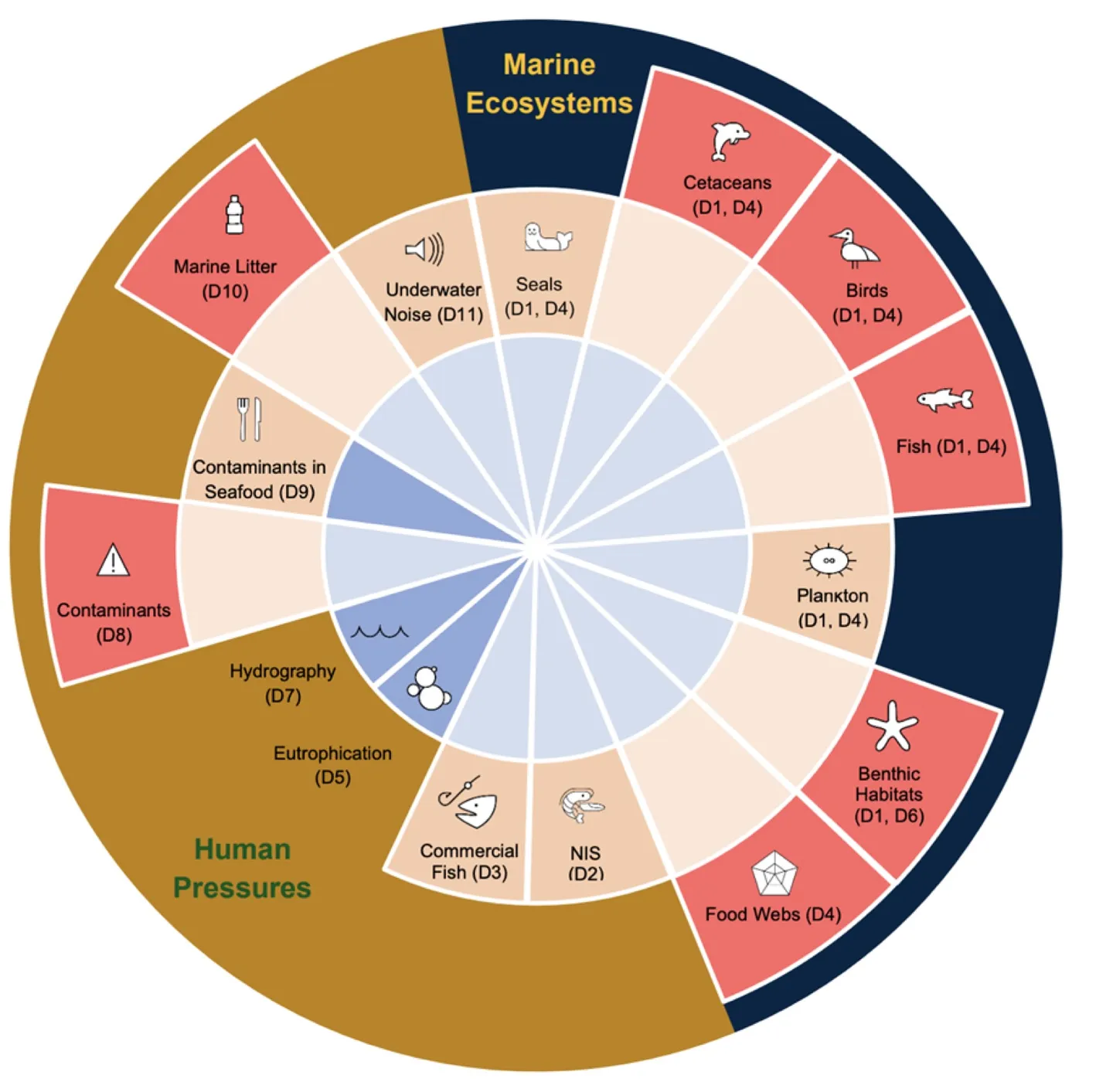
The United Kingdom offers a striking example: although 38% of its waters have been designated as MPAs, the country's latest UK Marine Strategy report found that only 2 of 15 marine health indicators — hydrological conditions and eutrophication — are on track. Food webs within protected areas have not achieved Good Environmental Status; plankton abundance has declined, while total benthic biomass has increased. Although non-native mammals have decreased, seabird populations continue to fall, painting a mixed picture of overall ecosystem health. Much of this can be traced to the intensifying effects of climate change — sea surface temperatures around the UK are rising, with the southern North Sea warming fastest. Marine heatwaves are becoming more frequent, atmospheric CO₂ is driving ocean acidification, and oxygen consumption is increasing. The report does note, however, that while climate change influences all indicators, it has not been confirmed as the primary cause of deterioration across the board.
Jonny Hughes, fisheries policy lead at the Blue Marine Foundation, noted that bottom trawling is still permitted inside protected areas and that bycatch discard bans are largely unenforced: "With fishers continuing to overfish on a large scale and governments lacking monitoring and enforcement measures, it's not at all surprising that targets haven't been met."


Paper Parks? Overfishing, Aquaculture, Oil and Gas Exploration, and Blue Growth
High-intensity fishing activities such as bottom trawling remain commonplace inside MPAs. A study examining the world's top 100 MPAs found that roughly a quarter are not effectively enforced, and a third still permit activities that run counter to conservation goals.
Some 80% of MPAs in the European Union only regulate human activities, while allowing practices that conflict with conservation — including high-intensity fishing, large-scale aquaculture, mining (oil and gas exploration), dredging, intensive anchoring, and offshore wind and other "Blue Growth" developments. A 2018 study found that in 59% of northern European MPAs, bottom trawling intensity was 1.4 times higher than in surrounding unprotected waters. Research tracking sensitive species from 1997 to 2016 found that populations of sharks, Stingray, and skates inside European MPAs declined by 69%. In Chilean Patagonia, a third of salmon cage-farming operations are conducted within MPAs.
The University of British Columbia (UBC) developed a "Paper Park Index" (PPI) using actual fishing levels as a core metric, cross-referencing it against International Union for Conservation of Nature (IUCN) protection categories. Areas legally designated as strictly no-take zones but assessed by stakeholders as having moderate or higher levels of fishing activity receive a high PPI score. The study identified 47 "paper parks" among 184 MPAs assessed — 17 in the Indian Ocean, 11 in Latin America and the Caribbean, and 8 in Southeast Asia and Oceania. European MPAs scored relatively low on the PPI in this study, though it is worth noting that the index focuses solely on fishing activity and does not fully account for other environmentally harmful economic activities such as aquaculture, oil and gas exploration, and Blue Growth developments — limiting its ability to provide a comprehensive assessment of overall MPA effectiveness.
Quality Over Quantity: Time to Rethink the Metrics for Protected Areas
In response to these shortcomings, the EU Biodiversity Strategy for 2030 requires that, of the 30% of EU waters to be legally protected, one-third (10%) must be "strictly protected." By explicitly defining levels of protection and driving measurable conservation outcomes, the strategy signals a shift toward prioritising quality over quantity. Closing MPAs to fishing has been shown to sustain or revive declining coastal fisheries, making them more profitable and sustainable, while also fostering public support and compliance — creating a positive feedback loop that strengthens MPA effectiveness.
Although the interpretation of "strict protection" leaves considerable room for flexibility, allowing EU member states to tailor measures to their specific national circumstances can help improve the likelihood of success. Experts have also emphasised that top-down, exclusionary management can undermine support for conservation and cause social harm and inequity. Involving stakeholders such as fishing communities in decision-making processes, and equitably distributing the responsibilities and burdens of conservation, are equally important to the successful implementation of strict protection.
In short, quality control and equitable governance are the true keys to effective MPAs and to achieving positive social and ecological outcomes. Expanding comprehensive, high-standard protection; building management capacity; ensuring strict compliance with regulations; and securing stakeholder participation and buy-in — these metrics not only deliver environmental benefits, but also generate positive socioeconomic impacts.
References
- Oceanographic, A third of UK waters are protected. Why are its seas still in decline?
- UK Marine Strategy Part One: Updated assessment and Good Environmental Status
- The Conversation, The UK's ocean health report card is damning, and protected areas aren't enough
- ScienceDirect, The 'Paper Park Index': Evaluating Marine Protected Area effectiveness through a global study of stakeholder perceptions
- nature, Quality of marine protected areas is critical to achieving global biodiversity targets
※ This article is reprinted from the Delta Electronics Foundation's Low Carbon Life Blog: Is Protecting 30% of the Ocean Enough? Research Finds Nearly a Third of Global Marine Protected Areas Are Paper Parks, co-produced with BlueTrend.