Contents(6)
- How Do Heavy Rainfall and Climate Change Impact the Surf Industry?
- Payouts Triggered When Disaster Conditions Are Met, Helping Communities Recover Quickly
- Insuring Waves Is Not the First Environmental Insurance Scheme — Mexico Already Insured Coral
- Environmental Insurance Is Complex and Costly — Who Foots the Bill?
- Beyond Post-Disaster Recovery, Reducing Risk in Advance Matters Too
- References
When heavy rains ruin surf conditions and cut off access roads, surfers stop coming — and the towns that depend on surf tourism suffer the consequences. The interconnection between ecosystems, natural resources, and local economies is now attracting the attention of financial mechanisms, with insurance emerging as a tool to help communities recover from disaster. Insuring waves is not the world's first environmental insurance scheme; Mexico has already insured coral reefs and successfully received payouts.
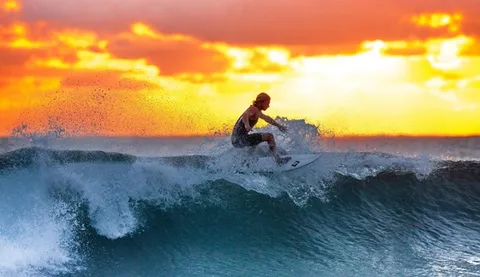
Extreme weather driven by climate change is hitting the surf industry. Image credit: Kanenori/pixabay
How Do Heavy Rainfall and Climate Change Impact the Surf Industry?
In 2025, the international non-profit Save The Waves Coalition published Climate Vulnerability of California's Natural Surf Capital, a comprehensive report analyzing the surf economy, the effects of sea-level rise on surf breaks, and the impact on the surf industry in Santa Cruz.
The data shows that a 1-foot rise in sea level would affect all 31 of Santa Cruz's surf breaks; a 3-foot rise would cause more than half of those breaks to diminish or disappear entirely. Sea-level rise doesn't only affect the surfing experience — it also damages the local surf economy. A 1-foot rise would result in US$12.8 million in losses; a 2-foot rise would push losses to US$25.4 million; and a 3-foot rise would mean losses exceeding US$30 million. No adaptation solution currently exists to address this looming crisis.
World-class surf breaks (see note) Las Flores and Punta Mango on El Salvador's eastern coast face similar challenges. In recent years, intense tropical cyclones have caused flooding and road closures in these areas, leading to a significant drop in surf visitors. Without surfers, hotels, restaurants, and surf shops grind to a halt. "Surf tourism is the backbone of our local economy," said local accommodation operator Barraza, "but our dependence on surfing also makes us extremely vulnerable to climate-related disasters."
Note: A surf break is a natural feature — such as a sandbar, coral reef, or headland — that causes open-ocean swells to break into surfable waves.


Payouts Triggered When Disaster Conditions Are Met, Helping Communities Recover Quickly
In 2023, Barraza partnered with Save The Waves to make an extraordinary decision: insure El Salvador's waves.
Working with international insurance broker Willis Towers Watson (WTW) and the local community, they developed a tailored financial model. After evaluating various indicators, they concluded that rainfall was the most reliable and appropriate single trigger for the local context. Research data showed that when intense storms struck, surf visitation dropped sharply, and local businesses depend on the surf economy for an average of 70% of their revenue. "They can forecast their income based on surf forecasts," said Save The Waves Executive Director Nik Strong-Cvetich.
Unlike traditional insurance, which can take months to process claims, surf ecosystem insurance is a form of parametric insurance that pays out immediately when pre-defined damage thresholds are reached — such as a specific wind speed, earthquake magnitude, or rainfall level. When extreme weather destroys a surf break or the surrounding ecosystem, the insurance quickly provides funds for recovery, response, and reconstruction, helping both the ecosystem and the local economy to rebuild before conditions worsen. It also supports coral restoration after storms, allowing reefs to continue serving as storm buffers and nursery grounds for juvenile fish.
Save The Waves has indicated that, in the interest of ecosystem recovery, they will continue refining insurance policies to include measures such as replanting mangroves to create stronger buffers, preventing soil runoff into the ocean during storms and protecting surf break water quality; restoring watersheds can also reduce river channel erosion, helping avoid soil loss and flood damage. More broadly, surf ecosystem insurance aligns with the organization's wider vision, as Strong-Cvetich put it: "We're protecting the entire environment — surfing is just the entry point."
Insuring Waves Is Not the First Environmental Insurance Scheme — Mexico Already Insured Coral
As early as 2015, Mike Beck — now Director of the Ocean Climate Resilience Center at UC Santa Cruz and formerly Chief Scientist at The Nature Conservancy — proposed the idea that "insurance can relieve pressure on ecosystems" in the Mexican state of Quintana Roo. "We need every possible tool to help coral reefs," he said.
Coral reefs have always faced hurricanes, but when hurricanes form more frequently, reefs no longer have sufficient time to recover. In 2019, The Nature Conservancy partnered with the state of Quintana Roo to create the world's first insurance policy designed for coral reefs and beaches. When Hurricane Delta struck Mexico in 2020, the policy paid out nearly US$850,000 to fund natural capital repair and restoration. The Reef Brigade collected and replanted eight thousand coral fragments within 11 days of the hurricane.
The insurance premiums are funded jointly by government and private sector contributions, with private funds sourced primarily from tourism hotel taxes. In 2019, the state purchased a policy from insurer Seguros Banorte and reinsurer Swiss Re. The policy covers 400 km of coral reef and is triggered when wind speeds reach 96 knots within 60 km of the reef. In 2020, the first payout amounted to nearly US$800,000.
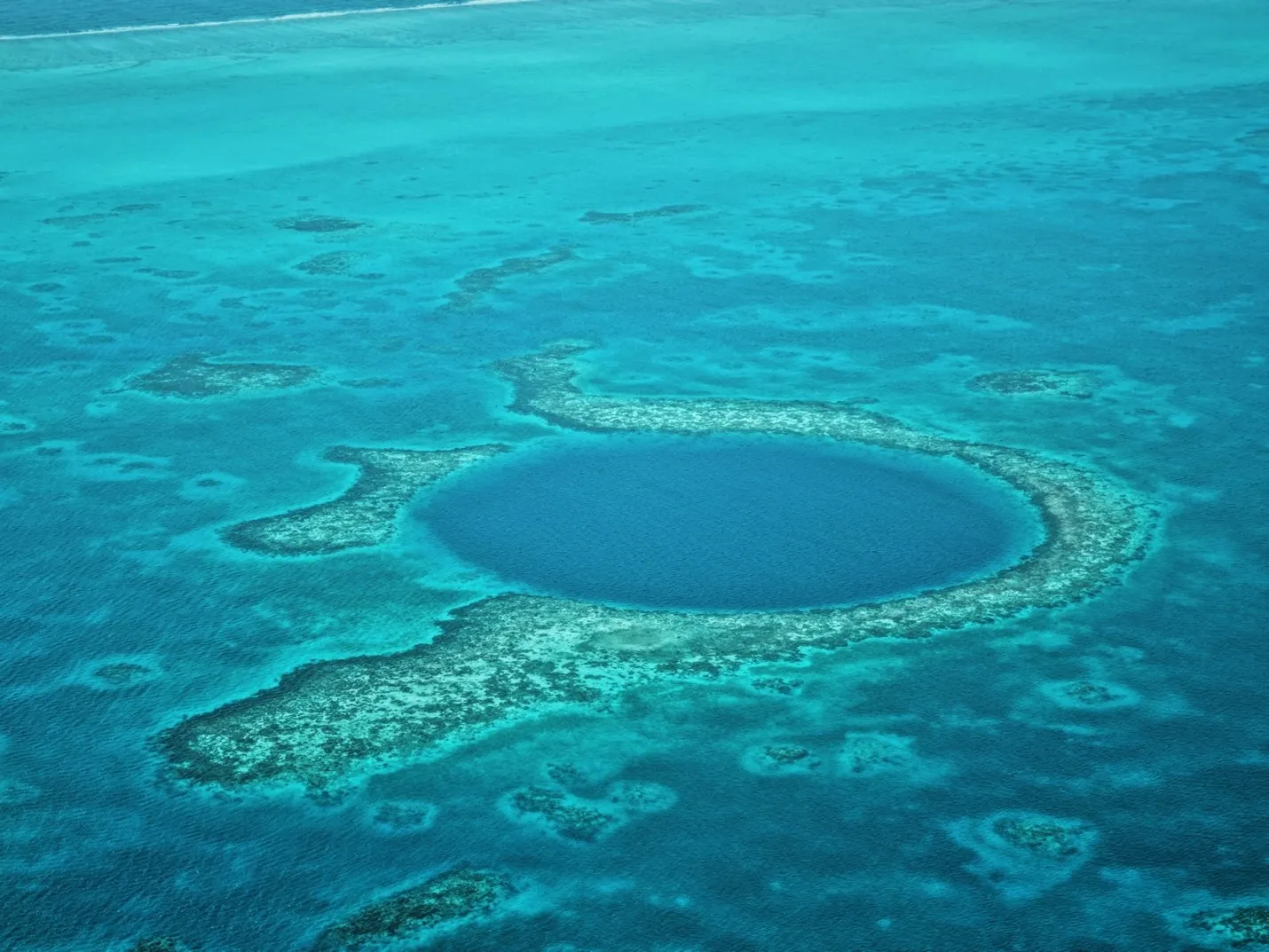
The Mesoamerican Reef is the world's second-largest coral reef system. Image credit: Agnes Lee/Unsplash
Building on this success, in 2021 the regional conservation finance organization MAR Fund (Mesoamerican Reef Fund) purchased a parametric insurance policy from AXA Climate covering the Mesoamerican Reef across Mexico, Belize, and two other Central American countries. The policy uses precise indicators to tier wind speed and reef distance, with each tier corresponding to a different payout ratio, consolidating multiple reef sites into a single policy to secure more favorable premiums.
In 2022, the fund received its first payout of US$175,000, used to repair damage to Belize's coral reefs caused by Hurricane Lisa. By 2023, the policy had been renewed for a third time and expanded to cover 11 sites, now including Guatemala and Honduras.
Environmental Insurance Is Complex and Costly — Who Foots the Bill?
Environmental insurance requires significant funding, the cooperation of surrounding stakeholders, and the ability to navigate unpredictable environmental variables.
Mélina Soto, coordinator of Mexico's Healthy Reef Initiative, notes that even within a single reef, coral bleaching varies depending on species composition and overall reef health, while ocean warming also brings acidification and other diseases. Natural damage may stem from multiple causes simultaneously, and compounding climate variability raises risk for insurers — which is reflected in higher premiums.
The MAR Fund currently relies heavily on grants from institutions such as the UN Development Programme and is working to find more sustainable sources of premium funding. How international organizations, local governments, and private institutions divide premium contributions to ensure stable payments requires ongoing social dialogue and negotiation. The scope of eligible claims, the thresholds under which payouts are triggered, and a host of complex and difficult-to-control variables also make setting policy terms a major challenge.
Beyond Post-Disaster Recovery, Reducing Risk in Advance Matters Too
Unlike environmental insurance, which targets specific ecosystems and uses claim payouts for post-disaster restoration, resilience insurance encourages the upfront investment of resources to reduce disaster risk. The Nature Conservancy has worked with reinsurer Munich Re to apply this concept to river flood risk management; Belize's Blue Bond has also used resilience insurance to reduce investment risk and free up capital for Nature-based Solutions (NbS) and carbon credits.
Parametric insurance — which triggers payouts the moment disaster thresholds are met — effectively helps local communities recover quickly; proactive disaster prevention, meanwhile, builds resilience against climate shocks. Used together, these two approaches could offer affected communities a far more comprehensive suite of adaptation options.
References
- The Nature Conservancy, Innovative finance to fund adaptation for climate-vulnerable communities and ecosystems
- The Guardian, Surfing's big break: how climate crisis insurance may save El Salvador's waves
- Save The Waves Coalition, The Progression Of 'Surfonomics'
- Save The Waves Coalition, Introducing New Initiative At Save The Waves: "Surf Ecosystem Insurance"
- Dialogue Earth, Can innovative insurance help protect coral reefs from climate change?
※ This article is reprinted from the Delta Electronics Foundation's Low Carbon Life Blog: 〈幫海浪投保:氣候變遷衝擊衝浪產業,環境保險如何協助災後復原?〉, co-produced with BlueTrend.