Contents(3)
Since the 1950s, the world's coral reefs have declined by half due to factors such as global warming, overfishing, pollution, and coastal development. This dramatic decline has prompted a wide range of efforts to protect what remains — and one innovative approach to restoring these fragile habitats is harnessing the power of sound.
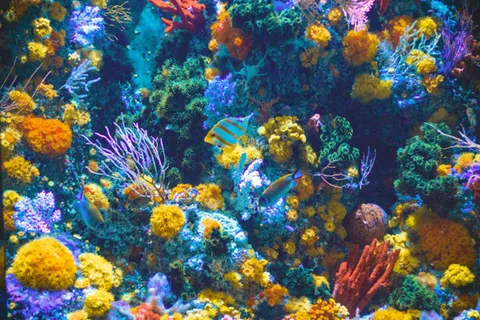
Coral reefs are among the most structurally complex and biodiverse marine ecosystems on Earth. They serve as multifunctional natural habitats, providing marine life with places to feed, shelter from predators, and reproduce — while also forming the economic and livelihood backbone of many coastal communities. Yet coral reefs are also the ocean's most imperilled ecosystem. Since the 1950s, land-based runoff pollution, overfishing, and climate change have driven an ever-increasing frequency of coral bleaching events. Combined with disease and ecological imbalance, the world has already lost half of its coral reefs.
What many people don't realise, however, is that "sound" also affects coral reef survival. Recent research in ocean acoustics has shown that noise from ship traffic, seabed drilling, seismic surveys, and underwater construction damages coral reefs — impeding the settlement of coral larvae, increasing stress on reef fish, and disrupting their navigation and reproductive abilities. Prolonged noise not only interferes with the natural acoustic cues larvae use to locate suitable habitats, but also causes long-term harm to ecosystem resilience and biodiversity.
Using the Ocean's Own Language as a Beacon to Draw Life Back
Yet what can harm can also heal. Used wisely, sound can be a tool for rebuilding fragile coral reef ecosystems. Experiments conducted at Lizard Island on Australia's Great Barrier Reef by the University of Exeter and the University of Bristol in the UK, together with James Cook University and the Australian Institute of Marine Science, have confirmed the potential of this approach.
At the time, Lizard Island's once-vibrant reefs had been reduced to a desolate coral graveyard following a powerful cyclone and a devastating coral bleaching event. The research team constructed miniature reef structures from coral rubble, then strategically placed underwater speakers nearby to broadcast recordings captured from a healthy reef ecosystem. After a six-week experiment, they found that the reefs near the speakers attracted twice as many juvenile fish as those without sound, with species richness increasing by 50%. This demonstrated that the strategic use of sound can promote the recovery of coral reef communities.
Why can sound help marine life survive and thrive? The reason lies in the fact that healthy marine ecosystems already possess rich, complex soundscapes — the whistles and grunts of fish, the rasping of sea urchins grazing on the seafloor, the snapping of pistol shrimp, the distinctive clicks of dolphins, the pleasing vibrations lobsters produce with their antennae. These sounds help other organisms identify suitable habitats.
This symphony of sound acts like a beacon, attracting young creatures in search of a home — much as the bustle of a thriving city draws in newcomers.
"Fish are vitally important for coral reefs to maintain a healthy ecosystem. Increasing fish populations in this way can help kick-start natural recovery processes and counteract the damage we're seeing on so many reefs around the world," said Tim Gordon, lead author of the study.


Coral Larval Settlement Rates Increased by 1.7 Times
The potential of sound has also been validated by the Woods Hole Oceanographic Institution (WHOI), the largest independent ocean research institution in the United States. The WHOI team travelled to the U.S. Virgin Islands in the Caribbean in 2023 to conduct a similar study, installing underwater speakers at three coral reef sites near the smallest island of St. John. They played recordings of healthy ecosystem sounds and measured how many coral larvae settled onto ceramic tiles — which resemble rock surfaces — within thirty metres of the speakers.
When these coral larvae are released into the water column, they drift freely with the current until they find a suitable spot to settle. Once they attach, they remain fixed in place, and if they survive, they have the opportunity to develop into adult corals.
To rule out any effect the speakers themselves might have on the environment, the researchers installed speakers at all three sites but played the healthy coral sounds at only one of them. They subsequently found that the site with sound had an average coral larval settlement rate 1.7 times higher than the sites without — with peaks reaching as high as 7 times greater.
"If you can attract some organisms to a place they might not otherwise go, and they successfully survive and reproduce there, then they start producing these sounds and signals themselves, drawing even more organisms back," said Nadège Aoki of WHOI. She noted that some coral reef restoration methods require intensive labour, whereas using sound is a far less resource-intensive approach.
While research confirms that "sound" shows promise as a solution for coral restoration and increasing biodiversity, a comprehensive approach that addresses both symptoms and root causes is still needed. Reducing threats to coral survival at the source — including improving water quality and habitat conditions, reducing land-based pollution, and controlling sedimentation — is essential to ensure that the "residents" attracted by sound can truly survive and reproduce. Nevertheless, this non-invasive restoration strategy genuinely opens up new possibilities for the rapid regeneration of damaged ecosystems. Guided by sound, marine ecosystems can recover more quickly on their own, creating a positive cycle.
References
- One Earth, How the power of sound can help restore marine ecosystems
- The Guardian, Playing thriving reef sounds on underwater speakers 'could save damaged corals'
- ScienceDirect, Noise pollution on coral reefs? — A yet underestimated threat to coral reef communities
- CNN, Underwater 'reef music' could help in coral restoration
- WBUR, New study from Woods Hole scientists suggests sound could help restore coral reefs
- Earth.Org, Can Soundscapes Save Coral Reefs?
※ This article is reprinted from the Delta Electronics Foundation's Low-Carbon Living Blog: 〈海洋噪音正在破壞珊瑚礁,但「聲音」也可能成為修復關鍵〉, co-produced with BlueTrend.