Contents(5)
- Oysters Need No Feed, Yet Reduce Carbon, Store Carbon, and Purify Water
- The UK Is Releasing 15 Million Oysters to "Rewild" the Ocean
- Oyster Shells Are No Longer Just Waste — They Are the Next Generation of Low-Carbon Building Materials
- A Taiwanese Textile Company Is Turning Oyster Shells into Clothing
- References
Every year, hundreds of millions of tonnes of oysters are produced worldwide. They are not merely a gourmet delicacy — they are also the ocean's quietly remarkable ecological engineers. An "oyster revolution" is sweeping the globe, harnessing the natural behaviour of oysters to drive environmental sustainability: the UK is restoring oysters at scale, France is turning oyster shells into low-carbon building materials, and Taiwan is transforming oyster shells into functional fibres.
For many people, oysters are simply seafood — a classic ingredient on the French table and one of the most down-to-earth staples of Taiwanese night markets. But scientists and businesses are now rediscovering the ecological value of oysters. It turns out that these rough-shelled, stone-like creatures can filter seawater, restore ocean health, and reduce and store carbon. Even the shells left behind after eating can enter the circular economy, becoming low-carbon building materials and textile raw materials.
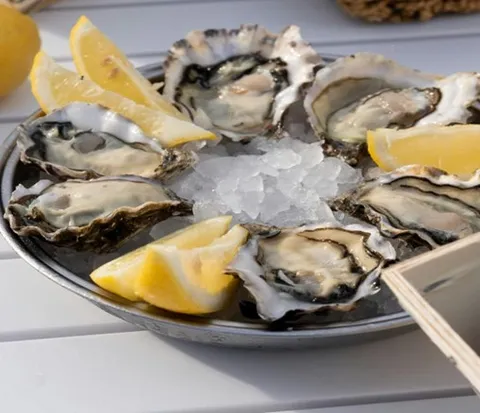
Oysters Need No Feed, Yet Reduce Carbon, Store Carbon, and Purify Water
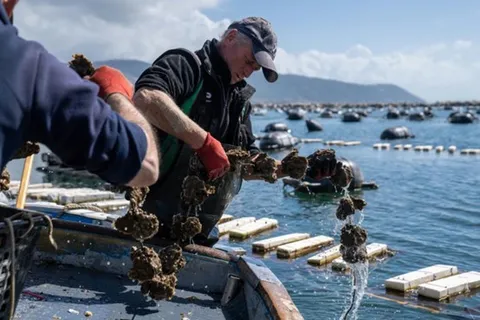
Oysters are a prime example of low-carbon protein. The World Wildlife Fund (WWF) notes that oysters require no additional feeding or nutritional supplementation as they grow — they survive entirely on natural resources in the seawater, such as phytoplankton and organic detritus. Compared with livestock farming, which demands high energy inputs and produces high carbon emissions, the environmental footprint of oyster cultivation is dramatically lower.
Farmed oysters do not merely reduce carbon — they also help store it. A study published in Communications Earth & Environment analysed 50 years of oyster farming history in China's Sanggou Bay and found that farmed oysters genuinely enhance the carbon-storage capacity of seafloor sediments. When oyster farming reaches an intensive stage, the organic carbon buried in seafloor sediments increases by as much as 2.6 times.
The research team attributed this to the oysters' feeding behaviour. Oysters are filter feeders: as they eat, they draw in phytoplankton and organic matter from the water, then excrete larger, heavier faeces and pseudofeces. These materials sink rapidly to the seafloor, gradually burying carbon from the marine ecosystem into the sediment.
The study even estimated that global oyster farming may sequester approximately 470,000 tonnes of carbon in sediments each year, of which more than 280,000 tonnes are in the form of Recalcitrant Dissolved Organic Carbon (RDOC) — carbon that is resistant to decomposition.
The ecological benefits of oysters do not stop there. Oysters are also expert water purifiers. Thanks to their filter-feeding nature, they continuously remove phytoplankton and organic matter from seawater, making it clearer and removing excess nutrients, which further improves water quality. Cleaner seawater is better suited to aquatic plants and marine life. As the marine ecosystem grows healthier, the ocean's capacity to absorb and sequester carbon improves in turn.


The UK Is Releasing 15 Million Oysters to "Rewild" the Ocean
The UK is on the verge of releasing more than 15 million juvenile oysters back into the North Sea, with plans to restore large-scale native oyster beds near the Orkney Islands.
Researchers believe this will do more than simply increase oyster numbers — it will reactivate entire marine ecosystems, triggering a trophic cascade that draws in scallops, algae, seaweed, molluscs, and a wide range of invertebrates.
In addition, the WWF points out that oyster reefs — formed by vast accumulations of oyster shells — create highly complex marine habitats that support a remarkable diversity of marine life, and also serve as spawning grounds and nurseries for many species of fish.
Oyster Shells Are No Longer Just Waste — They Are the Next Generation of Low-Carbon Building Materials
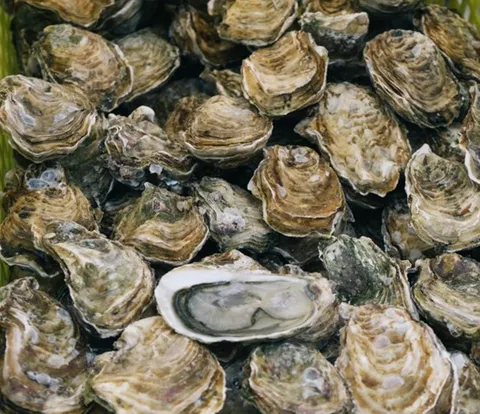
The primary component of oyster shells is calcium carbonate (CaCO₃), which is close in composition to natural limestone. Research teams in France have begun turning discarded oyster shells into low-carbon concrete. Researchers crush the shells directly and use them as a partial replacement for conventional sand and gravel, reducing dependence on traditional aggregates and saving natural resources in the process.
This oyster-shell concrete has superior biocompatibility, making it particularly well suited to marine engineering applications such as artificial reefs, helping to restore ocean ecosystems. Some pedestrian pathways at tourist sites in France have already adopted oyster-shell concrete, and after years of foot-traffic testing, the material has successfully turned the waste of one industry into an important raw material for another.
A Taiwanese Textile Company Is Turning Oyster Shells into Clothing
In Taiwan, oyster shells have even been made into clothing. Seawool — a sustainable, functional yarn developed by Creative Tech Textile — combines discarded oyster shells with recycled PET bottles. Through nanotechnology processing, the shells are ground into an ultra-fine powder and then integrated into yarns and fibres, ultimately producing a functional fabric.
Because oyster shells have an inherently porous structure, they can adsorb odours and reduce heat conduction, while also improving the tactile quality of the fabric. Taiwan generates approximately 160,000 tonnes of waste oyster shells each year. Once dismissed as seafood by-product, these shells are now entering the marine circular economy, with the potential to reduce water consumption by 80%, cut carbon emissions by 80%, minimise plastic waste, and lower dependence on petrochemical fibres.
In the face of climate change and the biodiversity crisis, countries around the world are urgently seeking new solutions — and the answers may not always come from the laboratory. They may come from nature itself. The oyster filters seawater and nurtures marine life while alive; the shells it leaves behind in death continue to deliver value in construction, textiles, and the circular economy.
References
- The Guardian, More than 15m oysters to be released in the North Sea for UK rewilding project
- World Wildlife Fund, Oysters: Unsung heroes in a changing climate
- Communications Earth & Environment volume, Intensive oyster farming enhances carbon storage in sediments over decades
- euronews, Shell shock: Meet the French professor turning oyster waste into building material
- 誠佳科紡, Seawool® 海毛紗
※ This article is reprinted from the Delta Electronics Foundation Low-Carbon Life Blog: 〈The Underrated Oyster! From Gourmet Delicacy to Ocean Saviour〉, co-produced with BlueTrend.