Contents(6)
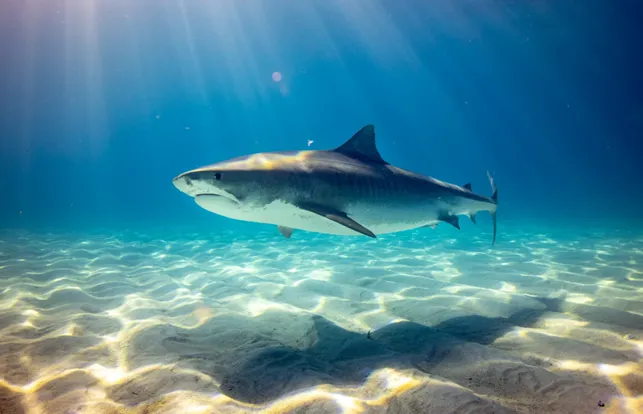
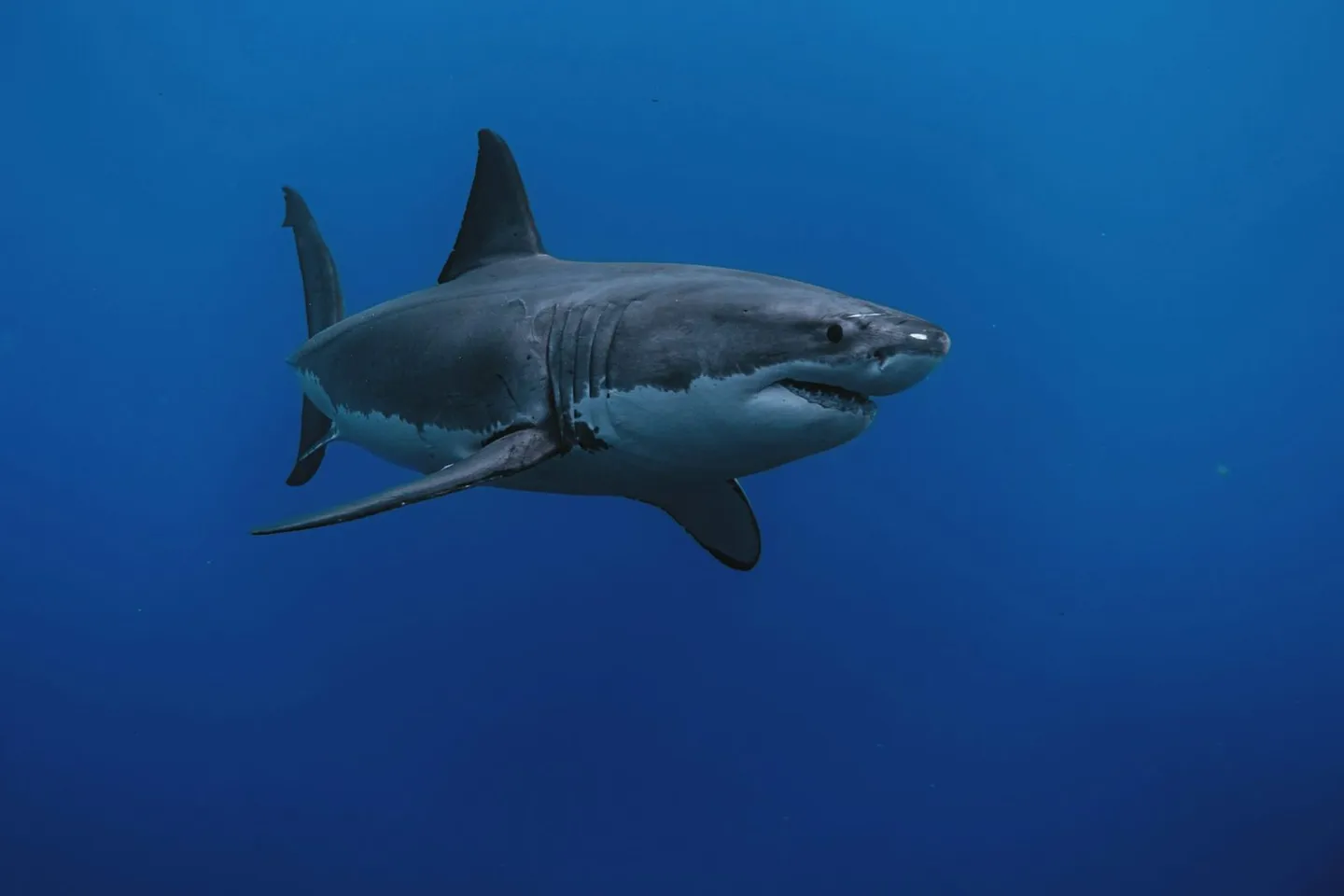
Great white sharks are among the ocean’s rare warm-blooded fish. Along with a handful of tunas and other lamnid sharks, they belong to a tiny club of mesotherms: species that trap the heat their muscles produce and hold parts of their bodies well above the temperature of the water around them. That trick powers the speed, range, and hunting performance that make the great white an apex predator. A new study in the journal Science suggests it is also becoming a liability.
The warm-blood tax
The research, led by Nicholas Payne of Trinity College Dublin and published in April, set out to measure something biologists had long struggled to pin down: how much energy large fish actually spend. By combining data from tagged animals with laboratory measurements, the team built an energy budget spanning the full range of fish sizes, from milligram larvae up to sharks weighing close to three tonnes.
The headline number is stark. After accounting for body size and temperature, the authors found that mesotherms use roughly four times more energy than cold-blooded fish of the same size, about 3.8 times in the study’s estimate. A 10 degree Celsius rise in body temperature, the team reported, more than doubles a fish’s routine metabolic rate, which in plain terms means a warm-bodied hunter has to eat far more simply to keep its engine running.
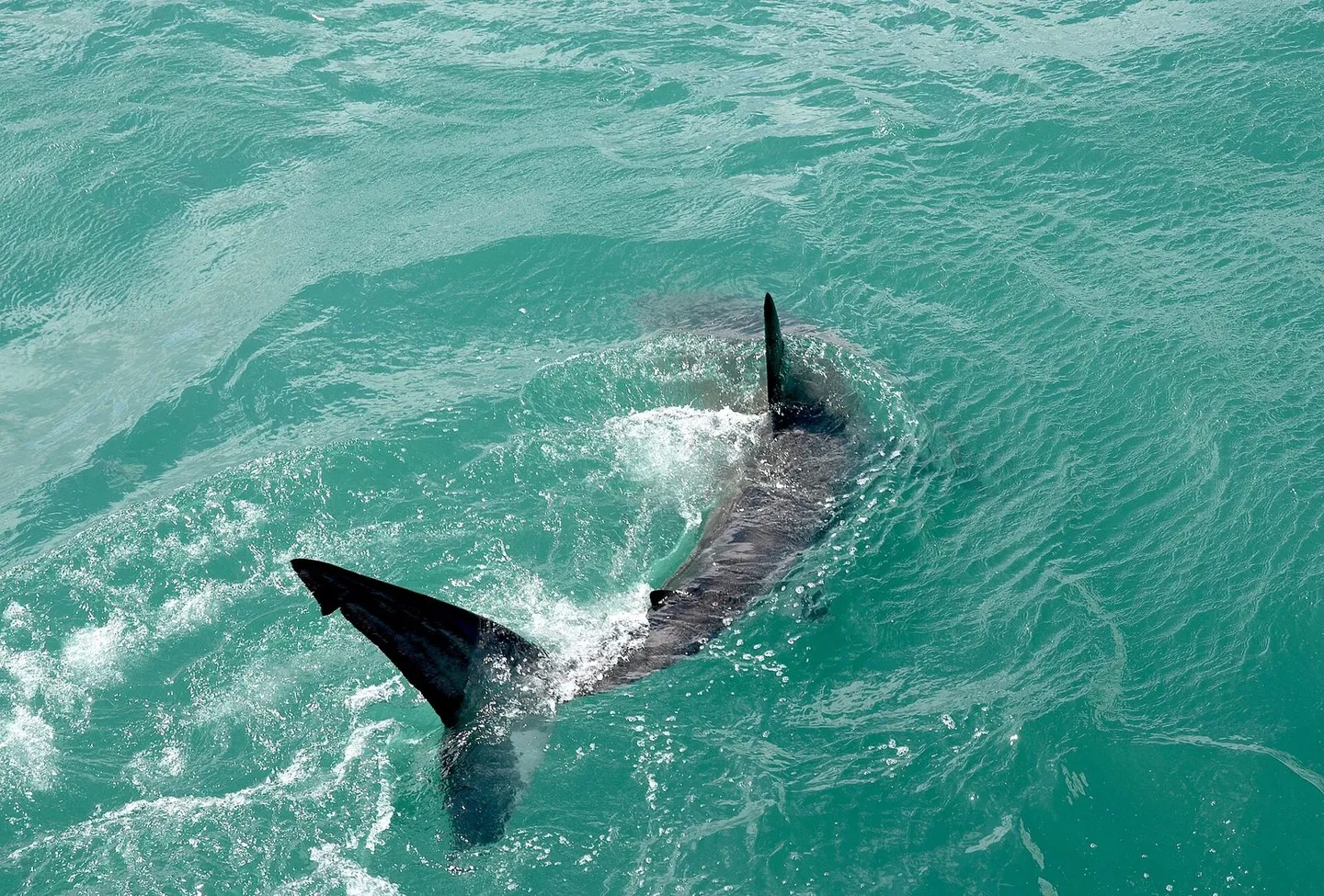
A great white shark off Gansbaai, South Africa. Holding a high body temperature buys speed and range, at the cost of a steep energy bill. (Photo: Olga Ernst / Wikimedia Commons, CC BY-SA 4.0)
The results were really quite striking.
That was how Payne described the finding in remarks released by Trinity College Dublin. Fewer than 0.1 percent of all fish species are mesotherms, a trait that has evolved independently several times in certain sharks and tunas, and it is one reason so many of them sit at the top of the food chain.


A problem of geometry
The study’s deeper finding is a mismatch built into physics. As a fish grows, its body generates heat faster than it can shed that heat to the surrounding water. In mesotherms, high metabolic rates amplify the effect, so the largest warm-bodied fish run the hottest. The authors describe this as an overheating predicament, and they argue it helps explain why big mesotherms tend to live in cooler seas rather than the tropics. Warm water offers less room to dump excess heat, and a warming ocean shrinks that margin further.
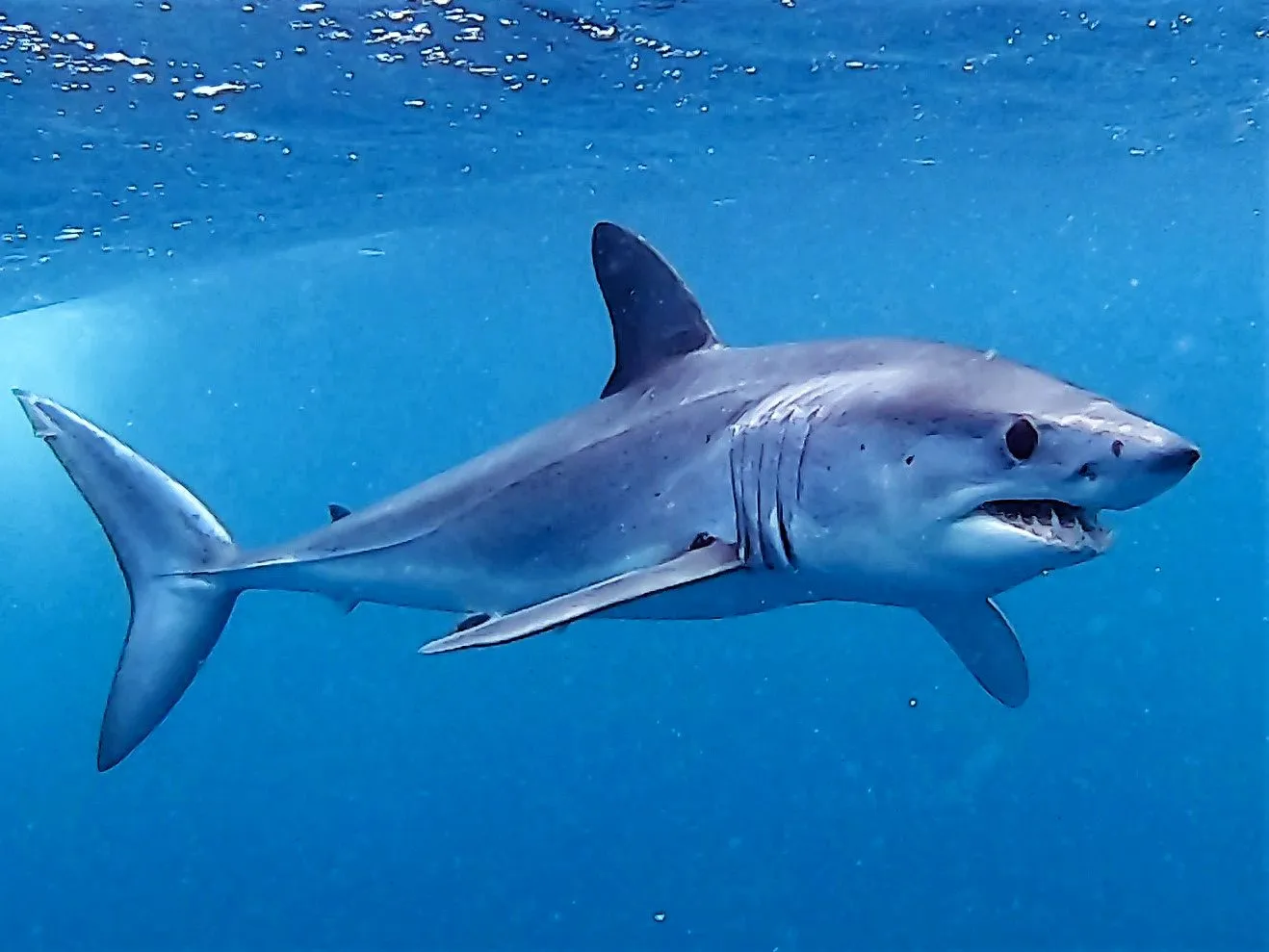
The shortfin mako, a lamnid relative of the great white, is another of the few mesothermic sharks. (Photo: Fábio Olmos / Wikimedia Commons, CC BY 4.0)
Double jeopardy
For animals already under pressure, that is a worrying combination. Many mesotherms, including several sharks and tunas, are heavily targeted by fisheries. Payne called the result a form of double jeopardy: species with unusually high energy demands are also the ones whose numbers, and whose prey, have been most depleted by overfishing. Co-author Edward Snelling of the University of Pretoria framed it the same way in the Trinity materials, noting that being a high-performance predator in the ocean comes at a greater cost than scientists had appreciated, and that warming is pushing these animals closer to their physiological limits.
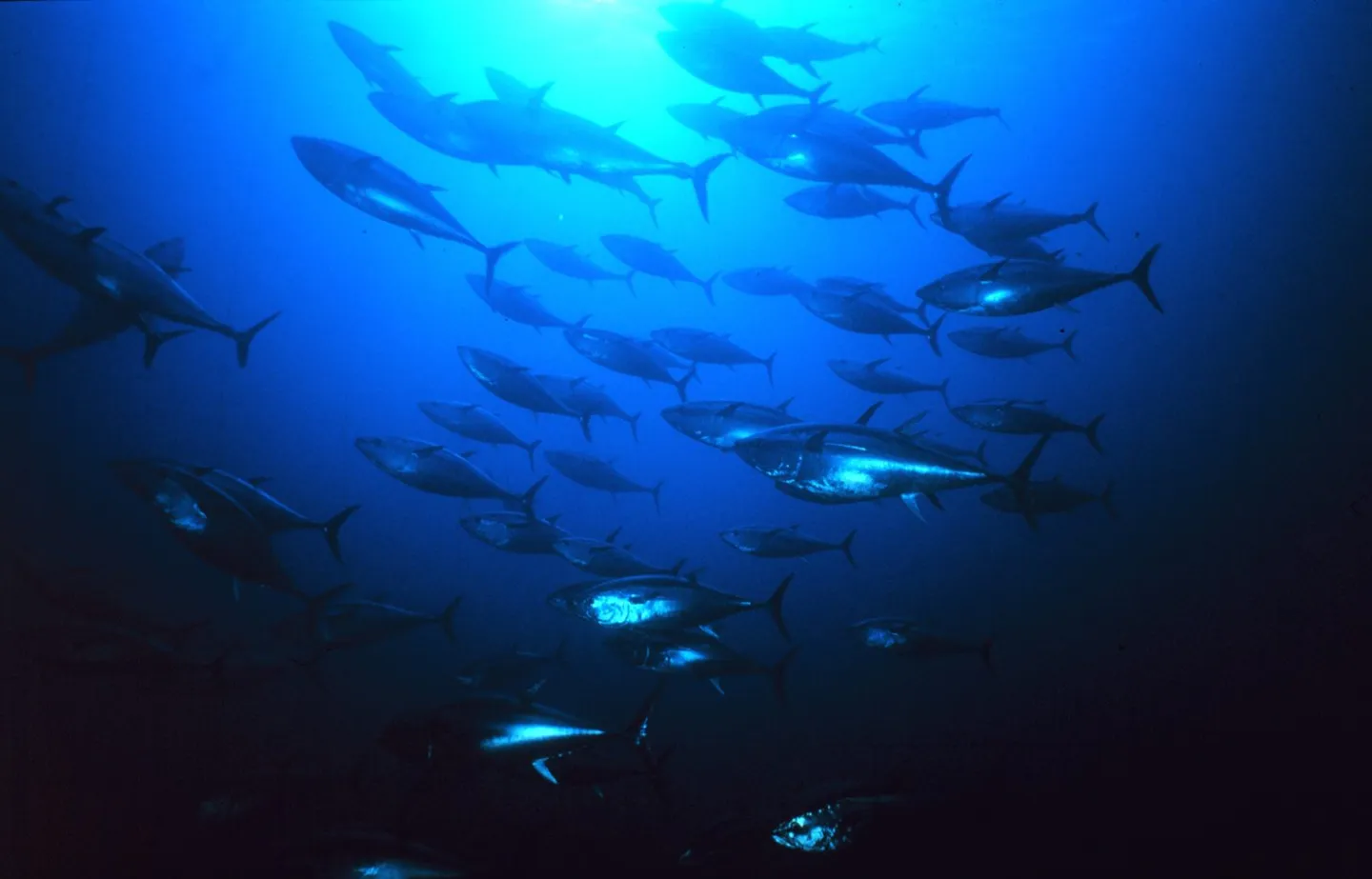
Atlantic bluefin tuna, also mesotherms, have long been heavily targeted by fisheries. (Photo: Danilo Cedrone (UN Food and Agriculture Organization) / Wikimedia Commons, Public domain)
The likely response, the authors suggest, is that warm-bodied predators shift toward the poles in search of cooler water, reshaping where they live and hunt. The study sets that risk against the fossil record, noting that mesotherms suffered disproportionately during past climate shifts.
A live stress test in the Pacific
That warning lands in the middle of an unusually vivid real-world example. As the Washington Post reported in early July, a marine heat wave now stretches across the Pacific over an area more than eight times the size of the contiguous United States, roughly 13.5 percent of Earth’s surface, running from the Philippines to Peru and north toward Hawaii and California. It formed when a North Pacific heat wave merged with warming tied to a developing El Nino.
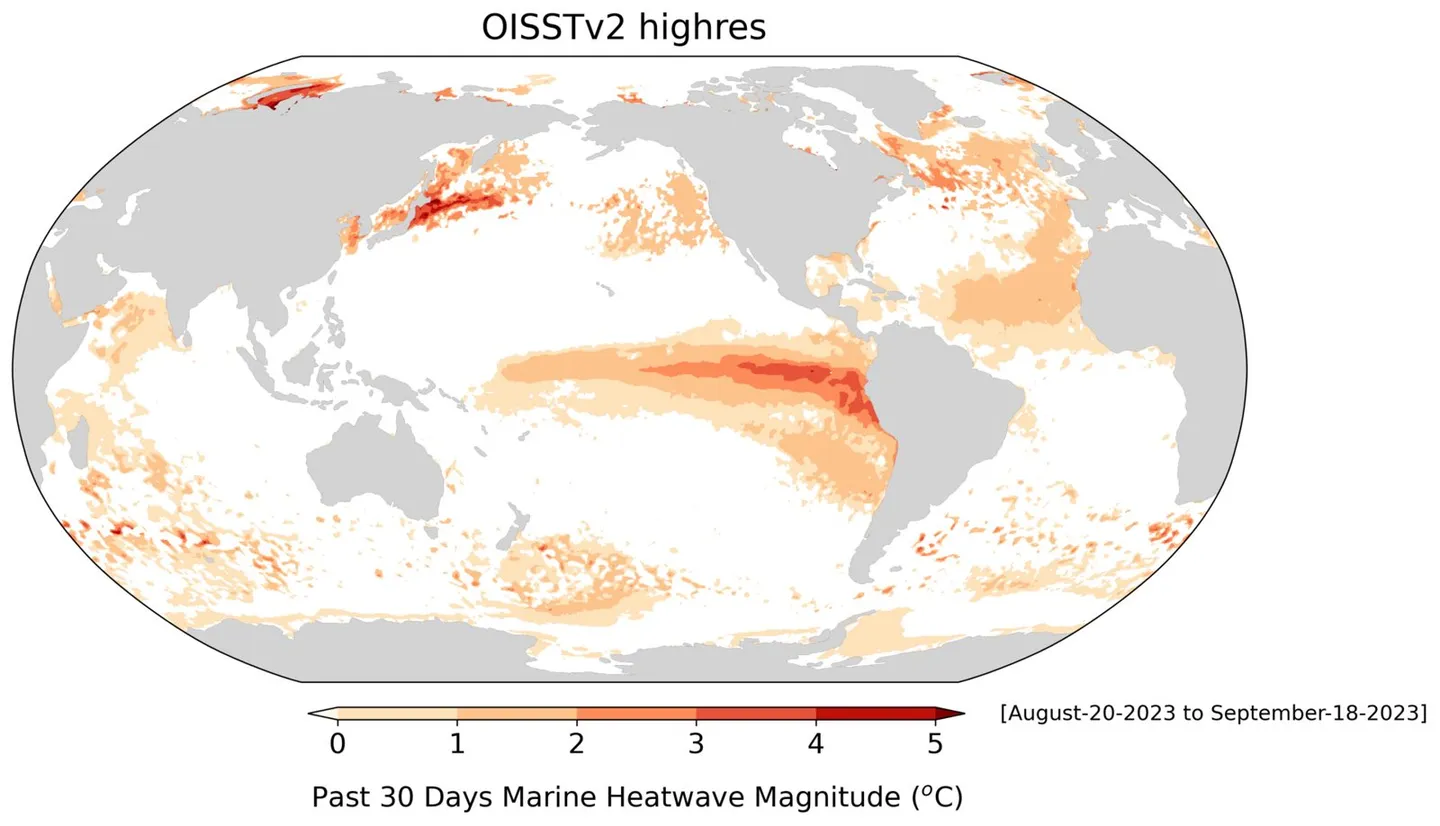
Global marine heatwave magnitude from 20 August to 18 September 2023, as monitored by NOAA. The warm band in the eastern equatorial Pacific coincided with a developing El Niño. Shown as a 2023 reference case. (Photo: NOAA Physical Sciences Laboratory / Wikimedia Commons, Public domain)
The trend, by the numbers
- Global ocean under marine heat wave, late 1980s: about 9 percent
- Global ocean under marine heat wave, today: more than 30 percent
- Strongest categories: coverage up nearly sixfold over the same period
- January 2024 peak: more than 46 percent, a record
- Currently: above 37 percent
Source: Washington Post analysis of NOAA Coral Reef Watch data, 1985 to present
The broader pattern is the part scientists find most sobering. The share of the global ocean experiencing a marine heat wave has more than tripled since the late 1980s, and the coverage of the most intense categories has grown even faster. Warm seas evaporate more readily, loading the atmosphere with water vapor that can fuel extreme rainfall thousands of miles away.
A sentinel species, with caveats
The timing has not gone unnoticed. The findings are circulating again as Discovery’s Shark Week runs from July 26 to August 1, and outreach organizations, among them the Center of Science and Industry in Columbus, have pointed to warm-bodied sharks as a sentinel species: an early signal of stress that ripples through the rest of the ocean.
It is worth keeping the claims proportionate. The Science paper describes a long-run physiological squeeze and a question of where these animals can live, not a forecast that any single heat wave will kill great whites outright, and no such mass die-off has been documented in the current Pacific event. Climate scientists tracking the heat wave have been careful to say it raises the odds of extreme outcomes rather than guaranteeing them. What the two threads share is a direction of travel: a warm-bodied predator built for a cooler ocean, and an ocean that keeps getting warmer.
For a lineage that has outlasted several mass extinctions, the great white’s predicament is a useful reminder that resilience has limits. The study’s authors point less to a single dramatic tipping point than to a slow closing of options, warming water on one side and depleted prey on the other, pressing hardest on the animals least able to throttle back their own metabolism. Watching where the sharks go next may tell us as much about the ocean’s health as anything happening at the surface.
Sources and further reading
- Payne, N. L., et al. “Mesothermic fishes face high fuel demands and overheating risk in warming oceans.” Science, vol. 392, 2026, pp. 301-305. doi.org/10.1126/science.adt2981
- Trinity College Dublin, “Iconic sharks and tunas are overheating; face double jeopardy in warming seas.” tcd.ie
- Noll, Ben. “The Pacific Ocean is running a fever. Why that’s an ominous sign.” The Washington Post, 5 July 2026. washingtonpost.com
Reprint & Copyright Notice
- Original Title: The Overheating Squeeze on Great White Sharks
- Original Source: SEVENSEAS Media (Read the original article here)
- Author: SEVENSEAS Media Editorial Team
- Translated and republished with permission from SEVENSEAS Media. SEVENSEAS Media is a fiscally sponsored project of The Ocean Foundation.