Contents(5)
Every time I chat with friends who've never dived, their image of diving seems to be: "Aren't you just floating around with a tank strapped to your back? Sounds pretty relaxing — how is that even exercise?"
Some even twist the knife: "Besides, plenty of divers have a pretty decent belly going on. It's not like they're as lean as endurance athletes."
People, this is a massive misconception. Today, the Editor is here to use properly sourced science to clear the name of divers everywhere — and to be completely honest at the same time: the belly thing really has nothing to do with what happens underwater.
Science Corner: Why Diving Actually Burns a Lot of Energy
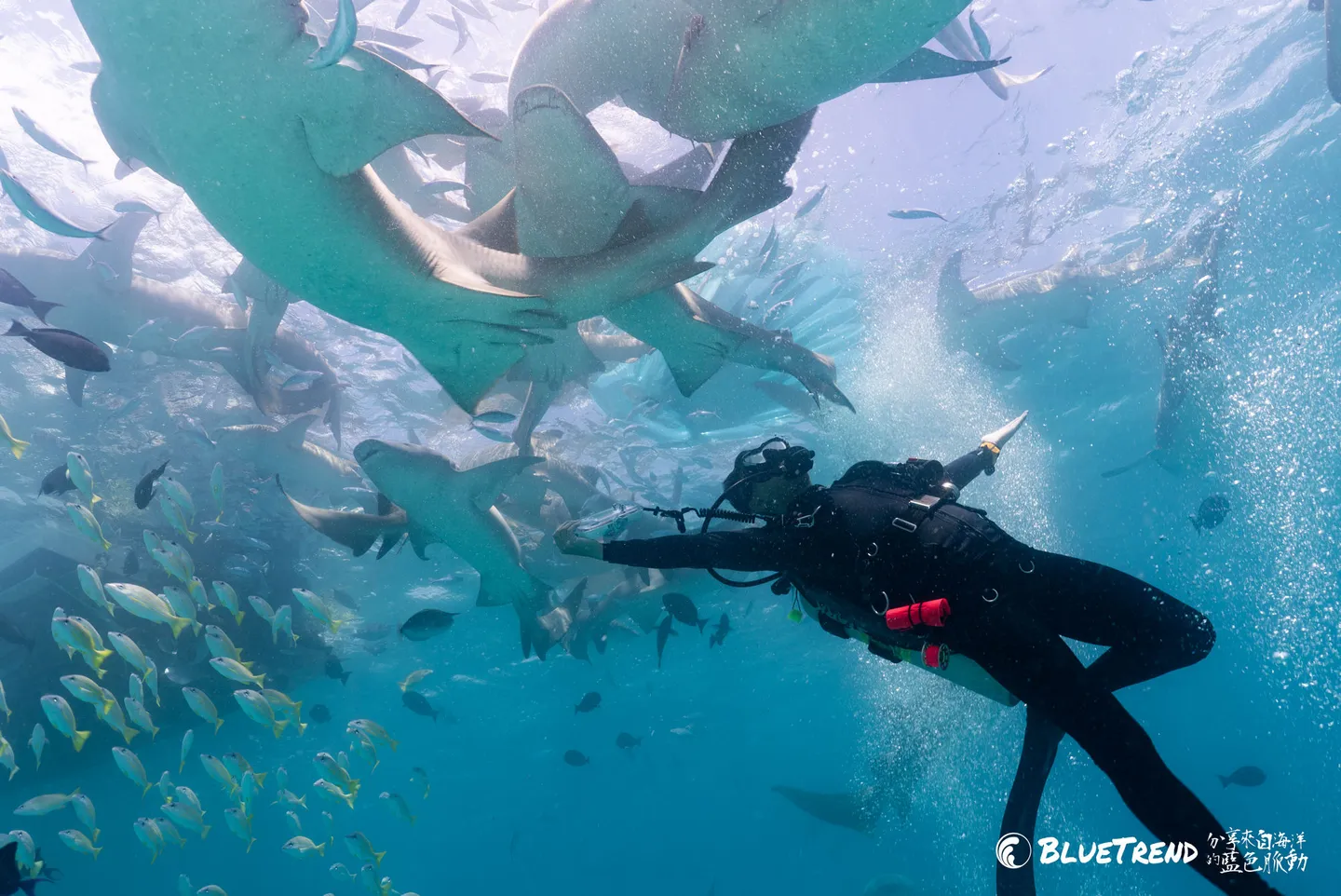
You think we're down there taking photos with sea turtles and elegantly watching fish? In reality, your body is fighting three battles simultaneously beneath the surface:
1. Breathing Resistance: Every Breath Underwater Is Harder Than on Land
The deeper you go, the greater the pressure, and the denser the gas you're breathing in. It feels a bit like replacing the air in a straw with juice — you still need to suck it in, but you have to work a lot harder.
The harder breathing becomes, the more problems pile up: your body produces more carbon dioxide, which also becomes harder to expel. Once CO₂ builds up, headaches, breathlessness, and impaired judgment follow — and that's the starting point for many diving incidents.
This is why the deeper the dive, the less you can rely on brute force. It's also why your instructor keeps telling you to "breathe slowly and stay relaxed" — that's not just motivational talk; it's about keeping your CO₂ levels down.
The right mindset underwater is "conserve energy," not "push hard." Calories are burned as a side effect, not the goal. Trying to burn a few extra calories by kicking harder usually just results in a headache and burning through your air too fast.
2. Water Is an Absolute Heat-Drain Monster
The entire ocean is, at its core, one enormous heat sink. At the same temperature, water draws heat away from your body more than 20 times faster than air does. That's why 28°C air feels comfortable, but staying in 28°C water for a while will leave you shivering.
Your body won't just let its core temperature drop — it automatically ramps up your metabolism and burns calories to compensate. The colder the water and the thinner your wetsuit, the more fuel it needs to throw on the fire. All of that counts toward your energy expenditure for the day.
3. Water Resistance: Your Entire Dive Is Resistance Training
Water is roughly 800 times denser than air. Every kick of your fins, every postural adjustment, every small effort to push against a current — you're displacing something 800 times heavier. The same movement costs far more in water than on land, which means your entire dive is effectively a resistance workout, even if you don't feel it at the time.


The Numbers: How Many Calories Does Diving Actually Burn?
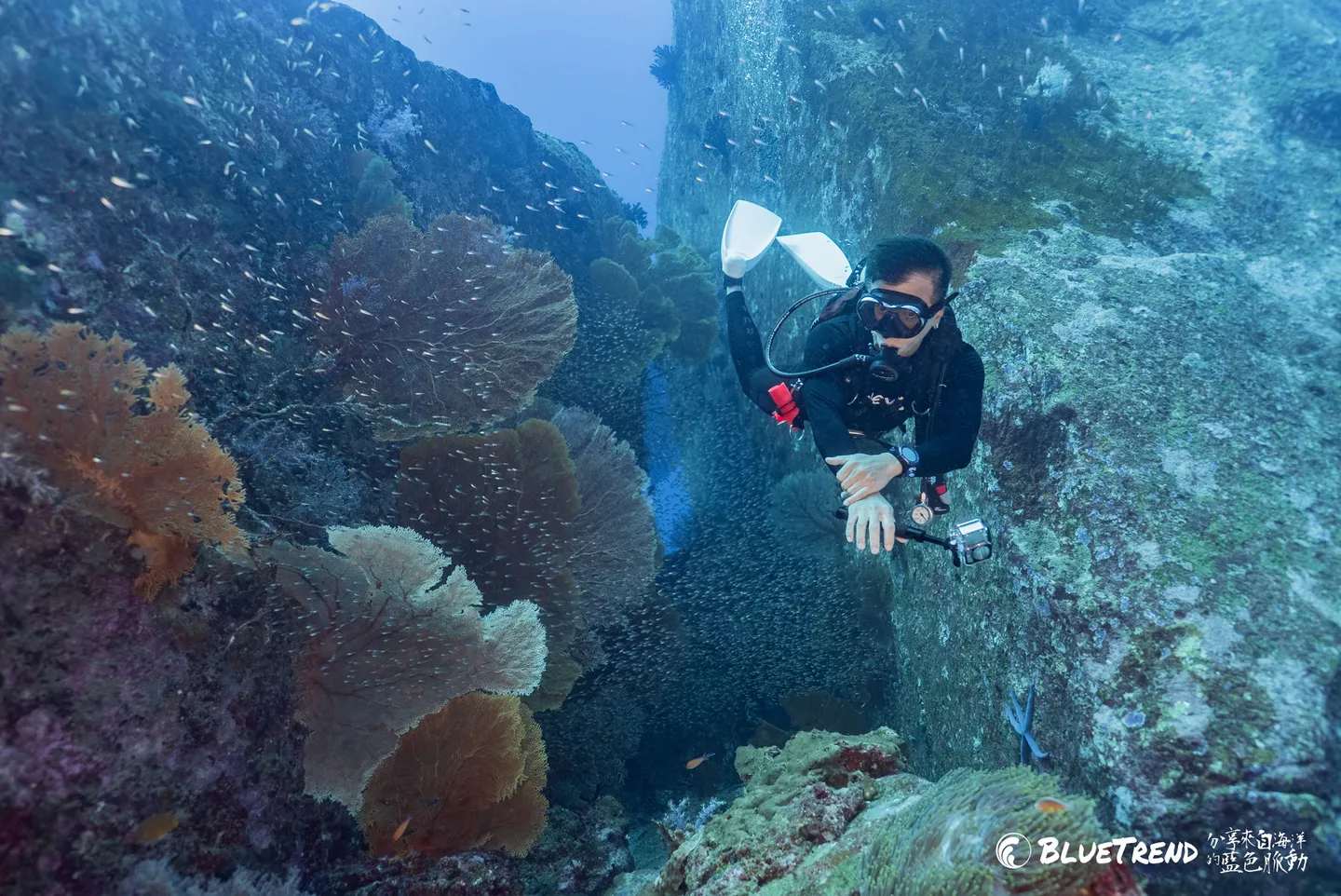
There's an internationally accepted unit for measuring exercise intensity called METs: lying still is 1, and the higher the number, the harder the effort. This scale is catalogued in a database called the Compendium of Physical Activities, which was updated in 2024.
Scuba diving appears in two entries:
- Lighter diving: 5.3 METs
- More effortful diving: 5.8 METs
And according to the same classification system: 3.0 to 5.9 METs is moderate intensity; 6.0 and above is vigorous intensity.
In other words, recreational scuba diving sits firmly in the "moderate intensity" category — right alongside brisk walking and doubles tennis.
Doesn't sound that impressive? Don't underestimate it. Moderate intensity is exactly the zone that public health guidelines worldwide recommend you accumulate "150 minutes per week" of. Do two dives in a day and you've already knocked out a good chunk of that weekly quota. So "diving isn't really exercise" — you can put that one away.
The Real Powerhouses: The Ones Without Tanks
The same database has another category called skin diving, referring to breath-hold descents without a tank — the kind of diving that covers snorkeling-style dives and freediving. The numbers look like this:
- Moderate-effort breath-hold diving: 11.8 METs
- Fast pace: 15.8 METs
Two to three times higher than scuba diving, and far beyond the vigorous-intensity threshold.
The logic isn't hard to follow: with a scuba tank, the equipment handles the "breathing" part for you; the freediver has no such advantage — everything runs on a single held breath, up and down. The intensity is naturally in a completely different league.
Next time a freediving friend tells you "we work harder," you'll have to give them that one.
Converted to Actual Calories (65 kg adult, one 45-minute tank)
| How this dive felt | Approximate burn |
|---|---|
| Easy: warm water, no current, basically drifting along watching fish | ~260 kcal |
| Active: kicking occasionally, dealing with some current | ~280 kcal |
Two tanks in a day ≈ 550 kcal. And that's without chugging any sports drinks.
⚠️ A couple of honest caveats here.
First, measuring underwater exertion accurately is genuinely difficult. Equipment is hard to use below the surface, and conditions are constantly changing, so these figures have always been rough reference points. Even the researchers who compile the database acknowledge that aquatic activities are among the hardest to categorize accurately.
Second, these numbers do not account for water temperature, currents, equipment weight, or the load carried during shore dives. Cold water, strong currents, and heavy gear will push the real number higher than the table suggests. These are also "total expenditure" figures — they include the baseline metabolic rate you'd burn just lying still (roughly 50 kcal over 45 minutes), so the calories burned specifically because of diving are a bit lower than they appear.
What About People Who Dive for a Living?
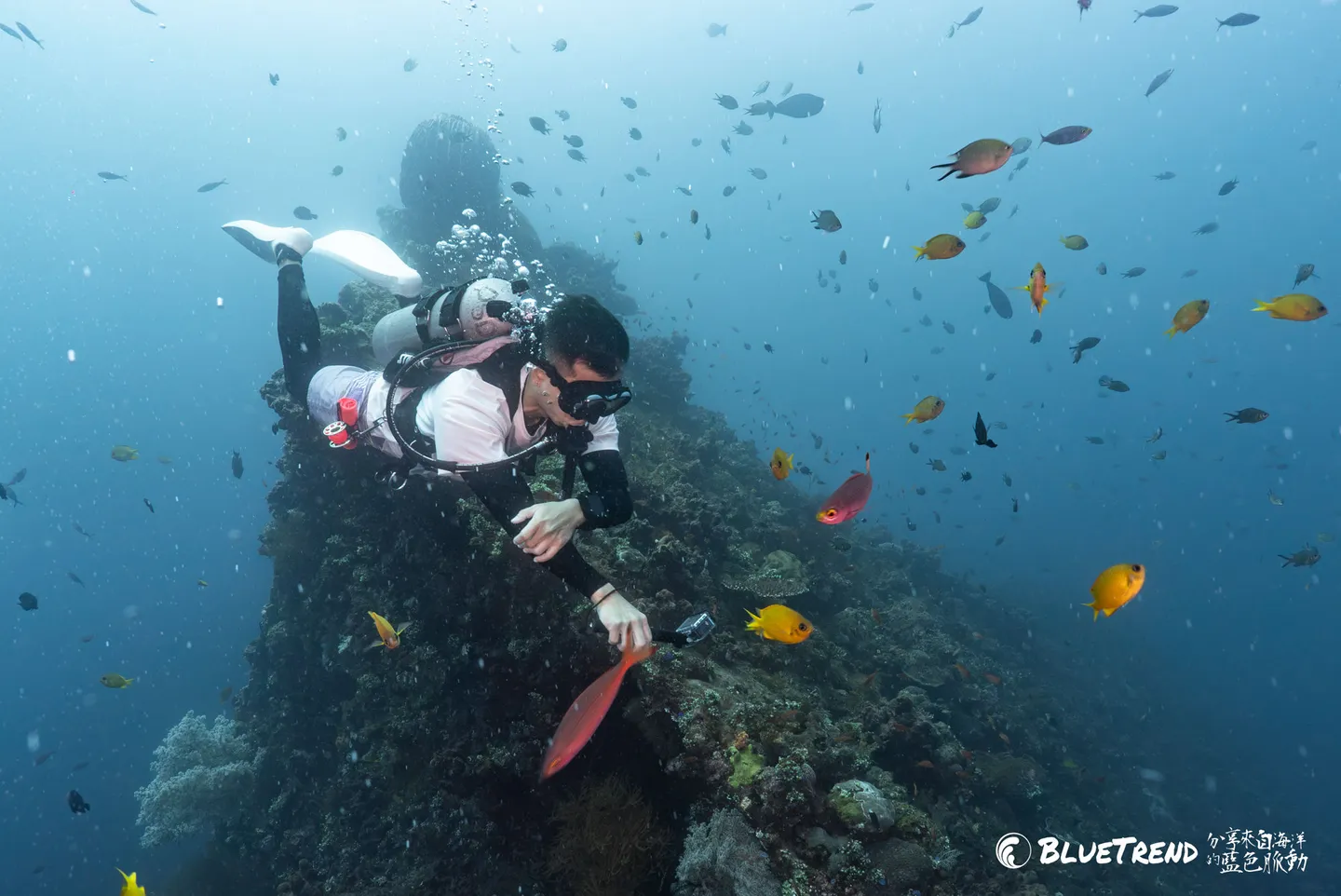
A 2021 study used the gold-standard method to measure the daily energy expenditure of 10 commercial divers in the North Sea. The result: an average of just over 3,000 kcal per day.
A 2024 review paper on dive nutrition also offered guidelines: anyone logging more than 3 hours in the water per day should consume 40 kcal per kilogram of body weight; if the underwater work is physically demanding, that rises to 50. For a 65 kg diver, that translates to 2,600–3,250 kcal per day.
The point of these numbers isn't "divers need to eat a lot." It's this: the energy demands of diving are real and significant. Don't go in on an empty stomach. Deliberately skipping breakfast to avoid seasickness or out of calorie-counting anxiety will more likely leave you low on energy underwater and losing body heat faster.
So... Why Do So Many Divers Still Have a Belly?
If diving burns this much energy, why do some divers still sport an impressive "tuna belly" — and why do some people actually gain weight from diving?
The problem isn't underwater. It's what happens after you surface.
1. Cold + Tired = An Appetite You Simply Cannot Fight
We said earlier that cold water makes your body burn more calories. That's true — but it's only half the story.
The complete version: cold water makes you burn more calories, and it also makes you eat more after you get out — usually more than you burned off. These two things aren't contradictory; they're the front and back end of the same physiological response.
One experiment had the same group of people do separate sessions in cold water and warm water, then let them eat freely afterward — as much as they wanted. The cold-water group ate 30% more.
The most fascinating detail: they didn't feel any hungrier. When researchers asked participants how hungry or full they felt, the answers were roughly the same between groups. But the actual amount eaten differed by 30%.
So that bowl of instant noodles after you surface might genuinely not be simple greed — your body is reclaiming what it spent, and you can't even feel it happening.
2. The "I Just Exercised" Mental Trap
The moment you peel off 30-odd kilograms of gear and collapse on the boat, a feeling washes over you: "I just torched 1,000 calories." And so:
- After dive one: a steaming bowl of cheesy instant noodles
- After dive two: seafood stir-fry, fried chicken, and beers — let's go
- After the night dive: come on, let's get a late-night snack
The math is brutal:
Burned 280 kcal through hard work underwater "Rewarded" yourself with 1,200 kcal of high-fat, high-sodium goodness back on land
Notice how wide that gap is. One tank's worth of effort is roughly equivalent to one bowl of instant noodles. This is exactly why "using diving to lose weight" is never a sound strategy — but "eating whatever you want after diving" is a very reliable way to gain it.

Final Thoughts
The next time someone takes a jab at you with "You're not even moving when you dive — how do you still have that belly?", respond with confidence:
"International exercise intensity standards put recreational scuba diving in the moderate-intensity category, right alongside brisk walking and doubles tennis. A single tank burns close to 300 kcal. My belly isn't a lack of exercise — it's the deepest expression of my respect for the ocean and its cuisine, shown after I get back on shore."
And, genuinely: before your next dive, swap that late-night snack for an earlier dinner. Your wallet and your waistband will both thank you.
References
- Herrmann SD, Willis EA, Ainsworth BE, et al. 2024 Adult Compendium of Physical Activities: A third update of the energy costs of human activities. Journal of Sport and Health Science. 2024;13(1):6–12. (Aquatic activity codes: 18202 scuba diving, light effort, 5.3 METs; 18204 scuba diving, moderate effort, 5.8 METs; 18190 skin diving, moderate, 11.8 METs; 18180 skin diving, fast, 15.8 METs)
- Ainsworth BE, Haskell WL, Herrmann SD, et al. 2011 Compendium of Physical Activities: A second update of codes and MET values. Medicine & Science in Sports & Exercise. 2011;43(8):1575–1581.
- Brenner RJ, Balan KA, Andersen MPL, et al. A review of nutritional recommendations for scuba divers. Journal of the International Society of Sports Nutrition. 2024;21(1):2402386. (Heat dissipation rate 20–27× faster than in air; energy intake recommendation 40–50 kcal/kg/day, original recommendation cited from Doubt et al., 1991)
- Deb SK, et al. The Assessment of Daily Energy Expenditure of Commercial Saturation Divers Using Doubly Labelled Water. Frontiers in Physiology. 2021;12:687605. (Daily energy expenditure of North Sea saturation divers: 3030.9 ± 513.0 kcal)
- Anthony G, Mitchell SJ. Respiratory physiology of rebreather diving. (Recommended upper limit for breathing gas density: 5.2 g/L; hard limit: 6.2 g/L; CO₂ retention risk)
- American College of Sports Medicine (ACSM) / Centers for Disease Control and Prevention (CDC) physical activity intensity classification: moderate intensity 3.0–5.9 METs; vigorous intensity ≥6.0 METs.
This article was compiled and written by the Editor. All data cited in the text includes source references; estimated values not supported by the cited literature have been noted as such. Dive safety always takes priority over any discussion of exercise benefits — plan your dives according to your training level and physical condition.

![[Diving Safety] Headache After Diving? Nosebleed After Diving? Ear Pain After Diving? 8 Physical Symptoms That May Occur During a Dive](/_astro/sea-79606_1920-2_1kBv47.webp)