Contents(8)
- The Whaling Boom of the Edo Period: From Industry to Cultural Symbol
- Traditional Food Culture and Local Identity: Why Cetaceans Are So Hard to Give Up
- Scientific Alarm Bells: Cetacean Population Collapse and Marine Ecological Crisis
- The Hidden Threat of Contamination: Heavy Metals, Mercury Levels, and Food Safety
- Magnifying Glass or Legitimate Criticism: The Limits of Cultural Relativism
- Difficult Choices and a Viable Future
- Closing Thoughts
- References
Taiji, Wakayama Prefecture — a small coastal town of barely 2,800 people — bears the weight and controversy of nearly four hundred years of Japanese whaling culture. From the industrial heyday of Edo-period "net-entrapment whaling" to the present day, when international conservation groups set up observation posts year after year to keep watch, the fate of this small town reflects the tension the whole of Japanese society feels between traditional values and modern ones. This article sets out to understand, from a historical and cultural perspective, why Taiji's fishermen cling to this way of life — and to examine, from a scientific standpoint, the cost behind that persistence: the actual changes in cetacean population numbers, the role these animals play in the marine ecosystem, and whether the heavy metal contamination accumulated in cetacean bodies truly makes them safe to eat.
Is the outside world's criticism of Taiji merely putting a magnifying glass to someone else's table culture — or has this four-hundred-year industry genuinely reached a moment when it must change? This article will not offer a simple yes-or-no answer, but it will try to lay out the historical context, the scientific data, and the Editor's own position in full daylight, so that readers can judge for themselves.
The Whaling Boom of the Edo Period: From Industry to Cultural Symbol
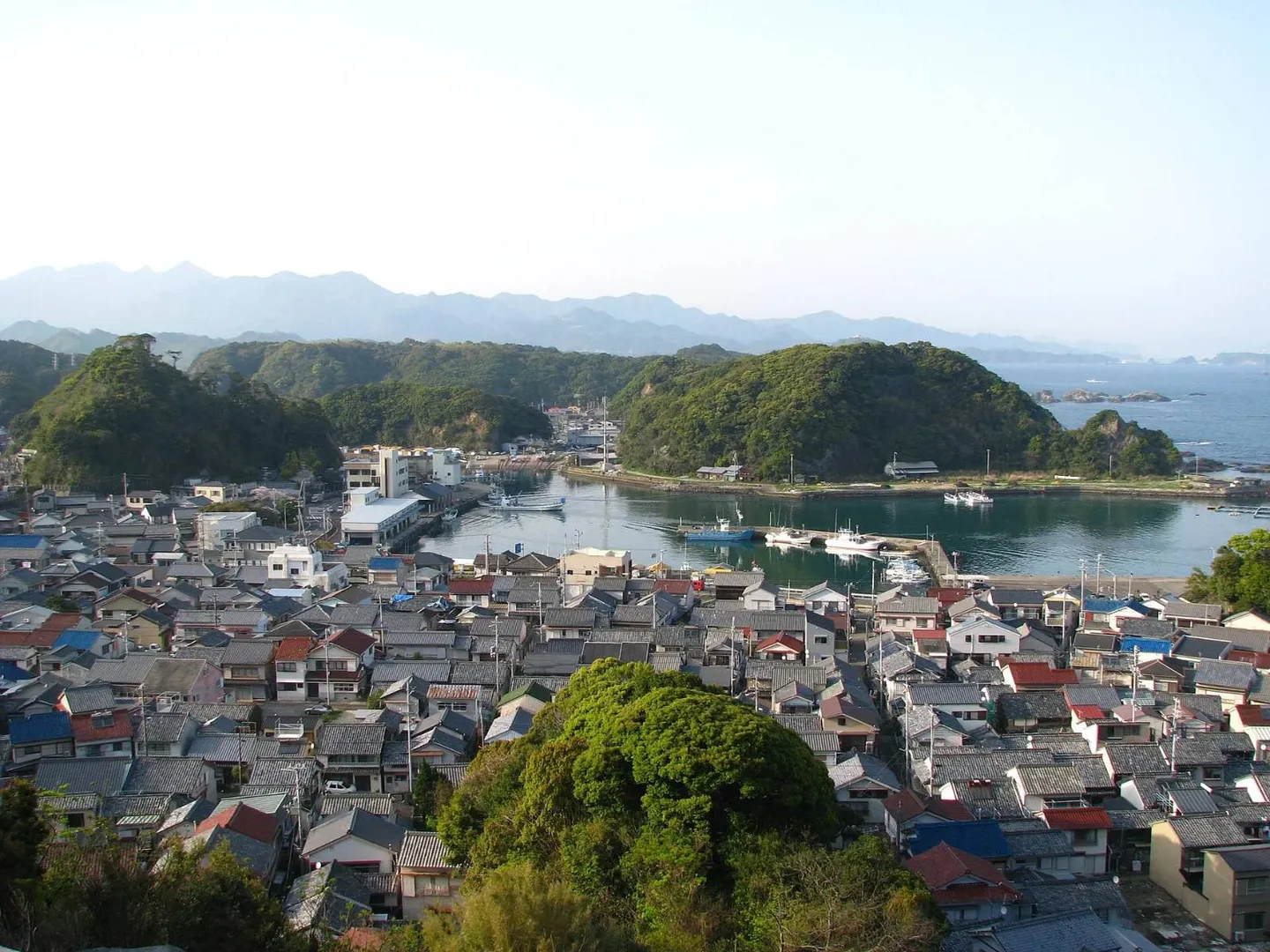
Taiji is a small coastal town nestled between mountains and sea, its harbour dotted with fishing boats and ringed by verdant isles and distant peaks. Once prosperous from whaling, it now stands at a crossroads of industrial transformation. Image credit: BD Padgett, CC BY-SA 3.0, Wikimedia Commons.
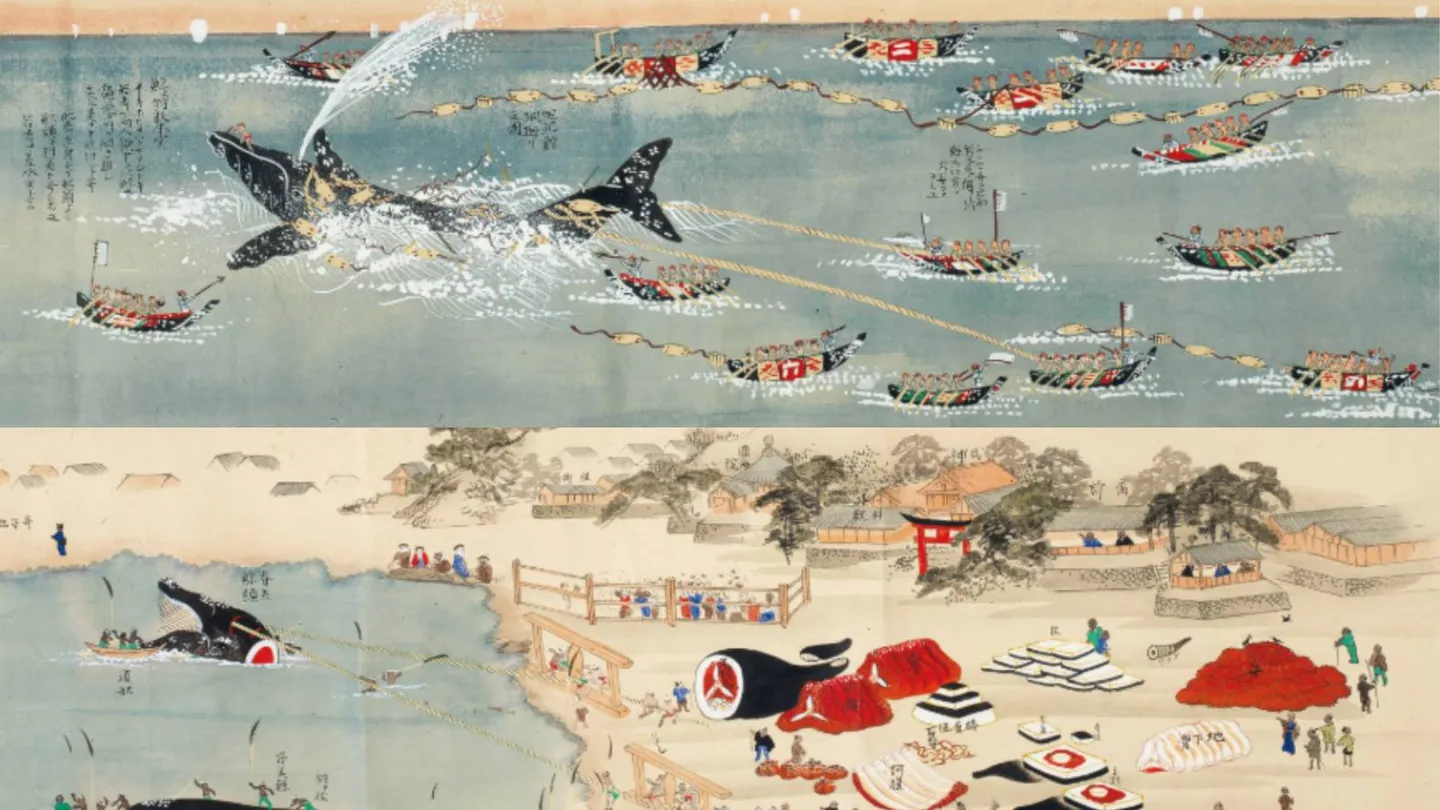
Japan's relationship with cetaceans can be traced back to the prehistoric Jōmon period, but organised commercial whaling took shape during the Edo period in and around Taiji, Wakayama Prefecture. Located on the eastern coast of the Kii Peninsula, Taiji became the representative town of Japanese whaling culture thanks to its long history of the practice. The "net-entrapment whaling" carried out there required hundreds of people working in coordinated roles: lookouts called yamami on the hilltops would spot a whale; a fleet of boats would surround and drive it back to shore; and workers on land would butcher the carcass and render it for oil. It was a complete industrial chain.
The economic importance of whaling to the local community was self-evident. A single whale's yield was enough to sustain the livelihoods of surrounding villages, allowing Taiji — with its sparse farmland — to maintain its economy for centuries on the strength of coastal cetaceans.
This history also left a rich visual record. Edo-period artist Katsushika Hokusai (known for The Great Wave off Kanagawa) created a series of woodblock prints on marine and fishing themes, A Thousand Pictures of the Ocean, which includes Whaling off the Gotō Islands — a depiction of whaling in the seas off the Gotō archipelago (in present-day Nagasaki Prefecture). Several small boats surround a massive whale while fishermen, harpoons raised, prepare to strike amid the waves, faithfully rendering the typical "harpooning" method of the Edo period. Such ukiyo-e prints and whaling picture scrolls recorded in detail the scenes of fishermen surrounding and killing whales, the division of labour from sighting to capture to butchering, and they reflect the complex emotions of a society that both depended on and held the whale in awe.
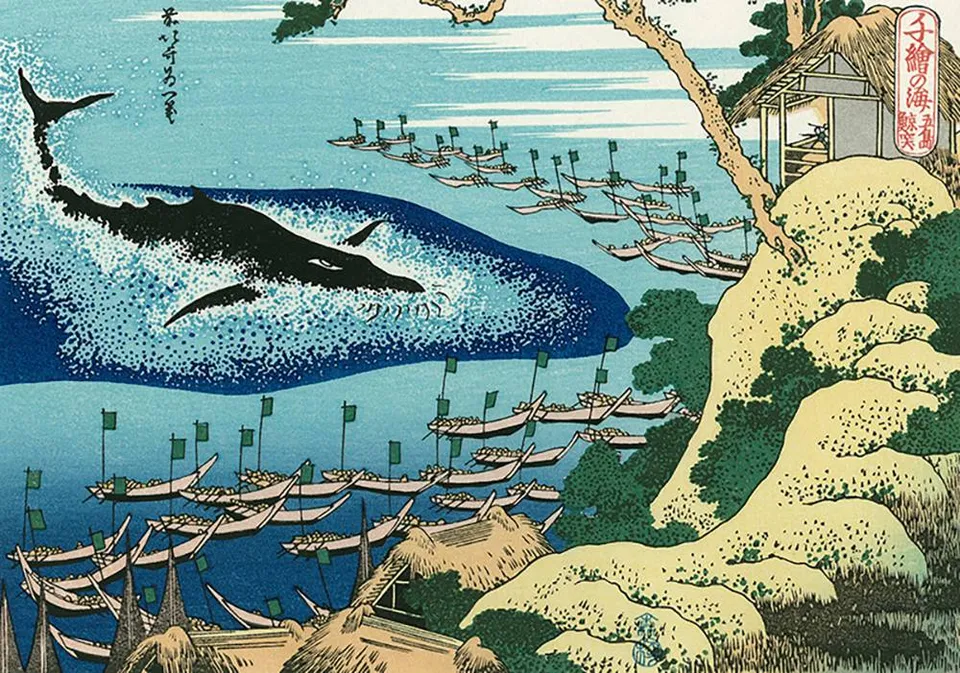
In this Edo-period ukiyo-e, a massive whale appears near the shore as dozens of whaling boats converge and stand ready. Whaling was once the most vital economic lifeline for coastal villages. Whaling off the Gotō Islands (千絵の海 五島鯨突) is a celebrated masterpiece created by ukiyo-e master Katsushika Hokusai around 1830.
Towards the end of the Edo period, the migration of large whale species through the Kumano Sea diminished, and a maritime disaster causing heavy casualties dealt a severe blow to large-scale whaling. Taiji's fishing industry then shifted towards hunting smaller cetaceans — sowing the seeds for the dolphin and whale hunting that continues to this day.


Traditional Food Culture and Local Identity: Why Cetaceans Are So Hard to Give Up
The history of coastal whaling in Japan is widely attributed to the country's terrain — mountainous, with little farmland — which led certain coastal communities to regard cetaceans as an important source of protein from ancient times. Taiji developed organised traditional whaling as far back as 1606 (the early Edo period), and the town's whaling tradition has continued unbroken for four hundred years. Every part of the whale — from skin and flesh to offal — gave rise to its own culinary preparations. During the Edo period, a dedicated cookbook, Methods of Cooking Whale Meat, was even published, recording in detail how to prepare each part of the whale from blubber and meat to internal organs. Historical sources document some seventy different preparation methods, attesting to how thoroughly whale meat had worked its way onto the everyday tables of certain communities.
This culture also encompassed a reverence for life. Many whaling villages built kujira-zuka (whale memorials). For example, Toshida Shrine in Shinagawa, Tokyo, preserves a memorial tablet erected in 1798 to mourn a whale — the only surviving kujira-zuka in Tokyo — and some local shrines retain ritual traditions connected to the whale, holding memorial services for the cetaceans killed. This coexistence of killing and mourning is key to understanding why Japanese whale culture cannot be simplified as either "cruel" or "justified."
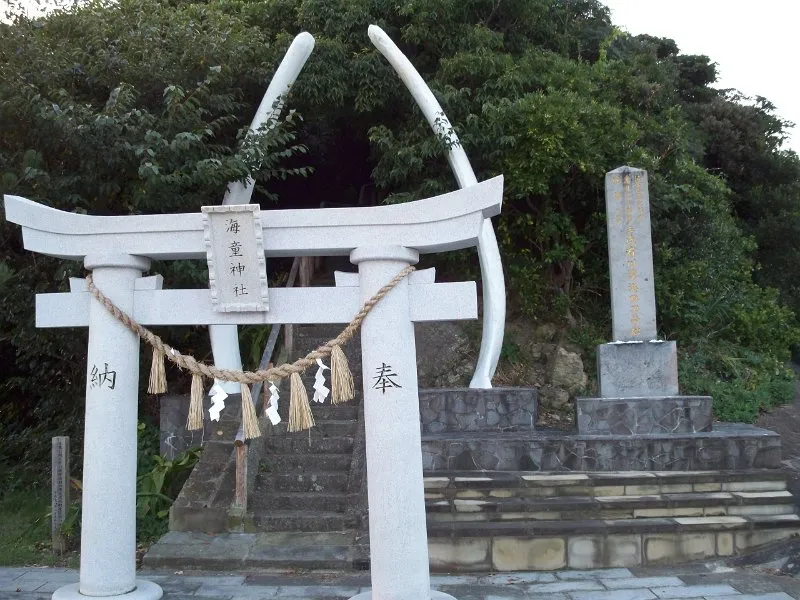
At Kaido Shrine in Shinkamigoto Town, Nagasaki Prefecture, Japan, a pair of enormous white gates made from whale jawbones stands behind the torii. Attribution: Nejuf at English Wikipedia
To this day, cetacean meat remains part of the traditional food culture for some residents of remote islands, peninsulas, and mountain villages; for the generations who grew up with it, it carries a certain nostalgic significance. Taiji has sustained itself through whaling for four hundred years, and whale and dolphin are an inseparable part of local food culture — this fishery is closely bound up with local livelihoods and the very continuity of the community.
It is in this light that one should understand why the Japanese government defends Taiji: the argument is not about whether whaling is right or wrong, but about whose way of life this is. With local economy, regional identity, and food culture all intertwined, criticism raised on animal welfare grounds from outside has found it difficult to resonate within the local community — and that is the deep-rooted reason why the conservation dispute has remained unresolved for so long.
Scientific Alarm Bells: Cetacean Population Collapse and Marine Ecological Crisis
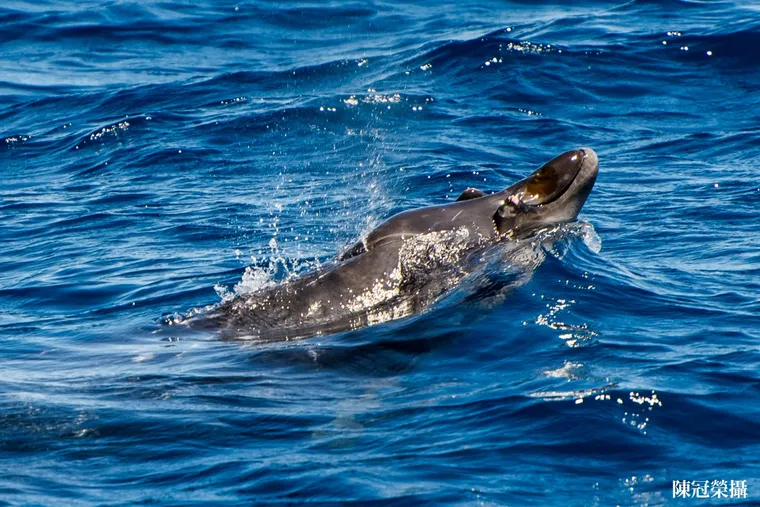
According to official data from Wakayama Prefecture, in 2021 Japan captured a total of 1,172 small cetaceans nationwide, of which 622 were taken in Wakayama Prefecture — more than half the national total. The independent monitoring group Dolphin Project recorded that during the 2025–2026 dolphin hunting season, 84 dolphins were taken alive for the captive entertainment industry and 416 were slaughtered for food, reflecting the sustained fishing pressure that cetacean populations have endured year after year.
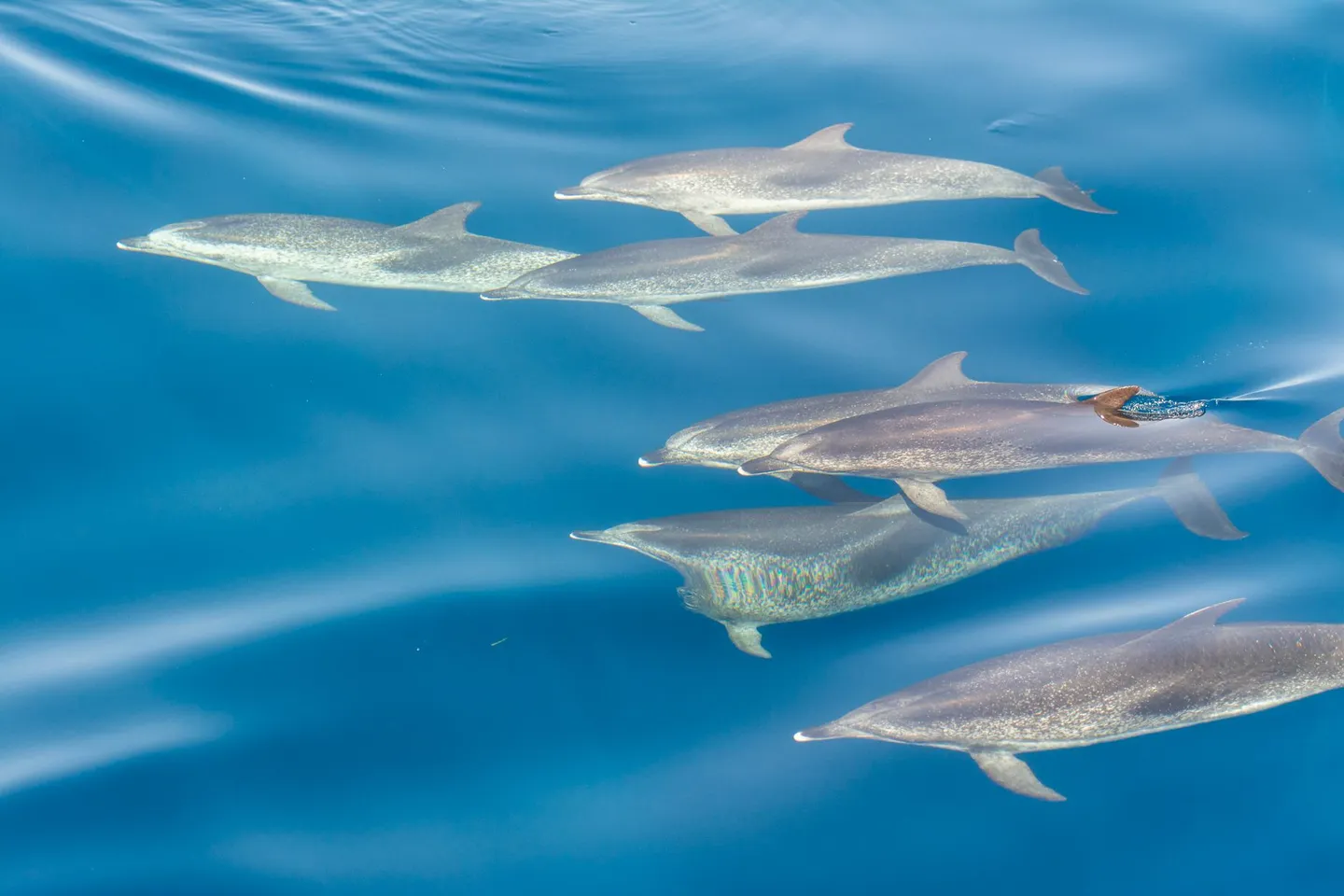
A pod of dolphins swimming together through clear water — these tightly bonded social groups are among the first to bear the brunt of fishing pressure. (Photo: Jan van der Wolf / Pexels)
Cetaceans occupy the top of the food chain, preying on squid and fish schools to maintain the balance of species below them. Their excrement is rich in nutrients such as iron and nitrogen, supporting the growth of phytoplankton — the very foundation of carbon sequestration and oxygen production in the ocean. A collapse in cetacean populations would sever this nutrient cycle and send ripple effects throughout the entire marine ecosystem.
Conservation organisations including Dolphin Project and the International Marine Mammal Project have maintained long-term observation posts in Taiji, documenting and publicly releasing data on each year's drive hunts and the species captured, and tracking population trends for target species such as the bottlenose dolphin. When a species faces the dual pressure of live capture and slaughter for food simultaneously, the risk of extinction is greatly amplified — and this is the core reason why the scientific community continues to express concern about Taiji's fishery.
The Hidden Threat of Contamination: Heavy Metals, Mercury Levels, and Food Safety
Mercury is a heavy metal that occurs widely in nature. Mercury in seawater is first absorbed by microorganisms and then passed up the food chain through small fish to large fish — a process known as bioaccumulation. Because cetaceans sit at the top of the food chain, the mercury concentrations that accumulate in their bodies are considerably higher than those found in ordinary fish and shellfish. Even the official documents of Wakayama Prefecture do not deny this, explicitly stating that methylmercury concentrations in certain large predatory fish and marine mammals are elevated as a result of food-chain concentration.
In response to this fact, the official position of Wakayama Prefecture and Taiji is that although high concentrations of mercury do accumulate in whale bodies, the majority of it exists in the form of "mercury selenide" — bound to selenium and therefore less toxic — which is not equivalent to methylmercury toxicity as commonly understood. Officials also cite a hair mercury concentration survey of Taiji residents conducted by the National Institute for Minamata Disease, which found that hair mercury concentrations among Taiji residents were approximately 4 to 4.5 times higher than the average across 14 other regions nationwide — but that no cases suggestive of methylmercury poisoning were detected.
However, the same survey also noted that because some residents were found to have abnormally high hair mercury concentrations, continued follow-up research remained necessary — particularly regarding the potential long-term low-dose effects of mercury on children's development and the circulatory system, which have not yet been conclusively established. This is precisely the grey area most easily overlooked in related discussions, yet most in need of serious attention.
Magnifying Glass or Legitimate Criticism: The Limits of Cultural Relativism
Taiji became an international focal point largely because of the 2009 documentary The Cove, directed by Louie Psihoyos. The film documented the dolphin drive hunt, with Richard O'Barry — the dolphin trainer from the 1960s television series Flipper — as its central figure. After the dolphin he had trained died, O'Barry turned against captivity and hunting. The film won the Academy Award for Best Documentary Feature in 2010 and thrust Taiji into the centre of global public opinion.
The controversy, too, began with this film. Within Japan, critics argued that it used covert filming techniques and reduced an entire town to a single image; when it was released in Japan in 2010, some cinemas cancelled screenings due to protests and threats. The Editor believes the film's value and its limitations should be considered together: it showed the world a scene that had previously been hidden, but it also made Taiji's residents feel they were being put on trial, which only deepened their defensiveness towards the outside world. Understanding this background is essential to grasping why dialogue between the two sides has been so difficult today.

Anti-dolphin-hunting activist Richard O'Barry stands beside the cove in Taiji. The documentary The Cove turned this small town into a global flashpoint. Image credit: Donald knapps, CC BY-SA 4.0, Wikimedia Commons.
The official Wakayama Prefecture position is that each nation's food culture is shaped by its climate, geography, and history, and that no single set of values should be used to judge another people's table. Officials also point out that Alaska Native peoples in the United States hunt bowhead whales and other large cetacean species under the "Aboriginal Subsistence Whaling" system, with quotas allocated through the Alaska Eskimo Whaling Commission (AEWC) — yet only Taiji's fishermen face sustained condemnation, a double standard that they argue warrants serious reflection. The regulatory framework of the International Whaling Commission (IWC) operates on a two-track basis: large whale species fall under its jurisdiction, while Japan — having withdrawn from the IWC in 2019 — has resumed commercial whaling in its own waters; Norway excludes the moratorium through a formal objection, and Iceland through a reservation, and both countries continue commercial whaling. Small cetaceans are not covered by IWC regulations and are managed by individual countries; Japan carries out related fishing activities each year, including in Taiji, Wakayama Prefecture.
One fact that is often overlooked deserves to be added here: Taiji does not conduct hunts throughout the entire year, and different species may only be hunted during specific months. The local drive-net fishery opens each year on 1 September. Smaller dolphin species such as the bottlenose dolphin and striped dolphin may be hunted until the end of February the following year. Pilot whale species collectively referred to in Japanese as gondō — including the short-finned pilot whale and Risso's dolphin — may be hunted through to the end of April. Therefore, only pilot whale species remain in season during March and April; operations cease in the remaining months. Independent monitoring groups recorded that the dolphin portion of the 2025–2026 hunting season ended on 28 February, with pilot whales potentially continuing until the end of April — consistent with this seasonal framework.
There are also limits on how many animals may be taken. The Fisheries Agency of Japan publishes annual species-by-species catch quotas. For Reiwa 8 (2026), the drive-net (追込網) fishery for small cetaceans in Wakayama Prefecture was allocated a combined quota of 1,814 animals across 9 species, with a further 354 animals under the harpoon (突棒) dolphin fishery in the same prefecture, and a nationwide total across all prefectures of 10,946 animals. It should be noted that the "fishing season" listed in the quota table runs from September through to August of the following year — that is the quota accounting year, and does not mean hunting is permitted at sea throughout the entire period.
In other words, this is a fishery that has a competent authority, quotas, and seasonal restrictions; the dispute does not lie in whether it is ungoverned. The real questions that need asking are: how these quotas are set, on the basis of which population surveys, who verifies those figures, and whether the current catch limits — in the face of gaps in population data — are sufficient to sustain the species over the long term.
Nevertheless, the tension between the right to cultural self-determination and animal welfare has not disappeared. Multiple conservation organisations argue that cetaceans possess a high degree of social complexity and cognitive capacity, and that drive hunts that break up family groups and capture animals alive for the entertainment industry violate ethical standards towards animals that transcend national borders. Some animal welfare groups also point out that so long as demand from the captive entertainment market remains undiminished, the incentive to hunt will not disappear either — extending the issue into a shared question about global consumer behaviour.
Which side has the stronger argument depends on one's perspective. Whether populations are stable or not is a conservation question that can be examined with scientific data. Whether it is appropriate to eat cetacean meat or keep them in captivity for performance is a matter of values. The fact that international regulations apply different management frameworks to large whales and small cetaceans is precisely how this complexity manifests at the institutional level.
Difficult Choices and a Viable Future
Taiji's organised whaling dates to 1606. Four hundred years of industrial history and local food memory are not things that can be dismissed with a single sentence. The circumstances of Taiji's fishermen have their own context, and official emphasis on cultural and livelihood rights is not mere rhetoric — but that understanding does not mean the status quo should continue unchanged. Obtaining protein in the modern world no longer requires hunting wild cetaceans, and both population pressure and the risk of heavy metal contamination in their bodies are scientific facts laid plainly on the table. At a time when sustainable development has become a cornerstone of global ocean governance, continuing to maintain large-scale hunting under the banner of tradition is not a responsible choice.
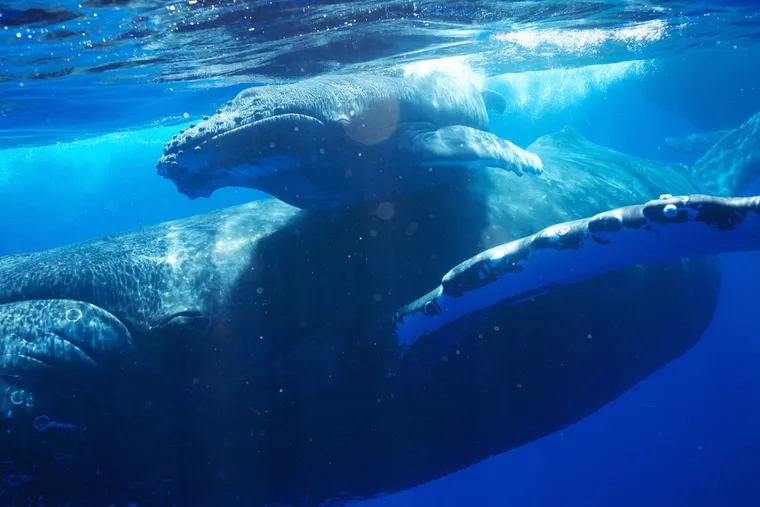
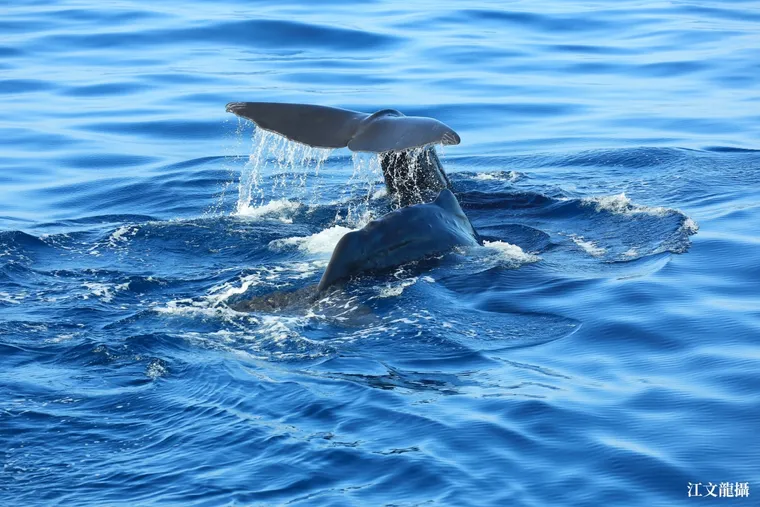
Rather than debating who should be blamed, what is more worth discussing is a pathway for transition. Taiji possesses a wealth of cetacean knowledge and years of accumulated observation experience — exactly the foundation that ecotourism needs. Other parts of Japan have already forged this path. The Ogasawara Islands were a popular hunting ground for Euro-American whaling fleets during the nineteenth-century peak of commercial whaling; Chichi-jima even served as a supply port for whaling vessels and was once known to foreign sailors as "Japan Ground." Today the islands are renowned for whale-watching and dolphin-watching tours: sperm whales are resident year-round, and humpback whales migrate through between December and May each year, drawing visitors out to sea to observe them.
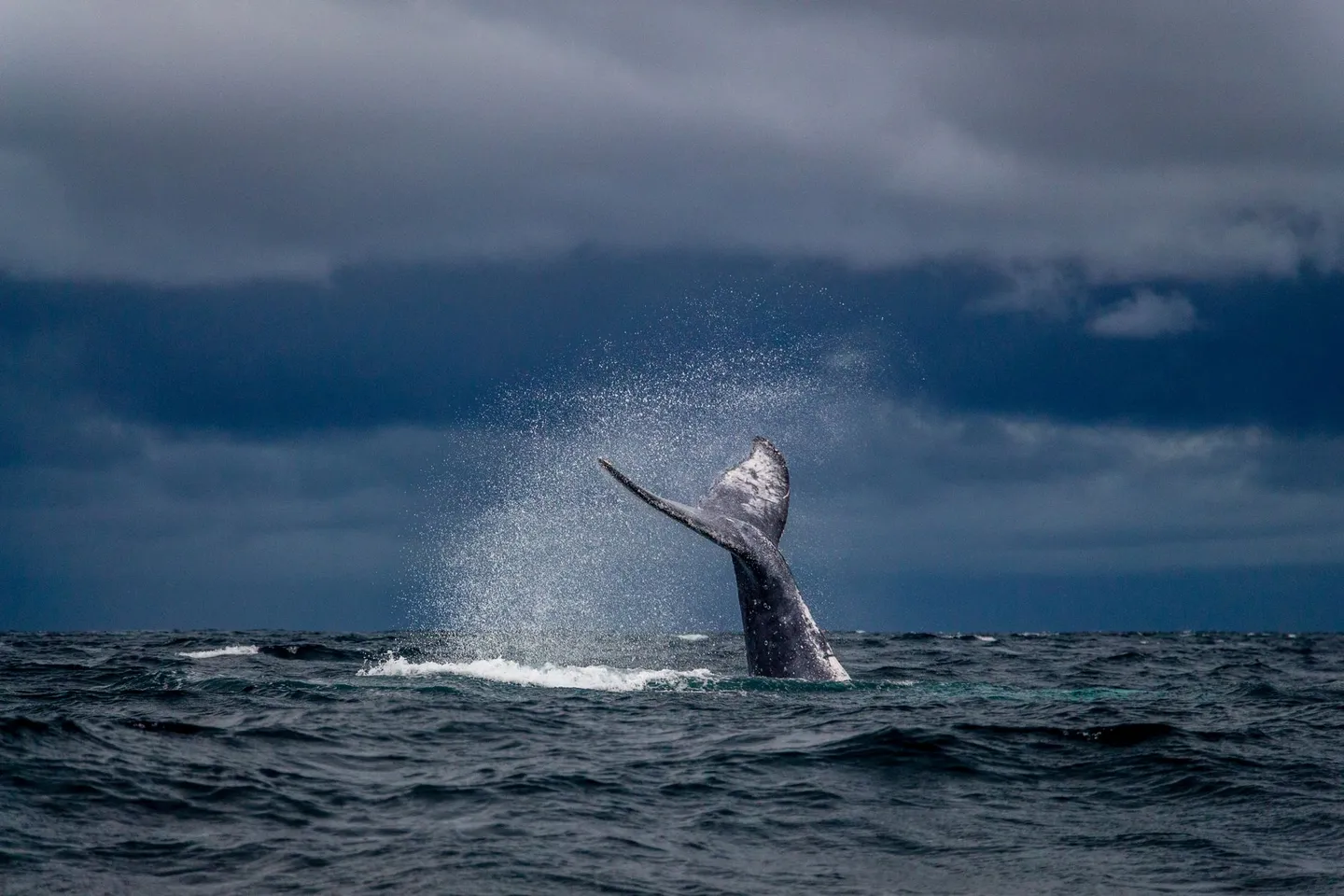
A whale breaches the surface in a spectacular display of power — a sight that lies at the very heart of whale-watching tourism's appeal and at the heart of Taiji's potential for transformation. (Photo: Silvana Palacios / Pexels)
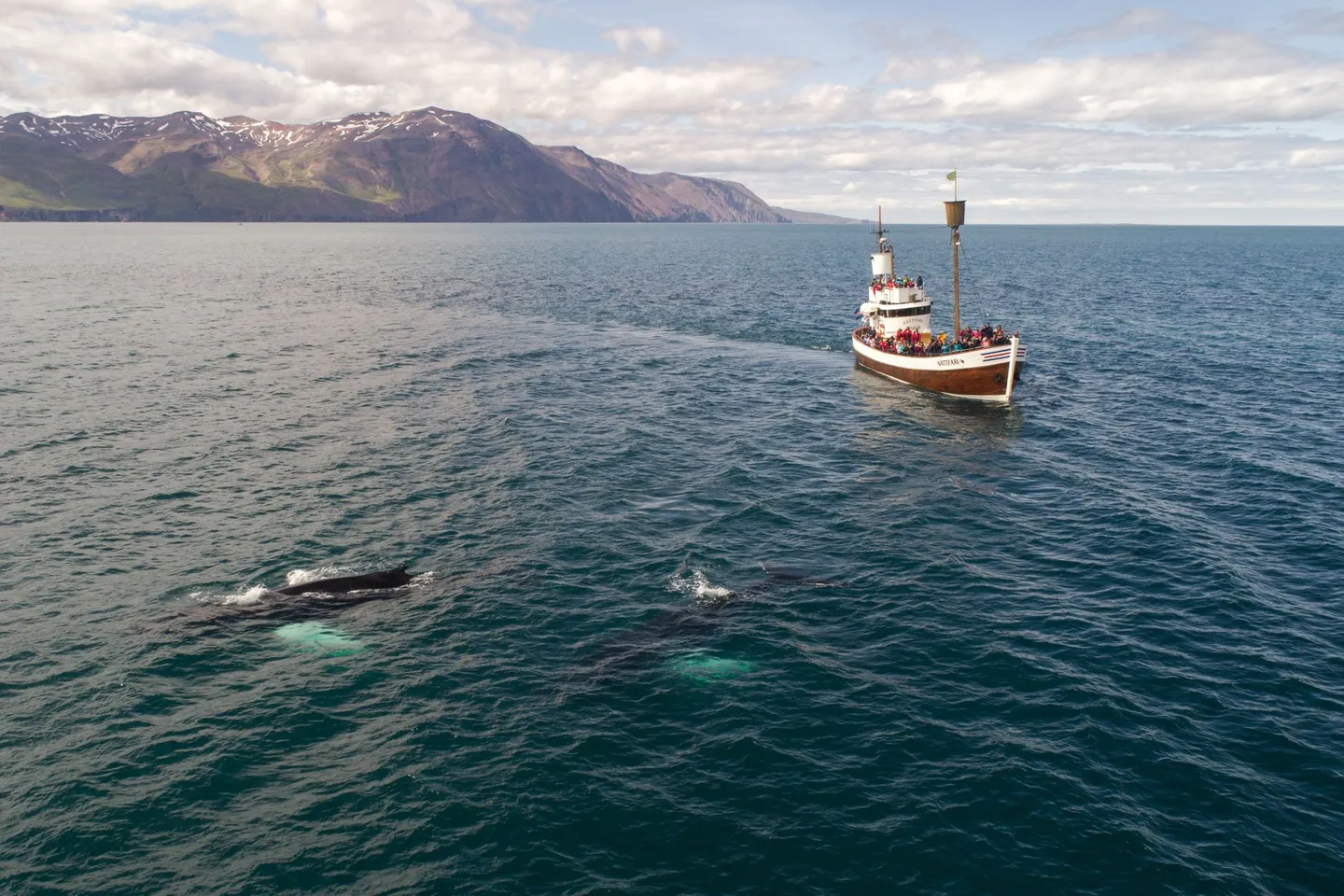
Visitors aboard a small boat observe whales up close among coastal mountain scenery — a concrete vision of what a living-whale economy replacing hunting might look like. (Photo: ArtHouse Studio / Pexels)
Cases like this demonstrate that living cetaceans can generate income too — income that is not subject to catch quotas or the pressure of international opinion, and that actually grows more sustainable as the marine ecosystem becomes healthier.
Based on verifiable population data and the documented risks of contamination, the whaling and dolphin hunting industries should be progressively reduced and ultimately ended, rather than prolonged indefinitely under the guise of cultural tradition. This is not a denial that the way of life of Taiji's fishermen was once entirely reasonable — it is an argument that scientific decision-making should replace the continuation of practices by force of habit.
The ocean's future will not be decided by a single fishing town alone, but every fishing town's choices will shape what that future looks like.
Closing Thoughts
Taiji's four-hundred-year history will not be rewritten by a single article, but the state of the ocean continues to change with every generation's choices. The Editor believes that understanding the origins of a tradition and deciding whether that tradition should be allowed to continue are, by nature, two separate questions. Modern society no longer needs to rely on wild cetaceans for protein, and the realities of population pressure and contamination risk are facts already in plain sight. The whaling and dolphin hunting industries should be gradually reduced, with a shift towards more sustainable paths such as ecotourism. This is not a value system imposed from outside — it is a choice to give the ocean a chance to breathe.
References
- Kyodo News, イルカ追い込み漁解禁 和歌山県太地町
- Fisheries Agency of Japan, 令和8(2026)年漁期のイルカ漁鯨種別捕獲枠
- Wikipedia, 血色海灣
- 25 Dolphins Taken Captive as Taiji Hunts Begin | Dolphin Project
- Beyond the Cove: How Captivity Sustains the Hunts | Dolphin Project
- Let them swim wild and free | Daily Tribune
- Petition: End Dolphin Hunting in Taiji | Dolphin Project
- 太地町でのイルカ漁業に対する和歌山県の公式見解 | 和歌山県
- Dolphin Project, Statistical Data
- Dolphin Project, Taiji's Drive Hunt Season Has Ended
- Agency for Cultural Affairs, 日本遺産 太地町関連ページ
- Tokyo Metropolitan Government Bureau of Environment, 小笠原諸島 父島の歴史
- VELTRA, 伊豆諸島・小笠原諸島 ホエールウォッチング
- Wakayama Prefecture, イルカ漁業に関する資料
- Ministry of Health, Labour and Welfare / National Institute for Minamata Disease, 太地町における毛髪水銀濃度調査報告
- Taiji Town, くじらの水銀について
- NOAA Fisheries, Bowhead Whale Conservation and Management
- Al Jazeera, Japan announces IWC withdrawal to resume whaling
- Greenpeace, International Whaling Commission
- IWC, Commercial Whaling
- IWC, Small Cetaceans
- Taiji Town official document, くじらの町「太地町」を もっと知ろう
- Shinagawa Tourism Association, 利田神社(鯨塚)
- National Diet Library, 鯨肉調味方
Cover image: Picture of Whaling at Kishū Taiji. Collection of the Taiji Town Whale Museum.