Contents(7)
- Panama Deployed 7 Underwater Microphones — and Recorded Whale Silence
- The Noisiest Places Are Exactly Where the Most Tourists Go
- The Other Half of the Problem: Only 380 North Atlantic Right Whales Remain
- The 10-Knot Rule: Why It Works but Never Stops Being Debated
- The Editor's Observation: Slowing Down Delivers Two Benefits from One Answer
- Bringing It Home to Taiwan: Our Whale-Watching Boats and Shipping Lanes
- Closing Thoughts
In the same week, one whale-related dataset emerged from the Pacific and another from the Atlantic. Panama's Ministry of Environment released the results of a year-long underwater recording project, finding that vessel noise reduces the probability of detecting whale song by 40 to 45%. On the other side of the Atlantic, the North Atlantic right whale population has fallen to approximately 380 individuals, while roughly 20,000 whales die from ship strikes worldwide every year.
The two stories appear unrelated, but they are two halves of the same problem. Ships harm cetaceans in two distinct ways: one prevents them from hearing, the other prevents them from getting out of the way.
And the prescription that both datasets ultimately offer is identical: slow the ships down. This article brings together the numbers and debates from both sides, then brings the question home to Taiwan — examining what our whale-watching boats and shipping lanes already do, and what is still missing.
Panama Deployed 7 Underwater Microphones — and Recorded Whale Silence
The research was coordinated by the MarViva Foundation, with technical implementation by Panacetacea Panama, and was incorporated into the programme framework of WWF Central America, the United Nations Development Programme (UNDP), and the Global Environment Facility (GEF). Results were released publicly by Panama's Ministry of Environment in August 2026.
The scale was substantial. The research team deployed hydrophones at 7 locations along the Pacific coast, covering Contreras, Ladrones, and Paridas in Chiriquí Province; Cébaco in Veraguas Province; Iguana in Los Santos Province; and Boná and Contadora in Panama Province. Equipment was deployed between May and June 2025, accumulating more than 56,000 audio files over the year, of which more than 9,000 have been analysed to date.
The single most critical finding: when vessel noise was present, the probability of detecting whale song dropped by 40 to 45%.
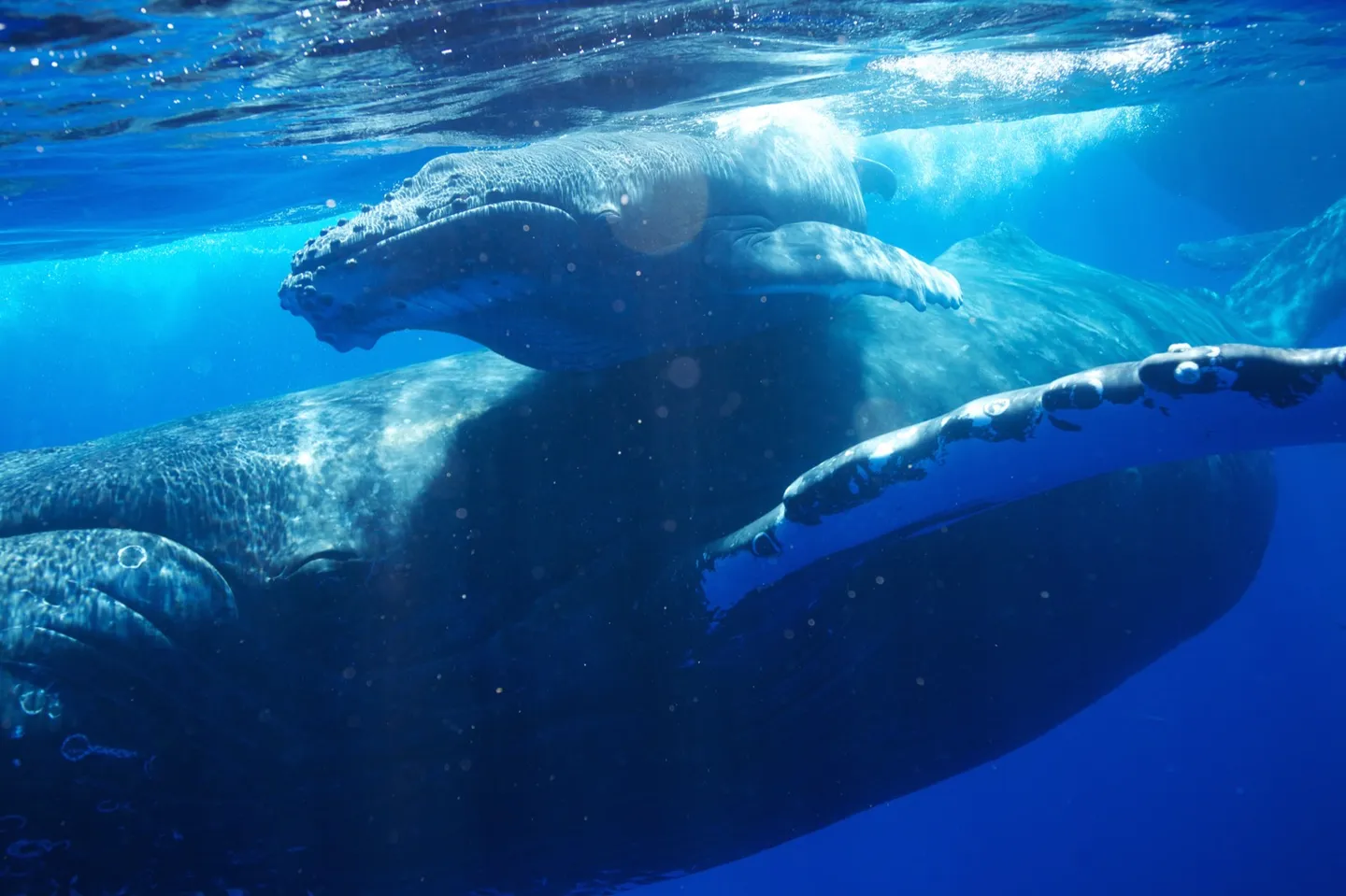
This number requires careful interpretation. It does not mean that 40% fewer whales were present — it means that during periods when vessels passed through, the hydrophones were unable to distinguish whale song from the surrounding noise. The reason is that engine noise and humpback whale song occupy similar low-frequency bands, and the song is masked by the noise — a phenomenon known acoustically as masking. Crucially, a hydrophone can be thought of as another whale's ear: sounds that instruments cannot distinguish are equally indistinguishable to whales sharing the same water.
Seasonal differences were equally striking. Whale song was detectable in 32.7% of recordings during the wet season, compared with just 0.5% during the dry season — consistent with humpback whale migration patterns. Overall acoustic activity was 59.2% in the wet season and 28.1% in the dry season.
Panama's Director of Coastal and Marine Affairs, Digna Barsallo, made a point that is fundamental yet often overlooked: whales and dolphins rely on sound to communicate and navigate, anthropogenic noise affects their behaviour, health, and survival, and measuring the impact is the first step toward protecting them with evidence. In other words, sound is not entertainment for these animals — it is the tool they use for navigation, foraging, and raising their young.


The Noisiest Places Are Exactly Where the Most Tourists Go
The figure that made the Editor sit up straight was from Contadora Island: 42.6% of monitored hours recorded engine noise there, and when looking at daytime hours alone, that figure rose to 74.5%.
Contadora is the tourism hub of Panama's Pearl Islands. In other words, the noisiest periods and locations overlap precisely with the periods and locations of highest human activity.
The research team also cited a 2021 study conducted in the Gulf of Tribugá, Colombia: a single whale-watching vessel was sufficient to reduce whales' communication space by 63%. Using a sound propagation model, the study estimated that without any vessels, humpback whale song was clearly audible across 2,306 square kilometres; with one vessel passing through, that range shrank to 859 square kilometres.
That figure is worth keeping in mind for everyone involved in marine tourism — ourselves included. Whale watching is not inherently harmful; it is an important gateway that brings people to the sea and motivates them to care about the ocean. But what this research is saying is something else: the number of vessels, the distances kept, and vessel behaviour all require regulation — otherwise the very animals we bring people out to see will find it harder to survive because of those visits.
The recommendations the Panama team put forward are not prohibitions but management measures: vessel traffic management during sensitive seasons, establishment of real-time acoustic monitoring, speed limits in sensitive marine areas, use of AI to help process the enormous volume of audio files, and the development of regional responsible whale-watching guidelines.
The Other Half of the Problem: Only 380 North Atlantic Right Whales Remain
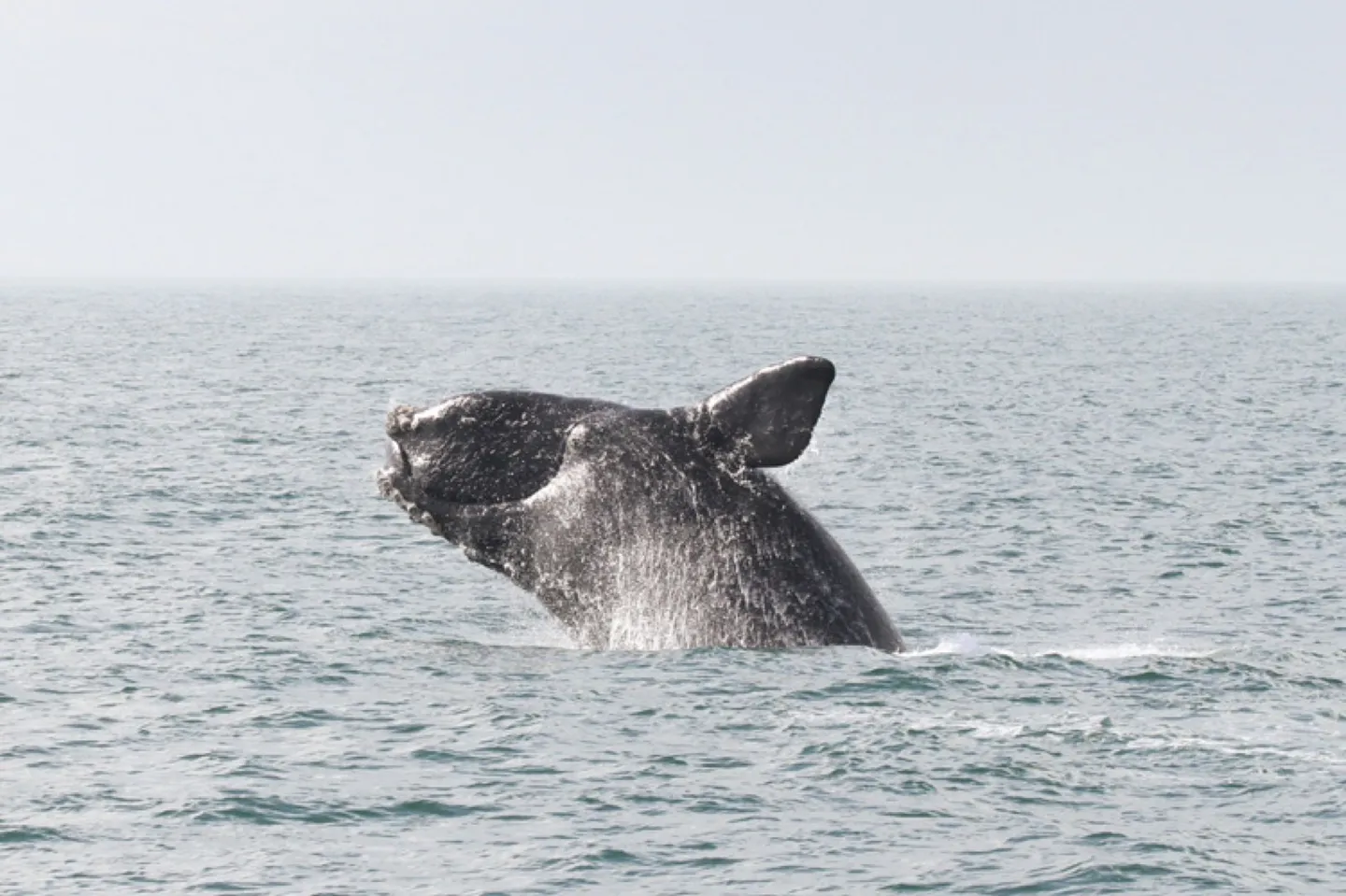
Shifting the lens to the Atlantic. The situation for the North Atlantic right whale is far more urgent — the entire population numbers only approximately 380 individuals.
Ship strikes are one of the leading causes of death. Between 2017 and 2026, at least 15 right whales died from vessel strikes, 3 were seriously injured, and 9 were injured or showed compromised health. Scaled up to a global level, approximately 20,000 whales die from ship strikes every year.
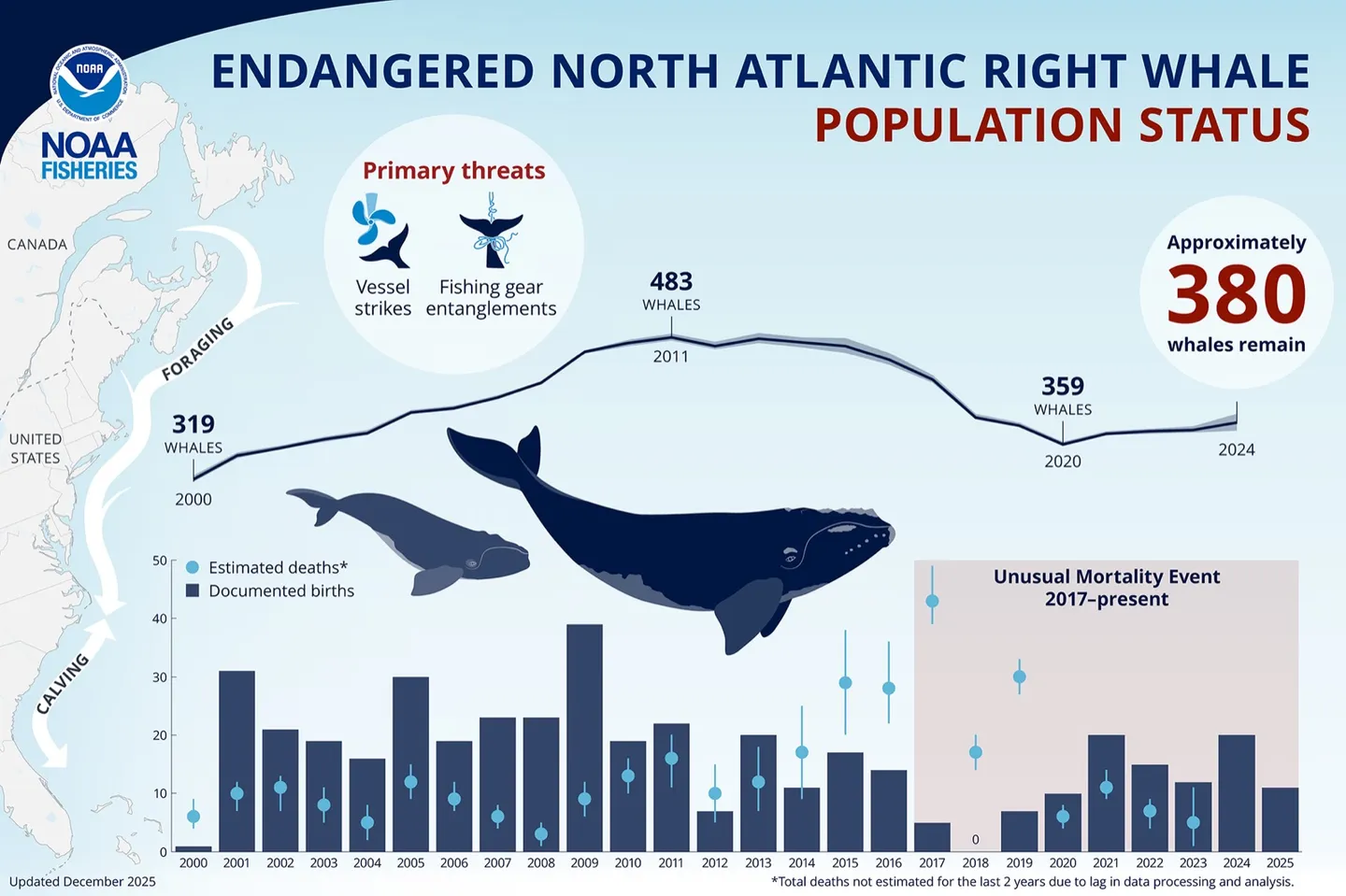
The reproductive numbers are equally alarming. During the 2023–2024 calving season, 20 newborn calves were recorded — and a quarter of them did not survive. For a population of only 380 individuals, every single calf is critical to whether the species can continue.
NOAA's population data, updated to December 2025, traces a clear downward trajectory: approximately 319 individuals in 2000, a brief recovery to 483 in 2011, a drop to 359 in 2020, and the most recent estimate of approximately 380. The starkest data point in the middle: in 2018, not a single newborn calf was recorded for the entire year. NOAA has also maintained an Unusual Mortality Event designation for this population since 2017 — a designation that remains in effect today.
Jessica Redfern of the New England Aquarium put the situation plainly: current mortality rates place this species at risk of extinction.
The 10-Knot Rule: Why It Works but Never Stops Being Debated
The US National Oceanic and Atmospheric Administration (NOAA) established seasonal management areas along the East Coast beginning in 2008, requiring vessels 65 feet (approximately 20 metres) and longer to observe a 10-knot speed limit within those zones — roughly 18.5 kilometres per hour. Penalties for violations range from US$11,000 to US$100,000; according to NOAA data, most vessels comply.
The rule's effectiveness is supported by research. A 2013 study found that speed reductions could reduce whale deaths by up to 90%. The reasoning is straightforward: lower vessel speeds simultaneously reduce both the probability of a strike and its lethality, and slower vessels also produce less noise.
| Item | Details |
|---|---|
| Effective date | 2008 |
| Applicable vessels | Vessels 65 ft (approx. 20 m) and over within seasonal management areas |
| Speed limit | 10 knots (approx. 18.5 km/h) |
| Penalties | US$11,000 to US$100,000 |
| Regulatory authority | US National Oceanic and Atmospheric Administration (NOAA) |
| 2022 proposal | Lower threshold to 35 ft (approx. 10.7 m) |
| 2025 | Proposal withdrawn |
| March 2026 | NOAA reopened public comment on revised rule; comment period closed 2 June |
The controversy lies in the last three rows of that table. In 2022, NOAA proposed lowering the applicable threshold from 65 feet to 35 feet, bringing more small and mid-sized vessels under regulation — a proposal that was withdrawn in 2025. In March 2026, NOAA once again opened public comment on revising the rule, with the comment period closing on 2 June.
The conservation position is unambiguous. Regina Asmutis-Silvia of the Whale and Dolphin Conservation Society's North America office argues that slowing vessels down is the only genuinely effective measure. Brett Hartl of the Center for Biological Diversity has warned that weakening the speed limits poses grave risks to the species' survival.
The Editor's Observation: Slowing Down Delivers Two Benefits from One Answer
Placing both datasets side by side, a very clear conclusion emerges.
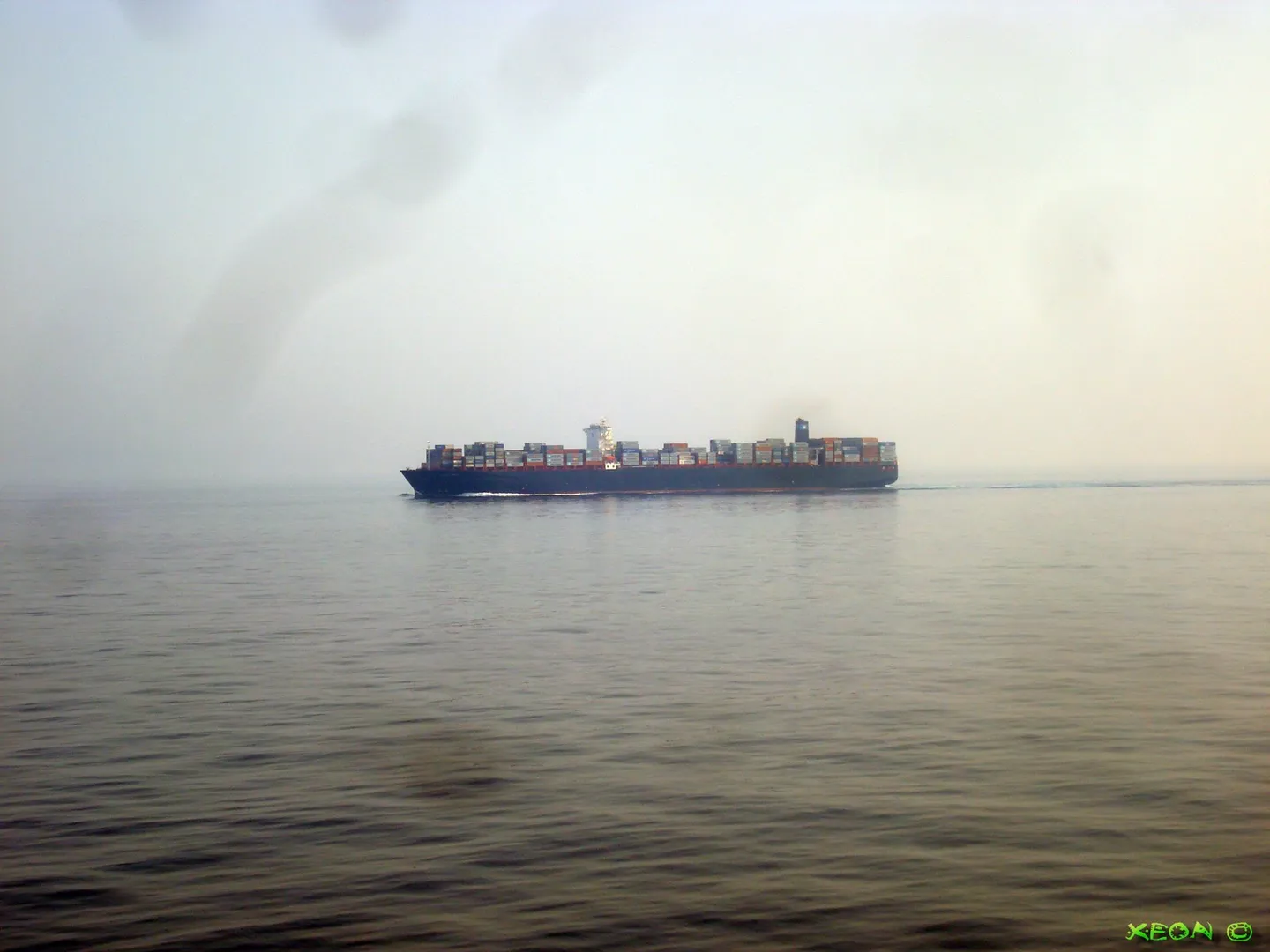
Panama is dealing with inability to hear; the US East Coast is dealing with inability to escape — and the solution for both converges on the same action: reduce vessel speed. A slower ship generates less low-frequency noise, preserving whales' communication space. That same slower ship also reduces both the probability of striking a whale and the lethality of any strike that does occur. In conservation, measures that simultaneously address two distinct mechanisms are rare.
The Editor also wants to be honest about the trade-offs. Slowing down means longer voyage times and higher costs for the shipping industry — a reality that cannot be brushed aside with "bear with it for the whales," and precisely why this rule has faced continuous challenge since it took effect in 2008. The genuinely pragmatic debate is not whether to slow down at all, but in which waters, during which seasons, and for which vessel types speed reductions should apply — and how real-time acoustic and sighting data can be used to narrow regulations to only where they are most needed.
This is also why the Panama research matters. It is not a slogan — it records a year of sound first, and then asks what needs to be managed, when, and where.
Bringing It Home to Taiwan: Our Whale-Watching Boats and Shipping Lanes
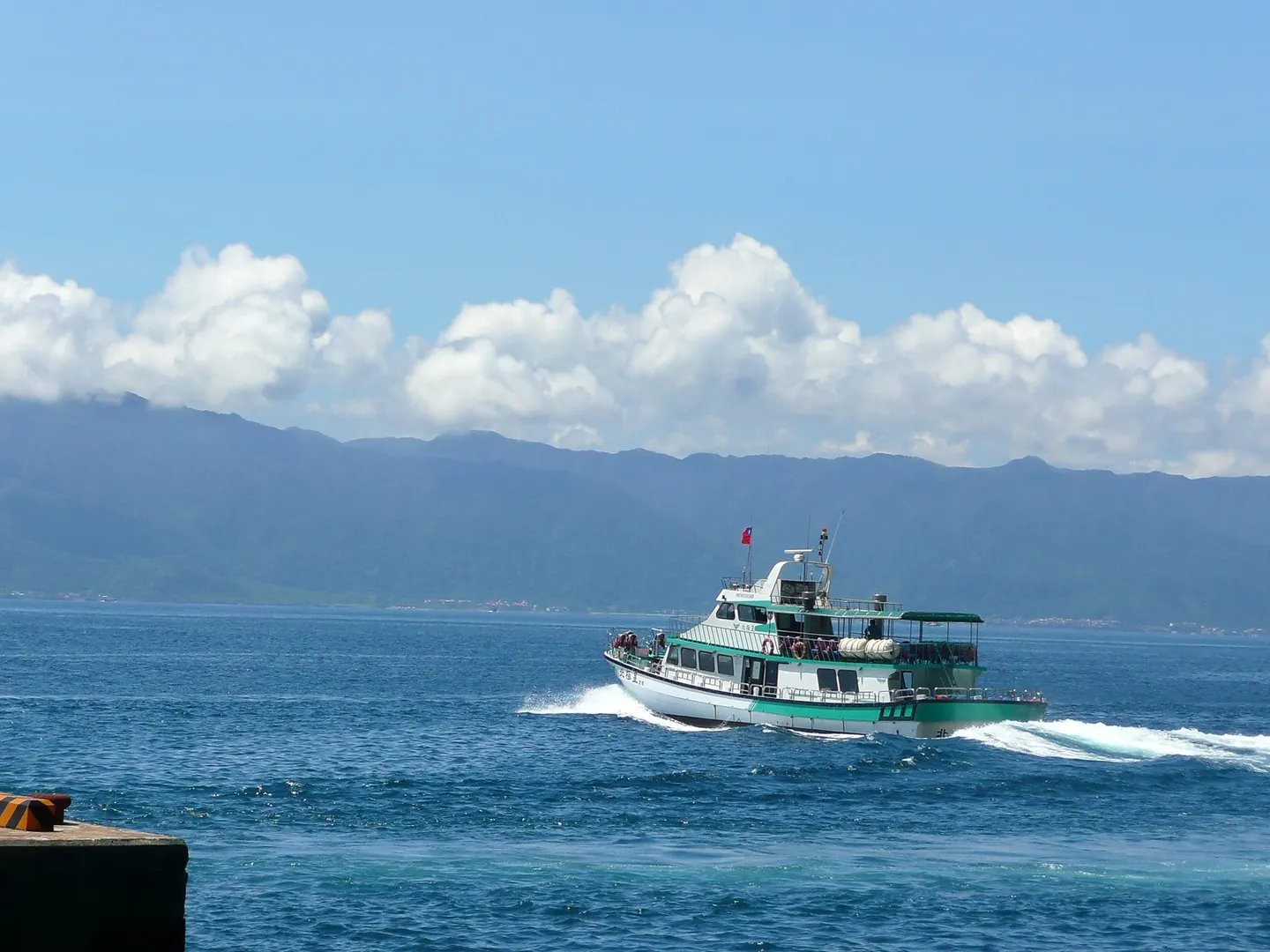
Taiwan's eastern waters are a cetacean hotspot — according to the Taiwan Whale-Watching Guide, summer sighting rates can reach 80 to 90%. Translating the two datasets above to our own doorstep, three points are worth discussing.
The good news is that Taiwan already has fairly clear guidelines. The Taiwan Whale-Watching Guide, published by the Ocean Conservation Administration of the Ocean Affairs Council and edited by the Kuroshio Ocean Education Foundation, is quite specific:
| Regulation | Details |
|---|---|
| Approach method | Vessels should approach cetaceans in parallel and slowly, with reduced speed |
| Friendly distance | Maintain at least 50 metres |
| Mother-and-calf groups | Avoid approaching; ideally maintain at least 300 metres |
| Maximum simultaneous vessels | No more than three, positioned on the same side where possible, taking turns to approach and observe the same group |
| Bow-riding situations | Maintain constant speed; do not suddenly change heading |
| Five prohibitions | Do not litter; do not deliberately chase or encircle; do not split or cut through cetacean groups; do not feed; do not touch |
The guide also notes that nearly 30 species of cetaceans have been recorded in waters surrounding Taiwan, all of which are protected wildlife — harassment is prohibited under Article 16 of the Wildlife Conservation Act. Anyone who observes suspected violations is encouraged to photograph or video the incident and report it to the marine conservation authority of the relevant county or city government, to the Ocean Conservation Administration, or by calling the Coast Guard Administration's 118 hotline.
First, our existing guidelines already align with the key findings of international research. "Reduce vessel speed," "maintain 50 metres," and "no more than three vessels simultaneously" — these three provisions directly address the issues raised by the Panama and Colombia research: noise, distance, and vessel density. Colombia's 63% figure is a reminder that a single vessel at the wrong distance and speed is already sufficient to cause disruption. The existence of regulations and compliance with them are two different things; the real test comes on the water during peak season.
Second, the overlap between shipping lanes and cetacean routes requires data before it can be properly discussed. The right whale case was able to drive speed regulations because of decades of sighting and mortality records. For Taiwan to consider similar area-based measures, the prerequisite is sufficient sighting data — and this is precisely where citizen scientists can fill the gap.
Third, marine tourism operators are actually in the most advantageous position. Boat captains and naturalist guides who go out every day are the first to notice anything unusual. When industry players voluntarily adopt standards of conduct stricter than legal requirements, they shift from being managed subjects to becoming data providers and co-authors of regulation.
For further reading, the Editor has written two relevant pieces: Creating an Oasis for Whales and Dolphins on the East Coast, and A First-Hand Whale-Watching Experience in Yilan.
Closing Thoughts
Whales cannot afford to ask us to be quiet. They cannot demand that we slow down. All they can do is move away from us, or stop singing.
Slowing ships down sounds like a very small thing. But across Panama and the North Atlantic — two ocean regions separated by ten thousand kilometres — it is simultaneously the most effective thing.
Sources
- Panama underwater noise research: Boat noise pollution is drowning out humpback whale songs (earth.com, 31 August 2026); research conducted by the MarViva Foundation and Panacetacea Panama, results released by Panama's Ministry of Environment.
- Colombia whale-watching vessel noise research: Rey-Baquero et al., Understanding Effects of Whale-Watching Vessel Noise on Humpback Whale Song in the North Pacific Coast of Colombia, Frontiers in Marine Science, 25 March 2021.
- North Atlantic right whale and speed limits: Speed Limits for Ships Protect Endangered Right Whales From Vessel Strikes (Smithsonian Magazine).
- Population data and regulatory details: NOAA Fisheries North Atlantic Right Whale Species Page; population statistics updated to December 2025.
- Taiwan whale-watching regulations: Ocean Conservation Administration, Ocean Affairs Council, Taiwan Whale-Watching Guide, edited by the Kuroshio Ocean Education Foundation.
This article was compiled and adapted by BlueTrend from the public sources listed above. All figures and regulatory details should be verified against the original sources and official announcements by the relevant authorities.