Contents(7)
- Coral's Status in Human Civilization: From Ancient Texts to Qing Dynasty Court Necklaces
- The Development and Peak of Taiwan's Precious Coral Fishery
- The Cost of Unchecked Harvesting: Ecological Damage to Taiwan's Waters from the Coral Fishery
- From Laissez-Faire to Regulation: The Fisheries Agency's Oversight and Current Status
- Toward an Orderly Exit: Calling for Changes in Consumer Behavior to Support Fishermen's Transition
- Conclusion
- References
Taiwan's Northeast Coast and the waters off Penghu were once among the world's most important production areas for precious coral. The red coral and pink coral harvested from these waters once supported an entire industry chain, from harvesting to processing to export. The status of precious coral in East Asian civilization was not established in modern times — from its medicinal value recorded in the Compendium of Materia Medica (本草綱目) to its role as a status symbol on Qing dynasty court necklaces, coral had long been a rare substance imbued with high commercial value. This is the historical backdrop against which Taiwan's coral fishery was willing to invest large numbers of boats and manpower in its development. But precious coral grows only a few millimeters per year, and a colony mature enough to be carved into jewelry often takes decades or even centuries to form. The damage caused to seabed habitats and surrounding biological communities by traditional trawling and hook-and-claw harvesting methods has been far more severe than catch records alone would suggest. This article examines how Taiwan's precious coral fishery went from a peak production value to its current state — brought under management by the Fisheries Agency of the Ministry of Agriculture, with the number of fishing vessels gradually declining — and considers where this industry should go from here, and how consumer choices might shape that answer.
Coral's Status in Human Civilization: From Ancient Texts to Qing Dynasty Court Necklaces
Coral being regarded as a rare treasure is not a modern phenomenon. The Compendium of Materia Medica (本草綱目), written by Li Shizhen of the Ming dynasty, classified coral under the "metals and stones" category, continuing a tradition dating back to the Tang dynasty's Newly Revised Materia Medica (新修本草) of recording coral and other marine species as medicinal materials. Ancient people ground it into powder for medicinal use. This record shows that coral carried both medicinal and symbolic significance in East Asian civilization from the very beginning, which meant demand for coral trade formed early along the coast of China.
This demand reached its peak during the Qing dynasty. Qing officials wore court necklaces made of different materials according to their rank, with second-rank officials wearing coral court necklaces — a status second only to the ruby court necklaces worn by first-rank officials, reserved for high-ranking officials or important occasions. The National Palace Museum still holds numerous coral court necklaces and carved pieces, their beads a rich, glowing red — concrete evidence of how Qing dynasty court craftsmanship intertwined with the hierarchical system.

Qing dynasty officials' court necklaces were made from coral and other precious stones. From the second rank up, officials wore coral court necklaces as a mark of status, and this demand for coral drove centuries of harvesting activity along Asia's coasts. "Portrait of the Kangxi Emperor in Court Dress," collection of the National Palace Museum
From the medicinal records in the Compendium of Materia Medica to the class symbolism of Qing dynasty court necklaces, coral in East Asian civilization has always centered on two qualities: rarity and an irreplaceable beauty. This is precisely the underlying reason the coral industry was later able to become commercialized. The emergence of Taiwan's precious coral fishery was, in a sense, a continuation of this civilizational thread spanning hundreds of years.


The Development and Peak of Taiwan's Precious Coral Fishery
Taiwan's precious coral fishery inherited the long-standing demand for coral along China's coast, and gradually took shape under favorable geographic and oceanic conditions. In November 1923, a Japanese fisherman named Akitaro Yamamoto accidentally hauled up a branch of red coral while longline fishing in waters northwest of Pengjia Islet. The government and private sector soon began planning to develop the resource, and that same year the Oriental Coral Company and the Taiwan Fisheries Corporation's Coral Market were established, officially launching Taiwan's coral fishery. Early fishing grounds were concentrated in waters off northern and northeastern Taiwan, and it was not until 1934 that coral was also discovered in the waters off Penghu. These waters were often hundreds of meters deep, and early harvesting relied on crude trawl nets and manually operated winches — the work carried considerable risk, but coral's high unit value made fishermen willing to take it on.
Taiwan's coral fishery reached its production peak between the 1960s and 1970s, with the golden era falling around the 1970s. At that time, 80% of the precious coral sold on the global market was exported from Taiwan, earning the island the nickname "the Coral Kingdom." In the years when coral prices were at their best, a single coral boat that landed a high-quality catch of red or pink coral could support an entire extended family — this is why, even under harsh working conditions, fishermen were still willing to take up the trade.
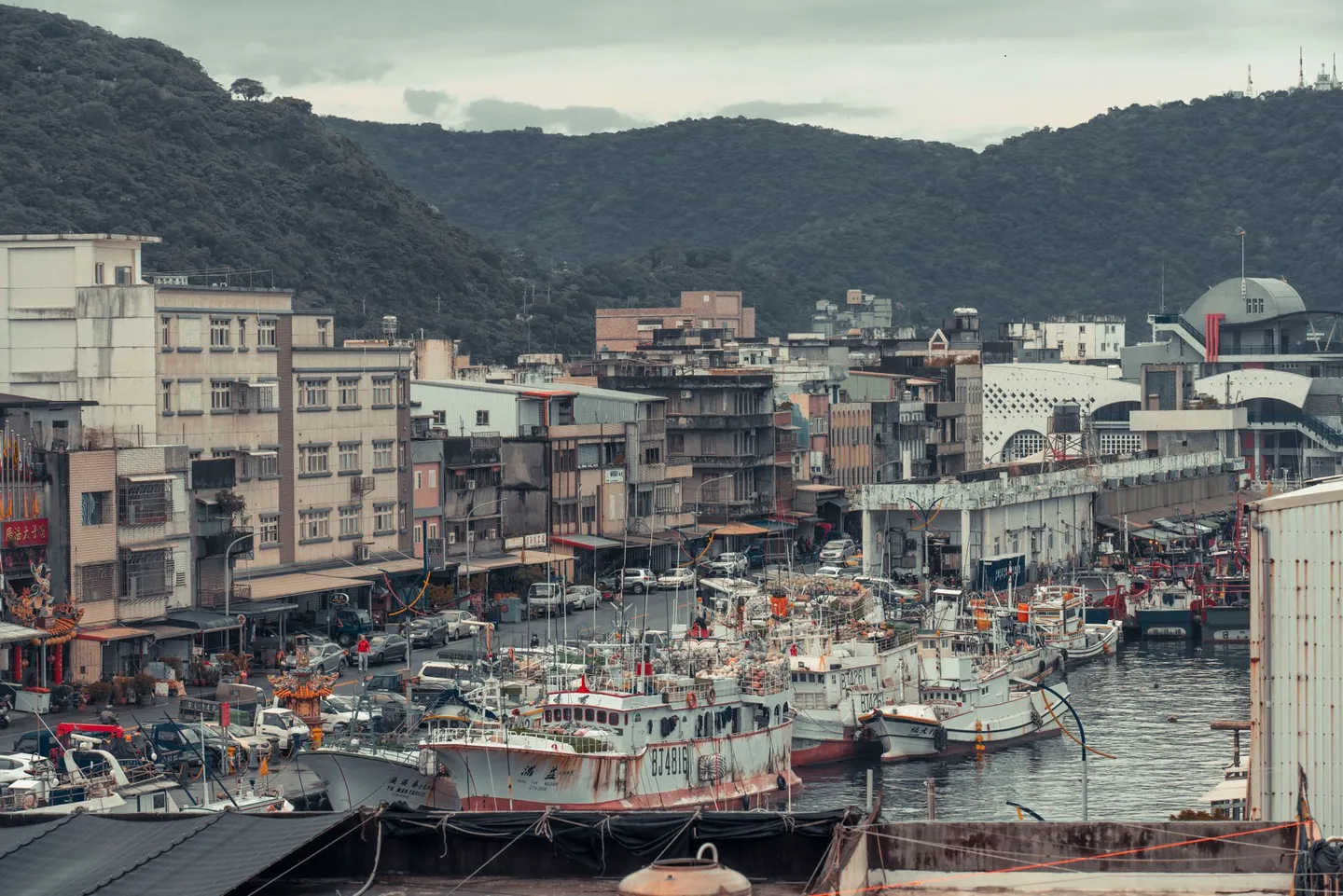
Trawlers line the docks at Nanfang'ao Fishing Harbor, with the red roof of Jin'an Temple visible in the distance. This was once the most important hub for Taiwan's coral industry. (Photo: Jimmy Liao/Pexels)
Since the harbor was built during the Japanese colonial era, Nanfang'ao had served as the central hub for Taiwan's precious coral harvesting, raw material distribution, processing, and trading. In the heyday of the Coral Kingdom, it was known as the "Hometown of Coral." Between the 1970s and 1980s, Taiwan's precious coral production led the world, and Nanfang'ao was the core port that sustained this entire industry chain — from resupplying harvesting boats and grading raw coral, to carving, processing, and wholesale trading, most steps in the process took place here. Inside Jin'an Temple, a landmark of Nanfang'ao, stands a statue of Mazu carved from deep-sea precious coral and gold — the world's first Mazu statue made from coral. The existence of this statue meant that coral was not only Nanfang'ao's economic lifeline, but also became part of the local faith and community identity.

The existence of this Mazu statue meant that coral was not only Nanfang'ao's economic lifeline, but also became part of the local faith and community identity.
The economic returns from the coral fishery, in a sense, shaped the industrial structure of fishing villages along the Northeast Coast — until the industry eventually faced the dual pressures of resource depletion and a younger generation unwilling to take over, at which point it gradually arrived at a crossroads where transformation became inevitable.
The Cost of Unchecked Harvesting: Ecological Damage to Taiwan's Waters from the Coral Fishery
Precious coral is valuable in large part precisely because it grows so extremely slowly. According to Professor Dai Chang-feng of National Taiwan University's Institute of Oceanography, the base diameter of red coral increases by only about 0.5 mm per year, and its central axial skeleton grows at a rate of less than 7 mm annually. This growth rate falls far short of the pace of harvesting. Unlike ordinary fishery resources such as fish or shellfish, whose populations can replenish themselves through reproduction in a relatively short time, once a coral colony is cut or uprooted, the loss of that seabed habitat is nearly permanent — no new coral reef bed will take its place in the short term.
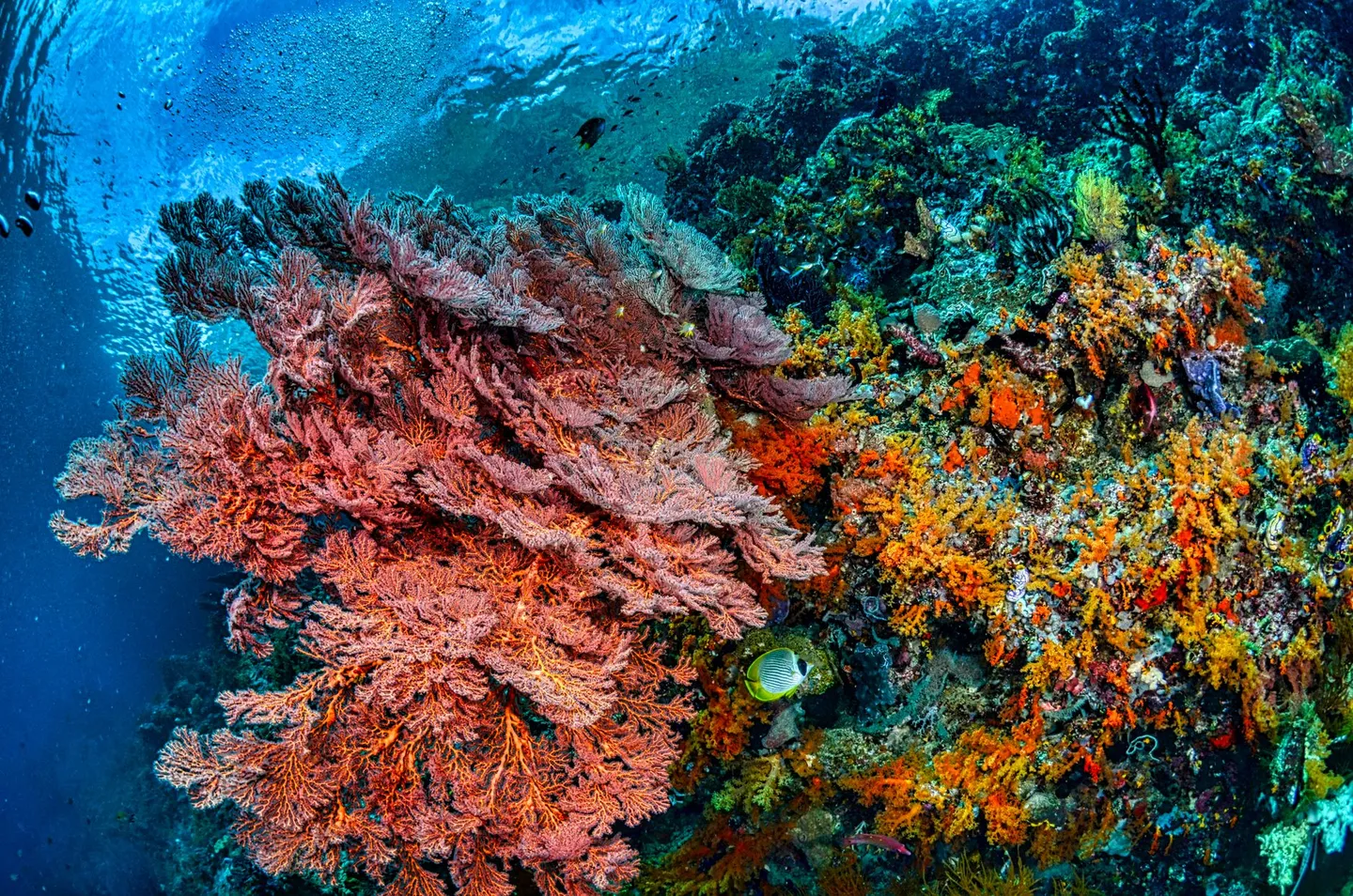
A healthy coral reef provides the three-dimensional structure fish and benthic organisms need to survive. Once destroyed by trawling, it often takes decades before even partial recovery is possible. (Photo: Tom Fisk/Pexels)
The damage caused to the seabed by early coral harvesting operations was comprehensive in scope. It was not only the targeted coral that was harvested — other benthic organisms in the same waters, soft coral colonies, and even the reef structures that fish depend on for habitat could all be damaged or entangled in the fishing gear during the harvesting process, resulting in what the fishing industry calls bycatch. The damage to these non-target species was often never factored into the industry's profit-and-loss calculations, yet it represented a real ecological cost occurring on the seafloor.
From the perspective of conservation biology, coral is essentially closer to an old-growth tree in a forest than a renewable fishery resource. The logic of harvesting fish, shrimp, and crabs is built on the premise that "population replenishment happens faster than the rate of harvesting" — a premise that simply does not hold for coral, given how extremely slowly it grows. Once harvesting pressure exceeds the natural rate at which coral grows and reef beds rebuild themselves, the seabed habitat moves toward a one-way decline, rather than reaching the kind of dynamic equilibrium commonly seen in fishery management.

The branching, tree-like form of red coral takes a century to grow on the seafloor — a growth rate that falls far short of the pace of human harvesting. (Photo: The New York Public Library/Unsplash)
This is precisely why the precious coral industry has, from the very start, operated under a fundamentally different logic than other marine fisheries. The problem is not whether individual fishermen work carefully — it's that the resource this industry depends on is, by its very nature, poorly suited to being managed and operated as a fishery at all.
From Laissez-Faire to Regulation: The Fisheries Agency's Oversight and Current Status
The long-standing problems with the precious coral industry were never about coral itself lacking value — they stemmed from the absence, in earlier years, of a management system aligned with ecological reality. The Fisheries Agency of the Ministry of Agriculture subsequently established dedicated regulations governing coral harvesting, formally bringing what had once been a gray-area activity under management, while guiding the industry according to a principle of maintaining its existing scale.
The coral fishery is classified as one of the sideline operations permitted under existing fishing licenses, and it is limited to the harvesting of precious coral. New vessel applications have not been accepted for many years — only operators already registered with harvesting equipment from earlier years are recognized under the controlled list. According to data held by the Fisheries Agency, the number of registered coral fishing vessels in earlier years far exceeded the current count, which has declined significantly since the controlled-list system was implemented.
In recent years, the Fisheries Agency has also continued to review the relevant regulations, moving in the direction of encouraging the retirement of old vessels and a gradual reduction in the total number of boats, while also reviewing the criteria used to determine operating eligibility, so that the system better reflects actual working conditions.
These adjustments make clear that the Fisheries Agency is not aiming to end this industry immediately, but rather to find a gradual balance between fishermen's livelihoods and resource sustainability. This is the key to understanding the current state of Taiwan's precious coral fishery: it is no longer an unregulated harvesting industry, but a controlled fishery on a path toward an orderly exit.
Toward an Orderly Exit: Calling for Changes in Consumer Behavior to Support Fishermen's Transition
The precious coral fishery has arrived at its current state not because fishermen were greedy or lawless, but because the industry's commercial logic has been fundamentally at odds with coral's growth rate from the very beginning. According to data published by the Ministry of Agriculture, Taiwan's precious coral fishing fleet originally consisted of 96 registered vessels, a number that has gradually declined in recent years to 60. This reduction has been achieved through the Fisheries Agency's progressively tightened management measures, not through natural market contraction. If society believes precious coral should no longer be harvested, the most direct and effective approach is on the consumer end: don't buy coral jewelry or ornaments. As demand falls, catch volumes will naturally decline along with it — a path that aligns more closely with how this industry can realistically wind down than a blanket ban would.
This does not mean stripping current fishermen of their livelihoods overnight. Under the "Regulations Governing the Approval of Fishing Vessel Construction and the Issuance of Fishing Licenses" (漁船建造許可及漁業證照核發準則), no new fishing licenses are, in principle, issued for the coral fishery — existing licenses may only be renewed upon expiry — and the number of vessels naturally declines as license holders change or as vessels are lost and not replaced. Research from National Taiwan Ocean University also shows that since a new management system was implemented for the coral fishery in 2009, the fleet has been maintained at 60 diving vessels, with roughly 3 vessels retired annually. Regulations revised in 2014 also introduced an annual total allowable catch (TAC) of 6 metric tons; once the catch reaches 5.4 metric tons, the central competent authority issues a public announcement, and fishing operations must cease seven days after the date of that announcement. This is a textbook example of an industry phase-out: it respects the years of accumulated livelihood and skill among fishermen, while allowing the overall scale to gradually contract. But if demand persists, fishermen have no incentive to change careers, and the current system will only sustain the industry's existing scale rather than genuinely shrink it — social consensus and consumer choice remain the key drivers.
Beyond consumer restraint, the government and industry should also address the career-transition needs of current coral fishermen, offering vocational training and transition support so these families have the opportunity to move into fisheries or other marine-related work with greater potential for sustainable development, while gradually tightening workforce training so that new entrants are no longer encouraged to join an industry destined to shrink.
This is not an attempt to paint the coral fishery as something that deserves to be punished — it is an acknowledgment that when an industry is fundamentally incompatible with ecological carrying capacity, society has a responsibility to help it exit with dignity, rather than allowing fishermen and the ocean to both pay the price of resource depletion together.
Conclusion
The problem with the precious coral fishery was never about whether to ban it overnight — it's that an industry so heavily dependent on a scarce resource ultimately cannot coexist with the pace at which marine ecosystems recover. The Fisheries Agency's approach of gradually shrinking the fleet through vessel attrition is a pragmatic, incremental path, but consumer choice is equally critical. When market demand for coral jewelry declines, the industry's exit will happen more naturally, and with less conflict. What we hope to see is an endpoint that is relatively fair to both current fishermen and marine ecosystems — not a simple story of prohibition and confrontation.
References
- National Science and Technology Museum's Science Education Center, Blue Treasure: Marine Medicinal Materials in the Compendium of Materia Medica
- Zhihu (compilation on the Qing dynasty court dress system), Just How Beautiful Were Qing Dynasty Court Necklaces?
- Lanyang Museum, The History of Taiwan's Coral Industry
- Environmental Information Center, Reports Related to Taiwan's Coral Fishery
- National Geographic Chinese Edition/NTU Institute of Oceanography, Research on Red Coral Growth Rates
- Environmental Information Center, Report on Red Coral Reproduction and Population Characteristics
- Ministry of Agriculture website, Announcements Related to Precious Coral Fishery Management
- Fisheries Agency, Ministry of Agriculture, Regulations Governing the Approval of Fishing Vessel Construction and the Issuance of Fishing Licenses
- National Taiwan Ocean University (imarm), Explanation of the Coral Fishery Management System
- Radio Taiwan International, Ministry of Education Agricultural Knowledge Portal/Profile of Professor Dai Chang-feng
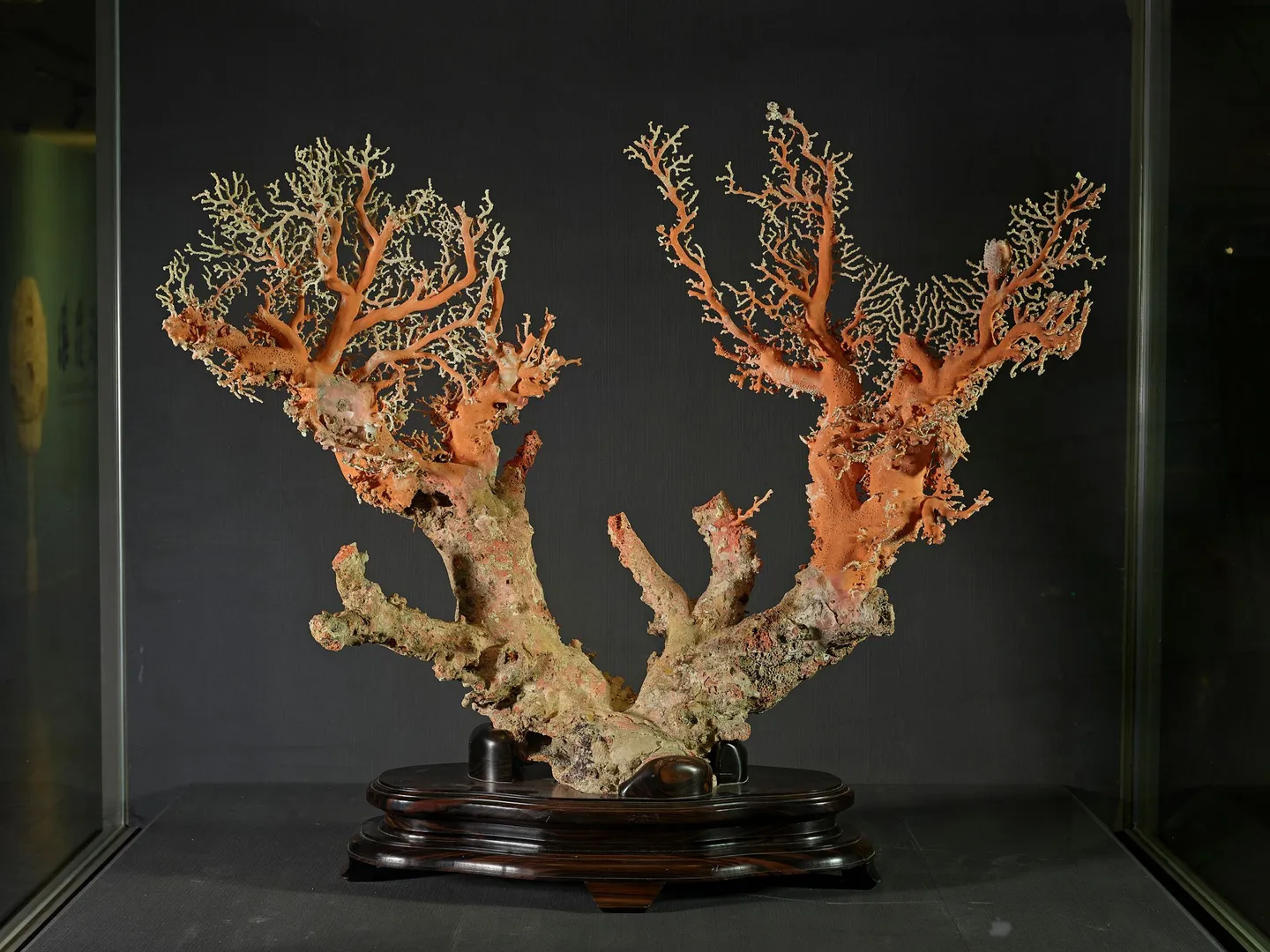
Cover image: Precious red coral. National Palace Museum, Taipei, CC BY 4.0 @ www.npm.gov.tw